7 min read

Patient Texting for Prime Clinical Practices | Curogram

Patient Texting for Prime Clinical Practices | Curogram
💡 Patient texting for Prime Clinical Intellect practices closes the gap between your EHR and your patients.

Prime Clinical's portal reaches only 15% to 20% of patients. Text messages reach 98%, and most are read within three minutes.

Curogram adds two-way, HIPAA-compliant SMS to Intellect through an HL7 link that goes live in 48 hours. Patient names, appointment types, times, and providers import on their own. Staff train in about five minutes.

Prime Clinical keeps charting, scheduling, and billing. Curogram handles the rest, from confirmations and prep steps to reschedules and recalls. No portal login needed.

Patient texting for Prime Clinical Intellect practices closes a gap your EHR was never built to close on its own. Curogram adds direct two-way SMS to your existing Prime Clinical setup through a standard HL7 connection that goes live in 48 hours.

Prime Clinical has been the backbone of your practice for years, and for good reason. Intellect and On-Line Power have handled charting, scheduling, and billing for decades, and they still do that work well. That part was never the problem.

The problem sits one layer above the chart. Prime Clinical Systems patient communication still runs on a 2012 model, where the portal is the only digital door into your practice. Call it "The 15% Portal."

That is roughly the share of patients who ever log in. The other 80% stay unreachable through any digital channel you own, no matter how many reminder messages you queue up.

The gap hits hardest in traditional specialties. Cardiology, internal medicine, family medicine, gastroenterology, OB/GYN, ophthalmology, and pediatric practices all serve panels where older adults and busy parents text every day but stall out at a password screen.

They are not avoiding technology. They are avoiding your portal. So they call instead, and your front desk absorbs the overflow one ring at a time.

Every one of those calls started as a message that could have gone out, and come back, without anyone lifting a handset. Multiply that across a full schedule and the cost stops looking like a service problem and starts looking like a staffing one.

Here is the number that reframes the whole conversation. Text messages are read at a 98% rate, and most are read within three minutes of arrival.

Your portal cannot come close, and no amount of staff training will change that.

Where Prime Clinical Patient Communication Runs Out of Room

Your EHR does exactly what it was designed to do. Intellect and On-Line Power have run ambulatory practices since long before smartphones existed, and Harris Healthcare has kept that foundation steady since acquiring Prime Clinical Systems. The clinical side is solid.

Patient communication is where the design shows its age. There is no native texting. The portal is the only digital channel, and portal adoption across ambulatory practices sits between 15% and 20%.

Watch what that looks like in practice.

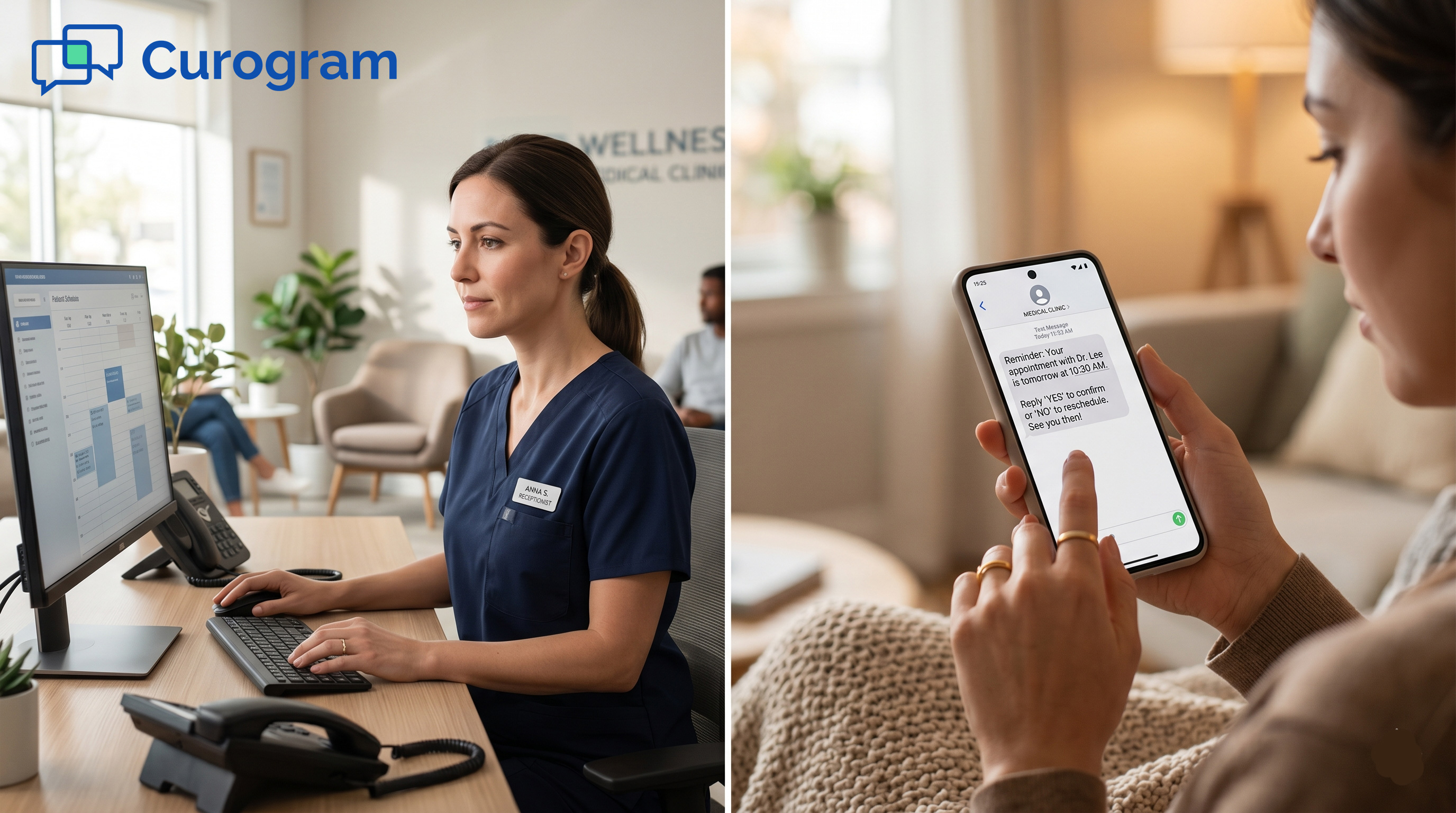
A patient needs to confirm Tuesday's echo. She opens the portal, forgets her password, and requests a reset. The reset email lands in spam, or the link expires, or she gives up at the second security question.

So she calls. Your front desk picks up, pulls the schedule, confirms the appointment, and hangs up. That exchange took four minutes and could have taken four seconds.

Multiply it. A busy two-provider practice fields 80 or more calls a day, and a large share of them are one-line questions:

What time is my appointment?

Do I need to fast?

Did my refill go through?

The real cost is the 80% you never reach

Every message that only exists inside the portal reaches a fifth of your panel. The rest default to the phone or simply disengage. Some of them drift to the practice down the street that texts back in five minutes.

That is the quiet part. Access is not just a service issue anymore. It is a retention issue.

Older patients text more than you think

Here is the twist most practices miss. The demographic that struggles most with portals is the same one that texts family every single day.

Texting older patients in healthcare works precisely because texting asks nothing new of them. No app. No username. No two-factor code.

The mismatch between portal and patient is generational, and it is completely fixable.

A Direct Line That Runs Through Your Practice Number

Curogram sits beside Prime Clinical, not on top of it, the same way it does with other ambulatory EHRs. Your EHR stays the system of record. Curogram becomes the layer that reaches patients wherever they are.

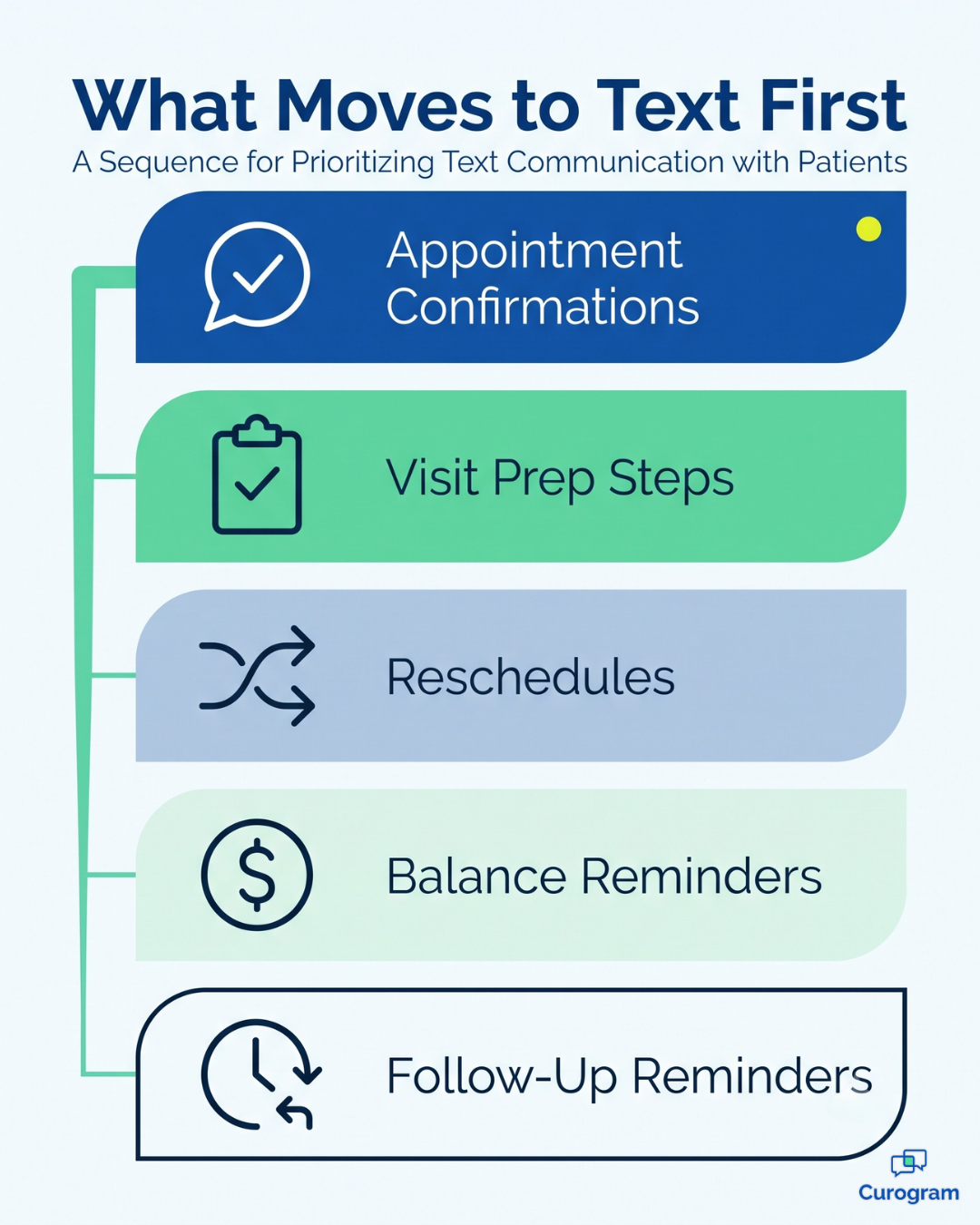
What Moves to Text First: top patient requests Prime Clinical practices handle by SMS

How the texting works day to day

Messages go out from your practice number, so patients recognize the sender and reply without hesitation. Every thread lands in one shared inbox your whole front desk can see.

Prime Clinical patient texting is two-way and HIPAA compliant, and every thread is logged for audit. Nothing sits on personal phones. When a staff member leaves, the patient history stays with the practice.

Templates cover the exchanges that eat the most phone time:

Staff still type freely when a chat calls for it. Templates just cut the retyping.

What the 48-hour setup brings across

The HL7 link pulls patient names, appointment types, times, providers, and locations from Intellect on its own. Your team never exports a spreadsheet or keys in the same data twice.

Setup runs about 48 hours start to finish. There is no IT project, no server work, and no downtime for your schedule. Staff training takes about five minutes, because the screen works like the texting app already on their phone.

Why it fits traditional specialty panels

Two-way SMS medical practice use tends to grow fastest in cardiology and internal medicine, where panels skew older and call volume runs high. Text messaging works as a Prime Clinical patient portal alternative for those exact patients, and it asks them to learn nothing.

Among Prime Clinical EHR patient engagement tools, the edge here is not the feature list. It is reach.

Every line lit on a front desk phone system, the call backlog two-way texting clears

What Changes When 98% of Messages Get Read

Numbers make this concrete. Here is how the two channels compare on the metrics that affect your day.

Metric Patient portal Two-way texting
Patient reach 15% to 20% adoption 98% read rate
Typical response time Hours to days Under 3 minutes
Setup for the patient Account, password, login None
Staff effort per message Portal message plus follow-up call One thread, one reply

Curogram clients average a confirmation rate above 75%, and the same channel carries post-visit review requests.

At Covina Arthritic Clinic, monthly confirmed appointments climbed from 369 to more than 1,300 after switching to automated text confirmations.

The Text-First Front Desk

The bigger shift is cultural. The phone stops being the default channel and becomes the exception channel, reserved for conversations that genuinely need a voice.

Curogram practices report phone volume dropping by as much as 50% and front desk productivity rising more than 30%. Here is what that looks like in dollars and hours for a typical practice.

Say your front desk handles 80 calls a day at four minutes each. That is 320 minutes, or just over five hours of pure phone time. Cut that volume in half and you recover about 2.7 hours every day.

Across a five-day week, that is roughly 13 hours. Over a year, it is more than 670 hours returned to your team, which is close to a third of a full-time position. This example uses illustrative call figures, so run your own numbers to see where your practice lands.

For your team, that time goes back into intake, prior authorizations, copay collection, and the patients standing at the counter. For your patients, an answer arrives in seconds instead of a callback that may never come.

Prime Clinical for Charting. Curogram for Everything In Between.

Prime Clinical handles the chart. Curogram handles the conversation. That division is the whole idea, and it is why adding a texting layer does not mean disrupting anything your practice already relies on.

Your EHR was built to document care with precision, and it still does that well. It was never meant to be a messaging platform, and asking it to be one created the gap. Charting, scheduling, and billing stay exactly where they are.

Everything that happens between you and your patients moves to a channel they actually use.

Try a quick exercise tomorrow. Count the calls your front desk takes that a single text would have ended in one reply.

Confirmations. Prep questions. Refill checks.

Most practices are surprised by how high that number climbs before lunch.

Now imagine that same volume arriving as threads your staff clears between patients, instead of a queue that stacks up during your busiest hour. That is not a lighter version of your current workload. It is a different shape entirely.

The patients you are missing are not hard to reach. They are simply waiting on a channel your portal does not use. They already text their pharmacy and their grandchildren every day, and they will text your practice the moment you make it possible.

Reaching them takes 48 hours, not a quarter-long implementation. Your data comes across through the standard HL7 connection, your team trains in about five minutes, and your practice number becomes the direct line it always should have been.

Schedule a Demo. Bring along your call log and your current portal adoption numbers, and we will show you exactly which conversations move to text first, and what that recovers for your front desk in the first month.


Frequently Asked Questions

Is texting patients HIPAA-compliant?

Yes, as long as you have patient consent, a signed BAA, and a compliant platform behind it. Curogram is HIPAA-compliant and SOC 2 Type II certified. Every conversation is logged and auditable, and texts come from your practice number rather than a staff member's personal phone. That last detail matters more than most practices expect, because it keeps patient history inside the practice when someone changes jobs.

How hard is the integration with Prime Clinical?

It takes about 48 hours and runs on HL7-compatible data exchange. Patient names, dates of birth, contact details, appointment types, times, providers, and locations import automatically from Intellect. You do not need an IT team, a server project, or downtime on your schedule. Staff training runs about five minutes, because the interface works like the messaging app already on their phone.

Our patients are older. Will they actually text?

Yes, and usually faster than younger patients do. Older adults struggle with portal passwords, not with texting, and most text family every day. Replying with a single letter to confirm an appointment sits well within their comfort zone. The barrier was never the technology. It was the login screen standing in front of it.

Does Curogram replace Prime Clinical?

No. Curogram is an add-on communication layer, not a replacement for your EHR. Prime Clinical stays your system of record for charting, scheduling, and billing. Curogram handles patient messaging alongside it, and data flows from Intellect into Curogram so your team is never entering the same information twice.

What happens to phone volume after we switch?

Most practices see calls drop sharply within the first month, and Curogram clients report reductions of as much as 50%. The change is not that patients contact you less. It is that routine exchanges resolve in one text thread instead of a four-minute call, which frees the phone line for conversations that genuinely need a voice.