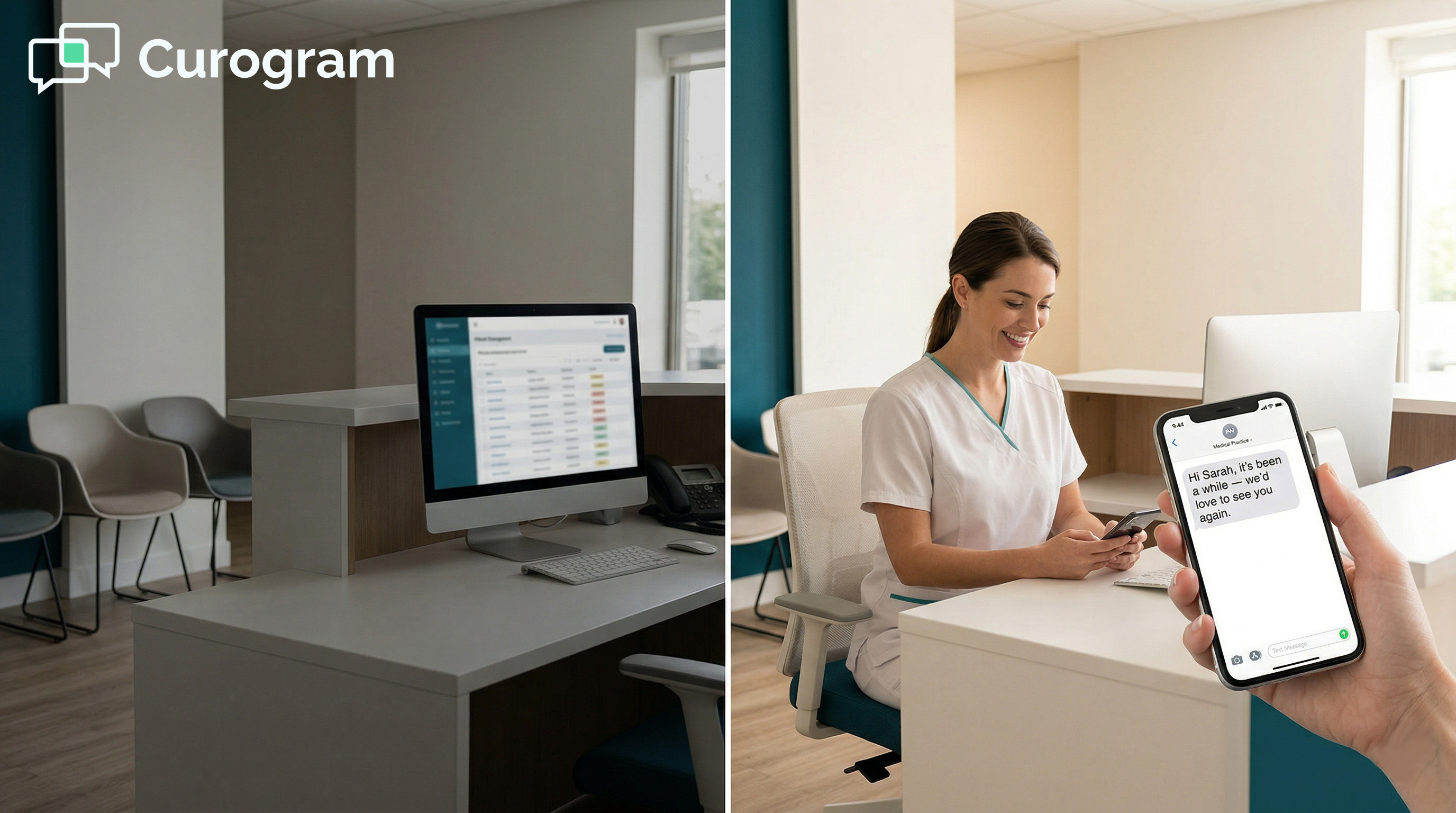


An Office Ally patient recall text message reactivation response is the fix: a short, warm text that reminds patients their provider is still there. Based on our internal data, practices that send personalized recall texts see 35% of inactive patients rebook.
The message arrives on a channel that patients already check dozens of times a day. It feels personal, not promotional. And it works.
Think about the last time you meant to do something but kept putting it off. Maybe it was a dentist visit. Maybe it was a checkup. You weren't avoiding it on purpose. Life just kept moving, and the appointment never made it onto the calendar.
That's exactly what happens to your patients.
They finish their treatment plan, feel better, and tell themselves they'll come back for a maintenance visit soon. But soon turns into next month. Next month turns into next year.
And the whole time, they're not upset with you. They haven't switched providers. They've simply drifted.
The problem? Most practices don't do anything to stop the drift. Office Ally's Patient Ally portal holds your patient records, but it doesn't send outreach. Reminder Mate sends reminders for existing appointments, not the ones that should exist but don't.
So the patient who was in your office six months ago is still sitting in your records, inactive, while their relationship with your practice quietly fades.
That's where a simple text message changes everything.
Reaching out to dormant patients through an inactive patient reactivation text message is one of the highest-return actions a small practice can take.
You've already done the hard work: the intake, the rapport, the clinical notes. All you need to do is remind that patient you're still there.
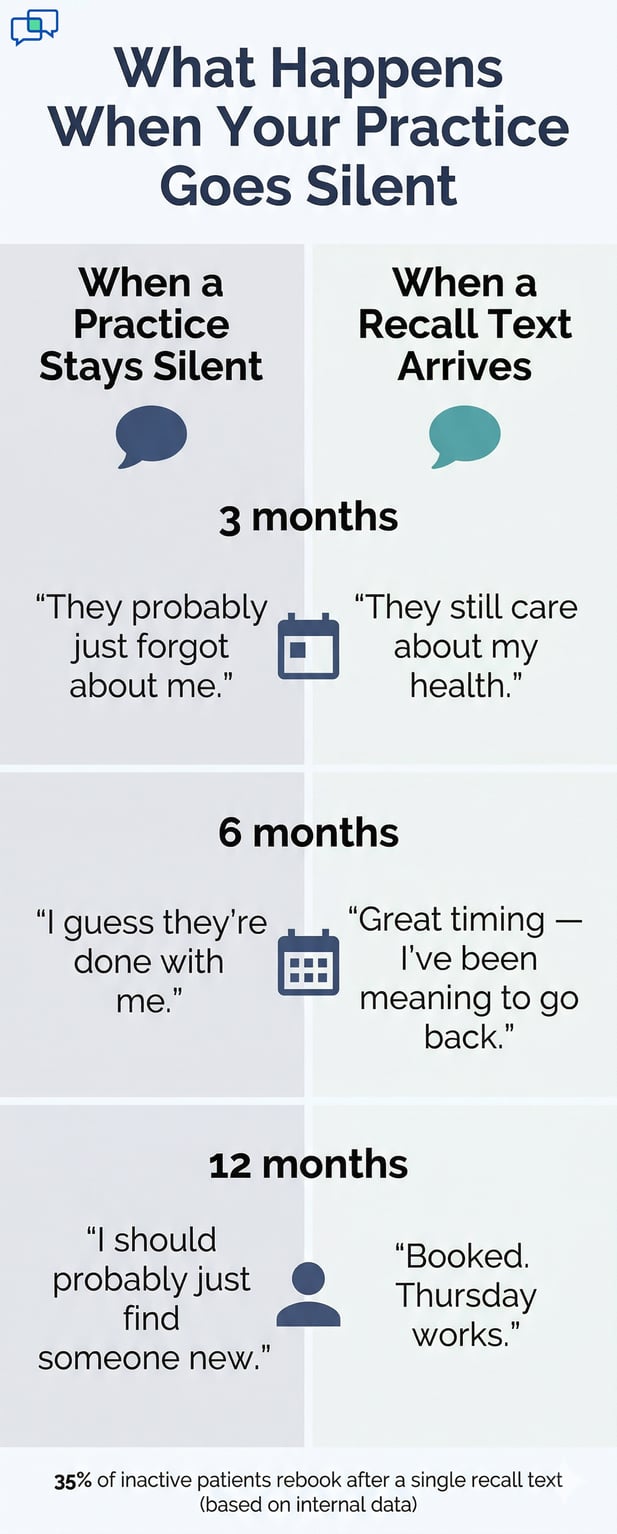
And based on our internal data, one text message is often all it takes. Practices that send personalized recall texts rebook 35% of their inactive patients. That's not a cold lead. That's a warm relationship that just needed a nudge.
This article breaks down why patients drift, why text outreach works so much better than phone calls or silence, and how practices of all sizes are using recall messaging to bring their patients back.
The Villain: The Practice That Forgot About Me
Most practices lose patients without realizing it. There's no angry call, no complaint, no cancellation.
The patient just stops coming in. Understanding why this happens, and what it feels like from the patient's side, is the first step to fixing it.
The Drift, Not the Decision
Patients rarely decide to leave a practice. There's no breakup moment. The chiropractic patient finishes their treatment plan, feels better, and says, "I'll schedule a maintenance visit next month."
Next month becomes next quarter. The appointment was never canceled because it was never made.
The patient didn't leave. They drifted. And without outreach, the drift becomes permanent.
This is what makes patient reactivation so valuable. These aren't lost patients in the traditional sense. They're people who already trust your practice.
They already know your team. They've already been through the hardest part, which is starting care. All they need is a reason to come back.
The barrier isn't trust. It's inertia.
Why The Drift Happens Quietly
Life fills in the gaps fast. A patient who finishes PT in March might fully intend to return in the summer. But by July, they've moved on to other priorities. The practice feels like a chapter that closed, not a resource that's still available.
The longer the silence from the practice, the more natural it feels to the patient. If six months go by and nobody reaches out, the patient assumes, on some level, that the practice isn't concerned about their ongoing care. It's an emotional read, not a logical one. But it sticks.
The Cost Of Doing Nothing
Every inactive patient record represents an investment. You spent time on their intake, their treatment plan, and building trust with them. When they drift away and don't return, that investment generates no return.
And reactivating a dormant patient costs far less than finding a new one. You're not starting from zero. You're picking up a relationship that already exists. The only thing missing is a message.
The Silence Interpretation
Here's something most practices don't consider: patients interpret silence. When a patient doesn't hear from their provider for months, they make an unconscious conclusion. They think, "I guess the practice isn't worried about my care anymore."
The chiropractor who helped them through six weeks of back pain now feels like a transaction that ended.
The therapist who provided a safe space now feels unavailable. The silence didn't just pause the relationship. It changed how the patient sees it.
This is why an Office Ally patient return text outreach effort matters so much. It breaks the silence before that reinterpretation takes hold.
Silence Vs. A Text: How Patients Read Each
|
What the patient experiences |
What they conclude |
|
No contact for 6+ months |
"They've moved on. So should I." |
|
A personal recall text arrives |
"They still care about my health." |
|
A phone call asking to rebook |
"This feels like a sales call." |
|
A warm text with a booking link |
"Easy. I'll schedule right now." |
Why The Competitor Wins By Default
While your practice stays quiet, the patient's world fills with healthcare marketing. Mailers from new clinics. Google ads for "chiropractor near me."
A friend's recommendation for a different PT. Every touchpoint from a competitor chips away at loyalty to a practice that hasn't communicated in months.
The patient isn't actively shopping for a new provider. But when they finally decide to schedule, they search Google instead of calling their old practice. Why? Because the old practice gave them no reason to remember it was still there.
The Relationship Waste
A small practice dormant patient problem is really a communication problem. The clinical work was done well. The relationship was built. But without a system to maintain that connection, all of that effort quietly expires.
The good news: the relationship isn't actually gone. It's just quiet. And it can be restarted with a single message.
What's At Stake Per Dormant Patient
For a solo chiropractor with 100 inactive patients in the system, a 35% recall response rate means 35 patients returning. At $150 per visit, that's $5,250 in recovered revenue from patients who were already on the books.
Based on our internal research, one multi-location practice recovered 1,240 patients through recall campaigns.
The math is hard to ignore. And the effort required is minimal, once you have the right tool in place.

The Guide: The Text That Brings Patients Back
The solution isn't complicated. It's a text message. Short, warm, and personal. But the details of how that message is crafted, sent, and received make a big difference in whether patients actually respond.
What a Good Recall Text Looks Like
A strong inactive patient reactivation text message doesn't sound like a marketing email. It sounds like a message from someone who knows you. Here's an example that works:
"Hi David, it's been 9 months since your last session with [Practice Name]. We'd love to check in on how you're doing. Schedule your next visit anytime: [link]."
The patient sees a message from their provider's number. It uses their name. It acknowledges the gap without making it awkward. And it gives them one clear action to take.
The response is quick and emotional: "They haven't forgotten about me."
How The Message Is Personalized
Curogram's recall texts include the patient's first name, the practice name, and a reference to when they were last seen. Each message can also be tailored by care type:
Chiropractic: "Your spine health doesn't take breaks, even if your schedule did."
Physical therapy: "Your progress doesn't have to stop. Let's pick up where we left off."
Therapy: "Checking in. Your next session is just a text away whenever you're ready."
These messages feel like a conversation, not an ad. That shift in tone is why patients respond.
Why Personalization Beats Mass Blasts
A generic "We miss you!" campaign gets ignored. A message that says your name, names your practice, and references your care history gets opened, read, and acted on.
The patient recall experience text-friendly approach is about meeting patients where they are. They're already on their phones. They already check texts dozens of times a day. A warm, specific message in that stream feels natural, not intrusive.
The Integration Advantage
One reason recall texts through Curogram work so well with Office Ally practices is continuity. The text comes from the same number the patient has seen before, whether for appointment confirmations, check-in reminders, or two-way conversations with the front desk.
The patient isn't receiving a cold outreach from an unknown sender. They're hearing from the same practice, through the same channel, with the same tone. The recall text is the next message in an ongoing conversation.
How Text Fits into the Existing Office Ally Setup
|
Tool |
What it does |
Gap it leaves |
|
Patient Ally (portal) |
Holds patient records |
No outbound recall messaging |
|
Reminder Mate |
Sends reminders for scheduled appts |
Can't reach unscheduled patients |
|
Curogram |
Sends personalized recall texts |
Fills the reactivation gap |
How Patients Experience The Text
A phone call interrupts. It asks for an immediate response. It puts the patient on the spot.
A text waits. It lets the patient respond when they're ready. For a therapy patient who paused sessions due to anxiety, a gentle text is far less intimidating than a call.
For a busy parent who keeps meaning to rebook PT, a text with a booking link is something they can act on between errands. For an elderly chiropractic patient, a text from the practice feels like a personal check-in, not a sales call.
The medium matches the message: warm, patient, and easy to act on.
Patient Recall Text vs. Phone Call: A Quick Comparison
The patient recall text vs phone call response difference comes down to comfort and control. A text gives the patient both.
|
Factor |
Phone Call |
Recall Text |
|
Interruption level |
High |
Low |
|
Response pressure |
Immediate |
On the patient's time |
|
Scheduling ease |
Must call back or stay on the line |
Tap link, done |
|
Tone control |
Depends on staff |
Consistent and warm |
|
Patient anxiety trigger |
Higher risk |
Lower risk |
|
Response rate |
Lower |
35% rebook rate (based on internal data) |
The Success: Remembered, Reached, Returned
Numbers tell one part of the story. The patient's actual experience tells the other. Both matter when you're deciding how to bring inactive patients back.
The Metric That Matters
A 35% appointment reconversion rate means 35 out of every 100 inactive patients rebook after receiving a single recall text.
Based on our internal data, that's not a result that comes from aggressive sales tactics. It comes from a message that feels personal and arrives at the right moment.
For a solo chiropractor with 100 dormant patient records, that's 35 returning visits. At $150 per session, the math comes out to $5,250 in recovered revenue from patients already in the system. No ad spend. No new lead generation. Just a text.
Scale Changes The Outcome
Based on our internal research, a multi-location practice ran a broadcast recall campaign and recovered 1,240 inactive patients. That kind of result doesn't come from cold outreach.
It comes from texting people who already know the practice, already trust the provider, and were simply waiting to be asked to come back.
Even at smaller volumes, the return is real. A practice with 50 dormant patients that reactivates 17 or 18 of them through one campaign has covered a meaningful chunk of its monthly revenue goal, with essentially no additional cost per patient.
What A Low Opt-Out Rate Tells You
One concern practices raise: "What if patients find this annoying?" The data answers that clearly. The opt-out rate from recall campaigns is under 2%, based on our internal research.
That means 98 out of 100 patients who receive the text don't ask to be removed. Most don't just tolerate the message. They welcome it. Many reply with something like, "I've been meaning to schedule, thanks for the reminder."
From Silent to Connected
The shift that happens when a practice starts sending recall texts isn't just about bookings. It's about how the patient-practice relationship works over time.
Patients no longer drift indefinitely. The practice maintains a presence in their lives, not through pushy calls, but through thoughtful texts that say: "We're still here. We still care. Come back when you're ready."
That shift changes how patients see the practice. It stops being a place they visited once. It becomes a resource they can return to.
A Real Example Of How It Plays Out
A therapy patient stopped sessions eight months ago. Life had gotten busy, and she'd been telling herself she'd rebook "soon." On a Tuesday morning, a text arrives from her provider's number:
"Hi Emily, we haven't seen you in a while and want you to know we're here whenever you're ready. Your next session is just a tap away: [link]."
She reads it during her lunch break. She taps the link. She books a Thursday appointment. She replies: "Thanks for reaching out. I've been meaning to come back."
Thursday arrives. She sits down in the therapist's office. The conversation picks up where it left off. That's what one text can do.
What Recovery Looks Like in Practice
|
Practice size |
Dormant patients texted |
35% return rate |
Revenue at $150/visit |
|
Solo provider |
100 |
35 patients |
$5,250 |
|
Small group (3 providers) |
300 |
105 patients |
$15,750 |
|
Multi-location practice |
3,000+ |
1,000+ patients |
$150,000+ |
Based on our internal data.
Don't Let Silence End the Relationship
Patients don't leave because they stopped caring. They drift because nobody reached out. The relationship was real. The trust was built. All it needed was one message to bring it back to life.
Office Ally patient recall text message reactivation response is not a complicated concept.
It's a warm, personal text that arrives at the right time and says, “We still remember you.” That's enough to turn a dormant record into a scheduled appointment.
Practice Mate holds your patient records. EHR 24/7 holds your clinical notes. But Curogram holds the conversation open. It's the tool that turns your existing Office Ally patient list into a living, active schedule.
You've already done the hard work of building those relationships. Don't let silence be the reason they end.
Your dormant patients haven't forgotten you. Show them you haven't forgotten them. Most practices rebook 35%+ of inactive patients within the first month.
Schedule a demo to see how Curogram completes your Office Ally setup.
Frequently Asked Questions
Most patients respond positively. A recall text feels like a check-in, not a sales pitch. Because it uses their name and comes from a familiar number, it lands more like a message from someone who knows them. The opt-out rate from these campaigns is under 2%, based on our internal research, while the patient recall experience text-friendly response rate sits at 35%.
A phone call demands an immediate response. It can feel like pressure, especially for patients who paused care for personal or emotional reasons. A text arrives quietly, lets the patient read on their own time, and includes a booking link they can tap without any back-and-forth. The patient recall text vs phone call response gap is significant: texts consistently outperform calls for both engagement and rebook rates.
Recall texts use the patient's first name and practice name, which are considered directory information, not protected health information. The messages reference the time since a patient's last visit in general terms, without naming specific diagnoses, treatments, or clinical details.
Saying "it's been a while since your last visit" is compliant. Naming the specific condition or procedure is not. Curogram's templates are built with this line in mind.
Drift is almost never about dissatisfaction. Patients finish a treatment plan, feel better, and intend to come back for maintenance visits. But life keeps moving, and without a reminder, that intention fades. The small practice dormant patient challenge isn't about quality of care. It's about the absence of outreach after care ends. A single recall text is often all it takes to restart what was never actually a closed relationship.
Based on our internal data, most practices see rebook responses within 24 to 48 hours of sending a recall text. Because the message goes to patients who already trust the practice, the decision to rebook is easy.
Many patients respond with something like "I've been meaning to schedule" and book the same day. Practices running their first campaign often see a meaningful lift in appointments within the first week.