Bring Lapsed Azalea Health Patients Back by Text
💡Reactivate overdue patients with text recalls for Azalea Health by sending one friendly message they can act on fast. The patient rebooks in a...
A patient misses one appointment. They fully intend to reschedule. Then weeks slip past, and you never hear from them again.
It happens quietly, without any drama. There's no complaint, no cancellation call, and no warning at all. One day they were a regular on your schedule, and the next they have simply vanished.
For most practices, this is the slow, silent leak that nobody notices. Your CharmHealth records still hold their entire history, yet nothing in the system actively reaches out to bring them back.
A connected patient communication platform for CharmHealth can finally close that gap, because the right outreach changes the underlying math completely.
Here's the part that genuinely stings.
These patients usually wanted to return all along. Life got busy, the visit quietly slipped, and no friendly reminder ever arrived. They didn't fire you on purpose — they just lost the thread.
That's exactly the case for patient reactivation texts for lapsed CharmHealth patients. It's a refreshingly simple, human way to reach people where they already pay attention every single day.
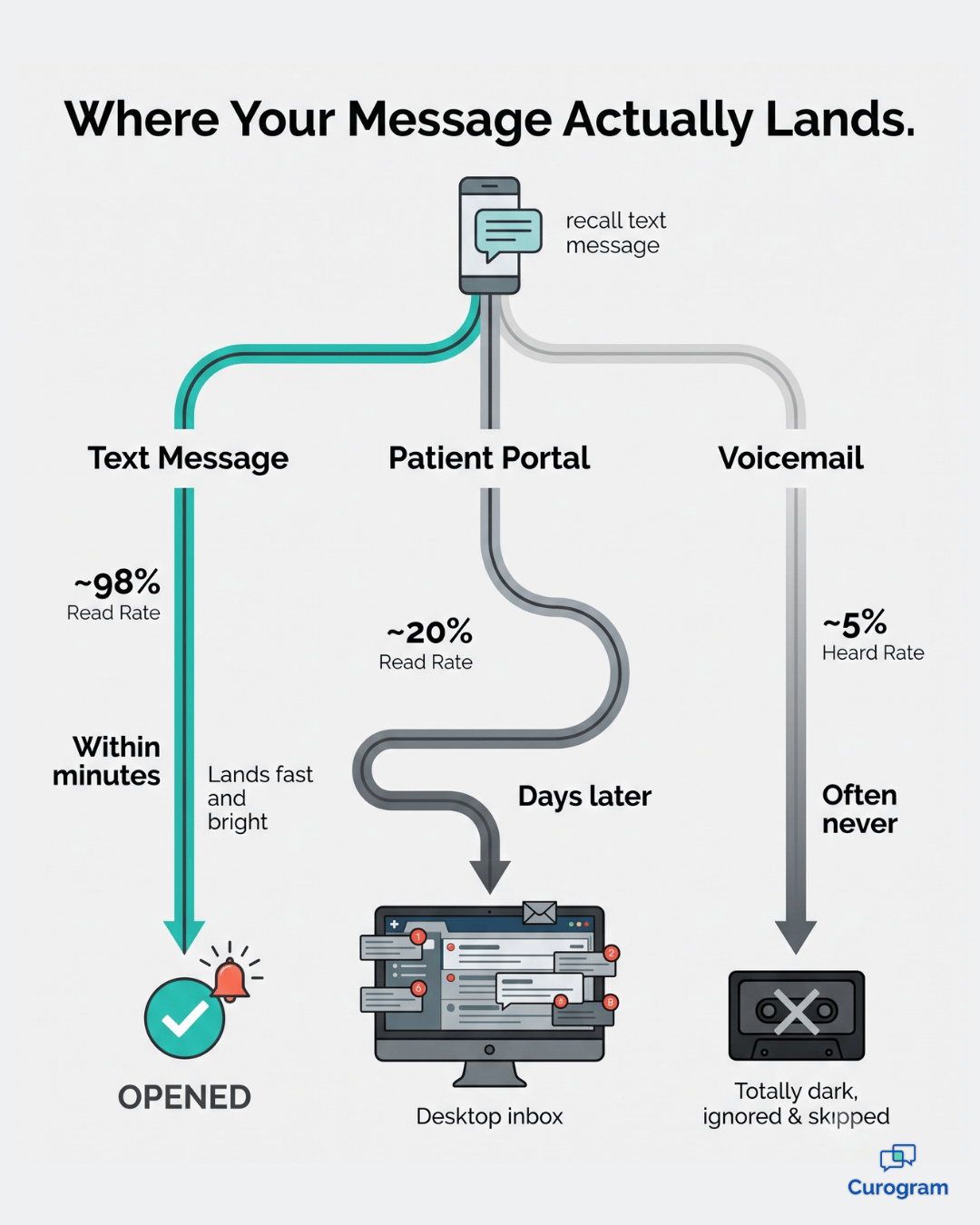
Not a portal login they forgot months ago, not another voicemail they'll ignore — just a text.
Think honestly about how you handle your own reminders.
A text message gets read within minutes of arriving. A portal message, meanwhile, can sit unopened for weeks, assuming anyone notices it at all.
That difference is the entire problem in a nutshell. The communication tools your practice relies on to reach lapsed patients are frequently the very same tools those patients ignore the most.
In this article, you'll learn why lapsed patients drift away, why standard outreach consistently fails them, and how a single well-timed recall text can rebuild a relationship you had assumed was gone for good.
The fix is genuinely easier than you would ever expect.
Most patients don't leave on purpose. The drift is so gradual that nobody inside the practice notices until the schedule starts showing gaps.
A patient misses a visit, plans to call back, and then life takes over. The appointment slips down the list, and your portal-based outreach never reaches the place they'd actually notice. Without a nudge, that one-time miss turns into months away from care.
The patient tells themselves they'll "get to it." You never learn they're gone. By the time anyone spots the gap, the relationship has already quietly cooled.
The numbers make this plain.
| About 70% of patients who miss a single appointment don't return within 18 months — unless someone reaches out. |
That's not a small leak. It's a steady loss of both care and revenue, one quiet patient at a time. For the patient, it feels like falling off the radar, and for your practice, it's losing people you never meant to lose.
Here's the hard truth.
You can't win back someone you never contact. This is why overdue patient outreach matters so much — silence is the single strategy guaranteed to fail.

Curogram reaches lapsed patients in the one channel they read every day — their text thread. To win back lapsed patients, one text is often all it takes. We call it the Reactivation Engine, and it makes coming back feel effortless.
At the center is a feature called Patient Recall:
A warm, personalized invite the patient can answer in a single tap.
The flow is short and mostly runs on its own:
That last step matters more than it sounds. Normally, an easy patient experience comes at the cost of messy records, because staff copy bookings by hand. Here, the system handles it for you.
The tone is built to feel caring, not salesy. Every patient reactivation SMS reads like a note from a practice that remembers you.
When patients can rebook by text, healthcare stops feeling like one more errand — and that's exactly why they reply.

The results speak plainly. At a comparable practice, a recall campaign rebooked 35% of lapsed patients, while only 5–10% of those patients tend to come back on their own.
Here's the gap laid out clearly:
| Outreach approach | Share of lapsed patients who return |
|---|---|
| No outreach (patients return on their own) | 5–10% |
| Recall texts through Curogram | 35% |
That's a 3–7× lift, which is a genuinely big deal in plain terms. Say 200 patients lapse over the course of a single year.
On their own, maybe 10 to 20 of them eventually wander back.
With recall texts running quietly in the background, closer to 70 of those patients return instead. For your team, that's roughly 50 extra visits you would otherwise have lost to silence.
Multiply those visits by your average revenue per appointment, and the math gets hard to ignore. The point isn't only money, though. Each of those patients is someone getting care they would have skipped.
From your side, it's one friendly text. From the patient's side, it's a welcome back. The result is a reactivated database — overdue patients returning to care, and relationships your practice had quietly lost now rebuilt.
Not every recall text earns a reply. The difference usually comes down to a few small choices that signal you actually remember the person on the other end. Get these right, and your response rate climbs without any extra effort from your front desk.
A recall text tends to work best when it includes:
Each of these lowers the effort to respond, and lower effort is exactly what drives replies.
In one realistic scenario, a personalized message can lift reply rates by 30% over a generic "you're due" blast — for your team, that's the difference between a handful of rebookings and a full afternoon of recovered visits.
The best part is that you don't have to craft each message by hand. Curogram builds these elements into every campaign, so a thoughtful, caring tone becomes the default rather than a daily chore.
Most lapsed patients aren't truly gone for good. They're simply out of reach, quietly waiting for a reason to return that never actually arrives. A timely recall text becomes that reason, and it works precisely because it meets people where they already are.
This is the quiet truth sitting behind every reactivation. Your CharmHealth system faithfully remembers each patient's full history, while Curogram earns their return. One platform holds the record, and the other rebuilds the relationship.
Think about what that really means for your daily schedule.
Every lapsed patient represents a visit that's already half-earned. They knew you, they trusted you, and they fully meant to come back. A single friendly text can close the loop that silence quietly left open.
The cost of doing nothing is easy to overlook precisely because it stays invisible. You never see the patients who quietly drift away from your practice. You only ever notice the empty gaps they leave behind on the calendar.
Those gaps accumulate, in both care missed and revenue lost, month after steady month.
The fix, by sharp contrast, is refreshingly simple. Send the welcome-back text, let patients reply in a single tap, and watch your schedule fill again with people you had assumed were gone.
The real goal here is straightforward: bring patients back to care before they're gone for good. Not with pressure, and not with another ignored voicemail, but with a message that feels like it came from someone who genuinely remembers them.
Ready to see exactly how it works? Schedule a Demo, and we'll walk you through the entire recall experience — from that very first text to the rebooked visit landing on your CharmHealth schedule. Silence ends here.
No. Patients rebook by replying to a standard text, with no Charm Patient Portal login and no app to download. That low effort is exactly why so many more of them respond.
They're designed to feel caring, not salesy. Each one is a short, personalized note inviting the patient back. Every message includes an easy opt-out, so patients always stay in control.
They can simply not reply, or opt out, and you've lost nothing. The campaign focuses your effort on the large share of patients who genuinely meant to return but never got the nudge.
Yes. Curogram is built as a HIPAA-compliant platform, so your recall messages and any patient replies are handled securely. You get the ease of texting without trading away privacy.
Most replies come fast, because texts get read within minutes. Many patients book the same day they receive the message, which means your schedule can start filling almost right away.
💡Reactivate overdue patients with text recalls for Azalea Health by sending one friendly message they can act on fast. The patient rebooks in a...
💡 Lytec recall texts that let patients rebook in one reply bring lapsed patients back into care fast. Curogram texts each overdue patient a...
💡Mass text messaging and patient recalls for Azalea Health practices let you reach your whole panel in one send. They also pull lapsed patients...