

7 min read

CollaborateMD Recall Texts: Revenue Off the Shelf

CollaborateMD Recall Texts: Revenue Off the Shelf
💡CollaborateMD patient recall broadcast messaging campaigns turn an idle patient list into booked visits. CollaborateMD handles one-to-one billing chats well. But it offers no mass or broadcast texting.

So lapsed patients pile up, unreached, while the revenue inside them slips away. Curogram fills that gap. It sends targeted recall texts, filtered by patient criteria. Replies route straight to your office dashboard for fast booking.

Whether you bill in-house or run many practices, this is added revenue from patients you already have. One comparable multi-location practice brought back 1,240 lapsed patients.

It hit a 35% reconversion rate in one campaign, with almost no extra staff work. The dormant list stops being dead weight and starts to refill the schedule.

Somewhere in your database sits a quiet list. It holds patients you have already seen, treated, and billed. Then they stopped coming back.

No one called. No one texted. Slowly, the revenue tied to those visits faded out.

This is the dormant list, and it grows in silence. CollaborateMD runs your billing with real skill. It tracks claims, posts payments, and manages single messages.

But CollaborateMD was never built to reach many patients at once. So the people who fall off your schedule tend to stay gone. The list just keeps growing.

That gap is costly. Winning a brand-new patient takes real money and effort. Meanwhile, the patients you already earned wait unreached. Every empty slot is revenue you could have kept.

The pattern shows up across primary care, multi-specialty, and lab practices. Overdue patients build up in every one of them. The reasons differ, but the result is the same.

You do not need a new marketing budget to fix this. You need a way to reach patients you already have.

There is a better path. CollaborateMD patient recall broadcast messaging campaigns turn that idle list into booked visits. Curogram acts as the reactivation engine your billing tool never had.

It sends targeted recall texts and routes each reply back to your dashboard. The results speak plainly.

One comparable multi-location practice brought back 1,240 lapsed patients in a single campaign. Its reconversion rate reached 35%, with almost no added staff work.

That is not new spend. That is money already sitting on your shelf. This guide shows how the channel works.

You will see why the dormant list forms and how recall texts wake it up. The channel is simple. The upside is real.

The Villain: The Dormant List

Every practice has one. A growing group of patients who slipped away without notice. They did not leave angry. They just never rebooked.

The trouble is reach. CollaborateMD gives you no easy way to text them all at once.

Why The List Keeps Growing

The list swells for a plain reason. There is no tool aimed at the whole group. And hand outreach cannot keep pace with new names.

No Broadcast Channel Exists

CollaborateMD was built for one-to-one billing talk. It handles claims and single-patient messages with ease. But it has no broadcast or recall feature at all.

There is no button that texts your entire overdue list. So mass text messaging for CollaborateMD practices does not live inside the platform. The reach you need is missing by design.

Manual Calls Do Not Scale

Your front desk could call each lapsed patient by hand. In theory. In practice, that eats hours no one has.

A staffer might reach a dozen people on a good day. Meanwhile the list stacks up faster than calls go out. The backlog wins, and outreach quietly stops.

Voicemails go unheard. Phone tag drags on for days. The effort rarely turns into booked visits.

What The Silence Costs You

An unreached list is not neutral. It is lost care and lost revenue. Both hide in plain sight inside your own records.

Lapsed Patients Rarely Return Alone

Patients who miss a visit often do not come back on their own. Life gets busy. The reason for the visit fades from mind.

Without a nudge, passive rebooking stays low. Most of that list never returns.

Professional bodies stress the value of steady preventive contact. The AAFP frames routine clinical preventive services as care patients should not miss. Outreach is how that care reaches them.

You Pay To Replace Patients You Own

Here is the painful part. Practices spend real money to win new patients. Ads, referrals, and outreach all cost time and cash.

Yet the patients you already earned sit idle in your database. They wait for a message that never comes. That is revenue on the shelf, gathering dust.

Acquisition costs add up fast across a year. Every lapsed patient you ignore raises that bill. Reactivation flips the equation. 

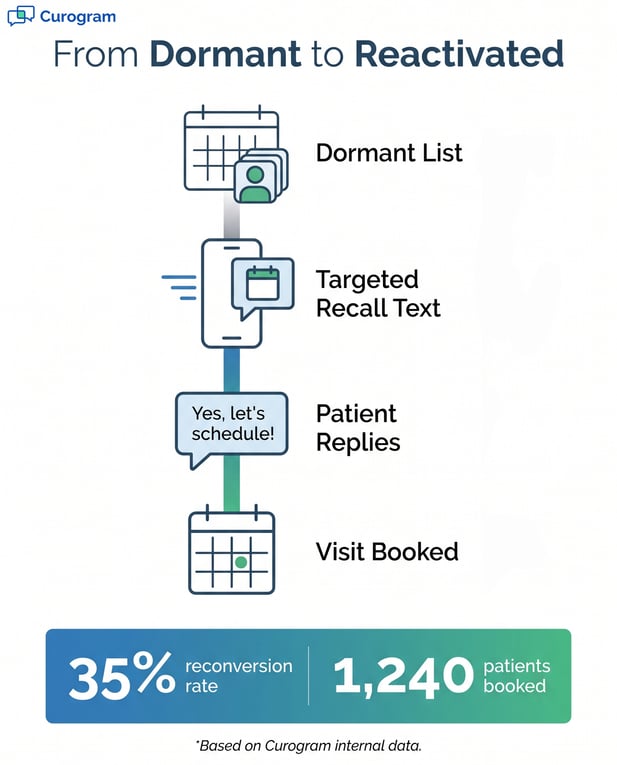
Medical appointment reactivation infographic flow with patient booking stats

The Guide: The Reactivation Engine

So, how do you fix a channel that does not exist? You add one.

Curogram works as the reactivation engine that sits beside CollaborateMD. It brings the broadcast reach your billing tool never offered.

The Broadcast Channel CollaborateMD Never Had

The idea is simple. Pull the right patients, send one text, and let each reply do the booking.

Targeted Recall Texts By Criteria

Curogram lets you filter patients by clear rules. Overdue visits, recall windows, or care that is simply due.

You can send bulk patient text messages for flu shot or wellness visits in minutes. Each message goes only to the group that needs it.

Replies Book The Visit

A patient reads the text and taps reply. That reply flows through Curogram's 2-way HIPAA-compliant texting. It is the channel that carries each response back to your team.

From there, the visit gets booked and syncs back to your records. No one pulls a list by hand. No one chases each answer.

The whole loop runs inside one system. Your team watches bookings land in real time. Control stays with the office.

Built For Billing Teams And RCM Companies

Recall is not just a clinical win. It is a business lever. And it fits both single practices and billing companies.

The Highest-ROI Volume Lever

For cost-minded practices, recall is the best lever there is. You reactivate lapsed patients in CollaborateMD using data you already hold.

There is no new ad spend and no cold outreach. The people are known, and the need is real.

One Dashboard Across Every Client

Run billing for many practices as an RCM company? Then recall becomes a service you can sell.

You can launch a broadcast recall campaign in a billing practice from one place. One dashboard covers every client you serve.

The old question, What are you doing for recalls?, finally has a clear answer. You can run it at scale.

You set the message once and reuse it. Each client gets their own recall cadence. Reporting rolls up in one view.


The Success: The Reactivated Schedule

Now for the payoff. When the dormant list wakes up, the schedule fills with people you already know.

The gain is measured, not guessed. Here is what one real campaign looked like.

From Dormant To Reactivated

The shift is easy to name. A list that once leaked revenue turns into a steady source of booked care.

The Numbers Behind One Campaign

The proof is in the count. One comparable multi-location practice ran a single recall campaign. It reactivated a large share of its overdue patients fast.

The results reached a 35% reconversion rate. That meant 1,240 patients seen from recall texts alone (Curogram client data from clinical settings).

Staff cost stayed near zero. The table below sets that against a list left alone.

Approach

Reconversion Rate

Patients Booked

No outreach, passive rebooking

Low, minimal

Few

Curogram recall campaign

35%

1,240 in one campaign

Curogram client data from clinical settings. A dormant list left alone rebooks at a low rate. A recall campaign lifts that sharply.

A List That Becomes A Pipeline

Framed simply, this is the move from dormant to reactivated. The list stops being a liability.

It becomes a pipeline you can tap again and again. Each campaign helps you recover patients who have fallen off the schedule.

The same records that felt like dead weight now feed real bookings. Nothing about your patient base changed. Only your reach did.

Revenue Without New Acquisition Spend

The best part is the cost side. This growth arrives with no fresh marketing bill attached.

The Schedule Refills Itself

The slots fill with patients you have already earned. There is no ad buy and no referral fee.

That makes the recall ROI of medical practice texting hard to beat. Every booked visit is incremental revenue.

It lands on top of what your active patients already bring in. The upside compounds with each campaign.

Recall also smooths out slow weeks. You can time a campaign to fill open days. The calendar stays fuller with less scrambling.

Clinical Continuity Restored

The win is not only financial. Patients who return get care they had put off.

Overdue checkups and follow-ups finally happen. That means better outcomes and stronger ties to your practice.

Continuity comes back, and so does trust. Both matter for the long-term health of your patients.

Regular contact keeps patients tied to your care. It also catches issues earlier. That protects both health and revenue.

Some returning patients leave feedback afterward. That work feeds your Reputation Management efforts. One recovered visit can become a public review.

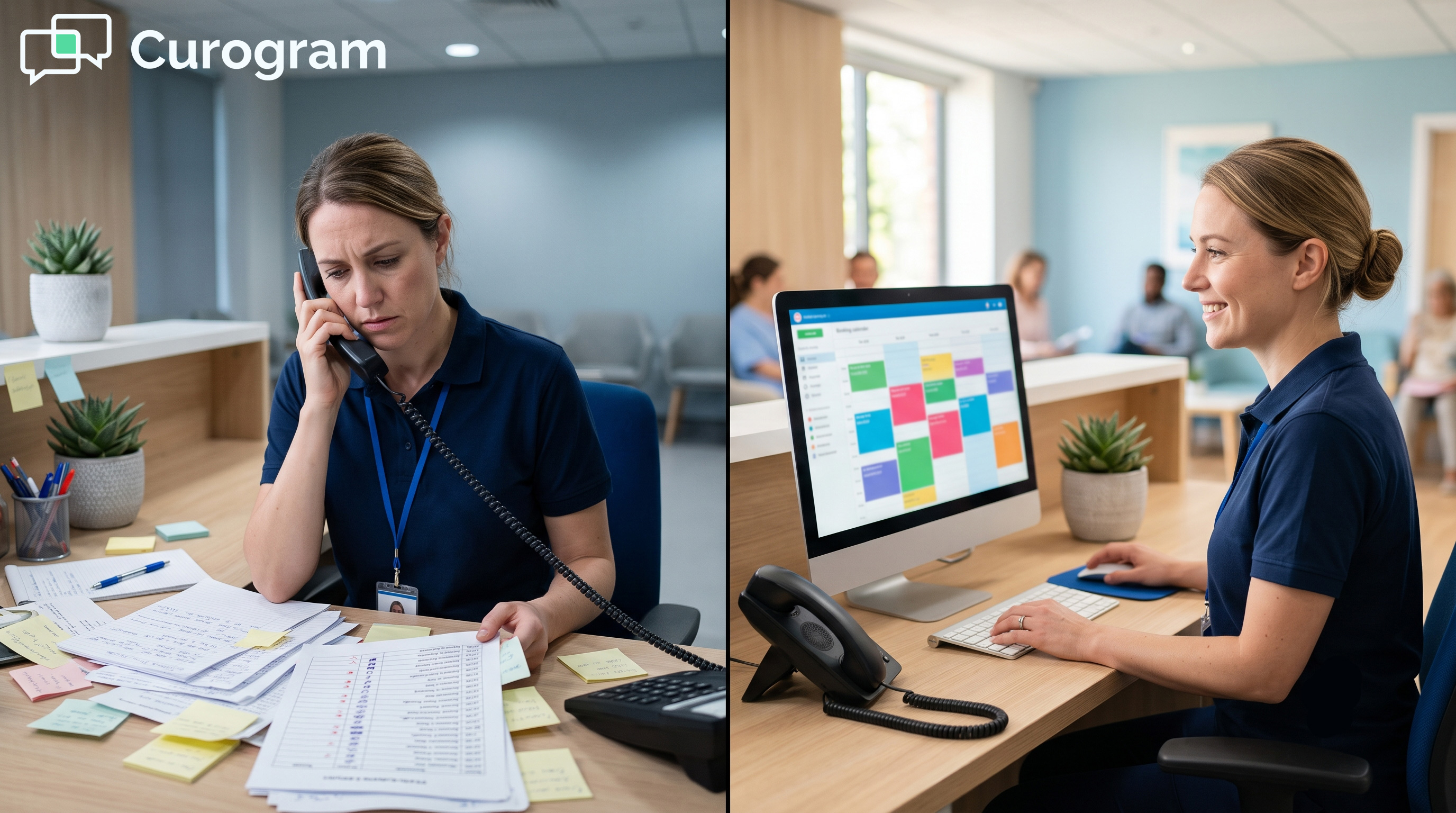
Friendly clinic receptionist scheduling patient appointments on computer and phone

ConclusionComplete Your Revenue Cycle

Think of your revenue cycle as two halves. CollaborateMD bills the patients who are active right now. Curogram re-engages the ones who drifted away.

Put together, they close a loop that was open too long. The split is clean and easy to see.

CollaborateMD is for the billing of your active patients. Curogram is for the return of the inactive ones. With both in place, no patient gets left behind.

And no dollar gets left on the shelf. That is the whole point of completing the cycle.

The dormant list was never truly lost. It was just out of reach. A billing tool alone could not text the whole group.

It could not route the replies either. A broadcast channel changes that in one step. The list becomes reachable again.

The math is friendly. You already paid to earn these patients once. Bringing them back costs a fraction of finding new ones.

That is why recall is such a strong lever. It works for a single practice or a whole billing company.

So the choice is plain. You can keep buying new patients while the ones you have sit unreachable. Or you can send one campaign and refill the schedule.

Recall is one of the few moves that helps care and cash at once. Patients get seen sooner. You collect revenue you had left behind.

It also scales with your practice. One campaign or many, the effort stays low. The system does the heavy lifting.

Start with the patients most overdue for care. Reach them first, then widen the net. Small, steady campaigns compound over time.

Recall does not add work. It adds booked visits, restored care, and revenue you had already earned.

The list stops being a liability. It starts to pay you back. That is a cycle worth completing.

Complete your revenue cycle. Schedule a demo today.


Frequently Asked Questions

How do recall campaigns stay TCPA and HIPAA compliant?

Curogram sends recall texts only to patients who have opted in. Each message carries a clear way to opt out. Protected health details stay out of the broadcast itself. That keeps bulk outreach inside TCPA and HIPAA rules.

Why won't a large recall blast flood the front desk with calls?

Replies route to the office dashboard, not the phone line. Patients can book straight from a text thread. So the volume arrives as booked visits, not a ringing queue. The campaign runs with near-zero staff effort.

How can an old, aging patient list still deliver results?

Curogram handles deliverability and lets you target by criteria. You reach the reachable patients first, instead of blasting a stale list blindly. That protects your sender reputation. It also turns a years-old database into recovered revenue rather than a bounce report.

Why does CollaborateMD need a separate tool for recall messaging?

CollaborateMD was built for one-to-one billing, not mass outreach. It has no broadcast or recall feature to text a whole overdue group. A separate channel adds that reach without replacing your billing setup. The two tools cover different halves of the same revenue cycle.

How soon can a practice see revenue from a recall campaign?

A campaign can go out in minutes once your patient criteria are set. Replies and bookings often start the same day. Because the patients are known, the path to a booked visit is short. Many practices see filled slots within the first week.


Mass Texting & Patient Recalls for Azalea Health

Mass Texting & Patient Recalls for Azalea Health

💡Mass text messaging and patient recalls for Azalea Health practices let you reach your whole panel in one send. They also pull lapsed patients...

Read More
Automate Patient Recall Campaigns in Azalea Health

Automate Patient Recall Campaigns in Azalea Health

💡Automated patient recall campaigns for the Azalea Health front desk find your overdue patients and text them to rebook. They run entirely on their...

Read More
Bring Lapsed Azalea Health Patients Back by Text

Bring Lapsed Azalea Health Patients Back by Text

💡Reactivate overdue patients with text recalls for Azalea Health by sending one friendly message they can act on fast. The patient rebooks in a...

Read More