How to Run Patient Recall Campaigns in Your Cerbo EHR Practice
💡 Running patient recall campaigns in a Cerbo EHR practice takes about 5 minutes with Curogram. The platform texts overdue patients in bulk and...
10 min read
Mira Gwehn Revilla
:
June 29, 2026
Your Lytec system holds a small fortune. It just can't reach it.
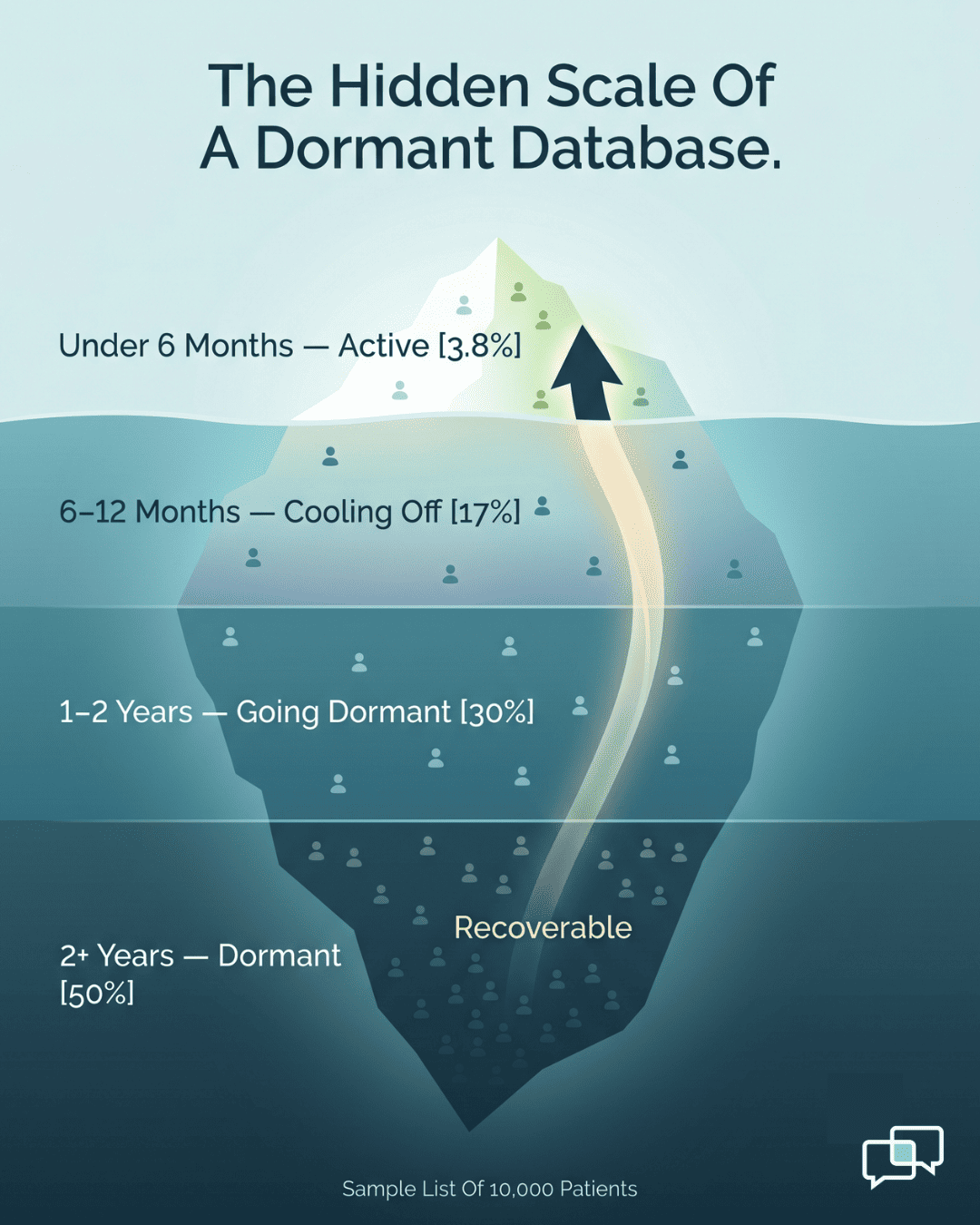
Every practice on Lytec sits on years of patient records. Some lists hold 10,000 names or more. Many of those patients have not booked a visit in months. They are not gone. They are simply out of touch.
Lytec was built to store and bill, not to message. It has no native way to text a large group at once. So the lapsed list sits quietly, aging year after year. The revenue is real, but the tool to reach it is missing.
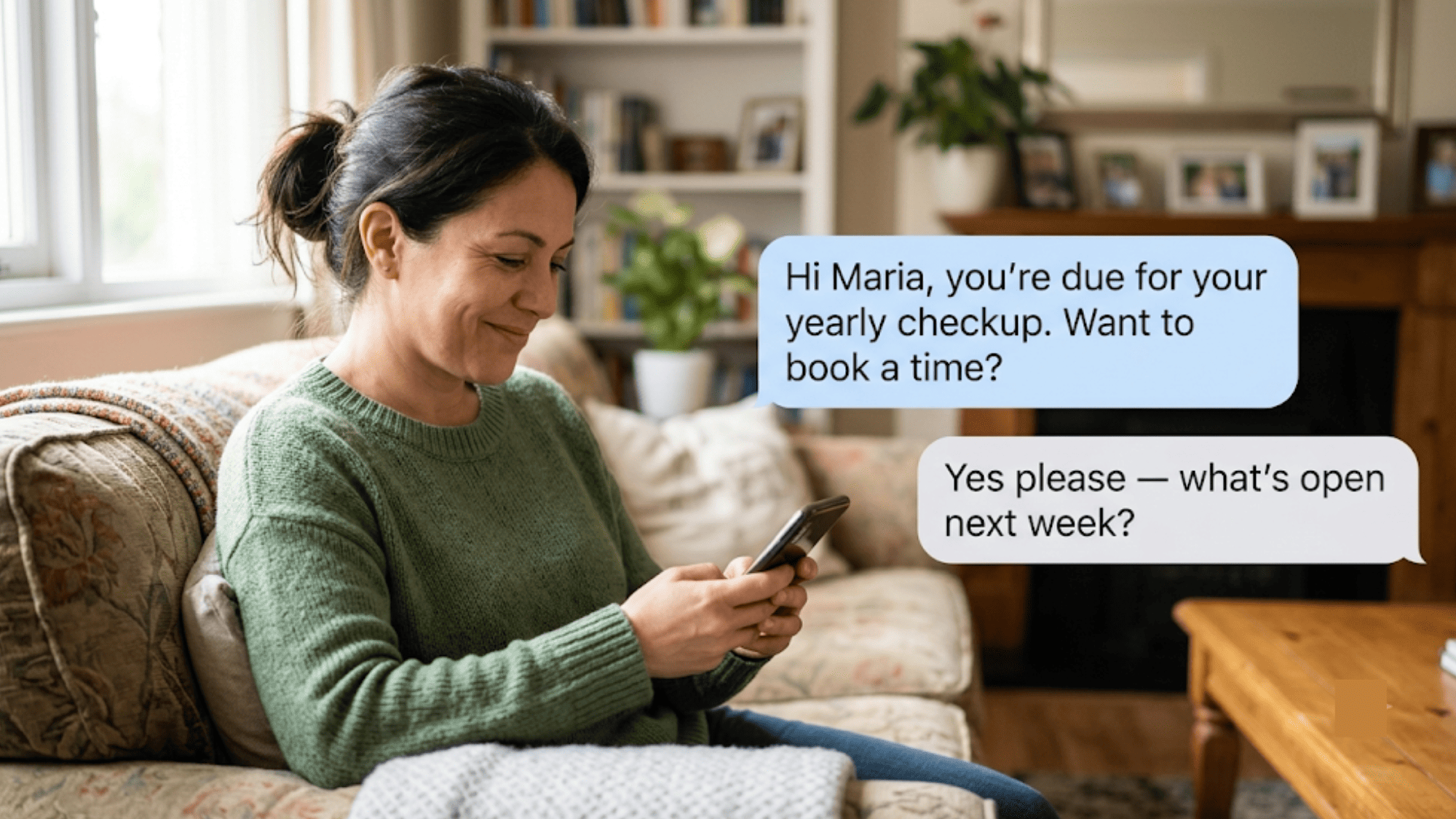
This is the gap that Lytec patient recall text campaigns for lapsed patients close. Instead of letters or slow phone calls, you send a short text. Patients read it and reply to book. One inbox holds every reply.
The math is hard to ignore. A patient who skips one visit often drifts away for good. Without outreach, that name turns into lost care and lost income. Multiply that by thousands, and the cost grows fast. That hidden loss shows up on your books each quarter.
The good news is that this list is recoverable. These are not strangers. They already chose your practice once. A friendly nudge is often all it takes to bring them back.
Curogram acts as the recall engine that Lytec lacks. It filters your patient data, sends targeted texts, and routes replies to staff. Based on our internal data, one multi-location practice reactivated 1,240 patients from a single recall effort.
This guide breaks that down in plain, clear terms. You will see how the dormant list forms and why Lytec alone can't fix it. You will also see how a simple recall layer can change the whole result. By the end, you will know how to turn old records into booked visits.
Lytec does its core job well. It stores patient records and handles billing with care. But it was never built to message people in bulk. There is no built-in option for mass texting patients inside Lytec.
So how do practices reach lapsed patients today? Usually the hard way. A staff member exports a list, then mails letters or makes calls. The work is slow, dull, and easy to push aside.
That is the real trap. Manual Lytec overdue appointment outreach competes with every other front-desk task. Phones ring, patients check in, and claims need filing. The recall list always loses that fight.
So the calls never happen. The letters never go out. And the dormant list keeps growing, month after month.
Some owners assume patients will rebook on their own. A few do. Most do not.
Without a nudge, only a small share of lapsed patients return on their own. People get busy and simply forget. Life moves on, and a yearly checkup slips far down the list. The result is a database full of names that never schedule again.
Now picture that across a long-tenured practice. Lytec lists can stretch back many years and hold thousands of patients. A large share of them have gone quiet. Each quiet name is a visit you earned but never collected.
Here is what that looks like in plain terms.
|
Patient group |
What Lytec does |
What's missing |
|
Active patients |
Stores, schedules, bills |
Nothing — they show up |
|
Overdue for a checkup |
Holds their record |
No way to remind them at scale |
|
Lapsed chronic care |
Holds their history |
No bulk outreach to bring them back |
|
Years-old "ghost" list |
Stores old data |
No recall tool at all |
Three of those four groups sit untouched. Lytec holds their data, but it cannot reach them as a group. The records are perfect. The outreach is the problem.
This is the quiet villain in many practices. The dormant database is not a Lytec flaw. It is just a job Lytec was never designed to do.
Most owners know the revenue is sitting right there. They can feel it. They just have no fast way to act on it.
The old options all carry a cost. Letters take time and postage. Calls eat staff hours and often reach voicemail. Hiring more help to dial through a list rarely pays off.
So the list keeps aging. Each month, a few more patients slip from "overdue" to "gone." The window to reactivate them quietly closes.
The good news is that none of this is permanent. These patients chose your practice once. Their trust is still there, waiting under the dust. To reactivate lapsed patients, Lytec users just need a layer that can reach the whole list at once.
That is exactly the gap a recall engine fills. It takes the data Lytec already holds and turns it into outreach. Instead of one call at a time, you reach hundreds in minutes. The dormant database stops being a dead weight and starts becoming a pipeline.
In the next section, we will look at how that engine works. You will see how a simple text campaign drains the lapsed list and refills your schedule.

Curogram is the recall engine that sits on top of Lytec. Its job is simple. It helps you target, text, and rebook lapsed patients in bulk.
Think of it as the missing outreach layer. Lytec keeps the records. Curogram puts those records to work. Together, they turn a quiet list into booked visits.
The core tool is Curogram's SMS Recall Campaigns. The flow is short and clear.
First, you filter. You pick patients by clear rules, like a missed yearly exam or a lapsed follow-up. Second, you broadcast. One Lytec recall campaign SMS goes out to the whole group at once. Third, patients reply to book, and you fill the slot.
No more one-by-one dialing. No more printed letters. Just bulk patient texts that Lytec alone could never send.
Here is the same idea as a simple loop:
|
Step |
What happens |
Who does it |
|
Filter |
Build a target list from patient data |
You, in a few clicks |
|
Send |
Broadcast one short recall text |
Curogram, all at once |
|
Reply |
Patient texts back to book |
The patient, on their phone |
|
Rebook |
Staff confirm an open slot |
Your front desk |
A recall is only as good as its list. That is why this engine pulls from your Lytec patient data. The target list is built from real records, not a stale export.
When patients reply, every message routes to one shared inbox. Your team sees each thread in one place. There is no manual export, and no praying that someone follows up.
This matters for clean handoffs. A patient can ask a quick question before booking. Staff answer right in the same thread. The whole exchange stays simple and human.
For practices with long lists, recall is the smartest move you can make. The reason is cost.
A new patient is expensive to find. You pay for ads, referrals, and outreach to reach a stranger. A lapsed patient is different. They already know you and already trust you.
So when you recover dormant patients, Lytec gives you a head start. The relationship is built. The history is on file. You are not selling; you are simply reminding.
That is why a recall layer beats buying new leads. You spend less and convert more. The list you already own becomes your best growth channel.
This engine fits long-tenured practices best. The bigger and older your list, the more it has to give. A 12,000-name database is not a burden here. It is a deep well of recoverable visits.
You can run a recall for one need or many. Target every patient overdue for a wellness visit. Or focus on a flu-season push. Or pull lapsed follow-ups for a chronic condition.
Each campaign is quick to build and quick to send. You set the filter once, write one message, and hit send. Then replies start arriving while your team handles normal work.
The clean-up is built in, too. Patients can text STOP to opt out at any time. That keeps your list tidy and your outreach welcome.
This is the shift in a nutshell. Lytec stores the patients. Curogram brings them back. In the next section, we will see what that looks like in real results.
So what happens when the recall engine runs? The dormant list comes back to life. Quiet names turn into booked visits, and the schedule fills.
This is the payoff. A database that just sat there starts producing again. Let's look at the numbers, the shift, and the lasting outcome.
Based on our internal data, the impact is clear. One multi-location practice ran SMS recalls to patients who had not booked a follow-up. The response was strong.
A full 35% of those patients booked a visit within a month. From that effort alone, 1,240 patients were seen. That is reconversion, which simply means turning a lapsed patient back into a booked one.
|
Recall result |
Figure |
Source |
|
Reconversion rate |
35% |
Our internal data |
|
Patients seen from recall |
1,240 |
Our internal data |
|
Added staff hours |
Near zero |
Built into the workflow |
The near-zero staff cost is the part owners love most. The campaign runs itself once you hit send. Replies come in, and staff simply book open slots. No one spends a week dialing through a list.
Let's make this concrete with some illustrative example math. The 35% reconversion rate below comes from our internal data. The list size and dollar figures are just examples to show the shape of the return.
Say you have 2,000 lapsed patients on file. You filter and send one recall campaign to all of them. At a 35% reconversion rate, that is 700 booked visits.
Now add an illustrative value per visit. If each visit is worth $150, that is $105,000 in recovered revenue. Even at half that response, the return still dwarfs the effort.
|
Illustrative example |
Value |
|
Lapsed patients texted |
2,000 |
|
Reconversion rate (internal data) |
35% |
|
Visits booked |
700 |
|
Illustrative value per visit |
$150 |
|
Recovered revenue (example) |
$105,000 |
To be clear, the dollar amounts above are examples, not a promise. Your real numbers depend on your list, your fees, and your specialty. But the pattern holds: a small effort can unlock a large return.
The bigger change is in how the database behaves. Before, it was a static archive. It stored data but produced nothing new. After a recall, it becomes a living pipeline.
Dormant patients flow back into the schedule by text. The list that felt like dead weight starts pulling its own weight. This is what "reactivated" really means in practice.
And it keeps working. A recall is not a one-time stunt. You can run a fresh campaign each season or each quarter. New patients lapse over time, and you simply catch them again.
That rhythm is the real prize. Instead of watching patients drift away, you build a habit of bringing them back. The aging database stops aging in a bad way. It starts cycling in a good one.
The first win is recovered revenue. You earn it from patients you already had. There is no ad spend and no new-patient hunt. You simply reach people who once chose you.
But the second win matters just as much. Recall restores clinical continuity. Overdue screenings get done. Lapsed chronic care gets back on track.
Think about what that means for a real patient. A diabetic skips a follow-up and falls off the radar. A recall text brings them back for a check. That visit could catch a problem early.
The same goes for routine but vital care. A missed mammogram reminder. A lapsed blood pressure check. A skipped yearly physical. Each recall is a chance to close a care gap, not just fill a slot.
So the reactivated database does double duty. It protects revenue and it protects patients. That is a rare combination in front-office tools.
Let's compare the two paths side by side. One path is to find new patients. The other is to reactivate lapsed ones. Both add visits, but the effort differs sharply.
|
Approach |
Effort and cost |
Trust level |
|
Find new patients |
High ad and referral spend |
Starts at zero |
|
Reactivate lapsed patients |
Low, mostly automated |
Already built |
New-patient marketing has its place. But it is slow and pricey. You are introducing yourself to strangers from scratch.
Recall flips that. You are reaching friends who already know your name. The trust is built, so the booking is easy. That is why recall is often the highest-return lever a practice has.

Curogram's SMS Recall Campaigns work as the recall layer Lytec was missing. The setup is simple, and your team controls every step.
First, you pick who to reach. You filter your Lytec patient data by clear rules. Think overdue wellness visits, lapsed chronic care, or a seasonal flu push. The tool builds your target list from those filters in seconds.
Next, you write one short message and send it to the whole group at once. This is true bulk texting, not one note at a time. Each patient gets a friendly, personal-feeling text that invites them to book. Patients reply from their own phones, on their own time, whenever it suits them.
Then the replies come in. Every response routes to one shared inbox, so nothing slips through. Staff see each thread in order and reply with open times. There is no messy export, no spreadsheet, and no guesswork.
Why does this matter so much for Lytec practices? Because your aging list is your cheapest source of growth. These patients already trust you. Bringing one back costs far less than chasing a brand-new lead.
The campaign also keeps your list clean. Patients can text STOP to opt out at any time. That keeps your outreach welcome and your records tidy over the long run.
You can target by visit type, gap length, or care need. A practice might recall every patient overdue for a yearly exam. Another might focus on lapsed follow-ups for a chronic condition. The filters bend to fit whatever goal you set.
Best of all, the work runs with almost no extra staff hours. You build the campaign once, hit send, and watch the replies arrive. Based on our internal data, one practice reactivated 1,240 patients this way. That is recovered revenue from records you already held.
Your lapsed list is not a dead end. It is recovered revenue waiting for a text.
Lytec does its job well. It stores patient records and handles your billing with care. But it cannot reach a large group of patients on its own. That gap is exactly where dormant patients pile up.
The fix is not more letters or longer call lists. Those methods are slow, costly, and easy to skip. A simple text reaches patients where they already look every day.
Think of it this way. Lytec keeps the patients on file. Curogram brings those patients back through the door. One stores, and the other reactivates.
The numbers make the case clear. Based on our internal data, one multi-location practice reactivated 1,240 patients from a single recall effort. That is care restored and income recovered, with little extra staff work.
These are people who already chose your practice once. A short, kind reminder is often all they need. The relationship is still there, just waiting for a gentle nudge.
So stop letting good patients age quietly in a database. The list is recoverable, but only if you can reach it. Right now, that list is just sitting still and earning nothing.
You can change that in about 15 minutes. In a quick demo, we build a recall against your own Lytec data. You will see your real target list and how the texts go out.
Stop letting recoverable revenue age in your database. Schedule a demo today and watch how fast lapsed patients rebook by text.
Curogram filters your Lytec patient data by recall rules, like overdue visits. It then sends one bulk text to the whole group. Patients reply to book, and every answer lands in a shared inbox.
Most people read texts within minutes, but ignore mail and dodge calls. A text is fast, low-effort, and easy to reply to. That speed is why recall texts rebook far more lapsed patients than older methods.
Recall campaigns use proper patient consent and a clear STOP opt-out, which satisfies TCPA rules. Curogram is HIPAA compliant and signs a BAA with your practice. So your outreach stays both effective and protected.
A lapsed patient already knows and trusts you, so there is no selling needed. New-patient acquisition is often cited in the low hundreds of dollars. Recall, by contrast, runs mostly on automation with near-zero added staff time.
Very little. You filter the list, write one short message, and hit send. The system handles the broadcast, and replies flow into one inbox. Staff only step in to confirm open slots as patients book.
💡 Running patient recall campaigns in a Cerbo EHR practice takes about 5 minutes with Curogram. The platform texts overdue patients in bulk and...
💡Automated patient recall campaigns for the Azalea Health front desk find your overdue patients and text them to rebook. They run entirely on their...
💡 DrChrono patient recall text messages through Curogram help practices bring back lapsed patients with texts that feel personal, not mass-sent. ...