
9 min read

Office Ally Patient Recall Campaigns | Text Broadcast

Office Ally Patient Recall Campaigns | Text Broadcast
💡 Office Ally has no built-in broadcast or mass messaging feature. Practices using Practice Mate can store hundreds of patient records, but there is no way to reach inactive patients at scale.

Patient Ally only works for portal-enrolled users, which is typically 20-40% of a patient list. Reminder Mate sends reminders for existing appointments, not outreach to dormant patients.

Curogram fills this gap. It connects to your Office Ally patient list and lets you send a text broadcast to any patient with a phone number.

Based on our internal research, one multi-location practice achieved a 35% appointment reconversion rate, bringing back 1,240 patients through recall messages alone. No phone calls. No ad spend. Just a targeted text to people who already know your practice.

Think about the last time you looked at your patient list in Practice Mate. How many of those names haven't been in for six months or more? A year? Longer?

These patients are not lost. They are not seeing a different provider. In most cases, they simply got busy, forgot to schedule, or assumed the practice would reach out.

Since Office Ally patient recall mass messaging text broadcast campaign tools don't exist within the platform, no one ever did.

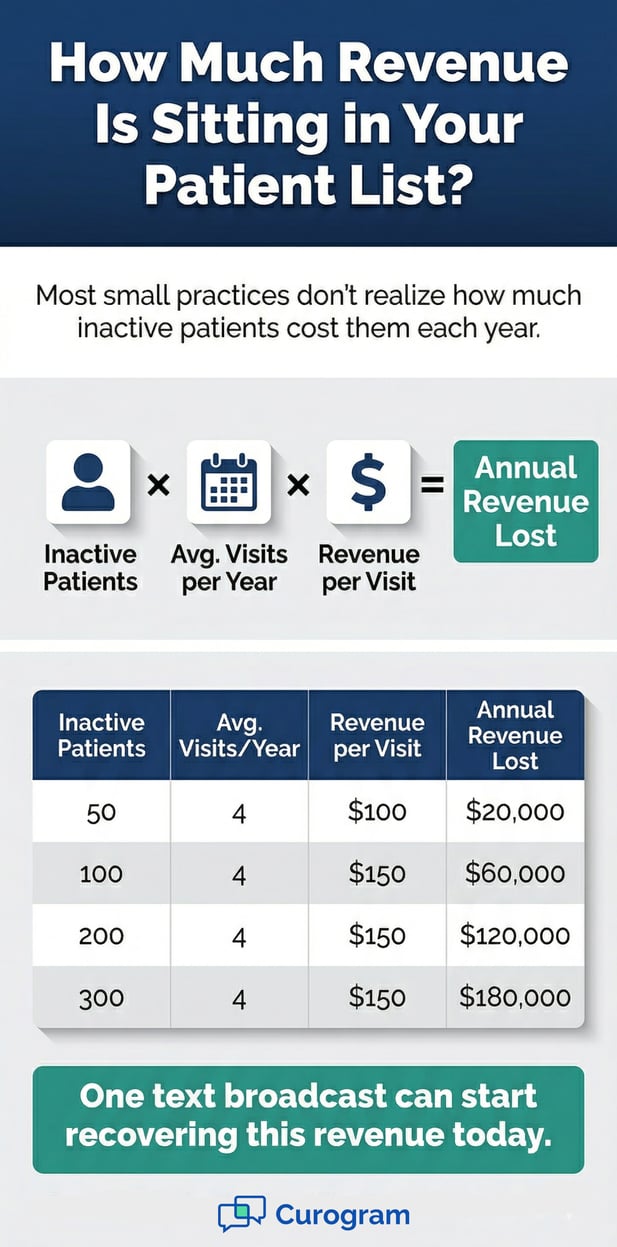
That silence has a price tag. For a solo chiropractor with 200 inactive patients at $150 per visit, the lost revenue can reach $120,000 a year.

The records are sitting in Practice Mate right now. The phone numbers are there. The relationship already exists. What's missing is the tool to reach them.

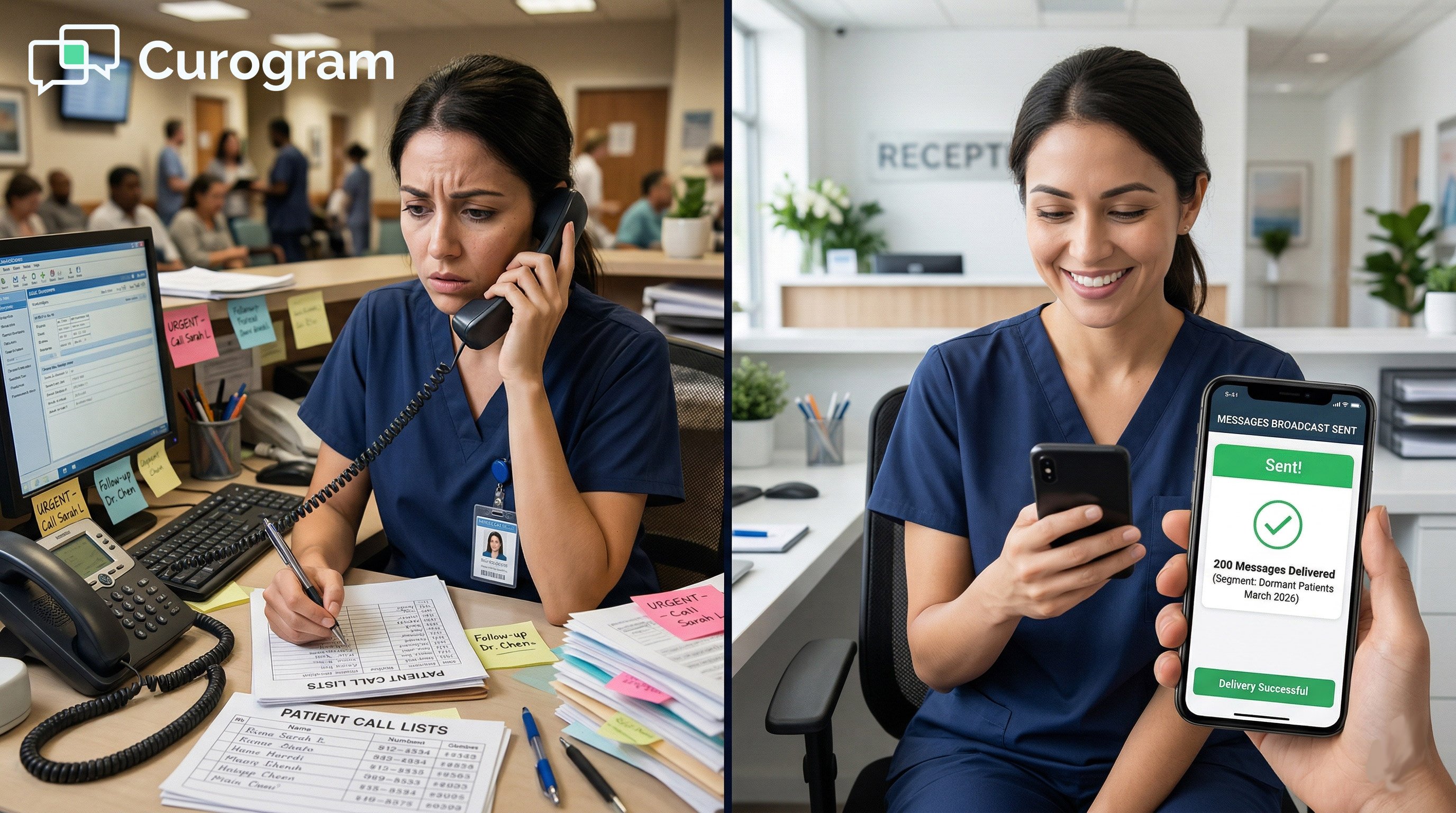
This is the problem Curogram was built to solve. A single text broadcast can reach every patient on that inactive list in minutes.

No staff hours burned on phone calls. No ad budget. No waiting months for SEO to work. Just a direct message to people who already trust your practice, sent at the right time, with a link to book.

In this article, we walk through why dormant patient lists are such a costly blind spot for Office Ally practices, how broadcast text campaigns work as a patient reactivation engine, and what real results look like. If your schedule has gaps and your patient list has names, this is worth reading.

The Villain: The Dormant Patient List

Most small practices think about growth in terms of new patients. But the fastest path to more revenue is often already inside the system. Inactive patients represent a huge pool of potential appointments.

They know your practice, they've received care before, and they just need a reason to come back. The problem is that Office Ally has no tool to give them that reason.

The Cost of Inaction

Here's a simple way to see the impact. A solo practice with 500 total patients and a 40% inactive rate has 200 people who are not booking.

At $150 per visit and four visits per year on average, that's $120,000 in unrealized revenue. It's not gone. It's just sitting in Practice Mate, untouched.

Every month that passes without outreach makes it less likely that those patients will return. They don't feel forgotten on purpose. They just haven't heard from you.

And when a competitor sends them an ad, a mailer, or a promotional text, your practice loses the edge that trust had already built.

What Inaction Actually Costs Over Time

Inactive Patients

Avg. Visits/Year

Avg. Revenue/Visit

Annual Revenue Lost

50

4

$150

$30,000

100

4

$150

$60,000

200

4

$150

$120,000

300

4

$150

$180,000


Why It Keeps Getting Worse

The longer a patient stays inactive, the harder it gets to bring them back. After six months with no contact, the habit of visiting your practice is broken. After a year, they may assume the relationship is over.

Silence signals indifference, even when that's not the intent. The practice loses not just the appointment revenue but also the referrals, reviews, and long-term care value that those patients could have provided.

Why Office Ally Can't Solve This

Office Ally is a solid practice management platform. Practice Mate handles scheduling, billing, and records well. But when it comes to proactive patient outreach, the tools fall short.

Patient Ally has a messaging function, but it only works for patients who are enrolled in the portal. In most small practices, portal adoption sits at 20-40%.

That means 60-80% of your patient list is out of reach through Patient Ally. The patients who haven't been in the longest are usually the least likely to be active on the portal.

Reminder Mate sends automated reminders, but only for scheduled appointments. It's reactive, not proactive.

It cannot send an outreach message to someone who hasn't booked yet. There is no Office Ally broadcast text messaging for patients, no mass campaign feature, and no way to send a text to a filtered segment of your list. The platform was built for managing existing appointments, not for reactivating patients who have drifted away.

The result is that a practice owner who wants to run a patient recall campaign faces two choices: call patients one by one, which is not realistic for a busy front desk, or do nothing and hope they come back on their own. Neither option is a strategy.

The Manual Outreach Problem

Some practices try to close this gap with manual calls. A staff member pulls a list of patients not seen in six months and starts dialing.

At three minutes per call, 200 patients means ten hours of work. That's more than a full workday dedicated to a task that gets dropped the moment the phone rings or a patient walks in.

Even if the calls happen, the results are limited. Patients screen calls from numbers they don't recognize. Voicemails go unchecked.

The effort is high, and the return is low. An Office Ally inactive patient reactivation strategy that relies on phone calls is not a real strategy. It's wishful thinking with a staff cost attached.

Infographic calculating revenue lost in small medical practices from inactive patient lists

The Guide: The Patient Reactivation Engine

There's a better way to approach patient recall, and it starts with the channel your patients already use: text messaging. Curogram connects to your Practice Mate patient records and lets you send a targeted broadcast to any patient on your list.

No exports. No manual steps. You pick your audience, write a message, and send.

Targeted Broadcast Campaigns

Not every inactive patient needs the same message. A chiropractic patient who finished a care plan three months ago needs a different prompt than a PT patient who completed sessions eight months ago.

Curogram's broadcast tool lets you filter by last visit date, appointment type, or other criteria, so the message fits the patient.

This is what makes a Practice Mate patient recall campaign effective. You're not blasting the same text to everyone. You're reaching the right patients with the right message at the right time.

A message that says, "It's been a while since your last adjustment, and we'd love to see you back," feels personal. It doesn't feel like spam. That distinction matters for response rates.

How the Targeting Works

Once you connect Curogram to Office Ally, your patient data flows into the broadcast tool automatically. You can filter by:

  • Last visit date (e.g., 6+ months, 12+ months ago)
  • Appointment type or specialty
  • Provider name, if you have multiple clinicians
  • Custom criteria based on your practice's needs

From there, you write a short message or choose from a pre-built template. The text goes out to every patient in the filtered group.

Replies come back into Curogram's two-way inbox, where staff can follow up, answer questions, and help patients book.

Why Text Works Better Than Any Other Channel

Text messages have a 98% open rate. Email sits closer to 20-25%. Phone calls are often ignored if the number isn't saved.

A text from a recognized practice number, with a patient's name and a simple ask, gets read. It gets acted on.

That's why the Office Ally patient list broadcast text approach is so much more effective than any other outreach method a small practice can realistically run.

The Integration with Practice Mate

One concern small practices often have is whether a new tool will create extra work. With Curogram, it doesn't. The integration pulls your existing patient records from Practice Mate.

There is no CSV export, no manual list building, and no data entry. The patient data you already have becomes the foundation for your broadcast campaigns.

When a patient responds to the text, the conversation shows up in Curogram's inbox. Staff can reply, share a scheduling link, or answer questions in real time. The whole workflow, from broadcast to booked appointment, happens in one place.

What a Real Campaign Looks Like

Here's a practical example. A solo physical therapist sends a recall broadcast on a Monday morning to 150 patients who haven't been seen in six months or more.

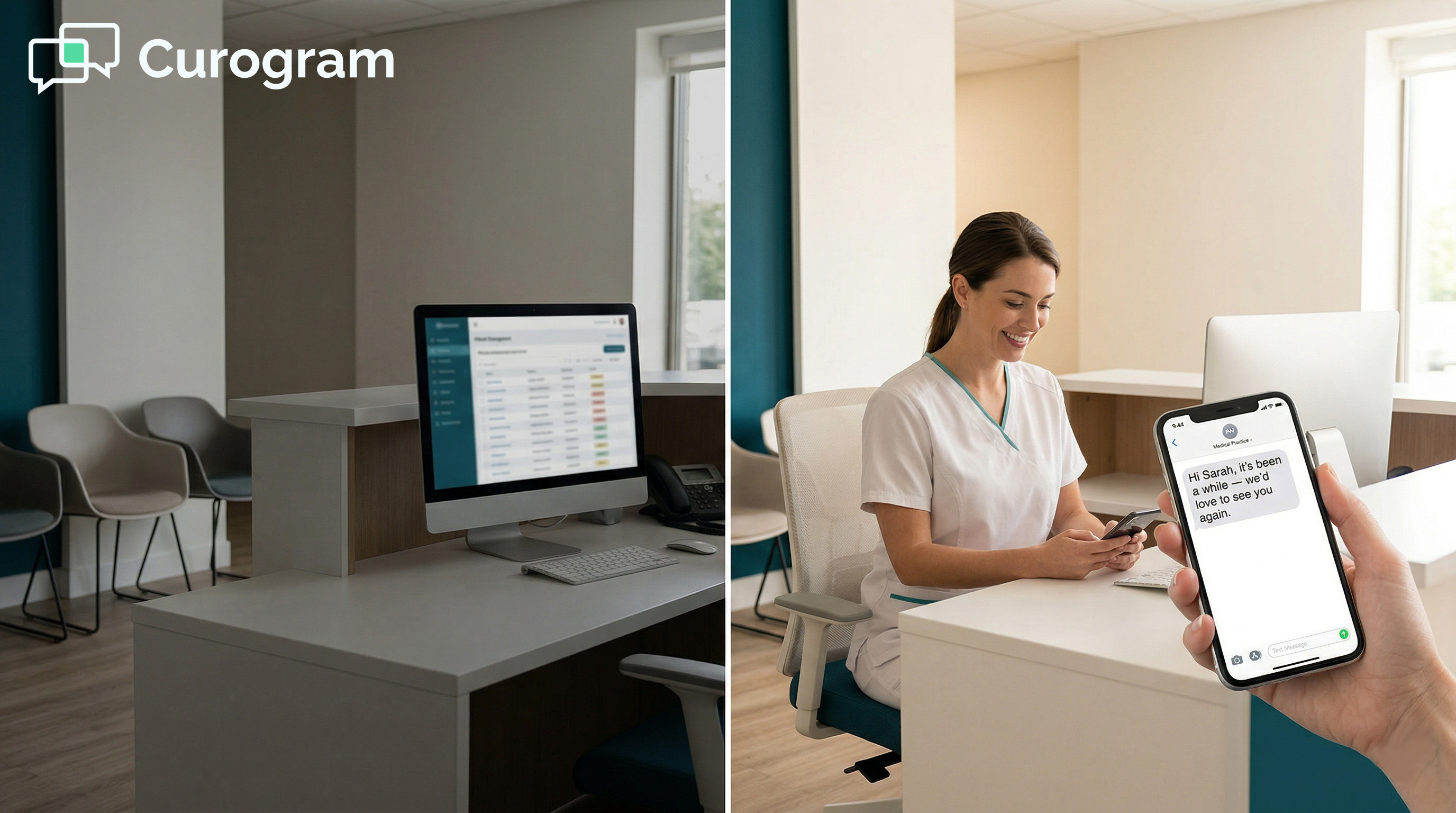
The text reads: "Hi [Name], we noticed it's been a while since your last visit with [Practice Name]. If you're due for a reassessment or just want to check in on your progress, we'd love to help. Book here: [link]."

By Tuesday afternoon, 28 patients have replied. Twelve have already booked through the link. By Friday, 22 appointments are on the schedule for the following two weeks.

The therapist made zero phone calls. No ad was placed. The only cost was the time it took to set up the campaign, which was under ten minutes.

This is what a small practice patient recall text campaign actually looks like in practice. It's simple, fast, and it works because the relationship already exists. The text is just a reminder the relationship needed.


The Success: One Text. Hundreds Reached. Revenue Recovered.

Broadcast text campaigns aren't just a theory. Practices using Curogram's recall tools have seen measurable results across specialties and practice sizes. The numbers show what's possible when a dormant list becomes an active outreach channel.

The Numbers Behind Patient Reactivation

Based on our internal research, one multi-location practice using Curogram's broadcast recall campaigns achieved a 35% appointment reconversion rate.

That means 35% of inactive patients who received a recall text scheduled an appointment within a month. In total, 1,240 patients were seen from recall messages alone.

To put that in context for a smaller practice: if a solo chiropractor sends a broadcast to 200 inactive patients and 35% respond, that's 70 rebooked appointments. At $150 per visit, that's $10,500 in recovered revenue from a single campaign.

Run that campaign four times a year, and the number grows to $40,000 or more, all from a list that was producing nothing.

Revenue Recovery Projections by Practice Size

Inactive Patients Texted

35% Response Rate

Revenue/Visit

Estimated Revenue Recovered

100

35 patients

$100

$3,500

200

70 patients

$150

$10,500

300

105 patients

$120

$12,600

500

175 patients

$150

$26,250


Why the Response Rate Is So High

A 35% response rate sounds impressive until you understand why it happens. These are not cold leads. They are existing patients who have already chosen your practice, received care there, and have reason to return.

The text isn't selling them on something new. It's reminding them of a relationship they already have.

Compare that to cold marketing: Google Ads click-through rates in healthcare are typically 2-3%. Direct mail response rates average around 2-5%.

With a Patient Ally mass messaging alternative like Curogram, you're reaching warm contacts with a relevant message. The math is simply better.

From Forgotten to Re-Engaged

The shift that happens with broadcast recall is more than just a revenue bump. The practice's relationship with its patient list changes

Instead of hoping patients come back on their own, the practice is actively maintaining those relationships. The list stops being a historical record and becomes a live asset.

Patients who feel heard and remembered are more likely to leave reviews, refer friends, and stay engaged with their care.

A single recall text can restart a relationship that leads to years of continued visits. The first campaign pays for itself, and the downstream value compounds over time.

Comparing Outreach Channels for Small Practices

Outreach Channel

Avg. Response Rate

Cost

Targets Existing Patients?

Broadcast Text (Curogram)

35%

Low

Yes

Google Ads

2-3% CTR

High (per click)

No

Direct Mail

2-5%

Moderate

Partial

Patient Portal Messages

Limited reach

Included in EHR

Portal users only

Manual Phone Calls

Low pickup rate

High (staff time)

Yes, but slow

Woman on couch pleasantly surprised, reading a text message from her medical office

Stop Letting Revenue Sit in Your Patient List

Office Ally is a reliable platform for managing appointments, billing, and records. But it was not built to bring inactive patients back.

There is no broadcast or mass messaging feature in the core platform, and the tools that do exist, like Patient Ally and Reminder Mate, have too many limits to serve as a real recall strategy.

Your Practice Mate database stores the clinical history. Curogram activates the patient relationship. Those are two different jobs, and they require two different tools. Together, they close the gap that most Office Ally practices don't even realize exists.

The biggest shift isn't the revenue, though that's real and measurable. It's the mindset change around the patient list.

When you can send a targeted text to 200 inactive patients in under ten minutes, the list stops feeling like a graveyard of old records. It starts feeling like an opportunity.

Every name on that list represents a patient who chose your practice at some point. They didn't leave angry. They didn't switch providers. They just stopped scheduling.

A well-timed, personalized text is often all it takes to bring them back. That's what a good Office Ally broadcast text messaging setup delivers.

There's no ad budget required. No agency fees. No months of waiting for content to rank. A broadcast campaign costs a fraction of what any paid marketing channel costs, and it targets people who are far more likely to convert than a cold audience.

For solo practitioners and small practices, this is the highest-return marketing move available. The leads are already in your system. The relationship is already there. You just need to reach out.

Your inactive patient list is your most profitable growth channel. One text is all it takes to start using it.

Schedule a demo to walk through the broadcast campaign tool using your own patient data.


Frequently Asked Questions

How does Curogram send text broadcasts to Office Ally patients?

Curogram connects directly to your Practice Mate patient records. It pulls patient names and phone numbers automatically, so there's no need to export a CSV or build a list manually. You filter by criteria like last visit date, write or select a message template, and send. The whole process takes under ten minutes for most practices.

Why do recall texts get such high response rates compared to other outreach?

The patients receiving the texts already know your practice and have received care there before. You're not selling something new to a cold audience. You're reminding an existing patient about a relationship they already have. That existing trust is the reason response rates on recall broadcasts are so much higher than cold marketing channels like ads or mailers.

How does a practice know which patients to target in a broadcast campaign?

Curogram lets you filter your patient list by last visit date, appointment type, provider, or other criteria. Most practices start with patients who haven't been seen in six months or more. From there, you can create specialty-specific segments, like PT patients due for reassessment or chiropractic patients who finished a care plan. The targeting is flexible and built around what's already in your records.

Why is broadcast text messaging more effective than using Patient Ally for outreach?

Patient Ally only reaches patients who are enrolled in the portal, which is typically 20-40% of a practice's total patient list. Curogram sends texts to any patient with a phone number, regardless of portal enrollment.

Since text messages have a 98% open rate, the reach and response are both far higher than portal-based messaging, especially for inactive patients who are unlikely to check the portal regularly.

How do practices make sure broadcast texts are HIPAA compliant?

Curogram's broadcast messages are sent through a secure, HIPAA-compliant platform and are covered by a Business Associate Agreement (BAA) that Curogram provides to every practice.

The content of recall messages avoids Protected Health Information (PHI), focusing on scheduling invitations rather than clinical details. Patients can also opt out of future messages with a single reply, keeping the process compliant with TCPA rules as well.