Skip to the main content.

10 min read

Common Patient Communication Problems: Causes and How to Fix Them

Common Patient Communication Problems: Causes and How to Fix Them
 💡 Patient communication problems are breakdowns in how information moves between your practice and your patients. They also cover gaps between the providers treating them. Most trace back to three causes: a language gap, a handoff nobody owns, or a channel your team never checks.

Practices run three kinds of systems. Emergency alerts reach staff and outside agencies. The EHR carries lab results and referrals between providers. Text reminders, online booking, and telemedicine reach patients directly.

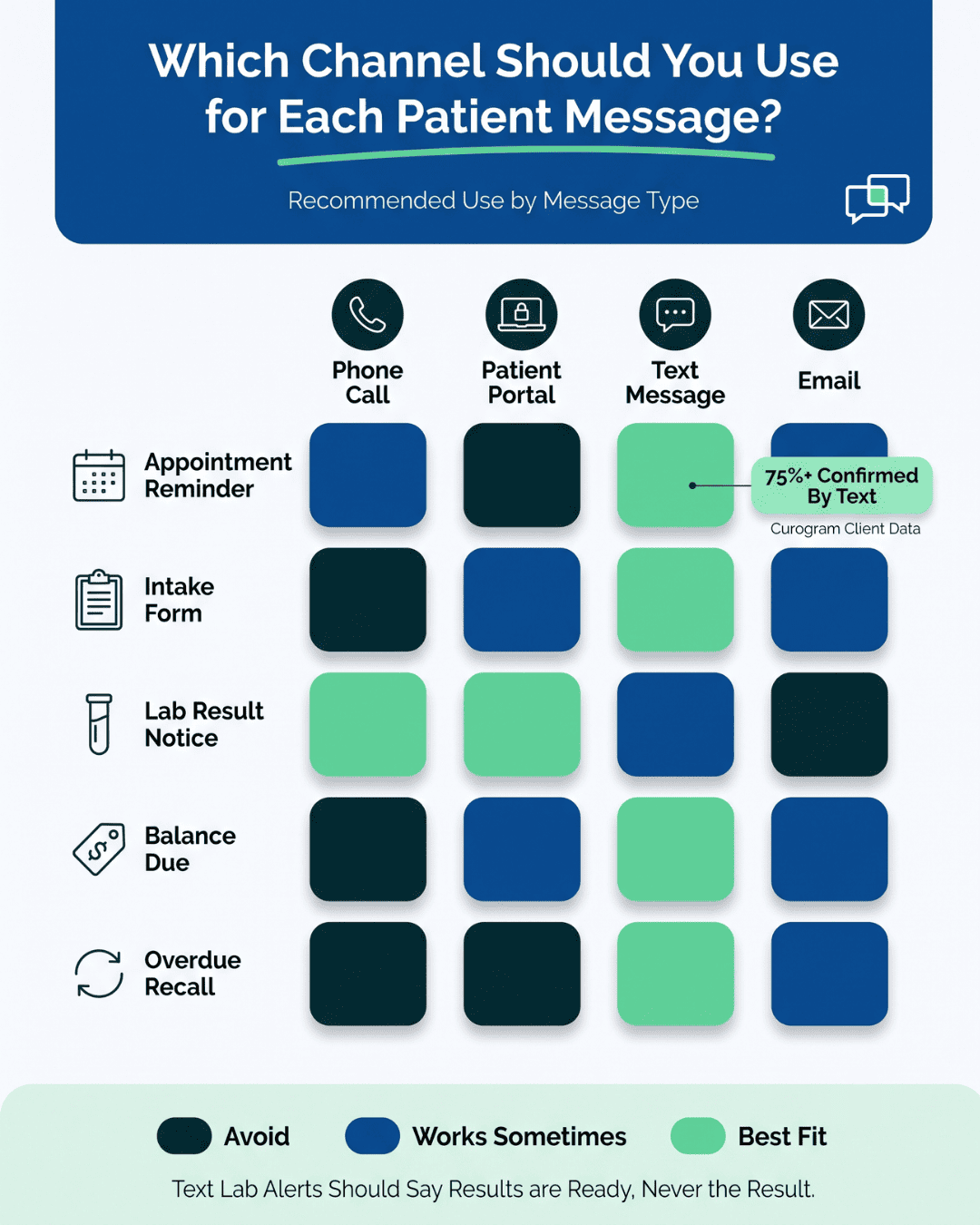
The fastest fix is matching each message to the right channel. Reminders and refill notices work well by text. Lab results belong in a portal or a phone call. Billing texts follow separate consent rules under the TCPA. Atlas Medical Center cut no-shows from 14.20% to 4.91% in three months after automating reminders, based on Curogram internal data.

Most practices treat patient communication as a training problem. Send the front desk to a customer service workshop, remind everyone to smile, and wait for the satisfaction scores to move.

Workshops change what happens in the exam room. Most breakdowns happen somewhere else. A voicemail nobody returned. A referral that left in March and never came back. A reminder sent to a number the patient dropped two years ago.

Patient communication problems have locations. Find the location, and you can fix it with a channel change rather than a culture change.

That difference matters, because the two fixes cost very different amounts. Retraining a team takes months and rarely holds. Moving one message type off the phone takes an afternoon.

The damage does not stay in one chart. A patient who leaves confused skips the follow-up, books somewhere else, or tells everyone who asks why.

Three systems carry the traffic in a medical practice. Emergency alerts reach your staff and outside agencies. The EHR moves lab results and referrals between providers. Text reminders, online booking, and video visits reach patients directly. Each one drops messages in its own way, and each failure has a fix you can name.

Why is Communication in Healthcare Important?

A patient leaves with a new prescription and three instructions. By the time she reaches the parking lot, she remembers one. That gap is where most patient communication problems begin.

Trust closes the gap. Patients who understand their doctor are more willing to accept the plan and follow it. When they can reach your office between visits, they ask instead of guessing. A clear answer on Monday prevents a confused callback on Thursday.

Open channels protect your schedule too. Atlas Medical Center cut no-shows from 14.20% to 4.91% in three months using automated reminders and confirmations, based on our internal data. Fewer missed visits also means fewer hours your front desk spends refilling the schedule by phone.

The same pattern shows up in everyday requests.

What The Patient Needs No Clear Channel Clear Channel
A copy of a visit summary Calls, waits on hold, gives up Gets it the same day
An urgent question after hours Guesses, or goes to the ER Messages the office, gets routed
To move an appointment Does not show up Reschedules by text that night


Each gap has a price. Sometimes it is an empty slot on a Tuesday. Sometimes it is a patient who stops booking and never says why.

Common Patient Communication Problems

A patient hears the word "biopsy" and stops absorbing anything after it. The dosage change, the follow-up date, the name of the specialist. None of it registers, because she is still back on the first word.

Sending personalized text reminders and follow-ups gives her that information again in writing, at home, after the panic has passed. She can read it twice. She can show it to her husband.

Language is the barrier that surfaces most often. A patient may speak enough English to book a visit and still miss what "take with food" means for her specific pill.

Slang and regional phrasing cut both ways. Cultural differences also change what a patient will volunteer without being asked directly.

Most patient communication problems trace back to a short list of causes.

Cause What It Looks Like At Your Practice
Language and vernacular gaps Patient nods through discharge, calls back confused on day three
Attitude A clipped tone at check-in, so the patient stops asking questions
Poor attention to detail Old callback number left on the chart, message never lands
Poor listening The real complaint arrives in the last 30 seconds of the visit
Lack of motivation Follow-up call sits on a sticky note until Friday afternoon
Communication tools One phone line, one voicemail box, three staff sharing both


Tools are the fastest one to fix. Practices using two-way texting have cut phone call volume by as much as 50%, based on our internal data. That frees the same staff to handle the barriers that need a real conversation.

Track which of these shows up in your callbacks this month. The pattern usually points to one or two, not all six. Patients who keep leaving confused eventually book somewhere else.

How Telemedicine Impacts Patient Communication Problems

Telemedicine is an effective way to thin out a crowded waiting room. A 10-minute medication check does not need a 40-minute drive and a 25-minute wait in a room full of sick people. Move those visits to video and your lobby holds the patients who actually have to be there.

For plenty of visit types, the video version does the same job as the in-person one.

Usually Fine On Video Still Needs The Room
Medication check-in New patient exam
Reviewing lab results Vitals, labs, or a swab
Follow-up after a procedure Anything needing hands
Behavioral health session In-office imaging


Booking one removes steps too. The patient picks a slot, gets a link, and joins from a phone. No parking, no sign-in sheet, no clipboard on a lobby chair.

Driving to an appointment is the part patients skip. Take the drive away and one common reason for a missed visit goes with it. A patient who cannot leave work for two hours can often step away for fifteen minutes.

Video also solves a specific class of patient communication problems. The patient is at home, standing next to the pill bottles, with a spouse in the room who remembers the questions she forgot to ask.

What are the Usual Healthcare Communication Methods?

No two practices run the same setup. One clinic clears a shared voicemail box by 10 a.m. Another routes every call through a nurse line. A third still faxes referrals and waits for a confirmation page.

Whatever yours looks like, your staff had to be trained on it, and any one of those channels can drop a message. An abnormal lab lands in the chart on a Friday afternoon. The person who works that queue is out. Nobody reaches the patient until Tuesday, and three days of silence on a bad result is a patient safety event.

Most practices run three kinds of communication systems.

System Who It Connects Everyday Example
Emergency alert and notification systems Your staff, plus outside agencies Closure notice during a power outage
Provider-to-provider communication systems Clinicians inside and outside your practice Referral sent with chart notes attached
Provider-to-patient communication systems Your practice and the patient Appointment reminder or results notice


Chart comparing phone, portal, text and email for five patient message types, with text rated best fit

Emergency Alert and Notification Systems

This rule does not cover every clinic. The Centers for Medicare and Medicaid Services’ Emergency Preparedness Rule applies to a set list of facility types that bill Medicare or Medicaid. Hospitals are on it. So are surgery centers, FQHCs, rural health clinics, hospices, and home health agencies.

Most private physician practices are not. A practice owned by a covered facility is folded into that facility's plan.

Covered sites have to build four things.

Core Element What It Covers
Emergency plan A risk assessment covering all hazards, kept current
Policies and procedures The steps staff follow once the plan activates
Communication plan Working contacts for staff, providers, agencies, and patients
Training and testing Staff training plus exercises that test the plan


The communication plan has to reach two ways. Inside, it lists your staff and your doctors. Outside, it lists the providers you refer to, plus state and local health and emergency agencies.

Outpatient rules are lighter than hospital rules. You do not have to stock food and water for staff and patients, for example.

Patients are the piece most plans handle worst. A power outage at 7 a.m. means every patient on the books needs a message before they leave the house. Mass texting reaches a full day of appointments at once, instead of two staff working down the list by phone.

Provider-to-Provider Communication Systems

You send a referral to a cardiologist on Tuesday. Three weeks later the patient asks what the cardiologist said, and nobody at your front desk knows. The note is stuck in a fax queue, or it never left the specialist's outbox.

An electronic health record (EHR) is where most of that traffic is supposed to land. A shared chart cuts down on repeat questions and repeat orders when a patient sees several doctors. That works cleanly when both offices run the same system.

Across two different systems it slows down. A specialist on another platform may send back a scanned PDF that lands as a flat image. Nobody can search it. It waits until someone opens it and routes it to the right chart. Plenty of referrals still travel by fax.

What Moves Between Providers Where It Usually Lands
Lab and imaging results EHR results inbox
Referrals and consult notes EHR, fax, or secure email
Patient transfers EHR, plus a phone handoff
Claims and payment records Practice management side


All of it counts as protected health information, so HIPAA applies. Sharing it with another provider for treatment does not need the patient's written authorization. Psychotherapy notes are the main exception. Staff who think every release needs a signed form end up slowing down care the rule already allows.

Provider-to-Patient Communication Systems

Text message appointment reminder systems and telemedicine visits carry most of the traffic between your practice and your patients. One confirms Thursday at 9 a.m. The other saves a 40-minute drive for a five-minute check-in.

No platform is HIPAA compliant on its own. Compliance rests on a signed business associate agreement and on how your office sets the tool up. Ask any vendor for that agreement before the first message goes out.

Consent is a separate rule, and it comes from the TCPA, not from HIPAA. Automated texts to a cell phone need prior express consent.

For treatment messages, that consent does not have to be in writing. A patient who hands you a mobile number and agrees to texts has cleared the bar.

Message Covered by the Treatment Exemption
Appointment reminder or confirmation Yes
Prescription refill notice Yes
Lab result ready notice Yes
Post-discharge follow-up Yes
Balance due or payment link No
Promotion for a new service line No


One promotional line can cost an otherwise clean message its exempt status. Penalties start at $500 per text and climb to $1,500 when a court finds the violation willful.

Traffic runs the other way too. Nurse call systems flag a change in a patient's condition. Some practices still take clinical questions by plain email, which carries its own risk, because ordinary email is not encrypted. Routing those messages back into the EHR keeps the chart current, and HIPAA governs every step of that trip.

Most patient communication problems come down to picking the wrong channel. To put HIPAA-compliant 2-way texting, online booking, and telemedicine on one system, contact Curogram to get started.

How Do You Solve Patient Communication Problems?

Solving patient communication problems starts with finding where messages die in your office. Most practices trace it back to one or two weak handoffs. Culture and language play a part, and so does a channel nobody checks after 3 p.m.

Four steps will tell you which one you have.

  1. Pull last month's inbound calls. Count how many happened because a patient never got a message the first time.
  2. Sort those into three buckets: language gap, missed handoff, or a channel your team does not monitor.
  3. Take the highest-volume message type in the biggest bucket and move it off the phone.
  4. Run the same count 30 days later.

Covina Arthritic Clinic worked through this. Confirmations were handled by hand until staff could not keep up with the volume. After automating them, the clinic now averages more than 1,100 confirmed appointments a month, based on our internal data.

The payoff lands in two places. Your schedule fills more reliably, and patients who actually receive their instructions turn up in better shape at the next visit. Satisfied patients also stay with you, and they tell other people why.

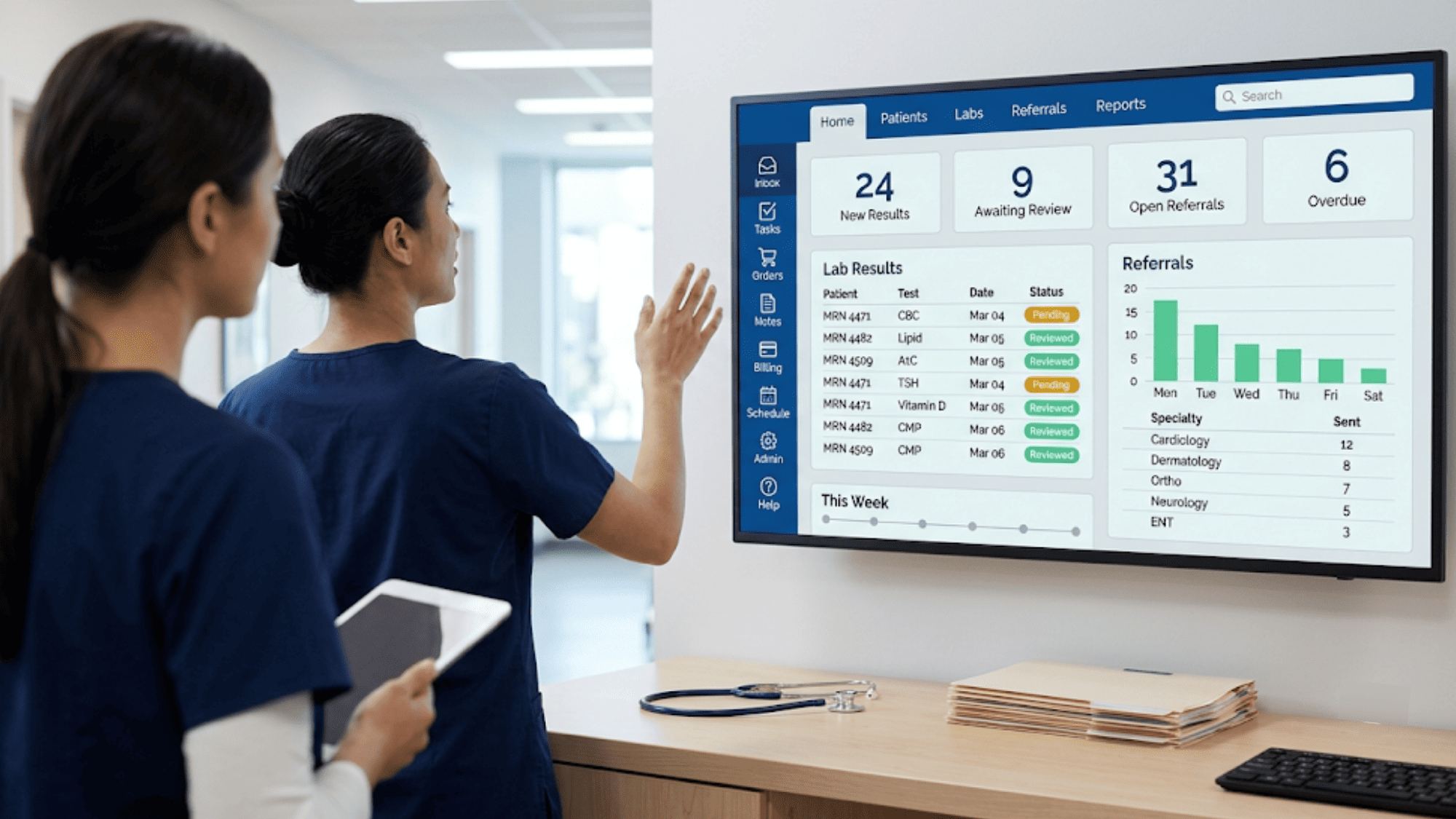
Two clinic staff reviewing an EHR dashboard showing pending lab results and open referral counts

Effective Communication

Three habits do most of the work inside the exam room.

Start with your hands.

Let the patient finish before you touch the keyboard, because typing sounds like the end of a conversation. Repeat back what you heard before you move on. That is what makes someone feel heard.

Your face does more work than your script.

Patients read your expression and your posture before they process a word, and that sets the first impression. A glance toward the door tells them the visit is over. Eye contact and an open posture keep the questions coming.

Feedback is the habit most practices skip.

Asking at checkout gets you one opinion from the one patient willing to say something out loud. Our automated patient surveys collect it from everyone, and they flag an unhappy patient while you can still pick up the phone and call.

Use of Telemedicine Software

A video visit is only part of what telemedicine software covers. Most of the daily work happens around the visit, before the patient ever joins the call.

A patient with two quick questions should not have to drive in and sit in your lobby for 40 minutes. Give them a way to ask, and they ask instead of skipping it.

Tool What It Takes Off Your Front Desk
2-way text messaging The call that was only ever one question
Automated surveys and rating requests Chasing feedback one patient at a time
Electronic patient forms Clipboard handoffs and retyping into the chart
Online appointment booking Phone tag over an open Tuesday slot
Smart appointment reminder system Confirmation calls down the day's list
HIPAA-Secure Staff Messaging Hallway interruptions during a visit


Reminders carry the heaviest load of the six. Average appointment confirmation rates across our clients run above 75%, based on our internal data, and that runs without staff time behind it.

Turning these on in sequence beats turning them all on at once. Start with whatever your phone rings about most.

Conclusion

Find the communication problem areas in your practice and implement strategies to improve.

Patient communication problems have addresses. A lab result sits in a queue over a weekend, a referral goes out and never comes back, a reminder lands on a landline nobody answers.

Training changes what happens inside the exam room, and it should. The 40 confirmation calls your front desk cannot finish by 5 p.m. need a different kind of fix.

Pick one message type this month. Count the inbound calls it creates, move it to text, then count again in 30 days.

One multi-location practice tried exactly that with recalls. Text messages went to patients overdue for follow-up care, 35% of them booked within a month, and 1,240 patients came back from those messages alone, based on our internal data.

Curogram runs 2-way texting, online booking, patient forms, reminders, and telemedicine on one platform that connects with your EHR. Schedule a demo with our team and bring last month's call log.


Frequently Asked Questions

Why does HIPAA get blamed for texting rules that come from a different law?

HIPAA covers how you protect patient information. The consent rule for automated texts comes from a different law, the TCPA. Practices stall on texting for years because they assume HIPAA blocks it. Treatment messages like reminders and refill notices need prior express consent. That consent does not have to be written down.

How do referrals still go missing when both offices run an EHR?

A shared chart only works when both practices sit on the same system. Across two platforms, a consult note often lands as a scanned image nobody can search. It sits in a queue until someone opens it and files it to the right patient. Plenty of referrals still move by fax, with no confirmation that anyone read them.

What should a text say when a lab result is ready?

Keep the clinical detail out of it. Tell the patient the result is ready, then give them a secure place to see it or a time to call. Sending the actual value by SMS puts protected health information on a device you do not control. The notice belongs in the text and the result belongs in the portal.

How can a practice handle language barriers without an interpreter at every visit?

Written follow-up does most of the work here. A patient who nods through discharge instructions can read those same instructions later, slowly, with family in the room. Save your most common instructions as templates in the languages your patients speak. In the room, ask the patient to repeat the plan back to you. Asking whether they understood gets you a yes almost every time.

Why do automated reminders outperform staff confirmation calls?

Calls need someone free to dial and someone free to pick up. Automation works the full schedule either way. No-show rates across our clients run 53% below the industry average, based on our internal data. Staff time then shifts to the calls that need a person, like an abnormal result or a reschedule with three moving parts.

Professional Text Communication in Healthcare: A Complete Guide

1 min read

Professional Text Communication in Healthcare: A Complete Guide

💡 Professional text communication in healthcare refers to the use of secure, HIPAA-compliant patient texting to manage appointments, share...

Read More
Patient Communication Evolution: Phone to Multi-Channel Guide (2026)

1 min read

Patient Communication Evolution: Phone to Multi-Channel Guide (2026)

💡 Patient communication evolution refers to the shift from phone-only contact to multi-channel outreach in healthcare. For years, medical...

Read More
Multi-Channel Patient Communication: Strategy and Integration

1 min read

Multi-Channel Patient Communication: Strategy and Integration

💡 A multi-channel patient communication strategy helps medical practices reach patients through text, email, phone, patient portals, and apps....

Read More