
1 min read
6 Strategies to Introduce Technology to Your Patients
 Jess Koslow : 3/3/22, 7:00 AM
💡 Introducing new technology to patients works best when practices teach it inside visits they already have, then support it afterward.Six...
7 min read

Most practices treat reviews as something to get to once the schedule calms down. That's the mistake. For a lot of new patients, your Google rating is the whole first impression, and it forms before they read a single word you wrote about yourself.
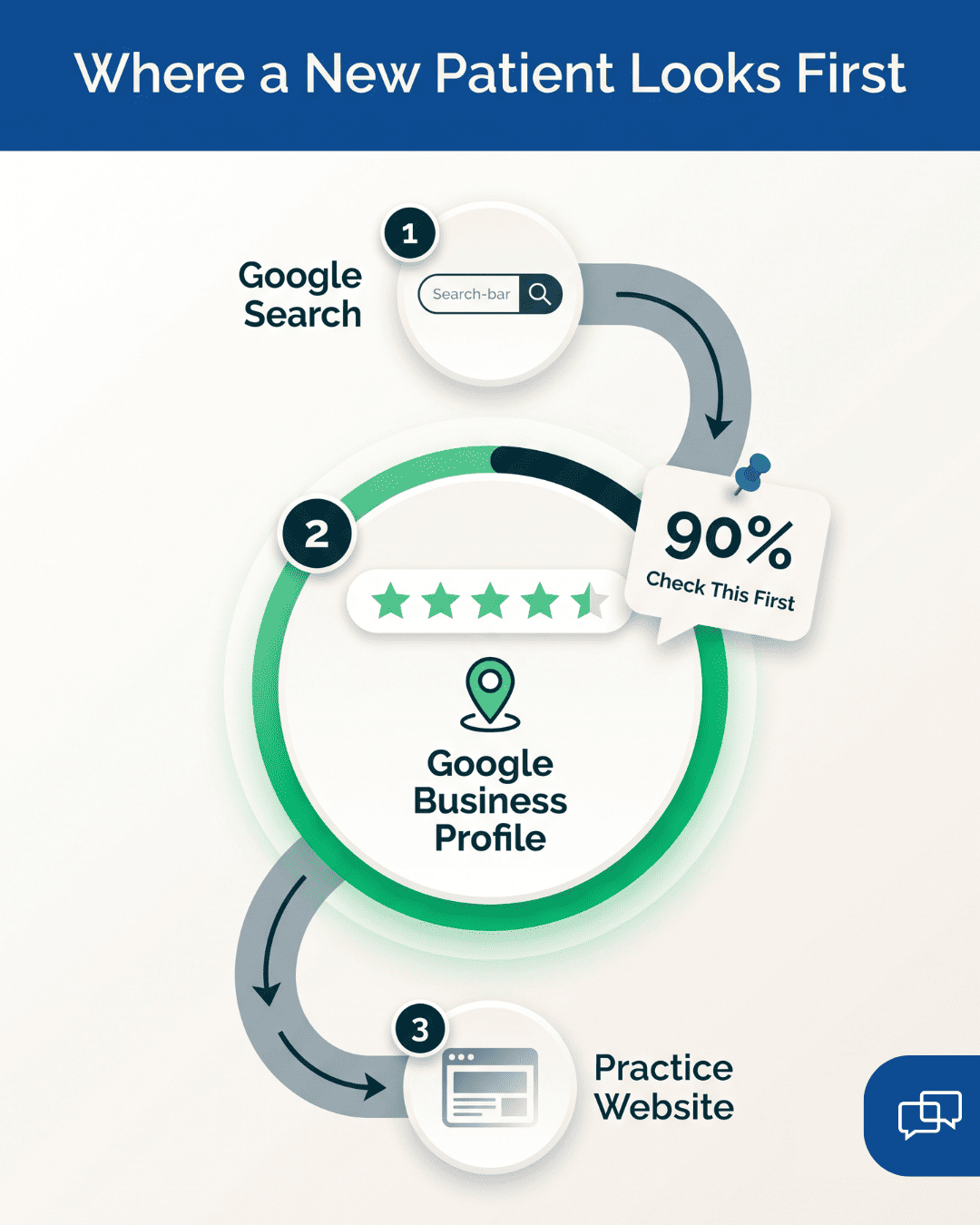
The number behind that is hard to ignore. Based on our internal data, 90% of new patient leads see a practice's Google Business Profile before they ever reach the website.
So the star rating sitting next to your name does the first round of convincing, whether you've earned it on purpose or left it to chance.
Here's the part that trips people up. Great care doesn't automatically produce great reviews. Happy patients tend to leave quietly satisfied and never post.
The frustrated ones almost always speak up. Left alone, that imbalance pulls your rating toward the loudest voices, not the typical experience.
Fixing it isn't complicated, but it does take a system. You earn the review with a good visit, then you ask for it at the right moment, then you keep the ask running so it doesn't die on busy days.
A practice we work with turned that routine into 1,064 new 5-star reviews in three months, with roughly 90% of responding patients leaving five stars.
This article walks through how reviews shape a patient's choice, why they matter so much to your visibility on Google, and the specific steps that earn them, from the front desk handoff to the post-visit text.
None of it requires a bigger team. It requires doing the small things consistently, so your reputation reflects the care you already give.
Great care and happy patients build a good practice. They don't, on their own, bring the next patient through the door. That job now runs through your reviews.
According to a recent survey, close to 100% of consumers say they read reviews online when shopping. The same habit shows up when someone picks a doctor. A practice with a wall of positive ratings looks safer than one with none, or worse, a few angry ones.
So 5-star reviews aren't a nice extra. They're often the first thing a new patient judges you on, before they read a word you wrote about yourself. More of them gives you a real edge in getting that patient to choose you.
Reviews pull double duty. They guide the patient who's deciding whether to book you, and they shape how easily that patient finds you in the first place. Both jobs are worth understanding, because you manage them differently.
Reviews are how patients vet you before they ever call. Most read the newest ones first, then scan for specifics: wait times, surprise bills, whether the front desk was warm or short with them. A practice with a wall of positive ratings reads as a safer choice than one with no reviews, or one with a few angry outliers sitting up top.
They also watch how you respond. A calm, helpful reply to a complaint tells the next reader you pay attention. After their own visit, patients may leave a review too, to thank a provider who listened or to vent about one who didn't.
For your practice, reviews drive visibility. Google ranks practices with more recent, positive reviews higher in Maps and local results, so a steady stream of them puts you in front of more people searching for care nearby.
Based on our internal data, 90% of new patient leads see a practice's Google Business Profile before its website. The ratings on that profile are your real first impression.
Reviews also work as proof from other patients, which carries more weight than anything you write about yourself. And they can be built quickly with the right prompt.
One multi-location practice we work with collected 1,064 new 5-star reviews in three months, with about 90% of responding patients leaving five stars, based on our internal data.
The catch: not every happy patient thinks to post, and unhappy ones speak up more often.
A handful of 1-star reviews can pull down the rating a new patient sees first. That's why the rest of this comes down to making it easy for satisfied patients to leave a review, which the next sections walk through.
A PowerReviews survey found that 98% of consumers treat reviews as an essential resource before they buy. Ratings now outrank price as the biggest factor in what people choose.
The same holds for medicine. In healthcare, a patient journey survey conducted in 2019 showed that 80% of consumers use the internet for health information. Before they book, patients tend to look up a few things:
A strong rating also sets you apart from the practice down the street. Stack up enough 5-star reviews and you become the obvious pick for a given service line or specialty.
Those reviews carry weight outside Google too. Feature them on your website and across your marketing, where they land harder than any claim you make about yourself. The words come from patients, and that's who new patients trust.

You need to understand what it takes to receive a 5-star so you can implement those processes in your practice. If you want to encourage your patients to leave positive reviews, you should consider the following tips.
A rating only holds up when the visit behind it does. Aim to meet what patients expect, then beat it on the parts they remember.
Patients value their time. Use an online booking system that syncs with your providers' calendars, so people can grab a slot without a phone call.
You can also use a HIPAA-compliant two-way texting platform to allow your patients to communicate with your front office staff. A quick text beats sitting on hold.
Inside the visit, the care has to feel personal. Give attentive, patient-focused treatment and plans built around each patient, so they leave feeling their concerns were heard and respected.
Patients rate the whole visit, not just the exam. That runs from the moment they book to the moment they walk out, and every handoff in between shapes the score.
The first impression sets the tone. Make booking quick and check-in warm, so people feel looked after before they even sit down. From there, the provider carries it: good bedside manner means listening, explaining the condition and the options in plain terms, and respecting what the patient believes and decides.
None of that holds up if the team can't talk to each other. Finally, use a HIPAA-compliant messaging platform to enable fast and secure internal communications between providers, staff, and patients. When the front desk and clinical side stay in sync, patients feel it.
Happy patients rarely think to post a review on their own. The unhappy ones do. So you have to ask, and the best moment is right after the visit, while the good feeling is fresh.
An automated review collection service may help you to send out text reminders to encourage patient feedback. That way the ask goes out every time, without anyone at the desk having to remember.
Reviews are a two-way street. When a patient leaves a kind one, reply to thank them by name. It costs a minute and shows the next reader you're paying attention.
Poor reviews need a response too. Reach out, find out what went wrong, and fix it. A calm, helpful reply often does more for your reputation than the complaint did to hurt it.
Curogram's Automated Google Reviews handles the ask for you. After each appointment, it texts the patient a quick request for feedback, so the prompt goes out while the visit is still fresh in their mind.
Each text carries a one-tap link straight to your Google review page. Patients can leave a rating in under a minute, without hunting for where to click. That low effort is what turns a good visit into a posted review.

Reviews aren't a marketing chore you get to later. They're the first thing a new patient checks, and often the reason they call you instead of the practice down the block.
Based on our internal data, 90% of new patient leads see a practice's Google Business Profile before they ever reach the website, so the ratings sitting there do your selling for you.
The good news is that this compounds. Every solid visit is a chance at another review, and every review makes the next patient more likely to book. A practice we work with turned that loop into 1,064 new 5-star reviews in three months, with about 90% of responding patients leaving five stars.
You don't get there by hoping. It takes real service, a front desk and clinical team that move as one, and a steady ask right after each visit while the patient still feels good about it.
Handle the ask by hand and it slips on busy days, which are most days. Automate it and the prompt goes out every time, one tap to post.
That last piece is where we come in. Curogram sends the post-visit text for you, links straight to your review page, and helps the ratings a new patient trusts keep climbing, without adding a task to anyone's morning.
Your reputation is worth protecting, and it's easier to build than most practices assume. Book a demo with Curogram and we'll show you how to turn happy patients into the reviews that bring the next ones in.

1 min read
Jess Koslow : 3/3/22, 7:00 AM
💡 Introducing new technology to patients works best when practices teach it inside visits they already have, then support it afterward.Six...

1 min read
 Aubreigh Lee Daculug : 5/31/26, 8:59 AM
💡 A 4.2-star aggregate rating can hide a serious problem. One provider scoring 4.8 and another scoring 3.1 average out to "satisfactory" — but the...

1 min read
.jpg?width=30&name=square-formal-photo%20(1).jpg) Mira Gwehn Revilla : 4/19/26, 1:00 PM
Mira Gwehn Revilla : 4/19/26, 1:00 PM
💡 Patient outreach is how medical practices reach out to patients before and after visits. It includes reminders, recalls, follow-ups, and health...