Digital Intake Workflow in StreamlineMD for Imaging Practices
💡 StreamlineMD practices use online patient forms to cut intake delays and boost exam readiness for radiology, vascular, and IR workflows. ...
13 min read
Mira Gwehn Revilla
:
January 7, 2026
Table of Contents
Your front desk is drowning in paper. Phones ring off the hook, patients wait too long, and your imaging staff can't start scans on time because forms are still missing key details.
This is the daily reality for many imaging centers still using paper-based intake. Every missing form or wrong entry costs time. And in radiology, vascular, and IR practices, time is money.
Think about it this way: A single MRI slot costs your practice real revenue. When a patient shows up without the right screening done, that slot may go empty. When staff must call back to clarify prep steps, they can't help other patients. These small delays add up fast.
The good news is online patient forms fix these problems at the source. Digital intake lets patients fill out forms at home before they arrive. The data flows right into StreamlineMD.
But this isn't just about ease of use. It's about hard returns on your investment. Practices that reduce admin workload in StreamlineMD see real gains in throughput, revenue, and staff morale.
In this guide, we'll break down exactly how online forms pay off for imaging centers. You'll learn how to cut costs, prevent cancellations, and improve data accuracy across your radiology, vascular, and IR workflows.
We'll also show you how tools like Curogram connect with StreamlineMD to create a complete digital front-end. From faster check-in to better patient reviews, you'll see why this shift makes sense for your bottom line.
Let's start with what matters most: how intake affects your revenue.
In imaging, every minute counts. Your scanners cost a lot to run. Your staff works hard to keep the day moving. Without automation within your StreamlineMD process, the whole system is affected once intake slows down.
Radiology throughput depends on accurate and timely intake. If a patient arrives without the right screening data, the scan may be delayed or canceled. For MRI exams, this might mean a full 45-minute slot sits empty. For CT, a prep issue could push back the entire afternoon schedule.
Vascular and IR schedules are even more fragile. These cases often need detailed pre-op history. A patient set for a port placement might need lab work, allergy info, and implant details on file. If any piece is missing, the case can't move forward. Staff scramble to find answers. The doctor waits. The patient waits. Revenue slips away.
Manual forms are the root of most intake problems. Think about what happens when a patient fills out paper in the lobby. They rush through the questions. Handwriting is hard to read. Staff must then type every answer into StreamlineMD by hand. This takes time and creates errors.
These bottlenecks cut into your daily patient volume. A busy imaging center might see 40 to 60 patients per day. If just 10% of those visits run late due to intake issues, that's four to six delays every single day. Over a month, that could mean dozens of missed or pushed appointments.
Staff time spent on paperwork also increases overhead and labor costs. Every hour a front desk worker spends on data entry is an hour not spent on patient care. Phone calls to chase down missing info add up too. Some practices report staff making 20 or more calls per day just for intake follow-ups.
Digital intake removes these problems before they start. When patients fill out forms online at home, they have time to find their insurance card, look up past surgeries, and answer questions fully. The data goes straight into StreamlineMD with no retyping needed. Staff see complete, legible info before the patient walks in the door.
This shift improves schedule predictability in a big way. Imaging managers can trust that morning patients are ready for their scans. Techs know what to expect. Nurses can prep rooms with confidence. The whole team moves faster.
For practices looking to increase billable studies, this is the key. More complete intakes mean fewer delays. Fewer delays mean more scans per day. More scans per day mean higher revenue without adding staff or equipment.
Consider a mid-sized imaging center that runs three MRI machines. If each machine gains just one extra scan per day due to better intake, that's three more studies daily. Over a year, that could mean hundreds of extra exams and tens of thousands of dollars in added revenue.
The math is simple. Smoother intake equals smoother operations equals more money in your pocket.
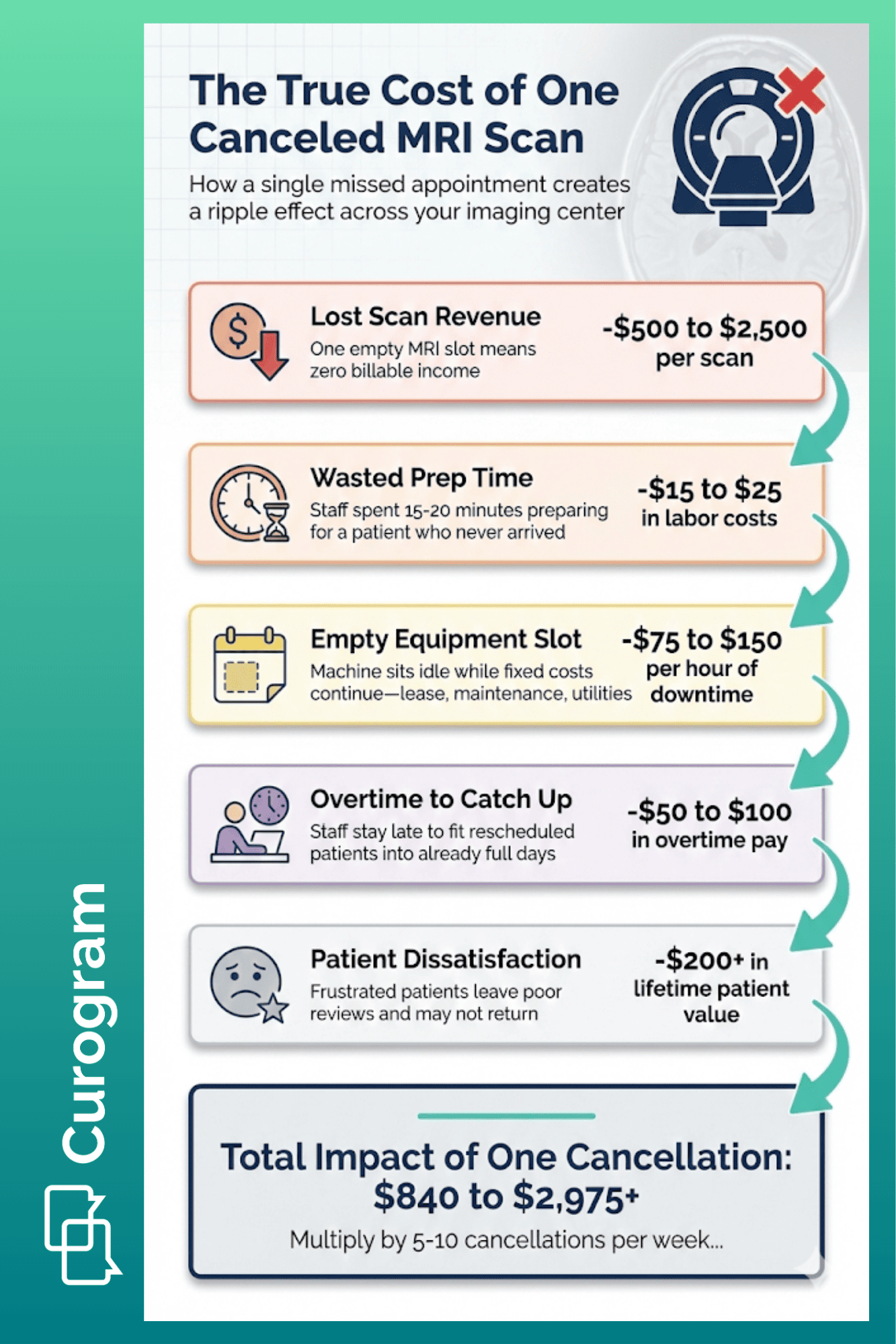
Lost scans hurt more than your schedule. They hurt your bottom line. Every time a patient cancels or needs a repeat exam, you lose money you already counted on. Automated online forms help stop these losses before they happen.
MRI and CT scans rely on screening accuracy. A patient with an unknown metal implant can't safely enter the MRI room. Someone who ate before a contrast CT may need to reschedule. These issues often surface at the worst time: right before the scan.
With paper forms, patients often skip questions or give vague answers. Staff don't catch problems until the patient is already in the gown. By then, it's too late.
Online forms change this. Patients answer detailed questions at home, where they can check records or call family for help. The form can flag high-risk answers right away. Staff review responses before the visit and can call ahead to clarify.
IR procedures need even more detail. A patient coming in for a biopsy might need to stop blood thinners days in advance. If intake doesn't capture this early, the case gets canceled. Digital forms with clear pre-op checklists prevent these surprises.
Repeat exams are costly for everyone. The patient makes another trip. Staff run the same scan twice. Your equipment gets used without extra payment. On top of these, you still have to fit the redo into an already full schedule.
Most repeats happen because of prep failures. A patient didn't fast. A contrast reaction wasn't flagged. An allergy was missed. Better prep compliance leads to fewer re-scans.
Online forms improve data accuracy from the start. When patients type their own answers on a screen, you avoid handwriting errors. Required fields ensure nothing gets skipped. Drop-down menus guide patients to the right choices.
Say, your center runs 1,000 MRI exams per month. If even 2% need repeats due to prep issues, that's 20 extra scans you didn't plan for. Cutting that rate in half saves time, money, and frustration for your team.
When intake runs smoothly, everything else speeds up. Faster check-in times preserve schedule integrity. Patients move from the lobby to the scanner without delay. Staff don't waste time hunting for missing info.
This creates a ripple effect across your entire day. Morning scans finish on time. Afternoon slots stay open for add-ons. Your team leaves work on schedule instead of staying late to catch up.
More billable studies per day is the end result. An imaging center that gains just two extra scans per day sees meaningful revenue growth over time. With the same staff and same machines, you simply run more efficiently.
Consider a vascular lab that handles 15 cases per day. If better intake helps them add one more case daily, that's five extra cases per week. Over a year, that adds up to more than 250 additional procedures without hiring anyone new.
This kind of growth doesn't come from working harder. It comes from working smarter. Digital forms do the heavy lifting so your team can focus on patient care.
The revenue you protect today sets you up for growth tomorrow. Next, let's look at how online forms also cut your staffing costs.

Staff costs are one of the biggest expenses for any imaging center. Front desk workers, call center agents, and data entry clerks all add to your payroll. When these team members spend hours on tasks that software could handle, you're losing money twice: Once on wages and again on lost productivity.
Online patient forms attack this problem head-on. They reduce admin workload in StreamlineMD by cutting out the manual steps that eat up staff time.
Paper intake forms require someone to type every answer into your system. A single patient might have two or three pages of information. Names, dates, addresses, insurance details, medical history, medications, allergies—all of it must be keyed in by hand.
This process is slow. A skilled front desk worker might take five to seven minutes per patient just for data entry. Multiply that by 40 patients per day, and you're looking at three to five hours of pure typing. That's nearly half a workday gone before anyone answers a phone or greets a visitor.
Digital forms skip this step entirely. When patients fill out forms online, their answers flow directly into StreamlineMD. The data is already where it needs to be. But speed isn't the only gain. Fewer errors also reduce time spent on corrections.
With paper, staff often misread handwriting or type the wrong number. A birth date entered as 1965 instead of 1956 might seem small. But it can cause insurance denials, chart mix-ups, and hours of cleanup work.
Online forms with required fields and format checks prevent these mistakes. If a phone number is missing a digit, the patient sees an error before they submit. If a date doesn't make sense, the form asks them to fix it. Your staff gets clean data every time.
One mid-sized imaging network found that switching to digital intake saved their front desk more than 15 hours per week. That's nearly two full workdays that could go toward patient care, scheduling, or other high-value tasks.
The phone is another time drain for imaging practices. Patients call with questions about prep. They call to ask what to bring. They call because they lost their paperwork. Each call takes three to five minutes, and busy days might bring 50 or more calls.
When patients complete forms at home, most of these calls go away. The form itself can include prep instructions. Patients see exactly what they need to do before their scan. No more wondering if they can eat. No more confusion about arrival times.
Digital intake also reduces follow-up calls from staff. With paper, someone often needs to phone the patient to clarify an answer. Was that surgery in 2018 or 2019? Is the allergy to the dye or to shellfish? These calls take time and often lead to phone tag.
Online forms cut clarifying call volume by giving patients space to answer fully. Open text fields let them explain in their own words. Conditional questions dig deeper when needed. If a patient marks yes to a pacemaker, the form can ask for the make and model right away.
Growth is good—but only if you can handle it. When patient volume goes up, most practices face a choice: hire more staff or watch service quality drop. Neither option is cheap.
Digital forms offer a third path. They handle increases in patient volume without adding bodies. Whether you see 30 patients or 300, the system works the same way. Patients fill out forms on their own time. Data flows in without extra effort from your team.
This matters even more for multi-location imaging networks with shared staffing. A regional group might have one central team handling intake for five or six sites. Paper-based intake would bury this team in work. Digital forms let them manage high volume with ease.
Say, your practice grows by 20% next year. With paper intake, you might need to add one or two front desk workers to keep up. At $35,000 to $45,000 per year in salary and benefits, that's a real cost.
With digital intake, you might not need anyone new. Your current team handles the extra load because the software does the heavy lifting. The savings go straight to your bottom line.
There's also the question of burnout. Front desk and call center jobs are stressful. High turnover is common. When you reduce tedious tasks like data entry and phone follow-ups, staff feel better about their work. They stay longer. Training costs drop. Morale improves.
One imaging center manager put it simply: before digital forms, her team dreaded Mondays. The weekend backlog of calls and paperwork made the first day of the week brutal. After switching to online intake, Mondays felt like any other day. Patients arrived ready. Data was already in the system. Staff could actually help people instead of chasing paper.
The ROI here is clear: Lower labor costs, higher productivity, and better retention. These gains add up fast and keep paying off year after year.
When intake works well, the rest of your operation follows. Digital forms don't just help the front desk. They make life easier for techs, nurses, and schedulers across every department.
Accurate intake leads to fewer day-of surprises. When patient info is complete and correct, schedulers can trust the calendar. They know which patients need contrast, which need sedation, and which have special needs.
This lets your team plan better. Techs can set up rooms in advance. Nurses can prep supplies. Doctors can review cases before the patient arrives. No one scrambles to catch up.
For imaging centers running MRI, CT, ultrasound, and X-ray in the same building, this is huge. Each modality has different prep rules and timing needs. Digital forms ensure everyone starts the day with the right information.
IR procedures are complex. A simple mistake in intake can delay or cancel a case. Safety red flags—like blood thinner use or contrast allergies—must surface before procedure day.
Online forms let clinical staff review intake data days ahead. If something looks wrong, they can call the patient and fix it. By the time the patient arrives, the case is ready to go.
This improves patient flow and reduces case delays. IR teams can move through their schedule with confidence. Add-on cases become easier to fit in. Everyone goes home on time.
Imaging centers often involve many departments. Radiology techs, IR nurses, front desk staff, and billing teams all need patient data. When intake information reaches the right staff sooner, friction drops.
Digital forms route data where it needs to go. Insurance info hits billing. Medical history hits the tech. Consent forms hit the chart. No one waits for someone else to finish typing.
This reduces communication gaps across departments. Teams work together more smoothly. Patients feel the difference in shorter waits and fewer repeated questions.
Paper forms come with hidden risks. They can get lost. They can sit in plain view. They can end up in the wrong shredder bin—or worse, in the trash. Digital intake solves these problems while also keeping your practice safe from liability.
No misplaced or unshredded paper documents means fewer chances for a breach. Digital records remain traceable and secure. You always know who accessed what and when.
This matters during audits. Inspectors want to see that you protect patient data. Paper makes that hard to prove. Digital logs make it simple.
With paper, every staff member might ask questions a bit differently. One tech might skip a question. Another might use outdated language. This creates gaps that lead to liability.
Online forms ensure all patients receive the same validated questions. Every question is asked the same way, every time. This helps imaging groups maintain consistency across locations.
Streamlined record-keeping makes compliance easier. Audits and internal reviews go faster when all data lives in one place. Quality programs depend on clean, complete records.
Digital intake delivers this without extra effort. Your team spends less time pulling files and more time caring for patients.
Satisfied patients come back. They also tell their friends and leave good reviews. In a crowded imaging market, patient experience is a real edge.
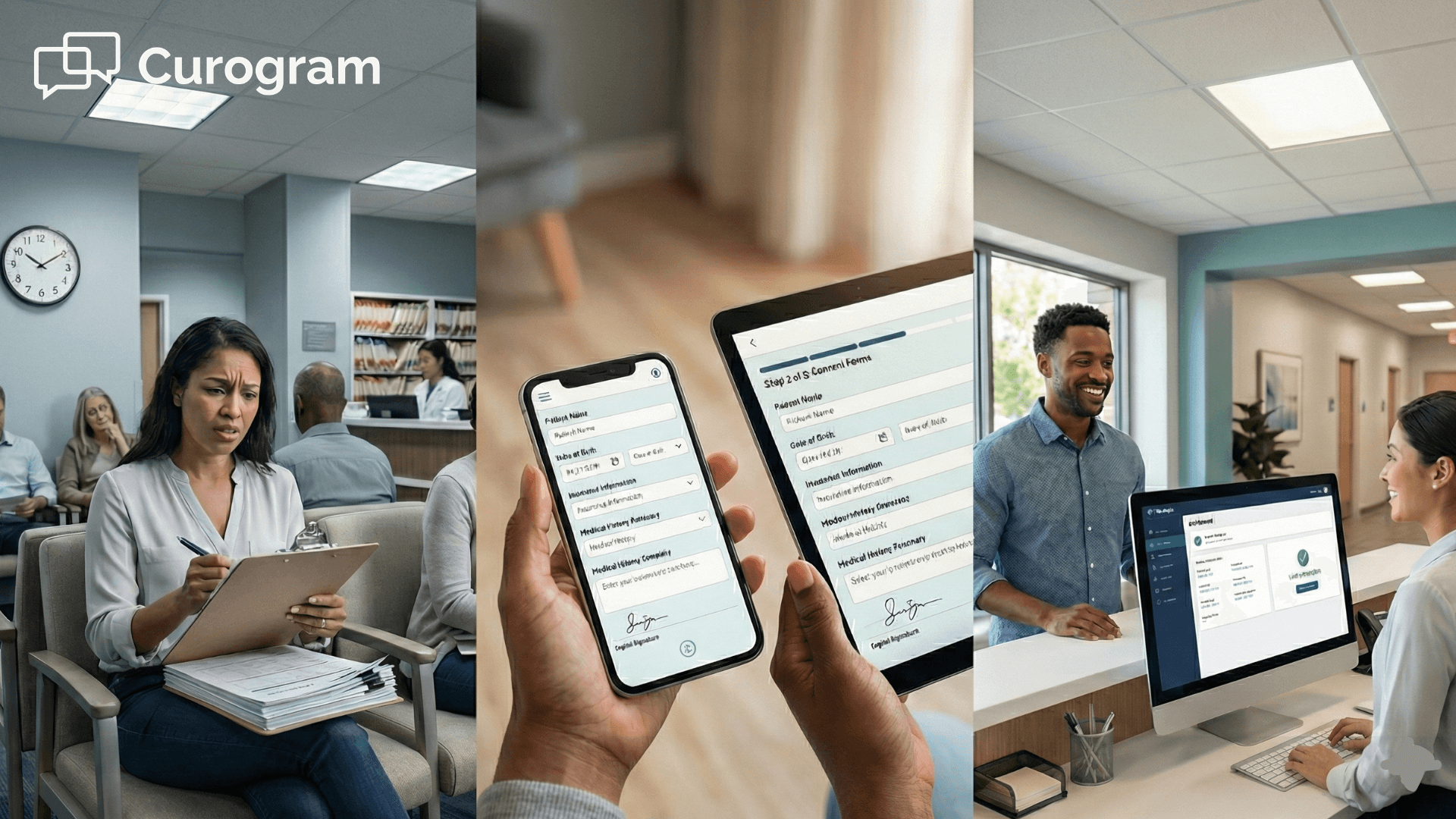
Patients notice when a practice feels put together. Filling out forms on a phone at home feels modern. Filling out paper on a clipboard in a crowded lobby does not.
Digital intake reduces friction before arrival. Patients arrive calm and ready. They don't stress about finding a pen or rushing through pages. This sets a positive tone for the whole visit.
Accurate intake leads to smoother appointments. Patients don't get asked the same questions twice. Techs know their history. The scan starts on time.
Satisfied patients leave stronger reviews. Good reviews bring more referrals. Over time, this builds a steady stream of new business without extra marketing spend.
Imaging groups with high satisfaction scores attract more referring providers. Doctors want to send patients to centers that run well. A strong reputation opens doors.
Online forms are part of that story. They show that your practice invests in quality and convenience. Referring physicians take notice.
Online forms are just the start. Other tools can stack with digital intake to boost revenue and cut costs even more.
HIPAA-compliant texting lets you send appointment details and prep reminders without phone calls. Mass texting helps you reach hundreds of patients at once for schedule changes or updates.
Appointment reminders reduce no-show rates by up to 75%. Patients get a text and can confirm or cancel with one tap.
Reputation management automates review requests after good visits. More 5-star reviews mean more new patients.
Telehealth adds another option for pre-procedure consults or follow-ups. Text-to-pay makes billing easy and speeds up collections.
Each tool works with online forms to build a complete digital front-end. Together, they amplify workflow and revenue benefits for StreamlineMD imaging centers.
How Curogram Powers Digital Intake for StreamlineMD Practices
Curogram is built for practices like yours. The platform offers HIPAA-compliant tools that work with StreamlineMD to create a seamless patient experience from first contact to final bill.
At the core is the online patient forms feature. Patients get a secure link via text or email. They fill out forms on any device at any time. Data flows into StreamlineMD without manual entry. Staff see complete info before the patient walks in.
But Curogram goes beyond forms. The two-way texting platform cuts phone calls by up to 50%. Patients can ask questions, confirm appointments, and get prep reminders all through text. Staff respond from one central dashboard. No more voicemail tag.
Automated appointment reminders reduce no-shows. Practices using Curogram report drops in missed visits by as much as 75%. That's real revenue saved every week.
Reputation management helps you collect more Google reviews. After a positive visit, patients get a quick link to leave feedback. More reviews mean better search rankings and more new patients finding you online.
Telehealth is also built in. For pre-procedure questions or follow-up calls, patients can connect by video without leaving home. This adds convenience and keeps your schedule flexible.
Text-to-pay makes billing simple. Patients get a link and pay with a few taps. Collections speed up. Outstanding balances shrink.
Best of all, Curogram is easy to use. Staff training takes as little as 10 minutes. The system is designed for busy practices that don't have time for complex software.
When you combine Curogram with StreamlineMD, you get a complete digital front-end. Intake, communication, billing, and reviews all work together.
Online patient forms are not just a convenience. They are a smart investment for any imaging practice using StreamlineMD.
The benefits are clear and concrete. Digital intake cuts labor costs by removing manual data entry and reducing phone calls. Staff spend less time on paper and more time on patients. These savings hit your bottom line every month.
Revenue protection is another big win. Fewer cancellations from missing prep mean more scans completed per day. Better data accuracy means fewer repeat exams. Each saved slot adds up over time.
Radiology, vascular, and IR procedures all run more smoothly with accurate intake data. Techs know what to expect. Nurses can prep with confidence. Schedulers trust the calendar. The whole team works better together.
Compliance also gets easier. Digital records are traceable and secure. Standardized forms reduce liability. Audits take less time and cause less stress.
Patients notice the difference. Modern intake feels efficient. Faster check-in and fewer repeated questions improve satisfaction. Happy patients leave good reviews and come back for future care.
Curogram connects all these pieces with StreamlineMD. Online forms, two-way texting, reminders, reputation tools, telehealth, and text-to-pay work as one system. This complete digital front-end drives long-term ROI for imaging centers of all sizes.
The practices that thrive tomorrow are investing today. Digital intake is the foundation. The tools are ready. The returns are tangible.
Start saving time and money while giving patients the modern experience they expect. Book a demo today to see how Curogram's digital forms enhance financial and operational performance for your StreamlineMD practice.
Digital forms handle growing patient volume without extra work. Patients fill out info on their own time. Staff review completed forms instead of typing from paper. One team can support multiple locations easily.
Paper forms create bottlenecks, data errors, and compliance risks. Online intake saves staff hours each day, improves accuracy, and keeps records secure. The time and cost savings deliver clear ROI within months.
Curogram sends patients a secure form link via text or email. Completed forms sync with StreamlineMD automatically. Staff see full patient info before arrival without any manual entry or duplicate work.
💡 StreamlineMD practices use online patient forms to cut intake delays and boost exam readiness for radiology, vascular, and IR workflows. ...
💡 Online patient forms in Veradigm enable imaging centers to transition away from paper-based intake that causes delays and errors. Patients...
💡 Manual patient intake slows clinics down and increases the risk of errors. Long check-in times can reduce patient satisfaction and limit patient...