17 min read

Online Patient Forms in Veradigm with Curogram

Online Patient Forms in Veradigm with Curogram
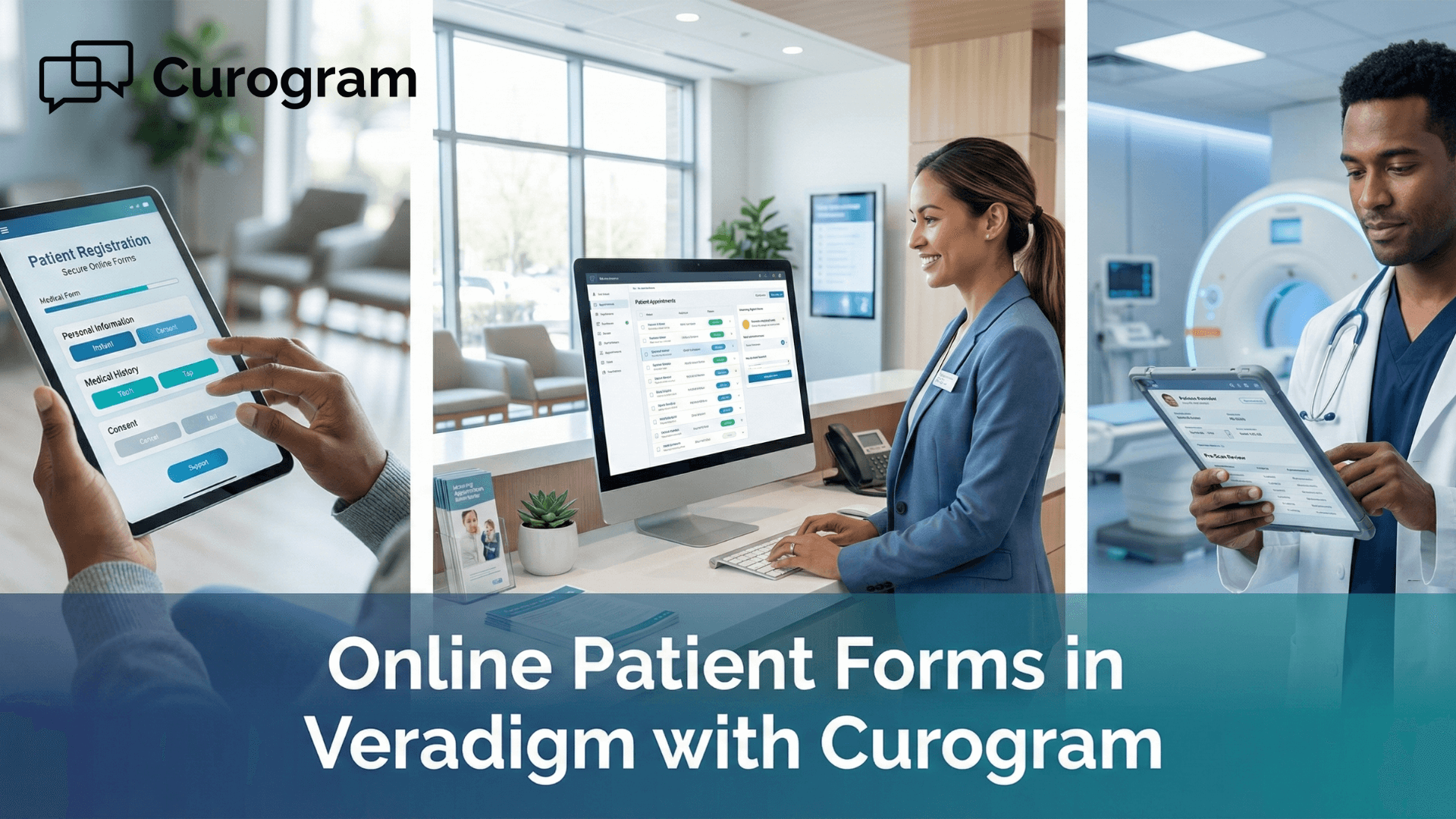
💡 Online patient forms in Veradigm enable imaging centers to transition away from paper-based intake that causes delays and errors.
  • Patients complete forms before they arrive, cutting check-in time
  • Staff avoid manual data entry and transcription errors
  • Veradigm digital intake ensures accurate, validated information
  • Multi-location networks gain consistent workflows across all sites
  • Patient registration automation reduces administrative costs
Imaging centers using online forms see fewer cancellations, better prep compliance, and higher throughput. The system is HIPAA-compliant and works with existing Veradigm scheduling workflows.

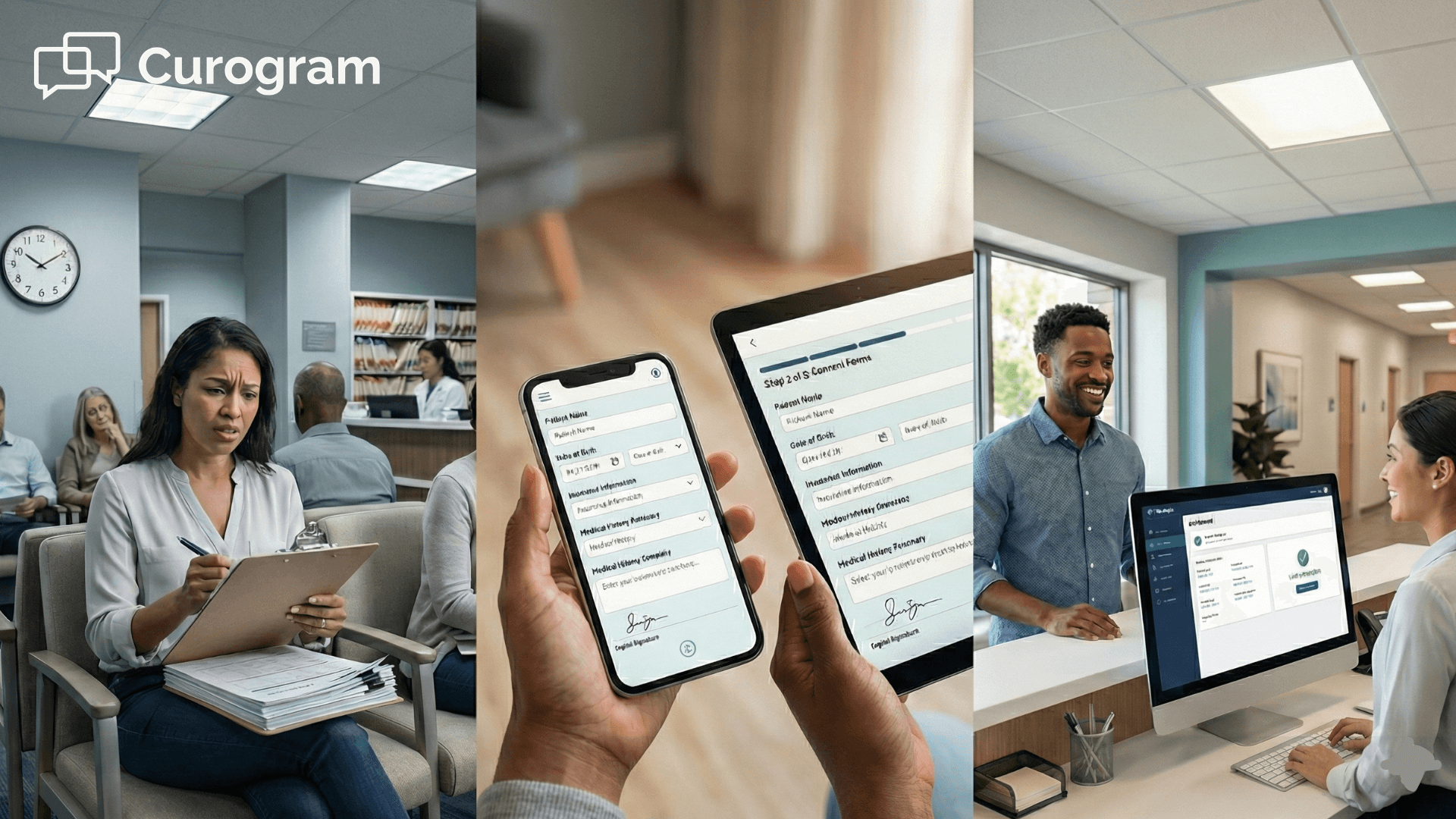
Paper forms create friction at every imaging center. Patients arrive, grab a clipboard, and spend time filling out the same information they provided on the phone. Staff must then decode handwriting, enter data into Veradigm, and chase down missing details before the exam can start.

This manual process affects more than just wait times. It creates gaps in clinical data, increases the risk of prep failures, and adds hours of work to front desk teams. For imaging centers running CT, MRI, and IR procedures, these delays directly impact daily throughput and revenue.

Online patient forms in Veradigm eliminate this bottleneck. Patients complete their intake forms digitally before the visit. Information flows into scheduling systems without manual entry. Staff focus on patient care instead of paperwork.

The shift from paper to digital intake is not just about convenience. It addresses core operational challenges that affect schedule performance, patient safety, and cost efficiency. Imaging centers that adopt patient registration automation see measurable improvements in workflow predictability and resource utilization.

Digital forms also support better patient preparedness. When patients receive clear instructions and complete detailed health histories ahead of time, they show up ready for their procedure. This reduces same-day cancellations and keeps modality schedules running smoothly.

The results are clear across metrics that matter to imaging directors and practice managers. Fewer errors, less administrative overhead, and stronger compliance all contribute to a more efficient operation.

Why Imaging Centers Need Digital Intake to Reduce Operational Bottlenecks

Manual intake processes create bottlenecks that affect every aspect of imaging center operations. Paper forms introduce errors, slow down workflows, and make it difficult to maintain consistency across multiple locations. Online patient forms eliminate these problems by automating data collection and validation before patients arrive.

The Hidden Costs of Paper-Based Intake Systems

Imaging centers depend on accurate patient data to maintain schedule flow. When information is incomplete or incorrect, it creates delays that affect the entire day. A single missing detail can push back multiple exams and force staff to scramble.

Paper-based intake introduces multiple points of failure. Patients make mistakes when filling out forms by hand. Staff misread handwriting or skip fields during manual entry. Missing signatures or incomplete medical histories require follow-up calls that consume valuable time.

For Veradigm users, these gaps create preventable problems. Scheduling systems rely on complete data to function properly. When demographic information is wrong or clinical details are missing, it disrupts the workflow that keeps modalities running on time.

Multi-Location Challenges That Paper Forms Create

Centers with multiple locations face an additional challenge. Each site may handle intake differently, leading to inconsistent patient experiences and operational friction. What works at one location may not translate to another, making it hard to standardize processes across the network.

Online patient forms replace this fragile system with predictable digital workflows. Patients enter their information directly into validated forms that catch errors before submission. Required fields ensure nothing gets skipped. Built-in checks verify that phone numbers, dates, and insurance details follow the correct format.

How Digital Workflows Transform Daily Operations

Staff no longer spend time decoding handwriting or chasing missing information. The data arrives clean, complete, and ready to use. This shift frees up front desk teams to focus on higher-value tasks like patient communication and care coordination.

Digital intake also supports better prep compliance. Imaging procedures often require specific patient actions before the appointment. Online forms can include prep instructions, dietary restrictions, and arrival guidance that patients can review multiple times. This reduces confusion and helps ensure patients show up prepared.

The impact extends beyond individual appointments. When intake runs smoothly, the entire schedule benefits. Modality utilization improves because fewer exams get delayed or canceled due to incomplete information. Staff morale increases because they spend less time on repetitive tasks.

For enterprise imaging groups, digital intake provides visibility into performance across locations. Administrators can track completion rates, identify bottlenecks, and make data-driven decisions about workflow improvements. This level of insight is impossible with paper-based systems.

Veradigm digital intake transforms a manual, error-prone process into an automated workflow that supports consistent, high-quality care delivery. The benefits compound over time as staff become more efficient, and patients arrive better prepared.

How Online Patient Forms Strengthen Veradigm Scheduling and Intake Workflows

Digital forms transform how imaging centers collect and process patient information. By moving intake online, facilities eliminate manual data entry, reduce errors, and speed up check-in times. The integration with Veradigm creates seamless workflows that benefit both staff and patients.

Eliminating Manual Data Entry and Reducing Check-In Time

The Problem With Double Data Entry

Paper forms force staff to re-enter patient information into Veradigm after each visit. This double-handling wastes time and introduces errors that affect scheduling accuracy. A misspelled name or wrong date of birth can create duplicate records or scheduling conflicts.

Digital intake removes this redundant work. Patients complete forms on their own devices before arrival. Information flows directly into the system without manual transcription. Staff verify details rather than typing them from scratch.

Measurable Time Savings at the Front Desk

The time savings are immediate and measurable. Front desk teams that once spent 15 minutes per patient on data entry now use that time for patient interactions and care coordination. Check-in becomes faster because most work happens before the patient walks through the door.

This efficiency gain supports better schedule performance. When check-in takes less time, the front desk can handle more volume without adding staff. Appointments start on time because patients are not stuck filling out paperwork in the waiting room.

Improved Data Quality Through Validation

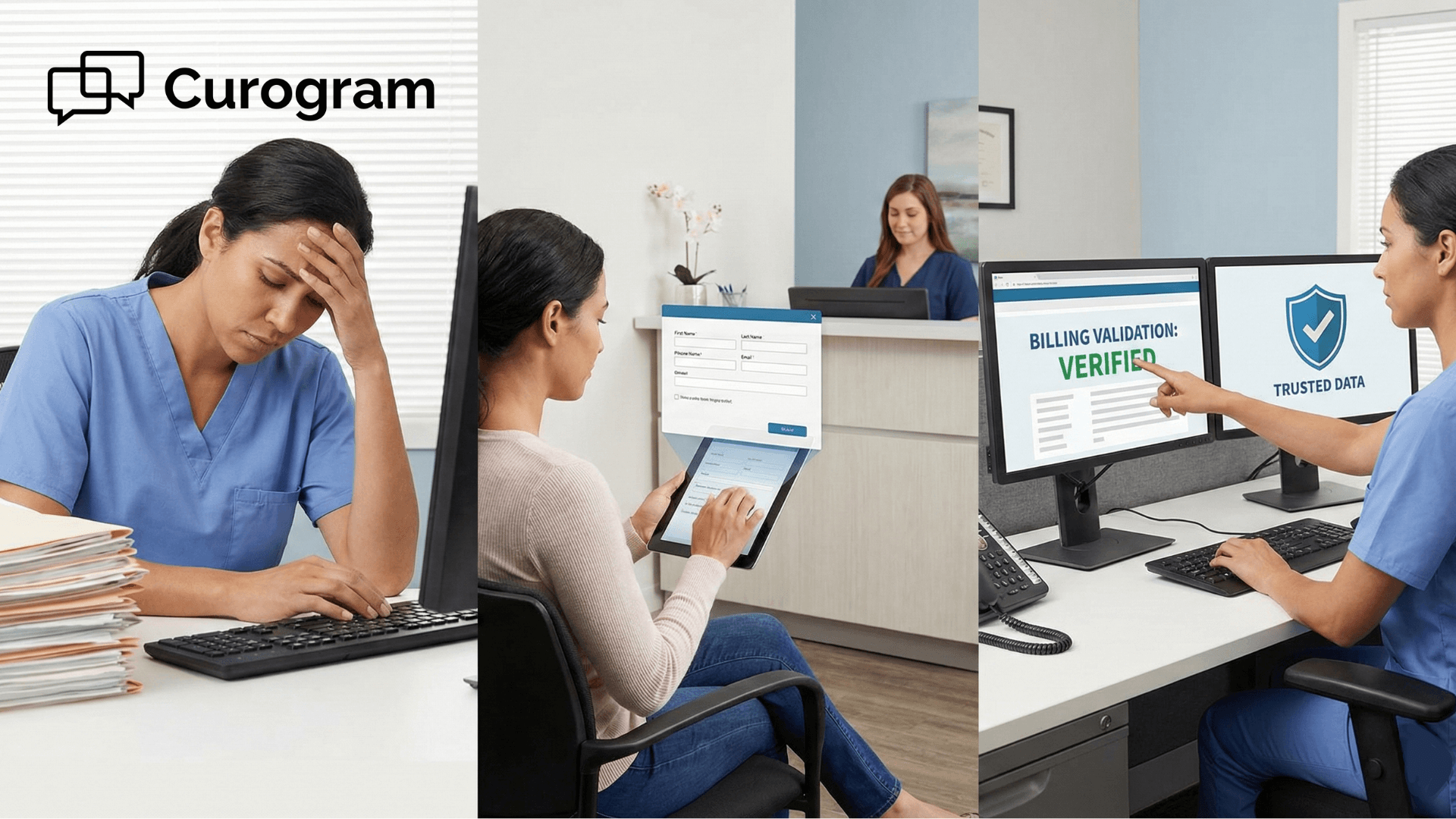
Patient registration automation also improves data quality. Validated fields prevent common errors such as invalid phone numbers or incorrect insurance IDs. Standardized formats ensure consistency across all submissions. This reduces the cleanup work that staff must do later.

For imaging centers that handle high volumes, these improvements add up quickly. A facility that processes 50 patients per day saves dozens of hours each week just by eliminating manual data entry. Those hours can be redirected toward patient care or other operational priorities.

The reduction in check-in time also enhances the patient experience. Patients appreciate not having to repeat information they have already provided. They arrive, confirm their details, and move quickly to their appointment.

This streamlined process creates a professional impression that builds trust. Patients see that the imaging center values their time and uses modern tools to provide efficient service.

Improving Accuracy for EMR Scheduling Sync

How Errors Disrupt Veradigm Workflows

Errors in demographic or clinical data disrupt Veradigm scheduling in ways that cascade through the day. A wrong phone number means staff cannot reach a patient to confirm an appointment. An incorrect insurance ID causes billing delays that tie up administrative resources.

Online forms ensure standardized, legible information that integrates cleanly with scheduling systems. Required fields prevent submissions with missing data. Format validation catches errors before they enter the system.

Building Reliability Through Clean Data

Accurate intake reduces downstream delays that affect multiple departments. When scheduling information is correct from the start, imaging teams can trust their daily workflow without constant verification and correction.

This reliability is especially important for complex procedures like CT and MRI exams that require detailed prep instructions. If patient contact information is wrong, staff cannot send reminders or clarify prep requirements. This increases the risk of no-shows or unprepared arrivals.

Digital forms also support better insurance verification. When insurance details are accurate and complete, billing teams can process claims without delays. This reduces the administrative burden on back-office staff and improves revenue cycle performance.

Veradigm users benefit from clean data that supports smooth operations across all functions. Scheduling, billing, and clinical teams all rely on the same accurate information, reducing friction and miscommunication.

The confidence that comes from reliable data allows imaging centers to operate more efficiently. Staff spend less time fixing errors and more time on productive tasks that support patient care and business goals.

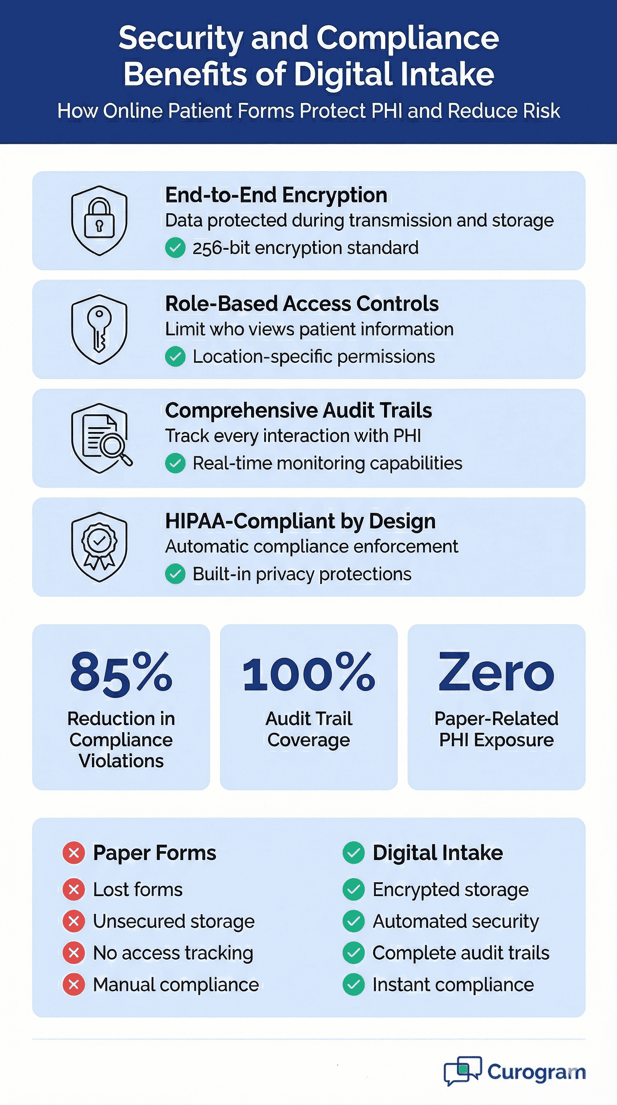
Digital patient intake security and HIPAA compliance benefits infographic

Enhancing Patient Preparedness for Imaging and IR Workflows

Proper patient preparation is critical for successful imaging procedures. Digital intake ensures that imaging centers collect complete clinical information and deliver clear prep instructions before appointments. This proactive approach reduces cancellations and improves first-attempt completion rates.

Collecting Clinical Information Needed for Prep-Sensitive Studies

Why Detailed Histories Matter for Safety

CT, MRI, and IR procedures require detailed patient histories and risk factor assessments. Renal function, contrast allergies, and implanted devices all affect whether a procedure can move forward safely. Paper forms often miss these critical details because patients skip questions or provide incomplete answers.

Online forms gather this information upfront with required fields that prevent submissions until all questions are answered. Patients cannot skip past allergy information or medical history sections. This ensures imaging teams have the data they need to make safe decisions about contrast administration and procedure protocols.

Better Information Collection at Home

The quality of information improves because patients can complete forms at home where they have access to medication lists and medical records. They can take time to provide accurate responses without the pressure of a busy waiting room. This leads to more complete and reliable clinical data.

Better information collection prevents day-of surprises that lead to cancellations. If a patient has a contraindication that requires additional prep or a different protocol, staff know about it in advance. They can adjust the schedule or provide additional instructions before the appointment date.

This proactive approach reduces wasted modality time and maintains schedule integrity. A canceled MRI because of an undisclosed pacemaker represents lost revenue and a disrupted workflow. Online forms help prevent these scenarios by collecting accurate information early.

Radiology workflow automation improves across all modalities when clinical data is complete and reliable. Technologists can prepare for each exam with confidence, knowing they have the information needed to perform procedures safely and efficiently.

For interventional radiology procedures, accurate clinical histories are even more critical. Bleeding risk factors, medication allergies, and prior surgical history all influence procedure planning. Digital intake ensures these details are documented before the patient arrives.

Ensuring Patients Receive Clear, Digital Prep Instructions

The Limitations of Verbal Instructions

Digital intake forms can include prep requirements, location directions, and arrival guidance that patients need for successful visits. Unlike verbal instructions given over the phone, written information can be reviewed multiple times and shared with family members who help with care.

This reduces misunderstandings that lead to no-shows or unprepared arrivals. Patients know exactly when to stop eating, which medications to hold, and what to bring on the day of the procedure. Clear instructions prevent confusion and increase patient compliance.

Supporting Better Outcomes Through Written Guidance

Digital delivery also allows for more detailed guidance than paper handouts. Forms can include links to videos, maps, and additional resources that help patients prepare properly. Imaging centers can provide customized instructions based on procedure type and patient history.

The ability to revisit instructions at any time gives patients confidence in their preparation. They can check the details the night before or on the morning of the appointment without calling the office. This reduces phone volume for front desk staff and empowers patients to take ownership of their care.

When patients arrive prepared, procedures run on schedule. There are no delays because someone ate breakfast before a fasting exam or forgot to bring the required paperwork. The predictability this creates benefits everyone involved in care delivery.

Imaging groups that use digital prep instructions see measurable improvements in first-attempt completion rates. Patients who receive clear, accessible guidance are more likely to complete their exams without rescheduling. This improves modality utilization and revenue performance.

The professional presentation of digital instructions also enhances patient confidence. Clear formatting, visual aids, and step-by-step guidance convey that the imaging center is organized and focused on patient success.

Standardizing Multi-Location Intake Workflows

Multi-location imaging networks face unique challenges in maintaining consistent processes across all sites. Digital intake creates standardization that paper systems cannot achieve. Every location follows the same workflow, collects the same information, and delivers the same patient experience.

Eliminating Variability Across Imaging Sites

The Problem of Inconsistent Processes

Paper workflows differ from one location to another, creating inconsistent experiences that confuse patients and complicate operations. One site may use a three-page form while another uses five pages. Staff at different locations may ask for different information or handle prep instructions differently.

This variability creates operational friction and makes it difficult to maintain quality standards across a network. Patients who visit multiple locations within the same imaging group should have a consistent experience, but paper-based systems make this nearly impossible.

Achieving Consistency Through Digital Standards

Online forms unify the intake process across the entire imaging network. Every location uses the same forms, asks the same questions, and collects information in the same format. This standardization improves data quality and reduces training burden for staff who work at multiple sites.

Consistent workflows also support better performance measurement. When every location follows the same process, administrators can compare metrics meaningfully and identify opportunities for improvement. Paper-based systems make this kind of analysis difficult because data collection methods vary by site.

Digital intake supports multi-location imaging workflows by providing a single source of truth for patient information. When a patient completes forms at one location, that data is available system-wide. This eliminates redundant data entry and ensures continuity of care across the network.

Imaging executives gain visibility and control over system-wide intake performance. They can see completion rates by location, identify bottlenecks, and implement improvements that benefit the entire organization. This level of oversight is impossible with decentralized paper processes.

Standardization also makes it easier to roll out new procedures or update existing protocols. Changes to forms or workflows can be implemented centrally and applied across all locations simultaneously. This ensures compliance and reduces the risk of inconsistent practices.

Strengthening Brand Consistency and Professionalism

Meeting Modern Patient Expectations

Digital intake conveys reliability and meets modern patient expectations. Patients increasingly expect healthcare providers to offer convenient digital tools that simplify administrative tasks. Paper forms feel outdated and suggest that a practice may not be keeping pace with industry standards.

Online forms demonstrate that an imaging center invests in patient experience and operational excellence. The professional appearance and ease of use build trust and create positive first impressions. Patients appreciate the convenience of completing forms on their own schedule rather than rushing through paperwork in a waiting room.

Building Trust Through Uniform Quality

This enhanced experience reduces negative feedback and improves patient satisfaction scores. When administrative processes are smooth and efficient, patients can focus on their care rather than frustrations with intake procedures. This contributes to better reviews and stronger patient loyalty.

Brand consistency across locations reinforces the imaging network's identity and market position. Patients who visit different sites within the same organization should encounter the same high standards and user-friendly processes. Digital intake makes this consistency achievable.

The entire imaging network benefits from brand alignment that differentiates it from competitors. In markets where multiple imaging providers compete for referrals, operational excellence and patient experience become key competitive advantages. Digital intake supports both.

Professional digital workflows also appeal to referring providers who value efficiency and reliability. Physicians are more likely to refer patients to imaging centers that demonstrate operational competence and use modern tools to support care coordination.

Reducing Administrative Workload and Costs

Administrative tasks consume valuable staff time and drive up operational costs. Digital intake automates repetitive work and eliminates paper management. The efficiency gains allow imaging centers to handle higher volumes without adding staff.

Minimizing Time Spent on Paper Management and Transcription

The Hidden Cost of Manual Processing

Imaging staff spend unnecessary hours decoding handwriting, correcting errors, and entering data from paper forms. This work is tedious, error-prone, and takes time away from patient-facing activities that add real value.

Online forms eliminate manual handling and reduce administrative overhead significantly. Once a patient submits a form, the information is immediately available in digital format. No one needs to type it, file it, or track it down later.

Redirecting Labor to Higher-Value Work

This frees up labor for patient-facing tasks that improve care quality and operational performance. Front desk staff can focus on communication, scheduling coordination, and problem-solving rather than data entry. The shift in how staff spend their time contributes to better job satisfaction and lower turnover.

For enterprise imaging centers that process thousands of patients each month, the time savings compound quickly. A facility that eliminates 10 minutes of manual work per patient saves hundreds of hours each month. Those hours represent real cost savings that can be redirected toward growth initiatives or quality improvements.

Digital forms also reduce the physical burden of paper management. Filing cabinets, storage space, and document retrieval all require resources. Digital records eliminate these costs while improving accessibility and security.

The environmental benefits of going paperless also align with corporate sustainability goals. Reducing paper consumption, printer use, and physical storage contributes to greener operations that resonate with environmentally conscious patients and staff.

Improving Staff Efficiency Without Adding New Resources

Scaling Through Automation

Digital intake absorbs routine tasks automatically, allowing existing staff to handle higher volumes without burning out. Automation handles data validation, error checking, and basic triage, freeing humans to focus on complex cases and patient interactions.

Imaging networks can avoid hiring additional staff despite increased patient volume. As demand grows, digital workflows scale efficiently without proportional increases in labor costs. This improves the cost structure of the business and protects margins.

Compounding Benefits Across Locations

Efficiency gains compound across modalities and locations. When every site uses automated intake, the total time savings across a multi-location network become substantial. These savings can fund investments in equipment, technology, or staff development.

The return on investment for digital intake is measurable and quick. Most imaging centers see payback within months as labor savings and efficiency gains accumulate. The ongoing benefits continue to deliver value year after year.

Patient communication automation works alongside digital intake to create end-to-end workflow improvements. When intake, scheduling, reminders, and follow-up all run automatically, the operational burden on staff drops dramatically. This creates capacity for growth without proportional cost increases.

Strengthening Compliance and Audit Readiness for Veradigm Imaging Centers

Healthcare compliance requires secure handling of patient information and complete documentation. Digital intake provides encryption, access controls, and audit trails that paper forms cannot match. These security features protect PHI while simplifying compliance management.

Encrypted, HIPAA-Compliant Digital Intake

Eliminating Paper Security Risks

Paper forms increase the risk of PHI exposure through loss, theft, or improper disposal. Clipboards left in waiting rooms, forms filed incorrectly, and documents thrown in regular trash all create compliance vulnerabilities that can result in penalties.

Online forms ensure secure submission and storage of sensitive information. Encryption protects data during transmission and at rest. Access controls limit who can view patient information. Audit logs track every interaction with the data.

Enterprise-Level Security and Oversight

Enterprise IT teams gain visibility into access patterns and security events. They can monitor compliance in real-time and respond quickly to potential issues. This level of oversight is impossible with paper-based systems.

Compliance becomes easier to maintain across all imaging sites when digital tools enforce security standards automatically. Staff cannot accidentally create vulnerabilities because the system controls how data moves and who can access it.

Regular security audits and compliance reviews become less burdensome when documentation is digital and centralized. Auditors can review access logs, encryption protocols, and data handling procedures without sifting through file cabinets or tracking down paper trails.

The peace of mind that comes from strong security practices allows imaging centers to focus on patient care rather than worrying about compliance violations. Digital intake removes a major source of risk while improving operational efficiency.

Reducing Documentation Errors That Trigger Workflow Disruptions

The Cost of Incomplete Documentation

Missing signatures, incomplete answers, and illegible handwriting cause clinical and legal challenges that disrupt operations. A form without a required signature may not be legally valid for consent. An incomplete medical history can lead to unsafe treatment decisions.

Digital intake ensures required fields are captured consistently. Forms cannot be submitted until all necessary information is provided. Electronic signatures meet legal standards and eliminate the ambiguity of handwritten names.

Building Confidence Through Complete Records

This reduces compliance gaps that could affect patient safety or audit performance. When documentation is complete and accurate, there is no question about whether proper procedures were followed. This protects both patients and the organization.

Veradigm workflows become more dependable and accurate when they are built on clean, validated data. Staff trust the information they receive and can make decisions confidently without constant verification.

The reduction in documentation errors also improves the quality of care delivery. When clinical teams have accurate information, they can provide appropriate treatment without delays or second-guessing. This contributes to better outcomes and higher patient satisfaction.

The ROI Value of Digital Intake for Enterprise Radiology Groups

Digital intake delivers measurable financial returns through improved throughput and reduced costs. Imaging centers see more completed exams, fewer cancellations, and lower administrative expenses. These benefits create sustainable competitive advantages.

More Completed Exams, Fewer Reschedules

Improving First-Attempt Success Rates

Patients with completed digital intake arrive more prepared and informed. They understand what to expect, know how to prepare, and have accurate information about timing and location. This reduces confusion and anxiety that can lead to no-shows.

The result is an increase in first-attempt completion rates. Imaging directors see higher modality utilization because fewer appointments get canceled or rescheduled due to patient unpreparedness. Each successful exam represents revenue that would otherwise be lost.

Financial Impact of Better Throughput

Stronger daily throughput contributes directly to financial performance. When modalities run at higher capacity, the fixed costs of equipment and facility are spread across more procedures. This improves margins and creates room for growth.

Reduced variability in schedule performance makes financial planning more predictable. Administrators can forecast revenue with greater confidence when they know that completion rates will remain consistently high. This supports better business decisions and resource allocation.

The compounding effect of small improvements becomes significant over time. A 5% increase in completion rates may not seem dramatic, but across thousands of procedures per year, it represents substantial additional revenue.

Lower Administrative Costs Through Automation

Quantifying Labor Savings

Less manual entry means fewer labor hours spent on repetitive tasks. When staff no longer need to transcribe handwritten forms, re-enter data, or chase missing information, those hours can be redirected toward revenue-generating activities.

Multi-location imaging groups gain significant cost savings by eliminating redundant work at every site. The cumulative impact across a network of 10 or 20 locations becomes a major line item in financial performance.

Long-Term Value Creation

Digital intake reinforces patient communication automation across the organization. When intake, reminders, and follow-up all run digitally, the operational leverage increases. Staff can support more patients without proportional increases in headcount.

Long-term ROI compounds as digital workflows scale with patient volume. Unlike labor-intensive processes that require additional staff as volume grows, automated workflows handle increased demand efficiently. This creates a sustainable competitive advantage.

The cost structure improvement that comes from automation allows imaging centers to invest in quality improvements, equipment upgrades, and market expansion. Better margins create strategic options that would not be available with manual processes.

Why Curogram Is the Digital Intake Layer Radiology Groups Add to Veradigm

Curogram provides the digital intake capabilities that Veradigm users need without disrupting existing workflows. The platform integrates seamlessly, scales with growing volume, and maintains enterprise-level security. Imaging centers gain efficiency without complexity.

Seamless Integration Into Existing Veradigm Workflows

Preserving Workflow Continuity

Curogram complements Veradigm scheduling and patient communication without requiring new systems or major workflow changes. The platform is designed to work alongside existing tools rather than replace them.

Staff adopt digital forms quickly with minimal training because the interface is intuitive and aligned with front desk workflows. Implementation does not disrupt operations or require lengthy transition periods. Imaging centers can start seeing benefits within days rather than months.

Maintaining Daily Operations

Workflow continuity stays intact across modalities and locations. Existing scheduling processes, billing procedures, and clinical protocols continue to function as designed. Curogram adds value without introducing friction or complexity.

Imaging teams experience smoother daily operations because digital intake removes bottlenecks without creating new problems. The platform handles routine tasks automatically while giving staff control over exception handling and patient interaction.

Integration with Veradigm means patient information flows seamlessly between systems. Data entered through Curogram forms appears in scheduling systems without manual transfer. This eliminates double work and ensures consistency across platforms.

Built for Enterprise Imaging Volume and Complexity

Scaling With Your Business

Curogram supports intake for thousands of patients across multi-location networks without performance degradation. The platform scales automatically as volume grows, maintaining speed and reliability even during peak periods.

Digital workflows handle complex scenarios that paper forms cannot manage. Conditional logic can show or hide questions based on previous answers. Forms can branch to collect specialty-specific information for different procedure types. This flexibility supports diverse imaging workflows.

Maintaining Quality at Scale

Imaging centers maintain consistent quality no matter how many locations they operate. Every site benefits from the same reliable platform, standardized forms, and automated processes. This consistency supports operational excellence across the entire network.

The platform's architecture is designed for enterprise healthcare environments where security, compliance, and reliability are non-negotiable. Uptime guarantees, disaster recovery procedures, and technical support ensure that digital intake remains available when imaging centers need it.

This enterprise-grade foundation aligns perfectly with multi-location imaging workflows that require both sophistication and reliability. Curogram delivers both without compromise.

Fully HIPAA-Compliant and Audit-Ready

Purpose-Built for Healthcare Security

Encrypted submission, secure storage, and comprehensive audit logs support enterprise governance requirements. PHI stays protected throughout the entire intake process from submission through long-term storage.

Compliance teams maintain oversight while improving efficiency. They can verify security practices, review access logs, and demonstrate compliance during audits without disrupting operations. Digital documentation makes regulatory review straightforward.

Reducing Risk While Improving Efficiency

Enterprise imaging groups reduce both operational and security risk by using tools that are purpose-built for healthcare compliance. Curogram meets HIPAA requirements and industry best practices without requiring extensive configuration or custom development.

The platform's security features work automatically, eliminating the risk of human error that can create vulnerabilities. Encryption is mandatory, access is controlled, and logs are maintained without staff intervention. This makes compliance easier and more reliable.

Imaging centers can focus on patient care and operational improvement, knowing that their digital intake platform meets the highest standards for data security and privacy protection.

Conclusion

A Faster, Safer, More Accurate Intake System for Veradigm Imaging Centers

Manual intake creates delays, errors, and workflow inconsistency that affect every aspect of imaging center operations. Paper forms burden staff with repetitive data entry while creating compliance risks and quality gaps.

Online patient forms eliminate these problems by automating intake and ensuring accurate, complete information from every patient. Digital workflows reduce administrative burden, improve schedule performance, and support better patient preparedness.

The benefits extend across operations. Staff save hours each day on data entry and paper management. Patients arrive better prepared for their procedures. Schedules run more predictably with fewer cancellations.

For enterprise imaging groups, digital intake provides the standardization and visibility needed to manage complex, multi-location operations. Consistent processes, reliable data, and measurable performance improvements contribute to stronger financial results.

Curogram enhances Veradigm by providing a compliant, scalable digital intake solution that integrates seamlessly with existing workflows. The platform supports operational excellence while reducing costs and improving patient experience.

Imaging centers that adopt patient registration automation position themselves for sustainable growth. Better efficiency, higher quality, and improved margins create competitive advantages that compound over time.

The shift from paper to digital intake is not just about technology. It is about building operations that can scale efficiently, deliver consistent quality, and meet rising patient expectations. Online patient forms in Veradigm make this transformation possible.

Book a Demo to See Curogram + Veradigm in Action.


Frequently Asked Questions

How do online patient forms improve scheduling accuracy in Veradigm?

Online patient forms improve scheduling accuracy by collecting validated, complete information before appointments. This clean data integrates directly with Veradigm scheduling systems without manual entry, eliminating transcription errors. Staff spend less time correcting mistakes and more time managing the schedule effectively.

Why does digital intake reduce administrative costs for imaging centers?

Digital intake reduces administrative costs by eliminating manual data entry, paper handling, and physical storage. Automated validation catches errors before submission, reducing cleanup work.

For multi-location imaging centers, these savings multiply across every site. The efficiency gains allow existing staff to handle higher patient volumes without adding headcount. These cost reductions improve margins while maintaining or improving service quality.

How do online forms help patients prepare better for imaging procedures?

Online forms help patients prepare better by including detailed prep instructions that they can review multiple times. Written instructions for fasting, medication changes, and arrival details reduce confusion compared to verbal phone instructions. This leads to better compliance and fewer day-of cancellations due to improper preparation. The result is higher first-attempt completion rates and better modality utilization.

Why is standardization important for multi-location imaging networks?

Standardization is important because it ensures consistent patient experiences and operational quality across all locations. When every site uses the same intake process, patients receive uniform service regardless of which facility they visit.

Standardized workflows also make staff training easier when employees work at multiple locations. Administrators can compare performance metrics meaningfully across sites to identify improvement opportunities. Changes to forms or protocols can be implemented centrally and applied everywhere simultaneously, ensuring compliance and reducing operational risk.

How does HIPAA-compliant digital intake protect patient information?

HIPAA-compliant digital intake protects patient information through encryption, access controls, and audit logging. Data is encrypted during transmission and storage, preventing unauthorized access. Only authorized staff can view patient information, with role-based permissions controlling who sees what data. Audit logs track every interaction with patient information, creating accountability and supporting compliance reviews.

Digital systems eliminate risks associated with paper forms, such as loss, theft, or improper disposal. Automated security measures work consistently across all locations without relying on staff to follow procedures manually. This combination of technical controls and process automation reduces compliance risk significantly.


Streamlining Digital Intake Workflows in Veradigm

Streamlining Digital Intake Workflows in Veradigm

💡 Digital intake workflow, along with Veradigm solutions, helps imaging centers eliminate delays and errors from paper-based processes. Patients...
Read More
Reducing Admin Workload and Boosting ROI with Online Forms in Veradigm

Reducing Admin Workload and Boosting ROI with Online Forms in Veradigm

💡 Online patient forms cut costs and boost revenue for imaging centers using Veradigm. They reduce the admin workload on Veradigm while making care...

Read More
Reducing Check-In Times with Ramsoft

Reducing Check-In Times with Ramsoft

💡 Reducing check-in delays is a growing priority for radiology networks using Ramsoft. Manual intake processes slow down patient flow, increase...

Read More