
1 min read
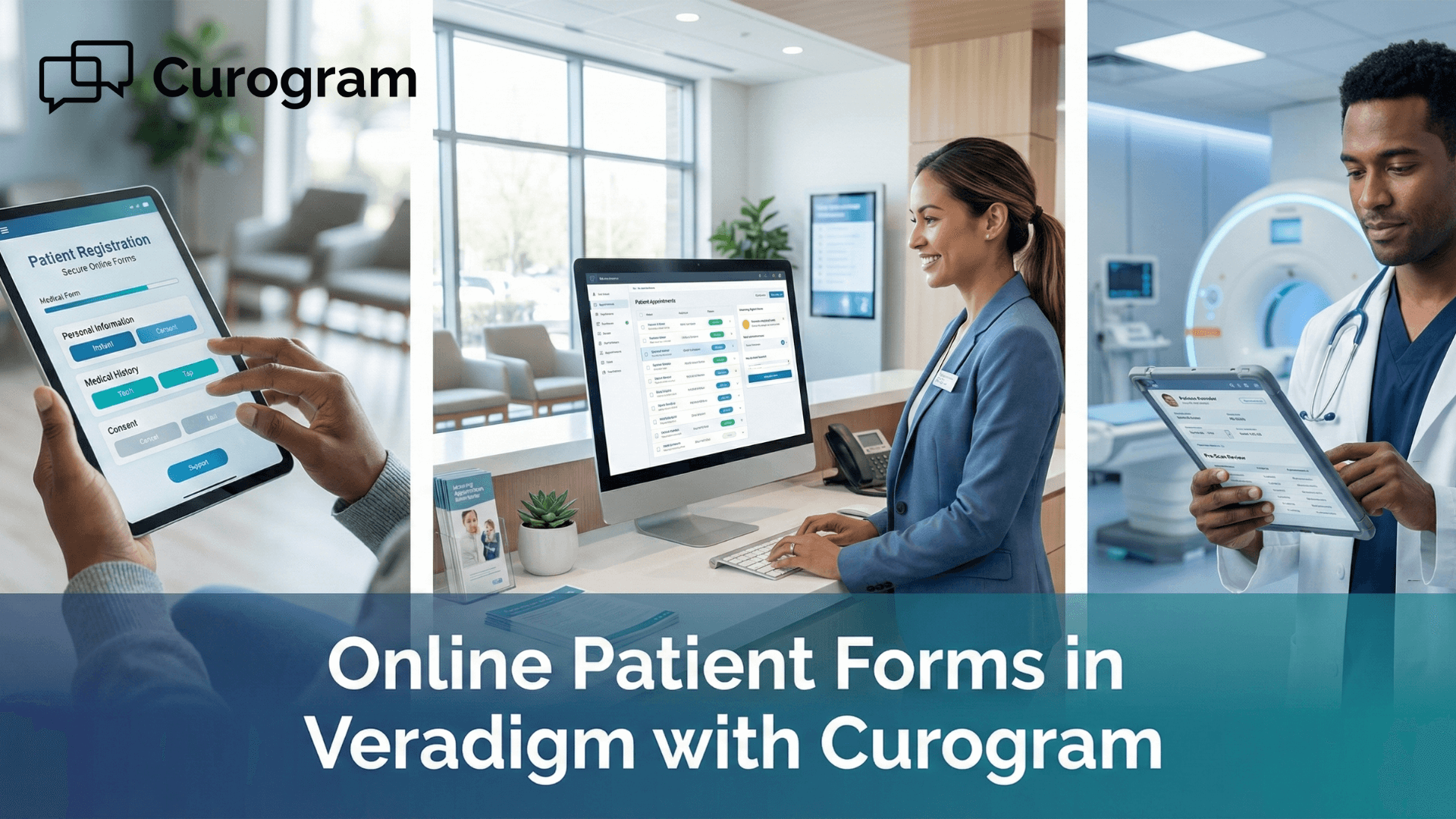
Online Patient Forms in Veradigm with Curogram
 Jo Galvez : Jan 7, 2026, 6:00:04 AM
💡 Online patient forms in Veradigm enable imaging centers to transition away from paper-based intake that causes delays and errors. Patients...

Every imaging center faces the same morning challenge. Patients arrive with forms to fill out. Staff wait for clipboards to return. Incomplete information requires follow-up questions. Meanwhile, the schedule falls behind before the first exam even starts.
Paper forms create friction that affects the entire day. A missing allergy notation delays a contrast study. Illegible handwriting forces staff to guess at insurance details. An unsigned consent form means another trip to the waiting room. Each small delay compounds into hours of lost productivity.
For radiology teams using Veradigm, these intake problems disrupt scheduling workflows that depend on accurate, complete information. When demographic data is wrong or clinical histories are incomplete, it creates cascading issues across departments. Billing teams cannot process claims. Technologists lack the necessary details to prepare properly. Referring providers wait longer for results.
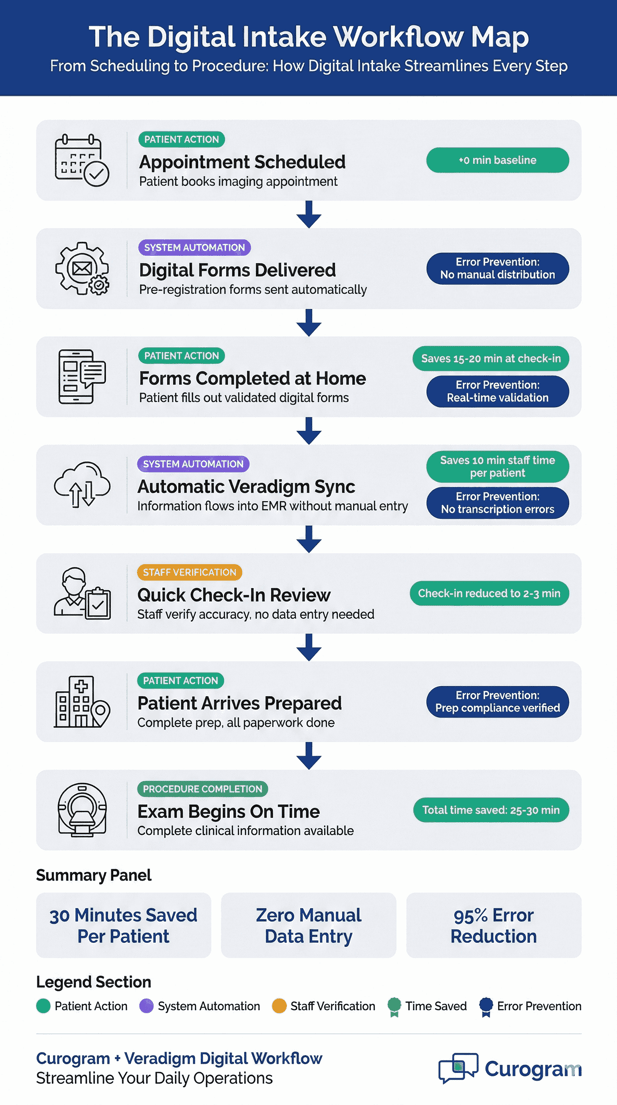
Digital intake workflow and Veradigm solutions address these challenges by moving the entire intake process online. Patients complete forms before they arrive. Information flows directly into scheduling systems. Staff verify details instead of entering them manually.
The shift from paper to digital transforms intake from a bottleneck into an efficient, automated process. Check-in takes minutes instead of 15 or 20. Staff handle more patients without adding headcount. Errors drop because validated fields catch mistakes before submission.
For multi-location imaging networks, digital intake creates consistency that paper processes cannot match. Every site follows the same workflow. Management gains visibility into performance. Patients receive the same high-quality experience regardless of which facility they visit.
The operational benefits extend beyond time savings. Better prep compliance reduces cancellations. Accurate data supports smoother Veradigm workflows. Staff satisfaction improves because repetitive tasks disappear. These improvements add up to measurable gains in throughput and cost efficiency.
Efficient intake workflows are the foundation of successful imaging operations. When patient information is accurate and complete, schedules run smoothly, and staff can focus on care delivery. Manual processes create bottlenecks that digital solutions eliminate.
Radiology teams depend on accurate, complete patient information to run predictable schedules. Every exam requires specific details about medical history, allergies, and current medications. Missing or incorrect information can halt procedures and force reschedules that disrupt the entire day.
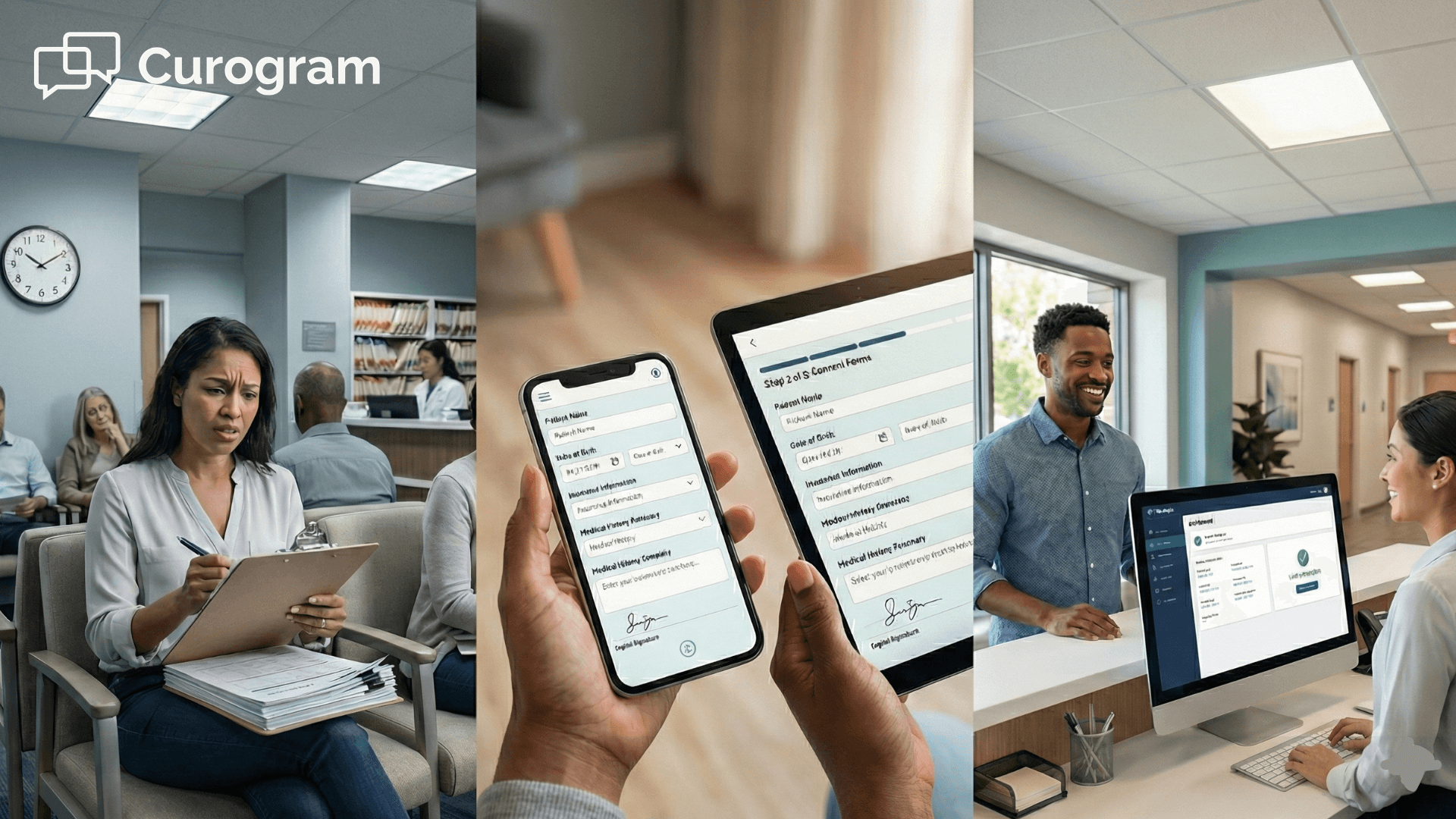
Paper forms slow down check-in and create errors that ripple through Veradigm workflows. Patients rush through questions in busy waiting rooms. Handwriting becomes illegible when forms are completed quickly. Fields get skipped because instructions are unclear or patients do not understand medical terms.
Staff then spend valuable time decoding these forms and entering data manually. A single digit wrong in a date of birth can create a duplicate record. A misspelled name causes billing delays. An incomplete medical history means technologists must track down missing information before starting the exam.
High patient volume makes manual intake unsustainable for multi-location imaging networks. A facility processing 50 or 100 patients daily cannot afford 10 minutes of manual data entry per person. The administrative burden grows faster than revenue, squeezing margins and limiting growth capacity.
The problems multiply across locations when each site handles intake differently. One facility uses a three-page form while another uses five pages. Different staff members ask for different information. Patients who visit multiple locations face inconsistent experiences that reduce satisfaction and trust.
Paper-based processes also create compliance vulnerabilities. Forms get lost or misfiled. Unsigned consent documents create legal risk. PHI exposure increases when clipboards sit unattended in waiting rooms. These risks become harder to manage as imaging networks grow.
Digital intake workflow with Veradigm offers a faster, consistent, and scalable alternative. Online forms standardize the process across all locations. Patients complete their intake forms at home, where they have time to provide accurate answers. Required fields ensure nothing gets skipped.
The validation happens automatically before submission. Phone numbers must match the correct format. Dates cannot be in the future. Insurance IDs follow standard patterns. These checks prevent errors that would otherwise require staff time to fix.
For imaging centers that handle complex procedures, digital intake supports better clinical documentation. CT and MRI exams require detailed histories about contrast reactions, kidney function, and implanted devices. Online forms can include conditional logic that shows additional questions based on previous answers.
This level of detail would be difficult to achieve with paper forms, where patients might skip sections or provide incomplete responses. Digital forms ensure that every required piece of information gets collected before the appointment date.
The time savings start immediately. Patients arrive with completed forms instead of clipboards. Front desk staff verify information rather than typing it. Check-in takes minutes because most work happens before the patient walks through the door.
These efficiency gains allow imaging centers to handle higher volumes without adding staff. The same front desk team that once processed 40 patients can now handle 60 or more. This improved productivity creates room for growth while controlling costs.
Check-in delays affect patient satisfaction and schedule performance. Digital intake moves the entire process online, allowing patients to complete forms before arrival. This shift eliminates waiting room congestion and speeds up the start of each appointment.
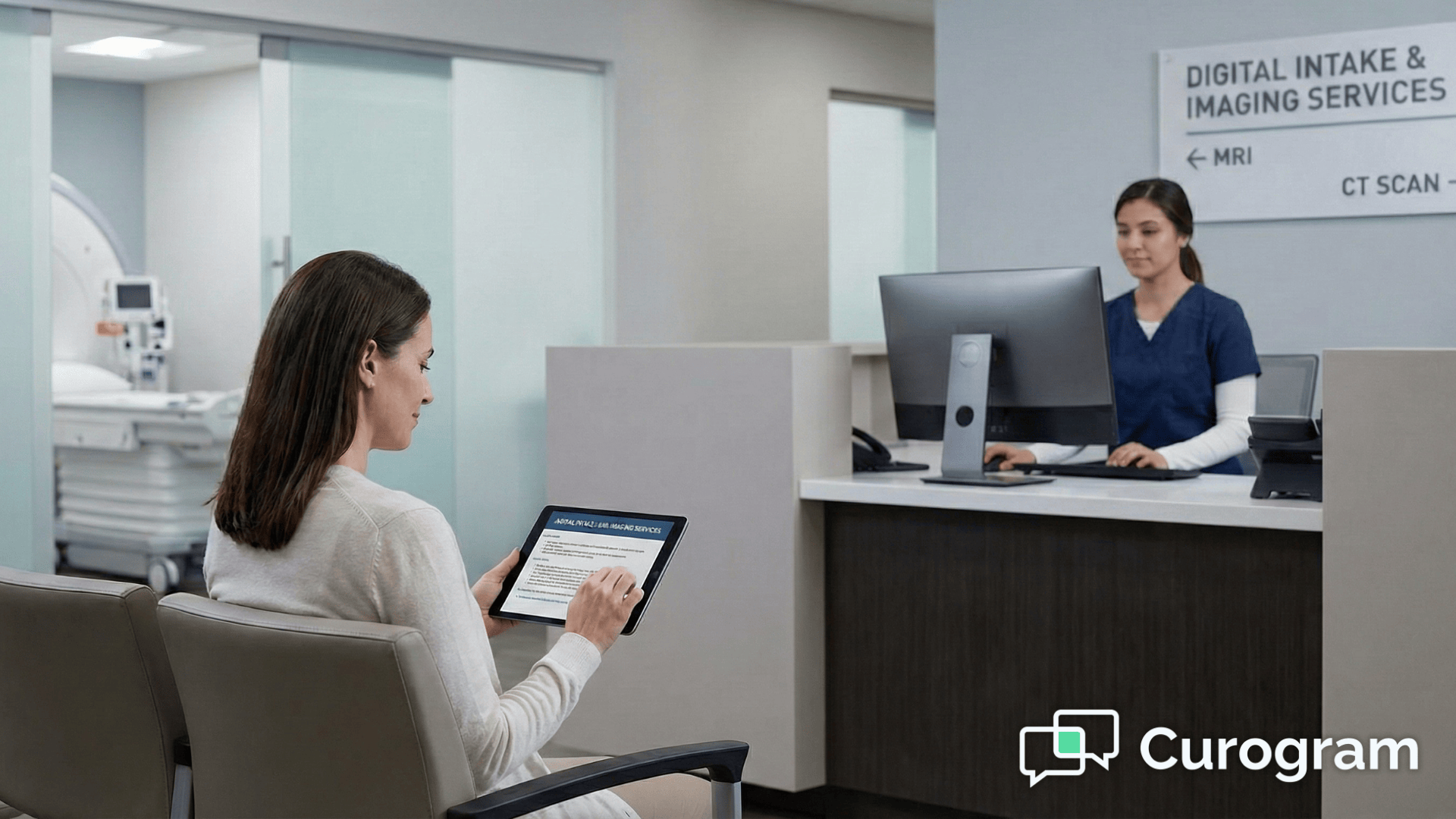
Online forms allow patients to submit required information from home, office, or anywhere they have internet access. This flexibility means intake happens on the patient's schedule rather than in a crowded waiting room under time pressure.
Patients can complete pre-registration forms days before their appointment. They can pause and resume if they need to look up medication names or insurance details. This results in more accurate, complete submissions compared to rushed paperwork filled out minutes before an exam.
The reduction in waiting room congestion improves the experience for everyone. Patients do not need to arrive 20 minutes early to fill out forms. They check in, confirm their information, and proceed to their appointment. This efficiency creates a more pleasant environment and reduces stress.
Staff workload at the front desk drops significantly. Instead of managing clipboards, answering form-related questions, and chasing missing information, they focus on verification and patient communication. This shift allows them to provide better service while handling more volume.
E-signature intake capabilities mean consent forms can be signed digitally before arrival. Patients review consent language carefully at home rather than skimming quickly in the waiting room. Legal requirements are met while improving patient understanding of procedures.
For imaging centers with early morning or late afternoon schedules, digital intake is especially valuable. Patients can complete forms the night before rather than rushing through paperwork before a 7 AM appointment. This improves compliance and reduces the stress of early arrivals.
Eliminating Errors Caused by Paper Forms
Illegible handwriting creates problems throughout the intake process. Staff must guess at names, addresses, or medication spellings. Wrong guesses lead to billing errors, duplicate records, or incomplete medical histories that affect care decisions.
Digital forms ensure clean, complete, and validated information that integrates seamlessly with Veradigm. Typed text is always legible. Required fields cannot be skipped. Format validation catches errors like invalid phone numbers or impossible dates before submission.
This accuracy eliminates the rework that consumes staff time with paper systems. No one needs to call patients to verify unclear information. No one needs to fix incorrect data that caused billing rejections. The information arrives right the first time.
Veradigm receives accurate data without manual intervention or correction. Scheduling systems can trust the information they receive. Billing teams process claims without delays. Clinical staff have the details they need to provide safe, appropriate care.
The reliability that comes from validated digital intake supports radiology workflow automation across departments. When every process can trust the accuracy of patient information, the entire operation becomes more efficient and predictable.
Patient preparedness directly impacts procedure success rates. Digital intake collects detailed clinical information and delivers clear prep instructions before appointments. Better-prepared patients arrive ready for their exams, reducing cancellations and delays.
Many imaging exams require detailed clinical history, allergy information, and risk factor assessments that affect procedure protocols. CT scans with contrast need kidney function details. MRI exams require information about implanted devices. IR procedures depend on bleeding risk factors and medication lists.
Online intake ensures this information is complete before the appointment. Patients have time to consult their medication bottles, review old medical records, or call their primary care provider for details. This results in more accurate clinical documentation than forms completed hastily in waiting rooms.
Required fields prevent submissions until all critical questions are answered. A patient cannot skip past contrast allergy questions or leave the surgical history blank. The form guides them through every necessary section and confirms completion before allowing submission.
This thorough data collection helps prevent last-minute reschedules caused by missing information. If a patient has a contraindication that requires protocol changes, staff know about it days in advance. They can adjust scheduling, provide additional instructions, or arrange for alternative imaging approaches.
The proactive approach reduces workflow interruptions that affect schedule performance. Technologists do not discover critical missing information when the patient is already on the table. Everyone has the information they need to proceed safely.
Pre-registration forms can include conditional logic that adapts based on patient responses. If someone indicates a prior contrast reaction, additional questions appear about the reaction type and severity. This intelligence in form design supports better clinical decision-making.
For interventional procedures, the level of detail required is even higher. Digital intake allows for comprehensive questionnaires that would be impractical on paper. Patients can work through complex questions at their own pace, ensuring nothing important gets missed.
Patients often forget verbal instructions given over the phone when scheduling appointments. "Nothing to eat after midnight" becomes "I think they said no food" which leads to confusion about coffee, water, or medications. These misunderstandings cause prep failures and canceled exams.
Digital forms include prep guidelines that patients can review multiple times before their appointment. Clear written instructions eliminate ambiguity about fasting requirements, medication changes, or arrival times. Patients can check details the night before or morning of without calling the office.
The ability to revisit instructions improves compliance significantly. Studies show that written information reinforces verbal communication and helps patients follow complex prep protocols. For procedures requiring multiple steps over several days, written guidance is essential.
This supports radiology appointment communication by creating a consistent message across all touchpoints. The prep instructions in the digital form match what the staff said during scheduling. Reminder messages can reference the same written guidelines. Everyone works from the same information.
Better prep compliance reduces cancellations that waste valuable modality time. When patients follow instructions correctly, exams proceed as scheduled. This improves throughput and protects revenue from prep-related no-shows.
IR teams benefit particularly from better-prepared patients. Complex interventional procedures often require extensive prep, including medication holds, lab work, and fasting protocols. Written instructions with checkboxes help patients track their compliance and arrive ready for the procedure.
The professional presentation of digital prep materials also builds patient confidence. Clear formatting, numbered steps, and visual cues convey that the imaging center is organized and focused on patient success. This reduces anxiety and improves overall satisfaction.
Digital intake can also include location-specific details like parking instructions, entrance directions, and what to bring on the day of the appointment. This practical information reduces confusion and helps patients arrive on time and properly prepared.
Paper processes naturally drift over time as staff at different locations develop their own habits and shortcuts. One site might emphasize insurance verification while another focuses on clinical history. These inconsistencies create operational problems and reduce quality control.
Online forms unify intake workflows across all imaging centers in a network. Every location uses identical forms, asks the same questions, and collects information in the same format. This standardization eliminates the variability that creates inefficiency and patient confusion.
When a patient visits multiple locations within the same imaging group, they should have a consistent experience. Digital intake makes this possible by ensuring that every facility operates from the same playbook. Patients recognize the professional standards that define the organization.
Standardized workflows also simplify staff training and reduce onboarding time. New employees learn one intake process that applies across all locations. Staff who float between sites do not need to learn different systems or adapt to local variations.
This consistency supports multi-location imaging workflows by creating predictable operations that management can measure and improve. When every site follows the same process, performance comparisons become meaningful. Best practices can be identified and scaled across the network.
Quality assurance becomes more straightforward with standardized intake. Compliance teams can verify that every location collects required information consistently. Audits follow the same checklist regardless of which facility is being reviewed. Documentation standards remain uniform.
The reduction in workflow variability also improves operational stability. Patients do not experience different levels of service depending on which location they visit. Staff know what to expect regardless of where they work. This reliability benefits everyone involved.
Standardized intake ensures that CT, MRI, ultrasound, and IR schedules run more smoothly because every exam starts with complete, accurate information. Technologists can trust that clinical details are documented correctly. Radiologists have the context they need to interpret studies appropriately.
When intake is consistent, imaging leaders can forecast demand and staffing needs with greater accuracy. Historical data becomes more reliable because processes do not vary by location or shift. This supports better resource planning and capacity management.
Reduced workflow variability improves overall operational stability across the network. Morning schedules run like afternoon schedules. Monday operations match Friday operations. This predictability allows for optimization that would be impossible with inconsistent processes.
Enterprise radiology groups benefit from improved throughput when digital intake eliminates the variability that paper processes create. Each location operates at its maximum efficiency because intake no longer creates unpredictable delays or errors. The cumulative impact across a large network is substantial.
Digital intake workflow Veradigm integration means that standardized forms feed directly into scheduling systems. The data quality improvements at intake flow through every downstream process from billing to reporting. This creates system-wide benefits that compound over time.
Staff waste hours re-entering patient information that was already written on paper forms. This double-handling adds no value and creates opportunities for transcription errors. A single keystroke mistake can cause billing denials or create duplicate patient records that require cleanup.
Digital forms eliminate this manual step entirely by capturing information directly from patients. Data flows into Veradigm without human intervention. Staff verify accuracy rather than typing everything from scratch. This shift saves enormous amounts of time.
For a busy imaging center, the time savings compound quickly. If manual entry takes 10 minutes per patient and the facility processes 50 patients daily, that is over 40 hours per week spent on data entry. Digital intake reclaims all of that time for more valuable work.
Workflow efficiency increases without requiring additional staff because automation handles the routine work. The same front desk team can support higher patient volumes when they are not burdened with repetitive data entry. This improved productivity creates capacity for growth.
Patient communication automation works alongside digital intake to further reduce manual tasks. Automated reminders, confirmations, and follow-up messages all draw from the same digital intake data. This creates end-to-end efficiency across the patient journey.
Incomplete intake often requires staff to track down patients days or hours before appointments to gather missing details. These calls consume time and create stress for both staff and patients. Some patients do not answer, forcing multiple call attempts or last-minute exam cancellations.
Online forms capture all necessary fields before submission because required questions cannot be skipped. The system enforces completeness automatically. Patients cannot submit forms until every mandatory field contains valid information. This eliminates the follow-up calls that waste staff time.
The reduction in back-and-forth communication saves significant administrative hours. Staff do not spend morning shifts calling patients to verify unclear information or chase missing signatures. They can focus on patient service and care coordination instead.
Imaging staff gain time to focus on higher-value tasks that improve operations and patient experience. They can handle pre-appointment questions, coordinate complex scheduling, or provide patient education. This shift in how staff spend their time contributes to better outcomes and higher job satisfaction.
Pre-registration forms ensure that every patient arrives with complete documentation. There are no surprises at check-in because everything was verified digitally days before. This reliability allows staff to manage their time efficiently rather than constantly firefighting intake problems.
Accurate intake supports Veradigm scheduling workflows by providing reliable data that every department can trust. When demographic details are correct, billing processes run smoothly. When clinical information is complete, care teams can make appropriate decisions without delays.
Digital forms validate required fields in real-time as patients complete them. Phone numbers must match standard formats. Dates cannot be impossible values. Insurance IDs follow recognizable patterns. These checks happen automatically before submission, catching errors that paper forms would miss.
The validation eliminates the documentation gaps that disrupt operations. Staff do not discover missing information when patients arrive. They do not spend time correcting obvious errors that should have been caught earlier. The data quality is consistent across all submissions.
Fewer errors result in fewer scheduling disruptions that affect daily performance. Appointments do not get delayed because the contact information is wrong. Procedures do not get canceled because clinical details are incomplete. The schedule runs as planned because the foundation of accurate data supports it.
Imaging departments maintain smoother daily operations when they can rely on intake data accuracy. Technologists prepare confidently for each exam. Radiologists have the context needed for interpretation. Billing teams process claims without constant rejections. Everyone benefits from clean data.
Incorrect intake data can halt exams or require same-day cancellations that waste valuable modality time. A patient arrives for a contrast CT, but kidney function is never documented. An MRI exam cannot proceed because no one asked about implanted devices. These preventable problems cost time and money.
Online forms gather complete information in advance through required fields and validation rules. Critical questions cannot be skipped. Answers must meet format requirements. The system ensures that every piece of necessary information is collected before the appointment date.
This proactive approach minimizes operational risk by catching potential problems early. If a patient has a contraindication, staff discover it days before the appointment rather than when the patient is already at the facility. This allows time to adjust plans or provide additional instructions.
Better data quality protects throughput by reducing the cancellations and delays that disrupt schedules. Modalities run at higher capacity when exams proceed as planned. Revenue increases because fewer appointments get wasted due to missing information.
Imaging networks gain more predictable daily volume when digital intake prevents the variability that paper forms create. Schedule performance becomes more consistent. Financial forecasting improves. Operational planning becomes more reliable because workflows are more stable.
Modern patients expect digital options for healthcare interactions. They book restaurant reservations online, check in for flights digitally, and handle banking through apps. When healthcare requires paper forms and manual processes, it feels outdated and inconvenient.
Online intake meets these expectations by providing the same convenient digital experience patients encounter in other aspects of their lives. They complete forms on their schedule using their preferred device. The process is fast, clear, and user-friendly.
This convenience reduces frustration and improves overall satisfaction. Patients appreciate not having to arrive early to fill out paperwork. They value the ability to complete forms carefully at home rather than rushing in a waiting room. These small improvements in experience create positive perceptions.
A better experience reduces negative feedback tied to long check-in times and administrative hassles. Patient satisfaction scores improve when intake is smooth and efficient. Online reviews mention convenient digital processes as a positive differentiator.
Digital intake workflow Veradigm solutions support radiology workflow automation that strengthens consistency across locations. Every patient receives the same high-quality digital experience regardless of which facility they visit. This consistency reinforces brand perception and builds trust.
Digital intake aligns with secure communication workflows for reminders and follow-up. The information collected through online forms feeds into automated messaging systems. Patients receive appointment confirmations, prep reminders, and arrival instructions that reference their specific procedure.
This integration creates a cohesive experience from scheduling through results delivery. Patients feel that the imaging center is organized and communicates clearly at every step. There are no gaps or inconsistencies that create confusion or anxiety.
Consistent, professional communication contributes to stronger reviews and higher patient loyalty. Patients who have positive experiences are more likely to return for future imaging needs and recommend the facility to others. Word-of-mouth referrals increase when patient experience exceeds expectations.
The entire imaging network benefits from improved perception that comes from modern, efficient operations. Digital intake is a visible signal that the organization invests in quality and convenience. This perception affects referral relationships and competitive positioning.
E-signature intake capabilities also contribute to smoother communication. Patients can review and sign consent forms at home, where they have time to read carefully and ask questions if needed. This reduces the pressure of signing documents quickly at check-in and improves informed consent processes.
Curogram works alongside Veradigm to provide digital intake without disrupting existing workflows. The platform handles high volumes, supports complex procedures, and maintains enterprise security. Imaging centers gain efficiency through seamless integration.
Curogram complements existing Veradigm scheduling and communication patterns without requiring disruptive system changes or lengthy implementations. The platform is designed to work alongside Veradigm rather than replace it. This approach preserves workflow continuity while adding digital capabilities.
Staff adoption happens quickly because Curogram's interface is intuitive and aligned with front desk workflows. Training takes minutes rather than weeks. Staff learn to use digital forms without abandoning the scheduling systems they already know. This minimizes resistance and speeds up ROI.
The integration means that patient information flows seamlessly between Curogram and Veradigm. Data entered through online forms appears in scheduling systems automatically. There is no manual transfer or duplicate entry required. This connection eliminates friction and ensures consistency.
Front desk teams avoid workflow disruption because daily operations continue with minimal changes. They still use Veradigm for scheduling and check-in. Digital intake simply happens earlier in the process, reducing the work required when patients arrive. The transition feels natural rather than forced.
This seamless approach simplifies adoption across multiple sites in an imaging network. Each location can implement digital intake without operational downtime or complex technical work. IT teams appreciate the straightforward integration that does not create new maintenance burdens.
Curogram supports thousands of form submissions across multi-location imaging groups without performance issues. The platform scales automatically as volume grows. Peak periods do not cause slowdowns or system problems. This reliability is essential for busy imaging centers that cannot tolerate downtime.
Digital workflows ensure consistency across modalities, including CT, MRI, ultrasound, and interventional radiology. Each procedure type can have customized forms that collect specialty-specific information. The system adapts to different clinical requirements while maintaining standardized data quality.
IR workflows gain from improved patient preparation that reduces day-of complications. Complex interventional procedures require detailed prep protocols. Digital forms can include comprehensive instructions, medication checklists, and lab result uploads. This level of detail supports safer, more efficient procedures.
Enterprise radiology networks benefit from scalable automation that grows with their business. As patient volume increases, digital intake handles the load without requiring proportional increases in staffing. This operational leverage improves margins and supports sustainable growth.
The platform's architecture is purpose-built for healthcare environments where reliability and security cannot be compromised. Uptime guarantees ensure that digital intake remains available during business hours. Disaster recovery procedures protect against data loss. Technical support responds quickly when issues arise.
Online forms are encrypted during transmission and storage to protect sensitive patient information. Modern encryption standards ensure that PHI cannot be intercepted or accessed by unauthorized parties. This security is automatic and does not require manual configuration.
Access controls limit who can view patient information based on role and location. Front desk staff see different data than billing staff. Administrators at one location cannot access patient records from other sites without proper permissions. These controls support compliance with privacy regulations.
Comprehensive logging tracks every interaction with patient data. Audit trails show who accessed what information and when. These logs support compliance reviews and help identify potential security issues. Enterprise IT teams gain the visibility needed to maintain governance.
PHI remains protected throughout the entire intake process from initial submission through long-term storage. Data never exists in unprotected form. Backups are encrypted. Transmission channels use industry-standard security protocols. Every aspect of the system is designed with HIPAA compliance in mind.
This alignment with compliance requirements makes Curogram appropriate for Veradigm environments where security and privacy are top priorities. Imaging organizations reduce risk without sacrificing the efficiency gains that digital intake provides. They can move forward confidently knowing their patient data is protected.
Online patient forms reduce check-in delays that slow down schedules and frustrate both staff and patients. Digital intake moves administrative work to before the appointment, creating more efficient operations at every location.
Improved prep accuracy leads to fewer cancellations and better first-attempt completion rates. Patients arrive knowing exactly what to expect and how to prepare. This predictability supports higher modality utilization and more stable revenue.
Strengthened radiology workflows benefit every department from the front desk through billing. Clean, accurate data from digital intake flows through scheduling, clinical operations, and revenue cycle management. The entire organization operates more smoothly when intake is reliable.
Imaging centers gain predictable operations across every location when digital intake standardizes processes. Multi-location networks eliminate the variability that paper forms create. Management can measure performance consistently and implement improvements that benefit the entire organization.
Curogram enhances Veradigm workflows with a secure, efficient, and scalable digital intake that integrates seamlessly. The platform provides enterprise-grade capabilities while maintaining the simplicity that enables quick adoption and immediate results.
The shift to the digital intake workflow Veradigm and Curogram offer is not just about technology. It is about building operations that can scale efficiently, maintain consistent quality, and meet rising patient expectations. Pre-registration forms and e-signature intake make this transformation achievable.
For imaging centers ready to move beyond paper, the benefits are immediate and measurable. Staff save hours daily. Patients arrive better prepared. Schedules run more predictably. These improvements compound over time into significant competitive advantages.
Book a Demo to See Curogram + Veradigm in Action.
1 min read
Jo Galvez : Jan 7, 2026, 6:00:04 AM
💡 Online patient forms in Veradigm enable imaging centers to transition away from paper-based intake that causes delays and errors. Patients...
1 min read
Jo Galvez : Jan 6, 2026, 6:00:03 AM
💡 Online patient forms cut costs and boost revenue for imaging centers using Veradigm. They reduce the admin workload on Veradigm while making care...
1 min read
 Aubreigh Lee Daculug : Jan 20, 2026, 2:00:00 PM
💡 Medstreaming imaging centers manage high volumes of MRI, CT, ultrasound, and cardiovascular scans, each requiring specific prep and safety...