
1 min read
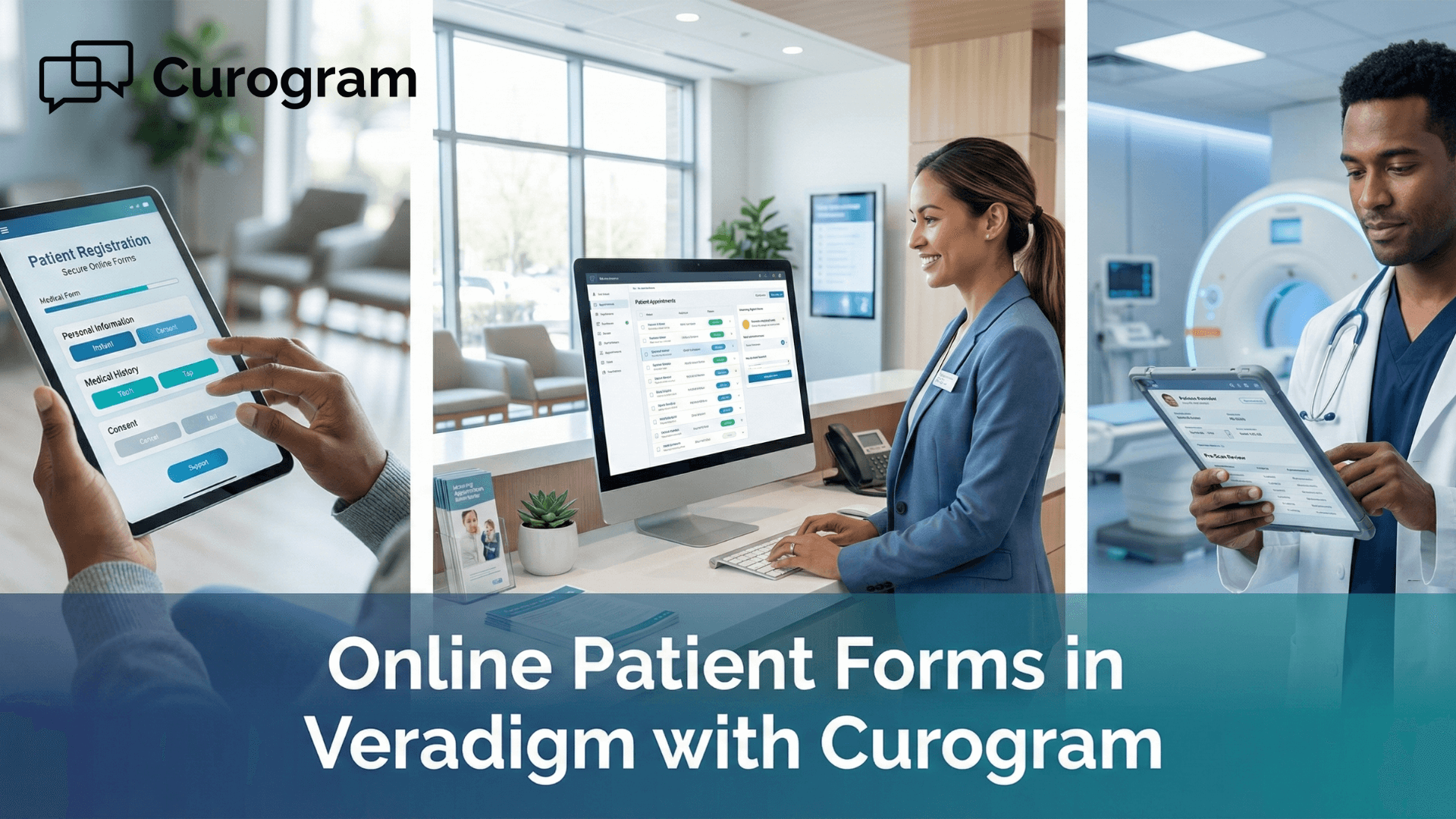
Online Patient Forms in Veradigm with Curogram
 Jo Galvez : Jan 7, 2026, 6:00:04 AM
💡 Online patient forms in Veradigm enable imaging centers to transition away from paper-based intake that causes delays and errors. Patients...
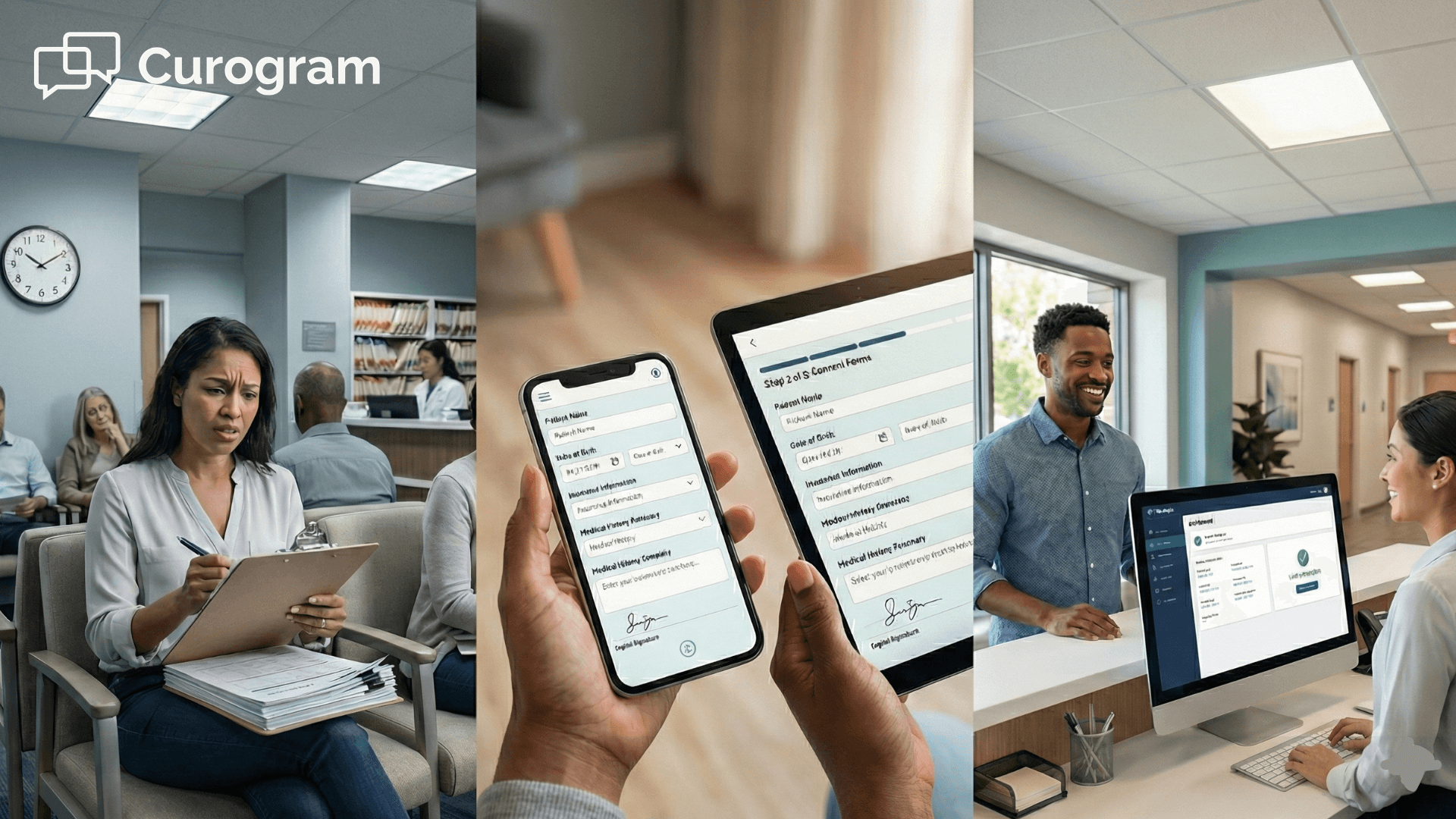
Every dollar counts in imaging center operations. Revenue depends on completing as many high-quality exams as possible each day. But outdated intake processes drain both money and time from these critical workflows.
Paper forms create expensive problems that most imaging leaders accept as normal. Staff spend hours each day typing patient information into Veradigm. Missing data triggers last-minute phone calls that disrupt schedules. Incomplete prep information forces exam cancellations that waste valuable modality time. These inefficiencies cost centers thousands of dollars weekly.
The financial impact extends beyond obvious labor costs. A single canceled MRI represents thousands in lost revenue. Multiply that across multiple modalities and locations, and the numbers become staggering. Administrative overhead keeps climbing as patient volumes increase. Growth becomes harder to sustain profitably.
Multi-location imaging networks face even greater challenges. Different sites handle intake differently, creating inconsistent results. Some locations run smoothly while others struggle with constant delays. Enterprise leaders lack the standardization needed to scale operations efficiently.
Digital patient intake eliminates these costly problems systematically. Online forms capture complete, validated information before patients arrive at imaging centers. This simple change triggers improvements across every part of operations. Staff workload drops dramatically. Exam completion rates climb. Revenue becomes more predictable.
The return on investment appears quickly and compounds over time. Imaging centers using Veradigm gain measurable benefits within weeks of implementation. Labor costs fall as manual data entry disappears. Modality utilization improves as cancellations decrease. Patient satisfaction rises as check-in times shrink from 15 minutes to just 2 or 3.
This article explores the specific financial gains imaging centers achieve through online patient forms. You'll see real numbers, proven strategies, and practical insights for maximizing ROI. The transformation starts with understanding exactly where digital intake creates value for Veradigm imaging networks.
In imaging centers, every minute counts. You're managing one procedure after another, with no room for delays and errors. But many centers still rely on paper forms that slow everything down.
Manual intake creates bottlenecks at every turn. Staff spend hours typing patient info into Veradigm. Missing details force last-minute calls. Bad data leads to canceled exams and lost revenue. These problems hit multi-location networks especially hard.
The cost adds up fast. A single rescheduled MRI can mean $1,000 in lost revenue. Multiply that across dozens of exams each week, and the impact becomes massive. Administrative labor keeps rising as patient volumes grow.
Online patient forms solve these issues directly. They collect complete, validated data before patients arrive. This reduces the admin workload Veradigm users face daily. Digital intake also helps improve data accuracy from the start.
The benefits show up immediately. Staff spend less time on data entry. Patients arrive prepared for their exams. Schedulers avoid frantic follow-up calls. Modality utilization stays high because fewer exams get canceled.
For Veradigm users, this means more exams per day without adding staff. Digital forms create faster check-in experiences that patients appreciate. Enterprise imaging groups gain stable workflows across all locations.
The ROI is measurable and quick. Centers see lower labor costs within weeks. Revenue protection starts from day one. Compliance becomes easier as digital records replace paper trails. This is how online intake transforms both finances and operations for modern imaging centers.
Revenue loss from intake problems hurts imaging centers every single day. Bad data forces exam cancellations and creates scheduling gaps. These issues drain profits while frustrating staff and patients alike.
Digital forms address these revenue threats directly. They capture complete information upfront and validate it automatically. This protection translates to measurable financial gains across all imaging modalities.
Exam cancellations destroy imaging center revenue. Many happen because the required info is missing or wrong. A patient shows up for an MRI but forgot to list their allergies. Another arrives for IR work without proper lab results. These gaps force rescheduling and waste expensive modality time.
Digital intake stops this problem at the source. Online forms collect all required clinical details before the appointment. Validation rules catch missing fields instantly. Patients can't submit incomplete information.
This approach reduces operational disruption across the board. Radiologists review complete patient histories ahead of time. Techs prepare equipment, knowing the exam will proceed. Front desk staff avoid awkward conversations about rescheduling.
The financial impact is direct. Protected modality slots mean steady revenue. CT and MRI machines stay productive throughout the day. Ultrasound and IR schedules run smoothly without last-minute gaps. For centers managing dozens of high-value exams daily, this protection adds up to thousands in saved revenue.
Improving First-Time Exam Completion Rates
Many imaging studies require specific prep steps to proceed safely. Contrast exams need allergy info and kidney function data. Nuclear medicine requires accurate weight and medication lists. IR procedures demand detailed medical histories.
Paper forms often capture this data poorly. Handwriting becomes illegible. Patients skip crucial questions. Staff miss validation steps when they're rushing. These errors lead to exam delays or complete rescheduling.
Online forms eliminate these accuracy problems. Clear digital questions guide patients through every required field. Drop-down menus prevent invalid entries. Conditional logic shows only relevant questions based on exam type.
This precision dramatically improves first-time completion rates. Patients arrive ready for their procedures. Clinicians have the data they need to proceed safely. Fewer exams get postponed due to missing or wrong information.
Higher completion rates mean stronger daily throughput. An imaging center that completes 90% of scheduled exams instead of 75% gains significant capacity. This translates to more revenue without adding equipment or extending hours.
Imaging leaders also gain clearer, more predictable revenue patterns. When completion rates stabilize, forecasting becomes accurate. Budget planning improves. Financial performance becomes easier to manage across quarters.
For multi-location imaging networks, this consistency matters even more. Enterprise groups can compare performance across sites with confidence. They know the data quality is uniform. This supports better strategic decisions about resource allocation and growth.
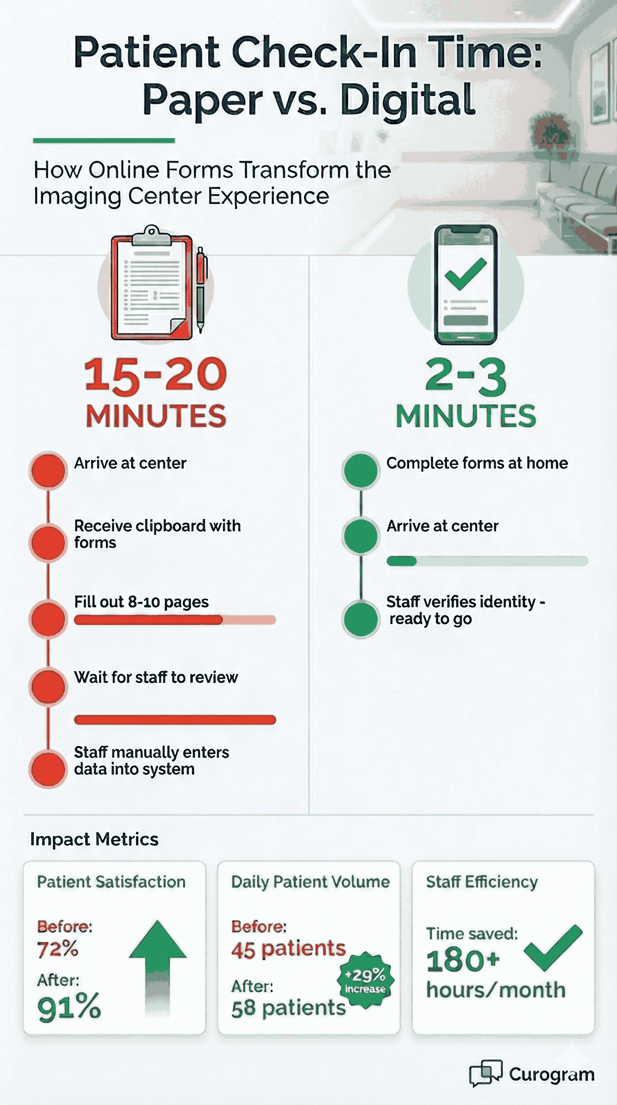
Labor costs consume a huge portion of imaging center budgets. Administrative tasks that don't add clinical value drain resources daily. These expenses grow worse as networks expand across multiple locations.
Digital intake cuts these costs dramatically. It eliminates manual work and reduces follow-up burdens. The savings compound quickly across enterprise imaging operations.
Administrative staff at imaging centers spend hours each day on data entry. They transcribe paper forms into Veradigm character by character. This work is tedious, expensive, and prone to mistakes.
The labor cost is substantial. Large imaging networks might employ several people just for this task. Multi-site operations multiply these costs across every location.
Digital intake eliminates this entire step. Patient information flows directly from online forms into Veradigm. No manual transcription needed. Staff time gets redirected to more valuable work, like patient care coordination and scheduling optimization.
The result is a dramatic reduction in the admin workload Veradigm centers face. Front desk teams handle more patients with fewer staff members. Administrative costs drop without sacrificing service quality.
This efficiency gain scales beautifully across enterprise networks. A 10-location imaging group might save hundreds of thousands annually in labor costs. These savings improve operating margins and create room for strategic investments in technology or facility upgrades.
Incomplete intake forms trigger constant follow-up calls. Staff must track down patients to collect missing insurance details. They chase referring physicians for authorization numbers. These calls eat up hours every single day.
The productivity drain is massive. Each call takes 5 to 10 minutes when you include phone tag and documentation. Multiply that by dozens of patients daily, and whole positions exist just to fix intake problems.
Online forms collect required details upfront through smart validation. Required fields can't be skipped. Insurance information gets verified automatically. Patients complete everything before submitting.
This approach dramatically reduces follow-up workload. Staff spend their time on activities that improve patient satisfaction and operational flow. They help with scheduling complexities, coordinate care between departments, and support referring providers.
Multi-location imaging workflows benefit enormously from this consistent administrative relief. Enterprise IT teams can standardize processes across all sites. Performance metrics become comparable. Regional managers gain clear visibility into operational efficiency.
The cumulative effect on staffing needs is significant. Centers that once needed three full-time employees for intake-related tasks might operate smoothly with two. This 33% reduction in labor requirements translates directly to lower costs and better margins.
Imaging equipment represents massive capital investments. CT scanners, MRI machines, and IR suites cost millions of dollars. Maximizing their use directly impacts financial performance.
Digital intake protects these investments through better preparation and workflow stability. Higher utilization rates generate more revenue from existing assets. This creates growth without expensive equipment purchases.
High-value imaging exams demand precise preparation. IR procedures require detailed medical histories and specific lab results. CT scans with contrast need allergy screenings and kidney function tests. MRI exams often need patient weight, implant information, and claustrophobia screening.
When patients arrive unprepared, the entire schedule collapses. A missing creatinine level halts a contrast CT. Unknown metal implants prevent an MRI from proceeding. These failures waste expensive modality time and frustrate everyone involved.
Online forms solve this preparation challenge systematically. Exam-specific questions gather all necessary clinical data ahead of time. Conditional logic shows relevant prep instructions based on the scheduled procedure. Patients know exactly what to expect and what information they need to bring.
Clinicians can review this information early and prepare accordingly. Radiologists check contrast safety before the patient arrives. Techs verify that scheduled exam times are appropriate for patient needs. Coordinators confirm that the required lab work is complete and available.
This preparedness leads to fewer delays and more completed exams per day. An MRI suite that previously handled 12 exams might now complete 14 with the same staffing. The 17% increase comes purely from eliminating prep failures and last-minute problems.
Higher throughput directly impacts revenue performance. CT scanners, MRI machines, and IR suites represent massive capital investments. Improving their utilization by even 10% to 15% can generate hundreds of thousands in added revenue annually.
For imaging centers operating at capacity, better throughput eliminates the need for costly equipment expansion. Instead of buying a second MRI machine, centers maximize their existing assets. This approach delivers growth without proportional capital spending.
Workflow disruptions create ripple effects throughout imaging operations. A delayed exam pushes back everything scheduled afterward. Techs sit idle waiting for patients who weren't properly prepared. Equipment utilization drops as gaps appear in the schedule.
These disruptions are especially problematic in multi-location imaging networks. Different sites handle intake differently, leading to inconsistent results. Some locations run smoothly while others struggle with constant cancellations and delays.
Digital intake reduces this variability by standardizing data collection across all imaging locations. Every site uses the same forms with identical validation rules. Patients at any location receive the same clear instructions and requirements.
This standardization stabilizes daily operations dramatically. Schedulers know exactly what information they'll receive from every patient. Techs can rely on consistent prep quality. Radiologists see uniform documentation regardless of location.
The operational stability supports better long-term planning. Center managers can forecast capacity accurately across quarters. They identify genuine growth opportunities versus inefficiency problems. Strategic decisions about new equipment or facility expansion rest on solid data.
Enterprise radiology networks gain more dependable ROI from this consistency. When every site operates efficiently, the network performs predictably. Financial forecasts become reliable. Investors and stakeholders gain confidence in operational excellence.
Reduced workflow variability also improves staff morale and retention. Employees prefer consistent, manageable workloads over chaotic, unpredictable days. Lower turnover means reduced hiring and training costs, further strengthening the financial benefits.
The cumulative effect on throughput is substantial. Imaging networks operating 10 sites might see aggregate throughput increases of 12% to 18% within months. This improvement happens without adding staff, equipment, or operational hours.
For organizations competing on service quality and turnaround time, this operational advantage becomes strategic. Referring physicians notice that exams happen smoothly and quickly. Patient satisfaction scores rise. Market reputation strengthens, driving referral growth and long-term revenue expansion.
Compliance failures carry devastating financial consequences. HIPAA violations trigger massive fines and legal costs. Poor documentation creates audit problems that drain resources.
Digital intake strengthens compliance while reducing risk exposure. It replaces vulnerable paper processes with secure, auditable systems. The protection benefits both individual centers and enterprise networks.
Paper forms create serious compliance vulnerabilities. They get lost, misfiled, or damaged. Unauthorized staff can access them easily. Audit trails don't exist to track who viewed what information or when.
These risks expose imaging centers to HIPAA violations and costly penalties. A single breach can trigger investigations, fines, and reputation damage. The financial impact extends far beyond the immediate penalty.
Digital forms eliminate these vulnerabilities through comprehensive security controls. Encrypted submission protects data in transit. Role-based access ensures only authorized users see patient information. Complete audit logs track every interaction automatically.
This security reduces compliance liabilities dramatically for Veradigm imaging centers. HIPAA alignment becomes straightforward to maintain across all sites. Compliance officers gain confidence in data protection standards.
Audits demand complete, legible, accessible records. Paper forms often fail these requirements. Handwriting is illegible. Pages are missing. Storage is chaotic and inconsistent.
Digital intake produces pristine documentation automatically. Every submission is complete, legible, and properly timestamped. Records are searchable and instantly retrievable.
Imaging centers avoid costs associated with data gaps, errors, or audit findings. Compliance teams spend less time on remediation. IT departments manage documentation with confidence.
Consistent documentation also supports enterprise compliance expectations. Multi-location networks maintain uniform standards across all sites. Regional compliance officers can verify adherence quickly and efficiently.
The result is reduced operational and financial risk at the organizational level. Fewer compliance incidents mean lower insurance premiums. Stronger documentation supports better legal positioning if issues arise.
Patient experience drives long-term financial success. Good experiences create loyalty and referrals. Bad experiences destroy reputation and limit growth.
Digital intake improves patient experience in measurable ways. It creates smoother visits and stronger satisfaction. These improvements translate directly to sustained revenue growth.
Long check-in times frustrate patients and contribute to negative feedback. They sit in waiting rooms, filling out forms while their appointment times slip away. This poor experience affects satisfaction scores and online reviews.
Online forms create faster check-in experiences that patients genuinely appreciate. They complete paperwork from home at their convenience. Arrival at the imaging center is quick and smooth.
Better experiences increase repeat visits and referral confidence. Patients who had smooth exams return willingly for future needs. They recommend the imaging center to friends and family.
Imaging networks benefit from strong long-term patient loyalty. Consistent positive experiences across all locations build brand reputation. This reputation drives sustainable growth and market position.
Online reviews heavily influence patient choice in healthcare. Imaging centers with higher ratings attract more referrals. Those with complaints about wait times or confusion lose business.
Patients who experience smoother visits leave higher ratings. Online forms reduce confusion and minimize delays. These improvements show up directly in review content.
Better reputation outcomes increase search visibility and patient acquisition. Imaging centers appear higher in local search results. More patients discover and choose them for imaging needs.
Reputation improvements support both immediate revenue and long-term financial performance. They create a positive cycle where good experiences drive reviews, which drive referrals, which drive revenue growth.
Growth traditionally means hiring more staff. Each new location requires proportional administrative support. This pattern limits expansion potential and squeezes margins.
Digital intake breaks this constraint completely. It enables efficient scaling without matching cost increases. Multi-location networks grow sustainably while protecting profitability.
Traditional multi-location expansion requires proportional staffing increases. Open a new imaging center and hire new admin staff. This pattern limits growth potential and strains margins.
Digital intake breaks this constraint by automating core workflows. New locations leverage the same online forms as existing sites. Staffing needs stay lean even as patient volume grows.
Imaging centers scale efficiently without proportional cost increases. A network might add three new locations while increasing administrative headcount by just one position. This efficiency drives sustainable expansion.
Enterprise radiology networks gain predictable operational scalability. They can model growth scenarios with confidence. Expansion becomes financially attractive instead of operationally daunting.
Seasonal fluctuations strain imaging operations. Flu season brings referral surges. New insurance years trigger utilization spikes. New modality openings create temporary volume increases.
Paper-based intake fails under this pressure. Staff get overwhelmed. Data quality drops. Patient experiences suffer during the busiest times.
Online patient forms maintain consistency even during high demand. Automated data collection scales effortlessly. Quality stays high regardless of volume.
This reliability ensures sustained throughput and stable revenue performance. Veradigm users handle volume spikes without compromising workflow quality or overextending staff.
Not all digital intake solutions deliver equal value. Generic platforms force imaging centers to adapt their workflows. Purpose-built solutions like Curogram address radiology needs directly.
Curogram was designed specifically for high-volume imaging environments. It understands radiology challenges and solves them systematically. This specialization drives faster ROI and better long-term results.
Curogram handles thousands of digital form submissions daily without performance degradation. The platform was built specifically for healthcare environments where volume and speed matter.
Radiology-specific workflows benefit from reduced prep failures and fewer operational disruptions. Exam-specific forms capture exactly the right information for each imaging study. Validation rules prevent common mistakes that derail schedules.
Enterprise imaging groups gain substantial operational savings through this specialization. The platform understands radiology challenges and solves them directly. There's no generic solution forcing imaging centers to adapt their workflows.
Multi-location imaging workflows stay aligned and predictable across all sites. Regional managers see consistent performance. Enterprise IT teams manage one platform instead of site-specific solutions.
Curogram complements Veradigm scheduling and documentation without requiring disruptive workflow changes. Data flows naturally between systems. Staff don't need to learn complicated integration steps.
Staff adopt digital intake quickly because the transition feels natural. Training requirements are minimal. Productivity gains appear within weeks instead of months.
Veradigm users gain efficiency without added complexity. The solution enhances existing workflows instead of replacing them. This drives faster ROI and smoother organizational adoption across all imaging locations.
All patient forms are protected with HIPAA-compliant encryption and comprehensive audit logs. Data security isn't an afterthought but a core design principle.
Compliance becomes easier, safer, and more controlled across imaging networks. Audit preparation takes hours instead of days. Documentation quality meets the highest enterprise standards.
Enterprise IT teams gain full governance and transparency. They control access permissions, monitor usage patterns, and verify security compliance. There are no blind spots in patient data handling.
Financial risk decreases as compliance stability improves. Fewer incidents mean lower insurance costs. Stronger security supports better legal positioning and protects organizational reputation.
Online patient forms deliver measurable financial benefits to imaging centers using Veradigm. They reduce the admin workload Veradigm teams face every day while making operations run more smoothly.
The improvements touch every part of the revenue cycle. Fewer cancellations protect modality utilization and daily revenue. Lower labor costs improve margins without cutting quality. Better throughput generates growth from existing assets.
Digital intake also strengthens compliance and reduces risk. Encrypted forms replace vulnerable paper trails. Audit-ready documentation becomes standard. Enterprise networks gain uniform security across all locations.
Patient experiences improve dramatically through faster check-in and better preparedness. These improvements drive higher satisfaction scores and stronger online reputations. Better reputations attract more referrals and support long-term revenue growth.
Multi-location imaging networks benefit from scalable operations. New sites launch without proportional staffing increases. High-volume periods stay manageable. Workflow consistency supports strategic planning and growth initiatives.
For Veradigm users, the ROI appears quickly and compounds over time. Lower costs, higher revenue, better compliance, and stronger patient loyalty all work together. The result is sustainable financial improvement that supports long-term success.
Curogram enhances Veradigm with a platform built specifically for imaging workflows. The solution helps improve data accuracy and enables faster check-in for patients. Enterprise imaging groups gain operational excellence that drives both immediate returns and lasting competitive advantage.
Book a Demo to See Curogram + Veradigm in Action.
1 min read
Jo Galvez : Jan 7, 2026, 6:00:04 AM
💡 Online patient forms in Veradigm enable imaging centers to transition away from paper-based intake that causes delays and errors. Patients...

1 min read
Jo Galvez : Jan 7, 2026, 8:00:00 PM
💡 Digital intake workflow, along with Veradigm solutions, helps imaging centers eliminate delays and errors from paper-based processes. Patients...
1 min read
Jo Galvez : Dec 19, 2025, 2:30:00 PM
💡 Reducing check-in delays is a growing priority for radiology networks using Ramsoft. Manual intake processes slow down patient flow, increase...