GE Centricity Workflow Improvements With HIPAA-Compliant Texting
💡 GE Centricity practices use HIPAA-compliant texting to solve radiology workflow problems. Instead of managing hundreds of daily phone calls,...
12 min read
Mira Gwehn Revilla
:
February 3, 2026
Someone just filled out your website contact form. They're ready to change their life. They want help now.
But your admissions team is on the phone with another family. By the time they call back 45 minutes later, that person has already reached three other facilities. One of them texted back in 90 seconds. Guess who got the admission?
This is the brutal reality of substance use disorder patient acquisition in 2026. The window of time when someone is ready to seek help is often very short. Miss that moment, and you may never hear from them again.
The data backs this up. Text messages have a 98% open rate. Most people read them within three minutes. Phone calls? They go to voicemail. Emails sit unread for hours or even days.
For addiction treatment centers using Opus EHR, the gap between a lead coming in and that person becoming a patient is where revenue lives or dies. That gap is also where lives hang in the balance.
Behavioral health clinical texting bridges this critical distance. It lets your team reach out the moment someone asks for help. No phone tag. No waiting. Just a quick, secure message that says "We're here. Let's talk."
This guide will show you how to reduce admissions friction and turn more inquiries into enrolled patients. You'll learn how Opus EHR CRM integration with HIPAA-compliant texting creates a smoother path from first contact to intake.
Whether you're an admissions director or a CEO looking at the bottom line, the math is simple. Faster responses mean more admissions. More admissions mean more revenue. And most importantly, more admissions mean more people getting the help they need.
Let's look at why speed matters so much in rehab intake automation.
Your biggest enemy isn't the facility down the road. It's time. Every minute that passes after someone reaches out, your chances of converting that lead drop fast.
In 2026, people expect instant replies. They don't leave voicemails. They don't wait by the phone. If your admissions team takes an hour to respond to a web form, that lead has already contacted three other facilities.
Think about it from the patient's view. They finally worked up the courage to ask for help. Their heart is racing. They're scared. They hit "submit" on your website form. Then... nothing.
What do they do next? They Google another facility and try again. And again. The first center to respond in a helpful, human way wins.
This is called "speed to lead." In the addiction treatment world, it's the most critical metric your facility can track. A response within five minutes can mean the difference between a full bed and an empty one.
Here's a simple example:
Say your facility gets 100 leads per month. Your current process converts 20 of them into admissions. That's a 20% conversion rate.
But if you respond faster using behavioral health clinical texting, you might convert 30 or even 35 of those same leads. That's a 50-75% increase in admissions from the same marketing spend.
Patients in crisis often avoid calls from unknown numbers. Think about your own phone habits. When a random number calls, do you answer? Most people don't.
This creates a painful loop. Your admissions coordinator calls. The patient doesn't answer. They leave a voicemail. The patient calls back two hours later, but now the coordinator is with another family. The cycle repeats.
Secure SMS breaks through this noise. A text message feels low-pressure. It doesn't demand an immediate verbal response. The patient can reply when they're ready, even if it's just "Yes, I'm interested."
That small reply opens the door. Once you have a text thread going, patients are 60% more likely to answer a follow-up clinical screening call. The text builds trust first.
Here's a problem many admissions directors don't think about until it's too late:
Where do those early conversations live?
Without integrated texting, your team ends up using personal cell phones or one-off messaging apps. Those chats never make it into your Opus EHR CRM. When the patient finally arrives for intake, no one knows what was promised or discussed.
This leads to fragmented intake experiences. The patient has to repeat their story. Staff scrambles to piece together details. Trust erodes before treatment even begins.
Opus EHR CRM integration solves this. Every text thread syncs directly into the patient record. When the clinical team reviews the file, they see the full picture. What the patient said. What your team promised. What documents were already collected.
This also matters for compliance. HIPAA requires that you protect patient communications. Using a compliant platform means those messages are stored securely, not floating on someone's personal phone.
Let's put a number on it: Say your average revenue per admission is $25,000 for a 30-day program. If slow responses cause you to lose just four admissions per month, that's $100,000 in lost revenue. Every month.
Now, add up the marketing dollars you spent to generate those leads. Google Ads, SEO, referral fees. You paid to get that person to raise their hand. Then you let them slip away because no one texted them back fast enough.
The solution isn't to work harder. It's to work smarter. Rehab intake automation with behavioral health clinical texting ensures no lead falls through the cracks.

Getting someone interested is only the first step. The real challenge is moving them from "I want help" to "I'm walking through your door." This is where most facilities lose momentum.
Between the first inquiry and the actual admission, there are dozens of small tasks.
Insurance verification. Document collection. Family calls. Scheduling. Each one is a chance for the process to stall out. Behavioral health clinical texting turns this bumpy road into a smooth highway.
The moment a lead enters your Opus EHR system, an automated text should fire off. Not an hour later. Not when someone checks the queue. Immediately.
This first message does three things. It confirms you received their inquiry. It lets them know a real person will follow up soon. And it gives them something to do right now.
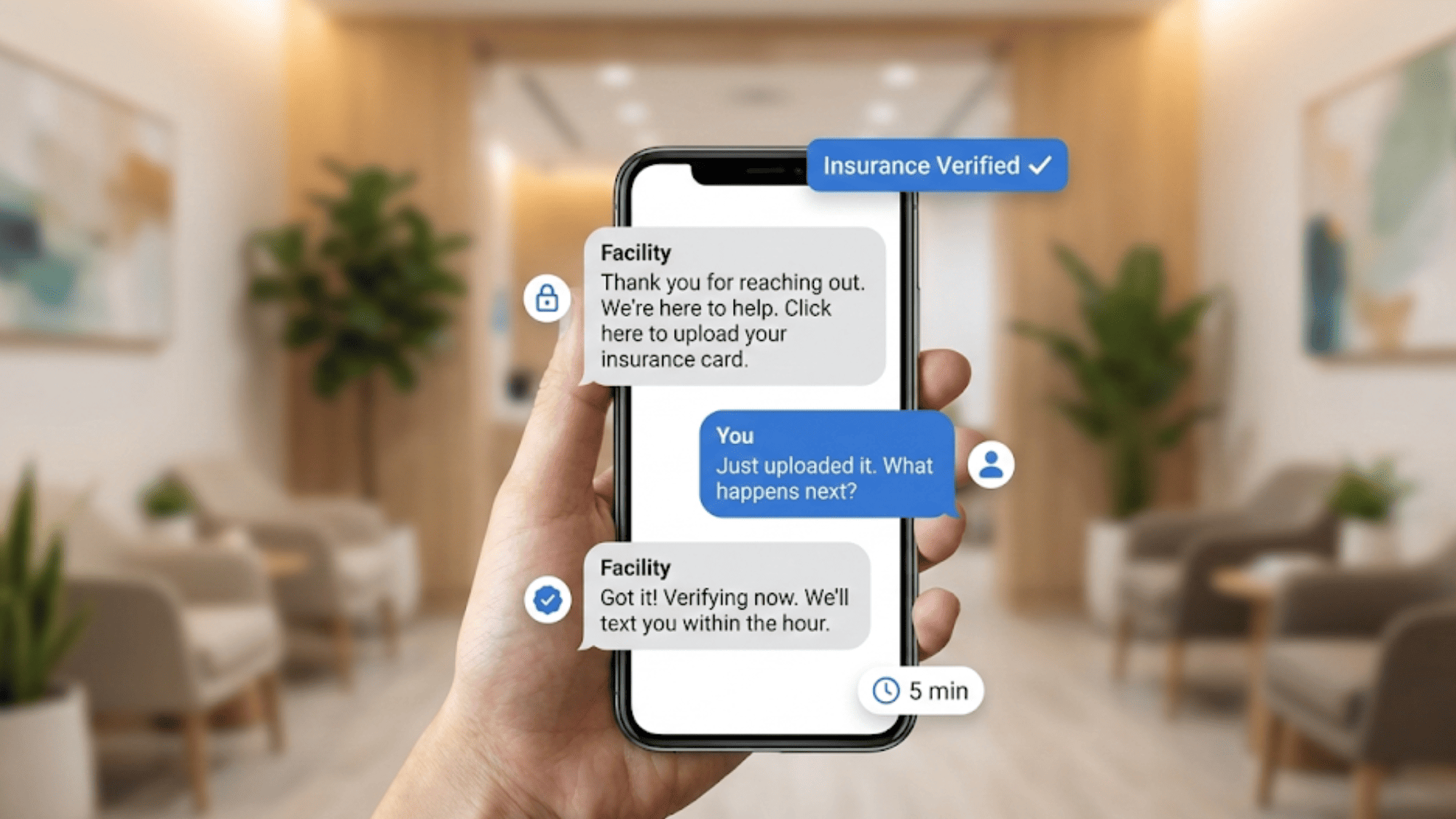
For example, that auto-reply might say: "Thank you for reaching out. We're here to help. Click this secure link to start your insurance check while our team prepares to call you."
That link leads to a secure form where they can enter their insurance details. Now you've turned waiting time into productive time. The patient feels engaged. Your VOB team already has what they need to get started.
This is rehab intake automation in action. No manual typing. No missed leads. The system does the heavy lifting.
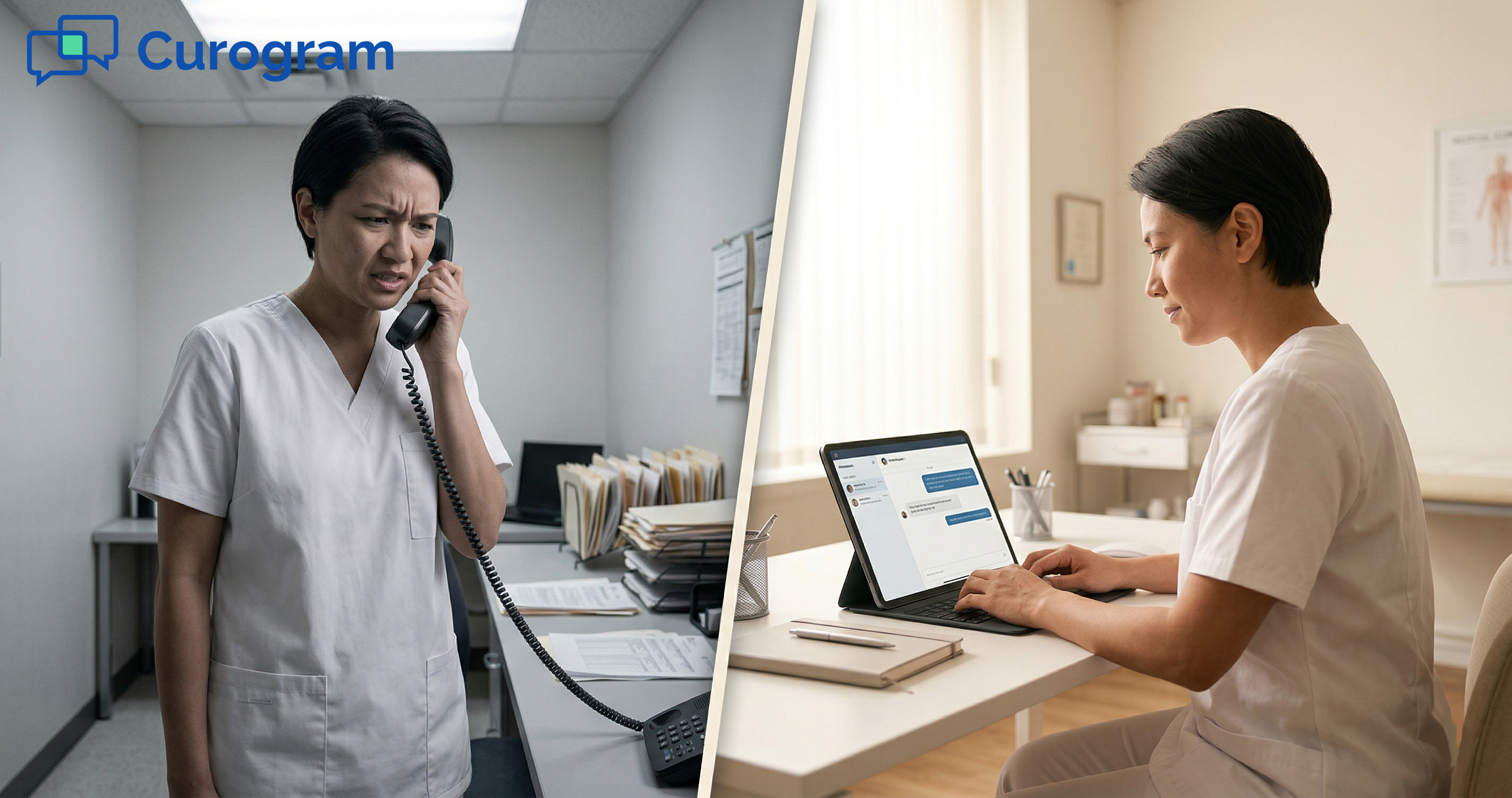
One of the biggest slowdowns in admissions is gathering paperwork. Insurance cards. Photo IDs. Prior treatment records. The old way involves endless phone calls: "Can you fax us your card?" "Did you get the email with the form?"
With secure SMS, your admissions coordinator sends a text with a secure upload link. The patient or family member opens it on their phone, snaps a photo of the insurance card, and submits. Done in 30 seconds.
That image maps directly back into the Opus EHR CRM. Your billing team can verify benefits without waiting for a fax that may never come.
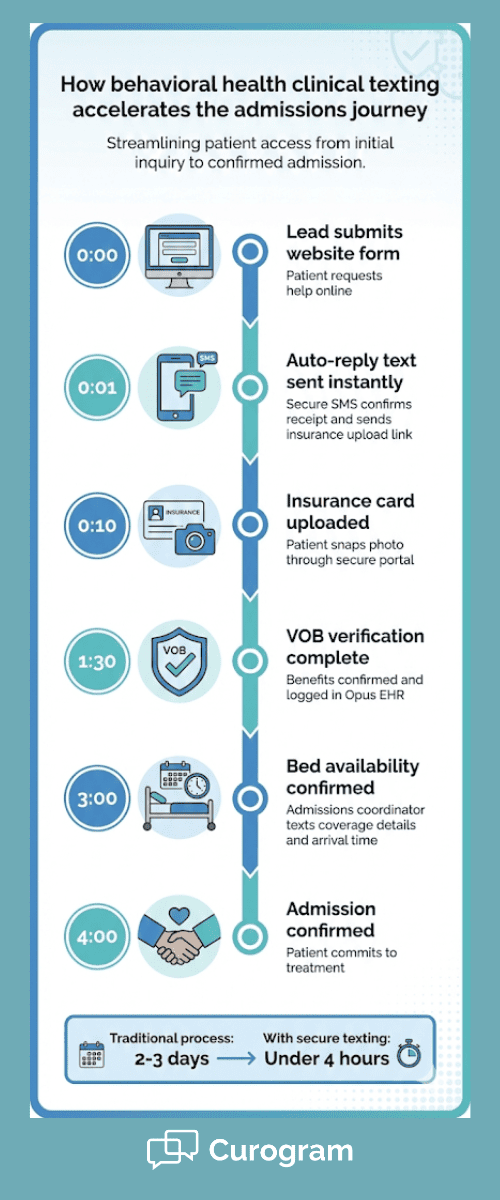
Here's a real-world flow:
Patient fills out web form at 9:00 AM
Auto-text fires at 9:01 AM with secure link
Patient uploads insurance card by 9:10 AM
VOB team verifies benefits by 10:30 AM
Admissions coordinator texts coverage details by 11:00 AM
Patient confirms intent to admit by 11:30 AM
That entire process used to take two to three days. Now it happens before lunch.
The hours between "we're checking your insurance" and "you're approved" are tense. Families don't know what's happening. Patients start to doubt. Anxiety builds.
Silence during this phase kills deals. The family starts wondering if they should call another facility. The patient's motivation wavers.
Text updates change everything. A simple message like "Good news, your insurance is verified. We have a bed ready for 4:00 PM today" keeps everyone engaged. It reduces the anxiety that often leads to no-shows.
You can also use texts to handle common questions before they derail the process. "What should I pack?" Send a text with a packing list link. "Can my spouse visit?"
Send the visitation policy. "What happens on day one?" Send a welcome video. Each message builds confidence. Each message moves them closer to admission.
In addiction treatment, families are often the decision-makers. Mom fills out the form. Dad wants to know about costs. The patient just wants the process to be easy.
Group texting features let you keep the whole support system in the loop. One message updates everyone. No one feels left out. No one calls your front desk asking for a status update because they already have it.
This is how Opus EHR CRM integration turns chaotic admissions into a streamlined experience for both your team and the families you serve.

Let's talk money. Every admissions director and CEO cares about the bottom line. And in addiction treatment, the financial math is straightforward: faster responses plus smoother intake equals more revenue.
But how much more? Let's break down the real numbers:
Most treatment centers spend heavily on marketing. Pay-per-click ads, search engine optimization, referral networks, call centers. Each lead that comes through your door has a cost attached to it.
Let's say you spend $50,000 per month on marketing and generate 200 leads. Your cost per lead is $250. If you convert 20% of those leads, you get 40 admissions. Your cost per admission is $1,250.
Now, imagine you improve your conversion rate from 20% to 30% using behavioral health clinical texting and faster response times. Same $50,000 in marketing. Same 200 leads. But now you convert 60 admissions instead of 40.
Your new cost per admission drops to about $833. That's a 33% reduction in CPA without spending an extra dollar on advertising.
This is why behavioral health lead conversion matters so much. You're not buying more leads. You're converting more of the leads you already paid for.
Empty beds are the silent killer of treatment center profitability. Every night a bed sits empty is revenue that never comes back.
Let's work through an example. A mid-sized residential facility has 50 beds. The average daily rate for treatment is $800. At full occupancy, that's $40,000 per day or about $1.2 million per month.
But most facilities don't run at 100% occupancy. The industry average hovers around 70-80%. That means 10-15 beds sit empty on any given night.
Now, let's say your current lead-to-admission conversion rate is 20%. By using rehab intake automation with secure texting and Opus EHR CRM integration, you boost that rate to 25%. That's a 5 percentage point improvement.
For a facility getting 200 leads per month, that means 10 extra admissions. At an average length of stay of 28 days and $800 per day, each admission is worth $22,400.
Ten extra admissions per month equals $224,000 in additional monthly revenue. Over a year, that's nearly $2.7 million.
And this comes from the same marketing budget. Same staff. Just a faster, smoother process that prevents leads from slipping away.
Here's an angle many facilities overlook: The time your team spends chasing documents, playing phone tag, and manually entering data.
Let's say your admissions coordinator spends three hours per day on these tasks. At a salary of $50,000 per year, that's roughly $24 per hour. Three hours daily equals $72 per day or about $1,500 per month in labor costs just for administrative chasing.
Now, multiply that across a team of three coordinators. You're spending $4,500 per month on tasks that could be automated.
With rehab intake automation, secure document uploads, and auto-reply texts, those three hours shrink to one hour or less. Your coordinators can spend their time on high-value activities like clinical counseling, relationship building, and closing difficult cases.
The numbers get even better when you factor in reduced turnover. Admissions staff burn out when they spend all day chasing paperwork and dealing with frustrated families.
Give them better tools, and they stay longer. Recruiting and training a new admissions coordinator costs $5,000 to $15,000 per hire. Retaining your team saves real money.
These savings don't exist in isolation. They multiply each other. When you reduce your CPA, you can afford to invest more in marketing.
More marketing means more leads. More leads, combined with a higher conversion rate, means more admissions. More admissions mean higher occupancy. Higher occupancy means more revenue.
Let's put it all together with a simple scenario:
| A 50-bed facility currently runs at 75% occupancy. They spend $50,000 per month on marketing and convert 20% of their 200 monthly leads into 40 admissions. Their average admission generates $22,400 in revenue. Total monthly revenue: 40 admissions x $22,400 = $896,000 |
Now they implement behavioral health clinical texting with Opus EHR CRM integration. Response times drop from 30 minutes to under 5 minutes. Document collection goes from 3 days to same-day. VOB updates happen in real time.
Their conversion rate jumps to 28%. From the same 200 leads, they now get 56 admissions.
| New monthly revenue: 56 admissions x $22,400 = $1,254,400 |
That's an increase of $358,400 per month. Over a year, that's $4.3 million in additional revenue.
The investment is only a texting platform that might cost $500 to $2,000 per month depending on volume and features. The return on that investment is extraordinary.
If you're an admissions director trying to get buy-in from your CEO, here's how to frame it:
Calculate your current cost per admission. Divide your monthly marketing spend by your monthly admissions.
Track your current response time. How long does it take from form submission to first contact? Be honest.
Estimate the improvement. Even a modest jump from 20% to 25% conversion can mean hundreds of thousands in new revenue.
Project the annual impact. Show the CEO a 12-month forecast that compares current performance to projected performance with behavioral health clinical texting.
The argument almost makes itself. Faster response. Higher conversion. More revenue.
Better outcomes for patients who get into treatment instead of falling through the cracks.
This is what addiction treatment admissions ROI looks like when you make speed a priority.
In addiction treatment, timing is everything. When someone reaches out for help, they've often fought through shame, fear, and denial just to ask. That courage is fleeting.
If your facility can't meet them in that moment, they may lose their resolve. They may convince themselves it's not that bad. They may choose a different path that doesn't include treatment.
Your job is to make the path to admission as smooth as possible. Remove every barrier. Answer every question before it becomes a reason to delay.
Behavioral health clinical texting isn't just about technology. It's about meeting people where they are, on their phones, in their moment of need.
Every text you send is a hand reaching out. Every fast response is a life that might be saved.
But don't just take our word for it. See the real impact for your facility. Use our free ROI Calculator to find out how much time and money your team could save.
How Curogram Bridges the Gap for Opus EHR Practices
Curogram was built for moments like these. When a family reaches out at 2 AM, when a patient finally decides to seek help, your team needs tools that work as fast as they do.
For Opus EHR practices, Curogram provides seamless integration that makes behavioral health clinical texting simple and secure.
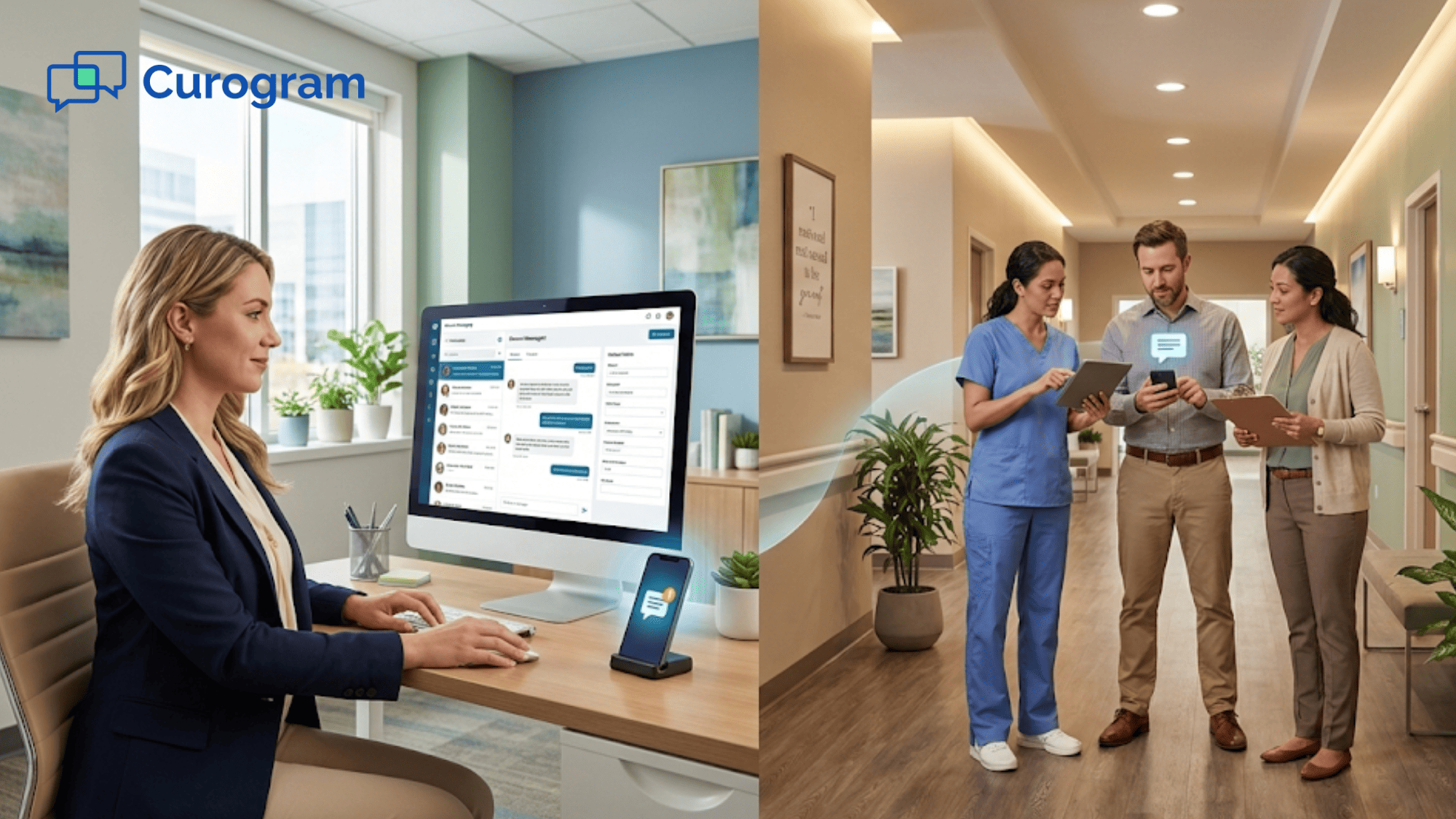
The platform connects directly to your CRM, so every conversation lives in one place. No more searching through personal phones. No more lost threads.
Say, a lead comes in through your website. Curogram triggers an instant auto-reply. That reply includes a secure link for insurance upload. The patient submits their card within minutes. Your VOB team gets notified immediately inside Opus.
Meanwhile, your admissions coordinator sees the new lead and sends a personal follow-up text. The patient responds right away because the message feels warm and human, not like a robot. A conversation begins.
All of this happens within five minutes of the initial inquiry. That's the speed-to-lead standard that top facilities maintain.
Curogram also offers features designed for substance use disorder patient acquisition. Secure document collection, appointment reminders, group messaging for family members, and real-time sync with Opus EHR CRM.
Staff training takes about 10 minutes. The interface works just like regular texting, so there's no steep learning curve. Your team can start using it the same day you go live.
Security is built in from the ground up. Curogram is HIPAA-compliant, with encrypted portals for any sensitive uploads. You stay protected while providing the fast, responsive service that today's patients expect.
Speed wins in addiction treatment admissions. The facilities that respond first, respond fast, and respond with empathy will capture more of the people reaching out for help.
Behavioral health clinical texting is not a luxury anymore. It's the standard that families expect when they're making one of the hardest decisions of their lives. They want to feel heard. They want answers. They want to know someone cares.
By integrating secure texting with your Opus EHR CRM, you create a system that works around the clock. Auto-replies catch leads instantly. Secure document collection speeds up intake. Real-time updates keep families engaged and confident.
The financial impact is clear. Higher conversion rates mean more admissions from the same marketing spend. More admissions mean better bed occupancy. Better occupancy means stronger revenue. Stronger revenue means you can help more people.
But the real win isn't on the balance sheet. It's in the lives you change. Every lead that converts into an admission is a person who gets a chance at recovery. Every fast response is a moment of clarity that doesn't go to waste.
Rehab intake automation with Curogram and Opus EHR gives your admissions team the tools to work smarter, not harder. It removes friction from a process that already carries too much stress.
If your facility is losing leads to slow responses, it's time to fix that. The technology exists. The ROI is proven. The only question is how soon you want to start seeing results.
Start helping more people, faster. Book a quick demo today to see how Curogram can accelerate your addiction treatment admissions ROI.
Most facilities see engagement improvements within the first 48 hours of implementing an SMS-first strategy. Within the first week, your team will notice patterns. By the end of the first month, you should have hard data. Compare your conversion rate before and after.
Responding within five minutes can increase your conversion rate by 50% or more. Leads that wait longer than 30 minutes often contact other facilities and commit elsewhere before you call back.
Focus on response time, lead-to-admission conversion rate, time from first contact to admission, document collection speed, and intake appointment no-show rate. Compare before and after implementation.
💡 GE Centricity practices use HIPAA-compliant texting to solve radiology workflow problems. Instead of managing hundreds of daily phone calls,...
💡 Multi-location GE Centricity clinics use HIPAA-compliant mass texting to manage urgent communication across radiology and specialty departments....
💡 Secure patient messaging in InSync EMR is crucial for your practice. It helps behaviorial practices protect confidentiality, improve engagement,...