HIPAA Compliant Texting for CollaborateMD: End Phone Tag
💡 HIPAA compliant texting for CollaborateMD lets billing teams replace slow phone calls with instant, secure SMS. Curogram plugs into your RCM...
9 min read
Jo Galvez
:
February 17, 2026
It is 4:45 on a Friday. Your front desk staff has 23 voicemails to return. The phone rings again. A patient on hold has been waiting for six minutes.
Another patient walks up to the window, forms in hand, while two more calls stack up behind the first.
Sound familiar? If your practice runs on Lytec, you already know the system does its job well. Scheduling, billing, and records all work the way they should. But there is one place where Lytec falls short, and that is patient outreach.
Every time your staff needs to confirm a visit, share a test result, or answer a quick question, they pick up the phone. And most of the time, nobody picks up on the other end.
This is the phone tag loop. Your team leaves a voicemail. The patient calls back an hour later when your staff is busy. Another voicemail goes out.
The cycle repeats. Meanwhile, the front desk gets louder, the hold times get longer, and real work stalls.
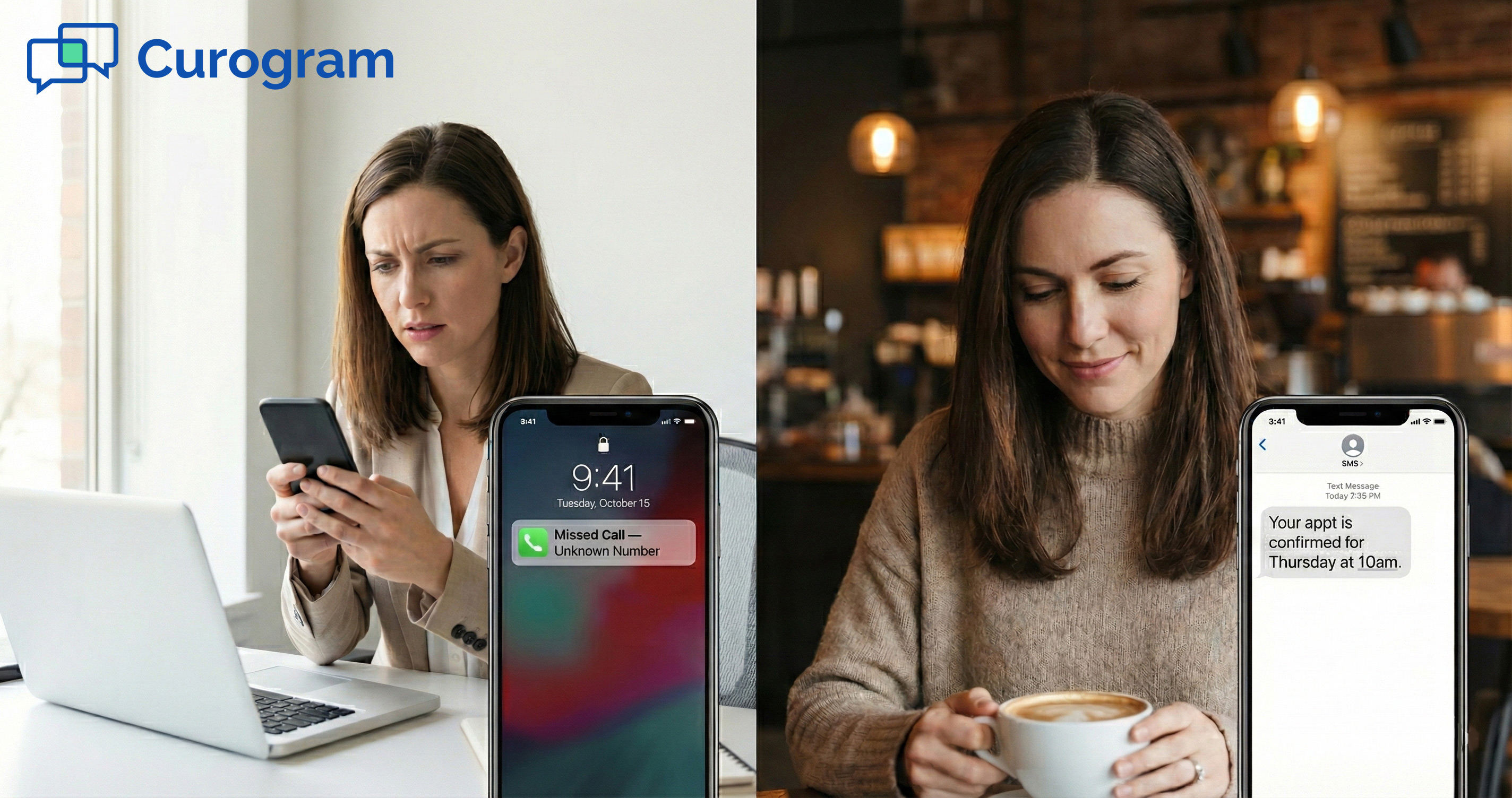
The truth is, patients do not want to call you either. Studies show that fewer than 20% of people answer calls from unknown numbers.
They would rather get a quick text they can read and reply to on their own time. That is exactly what 2-way HIPAA-compliant texting for Lytec practice workflows is built to do.
With Curogram, your practice keeps Lytec as the backbone of daily work. Nothing changes on the EMR side. What does change is the way your team talks to patients.
Instead of calls that go nowhere, staff send a text and get a reply in minutes. No new software to learn. No complex setup. Just faster, quieter, more secure communication.
Let us walk through why the old way is broken and how the fix is simpler than you think.
Every Lytec office knows this story. The software handles the clinical side just fine. But when it comes to reaching patients, the tools have not kept up.
The result is a daily grind of phone calls that eat into time, morale, and the patient experience.
Lytec does what it was built to do. It tracks records, manages billing, and keeps schedules in order. The problem is that none of that work matters if your team cannot reach the patient.
Every appointment that needs a confirmation, every balance that needs a reminder. Every intake form that needs to be filled out starts with a phone call.
Why Manual Calls Drain Your Day
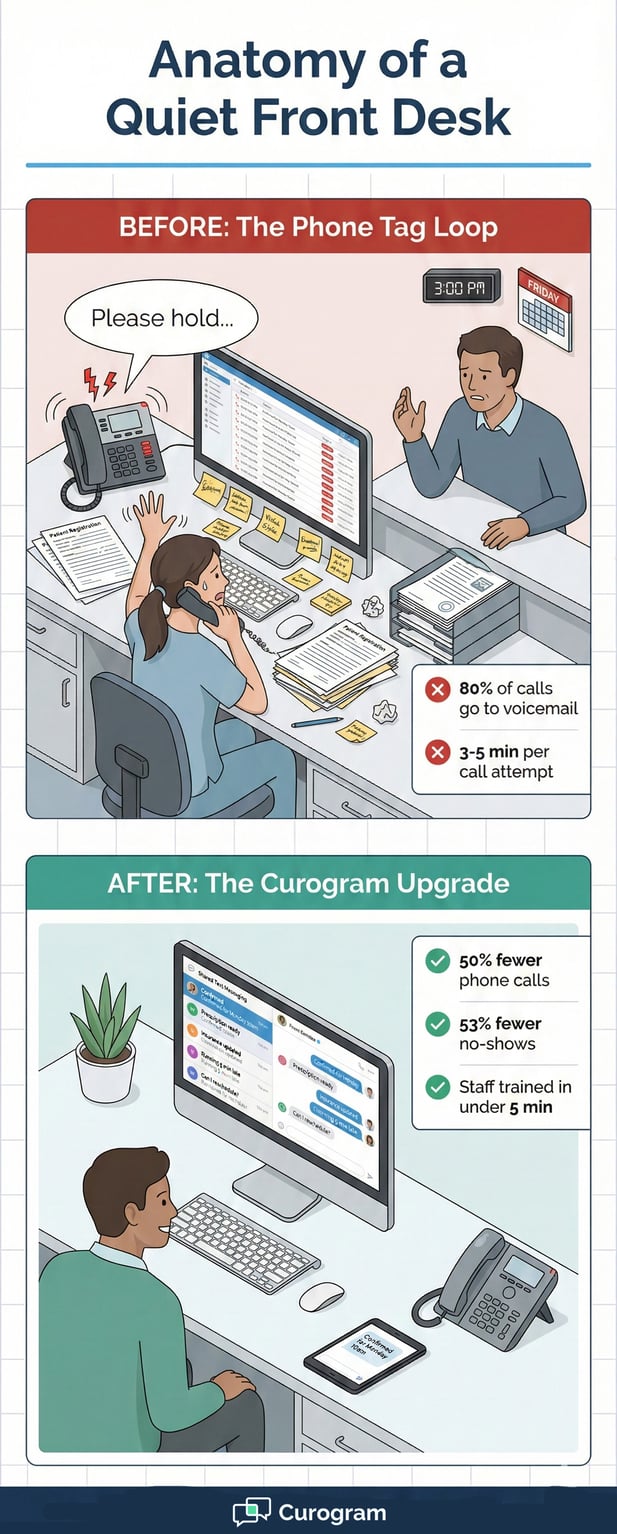
A single phone call can take three to five minutes, and that is if someone answers. Multiply that by 40 or 50 calls a day, and your front desk staff loses hours. Many of those calls end at a voicemail box.
Staff have no choice but to log the attempt and try again later. When you rely on manual calls as the main way to reach people, you create a bottleneck that slows everything else down.
The Hidden Cost of Playing Catch-Up
The phone tag loop does not just waste time. It also means your team is always in react mode. Instead of working ahead on tasks that matter, they are trying to clear a backlog that keeps growing.
The longer a callback takes, the more likely a patient will miss their visit or forget to fill out paperwork. Lytec patient messaging through traditional calls simply cannot keep pace with a full schedule.
The Friday Afternoon Rush
Anyone who works in a medical office knows the dread of Friday around 3 p.m. The weekend is close, but the to-do list is not.
Staff scramble to confirm Monday visits, follow up on labs, and clear the call log before the office shuts down.
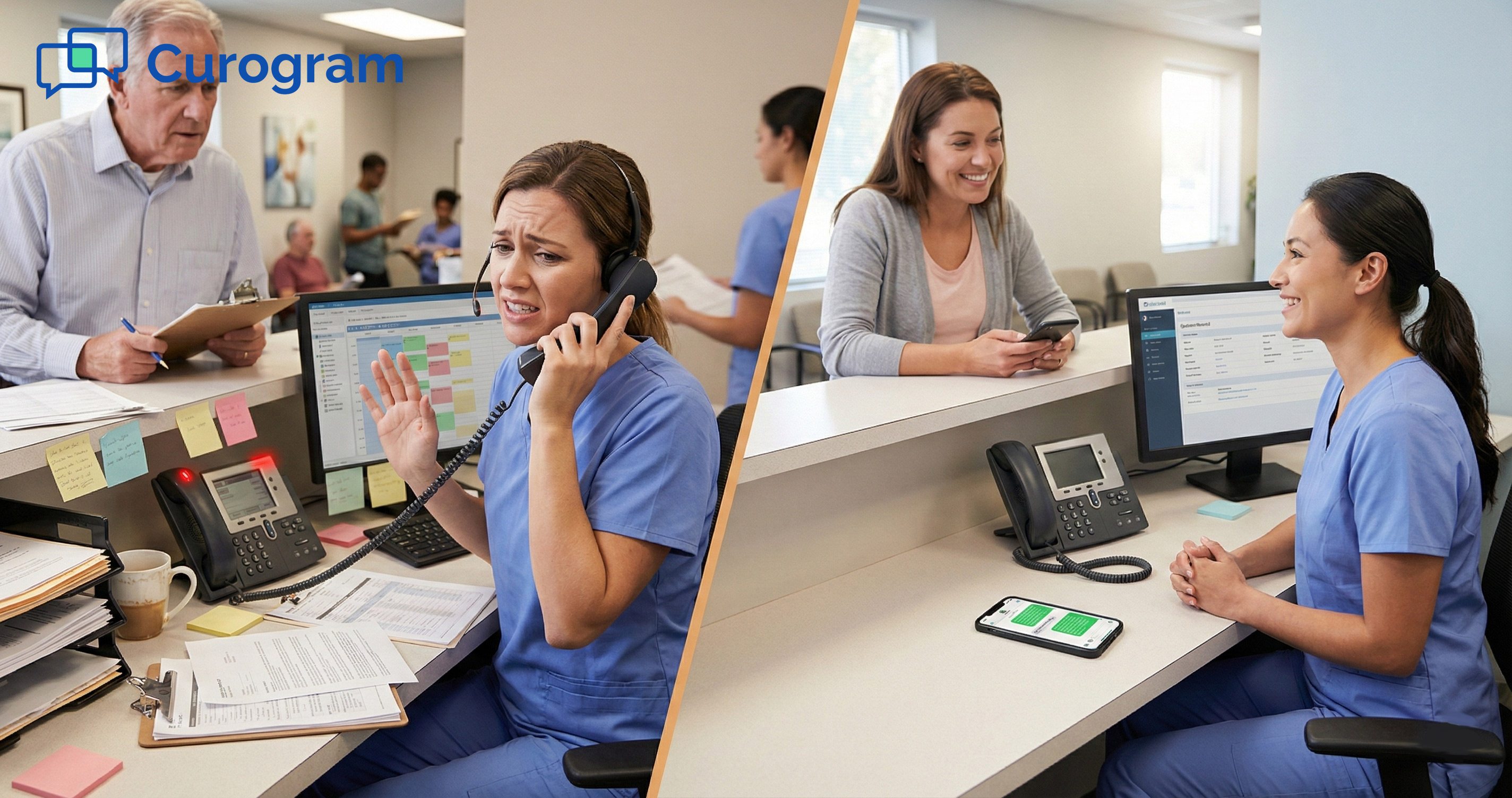
When phones ring nonstop, the front desk turns into a call center. Staff feel rushed. Patients in the waiting room overhear private details. The noise level rises, and the mood drops.
Over time, this chaos leads to burnout, high turnover, and a patient experience that feels more like a chore than care. The consequence is real: your best people leave, and the ones who stay are stretched too thin.
Here is the hard truth. Fewer than 20% of patients pick up calls from numbers they do not know. That means four out of five calls go straight to voicemail.
Your staff talks to machines more often than people. The effort to reduce front desk calls becomes impossible when the only tool you have is the phone itself.
Lytec modernization does not mean ripping out your EMR and starting over. It means adding a smart layer that fills the gaps Lytec was never built to cover.
That is where Curogram fits in. It connects to your existing setup and gives your team the one tool patients actually prefer: texting.
Curogram sits right on top of your Lytec system. It reads the data your EMR already holds, like patient contact info and visit schedules, and uses it to power secure SMS for small practices.
There is no data migration. There is no learning curve for your back office. Your EMR stays the same. The only thing that changes is how fast your team can reach people.
Many offices resist new tools because they fear a full system swap. Curogram removes that fear. It works as a plug-in, not a replacement.
Your staff still logs into Lytec for records, billing, and scheduling. Curogram simply adds a texting channel that runs alongside everything your team already does.
Patient portals sound good on paper, but the data tells a different story. Most patients never log in after the first time. Portals require passwords, logins, and sometimes even app downloads.
Curogram skips all of that. It sends a direct text to the patient's phone. No login. No app. No friction. Patients reply like they would to any other message.
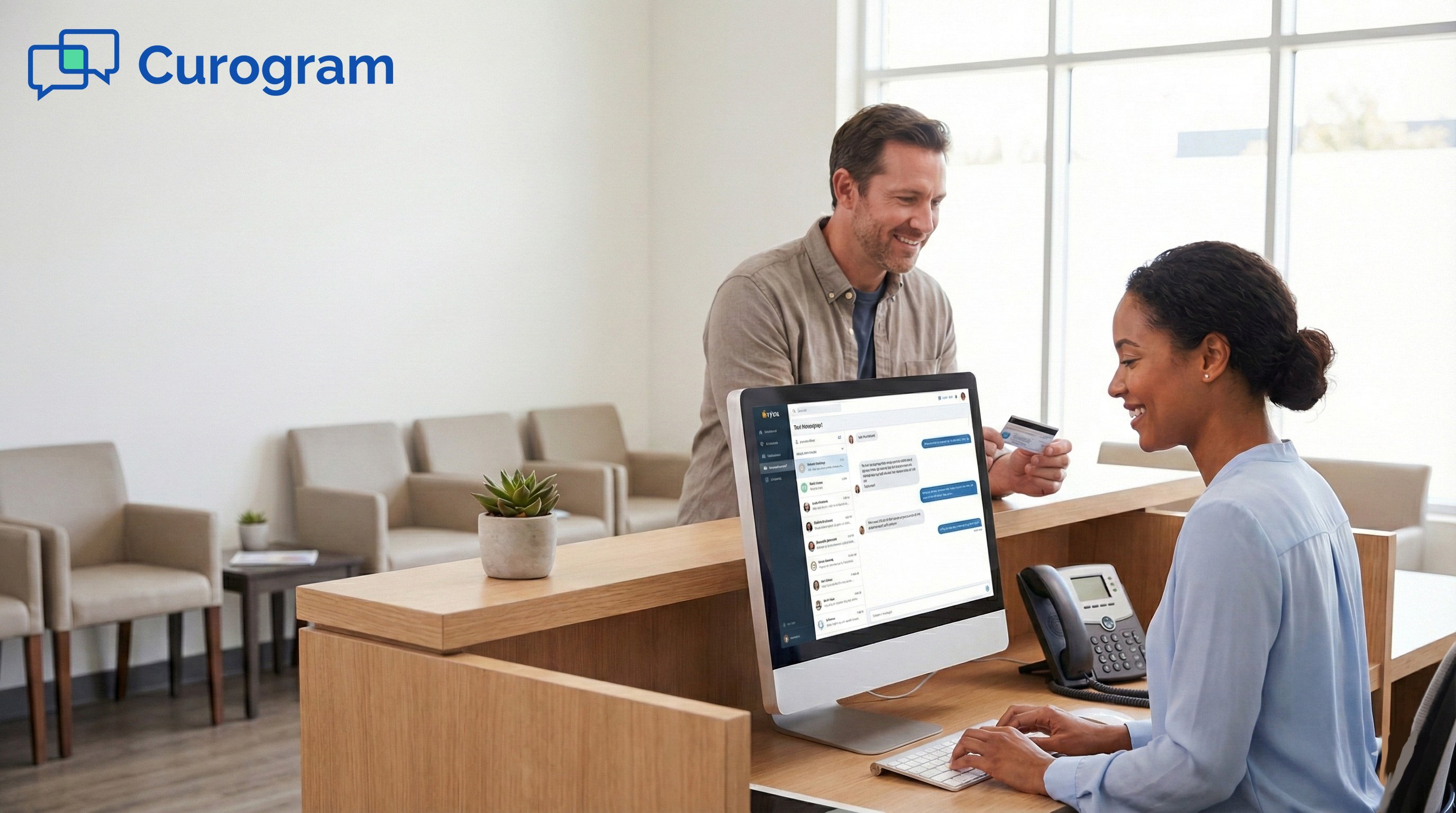
All incoming and outgoing texts land in a single shared inbox on the computer. This means anyone on the team can see the full thread, pick up where someone else left off, and handle multiple chats at once. In the time it takes to make one phone call, your staff can manage five text threads.
Texts get read within minutes. Most people reply just as fast. That quick back-and-forth means your team can confirm visits, answer questions, and send forms without ever picking up the phone.
The phone tag loop ends because there is nothing left to chase. Patients respond on their own time, and staff move on to the next task.
One of the biggest fears for Lytec users is complex new tech. Curogram was built with that in mind. If your staff know how to send a text, they can use the platform.
Training takes less than five minutes. There are no steep learning curves, no thick manuals, and no IT overhauls. It is as simple as typing a message and hitting send.

What does a modern Lytec office look like after adding 2-way texting? The phones still ring, but not as often.
Staff still talk to patients, but on their terms. The front desk is calmer. The workflow is faster. The numbers tell the story.
Real Results from Real Practices
Atlas Medical Center is one of the clearest examples of what happens when a practice adds Curogram to its workflow. After switching from a phone-first model to a text-first model, the results spoke for themselves.
Atlas Medical Center cut its incoming and outgoing call volume by 50%. That is not a small shift. Half of the daily phone traffic simply moved to text, where staff could handle it faster and with less stress.
When you stop phone tag at the source, the front desk transforms from a noisy call center into a calm, focused workspace.
Missed visits cost money and waste time. Atlas Medical Center saw no-show rates drop by 53% after using text reminders.
When patients get a quick message they can reply to with a simple yes or no, they are far more likely to show up. That means fuller schedules, steadier revenue, and fewer gaps in the day.
From Phone Operators to Patient Care Leads
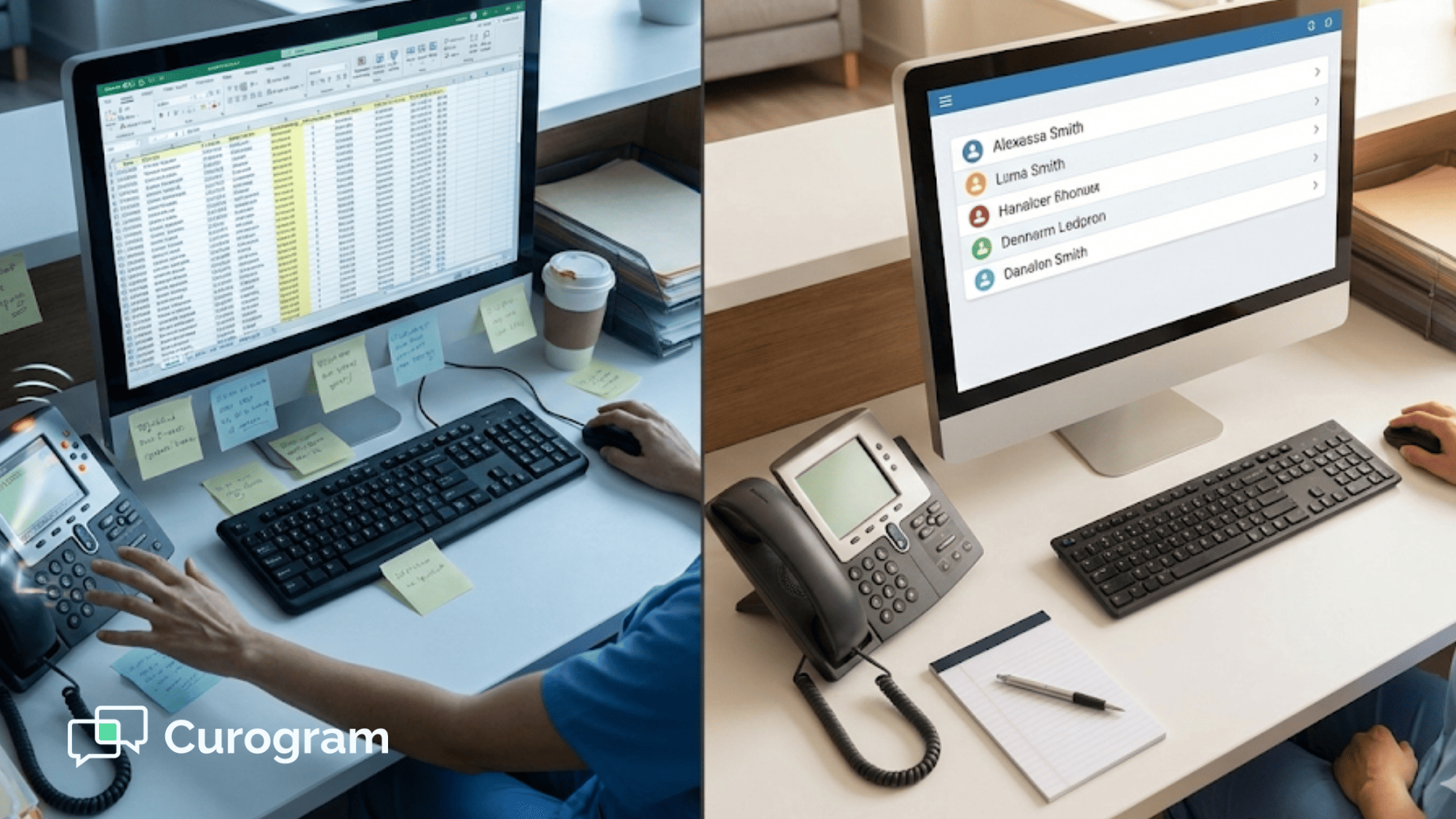
Before texting, front desk staff spent most of the day tied to the phone. Their main role was dialing, leaving voicemails, and logging callbacks. With Curogram in place, that dynamic shifts.
When you cut phone volume in half, staff suddenly have time to greet patients, manage intake, and handle tasks that move the practice forward.
They go from being phone operators to being patient care leads. The change is not just about speed. It is about the kind of work your team gets to do each day.
Texting also opens the door to paperless workflows. Staff can send links to digital intake forms, payment pages, and consent documents. Patients fill them out on their phones before they even walk in.
This cuts down on paper clutter, speeds up check-in, and keeps the office running lean. For any practice still relying on clipboards and printed forms, this single change can save hours each week.
Below are the most common questions we hear from Lytec offices thinking about adding 2-way texting. If you do not see your question here, reach out, and our team will be happy to help.
Will this work with my server-based version of Lytec?
Yes. Curogram works with both cloud-hosted and server-based versions of Lytec. There is no need for a complex IT overhaul or system migration.
The setup connects to your existing environment and pulls the data it needs to send and receive texts. Whether your Lytec install is local or hosted, the integration runs the same way.
Older versions of Lytec are still supported. Curogram was designed to work across a wide range of Lytec builds, so the age of your install is rarely a barrier. If you are unsure, a quick call with the Curogram team can confirm your setup works.
In most cases, no. Curogram connects through standard data paths that do not depend on the latest Lytec release. Your current version is likely ready to go as-is.
Is texting really HIPAA compliant?
Standard text messages are not HIPAA compliant on their own. That is why Curogram uses a secure, encrypted platform that meets SOC2 Type II standards.
Patient data stays protected at every step, from send to receive. The experience for the patient feels like regular texting, but the backend keeps everything locked down and audit-ready.
Regular SMS has no encryption, no access controls, and no audit trail. Curogram adds all three. Messages are protected in transit, and staff access is role-based. Every exchange is logged for compliance. It is the difference between sending a postcard and sending a sealed letter.
Patients receive and reply to texts using the default messaging app on their phone. There is nothing to download, no account to create, and no password to remember.
That simplicity is a big part of why response rates are so much higher than portal-based systems.
Do I need to replace my phone system?
Not at all. Curogram uses your main office phone number to send texts. Patients see a number they already know and trust.
This means higher open rates and faster replies. Your phone lines stay in place for the calls that still need to happen.
Texting does not replace your phone system. It works alongside it. Calls still come in and go out the same way they always have.
The difference is that a large chunk of those calls will no longer be needed, because the text already handled it.
All texts appear in a shared dashboard on the computer. Staff can toggle between calls and texts throughout the day without switching tools or screens. The workflow feels natural and does not add any extra steps to what your team already does.

Lytec has earned its place in thousands of small practices for good reason. It is stable, familiar, and does the core job well.
But the way patients want to communicate has changed, and the phone is no longer the best way to keep up.
You do not need to replace what already works. Lytec handles records, billing, and scheduling with the same steady hand it always has.
What it needs is a modern front end for patient outreach. Curogram acts as the upgrade layer that bridges the gap between your reliable EMR and the speed patients now expect.
Think about the shift from fax to email. Nobody got rid of their filing system. They just added a faster channel. That is exactly what 2-way HIPAA-compliant texting for Lytec practice workflows does for your office.
It keeps the structure you trust and adds a communication path that patients actually use. The phone tag loop ends, and in its place, you get quick, clear, and compliant exchanges.
Every hour your staff spends chasing voicemails is an hour they could spend with patients. Every missed call is a missed chance to confirm a visit or collect a balance.
The phone should support your workflow, not control it. When you adopt 2-way texting, you give your team the power to work smarter, not harder.
Adding Curogram to your Lytec setup takes less time than most staff meetings. There is no complex IT project. There is no downtime.
You keep your EMR, your phone system, and your current workflows. The only thing that changes is how fast and how securely your team can reach patients.
Lytec modernization does not have to mean risk. It does not have to mean disruption. It just means giving your team the right tool for the way patients communicate today.
Secure SMS for small practices is not a luxury anymore. It is the standard. And the sooner you make the switch, the sooner your front desk can go from loud and hectic to calm and in control.
Stop letting the phone dictate your day. Adopt 2-way texting to modernize your Lytec workflow instantly.
Schedule a Demo to see how easily Curogram connects to your version of Lytec.
💡 HIPAA compliant texting for CollaborateMD lets billing teams replace slow phone calls with instant, secure SMS. Curogram plugs into your RCM...
💡 Imaging centers depend on fast communication to keep schedules running smoothly. Quick, HIPAA-compliant texting connects staff and patients...
💡 Independent practices can achieve HIPAA-compliant texting for Elation Health by adding Curogram to their workflow. This creates secure, two-way...