Collect Copays Upfront in Prime Clinical | Zero-Touch Check-In
💡 When you collect patient copays upfront with Prime Clinical, you can stop chasing small balances after the visit. Curogram lets practices send...
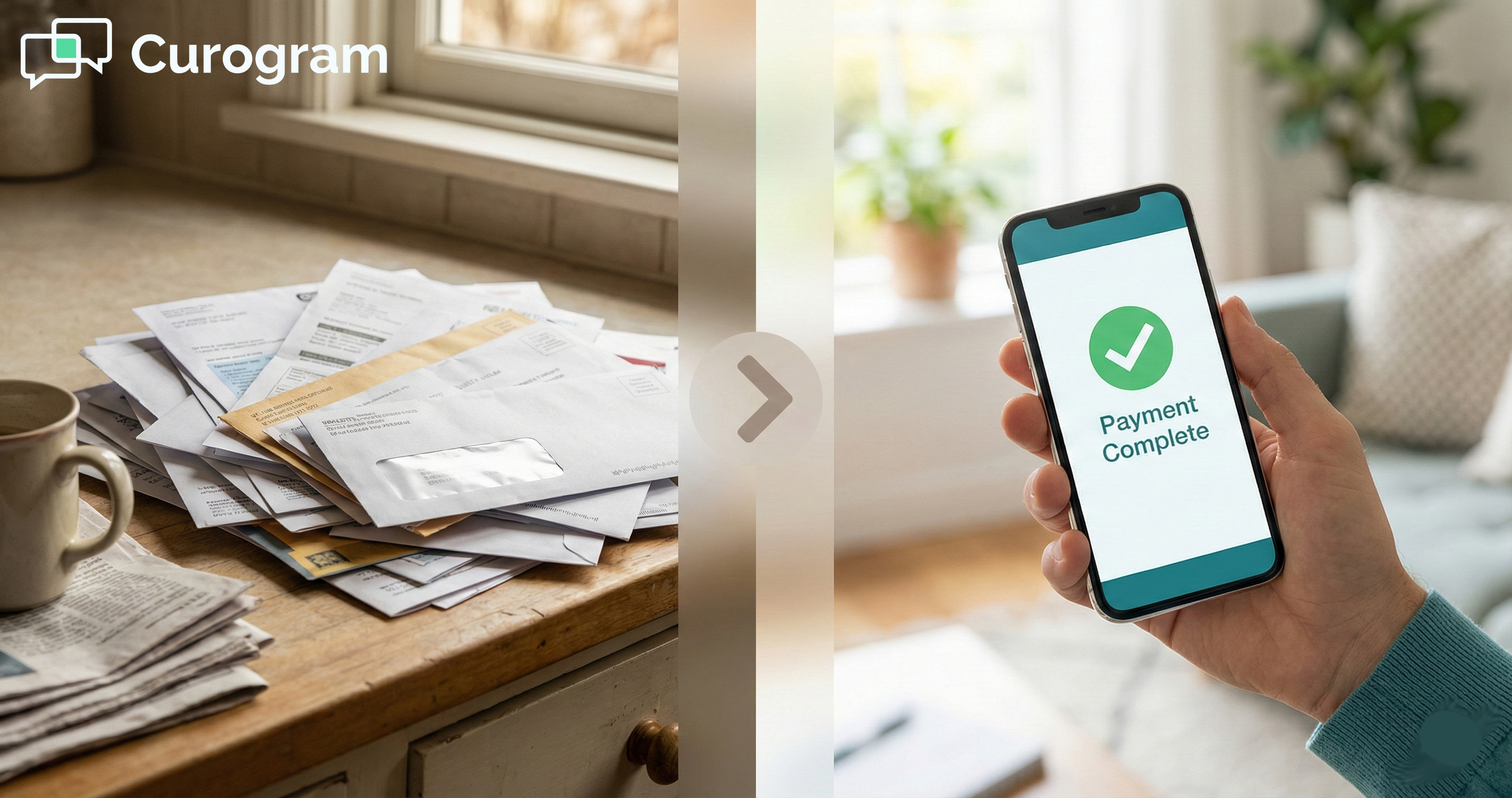
Your front desk prints a stack of bills every Friday. Each one gets folded, stuffed in an envelope, stamped, and dropped in the mail. Then you wait. And wait.
Maybe a check shows up in three weeks. Maybe it doesn't show up at all.
That slow loop costs real money. Stamps, toner, and staff hours add up fast. Worse, your cash sits in limbo while patients forget about that bill on the kitchen counter.
It's a cycle that most Lytec offices know too well, and it's one that no longer makes sense.
Patients today pay for coffee, parking, and online orders from their phones in seconds. They expect the same ease when they owe a co-pay or a balance after a visit.
When a practice still relies on paper, it creates a gap between what patients want and what the office offers.
Text-to-pay for Lytec practice workflows closes that gap. Instead of mailing a statement and hoping for the best, you send a simple text with a payment link.
The patient opens it, taps a button, and the money moves. No stamps, no phone calls, no waiting.
Curogram makes this work by reading balance data straight from Lytec. It spots what's owed, fires off an SMS bill pay message, and lets the patient settle up on their own time.
The shift from paper to Lytec mobile payments has helped practices cut AR days by 30% and collect over half of all balances in under two days.
In this guide, you'll see exactly how the paper chase drains your revenue, how a mobile-first approach fixes it, and what real results look like for practices that have made the switch.
Before we look at the fix, it helps to see the full cost of paper billing. Most Lytec offices follow the same steps every cycle. They print, fold, mail, and cross their fingers.
The problem isn't any single step. It's the chain of delays and costs that stack on top of each other.
A paper bill moves at a crawl. The clock starts the moment a patient walks out the door after a visit. From there, the path to payment is long and full of roadblocks.
After the visit, coders review the chart, then the practice prints a statement. Staff folds it, seals it, and sends it off.
Just this part can take a week or more, depending on how often your office runs a billing cycle.
The letter sits in transit for another two to five days. If the patient's address is outdated, the bill bounces back, and you start over. Every returned statement adds another week to your timeline.
Even when the bill lands in the right mailbox, the patient still has to open it. Many people sort through mail once a week at best. The bill goes on a stack, and days slip by.
Then the patient needs a checkbook or has to call during office hours to read a card number over the phone.
That friction alone pushes the average collection time past 30 days. When you're trying to reduce AR days at your medical practice, those lost weeks add up.
Paper billing isn't just slow. It's expensive. Every piece of that process has a price tag that eats into what you eventually collect.
Industry estimates put the cost of a single paper statement at around $3.00. That covers the envelope, the stamp, the toner, and the staff time to prepare it.
If one bill doesn't do the trick and you mail a second or third notice, you've spent $6.00 to $9.00 before the patient pays a cent.
For a practice that sends 500 statements a month, that's $1,500 just in direct mailing costs. Add a second round of notices, and you're closing in on $3,000.
The dollar signs on stamps and toner are easy to spot. What's harder to see is how much time your team spends on the phone chasing payments
A billing clerk who spends Friday afternoons calling patients to collect card numbers isn't doing other work that grows the practice.
Those calls are awkward, too. Patients don't enjoy being asked for credit card info on the phone. Staff don't enjoy making those calls. It's a lose-lose that paperless billing for Lytec offices can solve.
Here's what most practices miss. The delay isn't always the patient's fault. Patients often want to settle their bills. The process just makes it hard.
Fewer people write checks every year. Asking a patient to find a checkbook, write a check, and mail it back is asking them to do something they rarely do for anything else.
Calling the office to pay by card means calling during business hours. That's the same window when most patients are at work.
The bill sits in a pile until they remember, and by then another week has passed. Collecting patient balances shouldn't require this much effort from either side.
Now that the pain is clear, let's look at the fix. Curogram's text-to-pay turns your Lytec system into a mobile cashier. It reads what patients owe, sends a text, and collects the money, all without your staff lifting a finger.
The whole process starts with data that already lives in your system. Curogram doesn't ask you to enter anything twice. It pulls what it needs from Lytec and takes it from there.
Curogram connects to the Patient Balance field in Lytec. It checks each record for open amounts and flags any balance that meets your rules. There's no manual export or CSV file to mess with. The data flows on its own.
Because the link is live, changes in Lytec show up fast. If a patient pays at the front desk before the text goes out, the system catches it. You won't send a bill for something that's already been paid.
You decide when a text gets sent. Most offices set a floor, like sending a message only when the balance tops $5.00.
You can also set timing rules, such as waiting 24 hours after the visit before the first text goes out.
These rules keep the process smooth. A patient who owes $1.50 for a co-pay adjustment doesn't get a text at 7 a.m. the next morning. You control the tone and the timing.
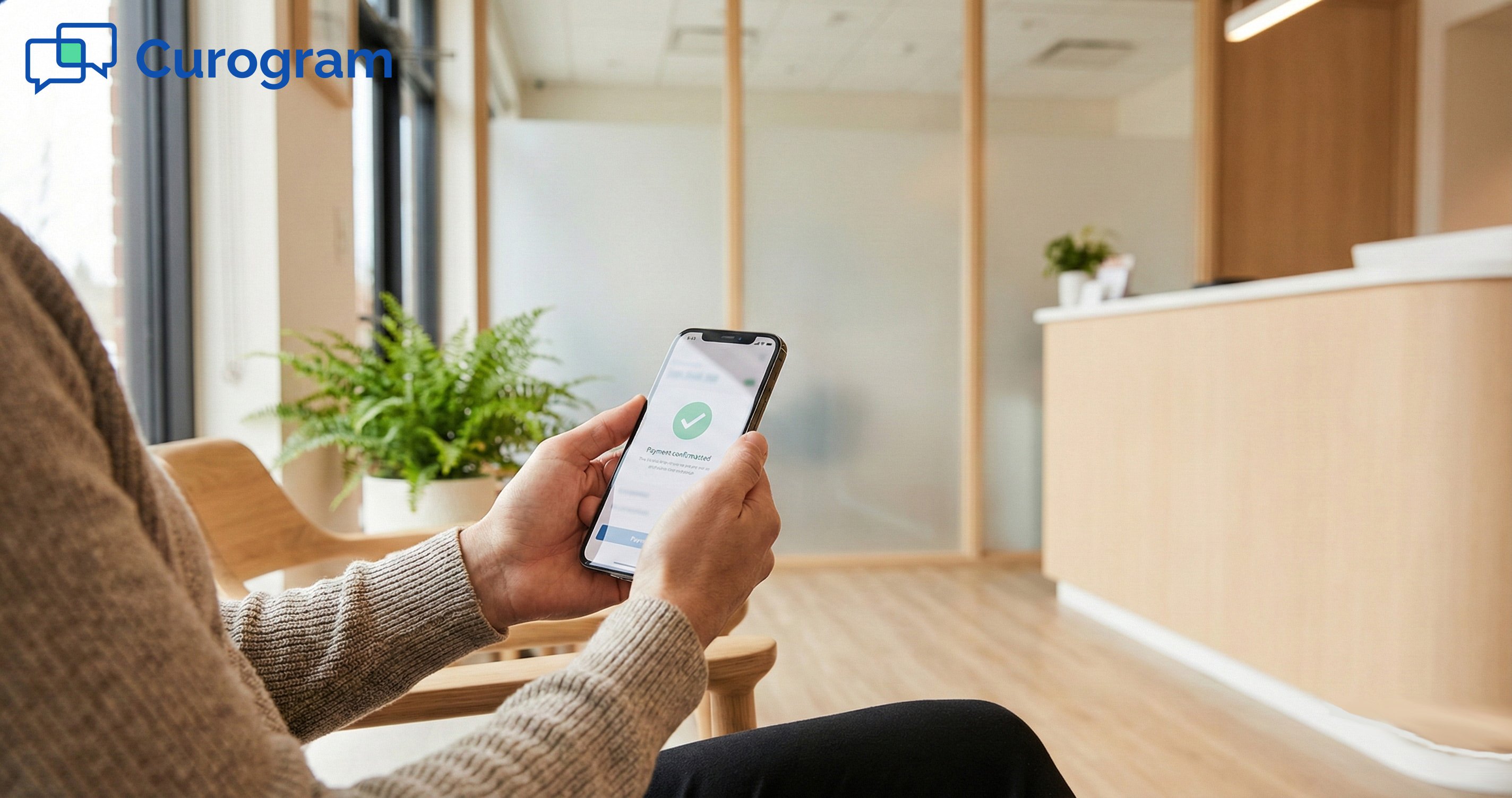
From the patient's point of view, the whole thing takes less time than sending a reply text. The message is clear, the link is secure, and the payment is done before they put their phone down.
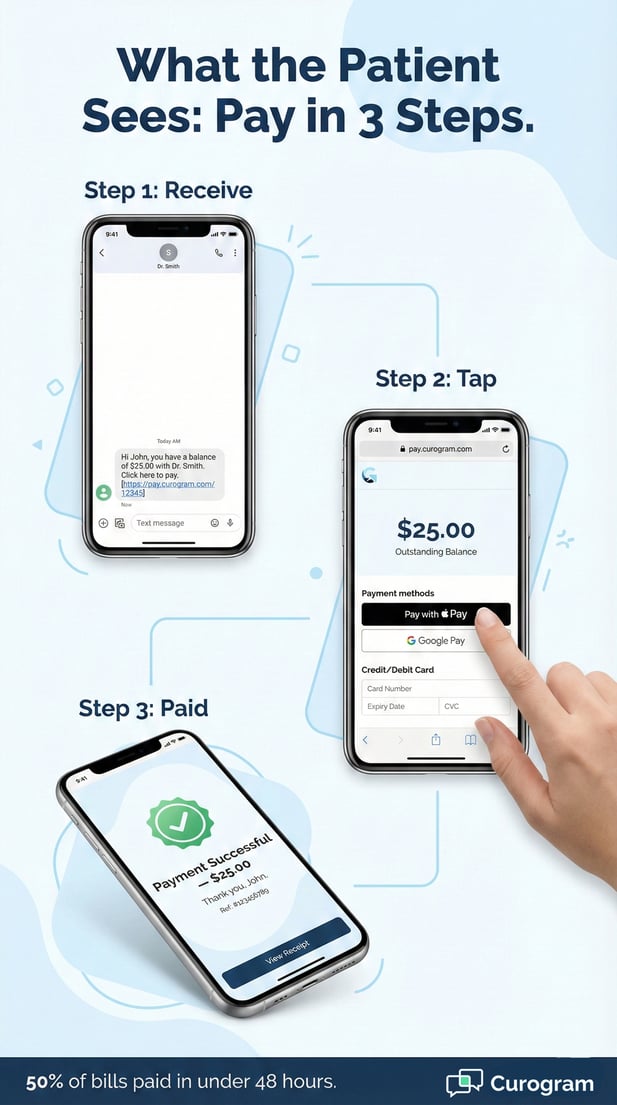
The patient gets a message like this: "Hi John, you have a balance of $25.00 with Dr. Smith. Click here to pay."
It's short, clear, and personal. There's no login, no portal password, and no app to download.
SMS bill pay keeps things simple on purpose. Patients don't need to create an account or dig through a patient portal. One tap opens the payment screen.
The link opens a secure page that shows the amount owed. The patient can choose Apple Pay, Google Pay, or type in a card number.
A quick tap on submit, and the payment is done. Start to finish, it takes about 15 seconds.
Every step runs through a PCI-compliant processor. The practice never sees or stores the card number.
That means less risk for you and more trust for the patient. This is what Lytec mobile payments look like in practice.
Speed changes everything in billing. A shorter path from invoice to payment means healthier cash flow and fewer write-offs.
A text arrives in seconds. There's no print queue, no mail truck, and no three-day wait. The patient sees the bill the same day the charge posts. That alone shaves weeks off your AR timeline.
Patients don't have to wait for office hours. They can pay at 9 p.m. on a Sunday while watching TV.
Removing the clock from the process means payments come in around the clock. Many practices see a spike in payments during evening hours, right when paper billing can't reach anyone.

Results tell the real story. When practices move from paper to text-based billing, the numbers shift fast. Let's walk through the metrics that matter most.
The headline number comes straight from Curogram case studies. Once a practice goes live with text-to-pay for Lytec practice workflows, more than half of all bills get paid within two days. Compare that to the old Net 30 standard, and the gap is striking.
In a paper world, 48 hours means the bill is still sitting in a print tray or riding in a mail truck. With SMS-based billing, that same window is enough time for most patients to see the text, tap the link, and pay.
This shift doesn't just speed things up. It changes the math on your entire revenue cycle. When half your open balances clear in two days, your cash position looks very different at the end of the month.
Practices that adopt this model see a 30% drop in AR days on average. That's not a small tweak.
It means money that used to sit in limbo for a month now lands in your account within a week. For a practice trying to reduce AR days at a medical practice, this is one of the fastest levers to pull.
Shorter AR cycles also mean fewer write-offs. The longer a balance sits, the less likely it is to be paid. By closing the gap, you keep more of what you earn.
Money is one half of the story. Time is the other. Staff hours spent on phone-based collections are hours that could go toward patient care or front-desk tasks that grow the practice.
Before text-to-pay, many offices set aside blocks of time each week just for payment calls. A billing clerk might spend three to four hours every Friday reading balances and taking card numbers over the phone. That work mostly goes away when patients handle it on their own through a text link.
Staff can use those recovered hours for tasks that matter more: verifying insurance, helping patients at the front desk, or handling claims that need attention.
Phone-based billing makes staff and patients play tag. You call, and the patient doesn't answer. They call back, your billing person is on lunch. The cycle repeats.
Text-based billing cuts this loop. The patient pays when it works for them; no call necessary.
This also means fewer voicemails to leave and return. The whole exchange goes from multiple touch points down to one: a single text.
The direct cost savings hit right away. Postage, paper, and toner costs drop the moment you start sending texts instead of letters.
Practices that shift to text-based billing report cutting postage costs by 50% to 75%. For an office that spends $1,500 a month on mailing statements, that's $750 to $1,125 back in your pocket each month. Over a year, you're looking at $9,000 to $13,500 in savings.
Those numbers grow when you factor in the second and third notices you no longer need to send. Paperless billing for Lytec offices doesn't just save on the first bill. It saves on every follow-up you don't have to print.
Unlike many software changes that take months to show a return, text-to-pay creates value from the first batch of texts. You see savings on postage immediately.
You see faster payments within the first week. The ROI case doesn't require a long runway.
When you add up faster collections, lower mailing costs, and freed-up staff time, the total impact is hard to ignore. Practices that have made the switch often say their only regret is not doing it sooner.
Switching to a new billing tool always brings questions. Below are the ones we hear most from Lytec offices thinking about text-to-pay.
Each answer is based on real feedback from practices that have made the switch.
Yes. Curogram uses PCI-compliant payment processors for every transaction. The data is encrypted from the moment the patient enters their card info to the moment the payment clears. This is the same level of security used by major online retailers and banks.
Your practice never stores the credit card number. It doesn't pass through your network or sit on a server you manage.
The processor handles it all. That setup shrinks your risk and keeps you on the right side of data security rules.
For practices worried about HIPAA, the text itself contains no protected health info. It only shows the balance amount and a secure payment link.
No diagnosis codes, no visit details, and no sensitive clinical data travel through SMS. Patients can pay with confidence, and your office stays compliant.
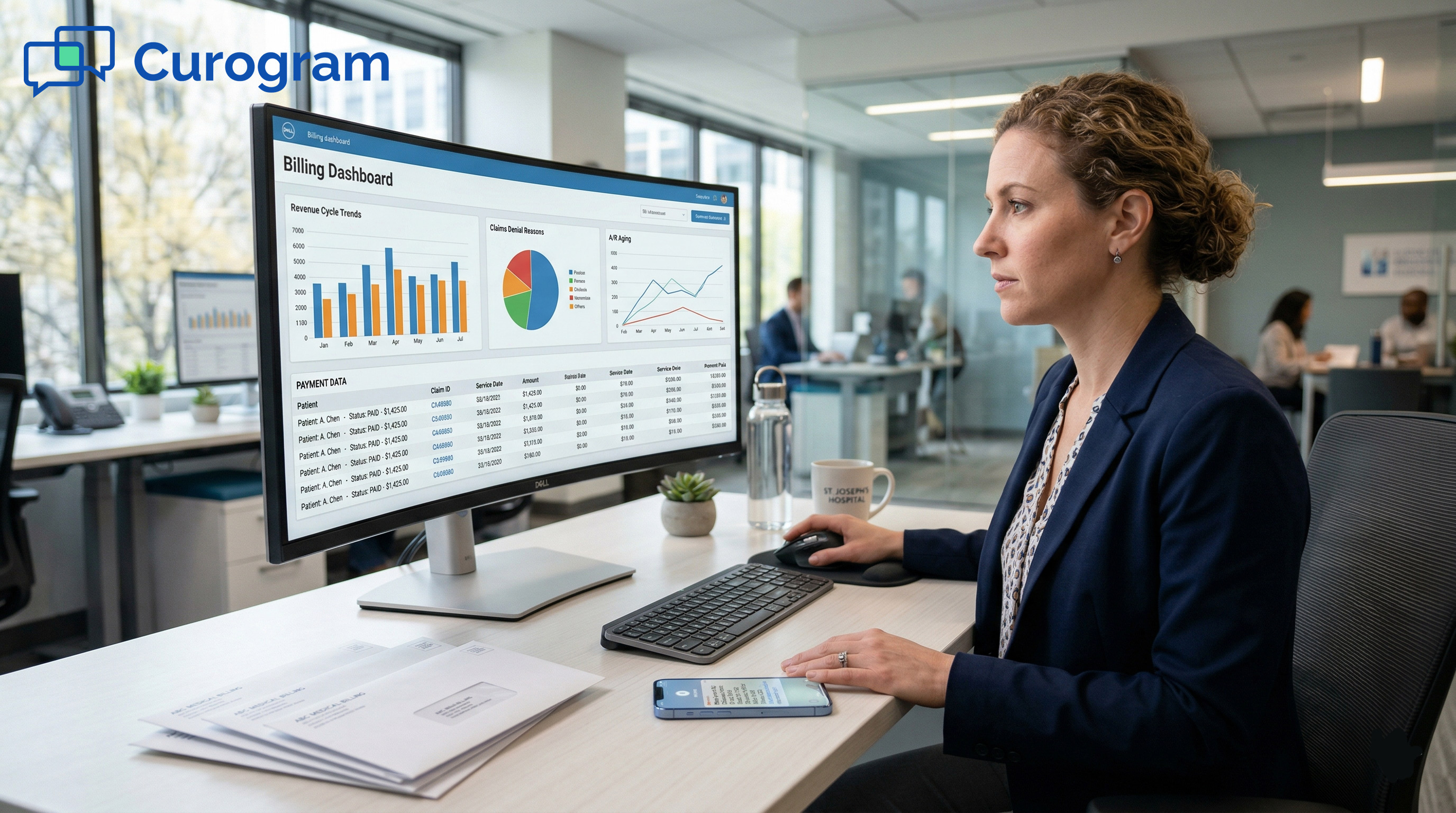
Yes. Curogram provides a daily report of every payment collected through text. The report lists patient's name, amount, date, and payment method.
Your team can use this to batch-post payments or match them to open balances in Lytec. The format is clean and easy to read at a glance.
Depending on your Lytec version and clearinghouse setup, these payments can often be batch-posted in just a few clicks.
Even if your setup requires manual posting, the daily report makes the job fast and simple. Most offices spend less than 15 minutes a day on it.
This means no double entry and no guesswork. Your books stay clean, and your billing team always knows which patients have paid and which still have open balances.
It's a simple process that fits into the workflow your staff already follows each morning.
Instead of calling the office, the patient can reply to the same text and ask something like, "What is this charge for?"
Your staff sees the message right away and can respond in seconds. There's no phone tree, no hold music, and no missed call to return.
Once the staff clears up the question, the patient is already in the payment flow. They can tap the same link and pay on the spot.
That back-and-forth that used to take three phone calls now happens in one text thread. No extra steps needed.
This two-way chat keeps the whole exchange in a single place. Staff can scroll back to see what was said, and the patient gets a written record of the answer.
It removes confusion, builds trust, and creates a faster path to collecting patient balances for your team.

The way we deliver care has changed. Patients check in on tablets, view lab results on their phones, and book visits online.
But for many Lytec offices, the billing process is still stuck in the past. It's time to close that gap.
Every section of this guide points to the same truth. Paper slows you down, costs you money, and frustrates the people who owe you. Moving to a text-based model fixes all three problems at once.
When over 50% of bills get paid in under 48 hours, you stop thinking in terms of Net 30. Cash flow becomes something you manage in days, not months. That shift gives your practice breathing room to invest, hire, or simply run with less stress.
Text-to-pay for Lytec practice workflows turns your billing from a waiting game into an action step. The invoice goes out, the patient pays, and the money moves. That's the kind of speed modern practices need.
You save on stamps. You save on toner. You save on staff time. Each of those line items adds up, and together they create a clear return.
Practices that make this switch often find that the savings alone more than cover the cost of the platform.
Beyond hard dollars, there's the value of staff who can focus on patient care instead of chasing payments. That's harder to put a number on, but every office manager feels the difference.
Here's a blunt way to frame it. Every day a patient balance sits unpaid, your practice is lending that person money at zero interest.
You did the work. You filed the claim. The patient's portion is due. There's no reason it should take a month to collect it.
Collecting patient balances doesn't have to mean phone calls, paper, and waiting. A single text message can do what three mailed notices couldn't. The tools exist right now to turn your billing from a pain point into a smooth, fast process.
Practices that have made the switch report happier staff, happier patients, and healthier books. That's a rare trifecta in healthcare admin.
If your office still prints and mails statements, you're spending money you don't need to spend and waiting longer than you have to.
Switching to SMS-based payments is not a huge overhaul. It's a plug-in that works with the Lytec system you already run.
The setup is fast. The learning curve is short. The results start showing up within the first week. Reading about results is one thing. Seeing the system work with your own Lytec data is another.
Schedule a Demo to see how we sync with Lytec to automate your billing outreach.
💡 When you collect patient copays upfront with Prime Clinical, you can stop chasing small balances after the visit. Curogram lets practices send...
💡 Patient payments for Osmind can be faster and simpler with secure text-to-pay tools. Curogram lets mental health clinics send one-click payment...
💡 Clinics using Osmind EMR can boost their Osmind EMR ROI for patient payments by switching from paper billing to secure SMS payment links....