
Office Ally Patient Text Payment | Pay in 60 Seconds
 Jo Galvez : Apr 20, 2026, 1:00:01 PM
Patients ignore statements and portals. They pay via text in 60 seconds. Curogram sends secure payment links to Office Ally patients — tap, pay, done.
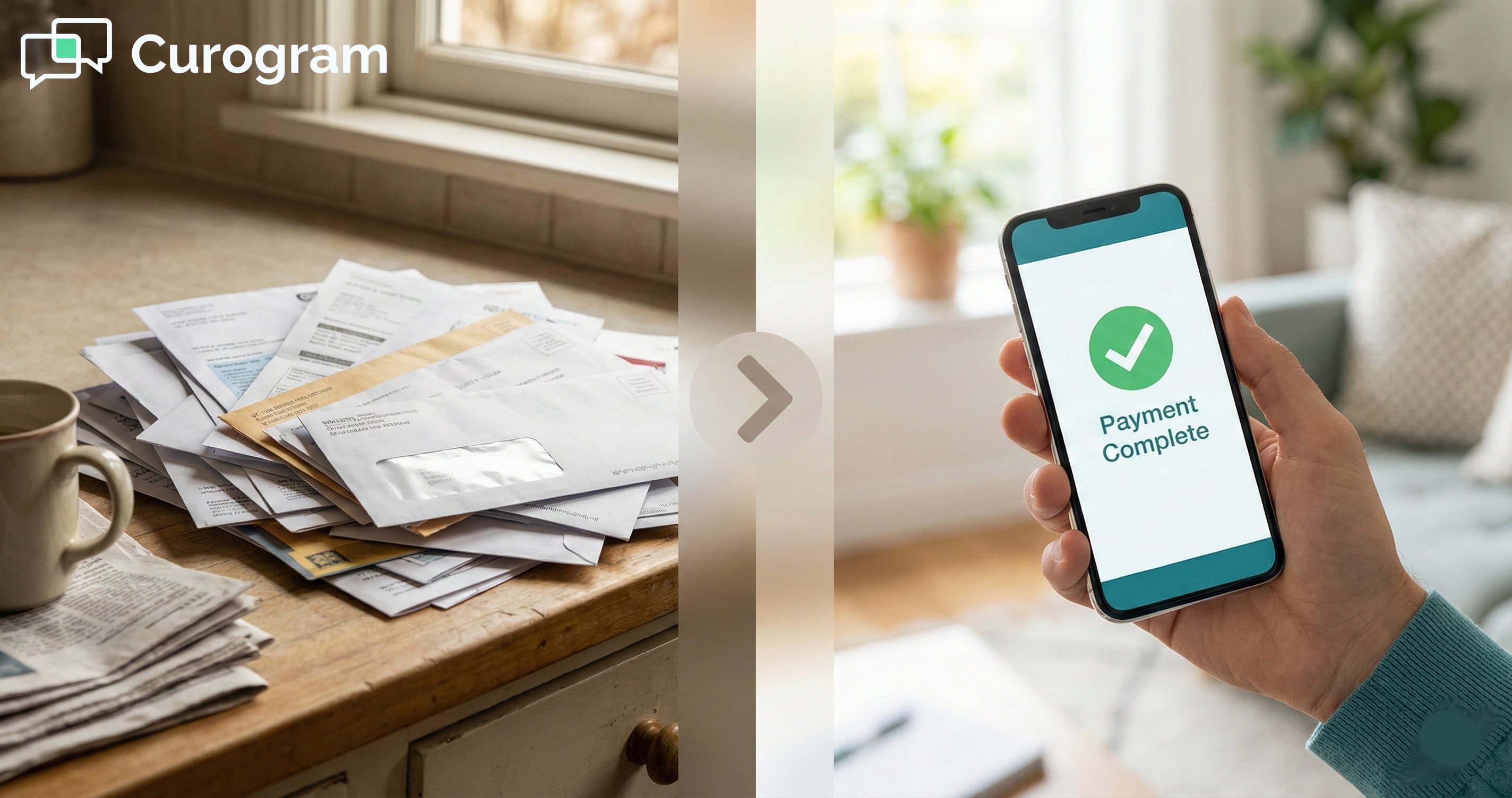
Think about the last time you paid for a coffee. You tapped your phone, saw the green check mark, and walked away. The whole thing took five seconds.
Now think about the last time you paid a medical bill. It likely took a lot longer than five seconds.
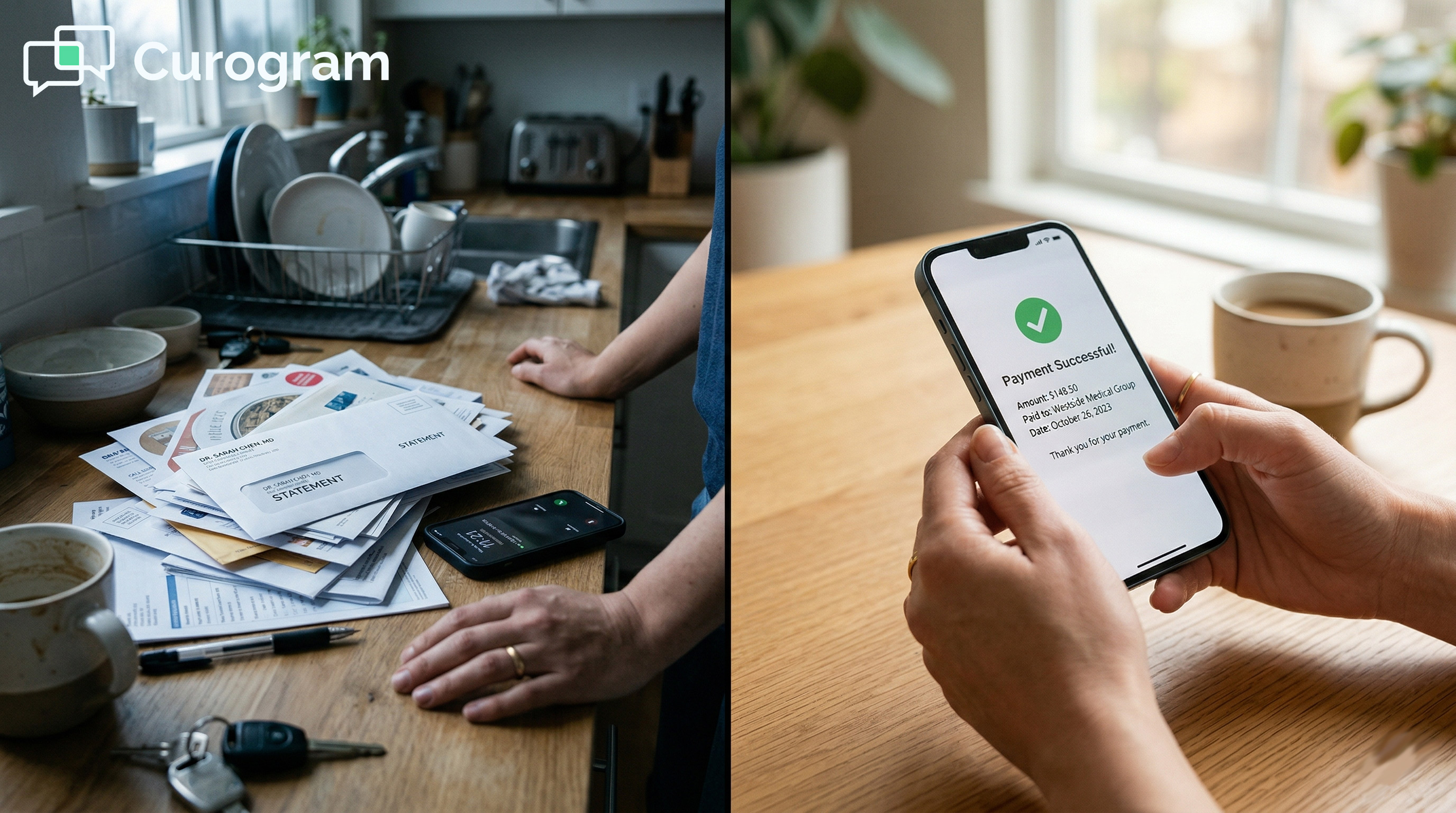
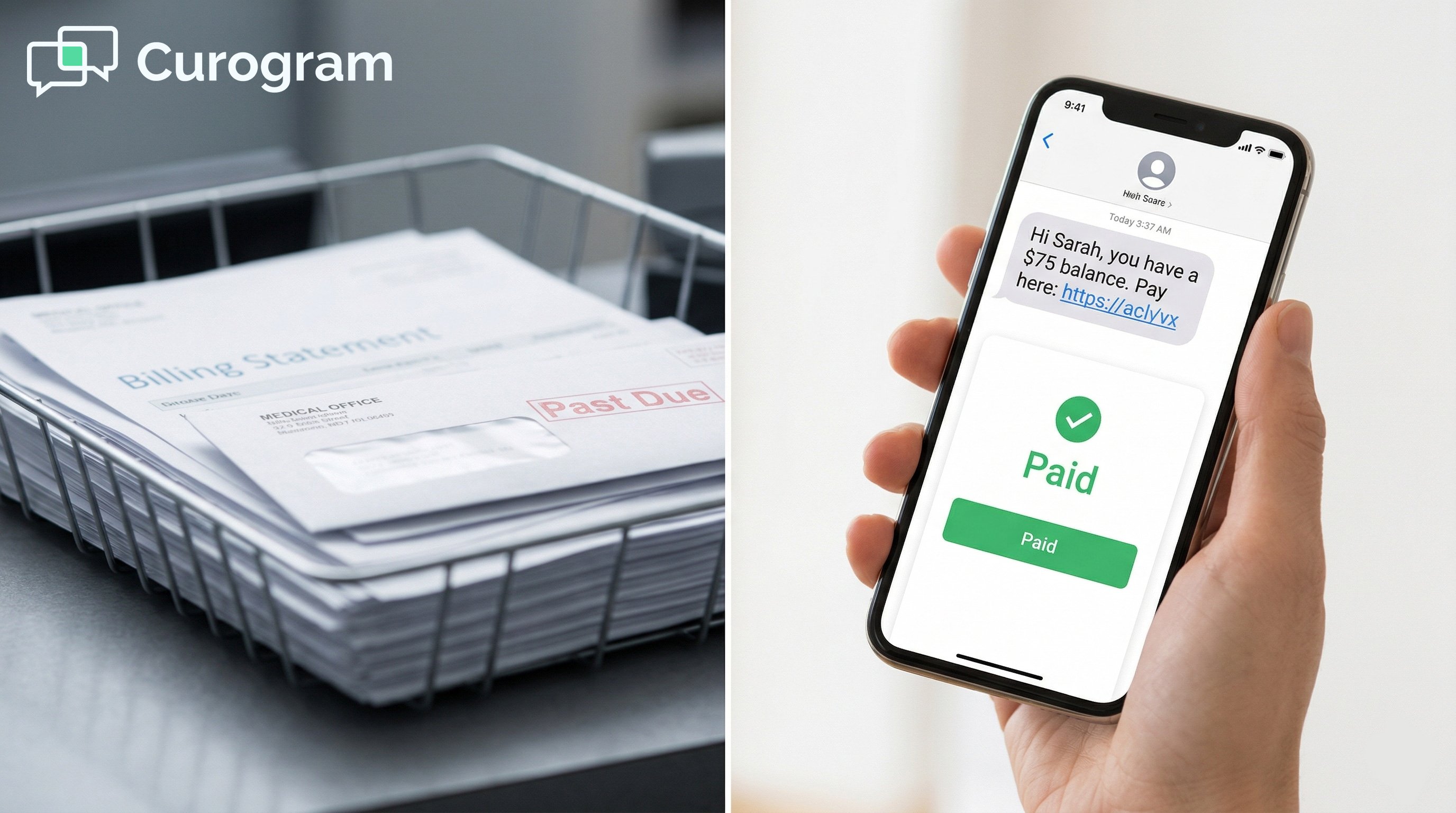
For most patients, paying a doctor's bill is a hassle. A paper statement shows up in the mail.
They set it aside because they don't have a stamp. Maybe they plan to call the office, but they forget.
Days turn into weeks. Weeks turn into past-due notices. It's not that patients refuse to pay. It's that the process makes it hard to pay.
This is the core problem for any practice running on Lytec. The system is great for scheduling and charting. But when it comes to collecting payments, the old way of doing things creates drag. Patients want to clear their balances. They just need a simple path to do it.
Improving patient payment experience for Lytec practices means meeting people where they already are: on their phones. When you replace paper statements with a text message that contains a secure pay link, you remove every barrier at once.
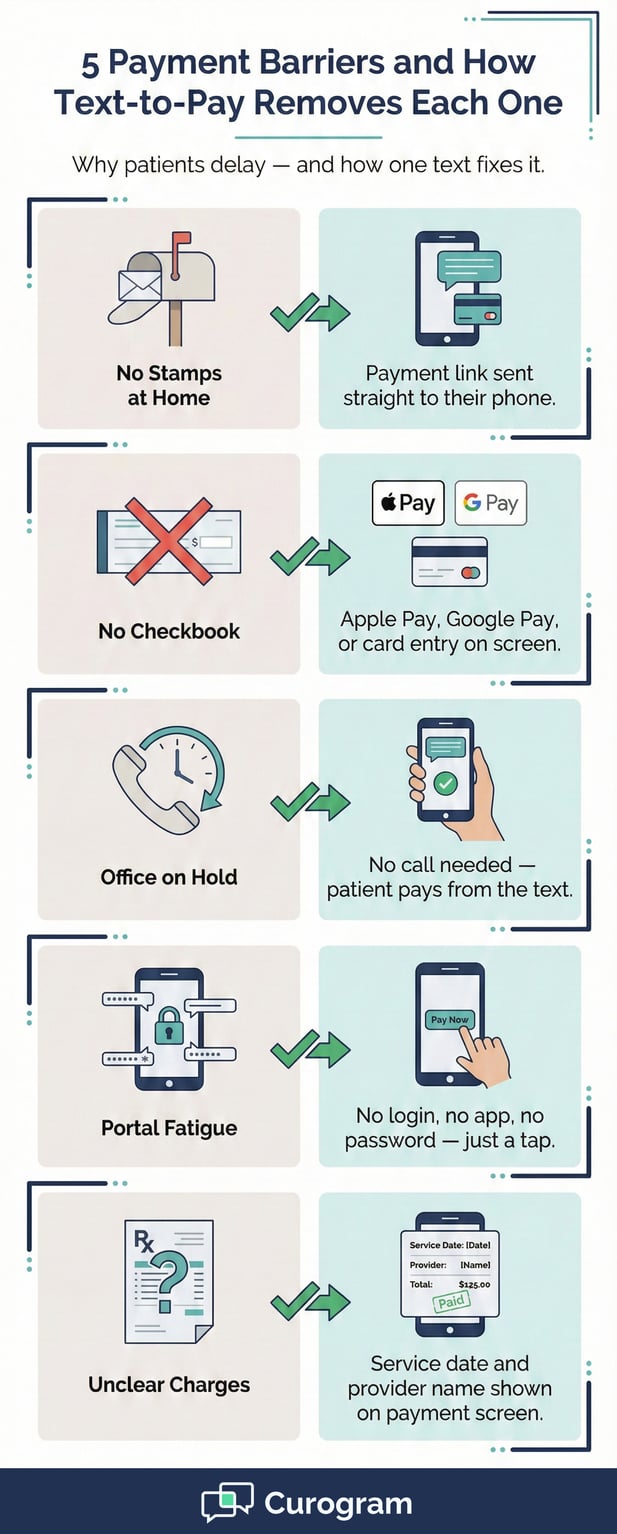
No stamps. No hold music. No logging into a portal. Just a tap and it's done.
Curogram bridges this gap by plugging right into Lytec. It pulls the patient's balance, sends a text, and lets them pay with Apple Pay or Google Pay. The whole process takes about 15 seconds from start to finish.
In this article, we'll walk through why the old process fails, how modern healthcare billing works, and what happens when you make it truly easy for patients to pay.
The real enemy is not patient apathy. It's friction. Every step between a patient and their payment is a chance for them to give up.
Paper billing made sense 20 years ago. Today, it's a relic that slows everything down.
Picture the average home of someone under 50. There's a phone on the counter and a laptop on the table. What you won't find is a book of stamps or a box of checks.
These items have faded from daily life. Yet many Lytec practices still rely on paper statements as their main way to collect.
When that bill arrives, the patient doesn't have the tools to pay it right then. So it lands on the kitchen counter, or in a drawer, or in the recycling bin. The intent to pay was there. The means was not.
A paper bill becomes one more item in the stack. It sits next to coupons, school forms, and junk mail.
The patient tells themselves they'll get to it later. Later often means never, or at least not until a second or third notice shows up.
This delay isn't laziness. It's how humans handle low-urgency tasks that require effort. When paying a bill means finding a pen, writing a check, and mailing an envelope, the effort outweighs the urgency.
SMS payments vs paper statements is a night-and-day comparison in this regard. One takes 15 seconds. The other takes 15 minutes, plus a trip to the mailbox.
Some patients try to pay by calling the office. That often creates more problems.
A patient calls the office during lunch. The line is busy, or they get put on hold. After five minutes, they hang up and tell themselves they'll call back. They rarely do. The window of motivation closes fast.
Front desk staff are stretched thin. They're checking patients in, answering questions, and handling referrals. Taking a payment call takes time they don't always have. This creates a bottleneck that hurts both sides.
If the patient hits voicemail, the chance of payment drops sharply. Very few people leave a message saying, "Please call me back so I can give you money."
The call goes unreturned. The bill goes unpaid. And a month later, the practice sends another statement, starting the whole cycle over.
This cycle drains staff time and delays revenue. Reducing billing friction means breaking this loop at its source. That source is the outdated assumption that patients will jump through hoops to pay you.
Now that we've named the villain, let's talk about the guide. Curogram acts as a bridge between your Lytec system and the patient's phone. It turns a multi-step process into a single tap.
The technology behind mobile medical bill pay is simple by design. That's what makes it work.
Curogram sends a text message with a secure link. The patient taps the link and sees their balance. There's no app to download. No username to remember. No portal to log into. It's all right there on one screen.
This matters because every extra step is a drop-off point. Patient portals have low adoption rates for a reason. They add friction. A direct text removes that friction and meets the patient where they already are.
The text message includes the service date and provider name, pulled straight from Lytec. So the patient knows exactly what they're paying for. There's no need to call the office and ask, "What's this charge for?"
This clarity reduces confusion and speeds up payment. Lytec patient convenience goes up because the patient has all the context they need in one place. No hunting through old mail. No digging through portal messages.
The payment methods available make a huge difference. The easier the method, the faster the payment.
When a patient taps the link, they can choose Apple Pay or Google Pay. On an iPhone, they verify with FaceID, and the bill is paid.
They don't even need to stand up and find their wallet. The card is already stored on their phone.
This is why modern healthcare billing is shifting toward mobile. Consumers expect the same ease they get when buying from Amazon or ordering food. Paying a medical bill should feel the same.
Not every patient uses Apple Pay. Some prefer to type in their card number, and the secure link allows for that too.
The screen is clean, large, and easy to read. This makes it a strong option for patients of all ages, including older adults.
Whether the patient uses a digital wallet or enters their card by hand, the result is the same. They pay in under a minute. The balance clears, and the practice sees the funds without chasing anyone down.
What happens when you make bills payment this simple? Patients pay faster, complain less, and feel better about the whole experience. The results speak for themselves.
Timing is everything in payment collection. A text message hits at the perfect moment.
A text pops up on the patient's screen. They see a balance. They tap the link, verify with their face or thumb, and it's done. The whole act takes seconds.
This is what we call the impulse pay. It works because the patient acts in the moment, before life gets in the way.
Compare this to a paper bill that arrives three days after the visit. By then, the patient has moved on. The bill feels abstract. A real-time text makes the charge feel current and clear.
There's a reason people check their phones over 100 times a day. We're wired to clear alerts.
When a payment text shows up, many patients pay it just to remove the badge from their screen. It's the same impulse that makes us open an email or reply to a message.
This is not a trick. It's how people behave with their devices. By using that behavior to your advantage, you collect faster and with less effort.
When you remove the barriers, your metrics improve across the board.
Patients are tired of complex billing. Surveys show that a large share of patients prefer digital payment options over mail.
When you give them what they want, satisfaction goes up. Happy patients leave better reviews, and those reviews bring in new patients.
Think of it this way: the billing experience is often the last touchpoint after a visit. If it's smooth, the patient walks away with a good impression. If it's clunky, that's what they remember.
One of the biggest wins is the drop in angry phone calls. When bills go unpaid for weeks, patients get past-due notices.
They call the office confused or upset. Staff have to spend time calming them down and taking a payment over the phone.
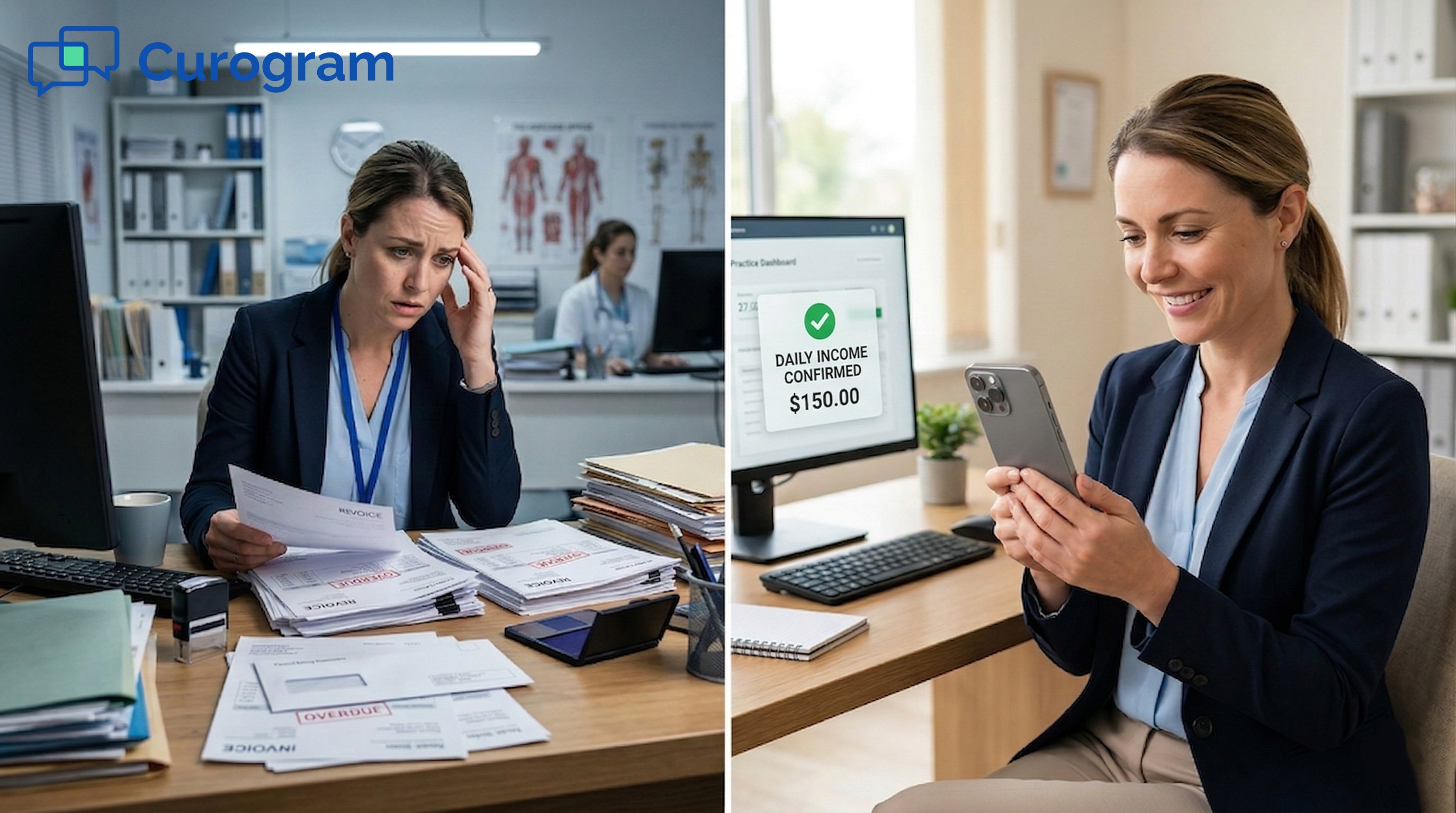
With text-to-pay, the payment happens right away. There's no gap for confusion to grow. That means fewer past-due notices and fewer tense calls. Your staff can focus on patient care instead of collections.
Here are some common questions we hear from Lytec practices considering text-to-pay.
Yes. You can set Curogram to allow partial payments or require the full balance. This depends on your Lytec practice policy.
Some offices prefer to collect the full amount up front. Others let patients chip away at larger bills over time.
Either way, you stay in control. The settings are easy to adjust, and you can change them at any time without needing tech support.
They do, and it's instant. Once the payment clears, Curogram sends an automated SMS receipt to the patient. They can save it for their records, including HSA or FSA claims.
This removes another reason patients call the office. Instead of asking for proof of payment, they already have it on their phone.
It does. While some older adults may not use Apple Pay, the secure link lets them type in a standard credit card number. The screen is large and easy to read, with clear labels on every field.
Many practices report that their older patients enjoy this option because it's simpler than writing a check. They don't need to remember a portal password or navigate a complex website. It's just a link and a form.

The lesson here is not complex. If you make it hard to pay, people won't pay on time. If you make it easy, they will. That's the whole story.
Practices often invest in marketing, new equipment, and staff training. But they overlook one of the simplest ways to boost revenue.
Every barrier between the patient and their payment costs you money. The stamp they don't have.
The phone call they won't make. The portal they refuse to log into. Each one is a leak in your revenue.
Improving patient payment experience for Lytec practices is about plugging those leaks. You don't need to change your whole system. You just need to add a better front door for payments.
Curogram works with your existing Lytec setup. There's no need to rip out what you have. It simply adds a layer that talks to your patients in the way they expect: fast, clear, and on their phone.
Schedule a Demo to see the patient interface and how simple it is to use.
 Jo Galvez : Apr 20, 2026, 1:00:01 PM
Patients ignore statements and portals. They pay via text in 60 seconds. Curogram sends secure payment links to Office Ally patients — tap, pay, done.
 Jo Galvez : Apr 17, 2026, 5:00:01 PM
Office Ally patients don't log in to pay. Curogram texts a payment link — patients pay in two taps. Collect balances faster than portal or paper...
 Jo Galvez : Mar 26, 2026, 8:00:02 AM
Practice Fusion practices replace paper statements with Curogram's text-to-pay. Patients pay in 30 seconds via SMS link. 3x faster collections.