
 Joshua Inciso
How Telehealth Improves the Patient Experience
One way to improve the patient experience is to implement telehealth in your medical practice. Telehealth offers benefits to patients and providers.

Your patients decide what they think of your practice long before they reach the exam room. They form an opinion when they search your name, when they call and land on hold, and when they try to book a visit at 9 p.m. By the time they sit down with you, half the experience has already happened.
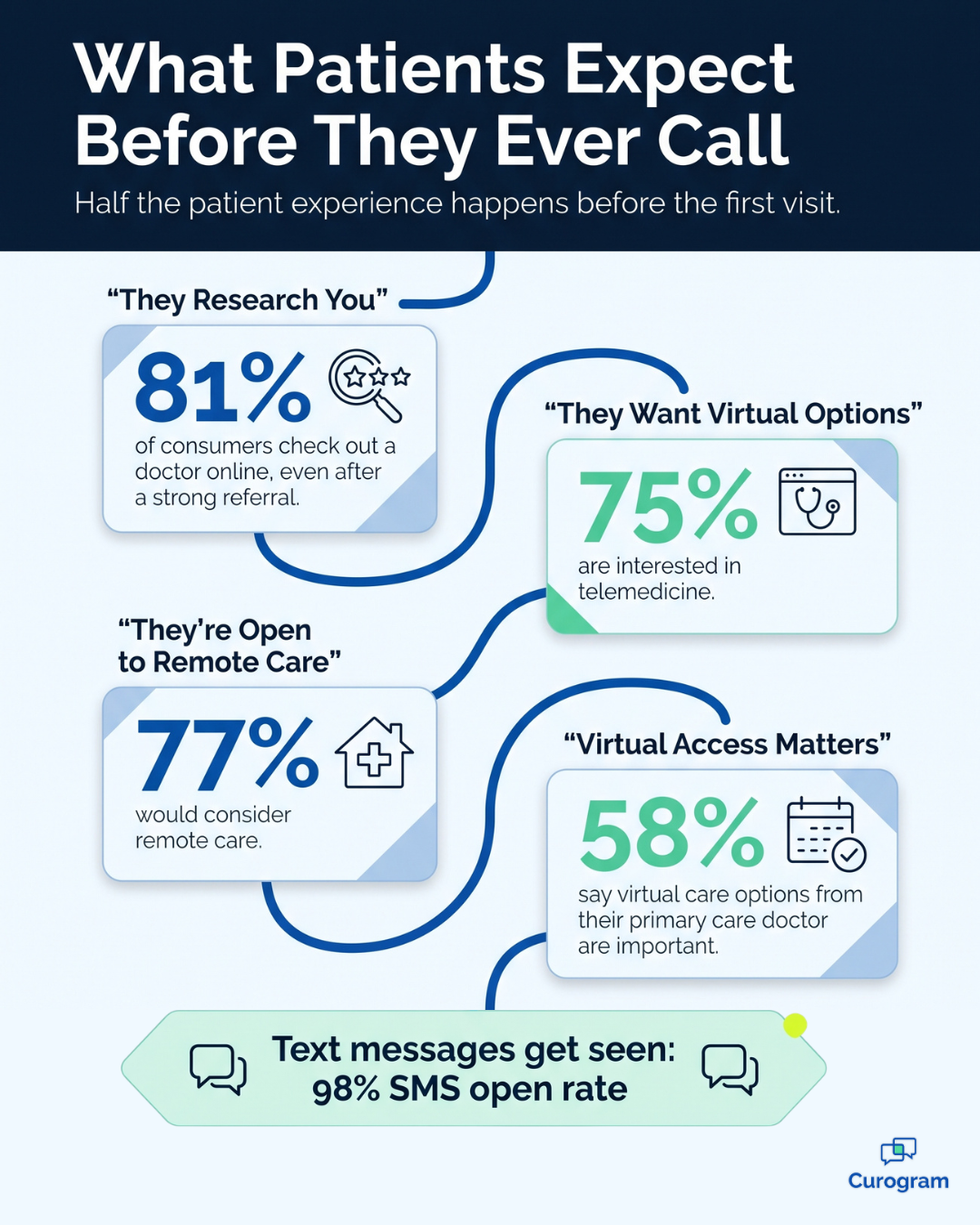
That matters more than ever. Patients today know they have choices, and they are not shy about using them. In one survey, 81% of consumers said they would still check out a doctor online, even after getting a strong referral from their primary care doctor. A trusted referral opens the door, but your online presence decides whether they walk through it.
So start with the basics. Your website should be easy to use and show the services you offer, your credentials, and clear contact details. Answers to common questions and real patient testimonials help new patients feel confident before they ever call.
Accessibility matters too. Many providers now offer telemedicine to make quality care easier to reach, and patients have wanted it for years. A Software Advice study found that 75% of patients were interested in telemedicine, and demand has only grown since.
And the reward is worth it. Happy patients are the heart of a thriving practice. They stay loyal, show up for appointments, follow their care plans, and refer friends, family, and coworkers. A great patient experience brings new patients in and keeps current ones from drifting away.
The good news? You don't need a huge budget or a full overhaul to get there. Small, steady changes in how you listen, talk, and follow up add up fast.
Below are 10 practical ways to create the ultimate patient experience, plus a look at the habits and tools that make it last.
This is a no-brainer. In every healthcare organization, all physicians should build relationships with their patients as part of the quality of care they provide. Connecting with your patients ultimately builds confidence and satisfaction with your care.
The following are key points to remember on how you can effectively build loyal relationships with your patients:
Take time to get to know your patients. They know how busy doctors are, but if you show that regardless of your busy schedule, you take the time to acknowledge them, it makes them realize you’re different from other physicians they know; when they need you, they won’t be rushed through an appointment.
Open-ended questions help you learn how patients really feel about their care. They also show that you care and want to do better.
| Instead of asking... | Try asking... |
|---|---|
| "Did everything go okay today?" | "How did today's visit go for you?" |
| "Do you have any questions?" | "What questions do you have about your treatment?" |
| "Is the medicine working?" | "How have you been feeling since you started the new medicine?" |
Small wording changes like these invite real answers instead of a quick "yes" or "no."
If you feel like your patient is too shy to ask about their concerns, be the first one to approach them and encourage them to ask away. Some patients are nervous, so use a friendly approach. Once they open up, support them to guarantee they won’t hesitate to ask the next time.
This is an effective way to create an ultimate patient experience — leaving no unanswered questions.
Not everyone is confident enough to be up-front about their health concerns. Anticipate what your patients need and be the first to address certain topics. Your patients will be happy to know that you’re looking out for them and understand them.
Patient education is a key part of good care, and it should be thorough.
A simple three-step approach helps:
The goal isn't just to share facts. It's to help patients know what to do with that information once they leave.
Integrate a patient-friendly appointment scheduling software into your system, so that your patients don’t have to wait on hold or experience unanswered calls — which can only frustrate them. It’s more convenient for potential patients to choose healthcare providers that offer the ability to change, cancel, and schedule an appointment online or via text message, as well — current patients appreciate the convenience, too.
To accomplish this, get a telemedicine software provider; Curogram offers HIPAA-compliant appointment reminders and online appointment booking.
“You never get a second chance to make a first impression.”
You’re probably familiar with that phrase. If you’re having a rough day, don’t let it affect you when you’re about to face a patient. Even if you’re doing a virtual visit, your patient might get the feeling that you’re not fully engaged. It’s important to put your personal issues and emotions aside and wear a smile when it’s time to meet a patient, new or old.
Making a good impression is a great opportunity for you to instantly create the ultimate patient experience for a patient who consults with you for the first time, so make it count.
Create a warmer relationship with your patients by asking them how their day is going. Create a bond and make them feel important.
If they respond with a certain event happening, you can ask about that event the next time they consult with you. Your patient might even find it touching that you remember what they said, like you’re a close friend of theirs.
A quick check-in after an appointment is a thoughtful gesture. It gives patients a chance to raise small concerns about their medicine or treatment. Even if they have none, they'll appreciate that you asked.
A short text message works well:
"Hi Maria, this is Dr. Lee's office. Just checking in after your visit on Tuesday. How are you feeling? Reply here if you have any questions."
Follow-ups like this leave a good impression and make patients more likely to recommend you to friends and family.
Send a short survey right after each appointment. It shows you where you shine and where you can improve. When patients see you act on their input, they're more likely to come back.
Good surveys cover more than the visit itself. Ask about:
Feedback like this helps you raise the quality of care and fix problems before they cost you patients.
The patient experience represents a pivotal element of your ability to retain and attract patients. When the patients are happy and satisfied with the service you provide for them, that forms a positive relationship where they develop loyalty and a deeper connection to you.
Understanding the patient experience is critical to any healthcare provider. It is more than just providing impressive care. The patients who experience better care often have better patient experience.
For instance, 58% of survey respondents said it is either ‘very important’ or ‘somewhat important’ that their primary care doctor offers virtual care options. Majority of the respondents prefer the care being provided virtually — experiencing a positive outcome through remote care.
When you provide outstanding care, your efforts positively impact a patient’s life. That makes them happy and you as well, knowing that your work is meaningful. And a large part of that is effective communication.
It's simple: the easier it is to talk with you, the better the patient experience. Patients bring you their concerns, and they need answers they can understand.
Clear, steady communication makes sure patients get the right facts about their condition and treatment. It also builds stronger relationships.
To communicate well, always:
When you speak with care, patients feel valued, and they leave happier. The right tools can make this even easier.
When patients struggle to reach their provider, frustration builds fast. Too often, that frustration ends with them switching to another practice. That's the outcome every provider wants to avoid.
The fix is to give patients more ways to reach you. Healthcare software lets patients connect with your practice without the usual hassle.
Here's how a few key tools help:
| Tool | What it solves |
|---|---|
| Two-way text messaging | Patients get quick answers without phone tag |
| Online booking, changes, and cancellations | No more waiting on hold to schedule |
| Survey and rating requests | You learn what patients think and build reviews |
| Smart reminders | Fewer forgotten and missed visits |
| Electronic patient forms | Less paperwork and faster check-in |
These tools do more than save time. They show patients your practice is modern and easy to work with, which helps you attract new patients.
Text messaging is especially effective. SMS messages have a 98% open rate, so your reminders and updates actually get seen. Still, even the best tools work better alongside virtual visits.
The COVID-19 pandemic pushed telehealth into the mainstream, but interest was growing well before that. One survey found that 77% of patients would consider remote care. Telehealth can raise patient satisfaction, cut wait times, and help you see more patients.
Telehealth also saves patients valuable time and money. There's no drive to the office, no need for child care, and no time off work. For patients in rural areas, that ease can be the difference between getting care and skipping it.
Think about what that looks like in hours. As an example, say a round trip to your office takes one hour, plus 30 minutes in the waiting room. A 15-minute virtual visit saves that patient more than an hour each time, or over 15 hours a year if they visit monthly.
Meeting patients where they are makes them happier with your care. And satisfied patients often return the favor with positive reviews.
Patient experience is the lifeblood of any practice. Your online reputation is a major factor in bringing in new patients and building trust.
When potential patients see bad reviews, they may choose another provider. A strong online reputation does the opposite. People read past patients' feedback and expect the same great experience for themselves.
Even a few positive reviews beat having none at all. Automated survey and rating requests make it easy to collect feedback from every patient, not just the few who think to post a review.
Reviews help, but they're the result, not the cause. To earn good feedback again and again, you need to understand what your patients need and connect with them on a deeper level.
|
Don't wait for patients to leave reviews on their own. Many happy patients never think to post one, so the reviews you do get may not reflect your real care. Instead, send every patient a short text survey soon after their visit, with an easy link to leave a public review. When someone reports a problem, follow up quickly and fix it. This simple habit turns everyday visits into a steady flow of honest feedback and stronger reviews. |
A study from Thomas Jefferson University found that physicians with stronger empathy had better results when treating patients with diabetes. The research also linked a physician's empathy to clinical competence.
In other words, empathy isn't just a nice extra. It can affect real health outcomes. Here are four simple ways to strengthen your emotional connection with patients.
Nobody enjoys waiting, so if a patient waits longer than they should, offer a sincere apology. It shows you value their time and care about their experience.
A light icebreaker can help nervous patients relax. Try an unexpected question, such as, "What talent would you most want to be famous for?" It may have nothing to do with their visit, but it can ease their worries and help them connect with you.
Treat patients the way you would want to be treated, and bring a little personal warmth to every interaction. It makes each visit feel less clinical and more human.
Asking patients how they're doing emotionally shows you care about the whole person. This can mean a lot, especially to patients living with chronic pain. These talks help build a relationship that lasts.
Technology will keep changing. Your commitment to quality care shouldn't. The practices that stand out pair new tools with real human connection, and patients can feel the difference. Patients rarely remember every detail of a visit, but they always remember how it made them feel.
Creating the ultimate patient experience isn't only about solving the problem a patient walks in with. It's about the whole journey: how easy it is to reach you, how clearly you explain their care, and how often you check in. When every step feels simple and every patient feels valued, loyalty follows.
One of the easiest ways to deepen that loyalty is to stay in touch between visits. Reach out to patients you haven't seen in a while. Ask how they're feeling, whether anything has changed, and if they're still taking their medicine as prescribed. These small check-ins show that your care doesn't stop when the appointment ends.
This is what a patient-centered practice looks like. You listen first, speak clearly, remove friction, and keep showing up, even when patients aren't in your office. Over time, those habits turn first-time visitors into long-term patients who recommend you without being asked.
You don't have to do it all by hand, either. The right patient communication platform can handle reminders, follow-ups, surveys, and two-way texting for you. That gives your team more time for the moments that matter most, like the talks that happen face to face. Automation also means no single patient slips through the cracks.
Curogram brings these tools together in one HIPAA-compliant platform built for busy medical practices. Our friendly team can walk you through each tool and show how it fits your daily workflow. If you're ready to make every patient touchpoint easier, book a demo to see how Curogram simplifies patient communication.

One way to improve the patient experience is to implement telehealth in your medical practice. Telehealth offers benefits to patients and providers.

What is patient experience in healthcare? Learn its meaning, why it matters for clinics, and how to improve it with reminders, messaging, and intake...

Learn some industry insights into what drives patients' satisfaction, improving patient retention, staff morale, and profitability.