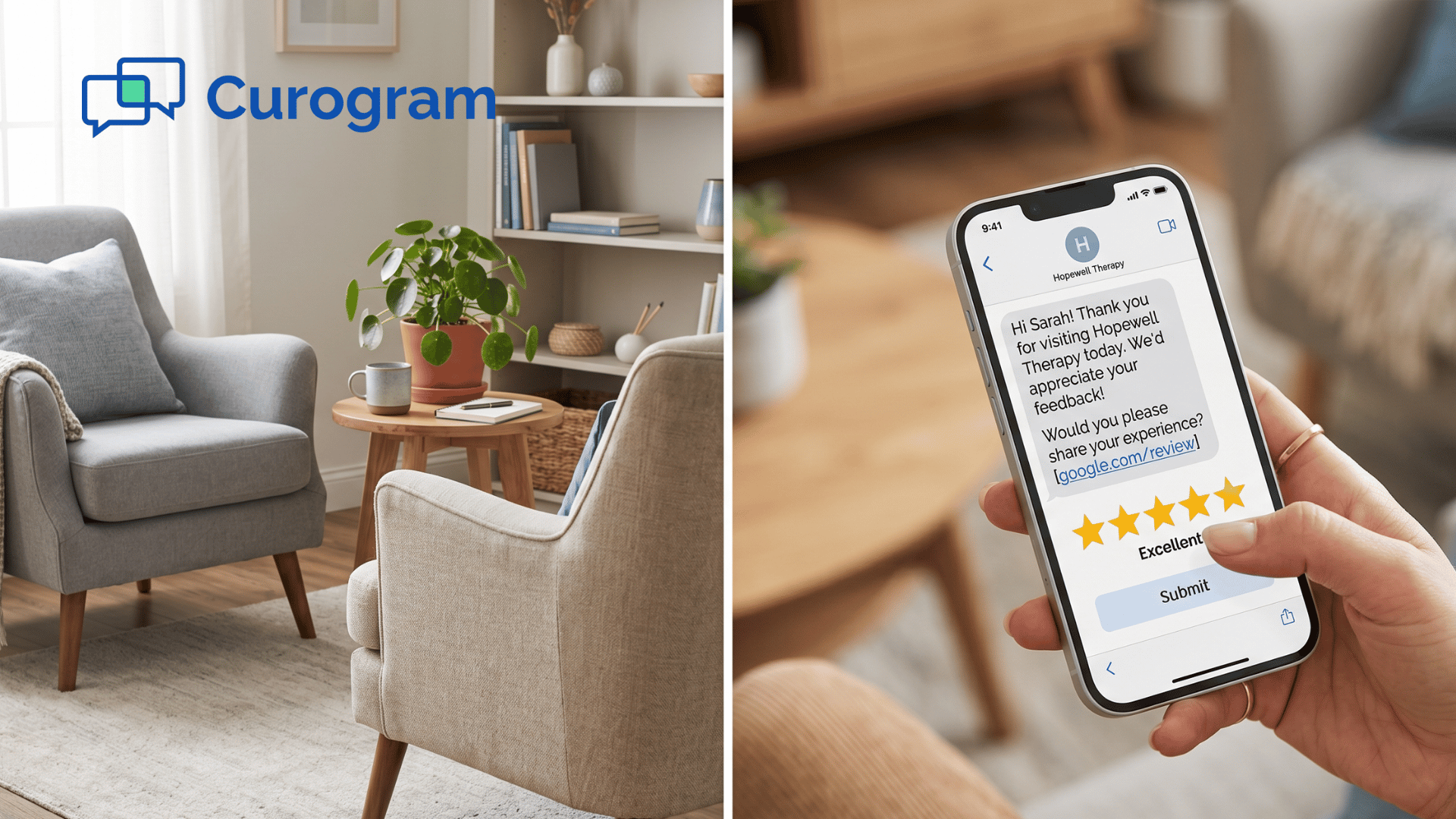
Curogram for Valant closes this gap. After each visit, it sends a quick text with a link to your Google page. The message meets patients on the device they already use. Smart filters skip visits where a request would feel wrong.
The result is steady, honest review growth that mirrors the care you give. More Google reviews for a psychiatry practice on Valant means a stronger rating, better search ranking, and more new patients.
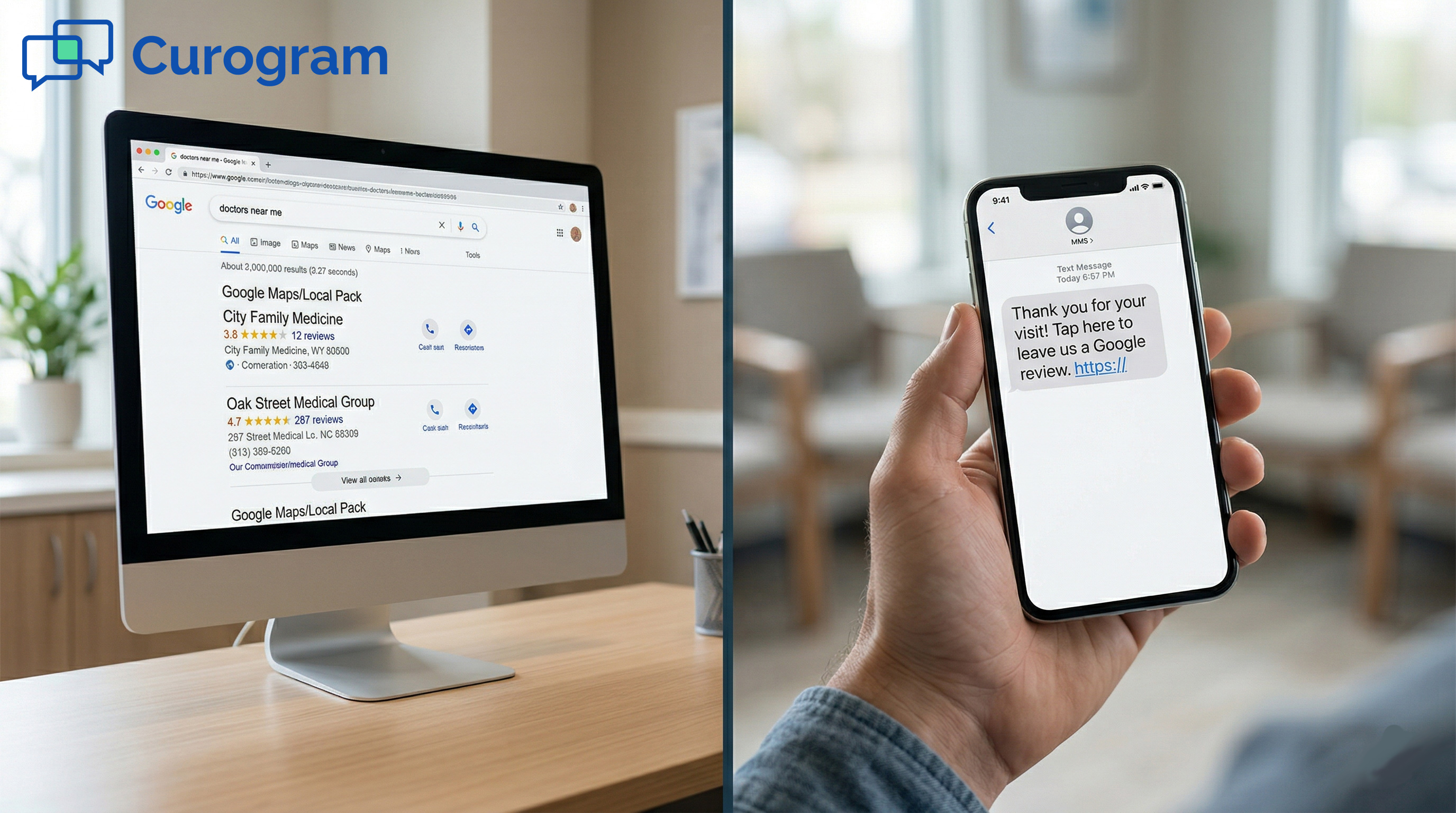
Picture two clinics on the same street. One is a dental office with 300 Google reviews. The other is a busy psychiatry group with barely 40. Both give great care, yet the numbers tell a different story.
This gap is common, and it is not your fault. Mental health is private.
Many patients value their care but keep it quiet. They heal, they thank you in person, and then they move on without a public note.
That silence has a cost. Most people now read reviews before they book a provider.
A thin list can read as a red flag, even when your care is excellent. Curogram for Valant helps close this gap with automated text requests after each visit.
Valant is a strong clinical system. Still, it does not send review requests on its own.
So your reputation rests on the few patients who act without a nudge. In psychiatry, that pool is small.
This guide breaks down the problem and the fix. You will learn why manual asks fall flat in a mental health setting.
You will see how automated texts build real review volume. And you will see what that volume does for new patient growth.
None of this asks patients to fake praise. The goal is simple. Make it easy for happy patients to speak up.
When the ask is quiet, kind, and well timed, more people say yes, and a fair rating gets built.
The Psychiatry Review Gap
Psychiatry sits at a real disadvantage online. Reviews build slowly here, even when the care is strong.
The numbers often lag far behind other clinics nearby. To close this gap, it helps to see why it forms in the first place.
Why reviews come slowly
Mental health care is deeply personal. Many patients value their provider but keep that bond private, due to various reasons such as stigma and their own privacy. They rarely want their name posted next to a psychiatry visit.
So a group with 15 providers and thousands of yearly visits may hold fewer than 50 reviews. A small dental office down the block might show 300. The gap is not about quality. It is about silence.
How thin reviews hurt the practice
A short review list does more than look quiet. It creates two clear risks for any practice.
A shaky star rating
With few reviews, your rating swings fast. One unhappy note can drop a 4.8 to a 4.2. Volume gives you a cushion that a single voice cannot break. Stability comes from numbers.
A weak first impression
People searching for a psychiatrist judge in seconds. A thin profile can read as new or untested, even after years of work.
Strong care deserves a profile that shows it. Otherwise, good clinics lose patients to busier-looking pages.
Valant leaves it to chance
Valant does not send review requests on its own. Your reputation then rests on the rare patient who posts without a prompt. In psychiatry, that group is very small.
Meanwhile, the practice with more reviews tends to win the click. That holds true even when the care is equal.
Why Manual Review Requests Fail In Psychiatry
You could ask for reviews by hand. In most clinics, that plan stalls fast. The mental health setting makes each manual path feel a little off.
The front desk ask feels wrong
Picture the checkout window right after a therapy session. Few staff will say, “Could you leave us a Google review?”
The moment is tender, and the request feels out of place. Patients may feel exposed or even judged. So the ask rarely happens at all, and reviews stay flat.
Email requests get lost
Email seems safe, but it works poorly here. Open rates are low, and replies are lower still.
The note often lands hours later, after the visit has faded from mind. By then, the urge to act has slipped away, and the message sits unread.
What actually works
The clinics that win at reputation share one habit. They automate the ask completely. They send it at the right time, on the right channel, with kind and simple words.
Timing is the key here. A text soon after the visit catches goodwill at its peak. That mix turns a quiet patient into a willing one, and it never adds pressure.

How Curogram Automates Reviews For Valant Practices
This is where the fix gets real. Curogram for Valant turns review requests into a quiet, steady habit. Here is how the system works, step by step.
Automated post-visit text requests
After a finished appointment, Curogram sends a short text. It carries a direct link to your Google review page.
You set the timing, often within one to two hours of the visit. The patient gets a gentle nudge while the care still feels fresh.
Why text beats email
SMS is the heart of this approach. Patients who skip a portal email will still open a text. The request meets them on the device already in their hand. One quick tap is all it takes.
Smart filters keep it appropriate
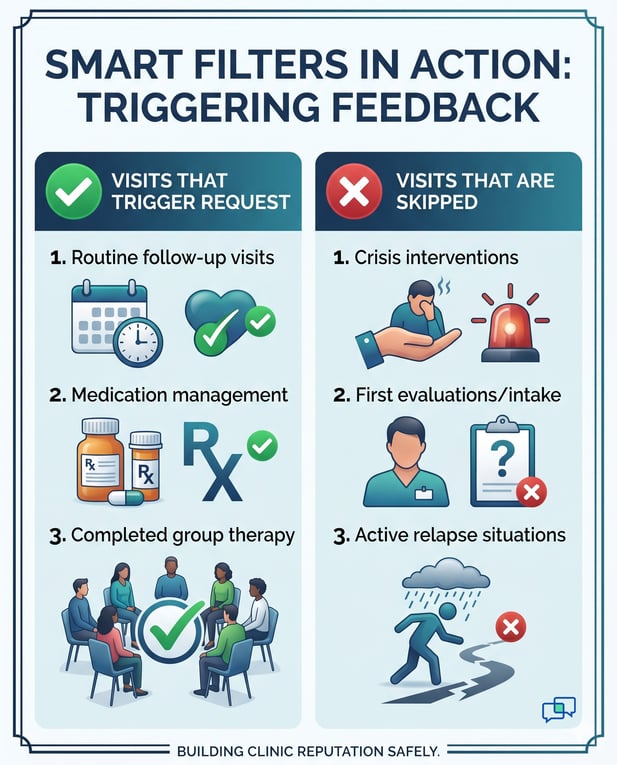
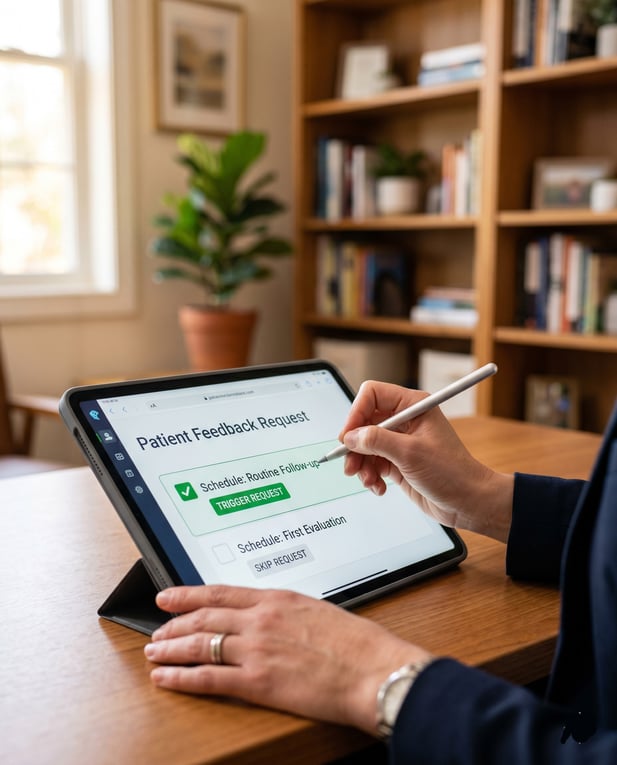
Not every visit should trigger a request. You can skip initial evaluations, crisis visits, or other sensitive cases.
The system reaches out only when the moment fits. This care matters most in psychiatry, where a clumsy ask can feel cold.
Proof from real practices
The model is not just theory. Two examples show the lift it can bring.
|
Optima Medical (Google reviews) |
Result |
|
Reviews before Curogram |
993 |
|
Reviews after 16 months |
8,159 |
|
Total growth |
721% |
|
Five-star rate |
90% |
Based on our internal data.
Optima Medical shows the lift, based on our internal data. This clinic was not psychiatry, but the engine was the same. It used automated text requests after each visit.
Kern Behavioral Health, a behavioral health group, ran the same review automation over six years, based on our internal research.
Its review count and star rating rose and then held steady. The long record shows lasting growth, not a quick spike.
For a psychiatry practice on Valant, even part of these gains would reshape your presence. You move from a handful of reviews to a number that matches your real patient flow.
What Review Volume Does For A Psychiatry Practice
Volume is not vanity. A deep review base does real work for your practice. It pays off in four clear ways.
More new patients
Imagine a search result with 200 reviews and a 4.8 rating. That profile signals trust at a glance. In a field built on trust, this matters even more.
Reviews act like quiet word of mouth at scale. Strong numbers pull in patients who are weighing their options.
A stable rating
Volume protects your score. One bad note barely moves a large review base, but it can sink a small one. Look at the difference below.
|
Review count |
Effect of one bad review |
|
10 reviews |
Rating can drop about 0.5 |
|
200 reviews |
Rating drops about 0.01 |
Better search ranking
Google weighs review count and freshness in local search. Practices with more recent reviews tend to rank higher. A higher spot means more eyes, more clicks, and more booked visits.
Easier provider hiring
Reputation also helps you recruit. Psychiatrists study a practice before they join.
A strong, active review profile signals a healthy, well-run clinic. Talented clinicians notice when patients speak well of a place. That edge can tip a good hire your way.
Getting Started
Starting is simple, and the setup stays light. Curogram handles the heavy lifting during onboarding. Here is what your team can expect from day one.
Quick, guided setup
Curogram sets up your review requests during a two to four week rollout. You pick which visit types trigger a text.
You also set the timing and the tone of each message. After that, the system runs on its own, day after day, and your staff barely has to think about it.
Try it for your practice
Ready to see it in action? Book a demo and see how automated Google reviews flow into your Valant practice.
You can also see how Curogram serves behavioral health clinics across the country. The sooner you begin, the sooner your reviews reflect the care you already give.
Frequently Asked Questions
After each finished visit, Curogram sends the patient a short text. The message holds a direct link to your Google review page. You set the timing, often within one to two hours. The patient taps once and posts a review.
Mental health care is private, so many patients stay quiet. They rarely want their name tied to a psychiatry visit in public. This keeps review counts low, even at busy clinics. Gentle, automated text requests help close that gap.
Patients open texts far more often than portal emails. A text reaches them on the phone already in their hand. The ask feels quick, and a single tap does the job. So more patients follow through.
You can set smart filters by visit type. Crisis visits and first evaluations can be skipped. The system only reaches out when the moment fits. This keeps each request kind and respectful.
A large, fresh review base builds trust at first glance. It steadies your rating against single bad notes. It also lifts your spot in local search. Together, these draw in more new patients.