
9 min read

TherapyNotes Intake Automation | Eliminate Data Entry with SMS Forms

TherapyNotes Intake Automation | Eliminate Data Entry with SMS Forms
💡 TherapyNotes intake form automation data entry elimination is possible when practices swap paper packets for SMS-delivered digital forms. Curogram texts each intake form to a new client. The client fills it out on their phone, and the answers come back clean and complete.

Front-desk staff at a TherapyNotes practice often spend 15 minutes or more retyping each paper form. For 10 to 15 new clients a week, that adds up to 2.5 to 4 hours of lost time. Curogram removes that work, so staff reviews records instead of retyping them.

Practices also save on printing, ink, and storage. Based on Curogram client data from clinical settings, those costs run $800 to $1,000 a month. The result is a faster, paperless intake that fits behavioral health needs and frees staff for client care.

TherapyNotes intake form automation data entry elimination is possible when practices swap paper packets for SMS-delivered digital forms.

Curogram texts each intake form to a new client. The client fills it out on their phone, and the answers come back clean and complete.

Front-desk staff at a TherapyNotes practice often spend 15 minutes or more retyping each paper form. For 10 to 15 new clients a week, that adds up to 2.5 to 4 hours of lost time. Curogram removes that work, so staff reviews records instead of retyping them.

Practices also save on printing, ink, and storage. Based on Curogram client data from clinical settings, those costs run $800 to $1,000 a month. The result is a faster, paperless intake that fits behavioral health needs and frees staff for client care.

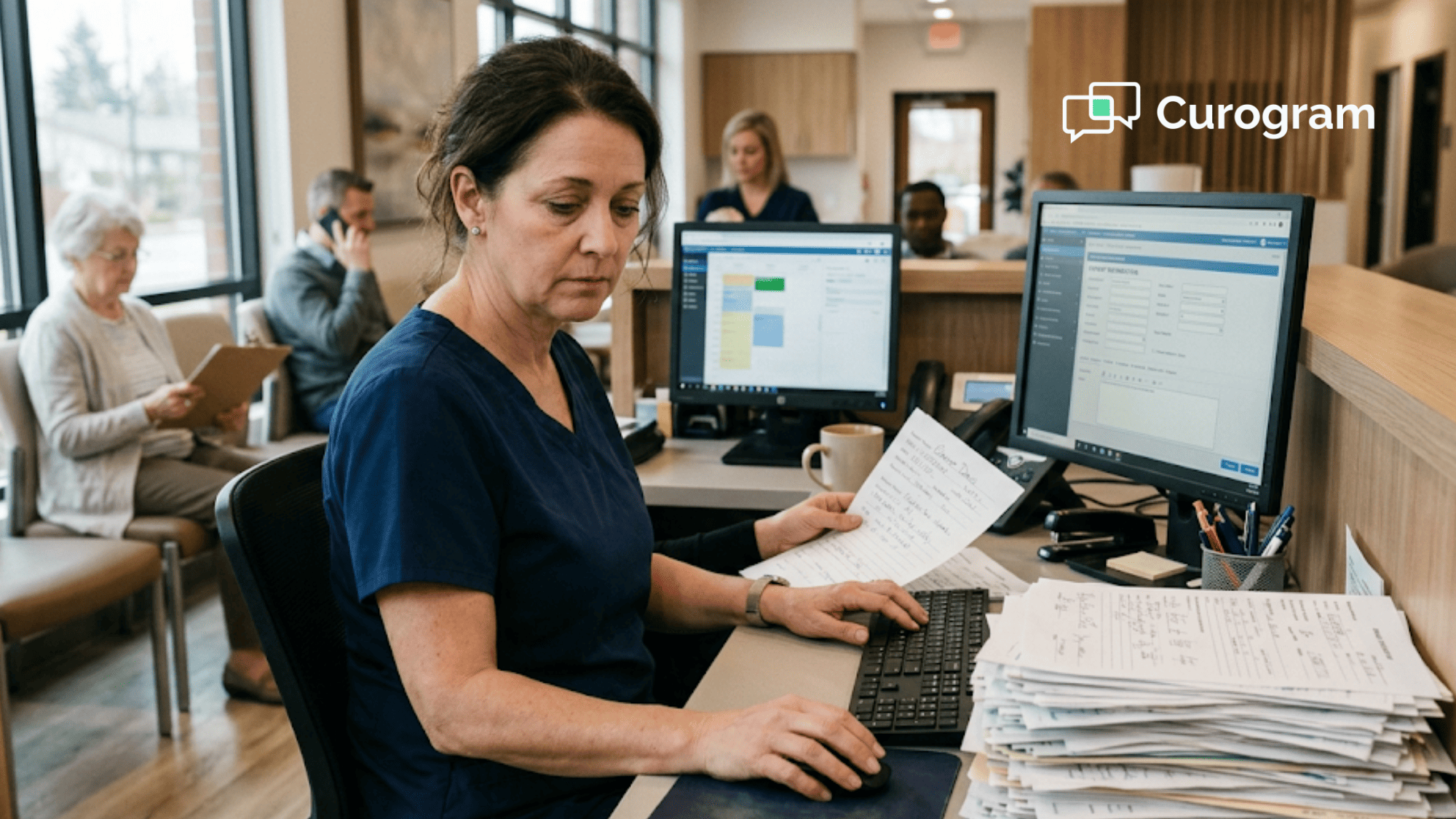
It is 8:15 on a Monday. Your front-desk lead sits down with a stack of paper. Three new clients came in Friday, and each handed over a thick intake packet by hand.

Now the real work starts. She squints at the first form. The writing slants and blurs. Was that a 7 or a 1?

She types it into TherapyNotes anyway, then moves to the next blank field. The clock is already ticking, and the stack is not getting shorter.

This is the quiet drain inside many behavioral health practices. The clinical side runs well. Notes, billing, and scheduling all live in TherapyNotes. But intake still leans on paper.

Paper has to be read, fixed, and retyped. Each new client eats 15 minutes or more of that. Multiply it across a busy week, and hours vanish. Those are hours your team could spend helping clients.

The cost is more than time. Handwriting gets misread. A wrong digit on an insurance line can stall a claim. A missing signature can delay a first session.

And the backlog never clears. Friday’s packets bleed into Monday. Small slips ripple into bigger ones.

There is a simpler path. You can automate client intake forms so therapists and staff stop retyping at all. Forms go out by text.

Clients tap through them at home, and the answers return typed, complete, and ready to review.

That shift is the heart of TherapyNotes intake form automation data entry elimination. It does not replace your EHR. It feeds it cleaner information, faster.

This guide walks through the problem, the fix, and the payoff. You will see how a TherapyNotes paperless intake workflow looks in real life.

You will also see what your staff gain back when the clipboard disappears. Let us start with the villain behind the mess. 

The Villain: The Data Entry Drag

Every villain has a trick. This one hides in plain sight. It looks like normal office work, yet it eats your whole week. Meet the Data Entry Drag.

Paper In, Hours Out

TherapyNotes is strong on the clinical side. It handles session notes, billing codes, and treatment plans with ease. The trouble starts before any of that. New client info still enters through paper or uploaded PDFs.

Staff get a handwritten packet, then type each field by hand. Contact details, insurance, emergency contacts, consent boxes, and screening scores all go in one by one. This is TherapyNotes front desk data entry at its slowest. None of it is hard. It is just slow, and it never ends.

Fifteen Minutes That Add Up

One paper intake takes 15 minutes or more to process. Staff decode handwriting, fix odd entries, and guess at blanks. Some packets run long.

One practice had to handle 19 pages per new client, based on Curogram client data from clinical settings.

Now do the math. A busy group sees 10 to 15 new clients a week. That is 2.5 to 4 hours of pure retyping. The work adds no clinical value. It only adds the risk of error.

A typo here does not stay here. A wrong policy number can bounce a claim weeks later. Then someone has to find the paper, fix it, and resend. The fixes always land on your busiest people.

The Hidden Costs Pile Up

Paper costs more than minutes. There is printing, ink, and toner. There is secure storage, since HIPAA requires shredding of any paper that holds client health info. File cabinets eat office space too.

These costs add up fast. Based on Curogram client data from clinical settings, paper intake can run $800 to $1,000 a month. That is real money for a mid-size practice.

Old records hide in those cabinets too. When you need one, someone walks over and digs. That search burns minutes you will never bill for. Every reprint and refile is a small tax on the day.

When Growth Hits a Wall

Here is the worst part. The drag gets heavier as you grow. Each new clinician means more clients, more packets, and more typing.

A system that felt fine for a solo office now slows the whole group. Your practice manager watches staff spend prime morning hours on data entry. That time should go to scheduling, coordination, and clinician support. Instead, it goes to the paper pile.

Hiring should feel like progress. With paper, each new hire also adds drag. The math works against you at the worst possible time.


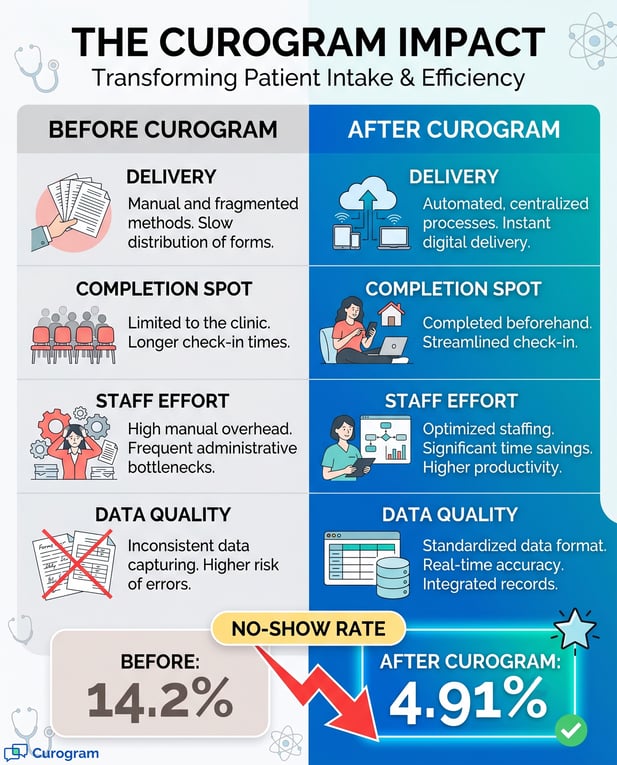
Curogram infographic comparing patient intake and reduced no-show rate

The Guide: The Data Entry Eliminator

Every story needs a guide. This one shows up with a simple promise: no more retyping. Curogram acts as the Data Entry Eliminator for your practice.

Forms That Arrive Already Done

Curogram sends intake forms straight to the client’s phone by text. The client taps through them at home.

The answers come back clean, typed, and complete. There is no handwriting to read and no paper to file.

These SMS intake forms turn a TherapyNotes practice from paper-bound to phone-first. Staff stop typing from paper. They simply review records that are already done.

There is no app to download and no password to recall. Clients just tap the link and start. That low bar is a big reason more of them finish.

Delivery on Autopilot

Curogram’s Auto-Trigger feature sends forms the moment a new appointment is booked.

No one has to remember to email or hand over a packet. The system tracks who has finished. It also texts a gentle reminder to anyone who has not.

This is how you automate client intake forms so therapists and staff stay focused. The busywork runs in the background.

Your team handles the human parts. The same texts power Curogram’s two-way HIPAA-compliant messaging and automated appointment reminders.

You can also see status at a glance. Done, started, or not yet opened. No more guessing who still owes paperwork.

Built for Behavioral Health

Behavioral health intake is its own animal. It needs consent forms, medication lists, and clinical scales like the PHQ-9 and GAD-7.

The form builder supports all of these field types. Digital intake for behavioral health staff means clean data from the very first touch.

Why does this matter so much? Because clean intake data shapes care. A clear PHQ-9 score helps a clinician plan the first session well. A readable med list keeps clients safe.

Most practices rebuild their current forms in one onboarding session. Text fields, dropdowns, checkboxes, dates, and e-signatures all transfer. Your forms stay yours, just digital.

Works Alongside TherapyNotes

You do not have to drop or rebuild anything. Curogram runs next to TherapyNotes, not on top of it.

TherapyNotes has no public API for write-back, so forms live in Curogram’s secure system. Staff review them there, then enter key fields fast.

The result is a true TherapyNotes paperless intake workflow. Paper leaves the process. Speed and accuracy take its place.

Nothing about your clinical setup has to change. Your team keeps the EHR it knows. Curogram simply handles the messy front end. Want to see it in action? You can book a quick demo and watch the flow end to end.


The Success: From Transcription to Coordination

So what changes when the paper is gone? The front desk gets its mornings back. The shift moves staff from retyping to real coordination.

The Numbers Behind the Shift

The gains show up fast. Digital forms cut 15 or more minutes of data entry per new client.

They also lift form completion, since clients get a direct link by text. More finished forms mean fewer delays at the door.

There is a knock-on effect too. Based on Curogram client data from clinical settings, no-show rates run 53% lower than the industry average.

Prepared clients tend to show up. One clinic dropped its no-show rate from 14.2% to 4.91% in just three months.

Completion climbs because the link is so easy to use. Clients finish at home, not in a rushed waiting room. That alone smooths the whole schedule.

Intake step

Paper workflow

Curogram digital workflow

Form delivery

Printed and handed out

Texted when the appointment is booked

Where clients fill it out

In the waiting room

At home, on their phone

Staff effort

15+ minutes of retyping per client

About 2 minutes to review

Data quality

Handwriting, gaps, errors

Typed, complete, easy to read

Monthly paper cost

$800 to $1,000

Near zero


Time and Money Reclaimed

Money follows the time savings. Based on Curogram client data from clinical settings, practices save $800 to $1,000 a month on paper, printing, and storage. They also win back 3 to 4 hours a week.

That reclaimed time is the real prize. It helps reduce the administrative burden of therapy intake. Staff spend it on people, not paperwork.

Fewer errors help too. Clean data means fewer rejected claims and less rework. The savings stack quietly, week after week.

A New Kind of Front Desk

Call it the transcription-free intake. New client paperwork shows up digital, done, and easy to read, all before the session. Staff stop reacting to paper. They start working ahead.

Now they review forms for gaps. They flag a missing insurance field early. They prep a short briefing note for the clinician. The job shifts from data entry to coordination.

Staff feel the change fast. The morning dread of a paper stack fades. Work starts to feel useful again.

A Monday That Runs Smooth

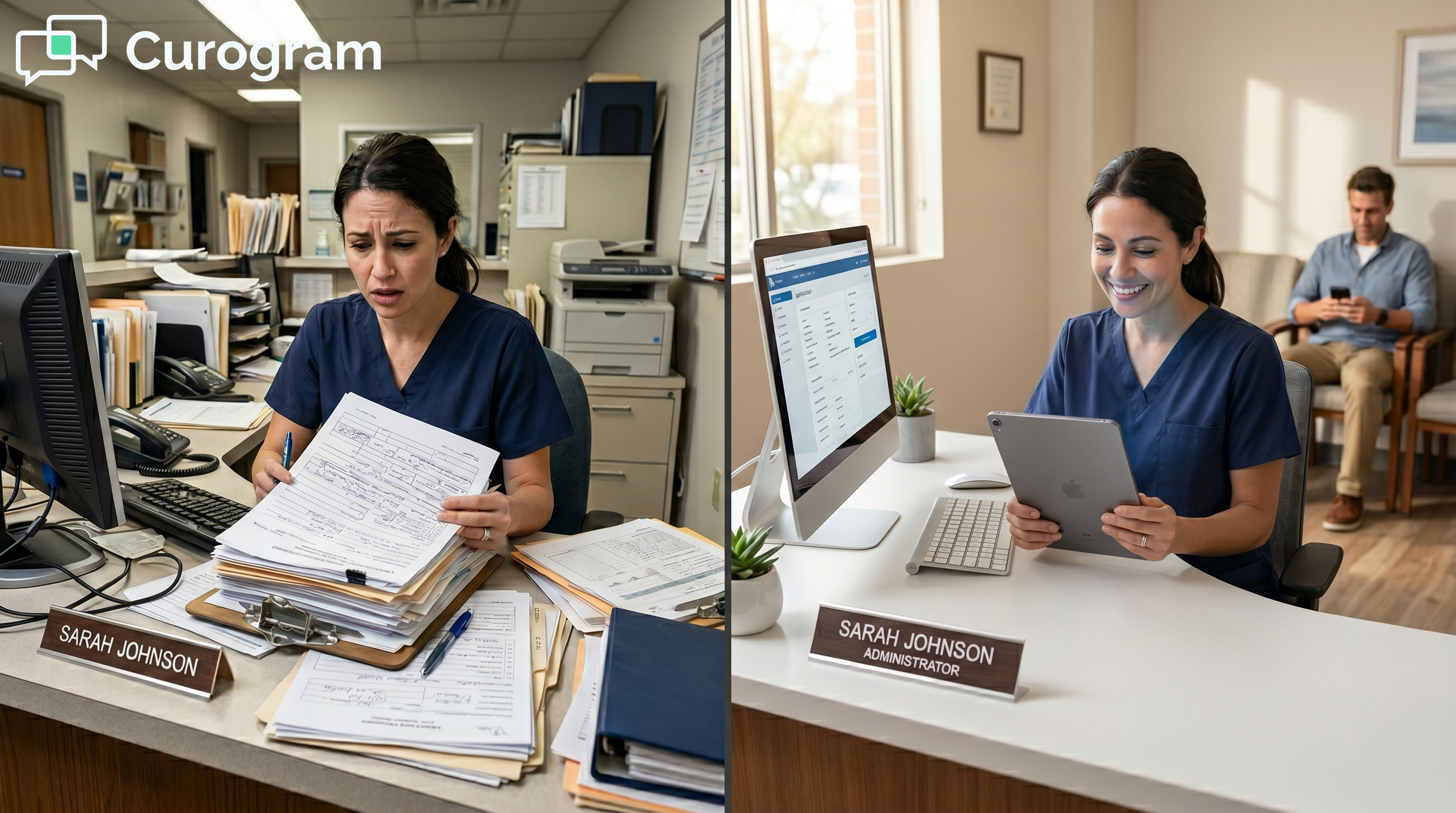
Picture it. Monday morning, three new intakes are set for Tuesday. All three got their forms by text on Friday. By Monday afternoon, two are done, and the third sits at 80%, with a reminder already sent.

Staff scans each finished form in about two minutes. No squinting. No guesswork. Tuesday’s sessions start on time, with clinicians briefed on scores and history.

Patient at home on couch using a smartphone app for convenient medical intake

Conclusion: Your Staff Were Hired to Coordinate, Not Transcribe

Let us bring it home. Your staff did not train to read messy handwriting. They came to help people.

TherapyNotes is your clinical home. It captures session notes, billing, and treatment plans. But the intake step sits upstream, and paper makes it slow. That is the gap Curogram fills.

Think of it this way. TherapyNotes is the clinical platform. Curogram is the intake platform. One holds session records. The other gathers client info before the visit.

Together, they end the paper-to-screen retyping that wastes hours. They also cut the errors that come with it. Documentation starts before the session, not after, and it arrives typed and complete.

Imagine the shift across a month. The paper pile shrinks to nothing. Your team handles more clients with the same hours. Growth stops feeling like a burden.

Clients feel it too. The first visit starts with a real conversation, not a clipboard. That calmer start matters in behavioral health, where nerves often run high.

And the data is better from day one. Clinicians open each chart and see complete, readable answers. They plan care with confidence, not guesswork.

There is a ripple in your reviews, too. Happy first visits lead to warmer feedback online. Word of mouth tends to follow.

The win is simple. You reduce the administrative burden of therapy intake. You give your team back hours each week. You hand clients a calmer first step, done from their couch instead of a waiting-room clipboard.

Every minute spent decoding a scrawled form is a minute lost. That time belongs to client care, not transcription.

That is the promise of TherapyNotes intake form automation data entry elimination. It is a small change with a big payoff for staff, clinicians, and clients alike.

This is not about adding software for its own sake. It is about removing busywork that never should have been there. Your people, your EHR, and your clients all gain.

Start small if you like. Pick your most common intake form and send it by text. Watch how fast it comes back, clean and complete. The proof shows up in a single week.

The clipboard had its day. Your front desk is ready for what comes next.

The next step is easy. Book a personalized demo and see how the paperless workflow handles it. 


Frequently Asked Questions

How do SMS-delivered intake forms work in a TherapyNotes practice?

Curogram texts a secure form link to each new client. The client taps it and fills out the form on their phone, with no app or portal login. The finished answers come back typed and complete. Staff review them, then enter key fields into TherapyNotes much faster than retyping paper.

Why does digital intake matter so much for behavioral health staff?

Behavioral health intake carries a lot of weight. Clinicians rely on clear PHQ-9 scores, full med lists, and accurate insurance details. Paper forms hide errors in messy handwriting and blank fields. Digital intake for behavioral health staff delivers clean data before the first session, which supports better care.

How does Curogram keep client health information safe and HIPAA-compliant?

Curogram is HIPAA-compliant and SOC 2 Type II certified. All form data is encrypted in transit and at rest, with role-based access and full audit trails. For practices under 42 CFR Part 2, forms can capture the extra consent that substance use rules require. A signed BAA comes standard.

Why do digital forms get completed more often than paper packets?

The link lands right on the client’s phone. There is nothing to print, sign by hand, or carry to the office. Clients fill forms in a few quiet minutes at home. Curogram also sends a friendly reminder to anyone who has not finished, which lifts completion rates.

How much time and money can a practice save by ending manual data entry?

The savings are real. Digital forms cut 15 or more minutes of retyping per new client, which can free 3 to 4 hours a week. Based on Curogram client data from clinical settings, paper costs of $800 to $1,000 a month also drop. That is time and money back for client care.