

9 min read

TherapyNotes Google Reviews | Automate 5-Star Reviews

TherapyNotes Google Reviews | Automate 5-Star Reviews
💡 Behavioral health practices using TherapyNotes Google Reviews automation can now earn 5-star reviews without the awkward ask.

Google is the top way new clients find care. Yet most therapy practices have fewer than 50 reviews. TherapyNotes does not offer review tools, so reviews trickle in slowly.

Curogram fixes this gap. After each session, a short text survey goes out. Happy clients get a quick link to Google. Unhappy clients reach a private form instead.
The clinician never asks. The front desk never forgets.

One multi-location practice earned 1,064 new 5-star reviews in just 3 months, and 90% of surveyed clients left 5 stars. Your care is already strong, and this simply helps people find it.

Picture a new client typing “therapist near me” into Google. Three names pop up on the map. One shows 187 reviews and 4.9 stars. Yours shows 23 reviews and a 4.3 rating.

The client never scrolls past that first name. They book with the busy practice and move on. Your office stays quiet, even though your care is excellent. This loss repeats dozens of times each month.

Each missed click can mean a lost intake call. Over a full year, those lost calls add up fast. The gap is not about the quality of care. It is about being seen on a search page.

Here is the hard part to hear out loud. Google rewards practices with many recent, strong reviews. A thin profile looks weak beside a crowded one. Your clinical skill does not change that math.

TherapyNotes is great at clinical notes and records. Still, TherapyNotes reputation management is not part of the package.

There are no review prompts and no after-session surveys built in. So most therapy practices gain only one or two reviews a month.

You already know why you skip the ask. Asking a client for a review right after a raw session feels wrong. That moment is about trust, not marketing. So the request never happens, and your profile stays thin.

None of this means your work is failing. It means the right people just cannot see it yet. A strong profile is not bragging. It is proof that your clients felt cared for.

There is a kinder way to get more reviews for your therapy practice. You can automate Google Reviews for therapists so the clinician stays fully out of it.

A short, friendly text does the asking instead. This guide shows how that quiet system works, with real numbers from real clinics. 

The Villain: The Invisible Practice

Most therapy offices do not have a marketing problem. They have a visibility problem. The care is strong, but the online proof is thin. Let us look at why that gap forms, and what it quietly costs.

The fix is not louder marketing. It is a simple, steady way to show your proof.

Why Strong Care Stays Hidden

Google ranks local practices by three things. It looks at how many reviews you have. It checks your star rating. It also weighs how fresh those reviews are.

So a practice with 12 reviews and a 4.2 rating sits low. A rival with 200 reviews and 4.8 stars sits on top.

The work behind your doors may be just as good, or better. The map cannot see that, and neither can the searcher.

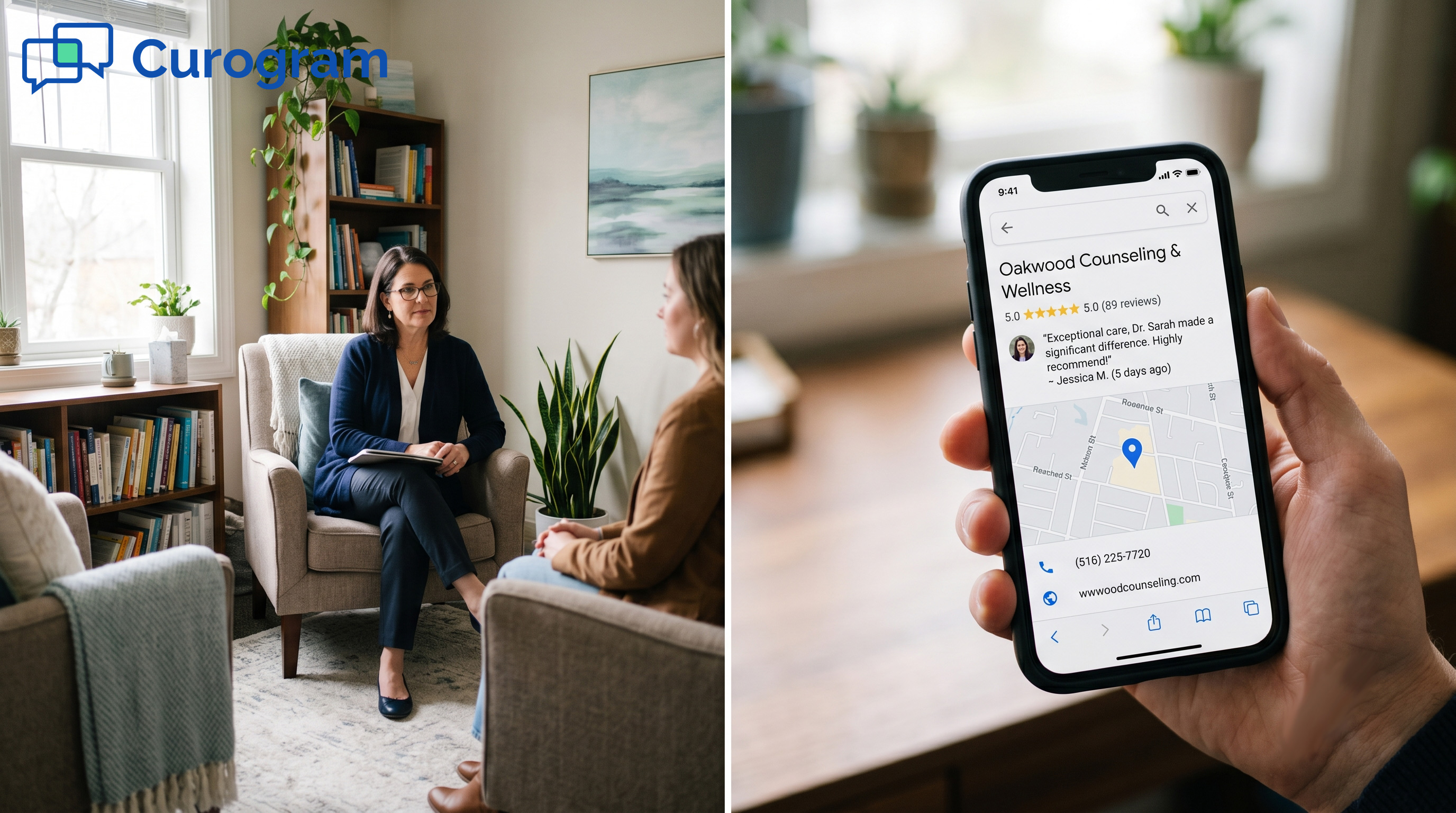
Think of it as a split screen. On one side, your care is excellent, and clients stay for years. On the other side, your public profile barely moves.

TherapyNotes handles your charts and notes with ease. But it does nothing for how you look on Google. So your skill grows while your profile stands still.

How One Search Picks a Winner

Picture a real search tonight. Someone types “therapist near me” and hits go. Google shows three names in the local pack. The eye jumps to the one with the most stars.

Here is how that choice tends to play out.

Practice

Reviews and rating

What the searcher does

Practice A

187 reviews, 4.9 stars

Gets the click and the booking

Practice B

142 reviews, 4.7 stars

Sometimes gets a second look

Your practice

23 reviews, 4.3 stars

Rarely seen, rarely chosen


The searcher taps Practice A and books a first visit. They never learn that your office exists. That click was a real person in need.

It was also a session fee near $120 or more. That fee went to a rival who is no better at the work.

This plays out dozens of times a month. Each lost click feels small on its own. Added up across a year, the loss is large. None of it reflects the quality of your care.

The Slow Cost of a Quiet Profile

This is why Google Reviews for counseling practices matter so much. Most behavioral health offices do not run ads.

So reviews become the main way new clients find them. A weak profile quietly shrinks your pipeline.

With no review tools in place, profiles grow slowly. Most add just one or two reviews a month. That trickle cannot keep pace with a busy rival down the street. The gap widens month after month.

Many owners feel the squeeze and turn to paid ads. They start paying for clicks they could have earned for free.

The ad spend masks the real issue, but does not fix it. The root problem is a thin profile that never catches up on its own.

So the practice works hard, serves clients well, and still stays hard to find. That is the trap.

The good news is that it is very fixable. Automated tools can close the gap fast, and the rest of this guide shows how.


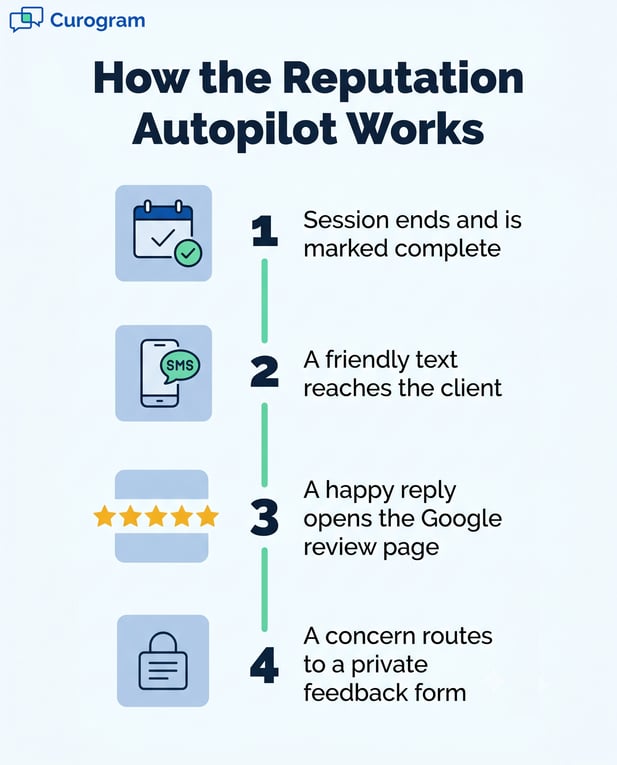
Reputation Autopilot workflow: automating patient reviews and collecting private feedback

The Guide: The Reputation Autopilot

So how do you build reviews without the awkward ask? You hand the job to a quiet system that runs after each visit.

Curogram acts as that system, working in the background. Here is how the pieces fit together.

The goal is simple. Turn each good visit into a public thank-you. Do it with zero extra steps for your team. The system carries the load.

How the Reputation Autopilot Works

After a completed session, a short text goes out to the client. It asks one simple question about their visit. The clinician sends nothing and says nothing. The whole flow runs on its own.

Here is the path in plain terms:

  1. The visit ends and is marked complete.
  2. A friendly text reaches the client soon after.
  3. A happy reply leads to your Google review page.
  4. A concern leads to a private form instead.

Clients who had a good visit get a quick link to your Google page. The prompt is ready for a 5-star review, so it takes seconds.

This is automated review generation for behavioral health, built around real visits. Reviews grow week by week, with no extra work for your staff.

Your team keeps its focus on care, not on chasing reviews.

Smart Routing Keeps Your Rating Strong

Not every client leaves happy, and that is fine. The system reads the first reply and sends each client down the right path.

This is the heart of the autopilot. Good news goes public, and hard news stays in-house.

Happy Clients Get a Quick Path to Google

When a client signals a good visit, the text shares your Google link at once. One tap opens the review box. A short, kind prompt makes it easy to leave 5 stars. Most people finish in under a minute.

There is no pressure and no script to read. The client shares only what they want to share.

Unhappy Clients Stay Private

When a client signals a concern, the text routes them to a private form. The feedback comes straight to your team, not to Google.

You learn what to fix without a public hit to your rating. Real problems still surface, just in a safer place.

This protects your public rating while you still hear the truth. You can act fast on a fixable issue.

Why It Fits Behavioral Health Care

Therapy runs on trust and care. A review request from the therapist can break that frame. So Curogram takes the clinician out of the ask completely. The request comes from the practice by text, never from the person in the room.

The message stays general and kind by design. It can read like a note from any clinic, not a mental health office.

It never names therapy or shares any private details. That keeps client trust intact while your reputation grows.

It also works next to TherapyNotes without deep setup. The survey fires based on visit timing, so no one has to hit send.

The front desk never has to remember. Set it once, then let it run in the background for good. No new logins, no daily checklist.


The Success: Clients Find You Before You Find Them

When reviews grow, something shifts in how clients find you. The map starts to favor your practice. New inquiries arrive on their own, without ad spend. Here is what that change looks like in real numbers.

This is the payoff of patience plus a system. Small, steady reviews stack into real visibility. Soon the practice that was hard to find sits right at the top.

The Numbers Behind the Growth

One multi-location practice put this workflow in place and watched it work. They earned 1,064 new 5-star reviews in just 3 months.

About 90% of clients who got the survey left 5 stars. That is based on Curogram client data from clinical settings.

Many practices move from 20 or 30 reviews to 100 or more in a single quarter. The jump is steady, not lucky. Each visit adds a fresh review to the pile. Over weeks, the profile starts to look as strong as the care.

None of that growth came from a hard sell. It came from happy clients given an easy way to speak up. The ask never touched a therapy session. It arrived later, by text, on the client's own time.

Reviews also tend to read warmly, since they come right after good care.

How Local Rankings Climb

Google notices a fast, steady rise in reviews and ratings. This is the visibility shift that changes everything.

Your practice starts to show up in the local 3-pack. That is the short list of three names most searchers ever tap.

Higher rank means more eyes, and more eyes mean more calls. The growth is organic, so it does not stop when an ad budget runs out.

A solid TherapyNotes online reputation strategy makes this rise easy to repeat. You build proof once and keep the benefit for the long run.

Think of reviews as compounding trust. Each new 5-star note lifts the next searcher's confidence. The profile becomes a quiet helper that never sleeps. It works while you focus on clients.

What Six Months Can Bring

Picture a 10-clinician counseling group six months in. They moved from 28 reviews to 180, with a 4.9-star rating.

They now rank first on Google Maps for “therapist near me” in their city. New intake calls rose about 40%.

Here is that group's profile, before and after:

Measure

Before Curogram

After 6 months

Google reviews

28

180

Star rating

Lower and mixed

4.9 stars

Local Maps rank

Not in the top three

First for “therapist near me”

New intake calls

Flat

Up about 40%

Ad spend

Rising

None added


They did not spend a dollar on ads to get there. And not once did a clinician ask a client for a review. The system did the quiet work. The care did the rest.

That is the whole promise in one story. Strong work, finally matched by a strong profile. Clients now find the group before the group finds them. The flywheel keeps turning on its own.

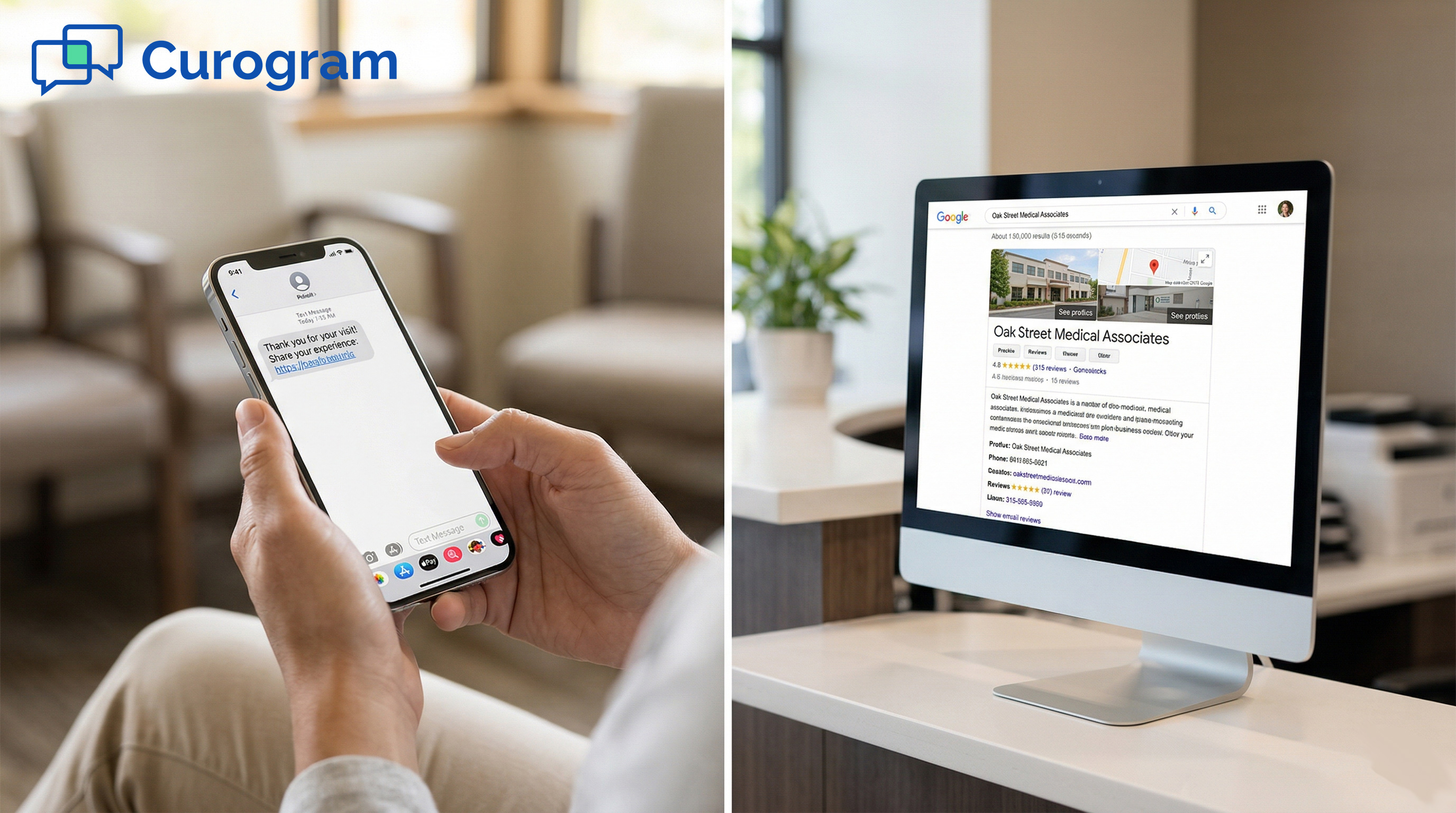
Woman on the couch reading a text on her smartphone

Conclusion: Let Your Care Speak for Itself Online

Your clinical work already earns trust every day. The problem was never the care. It was the gap between that care and your public profile. Now you have a simple way to close it.

This is not about chasing vanity numbers. It is about fairness. People who need help should be able to find good care. A fuller profile simply helps the right clients reach you.

You do not have to choose between trust and growth. You can protect the room and still fill your schedule. The two goals finally point in the same direction. That is the shift worth making.

TherapyNotes keeps your charts and notes in good order. It is built for the work behind the door. It was never built to grow your reputation online. That part needs a different tool, working alongside it.

Think of it this way. TherapyNotes is for giving great care. Curogram is for showing the world that great care is happening.

When reviews build on their own, your reputation grows as fast as your outcomes deserve.

Reviews also do more than boost a rank. They reassure a nervous first-time client. Many people feel scared to start therapy. A wall of kind reviews can be the push they need.

The best part is what you no longer have to do. You never have to ask a client for a review mid-session.

You never have to break the trust that therapy depends on. A short text does the asking, on the client's terms.

And the system stays gentle by design. It never shares private details. It never names what brought the client in. It reads like a simple note from any caring clinic.

Your happiest clients would gladly leave a kind word. They just need a gentle nudge that does not come from you.

Give them an easy path, and many will say yes. Let your care speak for itself, right where new clients look.

Here is the short version:

  • Reviews drive new clients in behavioral health.
  • Most therapy profiles are too thin to compete.
  • A post-session text builds reviews with no awkward ask.
  • Strong reviews lift your rank and your inquiries.

The path from here is short. You do not need a big marketing plan. You need a quiet system and a little patience. The reviews build on the care you already give.

Want to see how this fits your practice? Book a short demo built around your practice.  


Frequently Asked Questions

How can a therapy practice ask for reviews in an ethical way?

It works because the request stays general and hands-off. The text goes out after the visit, and the clinician is never involved. It asks about the visit in plain terms and never requests private details. This fits APA guidance and most state board rules, which allow general review requests.

Why is it a problem to ask clients for reviews during a session?

A therapy session is built on trust and raw emotion. A review request in that moment can feel cold or like a sales pitch. It risks bending the very relationship that helps clients heal. So most therapists skip the ask, and reviews never build.

How does the system handle an unhappy client?

It reads the client's first reply and sends them down a private path. Their concerns go to your team through a form, not to Google. You get honest feedback you can act on quickly. Your public rating stays protected while real issues still surface.

Why do most TherapyNotes practices have so few reviews?

TherapyNotes has no built-in review tools or post-session surveys. So practices must ask by hand, which feels awkward and rarely happens. Reviews then trickle in at one or two a month. That pace cannot keep up with busier rivals nearby.

How soon can a practice expect to see new reviews?

Many practices see steady growth within the first quarter. One multi-location practice earned 1,064 new 5-star reviews in 3 months, based on Curogram client data from clinical settings. Around 90% of surveyed clients left 5 stars. Your pace depends on visit volume, but the climb starts fast.