8 min read
Sigmund AURA Google Reviews Automation Built for Behavioral Health
Mira Gwehn Revilla
:
June 10, 2026
- Sigmund AURA has no built-in way to request Google Reviews.
- Stigma keeps many satisfied clients from leaving public feedback.
- Curogram texts a private survey after each visit.
- Happy clients get routed straight to your review page.
- Each message holds zero protected health information.
Your practice changes lives. Clients finish treatment healthier, calmer, and more hopeful. Yet your Google rating may not show any of that.
This gap is common in behavioral health. Many strong programs hold ratings near 2 or 3 stars. The few reviews they get often come from billing or wait-time complaints. Meanwhile, the clients who got real help stay silent.
There is a clear reason for this. Stigma keeps people quiet. A client may love their care. Still, they may not want their name tied to a mental health or addiction program online. So they never post a review, even a glowing one.
This creates a quiet problem. Most new clients check your Google Business Profile first. Based on our internal data, 90% of new leads see that profile before your website. If it shows few reviews and a low score, they call a competitor instead. The choice takes seconds. Your care quality never enters the picture.
Sigmund AURA cannot fix this for you. It is built to handle clinical notes, treatment plans, and billing. It does not ask clients for reviews. It does not watch your public rating. That job sits outside the chart, and most teams have no safe way to do it.
Asking for reviews by hand feels wrong here. Staff should not pressure clients in a therapy setting. A review kiosk in a recovery clinic lobby makes no sense. Mass emails risk privacy rules. So the profile stays stuck.
There is a better path. Sigmund AURA Google Reviews automation for behavioral health lets the right clients share their story with no awkward ask.
This guide shows how the system works. You will see how it protects privacy and builds a profile that finally matches your care. Your reputation should work as hard as your clinical team.
The Villain: The Reputation Vacuum
Sigmund AURA does a lot for your practice. It holds clinical notes, treatment plans, billing, and prescriptions. But it stops at the chart. It does not manage your reputation or ask happy clients for reviews.
This is more than one missing feature. For behavioral health and SUD programs, it is a real disadvantage. Your online image shapes who calls you. Yet the tool that runs your day ignores it.
Stigma makes the gap worse. Most fields can ask clients for reviews with ease. Behavioral health cannot. A client may feel grateful for their care. Still, they rarely want their name linked to therapy or addiction treatment in public.
So the kind reviews never get written. The angry ones do. A billing dispute or a long wait turns into a public one-star post. These voices are loud, even when they are rare.
|
Consider the math for a moment: Imagine a clinic with 18 Google reviews and a 2.4-star score. The top review complains about a $50 copay. These numbers are only an example, but the pattern is real. Now a clinical director reads that profile. They know the care is strong. Outcomes are good. Staff stay for years. Yet the public page tells a story that feels false and unfair. Here is what happens next: A person searches "behavioral health near me." They see your low rating beside a rival at 4.7 stars with 200 reviews. They call the rival. You lose a client you never even met. |
The cost adds up fast. Google search is the top source of new clients for many practices. Based on our internal data, 90% of new leads see your Google Business Profile before your website. A page with few reviews and a low score is almost invisible.
To cope, many practices buy ads. A program might spend a few thousand dollars each month on Google Ads. That figure is only an estimate, and it varies widely. But the point holds. You pay for clients who would have come for free with a strong profile.
This is the reputation vacuum. Your behavioral health practice online reputation does not match your real work. And the gap quietly drains both clients and cash.
Most teams feel stuck here. They cannot have clinicians beg for reviews. It feels wrong in a healing space. They cannot place a review kiosk in an SUD treatment lobby.
They also cannot blast mass emails asking for reviews. That move risks a privacy violation. So the profile sits frozen while the practice keeps giving five-star care.
The feeling is easy to name. "We give five-star care, but our Google page calls us a two-star clinic. And we have no safe way to fix it." That belief is the villain you must defeat. The good news is simple. The vacuum is fixable, and the fix is automatic.
The Guide: The Automated Reputation Engine
Curogram fills the vacuum with one quiet system. After each session, a short survey goes out by text. It asks how the visit went. Then it sorts the answers for you.
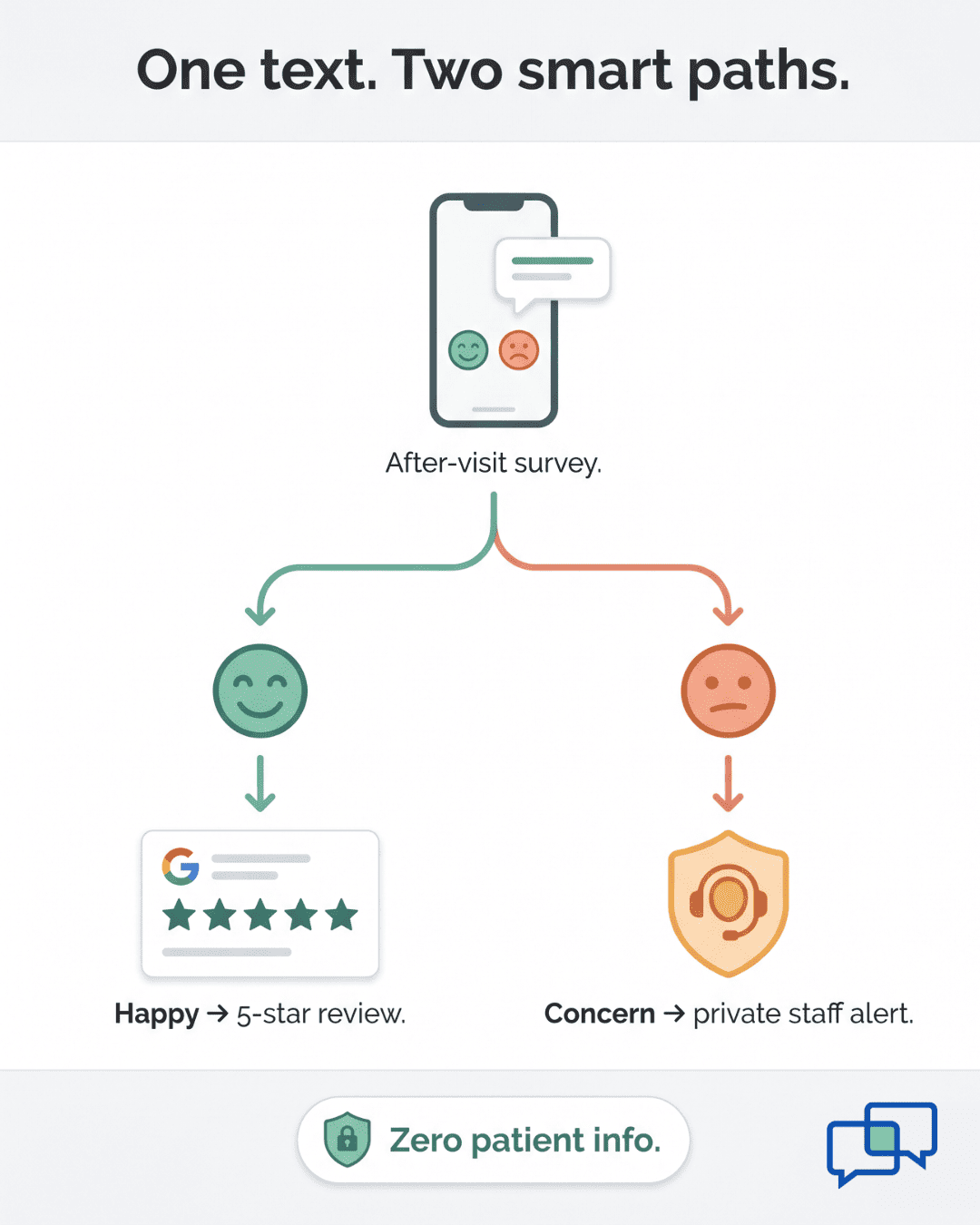
Here is the key step. Happy clients get sent straight to your review page. Unhappy clients get routed to a private staff channel instead. Your team hears the concern before it ever turns public.
This split is the heart of the design. You measure satisfaction first. You request reviews second. Only pleased clients are invited to post in public. No step in the flow ever exposes protected health information.
The Survey-to-Review Pipeline
The path is easy to follow. A post-session text goes out. The client answers the survey. A positive reply triggers a Google Review prompt. A negative reply triggers a staff alert.
The survey carries your practice name. It comes from your own texting line. It feels like a natural part of care, not a sales pitch. This is how behavioral health Google Reviews automation works in real life.
Setup stays simple too. Curogram runs alongside Sigmund AURA without needing API access. Surveys fire through Curogram's own scheduling and texting tools. Your clinical workflows never change.
In short, these automated review requests run alongside your behavioral health EHR. Sigmund AURA keeps handling the chart. Curogram becomes your Sigmund AURA reputation management layer. The two work side by side, not on top of each other.
The Privacy Concern
Behavioral health needs more care than most fields. Curogram builds that care into every message.
A review text never names a treatment type. It never lists a diagnosis. It never hints at session content. The client simply sees a plain prompt.
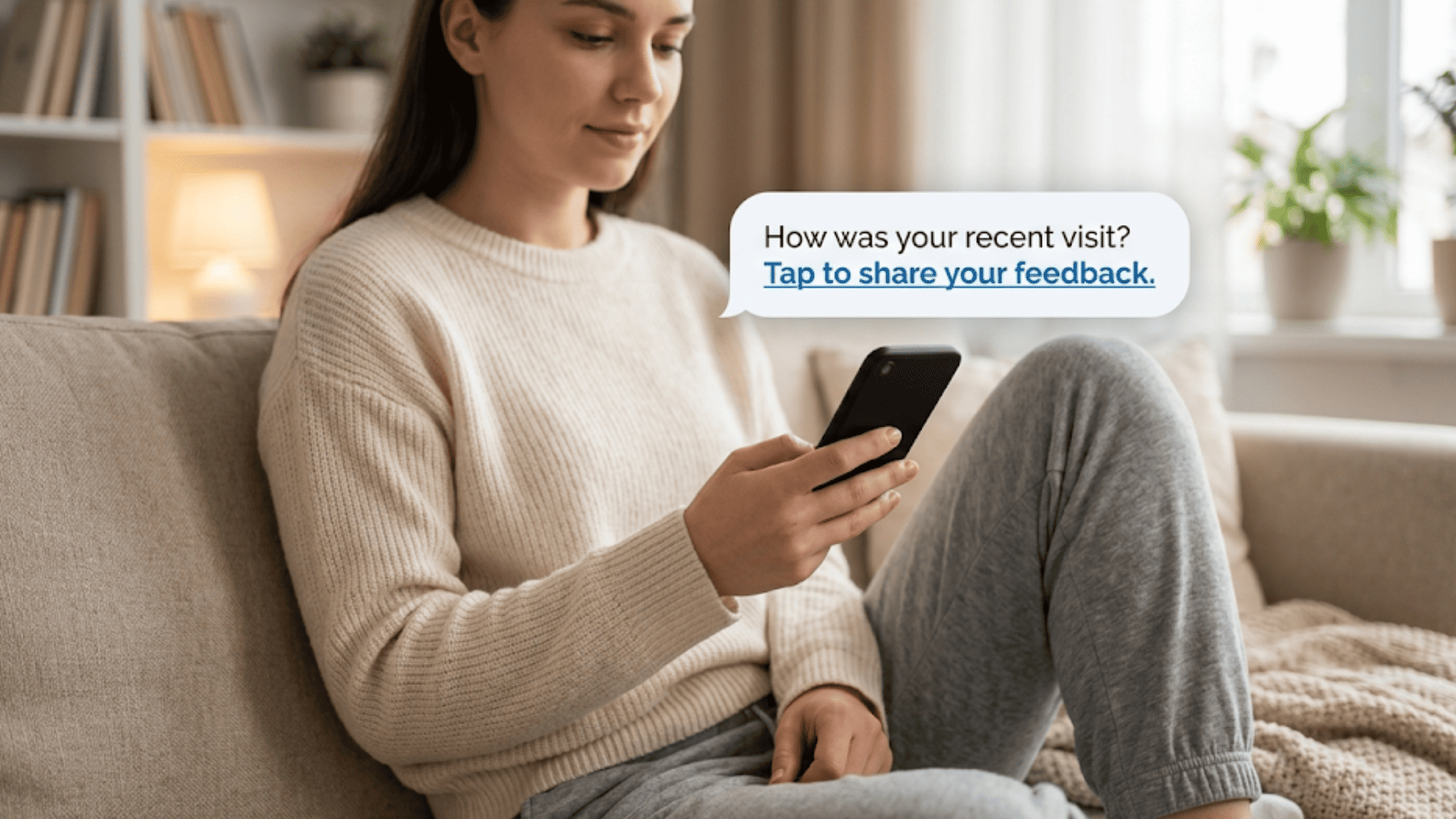
For example, the message reads:
"How was your recent visit? We'd love your feedback."
It does not say:
"How was your addiction counseling session?"
The wording stays neutral on purpose. This protects client dignity while it builds your name.
This matters most for SUD programs. Many follow 42 CFR Part 2, the rule that guards substance use records. Curogram's pipeline is designed for that reality. No protected information ever leaves your practice in an outbound message.
The whole system stays HIPAA and SOC 2 Type II compliant. So you can grow your reputation and keep client trust at the same time. The engine connects your Sigmund AURA workflow to your Google Business Profile, with privacy built into every step.
The result is a tool that does the asking for you. No clinician has to feel awkward. No client gets pressured. The right people share their story, and the wrong moments get handled in private. That is the reputation engine at work.

The Success: A 5-Star Profile That Markets the Practice
Now picture the payoff. The numbers here come from our internal data, and they are strong. One multi-location practice used Curogram's review system. It earned 1,064 new five-star reviews in just three months.
Even better, 90% of those clients left five-star ratings. The profile shifted from a weak page to a busy, glowing one. The change took a single quarter, not a full year.
This is the shift from a reputation vacuum to a five-star engine. Your Google page stops being a liability. It becomes your strongest source of new clients. People search, see your stars, and call.
Here is why that matters so much. When a family searches for SUD treatment, Google reviews shape the first impression. A high rating with recent praise builds instant trust. A low rating with old complaints sends them elsewhere.
Let's compare two practices to make it clear. Both give good care. Only one shows it online.
|
Practice A (no system) |
Practice B (Curogram engine) |
|
|
Reviews shown |
14 |
247 |
|
Star rating |
2.9 |
4.8 |
|
Recent praise |
None visible |
"Compassionate staff," "changed my life" |
|
Ad spend needed |
High |
Low |
|
Who gets the call |
Rarely |
Almost always |
Note: Practice A and Practice B figures are illustrative examples, not measured results.
A prospective client sees both profiles in one glance. Practice A looks risky. Practice B looks safe and proven. The client calls Practice B. No ad ran. No marketing dollar was spent. The reputation did the work.
Think about what that means for your budget. Strong reviews lower your need for paid ads. Organic search starts feeding you clients again. The money you saved can go back into care.
The shift also feels good for your team. Staff stop dreading the public profile. They watch ratings climb week by week. The page finally tells the truth about the work they do.
Your clients win too. Honest, kind reviews help the next person take a hard step. Someone scared to seek help reads a real story. That story gives them courage to call.
This is the goal of behavioral health Google Reviews automation. It turns quiet gratitude into public proof. It rewards your care with the reputation it has earned. And it does so without a single awkward ask.

Why Curogram Is the Reputation Layer Sigmund AURA Leaves Out
Sigmund AURA is a fine clinical home. It manages records, plans, and billing with care. But it was never built to grow your public name. That is where Curogram fits.
Curogram acts as a reputation layer on top of your EHR. It does not replace Sigmund AURA. It adds the one job your EHR cannot do. It asks the right clients to speak up at the right time.
The pipeline is fully automatic. A text survey goes out after each session. Happy clients move to your review page on their own. Unhappy clients reach your staff in private first. Your team gets a chance to make things right.
Privacy sits at the center of it all. Review texts hold zero protected health information. They never name a diagnosis or treatment. So programs under 42 CFR Part 2 can use the system with confidence. HIPAA and SOC 2 Type II compliance run through the whole flow.
The setup stays light on your staff. Curogram works alongside Sigmund AURA without API access. Your clinical workflows do not change at all. Surveys run through Curogram's own texting and scheduling tools.
The payoff shows up fast. Based on our internal data, one multi-location practice gained 1,064 new five-star reviews in three months. That profile now markets the practice on its own. New clients call before any ad is needed.
In short, Sigmund AURA runs your practice. Curogram grows it. One keeps your records safe. The other turns your best clients into proud advocates. Together, they let your public image finally match your real care.
Conclusion: Your Care Quality Deserves a Google Profile That Matches
Sigmund AURA was built for clinical work. It stores records, plans, and billing with care. But it has no tool for your public reputation. That gap leaves your Google page weak.
Behavioral health makes the gap harder. Stigma keeps grateful clients quiet. The loudest reviews are often the angry ones. So your rating sinks below your real quality.
Curogram fills that vacuum. A simple text survey goes out after each visit. Happy clients move to your review page on their own. Unhappy ones reach your staff in private first. Your team can fix the issue before it ever goes public.
The result speaks for itself. One multi-location practice earned 1,064 new five-star reviews in three months, based on our internal data. 90% of its clients left five-star ratings. That is the power of asking the right people the right way.
Think of the two tools this way. Sigmund AURA runs the practice. Curogram grows it. One keeps your records safe. The other turns quiet, happy clients into public advocates.
Your care already earns trust every single day. Your Google profile should say the same thing. When it does, new clients call you first, not your rival. Trust built online turns searches into booked visits.
Stop losing clients to a page that hides your work. Let the right clients tell your story. No PHI leaves your practice. No staff member has to make an awkward ask.
Stop letting a weak profile cost you clients. Book a demo today and learn how one practice earned 1,064 five-star reviews in three months.
Frequently Asked Questions
Every review text holds zero protected health information. It never names a diagnosis, treatment, or session detail. Clients see a plain prompt like "How was your recent visit?" The flow stays HIPAA and SOC 2 Type II compliant throughout.
Stigma drives the gap. Many clients feel real gratitude, yet they avoid linking their name to therapy or addiction care in public. So glowing reviews go unwritten, while billing or wait-time complaints often fill the page instead.
A negative survey reply never reaches Google. Instead, Curogram routes it to a private staff channel. Your team can follow up, fix the concern, and resolve it before it ever becomes a public review.
Most people check your profile first. Based on our internal data, 90% of new leads see your Google Business Profile before your website. A weak rating sends them to a rival before they ever read your site.
Each site keeps its own Google profile and its own survey routing. Reviews flow to the correct page per location. Administrators track volume, ratings, and trends for every site from one dashboard, all without extra staff work.