Sigmund AURA Google Reviews Automation Built for Behavioral Health
💡 Sigmund AURA Google Reviews automation for behavioral health means adding Curogram's survey-to-review system on top of your clinical work....
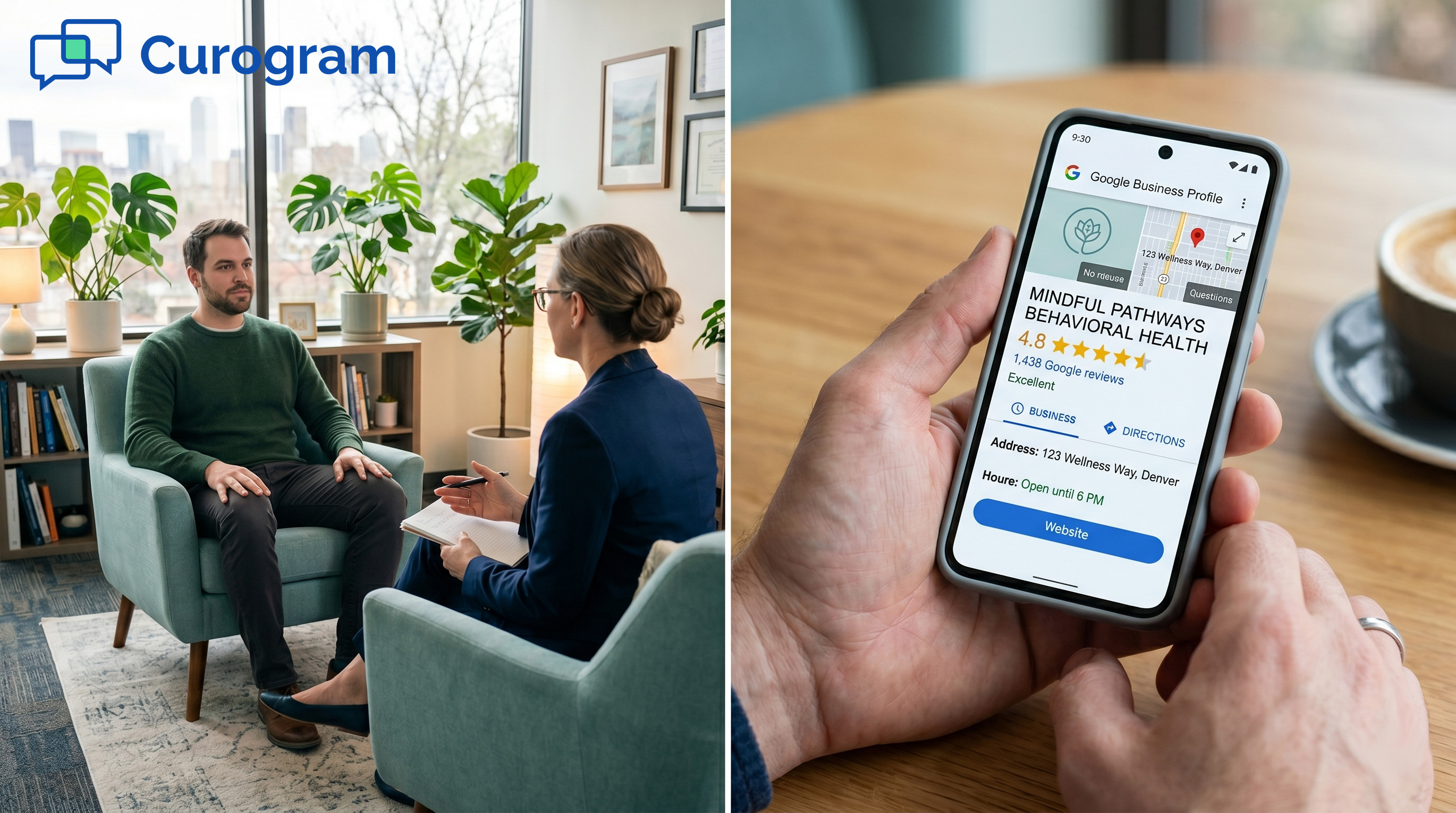
Most people pick a behavioral health practice before they ever call. They open Google, scan the reviews, and judge in seconds.
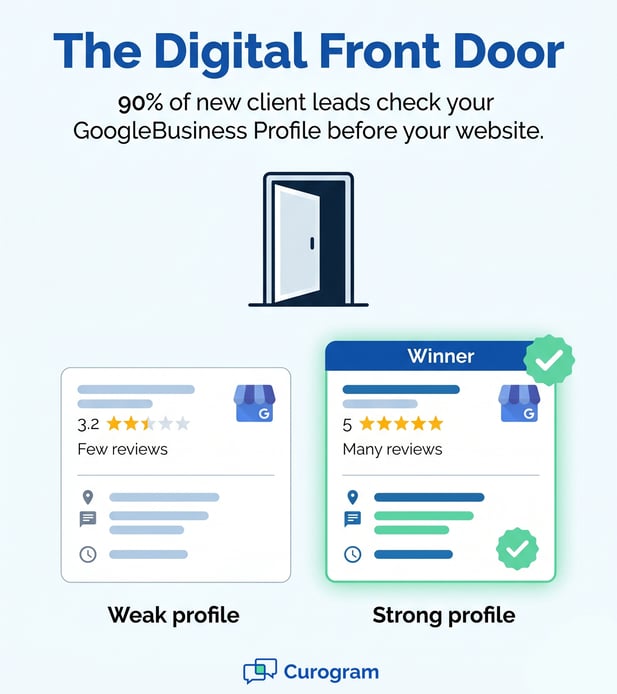
Based on Curogram client data from clinical settings, the pattern is clear. About 90% of new client leads check your Google Business Profile before your website.
That profile is your real front door. Now, picture what a new client sees there. A thin page with twelve reviews and a 3.2-star rating. The care inside your practice may be excellent.
Yet the profile tells a different story, so prospects scroll away. This gap is not a care problem at all.
It is a reputation problem hiding in plain sight. In behavioral health, stigma already makes people slow to seek help.
A weak online presence only adds to that doubt. So why do strong practices end up with so few reviews?
The reason is simple and very human. Asking a client for a review feels awkward in a therapy setting.
The bond between clinician and client makes a direct request feel out of place. Staff feel that same discomfort too.
They stay busy, and no single person owns the task. Manual emails and paper cards earn only single-digit response rates.
There is a much better way to handle this. You can automate Google Reviews while Proven EHR keeps running your clinical work.
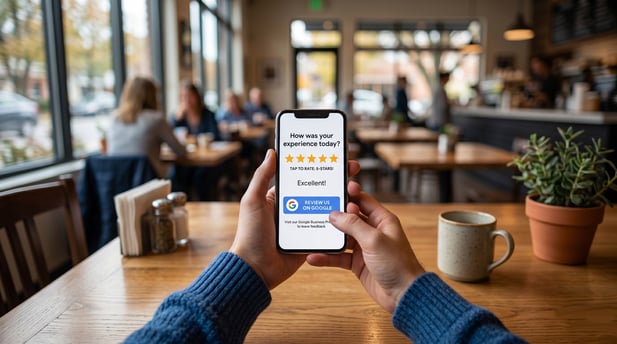
Curogram sends a brief, kind survey after each session. Happy clients get routed to Google, and concerns get caught in private first.
This guide walks through the automated review requests Proven EHR practice setup, step by step. You will see how the workflow runs and why it respects client trust.
You will also see the real results that a steady, automated review habit can soon bring. Best of all, it lifts the awkward ask off your team for good.
Every practice has a villain in this story. It is not a person, though. It is the awkward ask, the moment when someone must request a review face-to-face.
In behavioral health, that moment feels heavier than in most other fields.
This is exactly where automated review collection behavioral health teams need it most. The setting itself makes a direct ask feel out of step. Two clear forces are at work here.
The bond between clinician and client rests on a base of trust. A direct review request can strain that fragile bond.
Some clients may feel pressured or even a little exposed. Many staff members sense this real risk right away.
So they hold back, and the request simply never happens. The relationship can feel too personal for a sales-style ask.
That instinct is healthy and worth respecting in full. The fix is to remove the person from the ask, not the care.
When staff do try, they often lean on email or paper cards. These older methods tend to earn single-digit response rates.
The effort stays high, and the payoff stays very small. Most messages get skimmed once and then quickly forgotten.
Front desk teams are also stretched thin most days. Review outreach competes with intake, billing, and phone calls.
It almost always loses that daily fight for time. So review counts stay flat, month after slow month.
There is also no clear owner for the work. Reviews become everyone's job, so they become no one's. Without a system, the whole task quietly drifts. Good intentions rarely turn into steady results.
The cost here is quiet, but it is very real. Each missed review is a missed chance to be seen. Over time, that gap only grows wider.
Only a few reviews trickle in during any given month. Google tends to reward fresh, steady reviews over old ones.
Slow velocity keeps your practice out of the top spots. Your ranking stalls while busy rivals keep on climbing.
Velocity is really about pace, not just total count. A single burst of reviews once a year does little. A steady flow each week does so much more. Automation is the thing that makes that steady flow possible.
Prospects compare nearby profiles in just a few short seconds. A practice with active reviews looks safer and more trusted.
So they book there instead of with your team. Strong care can quietly lose to a stronger profile.
This stings the most when your care is the better choice. The new client never learns that fact, though.
They simply judge what they can see online today. The gap widens with every review you never ask for.
Trust is the real currency in this kind of choice. A full profile signals that others felt safe here. That signal often matters more than price alone. It can tip a nervous prospect toward booking.

Every good story needs a steady guide. Curogram plays that role here for your practice.
It helps you set up Google Reviews automation that works with Proven EHR, with no API or code. The tool is automated, sensitive, and shaped for this field.
The whole flow is a simple and clear design. You set the rules once, and the system does the rest. Two main pieces make it work.
You get to choose exactly when each survey goes out. Send it right after the session, at the end of the day, or the next morning. This lets you pick the kindest moment for your clients. Timing can also shift by program or by client group.
The survey itself is short and very easy to answer. It arrives by text, where most people actually read.
The same SMS channel powers your two-way HIPAA-compliant texting. So one channel quietly does double duty for your team.
Routing logic is the true heart of the whole workflow. Each reply takes one of two very clear paths.
Happy clients get a direct link to your Google review page. The trip from session to review takes only a tap.
Unhappy replies follow a quite different path instead. They go straight to a private follow-up alert for staff. Your team can then step in and make things right. You catch real concerns before they ever go public.
This simple split is what protects your public rating. Praise goes out, while problems stay in-house. You never have to gamble on a bad review. The safety net works on every single reply.
Sensitivity is not a nice-to-have feature in this work. It is the whole point in a behavioral health setting. You stay fully in charge of tone and timing.
Tone matters more in this field than in most others. You can shape each message to feel warm and low-key.
A simple question like How was your visit works very well. It reads like genuine care, not a hard pitch.
The message also stays generic on purpose, by design. It never names a diagnosis, a program, or a visit type. The client alone decides what to share in any review. That keeps the whole request safe and respectful.
One simple screen shows your whole reputation picture at once. You can track review volume, average rating, and trends over time.
That lets you spot a dip early and act on it fast. The numbers stay clear and easy to read.
The Google Review request setup for a Proven practice runs on its own. You just check in whenever you actually want to.
No daily login or manual chasing is ever needed. The dashboard quietly does the watching for you.
Clear data also helps you set fair goals. You can see what a strong month really looks like. Then you can aim for that same pace again. Progress stops being a vague guess.
So what does real success look like here? It looks like reviews that grow while you sleep.
A smart reputation management setup that behavioral health leaders trust turns good care into proof. The shift then shows up in both numbers and daily life.
The proof here lives in the sheer volume. Steady, honest reviews add up faster than most people expect. The numbers really speak for themselves.
One multi-location practice put this exact flow to work. Based on Curogram client data from clinical settings, it gained 1,064 new 5-star reviews in just 3 months. In that same window, about 90% of its clients left 5-star reviews.
That is real care made visible at a true scale. Each review came from a client who chose to speak up. None of it required a staff member to ask in person. The reputation grew on its own in the background.
Steady reviews tend to lift your spot in Google's Local Pack. That is the top three map results people see first.
Practices with strong ratings and counts tend to land there. Most prospects never scroll far past those three.
Fresh reviews can move your rank up within a few weeks. The early boost then tends to feed itself over time.
A higher rank brings more views and even more reviews. That steady cycle keeps your profile near the very top.
Visibility and trust then grow hand in hand. Each new review adds a little more proof. That proof pulls in the next set of clients. The profile slowly starts to market itself.
The real win is the shift in how the work feels. Heavy pressure turns into a quiet, simple routine. Two changes stand out the most here.
Private alerts flag your unhappy clients very fast. You can then fix issues before they become public reviews.
One quiet save can protect your whole star rating. Bad feedback turns into a useful tool, not a threat.
Early outreach also shows clients that you truly care. A quick, kind reply can rebuild trust in minutes.
Many concerns simply fade once a person feels heard. The alert system makes that fast response easy to do.
Your team no longer has to chase reviews at all. The system handles the ask itself, every single time.
Staff can put their energy back into client care. The awkward task just leaves their plate for good.
This frees up real, usable hours each and every week. Those saved hours go to clients, not to outreach. The practice can grow without adding to the workload. Better care and a better profile now rise together.
Team morale tends to rise along with this change. No one dreads the awkward ask anymore. The whole staff feels the win in the ratings. That energy flows right back to clients.

Your care already speaks for itself every day. The goal is simply to let your clients say so where it counts.
Automated review collection removes the awkward ask for good. It catches concerns early and builds a 5-star Google reputation with little effort.
Think of the two paths side by side for a moment. One leans on busy staff and a lot of hope. The other runs quietly in the background, day and night. The table below sums up the difference at a glance.
|
The Awkward Ask (Manual) |
Reviews on Autopilot (Curogram) |
|---|---|
|
Staff must request reviews in person |
The system sends every request by text |
|
Single-digit response rates |
High response from timed, gentle surveys |
|
Negative feedback goes public |
Concerns route to a private alert first |
|
Reputation work falls through the cracks |
Reviews build on their own, day and night |
Proven EHR powers your clinical and your billing work. Curogram builds the reputation that fills your schedule. Together, they cover both sides of a healthy practice. One runs the care, and the other opens the door.
The best part is how little it asks of you. You set the timing once and pick your message tone.
After that, the reviews gather on their own. Reputation work becomes a background task, not a daily chore.
Reputation is not a one-time project to finish. It is a habit your tools can keep for you. Every session becomes a small chance to be seen. Over months, those chances build into real, lasting visibility.
The setup also scales smoothly as your practice grows. Add a new location, and the flow still runs. Add more clinicians, and the asks still go out. The work simply does not grow with your size.
This matters most in behavioral health, where trust is the first hurdle. A strong profile lowers that hurdle before the first call.
Many prospective clients trust Google reviews more than referrals. That proof can be the nudge that gets someone the care they need.
Strong reviews also ease the load on referrals. New clients can find you on their own. Word of mouth then has backup it can trust. Your growth no longer hangs on a few sources.
None of this requires a big lift from your side. The heavy work lives inside the system itself. You bring the care, and the tool brings the proof. That balance is what makes the whole thing stick.
So stop leaving your online reputation to plain chance. A simple setup like this can change your growth curve.
Let the system do the asking, and let your work shine. This is how Proven EHR practices build a 5-star Google reputation that lasts.
Set it up once, and build your reputation forever. That is the simple promise of reviews on autopilot.
Wondering how many Google Reviews your program really needs? The honest answer depends on your market and your goals.
A short, clear look at your profile can point the way. Book a demo to see where you stand and what is possible.
After each session, Curogram sends a short text survey to the client. Happy clients receive a direct link to your Google Business Profile. Concerned clients are routed to a private alert for follow-up. The flow runs on its own, with no Proven EHR API and no staff effort.
Behavioral health clients often hesitate to leave public feedback due to stigma. A gentle, automated text feels less intrusive than a face-to-face ask. The message stays generic and never names a diagnosis or program. This respects client privacy while still inviting honest, willing reviews.
When a reply signals a problem, the system flags it for your team in private. That feedback goes to an internal alert, not to Google. Your staff can then reach out and resolve the issue directly. You protect your rating by fixing concerns before they go public.
Most people judge a practice by its Google profile before they ever call. Based on Curogram client data from clinical settings, 90% of new client leads check that profile first. A strong rating signals trust, which is vital where stigma raises the bar. More positive reviews often mean more new client inquiries.
Initial setup is quick because there is no code or EHR integration to build. You choose the survey timing and adjust the message tone once. After that, the workflow runs in the background on its own. A short demo can walk you through the whole process in about 15 minutes.
💡 Sigmund AURA Google Reviews automation for behavioral health means adding Curogram's survey-to-review system on top of your clinical work....
💡 Most Office Ally practices want more Google reviews. But no one has time to ask for them. Between scheduling, billing, and patient check-in,...
💡 Therapy practice Google Reviews automation staff workflow TherapyNotes can run hands-free. Curogram sends a short text after each session. Happy...