12 min read

Digital Patient Intake for Opus EHR: A Guide for Rehab Clinics

Digital Patient Intake for Opus EHR: A Guide for Rehab Clinics
💡 Digital patient intake for Opus EHR helps addiction treatment and behavioral health clinics speed up admissions and reduce paperwork. 
  • Patients complete forms on their phones before arriving
  • Staff skip manual data entry as info syncs to Opus EHR
  • Behavioral health electronic consents are signed digitally
  • Insurance and ID docs upload in seconds via secure capture
  • Clinicians see medical history before the first visit
With Curogram, rehab intake automation cuts the intake window by up to 50%. This mobile-first approach meets HIPAA and 42 CFR Part 2 rules while giving patients a calm, modern start to their recovery journey.

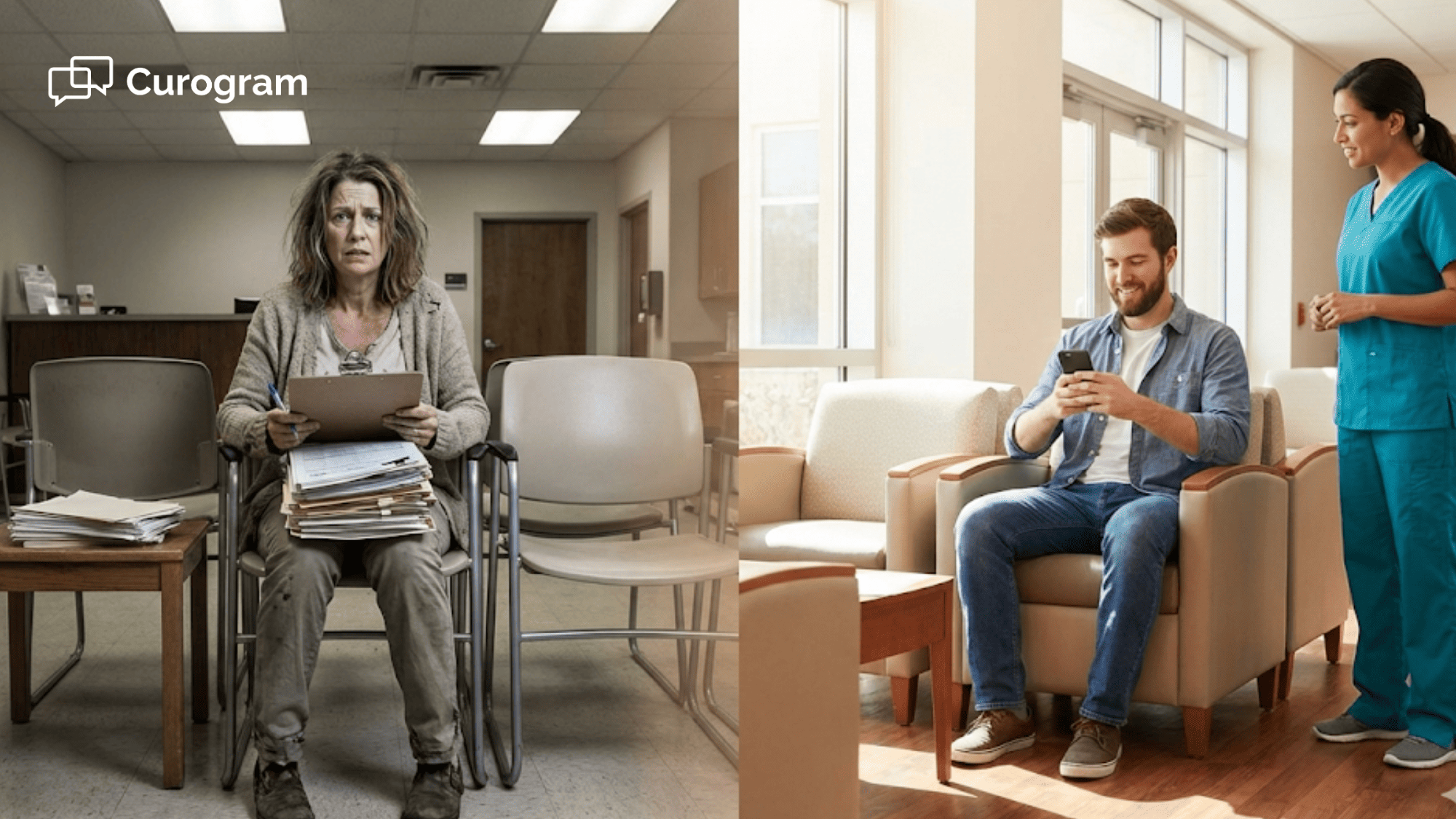
Picture this: A family in crisis finally makes the call. Their loved one is ready for treatment. But when they arrive at your rehab center, they face a clipboard thick with forms.

Twenty pages of health history. Consent forms. Insurance details. Privacy notices. It feels endless.

For someone in withdrawal or emotional distress, this moment can break the deal. Many walk out before they ever get help. This is the "pre-admission walkout," and it happens far too often in addiction treatment.

But there's a better way. Digital patient intake for Opus EHR changes how behavioral health and substance use disorder clinics welcome new patients.

Instead of clipboards and chaos, patients or their families complete everything on a phone. They fill out Opus EHR medical history forms from home, the car, or the lobby. They sign HIPAA consents and 42 CFR Part 2 releases with a tap.

By the time they walk through your door, the hard part is done. This is what addiction treatment mobile onboarding looks like in action. It removes friction during the most fragile moment of a patient's journey. It lets your clinical team focus on care, not typing.

For Opus EHR users, the win goes deeper. The data flows right into your charts. No double entry. No missing fields. No hours spent fixing errors.

In the world of substance use disorder care, speed matters. The faster you move someone from "inquiry" to "admitted," the lower the risk of dropout or relapse. That's why streamlining SUD admissions is not just about saving time. It's about saving lives.

This guide will show you how mobile intake tools work with Opus EHR. You'll learn how to ditch paper, capture behavioral health electronic consents, and build a front door that welcomes patients instead of wearing them out.

The "Admissions Logjam": Why Paper-Heavy Intake Fails BH Clinics

Think about the last time you filled out forms at a doctor's office. It was boring, right? Now imagine doing that while your hands shake from withdrawal. Or while your family is in tears, scared they'll lose you.

That's what patients face at many rehab and behavioral health clinics. And it's pushing them away before care even starts.

The Crisis Barrier

A patient in crisis has no patience for paperwork. Neither does a spouse or parent who just talked their loved one into getting help. Every minute spent on forms is a minute for doubt to creep in.

Consider a common scene:

A family drives two hours to get to your clinic. They're hopeful but fragile. At the front desk, staff hands them a stack of paper forms. Insurance card. Driver's license. Medical history. HIPAA consent. 42 CFR Part 2 release. Facility rules. Patient rights.

Thirty minutes pass. The patient gets restless. The family gets frustrated. Sometimes, they leave. This is the pre-admission walkout, and it can cost both the patient's recovery and your clinic's revenue.

One walkout per week adds up fast. If your average admission brings in $15,000, that's over $750,000 lost per year in just one scenario. More importantly, that's 52 people who didn't get the help they needed.

The Data Entry Tax

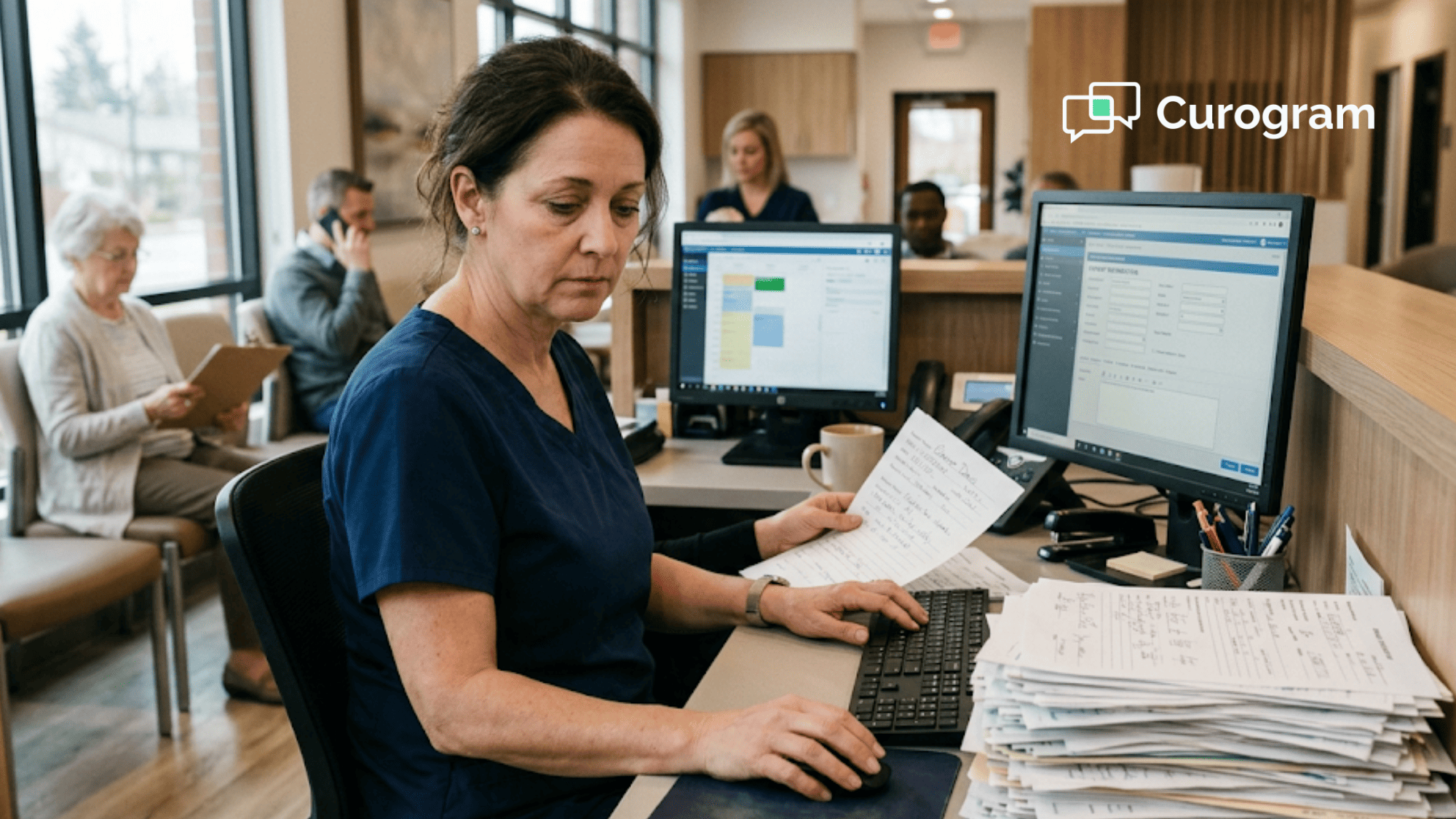
Paper forms create work that never ends. After the patient signs everything, your staff still has to type it all into Opus EHR. Every name. Every date. Every checkbox. This manual data entry eats up hours each day.

Worse, it opens the door to mistakes. A typo in an address. A wrong date of birth. A missed allergy. These errors can delay treatment or cause safety issues down the line.

When staff spend their day typing from paper into screens, they're not doing what they're trained to do. They're not helping patients. They're not running the clinic. They're stuck in a loop of copy-and-paste work that drains morale.

The Missing Signature Risk

Here's a problem that haunts many behavioral health clinics: incomplete consents. In substance use disorder care, 42 CFR Part 2 rules are strict. If a patient doesn't sign the right releases, you may not be able to share key info with other providers.

And if auditors show up, a missing signature on a consent form can turn into a compliance nightmare. You'll scramble to find the paper. You'll hope it was just misfiled. Sometimes, it simply doesn't exist because a staff member forgot to collect it.

With paper-based intake, tracking every required form is hard. There's no easy way to make sure all fields are complete before the patient leaves the lobby. A simple oversight can create massive risk during a Joint Commission or CARF survey.

The True Cost of Clipboards

When you add it all up, paper-heavy intake is more than just old-fashioned. It's a liability.
It slows down admissions. It burns out staff. It risks compliance. And it sends patients away at the exact moment they need you most.

For clinics using Opus EHR, there's a real disconnect. You have a powerful electronic record system, but the front door is still stuck in the 1990s. The data has to be typed in by hand, which defeats the purpose of having a modern EMR.

The solution isn't hiring more admissions staff. It's fixing the process. It's using rehab intake automation to meet patients where they are: on their phones, ready to start healing, not ready to fill out 20 pages of paper.

Transform Your Front Door: Key Features of Mobile Onboarding

The fix for the admissions logjam isn't complicated. It's mobile. When patients can complete intake forms on their phones, everything changes.

With Curogram's mobile intake tools for Opus EHR, you turn a stressful paper process into a simple digital one. Patients get a text link, tap it, and start filling out forms. 

Here's how the key features work:

Secure Document Capture

Every admission needs proof of insurance and ID. With paper intake, patients dig through wallets. Staff make copies. Someone files the pages. Then someone else types the info into Opus EHR.

With mobile onboarding, patients just snap a photo. Front and back of the insurance card. Driver's license or state ID. That's it.

The images upload through a secure link that meets HIPAA rules. They flow right into the Opus CRM and EMR. Your team can start verification of benefits (VOB) before the patient even arrives.

Think about what this saves. No more lost copies. No more blurry faxes. No more waiting for the patient to bring documents they forgot at home. The info is there, ready for your billing team to act on.

For families helping a loved one, this is huge. They can handle the insurance piece from home while the patient rests or gets ready to travel. It takes one more task off the plate during a hard time.

Smart Logic Forms

Not every patient needs the same questions. Someone entering detox has different needs than someone starting outpatient therapy. A one-size-fits-all form wastes time and causes confusion.

Smart logic forms fix this. The form adapts based on the answers the patient gives. If a question doesn't apply, it doesn't show up.

For example, if your clinic offers detox, residential, IOP, and PHP levels of care, you can build unique intake packets for each.

The detox form might ask about recent substance use and withdrawal symptoms. The IOP form might focus on schedule and outpatient history.

This removes "Not Applicable" fatigue. Patients don't have to skip through pages of questions that don't fit their situation. Completion rates go up. Errors go down.

Your staff also benefits. When the form lands in Opus EHR, every field that matters is filled in. No chasing down missing answers. No phone calls to ask about skipped sections.

Electronic E-Signatures

Consents are the backbone of behavioral health compliance. HIPAA. 42 CFR Part 2. Facility agreements. Patient rights. Every one needs a signature.

On paper, this is a lot to manage. Staff have to explain each form, watch the patient sign, and make sure nothing gets missed. If a single signature is blank, the file is incomplete.

With behavioral health electronic consents, patients sign on their phone. Each form displays clearly. The patient taps to sign. A timestamp records the exact moment.

This creates a clean audit trail. When Joint Commission or CARF surveyors ask for proof that consents were given and signed, you have it. No digging through paper files. No wondering if the form is legible.

E-signatures also let you capture consents before the patient arrives. A family member can help the patient review and sign from home. By the time they walk in, your team knows that 100% of required consents are complete.

Why This Matters for Opus EHR Users

All of this data syncs directly with Opus EHR. There's no second system to check. No manual import. No double entry.

This means your clinical team can open a patient's chart and see what they need before the first face-to-face. Medical history. Substance use profile. Signed consents. Insurance docs.
It's the start your patients deserve and the efficiency your staff needs.

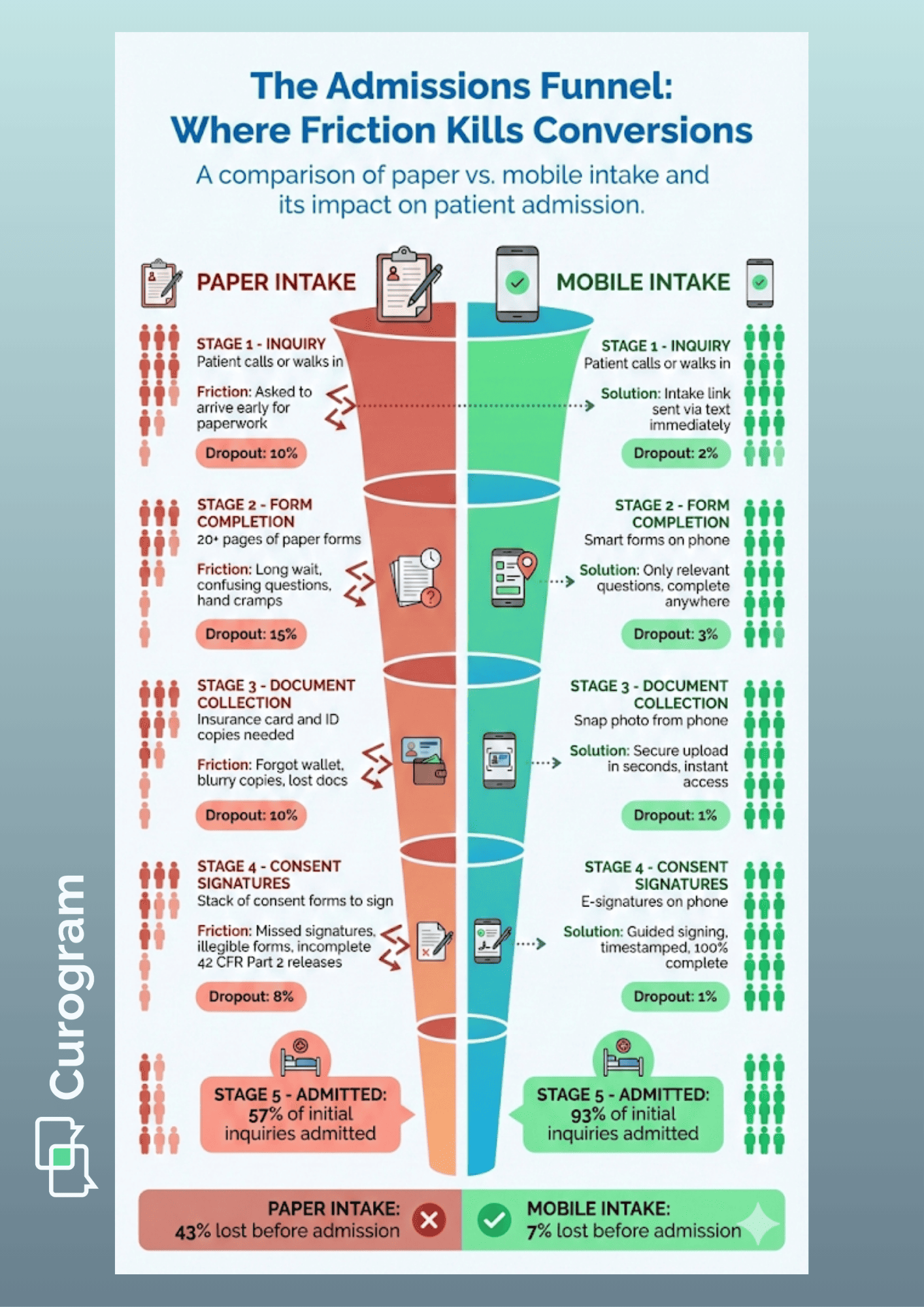
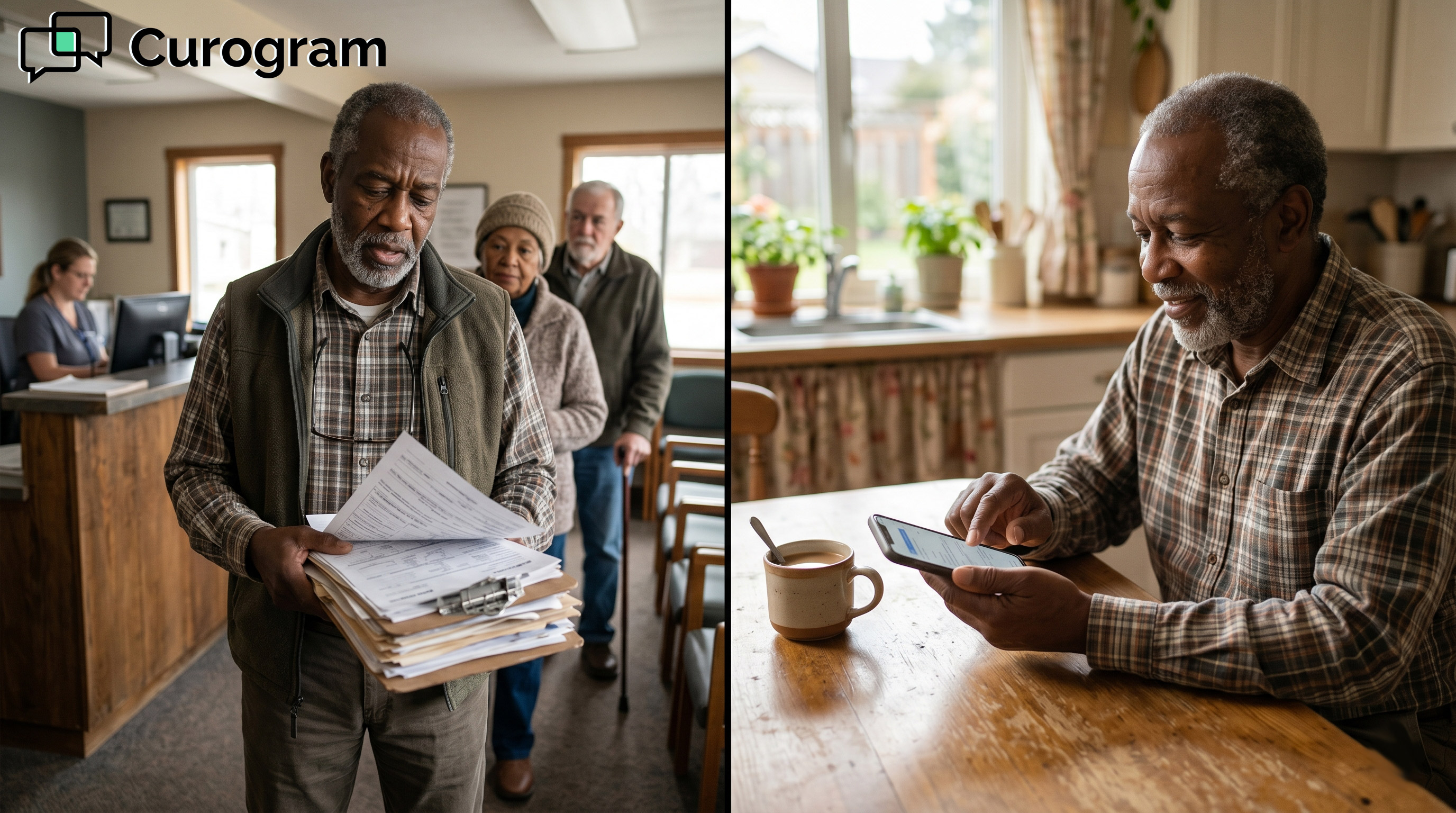
Side by side funnel graphic illustrating friction points in paper intake versus solutions in digital mobile intake

Clinical and Operational Advantages

When you switch from paper forms to mobile intake, the benefits go far beyond saving paper. Your clinical team gets better data, faster. Your patients feel calmer and more cared for. And your compliance posture gets a serious upgrade.

Let's walk through the real wins:

Immediate Clinical Visibility

In addiction treatment, timing matters. The faster a clinician can review a patient's history, the faster they can plan care.

With digital patient intake for Opus EHR, the data doesn't sit on a clipboard waiting to be typed in. It flows directly into the chart. As soon as the patient submits their forms, your team can see the info.

Picture this example:

A patient completes their intake forms on the drive to your facility. By the time they walk in, the nurse has already reviewed their Opus EHR medical history forms. She knows about the patient's past detox attempts, current medications, and allergy list.

Instead of spending the first 30 minutes on paperwork, the nurse can focus on assessment. She can ask deeper questions. She can start building rapport.

This is what immediate clinical visibility looks like. It shortens the gap between arrival and care. And in the world of substance use disorder treatment, that gap can make or break a patient's motivation.

Compare that to paper intake:

The patient fills out forms in the lobby. Staff collect them. Someone types them in. Only then does the clinician get access. By that point, an hour may have passed. The patient may be anxious, frustrated, or having second thoughts.

Reduction in Waiting Room Anxiety

Addiction treatment is scary for most patients. They're often unsure, ashamed, or afraid of what comes next. The intake process can either calm those fears or make them worse.

A cluttered waiting room full of clipboards sends a message: This will be slow and painful. A mobile intake process sends a different message: We respect your time. We're ready for you.

When patients complete forms on their phones before arriving, they skip the waiting room shuffle. They walk in and check in quickly. Staff greet them with a smile, not a stack of papers.

This first impression matters. It sets the tone for the entire treatment stay. Patients who feel welcomed and respected are more likely to engage with their care. They're more likely to trust their counselors. They're more likely to stay.

For families, the experience is just as important. They've worked hard to get their loved one through the door. A smooth intake rewards that effort and builds confidence in your clinic.

Accreditation Readiness

If your clinic is accredited by The Joint Commission or CARF, you know the pressure of surveys. Auditors want proof that you followed the rules. They want to see that patients received their rights, signed their consents, and understood their care plans.

With paper, this proof is scattered. Files get misfiled. Signatures get smudged. Dates get written wrong. When an auditor asks for a specific consent, your team has to dig.

With digital intake, every form has a timestamp. Every signature has a record. Everything is stored in Opus EHR, linked to the patient's chart.

Here is an example:

Let's say an auditor asks for proof that Patient X signed a 42 CFR Part 2 consent on their admission date. You pull up the chart. You show the digital form. You show the timestamp. This level of organization does more than impress auditors. It protects your clinic. If there's ever a dispute about what a patient agreed to, you have clear, dated documentation.

Faster Speed to Bed

In behavioral health and SUD care, an open bed is a perishable asset. Every hour it sits empty is lost revenue and a missed chance to help someone.

Paper intake slows the entire process. Staff spend time handing out forms, collecting them, typing data, and fixing errors. That's time the bed could be filling.

Mobile intake speeds everything up. Patients can complete forms before they arrive, so the clinical process can start right away. Verification of benefits can happen in parallel. Clinical assessments can begin sooner.

Some clinics report cutting their intake time by up to 50%. That means more patients served per week. More revenue captured. More lives changed.

Better Data Quality

When patients fill out their own forms on a phone, they're more likely to give accurate answers. They can take their time. They can check their records. They can ask a family member for help.

Compare that to paper forms filled out in a noisy lobby while feeling sick or anxious. Patients rush. They skip fields. They guess at dates and dosages.

Digital forms can also require certain fields before the patient can submit. If a question is blank, the form prompts them to answer. This means no more incomplete records landing in Opus EHR.

For clinical staff, better data means better care. Accurate medication lists prevent drug interactions. Complete substance use histories inform treatment plans. Real emergency contacts reach real people in a crisis.

Staff Satisfaction and Retention

Admissions staff are the gatekeepers of your clinic. They handle high-stress situations every day. They deserve tools that make their jobs easier, not harder.

Paper intake is a grind. It's repetitive. It's error-prone. And it often leads to burnout. When you adopt mobile intake and rehab intake automation, you free your staff from the typing trap.

They can spend their energy on welcoming patients, answering questions, and solving problems. They can use their skills, not just their keyboards. Meanwhile, happier staff stay longer. Turnover drops, hiring costs decrease, and your clinic runs smoother.

Integration That Streamlines SUD Admissions

All of these benefits tie back to one thing: smooth data flow. When your intake tool talks to Opus EHR without friction, everything moves faster and cleaner.

Patient completes forms. Data syncs. Clinician reviews. Care starts. No steps lost. No info stuck on paper.

This is how you streamline SUD admissions. Not by adding more staff or more steps, but by removing the roadblocks that slow you down.

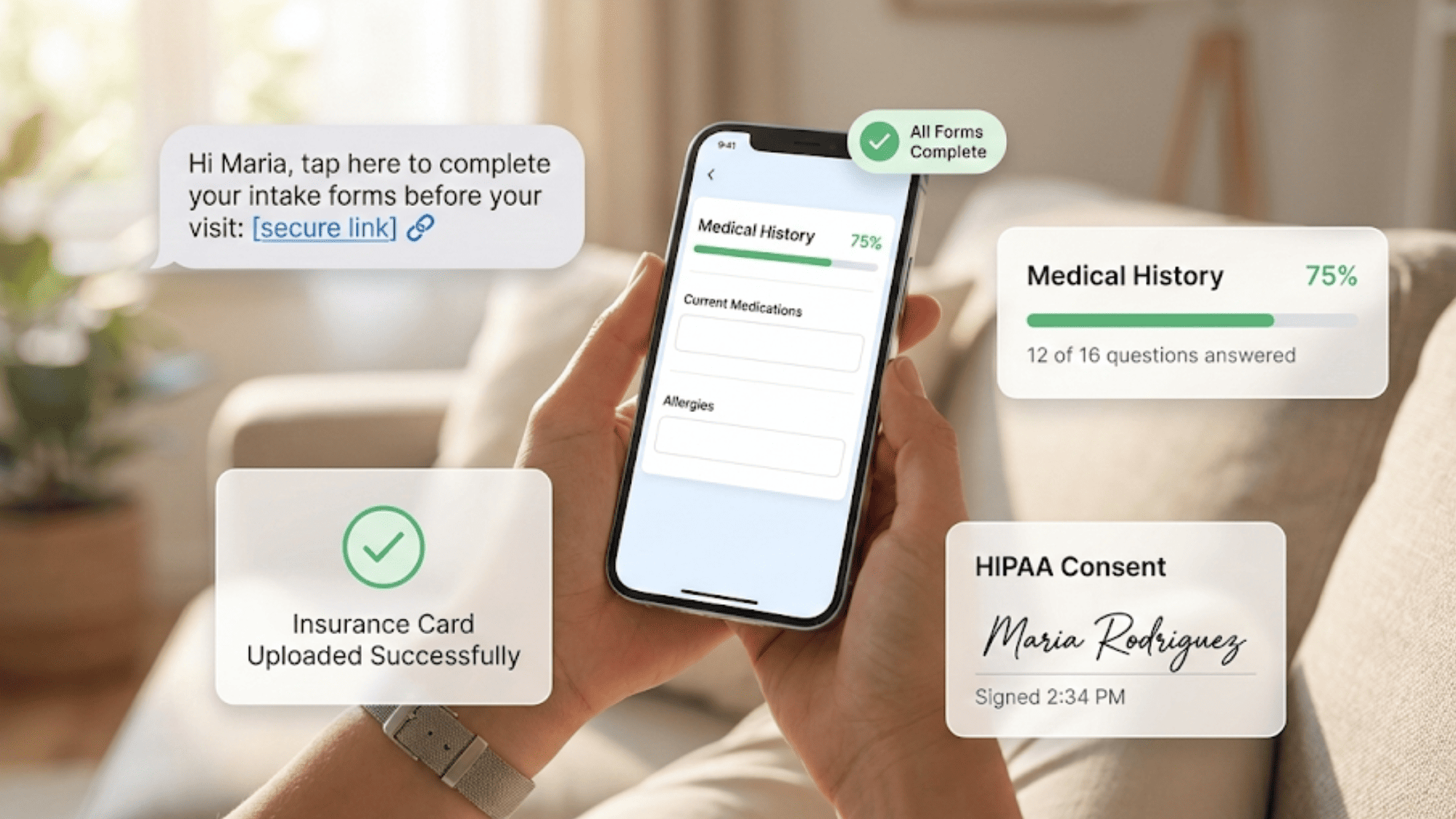
Smartphone displaying mobile intake form with insurance upload and HIPAA consent signature confirmations


Spend Less Time on Paper, More Time on People

The numbers tell a simple story. When staff spend less time on data entry, they spend more time on patients. When patients spend less time on forms, they spend more time in treatment.

Digital patient intake for Opus EHR is not just a tech upgrade. It's a culture shift. It says: We value your time. We're here to help, not to bury you in paperwork.

For SUD and behavioral health clinics, this shift can change outcomes. A smoother admission means a stronger start. A stronger start means a better chance at recovery.

Every minute you save on paperwork is a minute you can invest in care. Every error you prevent is a risk you avoid. Every patient who stays through intake instead of walking out is a life you can help.

That's the real return on mobile intake. Not just speed or savings, but the chance to do what you got into this work to do: help people heal.


How Curogram Speeds Up Admissions for Opus EHR Users


Curogram makes digital patient intake simple for Opus EHR users. As a HIPAA-compliant platform, it fits right into your existing workflow without adding friction.

The EMR integration is seamless. Data from patient forms flows directly into Opus EHR. No exports. No imports. No manual typing. Your staff see new patient info in the chart as soon as the patient submits.

Our mobile-first design meets patients where they are. The intake link arrives via text message. Patients tap, fill, and submit from any phone. No app download. No login hassle. This keeps completion rates high, even for patients in crisis.

The platform supports behavioral health electronic consents with built-in e-signatures. Patients sign HIPAA, 42 CFR Part 2, and facility forms right on their phone. Each signature gets a timestamp for easy audit tracking.

You can customize forms for your clinic's needs. Build unique packets for detox, residential, IOP, and PHP. Use smart logic so patients only see questions that apply to them.

Secure document capture lets patients upload insurance cards and IDs with a quick photo. These images flow to your billing team for fast verification of benefits.

Curogram also reduces phone call volume by up to 50% and boosts staff productivity by over 30%. When you combine intake forms with 2-way texting and appointment reminders, you have a full front-desk solution.

For behavioral health and SUD clinics using Opus EHR, Curogram acts as an admissions accelerator. It helps you move patients from inquiry to admitted faster, with less risk and less stress.

Conclusion

Paper intake is holding your clinic back. Every clipboard slows down an admission. Every missed signature creates risk. Every hour of data entry pulls staff away from care.

Digital patient intake for Opus EHR solves these problems. Patients complete forms on their phones. Data syncs to your EMR. Consents get captured with timestamps. Insurance docs upload in seconds.

For addiction treatment and behavioral health clinics, this isn't a luxury. It's a must. The faster you can move someone from "I'm ready for help" to "I'm in treatment," the better their chances of success.

Curogram makes this shift simple. The platform works with Opus EHR out of the box. It meets HIPAA and 42 CFR Part 2 standards. It gives your team the tools to streamline SUD admissions without adding complexity.

Think about your current process. How many patients have walked out before finishing intake? How many hours does your staff spend typing from paper? How many consent forms are missing signatures right now?

Now, think about what changes when those problems go away. Beds fill faster. Staff focus on patients. Compliance stays tight. Revenue grows.

That's the promise of mobile onboarding. That's what happens when you turn your front door into a welcoming experience instead of a barrier.

The choice is clear. Keep the clipboards and struggle. Or go digital and thrive.

Ready to see how digital patient intake for Opus EHR can work for your clinic? Book a demo now find out how to focus less on paper and more on the people you serve.


Frequently Asked Questions

Is it compliant with 42 CFR Part 2?
Yes. Curogram's digital forms and e-signatures are built with these rules in mind. Patient data travels through secure channels. Consents are captured with clear language and timestamped records. Auditors can see exactly when a patient signed, what they signed, and where the form is stored.
Does the patient need a login to complete forms?
No. Patients don't download an app. They don't create an account. They don't remember a password. They simply receive a secure, one-time link via SMS. Tap the link,fill out the forms, then submit. The link is also secure and expires after use. 
Can we customize forms for different levels of care?

Absolutely. You can build unique intake packets for each program your clinic offers. Detox forms ask different questions than residential forms. IOP packets focus on outpatient schedules. PHP forms cover partial day needs. Each packet captures exactly the data that level of care requires. 

What happens if a patient doesn't finish their digital intake forms?

Most platforms let staff see which forms are complete and which are pending. Staff can send a reminder text or help the patient finish in the lobby, ensuring no required fields are missed before admission.

How do smart logic forms improve data accuracy for rehab admissions?

Smart forms only show questions that apply to the patient's program. This prevents skipped fields and "Not Applicable" answers, resulting in cleaner data that clinicians can trust when planning treatment.


Online Patient Forms in StreamlineMD: Faster Imaging Intake

Online Patient Forms in StreamlineMD: Faster Imaging Intake

💡 Online patient forms in StreamlineMD help radiology, vascular, and IR practices cut check-in time and boost exam readiness. Curogram's digital...

Read More
The ROI of Online Patient Forms for Medstreaming Imaging Centers

The ROI of Online Patient Forms for Medstreaming Imaging Centers

💡 Online patient forms are transforming how Medstreaming imaging centers operate by reducing manual work and improving data accuracy before...

Read More
Online Patient Forms for Medstreaming Imaging Centers

Online Patient Forms for Medstreaming Imaging Centers

💡 Online patient forms in Medstreaming reduce prep errors and wait times by collecting intake before visits. Digital forms connect with imaging...

Read More