
Opus EHR handles intake, notes, prescribing, and billing for SUD and mental health care. But staff often report late reminders and lost messages. Curogram closes that gap with reliable texts to every patient.
The platform is HIPAA-compliant and SOC 2 certified. It supports 42 CFR Part 2 compliant messaging that Opus teams need for SUD work. Patients reply by standard text. No app. No portal. No login.
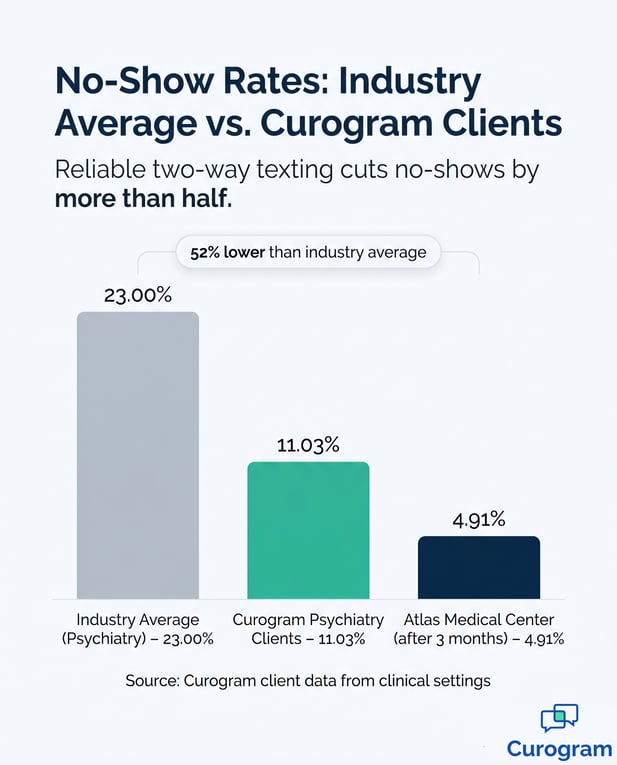
Based on our internal data, Curogram psychiatry clients see an 11.03% no-show rate vs. the 23% industry mark. That is a 52% drop. For SUD programs, that shift can mean fuller groups and better MAT follow-through.
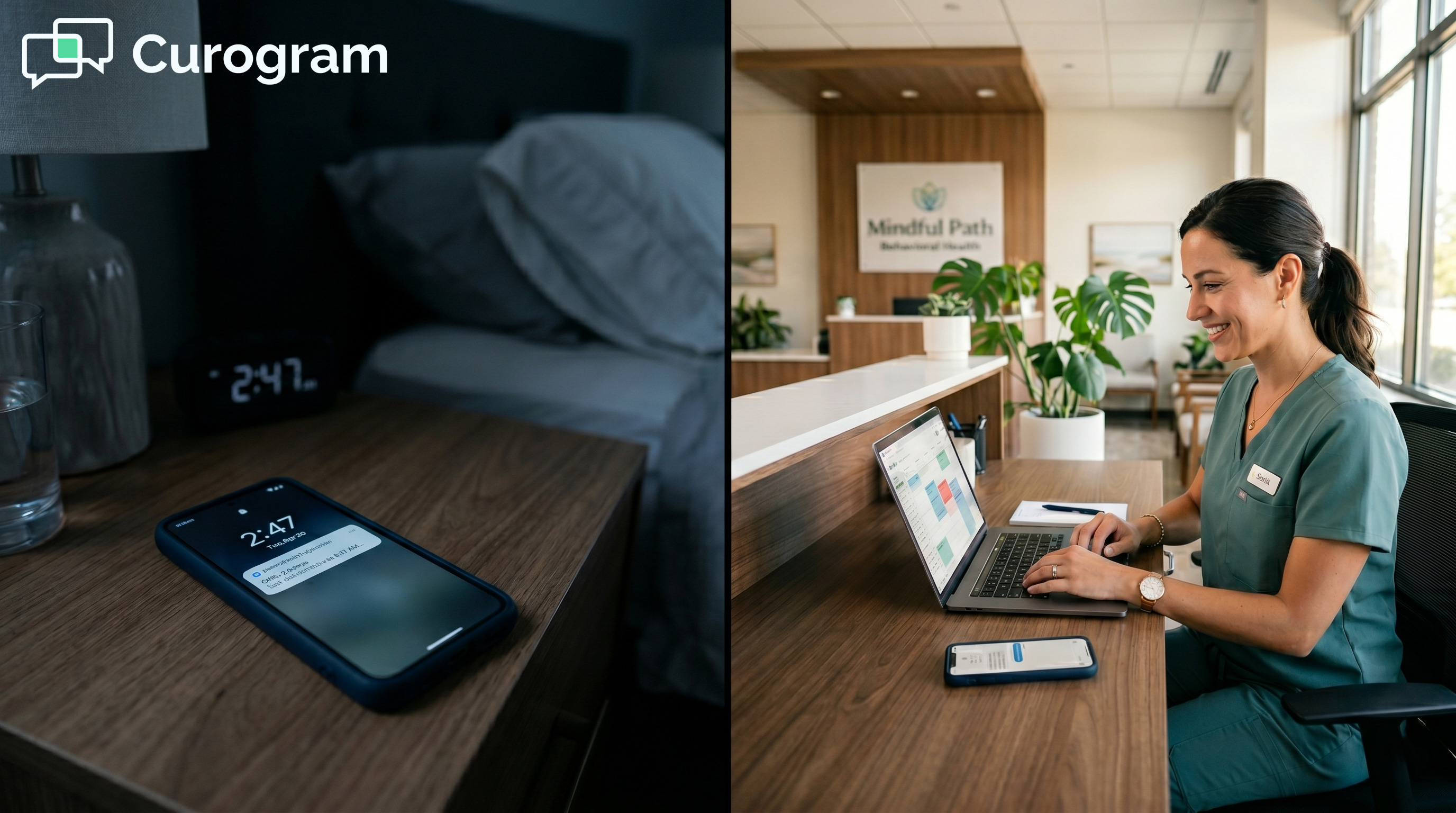
A patient in early recovery wakes at 2:47 AM. Their phone is buzzing. It is not a crisis call. It is an appointment reminder from yesterday.
By morning, the reminder is swiped away and forgotten. The patient skips tomorrow's IOP group. The front desk did not even know the text arrived late.
This is the daily reality for many practices running Opus EHR. The clinical side is solid. Intake, notes, e-prescribing, and billing all live in one place. But the native Messenger keeps failing in small, costly ways.
Reminders land in the middle of the night. Two-way replies go missing. Staff fall back on phone calls.
For behavioral health, that gap is more than a nuisance. It is a clinical risk.
SUD treatment programs face no-show rates of 30% to 50% for outpatient visits. Every empty IOP seat weakens group therapy. Every missed MAT dose raises relapse risk. The math is simple and grim.
That is why so many Opus EHR practices are layering Curogram on top. The answer is not a new EHR.
It is reliable Opus EHR patient texting that actually reaches patients on time, every time.
This guide walks through three things. First, why Opus's native Messenger falls short. Second, how Curogram acts as the steady text line. Third, what a connected program looks like when texting just works.
The Villain: The Midnight Reminder
Opus EHR was built for behavioral health and SUD treatment. It covers the clinical work well. But the native Messenger was not built for the daily pressure of this kind of care.
When messages arrive at 3 AM, the problem stops being a tech bug. It becomes a care problem. Here is what that looks like on the ground.
What 'The Midnight Reminder' Actually Looks Like in Daily Workflows
Picture a counselor planning tomorrow's IOP group. There are 15 patients booked. The group needs at least 10 to work well. Three hours of structured care depend on the right people showing up.
The front desk opens Opus's Messenger and sends out confirmations. Three messages fail to deliver. Two arrive at 2:47 AM.
By 8 AM, those late texts are gone. Patients swiped them away half-asleep. The staff has no clear read on who is coming.
The Hidden Hours Lost to Phone Follow-Up
Staff starts dialing. Voicemail. Voicemail. Then, a brief chat with one patient. Eighty minutes later, only 9 of 15 are confirmed.
That is 80 minutes of front desk time the practice cannot get back. Multiply that across a week, and the lost hours add up fast. This is time that should go to intake, family calls, or admissions outreach.
Why Late or Missing Texts Are Worse in Behavioral Health
In primary care, a missed text means a rebooked visit. In SUD treatment, the stakes climb fast. A skipped MAT dose can trigger relapse. A missed group can stall progress that took weeks to build.
Patients in early recovery often have unstable phones. They lose devices. They change numbers. A text channel that fails 5% of the time will fail the most fragile patients first.
The Revenue and Clinical Cost of a Broken Messenger
IOP sessions bill at $250 to $400 each. A program with 40 daily slots and a 30% no-show rate loses 12 sessions a day.
That works out to $3,000 to $4,800 in daily lost revenue. Across a month, the gap can hit $60,000 to $96,000.
The clinical cost is harder to put on a spreadsheet. Empty chairs change the tone of group therapy.
Census drops bend monthly numbers in the wrong direction. Two-way patient messaging behavioral health EHR users need has to be sharper than this.

The Guide: The Reliable Text Line
Curogram is not another behavioral health EHR. It is a steady SMS layer that sits next to Opus. Clinical work stays in Opus. The text line lives in Curogram.
Texts go out on schedule. Replies route back to the right staff. The audit trail stays intact. That is the simple promise.
What Two-Way Texting Looks Like When It Actually Works
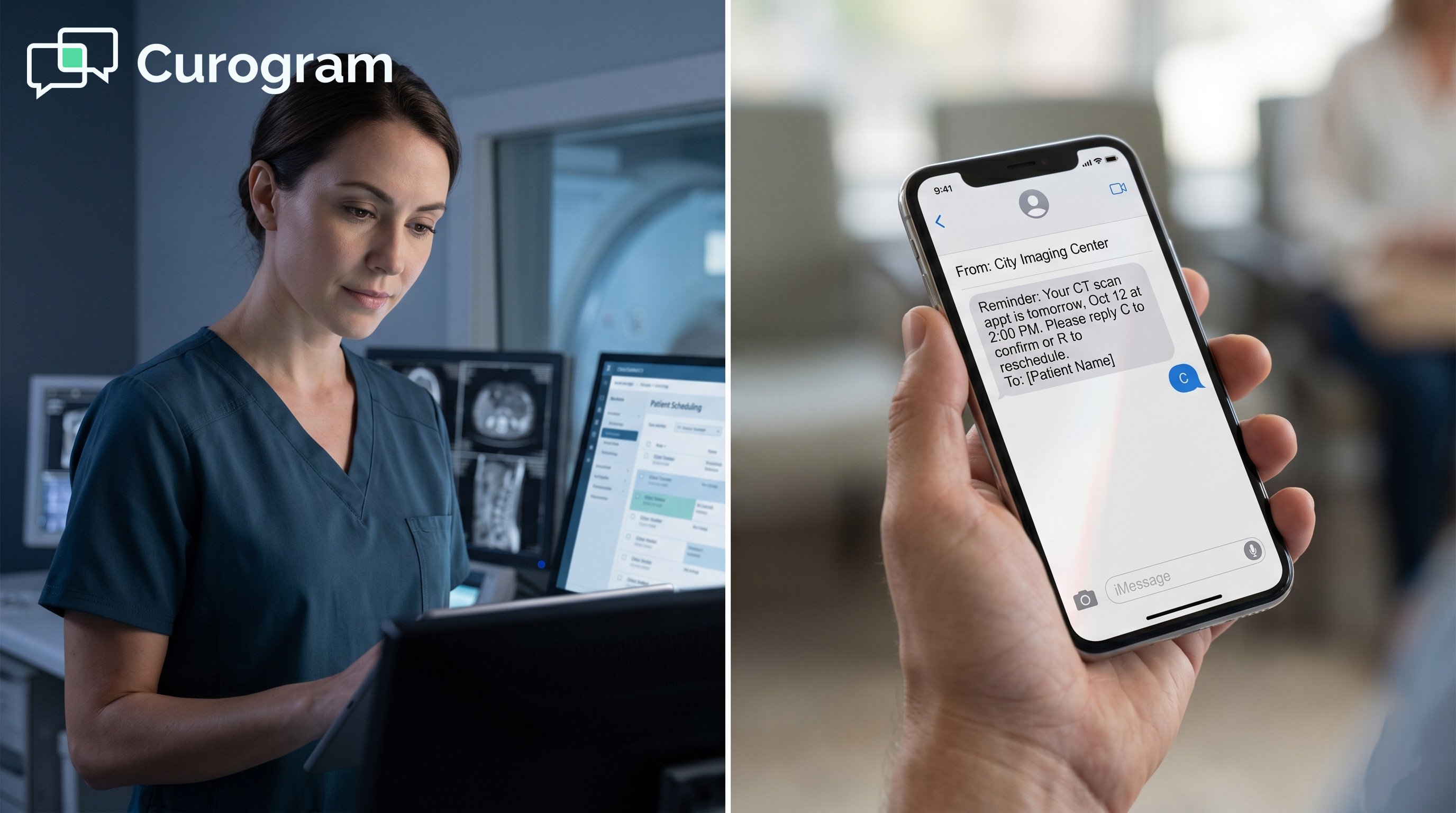
Curogram offers real-time SMS between staff and patients. The platform supports confirmations, check-ins, MAT reminders, and post-discharge outreach. All messages route through a HIPAA-compliant system with full logging.
Patients get a normal text on their normal phone. No app to download. No portal to log into. They reply like they would to a friend.
Text messages carry a 98% open rate. Compare that to email, which often sits unread for days. For high-acuity care, that speed gap matters.
How Opus EHR Communication Integration Works in Practice
Curogram lines up with Opus through smooth Opus EHR communication integration. Schedules, patient lists, and contact info sync in. Reminders, confirmations, and replies flow back out.
Staff do not toggle between five tools. The Curogram inbox sits open next to Opus. Front desk teams can pick up Curogram in under 10 minutes. Implementation takes days, not months.
Built for 42 CFR Part 2 Compliant Messaging Opus Teams Trust
SUD programs work under stricter privacy rules than standard HIPAA. That is where 42 CFR Part 2 compliant messaging Opus practices need really matters. Curogram was built with these rules in mind.
Every message is encrypted. Access is role-based. Audit logs are clean and exportable. Curogram is also SOC 2 certified, which adds a second layer of trust for boards and auditors.
Why Secure SMS for Addiction Treatment Practices Has to Be Different
Secure SMS for addiction treatment practices is not the same as generic patient texting. The patient population is more fluid. The legal bar is higher. The clinical risk is sharper.
Curogram meets people where they are. A patient with a prepaid phone still gets the reminder. An alumnus who moved last month still gets the check-in. That is the point of HIPAA texting for SUD treatment programs done well.
This is not automation pushing out the human touch. It is tech making sure the human touch lands. The counselor still cares. The text just makes sure the patient knows it.
The Success: The Connected Program
When the text line works, the program shifts. Front desk hours open up. Census stabilizes. Clinical staff stop chasing patients and start treating them.
This is the connected program. Every patient is one text away from their team, from intake to alumni.
The Numbers Behind The Connected Program
Based on our internal data, Curogram psychiatry clients see an 11.03% no-show rate vs. the 23% industry average. That is a 52% drop. For programs serving high-acuity patients, the margin is huge.
Atlas Medical Center cut no-show rates from 14.20% to 4.91% in just three months. That is 3X better than the industry mark. Atlas is a Curogram client case study approved for external sharing.
Here is how the numbers stack up against industry norms:
|
Metric |
Industry Average |
Curogram Clients |
|---|---|---|
|
Psychiatry No-Show Rate |
23.00% |
11.03% |
|
Atlas Medical Center No-Show Rate |
14.20% (start) |
4.91% (3 months) |
|
Appointment Confirmation Rate |
Varies widely |
>75% |
|
SMS Open Rate |
~20% (email) |
98% (text) |
Source: Curogram client data from clinical settings.
Revenue Recovered When the Text Line Works
For an IOP program losing $60,000 to $96,000 a month to no-shows, even a modest gain matters. A 25% drop in no-shows can pull back $15,000 to $24,000 in monthly revenue. The ROI math is short and clear.
Each recovered slot is a patient who got care that day. It is also a billable session that the program would have lost. Both wins land in the same workflow.
Census Stability Across the Continuum of Care
Patients move through levels of care often. Detox to residential. Residential to PHP. PHP to IOP. IOP to outpatient. Each step is a chance to lose contact.
A reliable text at each step keeps patients on track. Curogram clients also see a strong alumni response. Based on our internal data, 35% of patients who got an SMS recall scheduled a follow-up within a month.
A Day in the Life of a Connected Opus EHR Practice
By 9 AM, every IOP patient for the afternoon group has been texted. About 85% have replied. The clinical director knows the group will run.
The MAT coordinator sent medication reminders to 20 patients. Eighteen acknowledged. The admissions team texted intake links to three new referrals. Two have already finished their paperwork.
Phones are quiet. Staff are present. The census is stable. The communication layer is finally working as hard as the clinical team.
Conclusion: Give Your Opus Practice the Text Line It Deserves
Opus EHR is built for the clinical side of behavioral health. The notes, the prescribing, the billing, the audits. All of that lives in Opus, and most teams do not want to move it.
The gap is the text layer. The native Messenger was a nice idea on paper. In the field, it sends reminders at 3 AM and drops two-way replies.
For an SUD program, that is not a small bug. It is the difference between a full IOP group and a half-empty one. It is the gap between a steady MAT schedule and a missed dose.
Curogram fixes that gap. HIPAA-compliant two-way texting for Opus EHR behavioral health practices is not a luxury add-on. It is the missing piece that lets the clinical work pay off.
Texts go out on time. Replies come back into a clean inbox. The audit trail is intact. Patients get a normal text on a normal phone.
The numbers back it up. An 11.03% no-show rate vs. a 23% industry average. Atlas Medical Center cutting no-shows by more than half in 90 days. A 98% SMS open rate that beats every email tool out there.
Most of all, the day-to-day shifts. Front desk staff stop chasing patients by phone. Counselors walk into full groups. Alumni respond to a check-in instead of fading into the gap.
If your Opus practice is still leaning on the native Messenger, you already know the cost. The dropped messages. The late reminders. The hours lost to voicemail.
The next step is simple. See what reliable, compliant texting looks like in your own workflow. A 15-minute walkthrough is enough to show the shift.
Book a demo with Curogram today. See two-way texting integrated alongside Opus EHR in a live setting.
Frequently Asked Questions
Curogram sits next to Opus rather than replacing it. Clinical notes, prescribing, and billing stay in Opus. Curogram handles the SMS layer through Opus EHR communication integration. Staff can learn the inbox in under 10 minutes.
Part 2 sets stricter privacy rules than standard HIPAA for SUD care. It limits how patient info can be shared, even within a care team. Curogram is built to meet those rules. That is why 42 CFR Part 2 compliant messaging Opus programs trust looks different from generic patient texting.
Setup takes days, not months. There is no server install, and no IT lift. Most practices roll out with a short kickoff call and a training session. Staff pick up the inbox quickly because it works like normal texting.
Patients in recovery often have prepaid phones, lost devices, or shifting numbers. App downloads and portal logins add friction at the worst time. A plain text meets them where they are. Secure SMS for addiction treatment practices removes the steps that cause drop-off.
Reliable reminders land on time. Patients can reply with a quick word to confirm or reschedule. Staff see the responses in one inbox and act on them fast. Based on our internal data, this is how Curogram clients hit an 11.03% no-show rate vs. the 23% industry average.