
9 min read
Patient Texting for Opus EHR: No App, No Portal, No Recovery Barrier
Jo Galvez
:
May 22, 2026
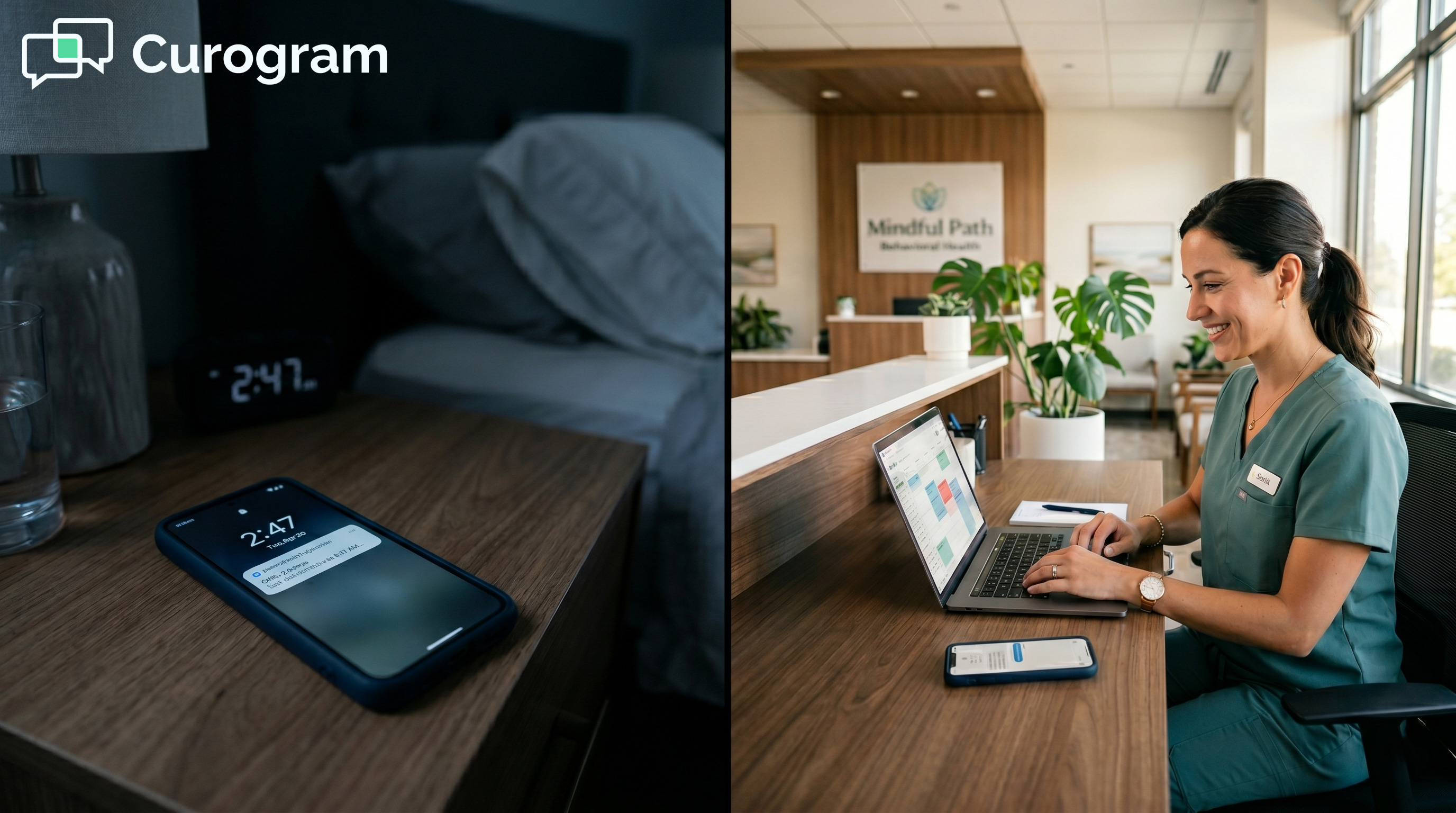
Curogram works alongside Opus EHR to send two-way, 42 CFR Part 2-compliant text messages straight to a patient's phone. There is no app to install. There is no password to recall. There is no portal screen to face.
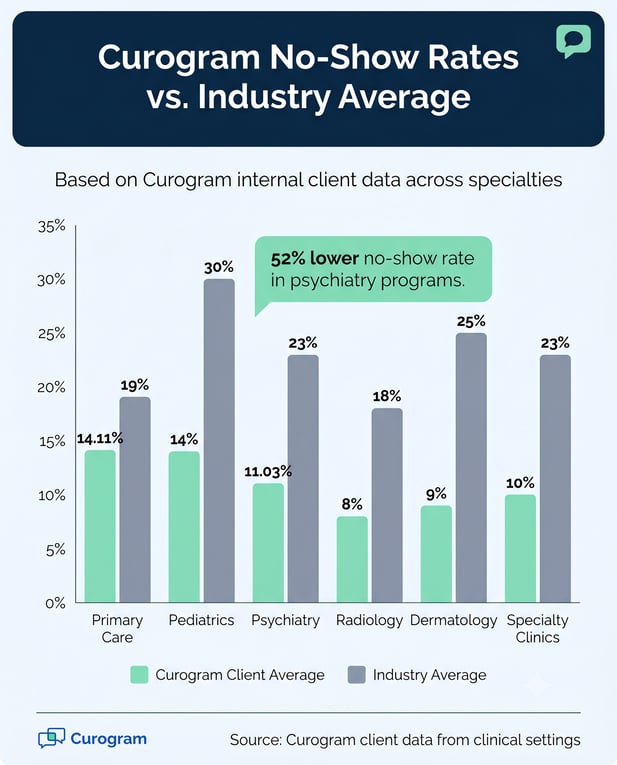
Based on our internal data, practices using Curogram see psychiatry no-show rates of 11.03% versus the 23% industry average. When the message lands where the patient already lives, the patient shows up.
A patient in their first week of detox is not thinking about app stores. They are thinking about getting through the next hour.
Yet many behavioral health programs still ask these patients to download software, create logins, and remember passwords just to confirm a group session.
This mismatch is quiet but costly. Opus EHR gives behavioral health teams strong clinical tools for intake, charting, and billing.
But the patient-facing layer often relies on portals or apps that this population cannot reliably keep. A login screen becomes a locked door.
The result is a slow drift away from care. A patient steps down from residential to IOP and changes phones along the way.
The reminder for their first group never reaches the new number. Staff marks the chart “no show, no contact.” The patient did not choose to drop out; the system simply stopped reaching them.
SUD patient communication SMS no portal is not a fancy add-on. It is the bridge that keeps care moving when the patient's life is in flux.
Text messages reach the phone the patient is actually holding today, not the device they had at intake.
This article looks at why the app barrier hurts recovery, how a two-way SMS layer fixes it, and what changes when every patient is one text away from their team.
We will also share what Curogram client data shows about reach, response, and retention. The goal is simple. Meet patients where they are, not where the software wishes they were.
The Villain: The App Download Barrier
The biggest hidden threat to recovery care is not clinical. It is the layer of friction patients face before they can even see a message.
Behavioral health patient texting no app required removes that friction at the source. This section walks through how the barrier forms and why it quietly drains your panel.
The Reality of App-Based Patient Messaging
Opus EHR was built for behavioral health and SUD treatment. It handles intake, charts, e-prescribing, and billing well. The patient-facing side, though, leans on tools that assume a stable user.
The portal needs a login. The Messenger needs the Opus system to be running smoothly, which user feedback suggests is not always the case.
Any app-based channel asks patients to install software, set up an account, and keep that app on a phone they may not have in three months. For a person in early recovery, each of these steps is a wall.
The Patient Journey Problem
Picture a patient entering a 30-day residential program. They give a phone number and an email at intake. Over the next month, they stabilize and step down to PHP, then IOP.
Between admission and step-down, that phone is often gone. The old number was tied to people and places from active use.
The new phone is a fresh start, but the program's app is not on it. The patient never opened the portal during detox, because an app download was the last thing on their mind that week.
The Drop-Off Hidden in the Numbers
SUD programs report outpatient no-show rates of 30 to 50%. Portal adoption in behavioral health lags far behind general medicine. For every patient who checks the portal, several have never logged in at all.
Some of those patients have credentials tied to a phone number they no longer use. When your communication depends on tech the patient cannot keep, you are not reaching close to half of your panel. These are not disengaged patients. They are patients the system has quietly shut out.
What the Clinical Director Actually Sees
The app barrier never shows up as “app barrier” in a report. It shows up as a chart that reads “stopped attending IOP after residential.”
It shows up as a MAT patient who missed two med checks and then vanished.
It shows up as an alumnus who never replied to a 6-month check-in. The clinical team sees disengagement.
The real cause is a broken communication path. In addiction care, where the gap between engagement and relapse can be days, a tech barrier is a clinical one.
The Cost of a Locked Door
Each missed group is a missed chance to catch a warning sign. Each unread reminder is a missed dose, a missed coping skill, a missed peer connection.
The cost of low-friction patient communication substance use disorder programs do not have is paid in relapse and lost lives, not just lost revenue.
Based on our internal data, SUD programs with high no-show rates can lose 60,000 to 96,000 dollars in monthly revenue.
The deeper cost is harder to count. It is the alumni who would have stayed in touch if the message had simply arrived.

The Guide: The Zero-Friction Lifeline
Once you see the barrier, the fix is clear. The channel must be one the patient already uses every day, with no setup and no learning curve.
This section shows how text-based recovery support Opus EHR teams need works in practice.
A Channel That Needs Zero Setup
Curogram acts as a zero-friction lifeline for behavioral health patients. It is a two-way texting tool that reaches patients through the one thing they always have nearby. A standard SMS thread on whatever phone they carry today.
There is no app to install. There is no portal to log into. There is no account to create. The patient gets a text. They reply. The thread is captured in Curogram, encrypted, compliant, and tied to the Opus EHR workflow.
What Patients Actually Receive
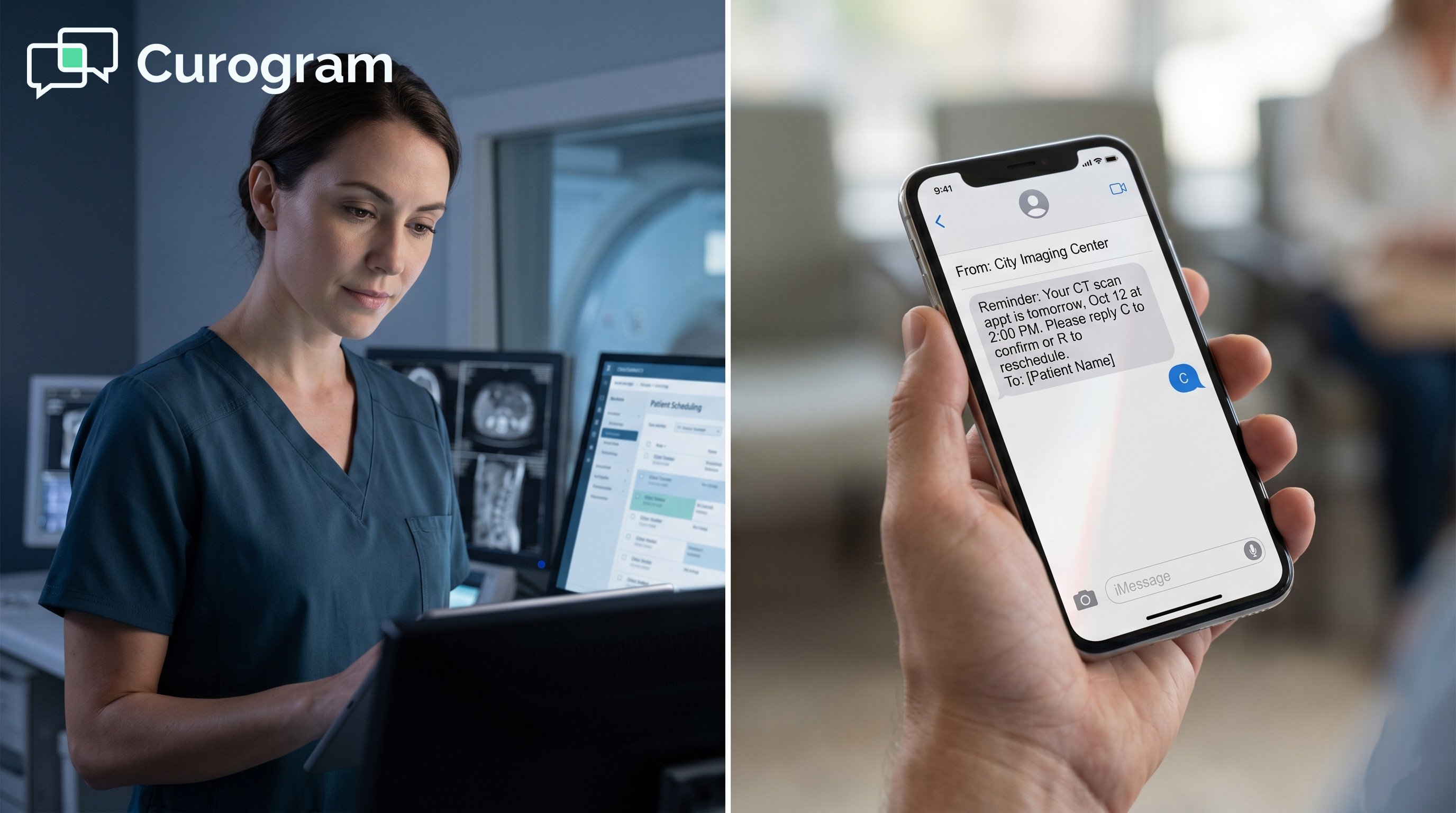
Curogram sends the full range of patient messages through plain SMS. That includes appointment confirms, group reminders, med management alerts, intake form links, payment links, and post-discharge check-ins.
From the patient's view, it is just a text. The same screen they use to talk with friends and family. For a person juggling the demands of recovery, that ease is not a perk. It is a clinical need.
How It Fits Alongside Opus EHR
Curogram is invisible to the patient. They simply get a text from their treatment program. Behind the scenes, Curogram works with Opus EHR so the message data lines up with the clinical record.
When a patient confirms a session by text, staff see it in the system. When a patient fills out an intake form sent by SMS link, the data flows into the practice workflow.
The patient never needs to know there is a platform behind the text. They just need to know their team is one message away.
Built for the Recovery Population
42 CFR Part 2 patient messaging Opus programs require is not a nice-to-have. It exists because SUD records carry real risk of harm. Discrimination in jobs, housing, and insurance can follow a leak.
Curogram's secure messaging meets that higher bar. The channel itself respects the privacy that the patient's chart already carries.
For patients who feel stigma about treatment, knowing their messages are protected at the federal level lowers a barrier no portal redesign can fix.
Why Familiarity Is a Clinical Tool
A patient in early recovery is managing a heavy cognitive load. New routines, new meds, new emotions. Asking them to learn a new app on top of all that is asking too much.
A text thread asks nothing new. The skill is already there. That is why Opus EHR patient engagement addiction treatment programs see better reach when the channel matches what the patient already knows.
Quick View: App Channel vs. SMS Channel
|
Step |
App or Portal |
Curogram SMS |
|---|---|---|
|
Setup |
Download, install, create account |
None |
|
Login |
Password each time |
None |
|
Phone change |
Re-install, reset password |
Update number in staff view |
|
Patient effort |
High |
Reply with one word |
|
Reach for SUD panel |
Low |
High |
The Success: The Patient Who Shows Up
When the channel works, the rest of the program works. Attendance rises, recall outreach lands, and alumni stay in touch. This section looks at what changes when SMS is the main line into your patient panel.
The Numbers Tell the Story
Text messages carry a 98% open rate. Portal notes, by contrast, are missed by a large share of behavioral health patients. The gap is not small. It is the gap between reaching your panel and missing it.
Based on our internal data, Curogram psychiatry clients see no-show rates of 11.03% versus the 23% industry average.
That is a 52% drop. Atlas Medical Center cut no-shows from 14.20% to 4.91% in three months, which is 3X better than the industry average.
Why Reach Drives Attendance
When the message reaches the patient through a channel they actually use, the attendance follows. A reminder that arrives in the same inbox as a text from their sponsor or their mom is far more likely to be read.
A reply takes one tap. Confirmation is no longer a barrier. It is a habit.
Meeting Patients Where They Are
The shift here is real and personal. The IOP patient gets a text confirming tomorrow's group at the right hour, from a number they know, in the same thread they use all day. The MAT patient sees a medication reminder within minutes of delivery.
The alumni get a check-in text six months out that takes five seconds to reply to. Based on our internal data, 35% of patients who get recall messages book a follow-up. The system stops filtering for tech-savvy patients and starts reaching all patients.
A Day in the Life of a Connected Patient
A new IOP patient gets a text with intake forms two days before their first group. They fill them out on their phone in a waiting room. No portal login needed.
The day before each session, they get a confirm text and reply with a thumbs-up. When they step down to outpatient, a text shares the new schedule and names their new counselor.
Six months after discharge, a message arrives. “Checking in, how are things going?” They reply. The thread holds.
What This Means for the Program
For the clinical director, this is the metric behind the metric. Better attendance means better continuity. Better continuity means better outcomes. None of it works without reach.
For staff, the change is just as real. Fewer hours on the phone chasing patients who never answer. More time spent in clinical work that actually moves the needle.
Quick View: Reach Outcomes
|
Metric |
Industry Average |
Curogram Client Average |
|---|---|---|
|
Psychiatry no-show rate |
23% |
11.03% |
|
SMS open rate |
Varies, low for app |
98% |
|
Recall to booking |
Low |
35% |
The pattern is steady across specialties. When SMS replaces app-based outreach, the panel becomes reachable again.
Conclusion: Reach Every Patient, Not Just the Ones Who Downloaded the App
The app barrier is one of the quietest threats in behavioral health care. It hides inside dashboards that look fine on paper. It only shows up when you look at the patients you stopped hearing from.
Curogram removes that barrier. It replaces portal-based and app-based messages with direct SMS that reaches every patient on the phone they have today. No setup, no login, no install.
Opus EHR is for your clinical records. The treatment plans, the prescriptions, the notes that drive recovery.
Curogram is for the patient's path back to you. The text that keeps them in care through every phone change and every moment of doubt.
The numbers back this up. Based on our internal data, practices using Curogram see psychiatry no-show rates 52% lower than the industry average.
Patient recall messages bring 35% of patients back for a follow-up. The reach is real, and it is steady across specialties.
The clinical case is just as strong. A reliable channel means fewer missed groups, fewer missed doses, and more chances to catch early warning signs.
In addiction care, those moments matter. They are often the difference between staying in care and slipping out of it.
For staff, the gain is just as clear. Less time on dead-end phone calls. More time on clinical work. The communication layer finally matches the intensity of the program.
Your patients did not choose addiction. Do not let an app download choose whether they stay connected to treatment. The barrier is invisible to the system, but it is very real to the patient sitting on the other side of it.
If you run a program on Opus EHR, the next step is simple. See what a single text can do that a portal never could.
Book a demo with Curogram. In 15 minutes, you will see how one text message replaces every portal login, every app install, and every communication wall standing between your patients and their care.
Frequently Asked Questions
Curogram is built for SUD communication, not retrofitted for it. Part 2 sets a higher bar than HIPAA alone, limiting disclosure of SUD records even in cases HIPAA would allow.
Our platform is HIPAA-compliant, SOC 2 certified, and meets Part 2 rules end to end. Patient messages stay protected at the highest federal standard.
SMS lives where the patient already lives. It is the same thread they use with family, sponsors, and peers, so it does not ask them to learn anything new. Portals demand setup, login, and recall under stress, which is hard for any patient in early recovery. Text removes those steps and lets the patient reply with one tap.
Phone changes are common in this population, and the platform is built for that reality. Staff updates the new number in Curogram, and messages flow to the new device right away. There is no app to reinstall, no account to rebuild, and no password to reset. The channel is tied to the phone number, not to an install, so it bounces back fast.
Curogram supports standard SMS opt-out, so patients can reply STOP at any time to pause messages. Opt-in and opt-out tracking is built into the platform and meets TCPA rules.
Staff can also adjust message types per patient inside Curogram. Patient choice stays in patient hands, which is both clinically right and legally required.
Patients in early recovery often face unstable housing, frequent phone changes, and heavy cognitive load. Each of those factors makes app-based tools fragile.
A login screen is a small task for a stable user and a wall for a patient in detox. SMS sidesteps all of it, which is why reach in this group jumps when the channel changes.