Tebra Text-to-Pay: SMS Payment Links That Collect Faster
💡 Tebra text-to-pay powered by Curogram sends patients an SMS payment link so they can settle balances in two taps — no portal login needed. ...
10 min read
Mira Gwehn Revilla
:
July 10, 2026
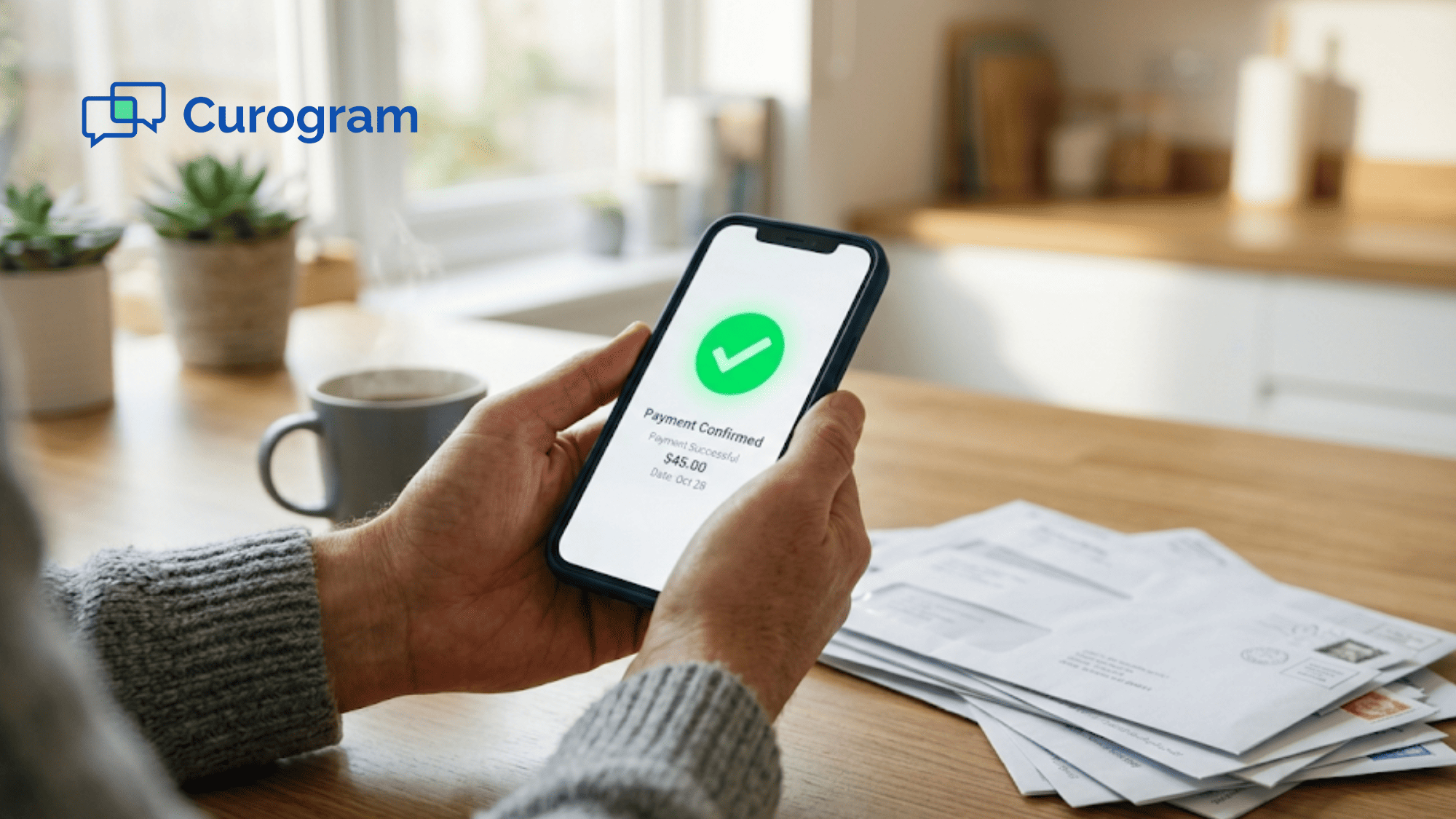
A $45 copay shouldn't need three mailed statements to collect. Yet that's how plenty of balances get chased in a busy CureMD practice.
The charge posts cleanly. The patient leaves. And the money sits, because paying it means logging into a portal the patient forgot they had.
CureMD can take that payment. Its Patient Portal offers bill pay, and its AI Contact Center can run a card over the phone.
Both work. Both also wait on the patient to act first, by signing in or picking up. For the many patients who never take that step, the balance just ages: 30 days, then 60, then 90.
That gap is where money leaks. The practice earned the revenue. Collecting it just takes more patient effort than a small balance seems worth. So staff mail statements and leave voicemails for amounts smaller than the cost of chasing them.
There's a simpler path, and it uses a channel patients already answer. Curogram sends a secure payment link by text, dropped into the same conversation where patients confirm their visits. They tap twice and pay. No login, no app, no statement in the mail.
This is a collection problem, not a billing problem. CureMD already knows what the patient owes. What's missing is an easy way for the patient to hand the money over.
When paying takes two taps instead of a login, more balances clear the day the link goes out, and billing staff stop mailing paper for amounts smaller than the postage.
CureMD handles billing well once a patient acts. Bill pay lives inside the Patient Portal, so the patient has to remember a login, find the balance, and check out. The AI Contact Center can take a card by phone, which helps the patients who call in.
Both channels share one catch: nothing collects until the patient signs in or dials. For a $200 specialty balance, that effort might feel worth it. For a $30 copay, most people put it off, and "later" quietly turns into never.
What's left is a balance the practice fully earned, parked behind a step the patient keeps skipping.
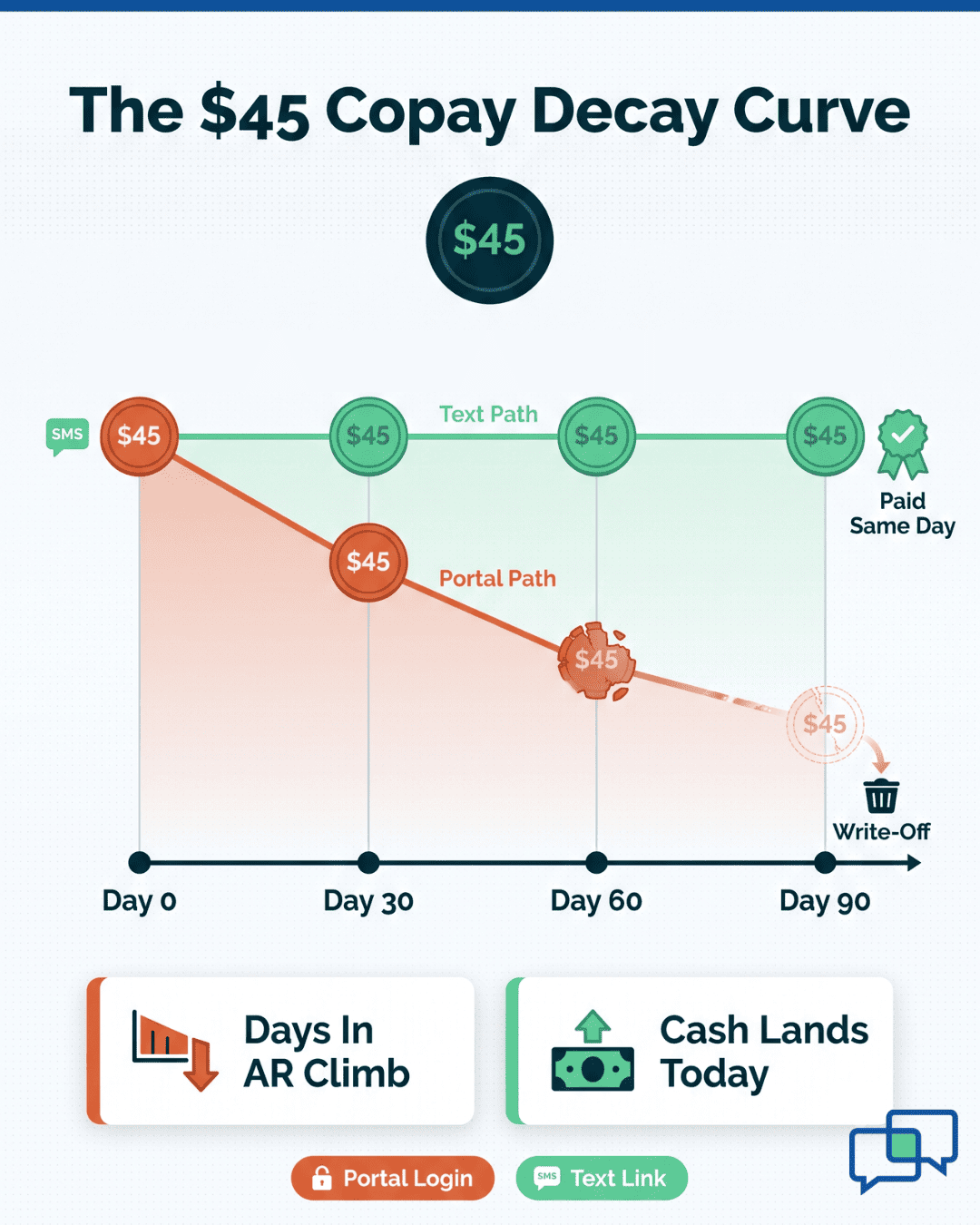
Take a routine follow-up with a $45 copay left unpaid at checkout. The front desk is slammed, so no one collects it in person. A portal reminder goes out. The patient sees it, means to pay, and closes the tab.
Two weeks later, a paper statement arrives and lands in a pile by the door.
By day 60, the balance has drifted into the awkward zone where staff debate whether a phone call is even worth the minutes.
By day 90, it's a write-off risk.
Nothing broke in CureMD. The charge is right and the record is clean. That money just never had an easy way to move from the patient's phone to the practice's account.
Put the two side by side, and the whole gap is one step. With portal bill pay, the patient logs in, hunts for the balance, and checks out. With a texted link, the patient taps and pays.
The comparison of CureMD text-to-pay vs portal bill pay comes down to how many patients finish, since both can process a card just fine.
Every extra step sheds people, and a login is the biggest step of all. Drop it, and the patients who meant to pay but never logged in finally do. That's the whole idea behind sending a link instead of asking for a sign-in.
Mailing statements is slow and costly for what it brings back. A typical paper-statement cycle runs about $800 to $1,000 a month once you count printing, postage, and staff time.
We're citing that as an illustrative industry range, not a Curogram measurement. And the return is thin: paper statements commonly recover only around 20% of what's owed.
So a practice pays real money every month to collect a minority of its balances, while the rest keeps aging.
Compare the three collection paths for a patient with a small balance:
|
Approach |
Patient effort |
Typical result |
|
Portal bill pay |
Log in, find the balance, check out |
Balances age when patients skip the login |
|
Paper statement |
Open the mail, send a check or call |
Recovers about 20% of what's owed (illustrative) |
|
Texted payment link |
Tap the link, tap to pay |
Paid from the phone, often the same day |
Specialties like rheumatology and gastroenterology see this every day. High-deductible plans mean patients owe more out of pocket, and those larger balances are the ones that stall.
A patient facing a $180 balance after an infusion visit isn't dodging the bill. They're waiting until it's convenient, and a portal login never feels convenient.
To reduce aged balances in CureMD for these patients, the practice needs a way to collect that doesn't hinge on the patient carving out time. A link they can tap from the couch beats a statement they'll "get to this weekend" and then quietly never do.
Every aged balance turns into a task for somebody. Billing staff print statement batches, stuff envelopes, and later work a call list for the balances that never came back.
Those minutes stack up against work that actually needs a person: verifying benefits, fixing claim rejections, answering patient questions. A $30 copay chased by phone can cost more in staff time than the copay is worth.
Collecting by text moves most of these small balances off the call list, so the people who could be solving billing problems aren't sealing envelopes instead.

Collection starts in a channel patients already read. Curogram sends a CureMD patient payment link by text, into the same thread where the patient got an appointment reminder and tapped to confirm.
They open the message, tap the link, and see the amount due on a clean payment page. One more tap with a saved or typed card, and it's done.
No username, no password reset, no app download. The path from notification to paid runs in well under a minute, on the device already in the patient's hand.
Patients already answer these texts. Across Curogram clients, the average appointment confirmation rate runs above 75%, based on our internal data. That number tells us people respond in the SMS thread when the ask is easy.
A payment link rides that same habit. It isn't a new inbox to check or a portal to remember. It's a reply in a conversation the patient is already having with the practice.
When the payment request shows up where the confirmation did, patients treat it as routine, and routine requests get handled fast. That familiarity is doing quiet work every time a link goes out.
Security here isn't bolted on afterward. The link opens a secure, PCI-conscious payment page, so card data is handled on infrastructure built for it.
Curogram's texting stays HIPAA-compliant under a signed BAA, which covers the messaging that carries the link. A secure SMS payment for a CureMD practice lets patients skip the login and still pay on a protected page.
For anyone who worries a texted link sounds risky, the detail that reassures is simple: the message holds a link, not card numbers, and payment happens on the secure page the link opens. Patients get speed, and the practice keeps the safeguards it needs.
Nothing here swaps out your billing system. CureMD keeps handling billing and revenue-cycle work, and Curogram adds the text-based collection channel on top. Picture it as the front door patients actually walk through, while CureMD stays the office where the accounting lives.
To collect patient balances alongside CureMD, staff send the link, often triggered right after a visit is marked complete, and the payment flows back into the practice's normal reconciliation.
There's no rip-and-replace and no new billing platform to learn. Patients get a simpler way to pay, and the back office keeps the system it already trusts.
Wording changes how fast people pay. Keep it short and human, with the practice name up front so it doesn't read like spam.
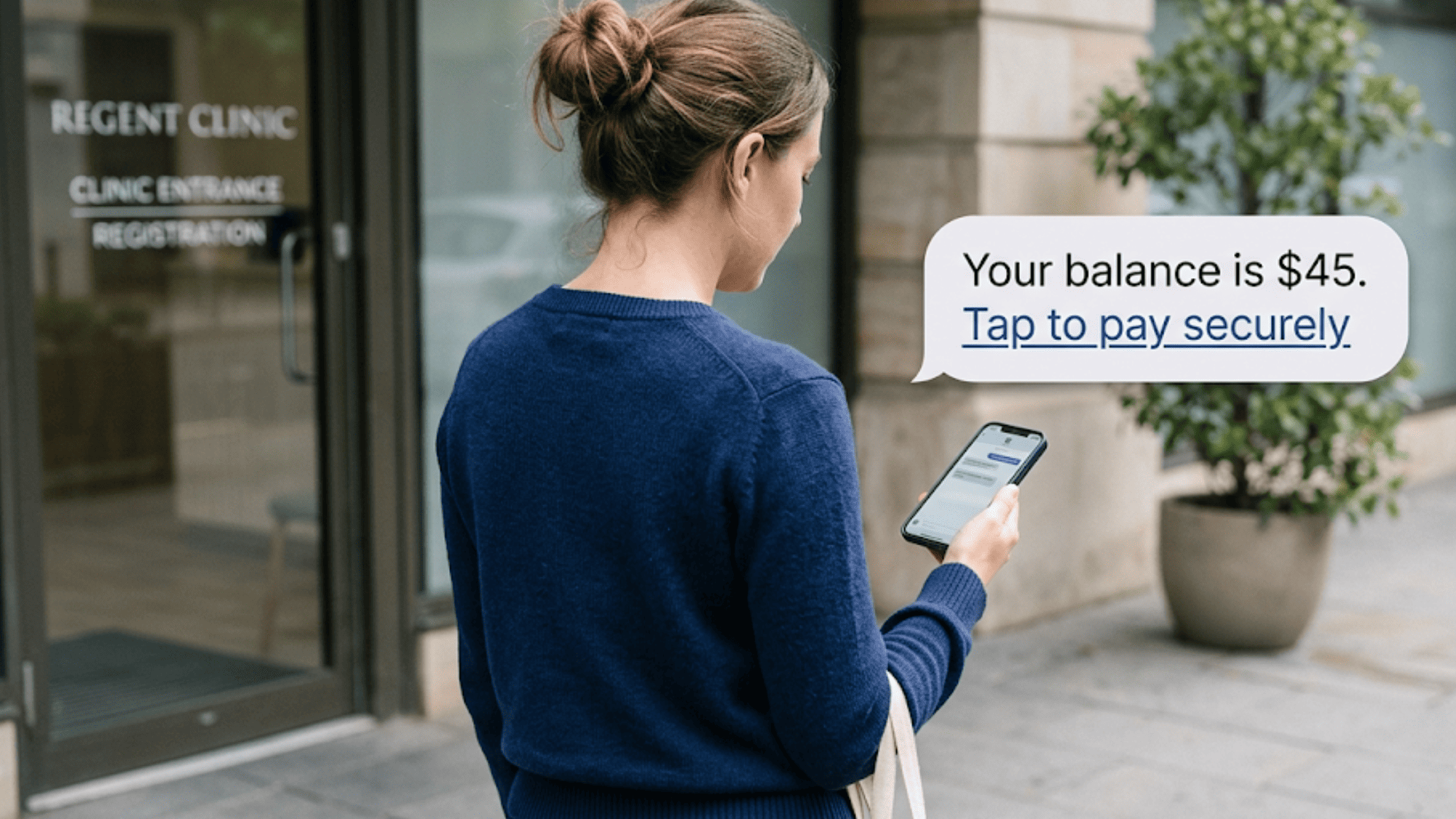
A line such as "Riverside Family Care: your balance is $45. Tap to pay securely: [link]" does the job.
Say the amount plainly. Name the practice. Give one link and nothing else to decode.
Long messages stuffed with account numbers and legal boilerplate get ignored, because they feel like the paper statement patients already tuned out. Patients pay fastest when they can read the whole thing in three seconds and act on it in the next thirty.
Timing decides how much you collect. The strongest moment is right at checkout, while the visit is fresh. Send the link before the patient leaves the parking lot, and many pay before they've merged onto the road.
For balances that surface after insurance adjudicates, send the CureMD patient billing text message as soon as patient responsibility is known. A short, plain note works best: the practice name, the amount, and the link.
Skip the jargon. Patients pay fastest when the message reads like a receipt, not a demand. A second nudge a few days later catches the ones who tapped away the first time. Most practices send that follow-up automatically, so no one has to remember it.
Walk one $75 balance through both paths. In the portal path, the patient gets a reminder, means to log in, forgets the password, requests a reset, gets distracted, and the balance ages.
In the text path, the same patient gets a message the afternoon of the visit. Each step runs like this:
The whole thing takes maybe 40 seconds, most of it typing a card number. No login ever stood between the patient and paying, so the balance never got the chance to age.
Run that same flow across a day's worth of visits, and the balances that used to trickle in over weeks start landing within hours. The patient barely notices the effort, which is exactly why they finish.
The shift shows up fastest in two places: how much of each balance you recover, and how long it sits in AR. A side-by-side makes the gap plain, and the second column is where the cash-flow difference lives.
|
Measure |
Statement and portal |
Texted payment link |
|
Recovery on small balances |
About 20% (illustrative) |
Paid in two taps |
|
Time to first payment |
Days to weeks |
Often the same day |
|
Statement mailing cost |
$800–$1,000 a month (illustrative) |
None |
|
Staff follow-up |
Print, mail, work a call list |
Send the link, done |
Money that used to sit for 60 days starts landing the same afternoon.
When most small balances clear on the day the link goes out, average days in AR drop, and the practice isn't floating patient responsibility for weeks. That's real cash-flow timing, not a rounding difference.
A clinic sending 200 balance texts a month, with a solid share paid same-day, gets a steadier weekly deposit instead of a lumpy statement-cycle trickle. Predictable cash is easier to plan payroll and rent around than a stack of aging paper.
Not every patient pays on the first text, and that's fine. A gentle reminder a few days later catches most stragglers, sent to the same thread so it reads as a follow-up rather than a fresh demand.
For the small group who still don't respond, staff get a clear signal: these are the accounts worth a phone call, instead of the entire list.
The link also gives patients a way to reply with a question, so a confused $60 balance becomes a quick text exchange rather than a missed payment. Sorting real payers from genuine questions this early keeps the aged-balance pile from ever forming.
Fewer aged balances means fewer chase tasks. Billing staff stop batching statements and working call lists for $30 copays.
That time goes back to work that needs judgment:
appeals
benefit checks
patient questions a text can't answer
Small balances now close with a single link sent at checkout, which is where collection belongs. The call list that used to run a page long shrinks to the handful of accounts that truly need a human touch.
Multiply the saved minutes across a month, and the hours add up. A biller who used to spend an afternoon a week on statement runs gets that afternoon back for work that moves claims.

Text-to-Pay sends a secure payment link by text and lets patients pay in two taps. There's no portal login and no app. The link lands in the same thread where patients already confirm appointments, so paying feels like part of a chat they're used to having.
The steps are short on purpose. A patient opens the text and taps the link. They see the amount due on a secure, PCI-conscious page. They enter or pick a card, then tap Pay.
Curogram's texting stays HIPAA-compliant under a signed BAA, so the whole exchange meets the same privacy bar as the rest of your patient texting.
It runs alongside CureMD instead of replacing it. CureMD keeps billing and revenue-cycle work.
Curogram adds the channel that reaches balances the portal-login step misses. Staff send the link at checkout, or once insurance settles what the patient owes, and payments flow back into the usual books.
Why does this collect so well? It leans on a habit patients already have. Across Curogram clients, appointment confirmation rates run above 75%, based on our internal data.
People clearly respond in the text thread when the ask is easy. A payment link uses that same habit, with no password to recover and no statement to open.
For high-deductible specialties and routine copays alike, the effort gap decides the outcome. A two-tap link clears today. A login gets skipped, and the balance ages. Text-to-Pay meets patients on the phone that's already in their hand.
CureMD can accept a payment. The harder part is getting patients to actually make one, and that's where a texted link earns its keep. Portal bill pay and phone payments both wait on the patient to log in or call. A payment link waits on nothing, because tapping it is easier than ignoring it.
Balances age for one plain reason: paying takes more effort than the balance seems worth. Take the effort away, and small copays stop drifting to 60 and 90 days. They clear the afternoon the link goes out, from the same thread where the patient confirmed the visit.
Your billing team feels the change too. Fewer statement batches, shorter call lists, and more time for the work that needs a person. Collection moves from a monthly mailing ritual to a quick send at checkout.
Stop mailing statements that barely pay off. Schedule a demo to see how a texted payment link clears CureMD balances the same day.
The link opens a secure, PCI-conscious payment page, so card data is handled where it belongs. Curogram's texting stays HIPAA-compliant under a signed BAA, letting patients pay safely without any portal login at all.
CureMD keeps billing and revenue-cycle work. Curogram adds the text-based collection channel on top, reaching the balances portal-login bill pay misses. Payments flow back into your normal reconciliation, with no billing platform to swap out.
Portal bill pay makes the patient log in, find the balance, and check out. A texted link skips all of that. It lands in the SMS thread patients already read, so they pay in just two taps.
CureMD collects only after the patient logs in or calls. Many patients never take that step for a small copay, so the balance sits and ages, even though the charge posted cleanly and the record is correct.
Send it at checkout while the visit is fresh, before the patient leaves the parking lot. For balances that appear after insurance settles, send the link as soon as the patient's responsibility is known.
💡 Tebra text-to-pay powered by Curogram sends patients an SMS payment link so they can settle balances in two taps — no portal login needed. ...
💡 DrChrono text-to-pay patient billing lets practices collect copays, balances, and past-due amounts through a single SMS payment link — no portal...
💡 Lytec text-to-pay sends SMS payment links for patient balances right to a patient's phone. Patients tap twice and pay, instead of waiting on the...