
Exa Imaging Center Text-to-Pay | Collect Patient Balances via Text
💡 Exa PACS RIS imaging center text-to-pay patient payment links fill the final gap in the radiology revenue cycle. Exa Billing handles claims. Exa...
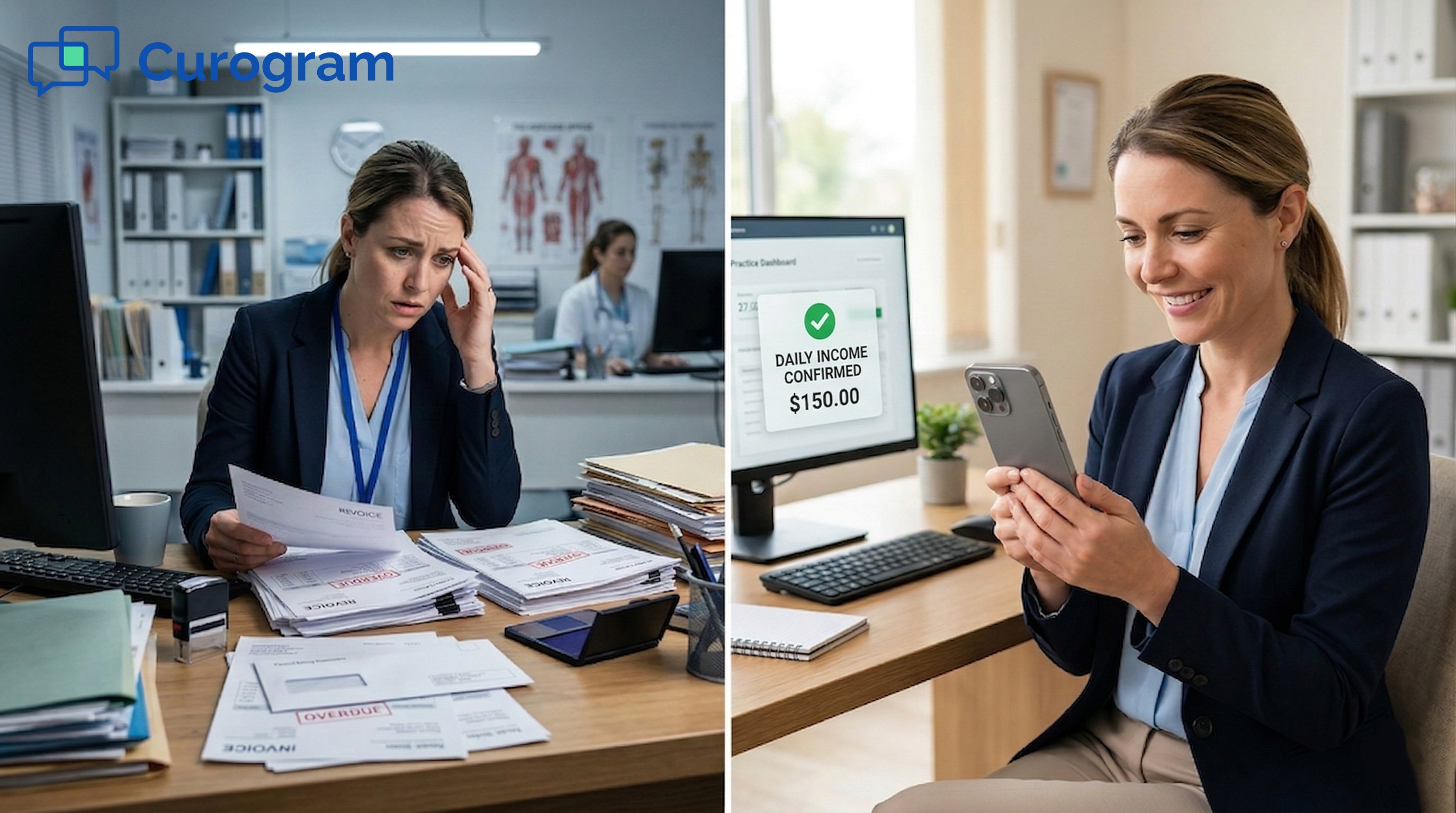
You saw the patient. You billed the visit cleanly. Then the balance slipped into a slow, quiet place. It sits in a mailbox, under junk mail, unopened.
This is the gap between doing the work and getting paid. Most practices try to close it in two ways. They mail a paper statement. Or they invite the patient to a portal.
Both paths lose people. Paper statements are slow and costly to send. They often return only a small slice of what you are owed. Every re-mail only adds cost while the balance keeps aging.
The portal sounds modern and clean. Yet most patients never log in. Many stall at the password screen and give up. The digital option misses the very crowd it was built for.
CollaborateMD gives your practice real billing power. It posts charges, tracks claims, and records what each patient owes. That record is exact and dependable. Still, a billing record is not a payment.
The money must travel from the patient's hand to your account. So the question is simple. How do you reach the patient where they already are?
The answer is the one place they check all day. Their text messages. That is the idea behind a text payment link. You send a short, secure link by SMS.
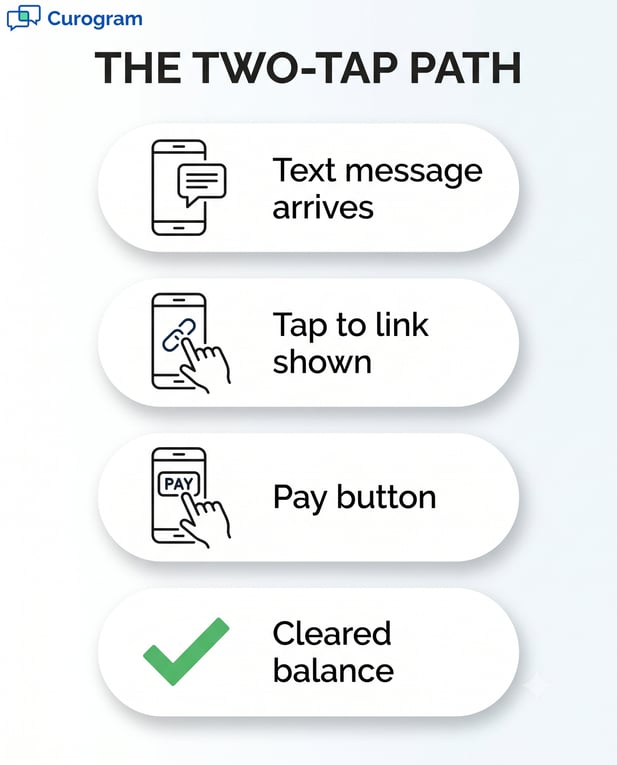
The patient taps it, taps to pay, and the balance clears. No app. No login. No stamp.
This guide walks through the whole shift. First, we name the problem that swallows balances. Then we show how text-to-pay for CollaborateMD practices collects them back.
Last, we look at what changes when money comes in, not mail out. You will see a faster way to collect that costs pennies to send. It reaches the patients your portal misses. And it helps close the revenue cycle you already started.
CollaborateMD ships with genuine, capable payment features built right in. Yet in daily practice, collection still rides on the portal or the mailbox.
Both of those channels quietly lose most patients before a single dollar moves. Here is exactly how each one leaks the money your practice has already earned.
The mailbox looks harmless, almost invisible, in your daily routine. In billing, though, it works like a quiet trap that swallows real money.
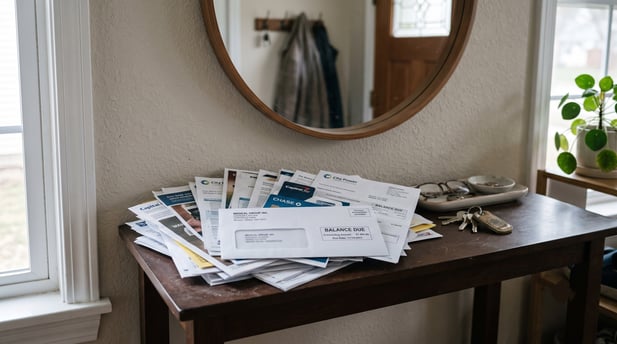
A printed statement leaves your office and lands in a growing pile of mail. Bills, ads, and glossy flyers stack up together on the kitchen counter. The envelope sits there, unopened and forgotten, while the balance keeps aging. So your staff prints and mails it again, then often a third and fourth time.
Paper billing is never cheap once you tally up every moving piece. Printing, envelopes, and postage all climb fast when you send them at volume.
A busy practice can spend $800 to $1,000 every month just on statements. Yet those mailed statements still often collect only about 20% of the balance.
Independent groups like the HFMA track the true cost to collect across the whole revenue cycle.
The patient portal promises a clean, modern, paperless option on paper. In real practice, it quietly asks the patient for far too much up front.
First, the patient has to find the portal invite buried in a crowded inbox. Then they must create a brand-new account and set a fresh password to keep.
Later, they have to recall that exact password just to pay one small bill. Each step is a place to quit, and a no-portal patient payment skips them all.
Portal use stays stubbornly, frustratingly low at the vast majority of practices. Often, fewer than 20% of your patients will ever choose to pay that way.
So your cleanest, most modern channel reaches the smallest possible crowd. The balance then drifts right back to paper, which collects little at high cost.

Curogram places the balance right where the patient already lives all day. That place is their text inbox, the one screen they check constantly.
The tool is called text-to-pay, and it stays refreshingly simple by design. Here is how it works and how it fits neatly into your CollaborateMD setup.
The whole payment flow fits inside a single, familiar text thread. There is truly nothing to install and nothing new for anyone to learn.
Curogram sends the patient a short SMS patient payment link billing message. It arrives from your practice's own real phone number, never a stranger's.
The patient taps the link once and immediately sees the exact amount due. One more tap clears the whole thing, and two-tap medical bill payment is done.
There is nothing at all to download and no fresh account to build. The patient gets to skip the invite, the signup, and the dreaded password.
That simplicity is the true heart of a no-portal patient payment flow. It is also how you collect patient balances by text in a matter of seconds.
Collecting a payment is really only half of the actual job. It also has to land in the right account without any extra manual steps.
With Curogram, each payment posts back through the CollaborateMD-connected workflow on its own. Your staff never has to match individual payments to accounts by hand.
That quiet automation saves real time on both sides of the front desk. The patient pays fast, and your books update cleanly without any manual entry.
Text-to-pay for CollaborateMD practices scales cleanly right alongside you as you grow. A single in-house office can switch it on with almost no effort.
A busy billing company can run it smoothly across every client it serves. One low-cost method then quietly collects for many separate practices at once.
Now picture the whole shift in plain, simple, everyday terms. Collection stops leaning on a stamp or a long-forgotten portal password.
It moves instead to the one channel your patients actually check every day. Here is what really changes when the money comes in, not the mail out.
|
Payment channel |
Who it reaches |
What it costs |
|---|---|---|
|
Mailed paper statement |
Often collects only about 20% of balances |
Roughly $800 to $1,000 a month |
|
Patient portal |
Fewer than 20% of patients log in to pay |
Free to offer, yet most never use it |
|
Text-to-pay link |
The four in five the portal tends to miss |
A few pennies per message sent |
How the three payment channels compare at a glance.
Name the shift out loud, and it suddenly gets easy to picture. You are moving your whole collection process from the mailbox to two quick taps.
The portal only ever serves the small share of patients who bother to log in. A single texted link, by contrast, reaches almost everyone else you bill.
Nearly every patient carries a phone and reads their text messages every day. So the payment request you send finally lands right in front of the right person.
A single text message costs a tiny fraction of one printed paper statement. There is no paper, no envelope, and absolutely no postage left to buy.
That is how practices reduce paper statement costs without losing any reach at all. You spend mere pennies to touch far more people than the mail ever did.
Speed alone changes the entire picture of your accounts receivable. Balances that move sooner simply stop weighing down your monthly books.
Many of your unpaid balances are not actually refusals at all. They are simply balances the patient never once managed to see.
The bill got buried in mail, or the portal login stopped them cold. Remove that single friction, and the payment you were rightly owed simply happens.
When more balances clear early, your aging A/R finally stops swelling. Fewer statements go out for a second or third expensive round.
Curogram does not replace your trusted, precise CollaborateMD billing record. It completes that record by collecting what you posted, so the cycle finally closes.

The gap in most billing is not the record. It is the last step, the actual collection. CollaborateMD posts the balance with care and precision. Curogram collects it by text in two taps.
Think about where balances go today. Some sit in a mailbox under a stack of mail. Others wait behind a portal, but the patient never finishes. Both channels miss most people and cost you time.
A texted link changes that story. It reaches four in five patients the portal skips. It costs a fraction of a stamp to send. And it clears the balances patients were willing to pay all along.
The two tools play different roles, and that is the point. CollaborateMD is for your billing record. Curogram is for their two-tap payment. Together, the revenue cycle actually closes.
This shift also eases the daily load on your front desk. Payments post back through the connected workflow on their own. No one matches receipts to accounts by hand for hours. The work gets lighter as collection gets faster.
Patients feel the difference too, and that matters. They pay a bill in seconds, from the couch, without a login. No password reset, no envelope, and no trip to the mailbox. A smoother payment leaves a better taste after the visit.
The channel behind the payment link matters too. It rides on 2-Way HIPAA-compliant texting, the same secure line you use for reminders. Digital intake follows the same no-portal model through secure online forms. Each one meets patients where they already are.
So here is the simple case. Stop mailing statements into a black hole that returns little. Start collecting where patients already spend their day. The balance you earned should reach your account, not a junk drawer.
You do not have to overhaul your whole system to do it. CollaborateMD keeps doing what it already does so well. Curogram simply adds the one channel that finally collects. The revenue cycle you started at last gets to finish.
Schedule a demo and see a patient pay a balance by text and watch it reconcile in CollaborateMD.
The link opens a secure, PCI-compliant payment page. No card numbers ever travel inside the text message itself. The whole exchange runs through a HIPAA-compliant channel. Patients pay safely without ever building a portal account.
The payment posts through the CollaborateMD-connected workflow on its own. Your staff does not match receipts to accounts by hand. Collection gets easier on both sides of the desk. The billing record stays accurate without extra manual work.
Most patients read their texts but skip the portal login. Many never open a mailed statement at all. A texted link lands where people already spend their day. So it reaches the four in five that the portal tends to miss.
Mailed statements are slow and easy to ignore. They sit unopened while the balance ages in accounts receivable. Practices often re-mail them, which adds cost without adding speed. The result is high spending and a low return.
One billing company can run text-to-pay for every client it serves. Each practice sends secure links from its own real number. Payments post back through each connected CollaborateMD workflow. That gives many practices a low-cost way to collect at once.
💡 Exa PACS RIS imaging center text-to-pay patient payment links fill the final gap in the radiology revenue cycle. Exa Billing handles claims. Exa...
1 min read
💡 AdvancedMD A/R recovery via text, powered by Curogram, lets billing teams send secure payment links to patients with open balances. Instead of...
💡 Text-to-pay patient billing for Modmed specialty practices lets you send a secure SMS payment link right after a visit. Patients tap, pay, and...