
CollaborateMD Text-to-Pay: Collect More, Mail Less
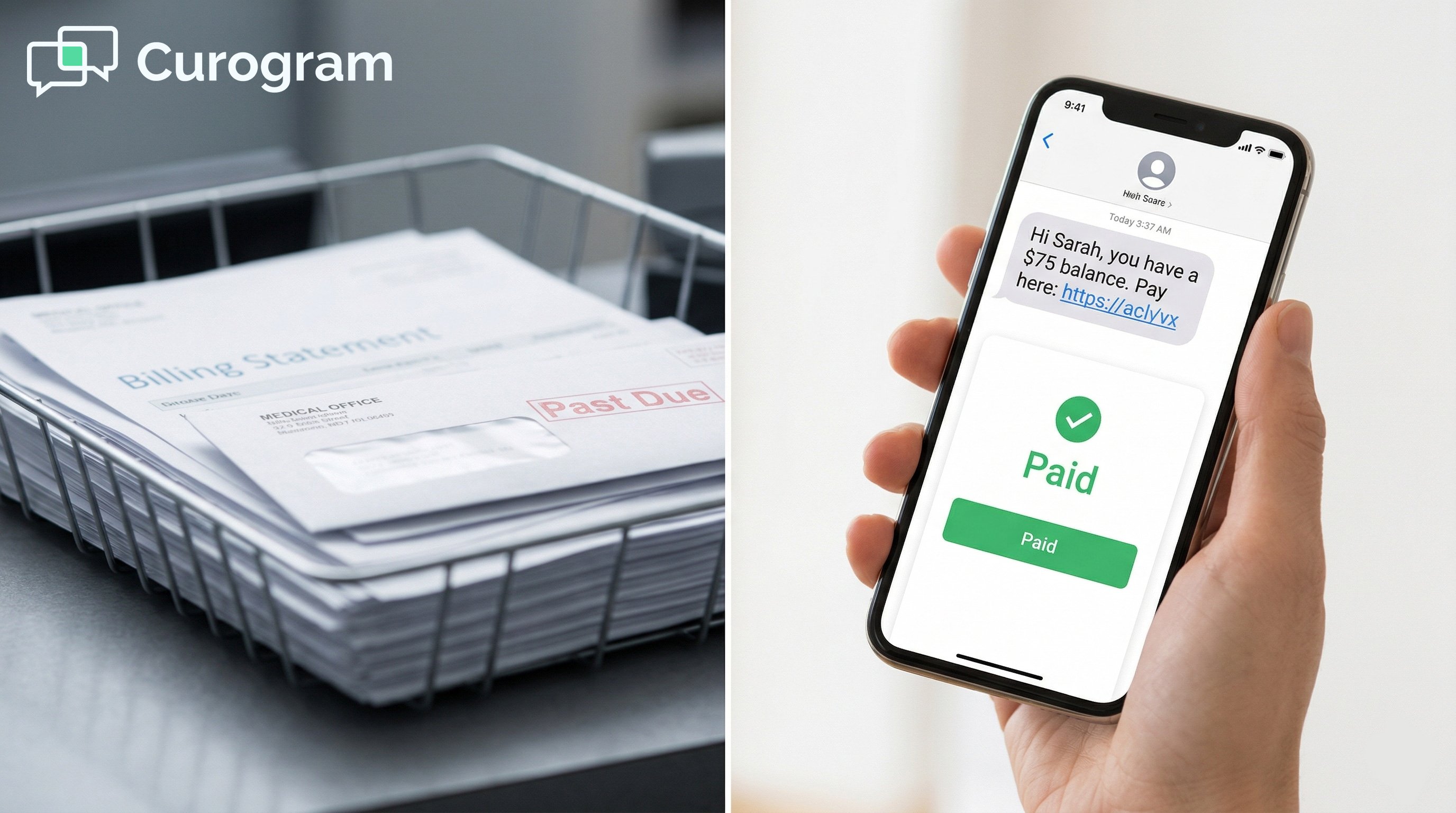
💡A CollaborateMD text-to-pay SMS payment link for patient balances turns an unread bill into a two-tap payment. The patient pays from their phone....
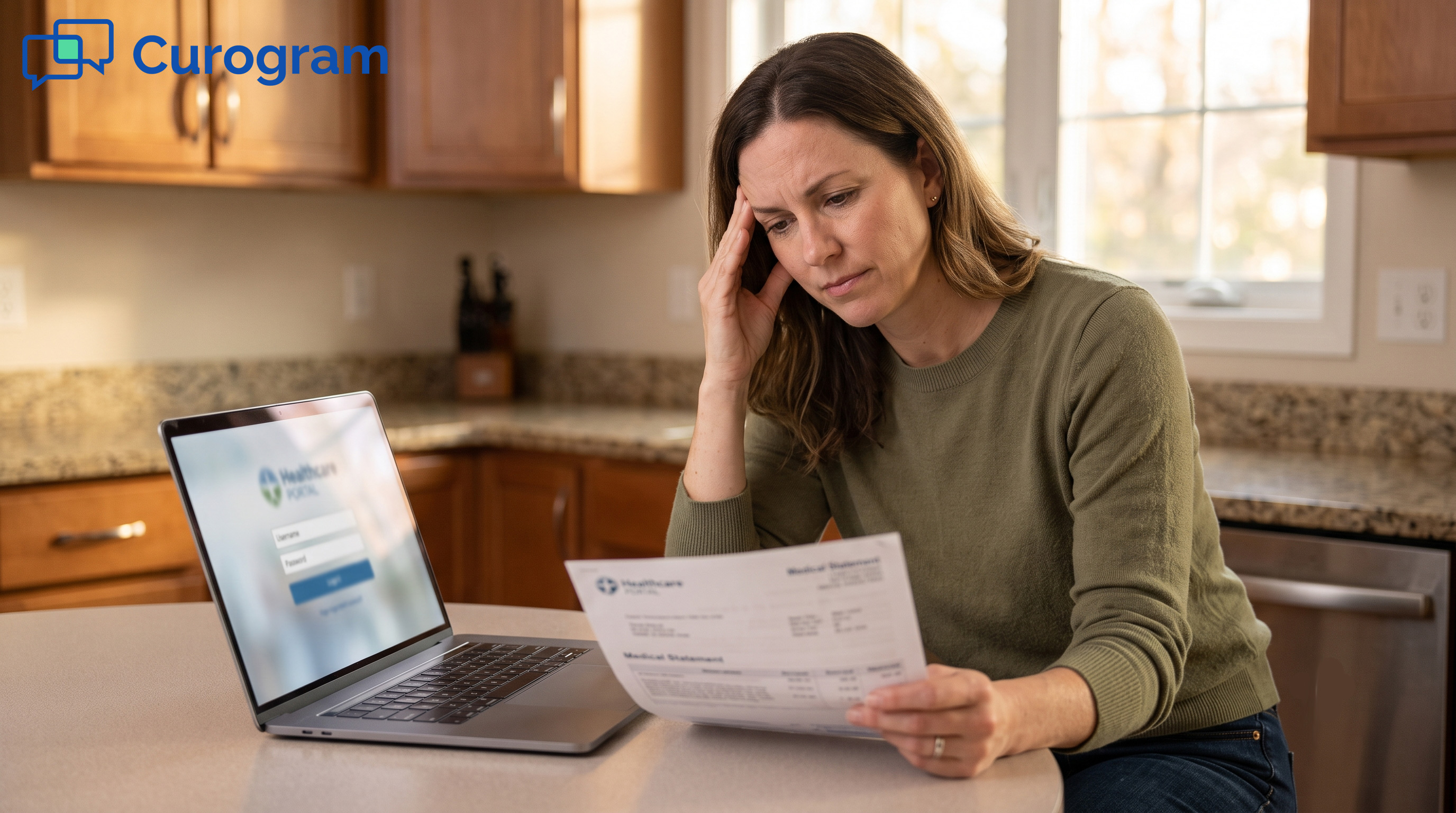
The statement lands in the mailbox. The patient means to pay it. Then the portal asks for a password set up months ago. They cannot recall it, so the bill gets set aside.
This plays out every day in busy practices. The care was great. The visit went well. Yet the last step, paying, hits a wall no one meant to build.
That wall is the portal login. It sounds small. For staff, it is one more click. For patients, it is a locked door they rarely open.
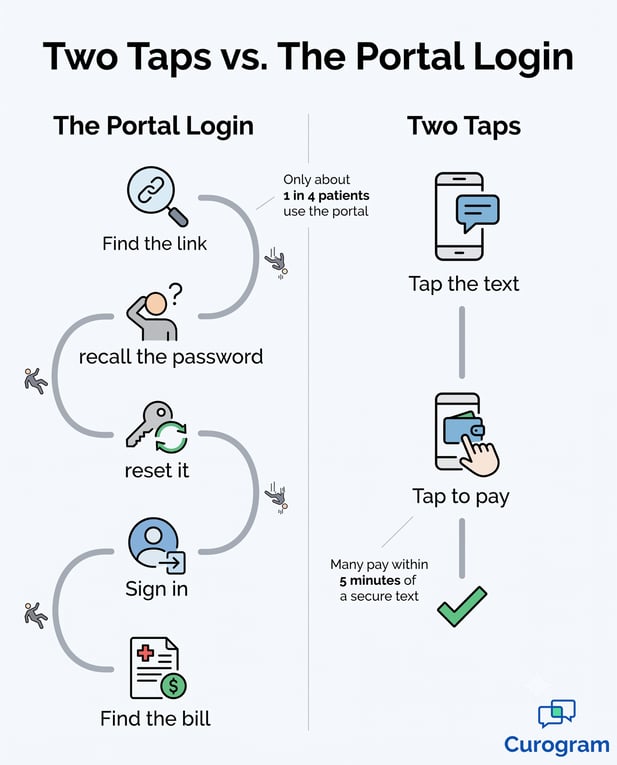
Here is the hard part. Most patients never log in at all. Real-world portal use often sits near one in four. So the bulk of your balances ride on a tool few people ever touch.
There is a simpler path. A texted link lets a patient pay a doctor bill by text link, right where they already are. No app or account needed. No trip to the post office.
This is what no login medical bill payment looks like. The bill shows up as a message. Two taps clear it. The friction that stalled payment is simply gone.
The care you gave built real trust. A clumsy bill can chip away at it. An easy one keeps that good feeling whole.
Curogram sends the link from the number your patients already know. It works beside CollaborateMD, not in place of it. This guide stays close to the patient and follows the bill from the patient's point of view, one tap at a time.
Below, we show why portals stall payment. Then how a two-tap text fixes it. Last, what shifts once paying feels easy for everyone.
Patients want to pay. The system just makes it hard. A portal login stands between the bill and the button. When that login trips them up, the balance stalls.
The portal was built for records, not payment. To pay online, a patient must sign in to a tool they rarely touch. That single step stops many of them cold.
The bill arrives with a link to the portal. The patient clicks it and gets a login screen. They cannot recall the password from a visit months ago.
So they hunt for a reset email. It does not come fast. The moment passes, and the bill waits. A checkbook and a stamp feel like just as much work.
Now the bill sits in limbo. The patient is not angry. They are just stuck. One forgotten password held up a payment they were ready to make.
This is not about refusal. The patient has the money and the intent. The tool simply put a gate in the way.
Every extra tap costs you a payment. The portal asks for effort before it asks for the card. Many patients quit before they reach the part that matters.
Count the steps a portal demands. Find the link, recall the login, then reset it. Only after signing in can they find the bill. Each step sheds a few more payers.
Good intentions fade fast. A bill set aside rarely gets picked back up. Over weeks, the friction turns into a write-off that the practice never planned for.
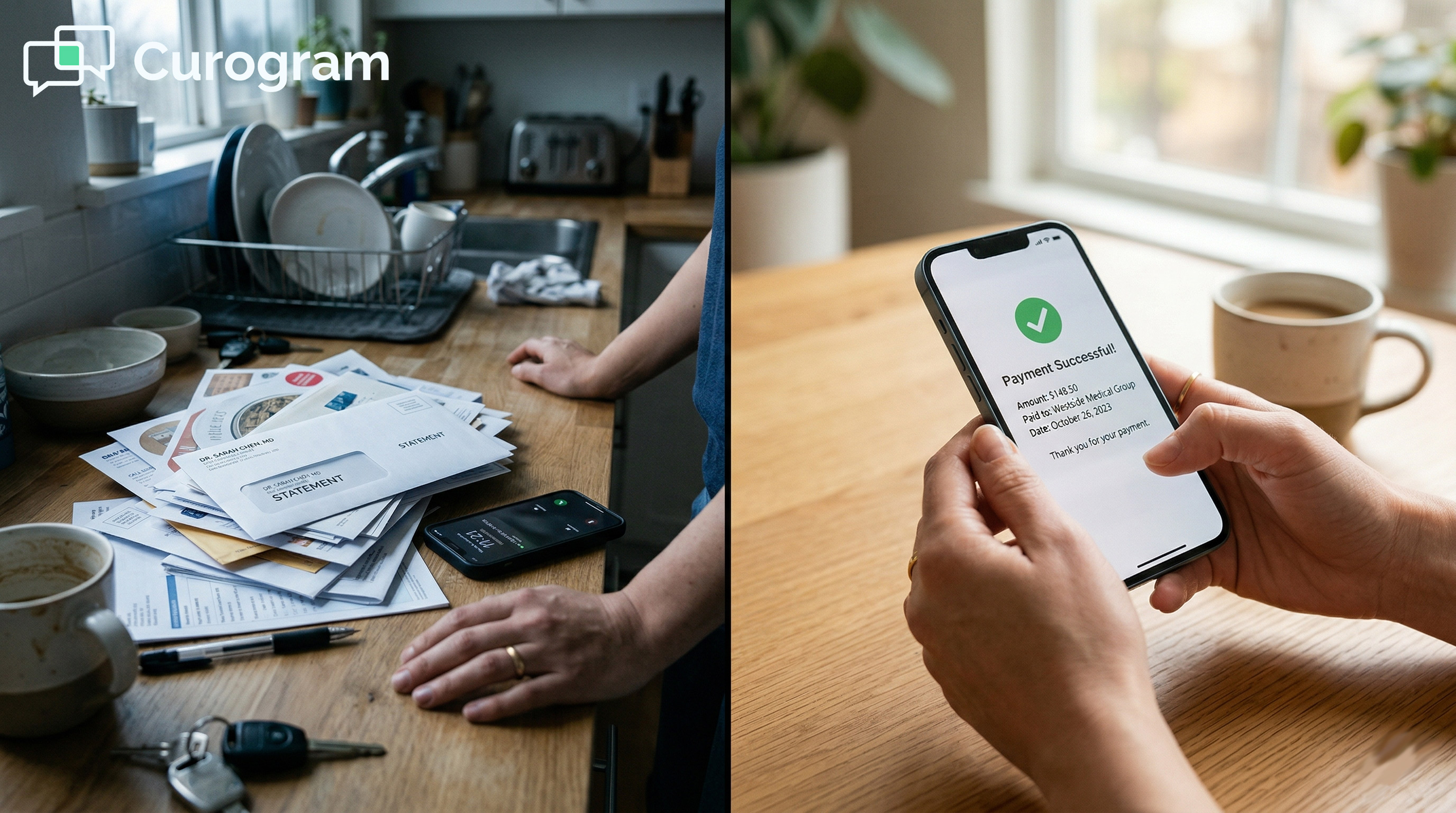
The statement lands. The patient plans to deal with it later. Later becomes next week, then next month.
Life fills the gap. The bill slides under a stack of mail. What began as a quick task turns into a nagging one nobody finishes.
Time makes it worse. An old bill feels easy to ignore. The longer it waits, the less likely it is to get paid at all.
Portal adoption stays low across the board. Real-world use often hovers near one in four patients. That means most of your balances depend on a tool few people open.
The balance goes unpaid because paying was made hard. Fix the friction, and the patient pays. The will was there all along.
So the problem is not the patient. It is the path you gave them. Change the path, and the same patient clears the bill in seconds.

Curogram removes the paywall. The bill arrives where the patient already is, ready to pay. No login, no app, no wait. This is two-tap patient payment done right.
Meet patients on the channel they check most. A text lands and gets read within minutes. The link inside does the rest, fast.
The patient gets a text with a secure link. One tap opens it. A second tap pays. There is nothing to download and nothing to set up.
This is mobile medical bill pay at its simplest. The card details never travel in the text itself. The page is secure and PCI-compliant, so the payment stays safe.
The patient stays on their phone the whole time. No new tab, no new app, no new login. The path is short by design, so more people finish it.
Text-to-Pay sends the link the patient taps twice to pay. No password. No account. No portal to learn.
It rides on the same channel your team already uses for 2-Way HIPAA-Compliant Texting. That means one trusted thread for reminders, questions, and now payment.
The patient does not learn a new tool. They just read a text and tap. That is the whole point of two-tap patient payment.
The tool works for staff as smoothly as it works for patients. Payments land in the right place on their own. Nobody has to chase a balance by phone.
When a patient pays, the payment posts back automatically. Staff never navigate a portal to reconcile it. The record updates without a manual step.
This is the same no-portal feel as Secure Online Forms. Patients act in two taps, and the data flows straight in. Less chasing, more done.
Your team sees the balance clear in real time. No spreadsheet updates. No phone tag over a payment. The record simply catches up on its own.
The link comes from the practice's real number. It reads like the office, not a stranger. Patients open it because they know the sender.
It fits every patient with a phone and every specialty. Primary care, specialty, and lab visits all work the same way. The whole thing takes seconds.
A text from a known number gets opened. A text from a stranger gets ignored. Sending from the practice line keeps trust high and payments moving.
Reach the patients your portal keeps missing. Give them a path that takes seconds, not steps. When paying beats ignoring, balances clear sooner.
The portal serves a small slice of your patients. The rest need another way in. A texted link meets them where they already are.
Most patients never log into the portal. When you skip the portal and pay by text, you reach that majority at last. No paper, no password.
The reach anchor is simple. If most patients ignore the portal, meet them by text. That is where they read and act.
You do not have to convert portal holdouts. You just route around the login. The bill finds them on a screen they check all day.
A texted link turns a slow task into a quick one. Patients pay within five minutes far more often when a secure text arrives.
This is a patient-friendly balance payment in action. Two taps, no envelope, no stamp. The bill clears while the message is still on the screen.
Speed matters more than most teams think. A bill paid today never becomes a bill chased next month. The faster path protects the balance.
The goal is a bill that is easier to pay than to dodge. Text-to-Pay flips the effort. The old path rewarded delay. The new path rewards a quick tap.
Name the shift plainly: from portal login to two taps. The old path asked for a password. The new path asks for a tap.
Patients also want this. Most now prefer a text notification for a bill, and a text reminder prompts many to pay faster.
So the easy choice and the paid choice line up. That is the shift you want. The path of least effort now ends in a cleared balance.
Patients pay sooner, so fewer balances linger. Staff stop chasing checks that never arrive. The billing step finally matches the care.
The result is a cleaner revenue cycle. Money owed becomes money collected, faster. The friction that held it up is gone.
Staff time opens up too. Fewer calls about old bills. Fewer statements to reprint and mail. The team focuses on patients, not payment chasing.
The billing step finally matches the care. Great visits deserve an easy last step. A quick, clean payment leaves patients with a good final impression.

When the bill is a two-tap text, patients pay. The friction that stopped them is gone. No login stands in the way, and no envelope waits on a desk.
Think about the two tools together. CollaborateMD keeps your billing record clean and correct. Curogram makes paying easy for the patient. One holds the ledger, the other clears the balance.
That split is the whole point. Your system is built for your team. The texted link is built for their convenience. Together, the bill actually gets paid.
Most patients will not chase down a portal password. They will tap a link that lands on their phone. So the practice that texts the bill gets paid sooner than the one that mails it.
The math is plain. A portal reaches a small share of patients. A text reaches nearly all of them. Meet people where they already read, and more balances clear.
This is not about removing options. The portal still works. A mailed check still works. Text-to-Pay simply adds the easy path for the many who skip both.
Picture the change from the front desk. Fewer calls asking how to log in. Fewer statements to reprint. More balances clearing on their own, day after day.
Now picture it from the patient's chair. A text arrives. Two taps clear the bill. No password to hunt down, no envelope to find, no line to wait in.
That is a small win for one bill. Across a full patient panel, it adds up. Faster payments and fewer write-offs strengthen the whole practice.
Stop putting a portal login between your patients and paying you. Let the bill arrive as a message they can clear in seconds. That small change moves real money.
Think of it as finishing what the visit started. The patient came in, got care, and left satisfied. A clean, easy bill lets that good feeling last.
The care you give already earns trust. Let the payment step earn it too. When paying is as easy as a text, the whole visit feels complete.
See a patient pay a balance by text in real time. Book a quick demo and watch the two-tap flow work from the practice's real number.
The practice sends a secure link by text from its real number. The patient taps it once to open the page. A second tap pays the balance. There is no account, no password, and nothing to mail.
Portals were built for records, not quick payment. Signing in means recalling a password from a past visit. Real-world portal use often sits near one in four patients. So most people never reach the pay button at all.
The link opens a secure, PCI-compliant payment page. Card details never travel inside the text itself. That makes paying by text as safe as paying online anywhere else. The page protects the patient's information at every step.
The payment posts back to the record automatically. Staff do not log into a portal to reconcile it. The balance updates without a manual step. That means less chasing and fewer errors.
Some patients still prefer the portal or a check. Those paths keep working as before. Text-to-Pay only adds an easy option for the majority who skip both. It never removes a way to pay.
💡A CollaborateMD text-to-pay SMS payment link for patient balances turns an unread bill into a two-tap payment. The patient pays from their phone....
💡 Most patients do not refuse to pay their medical bills. They just find it too hard. Paper statements sit on counters for weeks. Patient Ally...
💡 Office Ally text-to-pay is a patient billing solution that pairs with Curogram to send secure SMS payment links directly to patients' phones. ...