
 Jess Koslow
5 Reasons Healthcare Providers Should UseText Messaging
 Carylee Gali : 3/16/22, 7:00 AM
There's no doubt about it — patients prefer text messages. Check out these five reasons you should find the right way to text your patients.
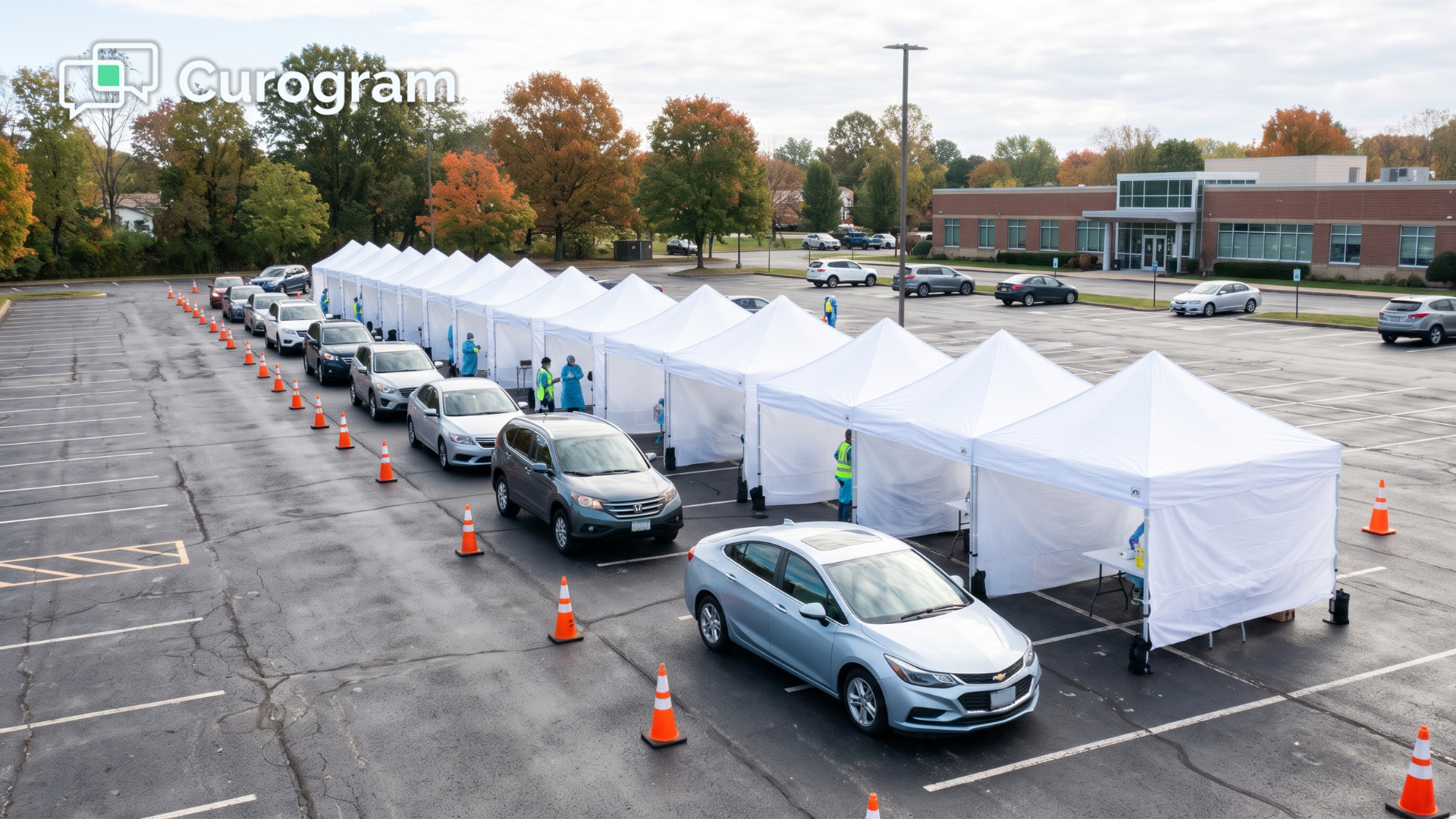
Eighty appointments a week. That's all VNA's call center could book at the height of the COVID-19 testing and vaccine rush, even with the phones ringing nonstop.
The problem wasn't effort. It was the process behind every appointment. Every booking depended on a live phone call, and every call meant collecting intake details, typing them into the system, and finding an open slot. When thousands of people need care at once, that process breaks down fast.
Visiting Nurse Association (VNA) is a patient-focused, community-based not-for-profit healthcare provider. It serves the Chicago suburbs from four locations. Like many community providers, VNA had a call center that was already stretched thin before the pandemic hit.
If your practice still runs scheduling and registration mostly by phone, VNA's story may sound familiar. Long hold times frustrate patients. Overloaded staff can't keep up. And every caller who gives up is an appointment your practice never books.
This case study walks through what went wrong, what VNA changed, and how the shift to online booking and digital forms grew weekly appointments by over 1,000%.
VNA's call center was busy even in normal times. Then COVID-19 arrived, and demand for testing, and later vaccines, skyrocketed.
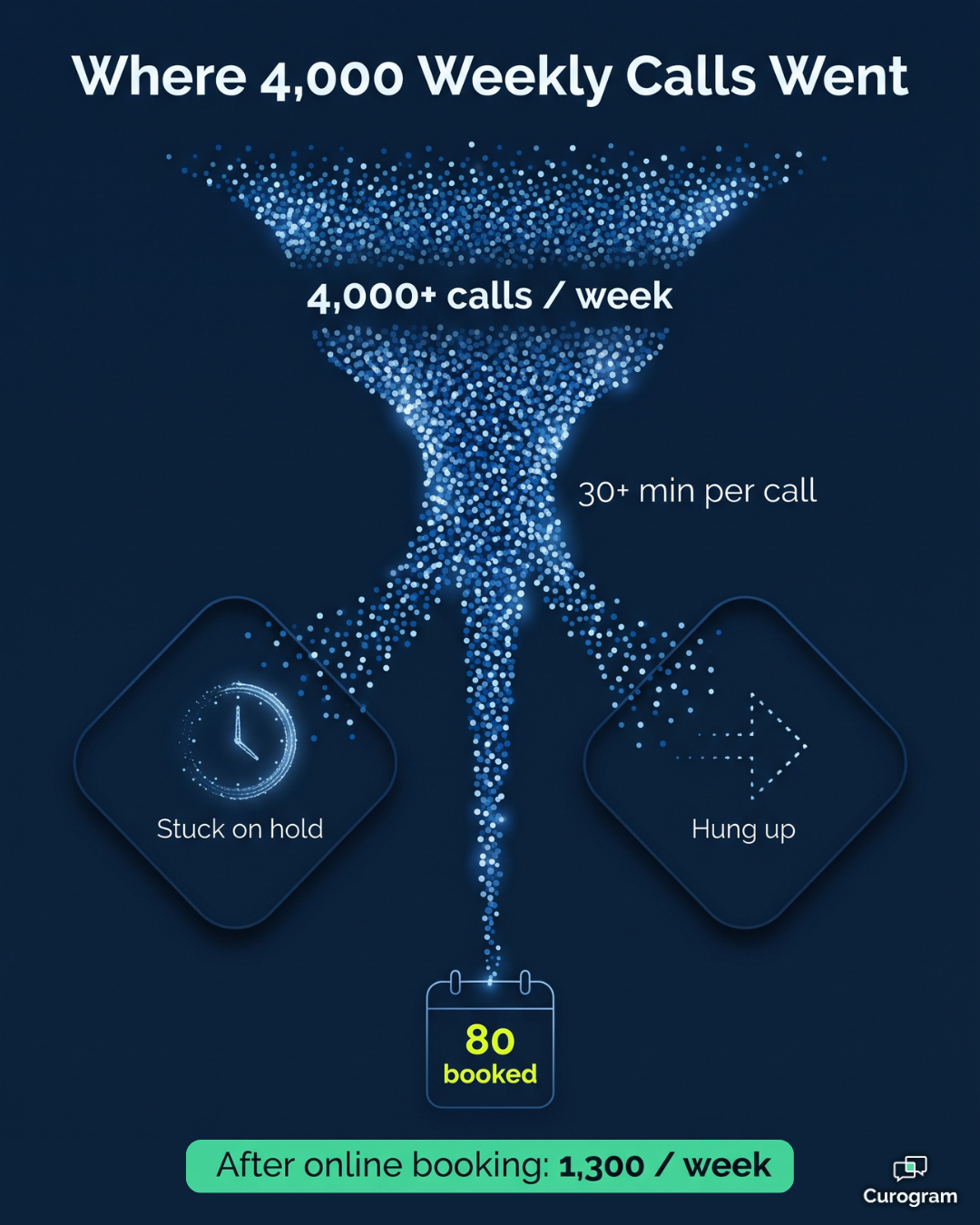
Here's what the team faced each week:
The result was just 80 booked appointments per week. That number hurt everyone involved. Patients couldn't get timely care, VNA lost revenue, and the low output put pressure on the call center team's jobs and income.
VNA needed a way to book more patients without asking staff to work even harder. That's where Curogram came in.
VNA already used NextGen as its EMR. Curogram integrated with VNA's NextGen system, and the setup was complete within 48 hours.
With the integration in place, VNA rolled out three core features:

The change was almost instant. Inbound call volume dropped, while booked appointments jumped from 80 to 1,300 per week.
Demand had been there all along. VNA's metrics showed that around 100,000 people tried to book appointments online in a single day. With an easy self-service option, patients no longer had to sit on hold or give up before booking.
Digital forms took a major task off the call center's plate. Patients completed their own intake paperwork online instead of reading it out over the phone.
Because Curogram was connected to NextGen, that form data went to VNA's EMR instead of being retyped by staff. This removed much of the manual intake work that had pushed each call past 30 minutes.
| Metric | Before Curogram | After Curogram |
|---|---|---|
| Appointments booked per week | 80 | 1,300 |
| How patients booked | Phone calls only | Online scheduling plus phone |
| Intake paperwork | Collected and entered during each call | Completed online by patients |
| Call center focus | Routine booking and data entry | Patients with more complex needs |
Overall, Curogram helped VNA increase productivity and booked appointments by over 1,000%. The call center could finally give its time to patients with more involved needs.
Most importantly, VNA was able to serve a larger part of its community. More people got access to quality care, COVID-19 testing, and vaccines when they needed them most.
| Your phone line shouldn't be the only door into your practice. VNA didn't grow by adding staff. It grew by letting patients book appointments and complete registration forms on their own, which freed the call center for conversations that truly require a person. If hold times are rising at your practice, identify which routine tasks patients could comfortably handle online first. |
VNA's results came during an unusual surge, but the core problem is common. When scheduling, reminders, and intake all run through the phone, your staff becomes the bottleneck.
Curogram is a patient engagement platform built for growing practices. It helps you talk with patients by text, keep messages HIPAA-compliant, and take routine work off your front desk.
Here's what Curogram client data from clinical settings shows:
VNA's story is a reminder that a busy phone line doesn't always mean a busy schedule. Before Curogram, thousands of weekly calls turned into just 80 appointments. Long calls and manual data entry kept the team stuck, and patients left for other providers.
The fix didn't require a bigger call center. It required a better path for patients.
Online scheduling let people book appointments on their own time, and digital forms moved intake paperwork off the phone line. A fast integration with NextGen meant VNA could get started within days instead of months.
The payoff was significant. Weekly bookings grew from 80 to 1,300, and staff could finally focus on patients who needed personal attention. VNA reached more of its community at a time when access to testing and vaccines mattered most.
Your practice may not be facing a pandemic surge. But the same pressures show up every day in smaller ways: patients on hold, staff buried in paperwork, and open slots that never get filled. Each of those is a chance to shift routine work to tools patients can use themselves.
Curious what that could look like for your team? See how Curogram can streamline your scheduling and patient communication with a quick, personalized walkthrough.
 Carylee Gali : 3/16/22, 7:00 AM
There's no doubt about it — patients prefer text messages. Check out these five reasons you should find the right way to text your patients.
 Carylee Gali : 6/3/22, 8:45 AM
Explore the key benefits of evaluating patient feedback, learn which survey questions to ask. Book a Curogram demo to send review requests to...

Automated reminders, advanced call routing, 2-way texting, and online patient forms improve efficiency for healthcare call centers.