
 Carylee Gali
1 min read
How Telehealth Improves the Patient Experience
💡 Telehealth improves the patient experience by removing the biggest barriers to care: travel, long waits, time off work, and hard-to-reach...
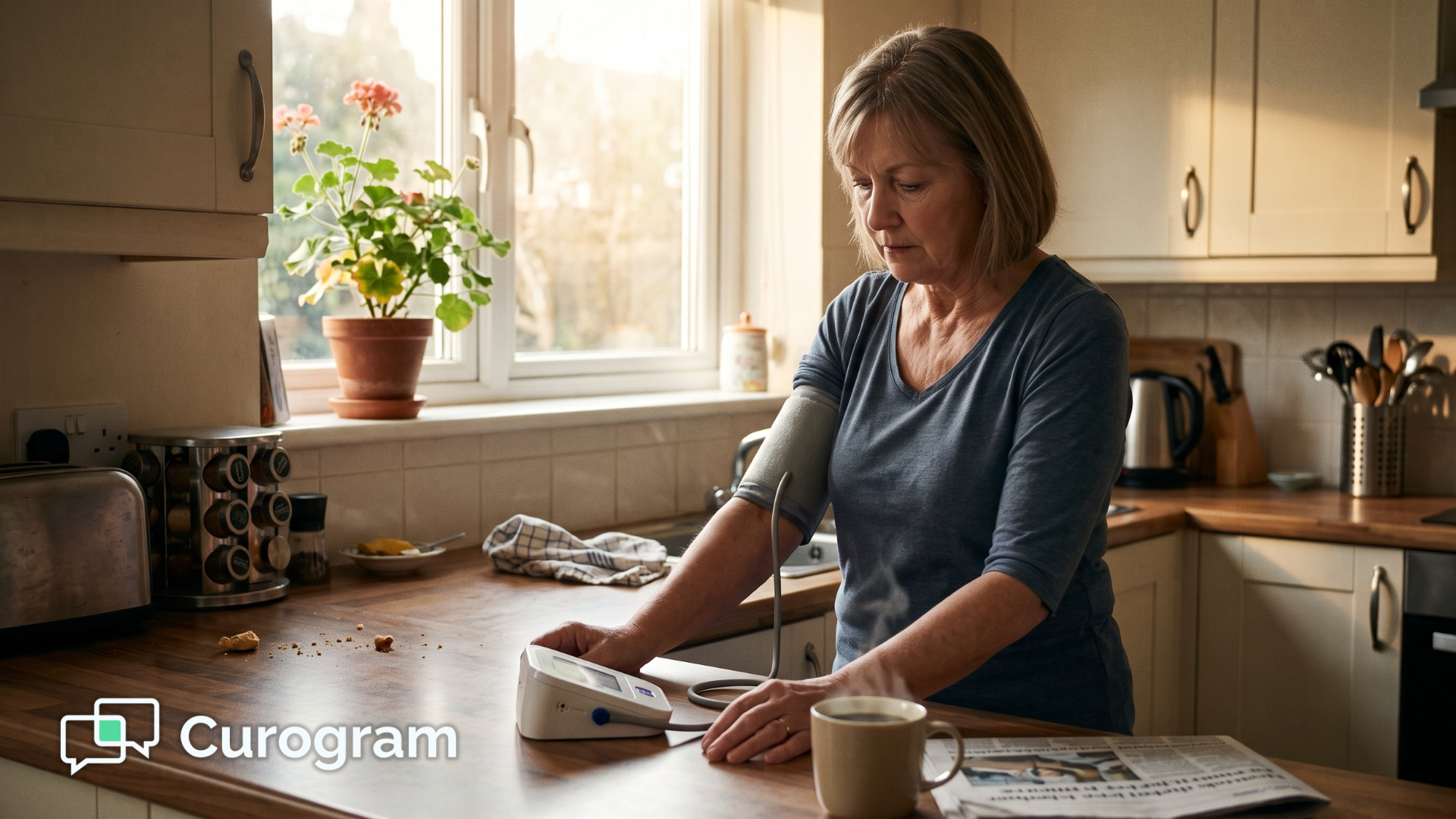
A patient feels a sharp pain in her side on a Sunday. She types her symptoms into a search bar, reads four conflicting answers, and decides to wait it out. By the time she calls your office, it is Thursday and she needs a specialist.
That gap between worry and care is where patient engagement quietly breaks down. Nobody made a bad decision. The path to a provider was just harder than the path to Google.
Telehealth closes that gap. When a patient can see a provider from her kitchen in under ten minutes, waiting stops making sense. Access stops being a hurdle and starts being a habit.
This matters more than convenience. Engaged patients show up. They ask questions, follow treatment plans, and come back for follow-up care.
Disengaged patients do the opposite. They cancel, they no-show, and they reappear months later with a bigger problem and a bigger bill.
The shift is already underway across the healthcare industry. Healthcare providers now use video conferencing, secure SMS, and remote patient monitoring to stay in touch between visits. Patients do not feel distant from their care team. Many say they feel closer to it.
For your practice, that connection shows up in the schedule. Fewer empty slots. Fewer missed follow-ups. More patients who treat their care as something they participate in rather than something that happens to them.
None of this replaces in-person medicine. Some visits need an exam room, and no video call changes that. But a large share of patient contact does not need a room at all, and treating every interaction as an office visit is what pushes patients toward the search bar in the first place.
Below, you will see exactly how telehealth enhances patient engagement, where the biggest gains come from, and what the numbers look like when a practice gets it right.
Many people turn to the internet the moment a symptom shows up. Sites like Mayo Clinic and WebMD are reliable, but self-diagnosis is not. A Pew Research Center report found that 1 in 3 US adults have gone online to figure out a medical condition for themselves or someone they know.
That is roughly 33% of your patient panel guessing before they call you.
Searching feels faster than booking. It is free, instant, and requires no phone call. So patients delay real care until symptoms get loud enough to force the issue, and by then the visit is more complex and more expensive.
Telehealth flips that math. A patient can reach a licensed provider in minutes without leaving home, so the easy option and the right option finally match. Texting and video visits make that first contact simple, which is where engagement actually begins.
The same access solves problems that have nothing to do with convenience. Rural patients who live an hour from the nearest clinic can be seen the same day. Patients without a car skip the transportation problem entirely. Patients worried about catching the flu or COVID-19 in a waiting room no longer have to weigh that risk against getting care.
Access is the foundation. Patients participate in their health when participating is simple, and telehealth makes it simple no matter where they are.
In a traditional healthcare setup, patients go to their physician’s office or clinic when they are not feeling well or need treatment. They book their appointments over the phone with the front desk and wait for their time to see the physician.
The times have changed, though. Healthcare providers have shifted to telehealth platforms to sustain and increase patient engagement. No longer is an in-person appointment needed for many symptoms or illnesses — and patients like that.
Patients have different responses when it comes to healthcare management. Some just wait for a doctor to check their condition and prescribe them medication, while others, often with a serious illness, want to know more about their disease and the treatment process. Telehealth works for both types and can transform a passive patient into an active participant.
Telehealth modalities such as video conferencing, online medical record access, and remote patient monitoring (RPM) provide patients virtual care options to actively engage in their healthcare even without the physical presence of a physician.
Telehealth helps to increase patient engagement and change passive patients into active patients by:
Personalized text messaging is also great for physicians to share vital information about a patient’s condition that could help them understand more about it and treatments, such as sending a link to an online article or study
Healthcare providers are actively leveraging telehealth to establish an effective rapport with patients and motivate them to be involved with their healthcare.
Physicians can treat their patients as partners in healthcare because of their direct involvement made possible through technology. It can also increase patient trust, as communication is easier, whether for questions about a condition, medication, or diagnosis.
|
Adoption stalls when patients assume telehealth is complicated. A 60-second explanation at checkout, plus a text with a screenshot of what the visit link looks like, removes most of that hesitation. Keep it concrete. Tell patients there is no app to download, no password to remember, and no waiting room. With a platform like Curogram, patients tap a link in a text message and the video visit opens on the device they already use. One short conversation now prevents a week of "I did not know how to join" cancellations later. |
Regardless of the healthcare practice’s size, employee structure, or patient demographics, any telehealth system is a solution to communicate with and engage patients in their care, entrust them to improve lifestyle habits, and take more control in managing their healthcare conditions and treatments.
Telehealth transforms medical practices into a patient-centered care model, which keeps the patient at the center of the treatment.
Simply put, patient-centered care focuses on providing the patients’ needs to improve access, quality, prevention, and safety to healthcare. Through various telehealth communication platforms, healthcare providers can facilitate health education while providing monitoring and management.
As a result of patient-centered care that improves communication, patients are well-informed about their condition and become proactive in taking preventive measures and making decisions about their treatments and overall wellness. That exponentially increases patient engagement since patients feel recognized for their role in healthcare management.

The following are points that describe the impact of telehealth in patient-centered care:
By now, most experts agree that providing patient-centered care is central to high-quality healthcare. Through patient responses, healthcare providers continuously improve their healthcare delivery and market health plans and products. Telehealth offers convenience in gathering patient responses through online surveys.
Also, with telehealth, patients can easily schedule appointments and discuss directly with their physicians the care they need. Moreover, they have a chance to ask questions and express concerns.
They are more open in discussing if their medication is effective or no longer working as well as before. Using an interactive, 2-way communication channel and a secured SMS platform like Curogram, patients can ask follow-up questions and receive answers quickly even beyond their scheduled appointments.
A study suggests that telehealth, when done right, can be as effective as in-person healthcare. It is most efficient for patients with ongoing conditions or chronic illnesses such as diabetes, heart disease, and lung disease because telehealth makes it easier to have frequent check-ups than in-person care.
The same study also proposed that using telehealth to check minor injuries or illnesses, such as stomach pains or nausea, provides the same level of care as in-person medicine and reduces unnecessary hospital or emergency room visits. However, the complex part is knowing which situations are appropriate for remote healthcare treatment.
For example,
After making an initial diagnosis of a patient’s large bruise on the arm, the physician can provide primary medical advice such as putting ice on the area and taking a pain reliever.
However, if the physician thinks that further care is needed, they recommend taking the next steps, such as an X-ray to confirm or rule out a fracture.
After connecting with a physician through telehealth, if a patient needs further care, they simply book an in-person visit.
Additionally, telehealth is most effective for patients with mobility issues since they won’t have to overcome difficulties to go to the office.
It is essential to consider that some patients may be reluctant to choose telehealth services. They may feel that the technology is too advanced to understand. So it is every healthcare provider’s job to adequately educate them on the impact of telehealth on their overall care and how easy the whole program works.
The more clearly patients understand telehealth, the more likely they adopt it and get involved with their healthcare, producing better treatment outcomes because you can provide the patient education they need virtually.
Telehealth promotes patient education because of the following services:
Patient-centered care correlates with patient engagement. It focuses on the welfare of the patient’s needs and requirements, even after the treatment.
At the same time, telehealth provides patient education with direct engagement to healthcare leading to higher levels of preventive health behaviors and increased self-management of health conditions.
Of all the ways telehealth enhances patient engagement, the most cited is simple: patients can attend from anywhere.
Missed appointments are easy to understand. A long drive, a shift that runs late, a sick child at home. Life gets in the way, and the appointment loses. But cancellations and no-shows cost both sides, and the cost is bigger than most practices realize.
Here is what that looks like for a practice running 200 appointments a month. These figures are illustrative and use a $150 average visit value, so plug in your own numbers.
| Scenario | No-show rate | Missed visits per month | Lost revenue per month | Lost revenue per year |
|---|---|---|---|---|
| Before automated reminders | 14.20% | 28 | $4,200 | $50,400 |
| After automated reminders | 4.91% | 10 | $1,500 | $18,000 |
| Difference | 9.29 points | 18 recovered | $2,700 | $32,400 |
Those rates are not invented. Atlas Medical Center moved from 14.20% to 4.91% in three months after switching to automated text reminders and confirmations. Across specialties, Curogram practices run no-show rates 53% below the industry average.
In practice, that means 18 more patients seen every month without adding a single provider hour. Covina Arthritic Clinic saw the same effect on the confirmation side, averaging more than 1,100 appointments confirmed per month once the process was automated.
Scheduling is where telehealth quietly earns its keep. Patients can book by text instead of waiting on hold, and skipping that hold music is often what turns an intention into an actual appointment.
Choose a telehealth solution that lets you engage patients proactively and adjust when plans change. Platforms like Curogram pair scheduling features with the security needed to protect patient information.
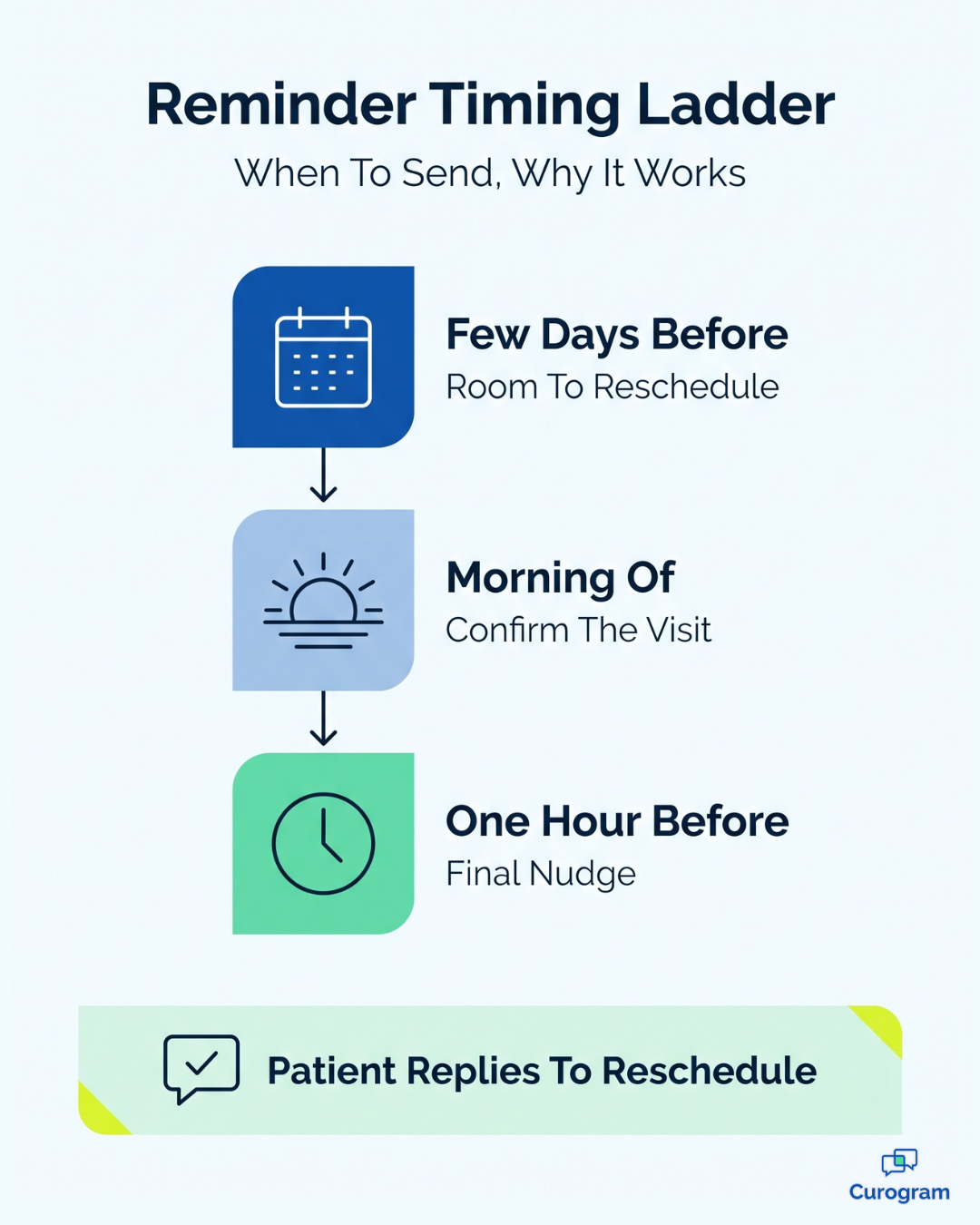
With Curogram, you can build templated HIPAA-compliant text messages and send appointment reminders automatically. If a patient needs to reschedule or cancel, they reply to the text. No phone call, no voicemail tag.
You also control the timing. Reminders can go out:
Early notice is what makes the gap usable. When a patient cancels two days out, your staff has time to text another patient and fill the slot, or to bring in a new patient who would have waited weeks.
That single change saves hours. Instead of calling down a waitlist, your team sends one message and moves on to the work that actually needs a human voice.
When rescheduling is this easy, patients follow through more often. Better attendance means care that does not stop and start. That steady rhythm is what drives outcomes.
The digital age transforms the way consumers access services and transactions. Online shopping sites allow consumers to buy items with just a few clicks on their smartphones or tablets. Online banking provides easy transactions to deposit money, send funds, or pay bills. And telehealth allows a patient to meet their physician without leaving their home.
A telehealth appointment is a video meeting or consultation between a healthcare provider and patient. It includes both video and audio features from a desktop computer, laptop, or even smartphone.
With Curogram, patients can join a virtual appointment through a link they receive in an SMS. In just a matter of minutes, they meet with a licensed healthcare professional and receive their required medical care.
Here are some benefits of convenient virtual appointments that encourage patients to be more engaged with their care:
Telehealth is beneficial to healthcare providers and patients as it saves time, is convenient, provides more flexibility in receiving care, and allows patients to have more mental space for a better understanding of their conditions and treatments.
Nearly every patient already carries the hardware. A phone, a tablet, or a laptop is enough to connect with your practice, and that removes the last excuse for staying out of touch.
Virtual care has become a core option rather than a backup plan. Telehealth cuts unnecessary trips to the office, and because visits are easy to schedule and reschedule by text, patients are more likely to keep them. They get a faster, simpler way to reach you without the drive, the parking, or the waiting room.
That ease helps patients deal with problems early, whether small or complex. Bring patients into the decision and they learn more about their own condition. More understanding leads to better outcomes.
Questions get answered fast by video or text. Platforms like Curogram build HIPAA-compliant texting into a secure 2-way channel. You protect patient health information (PHI) and keep the conversation moving.
Direct record access matters too. Patients who can see their own results make more informed decisions and come to appointments prepared instead of confused.
The relationship is the real return. When you and your patient work the same problem from two screens, you are partners rather than an appointment on a calendar.
Patient engagement is not a personality trait. It is a response to how hard or easy you make it to participate.
Telehealth lowers that effort at every step. A patient who can text your front desk, join a visit from a link, and check results without a phone call has almost no reason to disengage. That is why practices using virtual care and automated reminders see the results they do, from a no-show rate cut by two-thirds at Atlas Medical Center to more than 1,100 confirmations a month at Covina Arthritic Clinic.
The gains stack. Fewer no-shows mean fuller schedules. Fuller schedules mean more revenue from the same provider hours. More touchpoints between visits mean patients catch problems earlier, which improves outcomes and lowers the cost of care.
None of this requires a technology overhaul. It requires a platform your staff can learn quickly and your patients can use without instructions.
Start with the basics. Turn on automated appointment reminders with a reply-to-reschedule option. Add secure 2-way texting so patients can ask questions without calling. Then layer in video visits for the appointments that do not need an exam room.
Measure what changes. Track your no-show rate for 90 days, count how many phone calls your front desk handles per day, and watch how often patients reply to a reminder instead of ignoring it. Those three numbers will tell you whether engagement is improving.
Your patients have already decided they want the option to connect virtually. The practices that make that option effortless are the ones filling their schedules.
Ready to see it work in your practice? Request a personalized Curogram demo and see how secure texting, automated reminders, and telehealth video visits fit into the workflow you already run.
Frequently Asked Questions

1 min read
💡 Telehealth improves the patient experience by removing the biggest barriers to care: travel, long waits, time off work, and hard-to-reach...
%20-%20fetaured.png)
1 min read
💡Patient experience in healthcare is the sum of every interaction a person has with your practice. It covers booking, reminders, check-in, wait...

1 min read
💡 Telemedicine changes the patient-doctor relationship by keeping both sides in touch between visits. Patients can text a question, join a video...