The 10 Best Patient Check In System & Software Solutions of 2025
The single biggest opportunity to reduce staff workload and improve patient satisfaction lies in the first five minutes of a patient's visit. A...
10 min read
Mira Gwehn Revilla
:
January 31, 2026
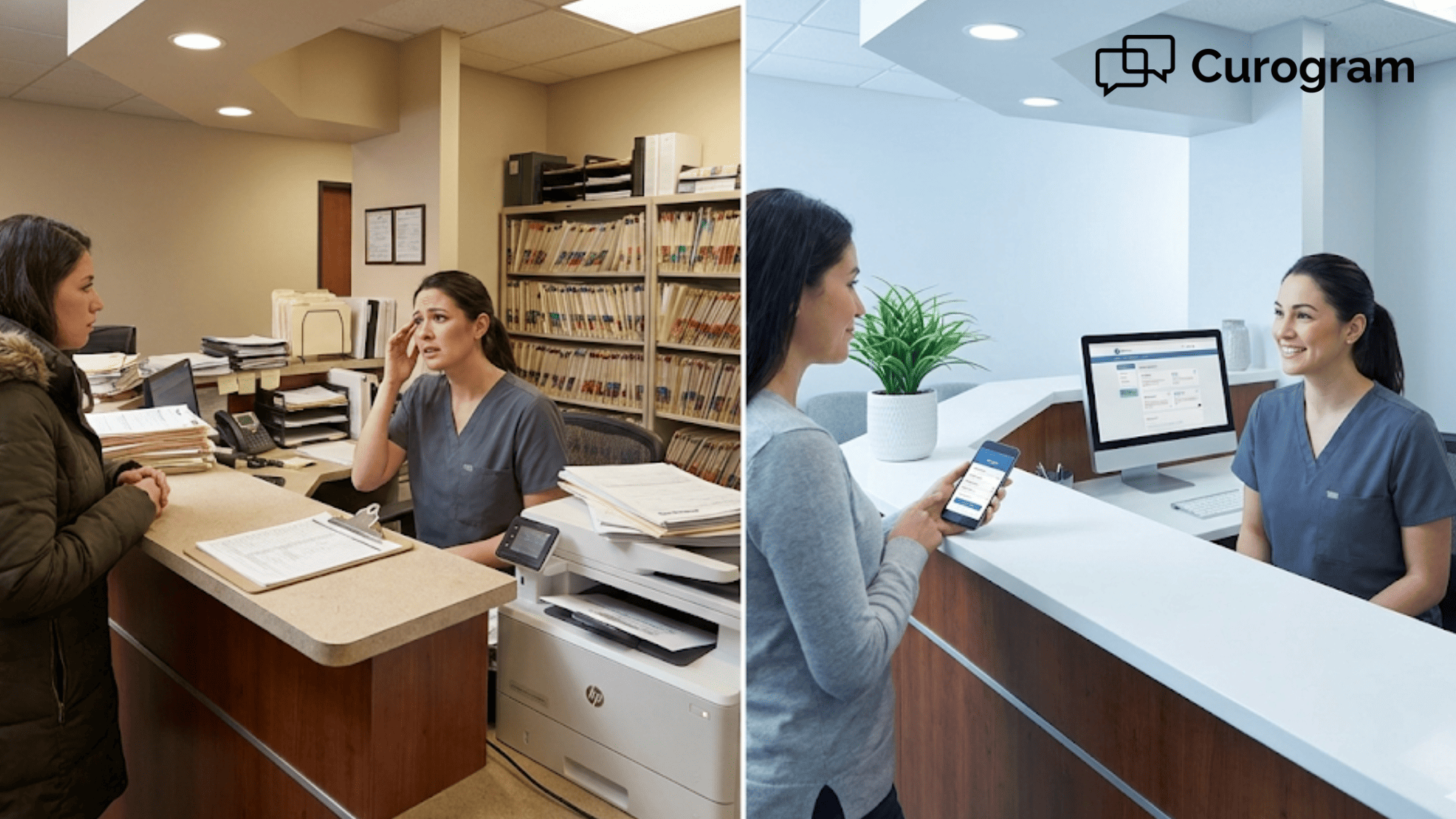
Picture this: your waiting room is packed. New patients sit with clipboards in hand. They scribble away at forms while the clock ticks.
Meanwhile, your front desk staff juggles phone calls and a pile of paper forms that need typing into the system. Sound familiar?
This scene plays out every day in clinics across the country. It slows down your schedule, wears out your team, and leaves patients feeling frustrated before they even see a doctor.
But what if there is a better way?
Online patient forms for medical practices are changing how clinics handle check-ins. Instead of filling out paper in the lobby, patients can complete their forms from home on their phones. By the time they walk through your door, their info is already in your system and ready to go.
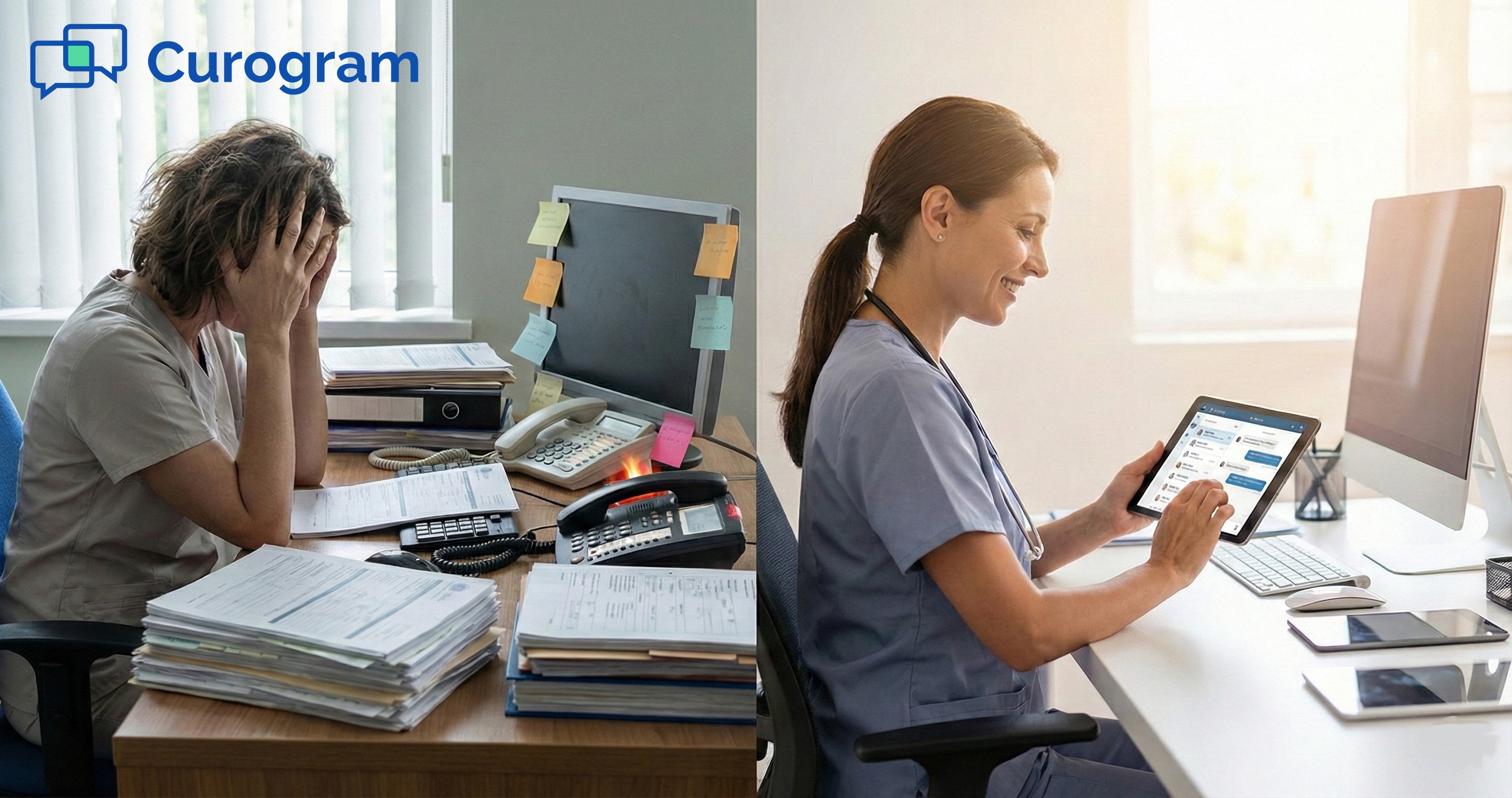
Think of digital patient intake as your secret weapon against the chaos of manual paperwork. It tackles the two biggest pain points in any busy practice: wasted time and data errors.
When patients enter their own details, you skip the step where staff type it all in later. That means fewer typos and more time for your team to do what matters most.
Going paperless also makes good business sense. Paper, ink, and storage add up fast. A paperless medical office cuts those costs while helping the planet too. And when you use EMR integrated forms, every piece of data flows right where it needs to go without extra steps.
In this guide, we will walk through why paper intake is holding your practice back and how smart digital tools can help you reduce patient wait times, boost staff morale, and run a smoother operation.
Let's dig in.
Paper forms may seem harmless, but they create real problems for busy clinics. From crowded waiting rooms to tired staff, the costs of manual intake add up fast.
Let's break down the three main ways paper is hurting your practice:
When patients arrive, they often spend 15 minutes or more filling out clipboards. That time adds up. If you see 30 patients a day, those delays can push your entire schedule off track.
Late starts lead to rushed visits and unhappy patients. A practice that runs behind feels stressful for everyone. Patients start their visit annoyed, and your team scrambles to catch up.
After patients hand in their forms, someone on your staff has to type all that info into the EMR. This double entry takes hours each week and opens the door to mistakes.
A wrong digit in a phone number or a missed allergy note can cause real harm. Your staff didn't get into healthcare to spend their day copying handwriting into a computer.
Paper costs money. So does ink. So does the space to store years of files. Many practices spend hundreds of dollars each month on supplies they could cut.
On top of that, shredding old records and staying compliant adds even more work. These are funds and hours you could spend on patient care instead. Moving to a digital patient intake system helps you spend wisely while keeping your records safe and easy to find.
In short, manual intake drains time, money, and morale. The next step is finding a way to get the data accuracy you need without all the hassle.
Many practices hear about AI and think it's the answer to their data problems. The truth? What most clinics really want is a simple way to get clean, correct data into their EMR without extra labor. Smart digital forms deliver exactly that.
When practice owners search for AI data entry tools, they're often looking for one thing: fewer errors and less work. AI sounds high-tech and promising, but it can be costly and complex.
The real solution doesn't need to be fancy. Online patient forms for medical practices give you the same end result—accurate data—without the learning curve or high price tag.
Curogram's digital forms act as a bridge between your patients and your records system. When a patient fills out their info on their phone, that data moves straight into your EMR.
There's no middle step where a staff member has to retype it. This means 100% of the data entered by the patient shows up exactly as they typed it. No guessing at bad handwriting. No missed fields.
When you remove paper from the process, your front desk staff gets their time back. Instead of spending hours on data entry, they can greet patients, answer questions, and handle tasks that need a human touch. A simpler system means less stress and more focus on what matters.
Digital patient intake doesn't just speed things up. It gives your team the tools to do their best work. Practices that use EMR integrated forms often report happier staff and smoother days. When the boring, error-prone tasks go away, everyone wins.
Curogram's forms are built to fit the way modern patients and staff work. Here are the main features that set them apart.
Most patients have their phone in their pocket at all times. Curogram takes advantage of that.
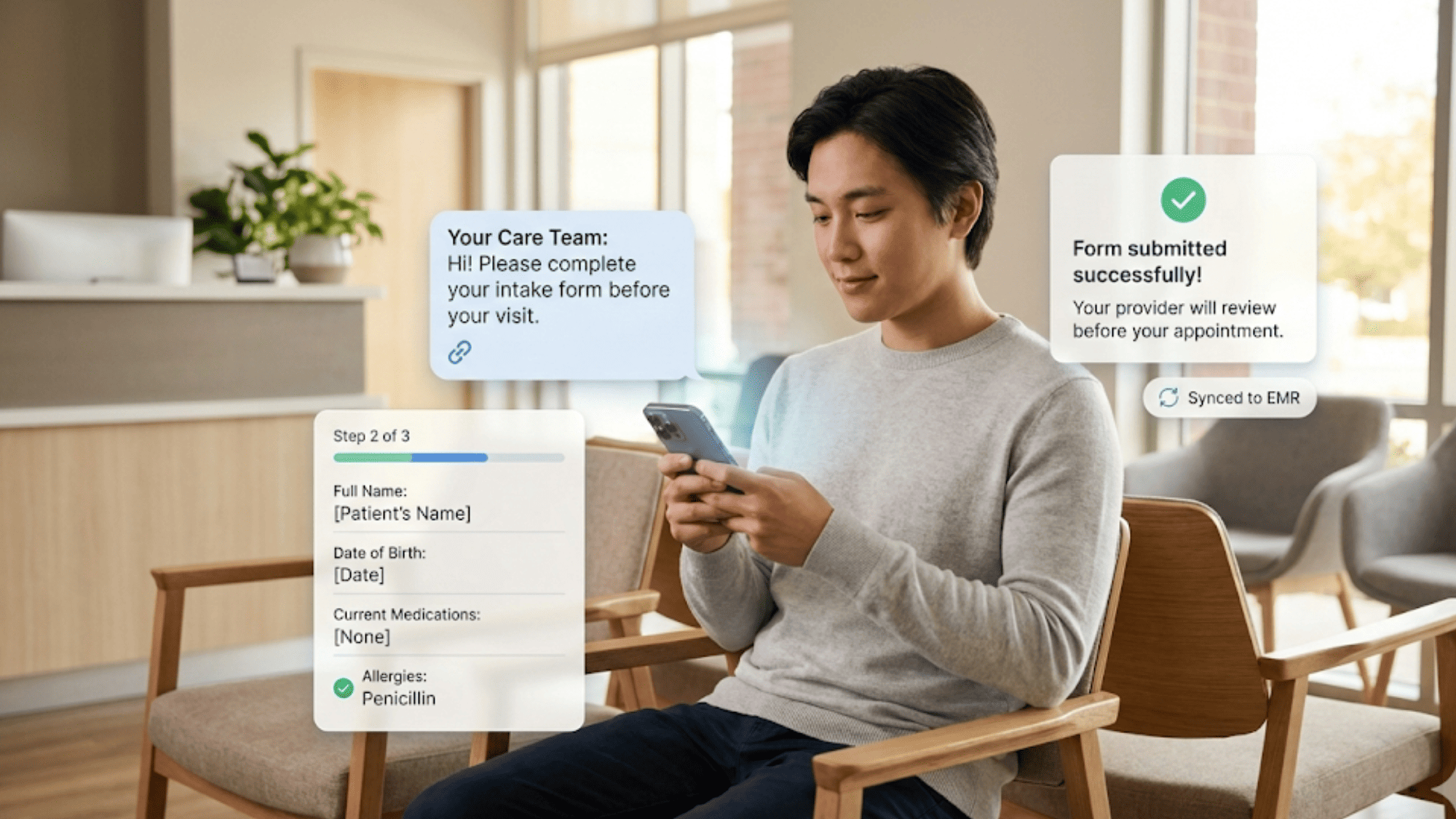
Before a visit, your office sends a secure text link. The patient taps it, fills out the form on their screen, and hits submit. The process is quick and works on any smartphone, tablet, or computer.
Data is only useful if it ends up where you need it. Curogram's forms connect directly to your practice management system.
When a patient submits their info, it syncs right away. Records stay current without anyone lifting a finger. This EMR integrated forms approach means no copy-paste, no double entry, and no lag time between intake and charting.
Patients trust you with their health details. That trust demands strong protection. Curogram uses secure, encrypted connections to keep data safe during every step.
The platform meets all HIPAA rules, so you can offer digital patient intake without worry. Patients get peace of mind, and your practice stays compliant.
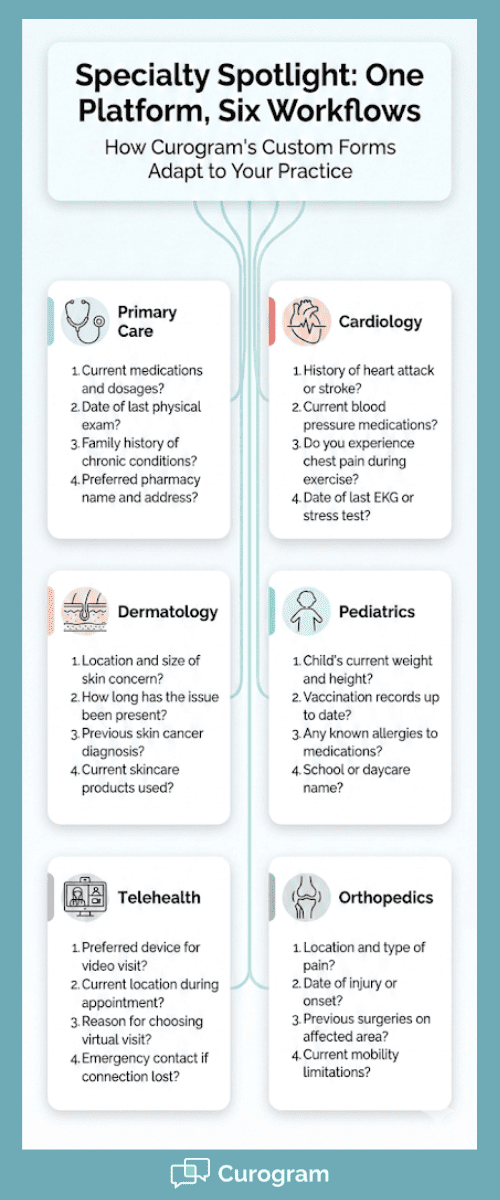
Not every practice asks the same questions. Curogram lets you tailor forms to fit your needs. A pediatric office might ask about school and vaccinations.
A cardiology clinic might gather heart health history. You choose what to include, and the system handles the rest.
These features work together to reduce patient wait times and ease the load on your team. In the next section, we'll look at how going paperless helps your bottom line and your patients.

Switching to a paperless medical office does more than save trees. It changes how your practice runs day to day.
Here's what you can expect when you leave paper behind:
When patients complete forms before they arrive, check-in takes minutes instead of the usual 15 or more. The front desk confirms info, not collects it.
This speeds up the flow from lobby to exam room. Patients feel valued when their time is respected. Staff feel calmer when the schedule stays on track.
Faster intake also means more room for last-minute appointments. If a patient cancels, you can fill that slot without scrambling to prep paperwork. Your practice runs at full capacity more often.
Paper waste is a real issue in healthcare. Reams of forms, file folders, and printed records pile up fast. Going digital cuts that waste down to almost nothing.
Patients notice when a practice takes steps to help the planet. It sends a message that your clinic cares about more than just the bottom line.
Paper management is tedious. Sorting, filing, and shredding are not what your team signed up for. When you remove these tasks, staff get to spend their energy on patient care. That shift makes a big difference in how people feel about their jobs.
A happier team means lower turnover and better service. Patients can tell when staff are relaxed and engaged. The ripple effect of going paperless touches every part of your operation.
Digital patient intake is not just a tech upgrade. It's a way to reduce patient wait times, cut costs, and create a workplace where people want to be. Next, let's see how these tools fit into different types of practices.
Not every practice works the same way. A family clinic has different needs than a heart specialist or a virtual care provider.
The good news is that digital forms can flex to fit almost any setting. Whether you run a busy primary care office or a niche specialty practice, the right system adapts to your workflow.
Here's how online patient forms for medical practices apply to three common scenarios:
Primary care offices see a wide mix of patients: new families, seniors, kids, and everyone in between. That variety means lots of forms. New patient packets, annual health updates, and consent documents all pile up.
With digital patient intake, you can send the right form to the right patient before their visit. A new patient gets the full registration packet. A returning patient gets a quick update form. The system handles the sorting, so your staff don't have to.
Annual wellness visits become smoother too. Patients review their medications, allergies, and health history on their phones. By the time they sit down with the doctor, the chart is already up to date.
Primary care teams also deal with high volume. Every minute saved at check-in adds up over a week. Practices that use EMR integrated forms often see a noticeable drop in lobby congestion. Staff spend less time on data entry and more time greeting patients.
Another perk: parents can fill out forms for their kids ahead of time. That means fewer delays when a busy family rushes in for a sick visit. The process feels simple and fast for everyone involved.
Digital intake fits the rhythm of primary care because it handles variety without extra effort. The system bends to your needs, not the other way around.
Specialty clinics ask questions that general forms don't cover. A dermatology office might need skin history and photos. A cardiology clinic might ask about heart events and stress tests. Cookie-cutter forms don't work here.
Curogram lets you build custom forms for your specialty. You add the fields you need and skip the rest. Patients see only what applies to them, which keeps the process short and focused.
Consider a pre-surgery checklist. The patient fills it out at home, noting medications, past reactions, and current symptoms. By the time they arrive, the care team has a clear picture of their status. This prep work saves time and reduces surprises.
Specialty practices also benefit from digital consent forms. Instead of printing stacks of papers for each procedure, you send a link. The patient reads, signs, and submits—all from their phone. Records store securely and stay easy to find.
Custom forms also help with referrals. When a patient arrives from another provider, you can gather their history in a structured way. That data flows into your EMR and gives you a full view before the visit starts.
The ability to tailor forms makes a paperless medical office possible even for complex specialties. You keep the detail you need without the paper mess.
Virtual visits are here to stay. Patients expect the same smooth experience whether they see you on screen or in person. Digital patient intake makes that possible.
Before a telehealth appointment, the patient receives a text with a link to their intake form. They fill it out on their device, just like they would for an office visit. When the video call starts, the provider has all the info they need right on the chart.
This approach removes a common frustration: wasting the first few minutes of a virtual visit collecting basics. With forms done ahead of time, you can jump straight into care.
Virtual care also reaches patients who live far from your clinic. These patients may never set foot in your lobby, but they still need proper intake. Online forms ensure they get the same quality documentation as in-person patients.
Hybrid practices also benefit. A patient might do a follow-up virtually after an in-office procedure. The intake process stays consistent no matter how they connect with you.
Security matters even more online. Curogram's platform protects data whether the patient is in your building or across the state. Patients feel confident sharing their info, and you stay compliant with HIPAA rules.
Telehealth works best when intake is just as simple and accessible as clicking a link. Digital tools make that a reality.

When it comes to online patient forms for medical practices, not all platforms are equal. Curogram stands out because it was built with real clinic needs in mind.
Setup is fast. Most practices go live in days, not weeks. Staff training takes as little as 10 minutes because the system is simple to use. There's no steep learning curve or complex tech to master.
Curogram also works with almost any EMR. You don't need to switch systems or pay for custom coding. The platform connects to what you already use, so data flows without friction.
Cost also matters, as Curogram delivers premium features at a price point that works for practices of all sizes. You get HIPAA-compliant security, real-time syncing, and mobile-first design without breaking your budget.
Finally, support is always available. When questions come up, a real team is ready to help. You're never left figuring things out alone.
Curogram gives you the tools to reduce patient wait times, cut costs, and run a smoother practice—all in one platform.
The days of clipboards and crowded lobbies don't have to last. Online patient forms for medical practices offer a clear path to faster check-ins, cleaner data, and happier teams.
The switch to digital patient intake is not about chasing the latest tech trend. It's about solving the real problems that slow your practice down every single day.
Think about what your staff could do with the hours they spend typing from paper. Think about how patients would feel if they walked in and went straight to their appointment. That's the change a paperless medical office makes possible.
Curogram's platform brings these benefits together in one place. EMR integrated forms ensure data lands where it belongs without extra steps.
Mobile-friendly design meets patients where they are—on their phones. HIPAA-compliant security keeps everyone protected. And custom form options let you shape the intake process to fit your unique needs.
As a result, you reduce patient wait times, cut supply costs, and give your team the freedom to focus on care. Your practice runs smoother. Patients leave happier. Staff feel less burned out.
If you're ready to see what this looks like in action, Curogram makes it easy to get started. A short demo shows you exactly how the forms work, how they connect to your system, and how fast you can go live.
Build the efficient, patient-centered clinic you've always wanted. Book your demo today to see how Curogram's smart forms can automate your intake.
Data flows straight from the patient's device into your records system. Staff skip the manual entry step entirely, which can save hours each week and lower the risk of mistakes.
Most patients carry their phones everywhere and feel comfortable using them. A mobile-friendly form lets people fill out info on their own time, at home, without needing to download an app or remember a login.
Faster check-ins mean patients spend less time in the waiting room and more time with their provider. Respecting their time often leads to better reviews and higher satisfaction ratings.
The single biggest opportunity to reduce staff workload and improve patient satisfaction lies in the first five minutes of a patient's visit. A...
💡 A connected patient journey healthcare system brings all patient touchpoints into one platform.Curogram unifies reminders, online forms,...
💡 Billing costs drain clinic budgets through paper, postage, and staff time, but affordable text-to-pay systems cut these costs by 90% while...