
 Carylee Gali
15 Powerful Patient Engagement Strategies: Top Ideas for Patient Care
Explore 15 patient engagement strategies that help practices cut no-shows, recover lapsed patients, and keep their schedules reliably full every week.
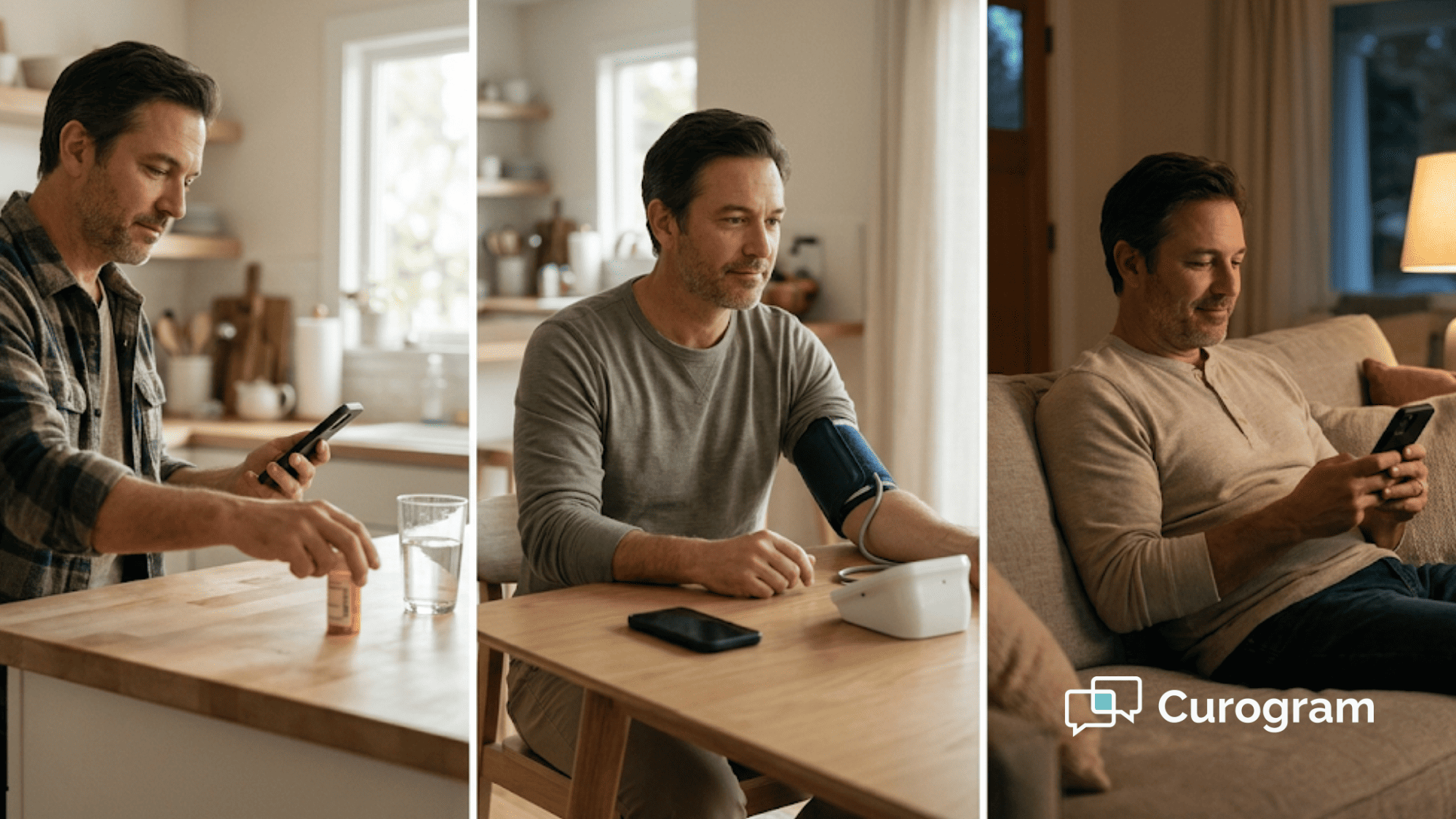
Ask a practice manager who drives patient engagement, and the answer is usually the doctor. The doctor explains the diagnosis, answers questions, and builds trust in the exam room.
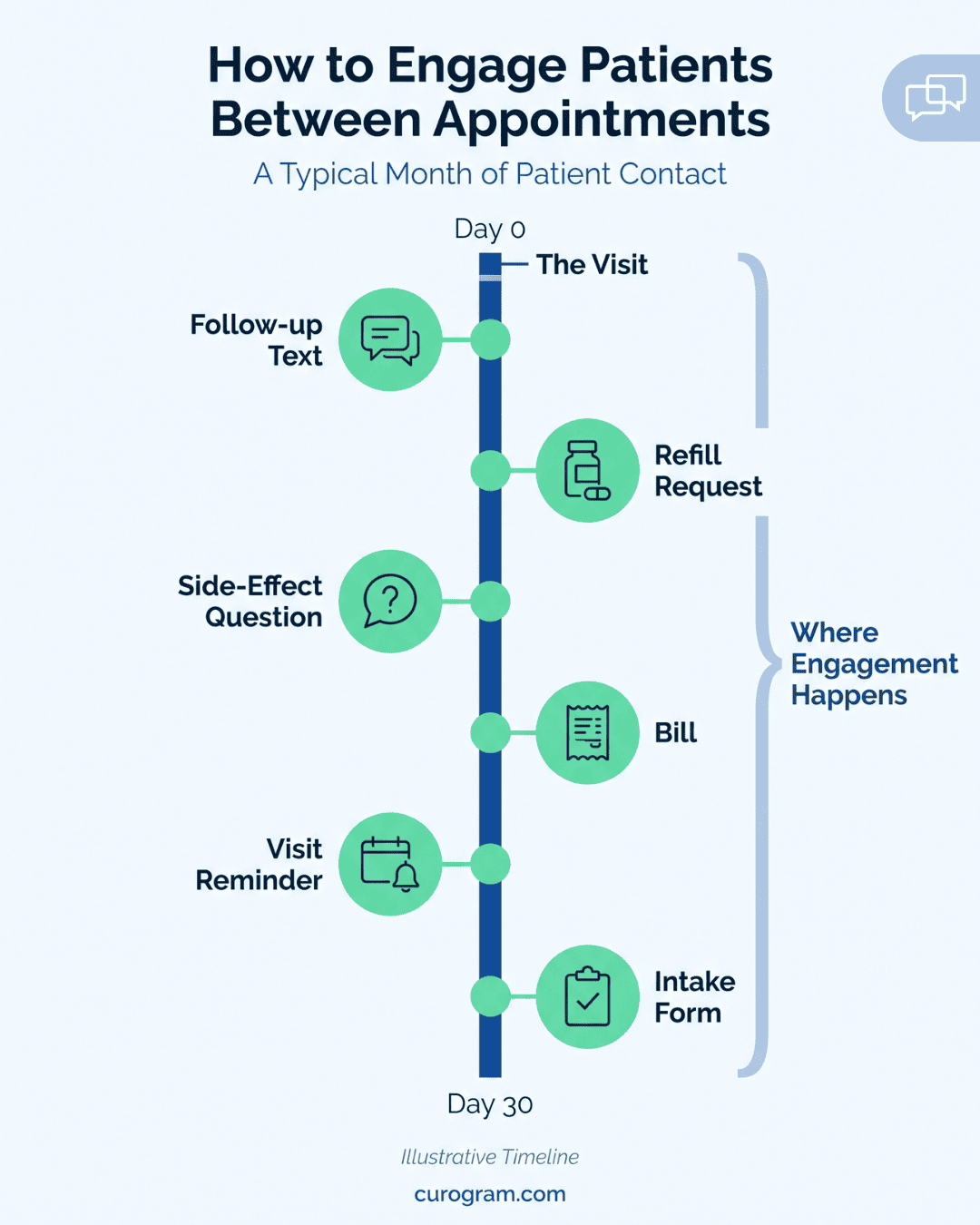
But look at what a patient deals with in a typical month of care: a reminder for the next visit, intake paperwork, a refill request, a question about a side effect, and a bill. Almost none of it involves the doctor.
Each of those contacts runs through your front desk, your phone line, or your patient portal. When three lines are ringing and a refill request waits in voicemail until tomorrow, the patient learns that reaching you takes effort.
Some stop trying. They skip the follow-up, guess at a dose, or move to another practice without saying why.
Patient engagement is built in those small contacts, and your team controls nearly all of them. When booking a visit, asking a question, or filling out a form takes a minute, patients stay involved in their care. Involved patients keep their appointments, follow their treatment plans, and stay with your practice for years.
The sections below cover what engagement looks like day to day and what it does for your schedule and revenue. You’ll also see how technology changed what patients expect from a practice.
Last come four strategies you can put in place: real-time support, HIPAA-compliant digital forms, an active social media presence, and more ways for patients to reach you.
Patient engagement means patients, and the family members who care for them, take part in decisions about their own care. They ask questions, weigh their options, and know what comes next after the visit.
Every patient has a right to understand:
Some patients would rather skip all of that. They want the visit over and leave the thinking to the doctor. A patient who goes home unsure how to take a new medication, or what their discharge plan says, is more likely to land back in the hospital.
No practice can make every patient care about their chart. Your team does control how easy it is to ask a question, read up on a diagnosis, or reach someone after the visit. Make those steps simple, and more patients will take them.
The link between involvement and results is well studied. A 2013 review in Health Affairs by Judith Hibbard and Jessica Greene found that patients who are more involved in their care tend to have better health outcomes and better care experiences.
Engagement doesn’t end when the patient walks out. A follow-up text asking how the new blood pressure medication is going shows the patient that someone is still paying attention. Patients who feel that are more likely to be satisfied, keep booking with you, and stay with your practice for years.
Your front desk, your billing team, and your patients all feel the difference when patients stay involved in their care. Three of the gains below show up in your schedule and your budget: more patients coming in, lower costs, and better service. The fourth is how satisfied your patients are, and that one feeds the other three.
Engaged patients come back. They book their next visit, show up for follow-ups, and treat your practice as their first stop for care.
Those regulars also talk. A patient who got a quick text answer about a refill will mention it to a coworker, a sister, or a neighbor who’s looking for a new doctor. The more regulars you keep, the more often those conversations send new patients your way.
Engagement cuts costs in two places.
The first is marketing. When regular patients and their referrals keep your schedule full, you can spend less on ads to find new patients and more on keeping the ones you have.
The second is your schedule. Engaged patients are less likely to skip or cancel appointments. Each no-show leaves an empty slot, like a 10 a.m. visit your staff prepped for and can’t bill. Fewer of those gaps means steadier revenue from week to week.
Patients choose practices that give them good care, and engaged patients make good care easier to deliver.
Picture a patient who filled out intake forms the night before, brought an updated medication list, and wrote down two questions for the doctor. Check-in takes a minute. The visit stays on topic and ends on time, which keeps the rest of your morning on schedule too.
That kind of visit also tells the patient what to expect from you. Once they’ve seen your practice run smoothly, it becomes the standard they hold you to, and the reason they keep coming back.
Patients notice when your team makes time for them. A nurse who calls back the same afternoon about a rash, or a front desk that texts a reminder with parking directions, shows effort the patient can feel.
Those small moments add up to patients who are happier with their care and more loyal to your practice. They’re also the moments patients mention when family members or coworkers ask, “Do you like your doctor?”
For a long time, care happened almost entirely in the exam room. A patient who forgot a question had to wait until the next visit to ask it.
The COVID-19 pandemic cut back face-to-face contact, and that forced a change. Patients learned to reach their doctors by text, video, and online portals. Your team now has more ways to draw out the quiet patient, the one who nods along and asks nothing, and turn them into an active partner in their care.
Telehealth also widens your reach. A patient who lives two hours from your office can do a follow-up by video instead of losing a day of work to the drive.
Patients now expect these digital options. Practices that offer them tend to see happier patients and stronger revenue.
Software, online platforms, and health devices help patients:
A Deloitte Survey of US Health Care Consumers found patient engagement rising in three areas.
More patients want a say in their care. They’d rather make treatment decisions together with their doctor.
Respondents to the Deloitte survey said doctors should:
The third point involves your whole team. When a doctor orders an MRI, the patient wants to know why they need it and roughly what it will cost before the scheduler calls to book. An estimate from your billing team, sent ahead of that call, saves an awkward conversation and makes it less likely the patient will cancel.
Patients trust secure patient portals and online resources when they want to learn more about a health concern. Most of them carry the means to do it in their pocket: 97% of smartphones have internet access.
That makes a text one of the fastest ways to put good information in front of a patient. After a new type 2 diabetes diagnosis, for example, your team can text a link to a portal page on reading food labels. The patient can open it on the drive home, while the visit is still fresh.
More patients now use health devices, software, and mobile apps to reach their health goals from home.
Take a patient managing high blood pressure. A home cuff logs each reading in an app, and the app sends a notification when it’s time to check again. The patient can also log in to a secure portal to send those readings to your office and get messages back from your care team.
For your clinical staff, that means two weeks of readings are in hand before the follow-up visit. The conversation can start with what the numbers show.

Patient engagement starts with a patient-centered practice, one built around how your patients actually live and communicate.
That means knowing details like these: which patients ignore calls from unknown numbers but answer a text within minutes, who needs forms in Spanish, and who would rather book online at 10 p.m. than call during office hours.
With that knowledge, your team can reach each patient the way they’re most likely to respond, and those small fits build loyalty over time.
The four strategies below put that idea to work: real-time support through live staff or chatbots, HIPAA-compliant digital forms, an active social media presence, and more ways for patients to reach you.
COVID-19 made many patients wary of crowded waiting rooms, and lots of them got used to video visits. For problems that don’t need a hands-on exam, many still prefer a virtual option to a walk-in.
They also expect quick answers. A question about a new prescription shouldn’t sit in your voicemail until tomorrow afternoon. Real-time replies are one of the fastest ways to earn trust, so the software you use to talk with patients matters as much as any tool in your exam rooms.
Real-time support, whether from your staff or a chatbot, can cover requests like these:
| Patient request | Who should handle it |
|---|---|
| General questions, like hours or directions | Chatbot |
| Setting up a telehealth visit for an acute illness | Chatbot or front desk |
| Quick advice on a minor treatment, like a small burn | Nurse, by secure message |
| Prescription dosage or side effects | Clinical staff |
A chatbot on your website or app gives patients a way to reach you 24/7, which keeps them engaged and coming back. Set it to pass anything clinical to a person: the bot takes the message or books the visit, and a nurse follows up during office hours.
Healthcare is moving from paper records to digital forms, like most other fields. For your practice, the reason is accuracy: your doctors and staff need correct patient data to diagnose and treat.
When a medication list is handwritten on a clipboard in the waiting room, someone has to read it, guess at a few words, and retype it into the EHR.
Patients expect better. Based on one survey, 93% of patients expect their providers to use digital tools such as electronic health records (EHR) and digital patient forms.
Here’s how paper and digital forms compare:
| Paper forms | Digital forms | |
|---|---|---|
| Who fills in the data | Patient by hand, then staff retype it | Patient, directly in a secure portal |
| Who can see it | Anyone near the front desk | Only authorized staff |
| Risk of loss | Can be misplaced, damaged, or misfiled | Stored and backed up |
Digital forms also make teamwork easier. Patients enter their own details, your staff reviews them, and both sides work from the same record.
Patients can pull up their records without a trip to your office, whether they’re seeing a specialist or tracking their health over time with a wearable device or app.
Patients feel more at ease knowing their data sits in a secure, HIPAA-compliant system instead of a folder on a shelf.
Your patients are already on Facebook, Instagram, and X (formerly Twitter). Setting up an account for your practice costs nothing. Businesses use these pages for marketing and promotions, and the more active a page is, the more people it reaches.
If your practice doesn’t have accounts yet, you’re missing a free way to stay in touch with the patients you have and reach new ones. Based on a PwC survey, 74% of internet users follow the social media pages of healthcare practices.
Start by putting these basics on every profile:
From there, the page works like a second front desk. Patients send messages asking whether you take their insurance or have Saturday hours, and they comment on your posts.
Quick replies from your staff keep those conversations going. Keep public replies general, and move anything about a specific patient’s health to a secure private channel to stay within HIPAA rules.
Reviews matter just as much. Most patients look up your practice before their first visit, and Google reviews are often the first thing they see. Happy patients tend to leave good ones, and strong ratings help your reputation and your ranking in search results.
Reply to reviews too, good and bad, to show you read patient feedback. Thank the reviewer or invite them to call the office. Never confirm that they’re your patient or mention their care in a public reply.
Patients engage most on the channels they already use. For most of them, that means text messages, email alerts, automated reminders, and a patient portal app on their phone, with phone calls in the mix as well.
When every request has to go through your phone line, routine tasks pile up. Compare the same tasks with digital options in place:
| Task | Phone only | With digital options |
|---|---|---|
| Booking an appointment | Call during office hours, wait on hold | Book online, any time of day |
| Requesting a refill | Leave a voicemail, wait for a callback | Send the request through the portal app |
| Appointment reminders | Staff call each patient the day before | Automated text goes out on schedule |
| Medication reminders | Rarely done | Text at the time the dose is due |
Each digital option saves the patient a phone call and saves your front desk a task. Patients notice when you respect their time and make care easy to reach, and they’re more satisfied and more likely to stay with your practice.
Patients want good care that’s easy to get, that lasts, and that gives them a say in their own decisions.
Engagement reaches past the exam room. Regular social media posts about your services and treatments keep your practice in front of patients between visits.
Healthcare is a service business, and patients judge it that way. To go beyond what they expect, give them flexible ways to book appointments, handle follow-ups, and see their health records securely.
Skilled doctors and nurses carry a practice only so far. When engagement is low, patients often miss how good their care really is. Build connections that last for years, so each appointment is one more visit with a practice they know and trust.
Start with the request that clogs your phone line most, whether that’s rescheduling, refills, or form questions, and move it to text first. Your team will feel the difference within the first week.
Book a demo to see how Curogram fits your practice. We’ll look at how your schedule, forms, and follow-ups run today.

Explore 15 patient engagement strategies that help practices cut no-shows, recover lapsed patients, and keep their schedules reliably full every week.
 Dax Francisco : 8/15/25, 4:49 PM
Learn how Remote Patient Engagement SMS can improve patient attendance, streamline workflows, and enhance satisfaction in virtual clinics.

Learn about the actual EMR integration success story of a small practice. This is how one clinic fixed its workflow and boosted patient satisfaction.