10 min read

Re-Engage Dropped SUD & Behavioral Health Clients With SMS Texts

Re-Engage Dropped SUD & Behavioral Health Clients With SMS Texts
💡 Dropped behavioral health and SUD clients are usually unreached, not unwilling. SMS is the one channel that reliably reaches them.
  • Calls hit voicemail; portals need logins; emails go unopened.
  • A text needs no app, no password, and no perfect timing.
  • Based on our internal data, SMS recall brought back 35% of inactive patients in a month.
  • That meant 1,240 patients seen from recall texts alone.
  • Recall texts can be HIPAA-compliant and 42 CFR Part 2 safe.
The clients were not gone. They were simply waiting for a message on the right channel.

A dropped client is not the same as a gone client. That one distinction changes how a behavioral health or SUD practice thinks about recall.

The most effective way to re-engage SUD and behavioral health clients who dropped treatment is SMS. Text messaging reaches this group when other channels cannot.

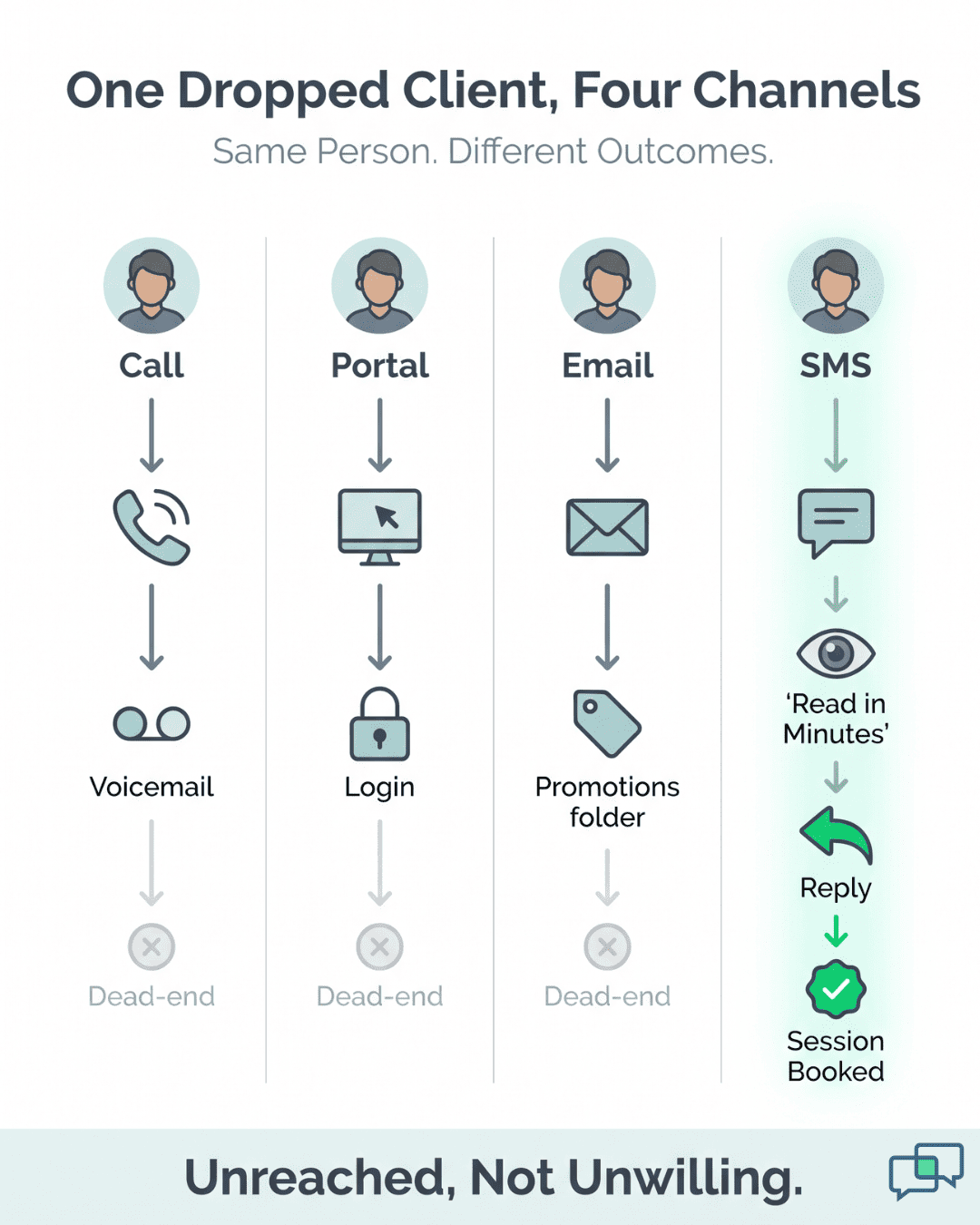
A call goes to voicemail. A portal sits behind a password no one remembers. An email lands in a folder no one opens.

A text works differently. It arrives on the one device the client always keeps and always checks. No login. No app. No barrier. They read it, then reply with a single word.

This matters because dropout here is common, not rare. Each lost week can raise relapse risk and erase revenue. Yet many practices treat attrition as fixed. They have simply never tested the channel their clients actually use.

That gap is the real story. The client marked "unreachable" was often just unreached. The outreach went out on channels built for staff convenience, not client reality.

Based on our internal data, Curogram's SMS recall campaigns brought back 35% of inactive patients within a month. That worked out to 1,240 patients seen from recall messages alone. These were people the practice had already written off.

Curogram's recall texts are HIPAA-compliant and built to respect 42 CFR Part 2 rules. The message says enough to invite a return. It says nothing that exposes a client's care.

So why SMS works for SUD treatment recall comes down to reach, not luck. This guide breaks that down in plain terms. It compares text against phone and portal outreach.

It shows how to turn "lost to follow-up" into a session booked for next week. The channel, it turns out, is the whole game.

The Villain: The Unreachable Client Myth

When a client stops showing up, most practices assume they chose to leave. The label lands fast: non-compliant, not ready, lost to follow-up. Staff mark the client inactive in Sigmund AURA and move on. The wording itself hints the person is beyond reach.

But look closer at what "unreachable" usually means. A coordinator called once and left a voicemail. No callback came.

A portal message went out, but the client never set up the account. Or they forgot the password. An email slid into a promotions folder and stayed there.

The practice tried three channels and got silence. So it decided the client did not want to return. What it really proved is much smaller. Calls, portals, and emails do not reach this group well. The one channel the client actually uses was never tried.

This is the flaw inside most SUD treatment dropout re-engagement strategies. They lean on tools built for staff workflows, not client reality. The report says "no response." The truth is closer to "no contact."

The label also carries a real cost, and it shows up in three ways:

Clinically

A dropped SUD client who is not reached within a month faces rising relapse risk. Every quiet week makes the return harder. Momentum fades. Shame about missed sessions grows. The longer the gap, the steeper the climb back.

Financially

Each lost client erases income the practice was counting on. Consider a simple example. If one session is worth $150 to $400, and a practice drops 200 clients a year, the loss adds up fast.

That can reach tens of thousands of dollars. (This figure is illustrative, not a measured result.) The number starts to feel normal because no one has a tool for this population.

Operationally

The practice begins to accept high attrition as the cost of doing the work. The dropout rate gets treated as a client problem. It is not. It is a channel problem.

Consider a quarterly retention review. The dropout rate sits high. The clinical director asks what outreach was done.

The coordinator lists calls, portal messages, and emails. No one mentions text. The room nods: "We've tried everything." In reality, they tried everything except the channel their clients open.

Here is a concrete case:

A client left an IOP six weeks ago. Staff called twice and reached voicemail both times. They sent a portal note, but she never activated her portal. They emailed once. Nothing came back. On paper, she looks like a client who walked away for good.

But she did not walk away. She changed phones during a rough stretch and lost her portal login. She avoids unknown numbers because calls feel like pressure. She thinks about going back most weeks. She just needs a door that is easy to open.


That is the heart of the unreachable client myth. The practice reads silence as refusal. The client reads each missed channel as one more wall. Both sides assume the worst, and the gap widens.

For dropped behavioral health clients, the text vs phone difference is not a small detail. A phone call demands the client perform in real time. A text waits quietly until they feel ready. One asks for energy the client may not have. The other meets them where they already are.

So the villain is not the diagnosis or the client. It is the belief that a person who skipped a voicemail has chosen to vanish. Once a practice sees that clearly, recall stops feeling hopeless. It starts looking like a reach problem with a known fix.

Chart showing SMS as the only channel that reaches dropped behavioral health clients to book a session

The Guide: The Channel That Matches the Population

Curogram's mass SMS recall reaches dropped clients on the device they always carry. A recall text arrives as a normal message. The client reads it, taps reply, and the conversation starts.

For behavioral health and SUD groups, that simplicity is not a minor perk. Technology friction and distrust are real barriers. Removing them can be the line between reconnection and permanent loss. The easier the door, the more people walk through it.

To re-engage dropped SUD clients, text messaging strips away the steps that usually block contact. There is no account to find. There is no inbox to dig through. There is no business-hours window to catch. The message simply waits until the moment feels right.

Low-Barrier Recall Messaging

It is built for groups where engagement friction directly shapes outcomes. The text arrives plainly, with no branded portal alert and no special app ping. The tone is warm and brief. It reads like an invitation, not a treatment order.

For SUD clients under 42 CFR Part 2, the message reveals no treatment type. It names no substance and no program.

For clients who feel anxious or unsure about coming back, the text offers a soft path: reply to schedule, or call when ready. Nothing pushes. Everything invites.

This is where client recall by SMS quietly works around behavioral health portal limitations. Portals assume the client set up an account, kept the login, and checks it often.

Many clients in crisis or early recovery did none of those things. A text needs none of them. It meets the client at the lowest possible barrier.

When a client replies, the response flows into Curogram's two-way messaging channel. Now the coordinator can solve real problems in real time.

Maybe transportation is the issue. Maybe the schedule does not fit. Maybe the client feels embarrassed about the gap. The thread handles all of it in plain language.

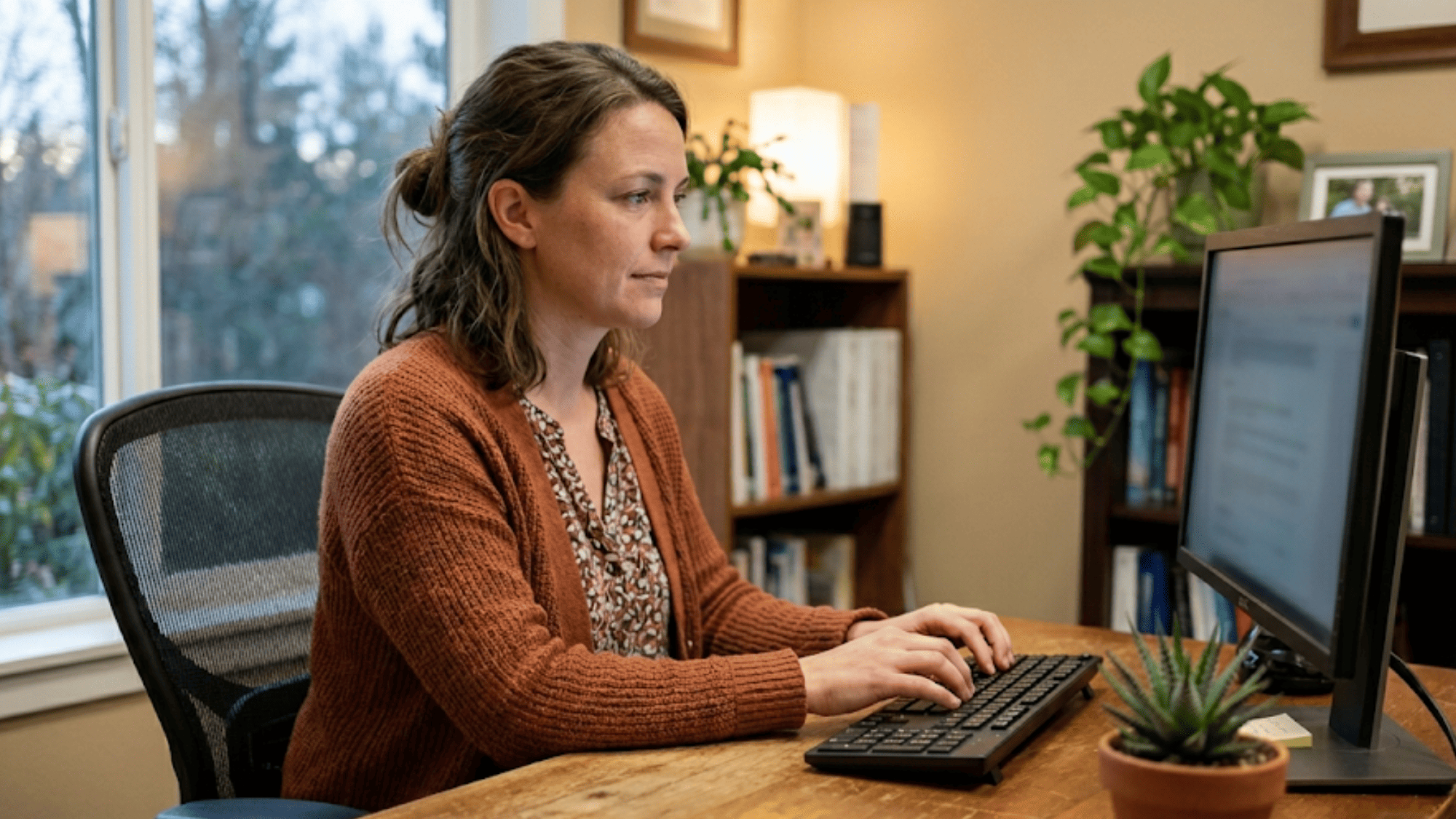
Practice staff member typing a warm recall text to re-engage inactive SUD behavioral health clients

Conversation That Feels Personal, Not Institutional

The client talks to a human, not a system. Rescheduled sessions get booked through the practice's existing workflows. Nothing about the back end changes for staff.

Behavioral health and SUD clients face barriers that older channels cannot touch. Each one points back to the same fix:

  • A client with social anxiety may avoid calls from unknown numbers. A ringing phone feels like a demand. A text feels like a choice.

  • A client in early recovery may have switched phones or lost portal access during an unstable stretch. The old login is gone. The text still lands on the new number.

  • A client managing depression may lack the energy to log in or open an email. Each extra step is a reason to wait. A text asks for almost nothing. One word can restart care.

A text bypasses all of these. It arrives quietly. It waits for the client's readiness. It lets them answer on their own terms. The channel bends to fit the population, instead of asking the population to bend to the channel.

This is what behavioral health client retention through SMS outreach really means. It is not a clever marketing trick. It is matching the tool to the people. When the channel fits the clinical reality, more clients reconnect.

Here is the short version: The phone asks the client to perform. The portal asks them to remember. The email asks them to search. The text asks for one tap, whenever they are ready. For this population, that difference decides who comes back.

The Success: The Text They Were Waiting For

The shift starts with a number. Based on our internal data, Curogram's SMS recall reached a 35% reconversion rate. More than a third of inactive patients who got a recall text booked an appointment within a month. That is not a rounding error. It is a working recall program.

Compare that to the channels practices usually rely on. Phone outreach to dropped clients tends to convert at a small fraction of that.

Portal messages do even worse, since many clients never open the portal at all. The exact figures vary by practice. The direction does not.

The volume tells the same story. Based on our internal data, 1,240 patients were seen from recall messages alone.

These were people already marked inactive. The texts did not create new demand. They surfaced demand that was sitting there, unreached.

For dropped behavioral health clients, the text vs phone gap is the whole point. A voicemail asks the client to call back during business hours. That call feels public and high-pressure. A text waits silently and lets them reply at 9 PM from the couch. One channel adds friction. The other removes it.

Real Recall Engine vs Administrative Gesture

A gesture checks a box: "We tried." An engine produces booked sessions. The channel choice is what separates the two.

Notice what changes in the language, too. The phrase "lost to follow-up" starts to disappear. In its place comes something simpler: "recovered by text."

The wording shifts because the outcome shifts. Clients once called "unreachable" reply within hours of a single message.

Let me walk through one realistic story:

A client dropped out of IOP six weeks ago. She has thought about returning most weeks. But she feels embarrassed about the sessions she missed. The shame keeps her from picking up the phone.

One evening, a text arrives:

"Hi [Name], we haven't seen you in a while and wanted to check in. Reply here or call us when you're ready to schedule."

She reads it in about ten seconds. The message does not judge. It does not demand. It simply opens a door.

She sits with it for a moment. Then she replies: "Can I come in next week?" The coordinator answers within minutes. They settle on Tuesday. A session is booked. She shows up. Treatment resumes.


Now contrast the effort. The text took her ten seconds to read and a few more to answer.

The phone call she would have ignored took the coordinator three minutes to record. Then it sat in a voicemail she would have deleted unheard. Same intent, opposite result.

That single case scales. When the channel fits the population, more clients respond, and they respond faster. This is behavioral health client retention through SMS outreach in practice. It is not a one-time win. It is a repeatable pattern.


How Curogram Turns an "Inactive" List Into Booked Sessions

Most practices already have the clients they need to fill their schedule. They are sitting on the inactive list. The problem was never demand. It was reach. Here is how Curogram closes that gap.

First, the practice segments inactive clients. Maybe they missed a recommended follow-up window. Maybe they dropped out of a program weeks ago. Curogram helps group them so the right message goes to the right people.

Next comes the recall text itself. The message is warm, short, and non-clinical. For SUD clients, it follows 42 CFR Part 2 rules. It names no treatment type, no substance, and no program. It reads like a simple check-in any provider might send.

Then the channel does its job. The text lands on the client's phone with no app and no login. There is no portal wall to climb. This is exactly how client recall by SMS sidesteps the behavioral health portal limitations that block other outreach. The client just reads and replies.

When they reply, the conversation moves into Curogram's two-way messaging. A coordinator can address barriers in real time. Transportation. Scheduling. Cost. Embarrassment about the gap. The thread feels human, not institutional.

The result is measurable. Based on our internal data, this approach reconverted 35% of inactive patients within a month. It produced 1,240 patients seen from recall messages alone. Those are real sessions, recovered from a list most practices treat as dead.

One more point matters here. Sigmund AURA holds the clinical record and treatment history.

Curogram handles the outreach that decides whether dropped clients ever return to add to that record. The EHR documents the disengagement. The text reverses it. Together, they keep more clients in care.

Conclusion: They’re Waiting for the Right Message on the Right Channel

Dropped behavioral health and SUD clients are not unreachable. They are unreached. The difference is everything. One word ends the story. The other starts a new chapter.

The old channels keep failing for predictable reasons. Calls go to voicemail. Portals sit behind logins clients lost or never made. Emails stay buried in folders no one opens. The outreach went out. The client never saw it.

A recall text skips all of that. It bypasses the voicemail. It ignores the forgotten password. It steps around the unopened email. It delivers one simple thing: an invitation to come back.

And it works. Based on our internal data, about 35% of clients accept that invitation within a month. They were never refusing care. They were waiting for a way to say yes that did not feel like pressure.

This reframes the whole problem. Sigmund AURA is built for clinical documentation and treatment records. Curogram is built for the outreach channel that decides whether dropped clients ever return to create new records. The EHR tracks the disengagement. The text reverses it.

So the label "lost to follow-up" deserves a second look. Those clients are not lost. They are one text away from scheduling their next session. The only thing missing was contact on the channel they actually use.

Your inactive list is a waiting room, not a graveyard. Book a quick demo to see how compliant recall texts reconvert dropped behavioral health clients.


Frequently Asked Questions

Why do behavioral health and SUD clients respond to texts but not calls or portals?

Texts feel low-pressure and need no login. Clients managing anxiety or shame often dodge unknown calls. Many never set up a portal, or lost the password. A text simply waits until they feel ready to reply.

What does a 42 CFR Part 2 compliant recall text actually say?

It names no treatment type, substance, or program. A typical line reads: "Hi [Name], we wanted to check in. Reply or call when you're ready to schedule." Nothing in it exposes the client's care or status.

How should staff respond when a client texts back that they don't want to return?

Reply with warmth and log their wish. Many who say "not now" feel unsure, not done. Use the thread to ask about cost, rides, or timing. Keep the door open without applying any pressure.

Why is the outreach channel a clinical decision, not just a preference?

For SUD clients, each disengaged week can raise relapse risk. If a channel fails to reach them, care stalls. So choosing the channel that actually lands becomes part of good, timely clinical care.

How is SMS recall different from portal messaging for dropped clients?

Portal messages sit behind logins many clients lost or never created. SMS arrives on a device they always check, with no password needed. That removes the exact barrier portal outreach keeps hitting, every time.