
1 min read
Ortho & Surgery Patient Communication with Dolphin HIPAA Texting
💡 Ortho patient communication in Dolphin is a challenge when not done right. But with HIPAA-compliant texting, your clinic can: Give parents...
A patient arrives for their Spravato session. The clinic staff asks if they've eaten. The patient nods yes—they had lunch an hour ago. The session must be canceled. The patient is frustrated. The clinic loses revenue. More importantly, the patient's treatment timeline is now disrupted.
This happens every week in interventional psychiatry practices. The core issue isn't patient carelessness. It's a communication gap. Patients don't always understand the critical nature of pre-treatment rules. Or they forget them between visits.
Mental health patient monitoring requires more than occasional check-ins. These treatments work within narrow safety windows.
A missed fasting requirement creates aspiration risk. A forgotten ride home leaves patients in danger after treatment. Post-session mood changes need immediate attention, not next-week follow-ups.
Traditional communication methods can't keep up. Phone calls go to voicemail. Patient portals require logins that patients forget. Email gets buried in inboxes. Meanwhile, patients check text messages within three minutes of receiving them.
Osmind patient communication safety needs a direct line. Curogram provides secure SMS that works with your existing systems. No app downloads. No portal logins.
Just clear, encrypted messages that confirm safety protocols are followed. The result is fewer cancellations, better treatment outcomes, and reduced clinical risk across your practice.
Treatment failure often starts with a simple missed message. In interventional psychiatry, small communication breakdowns create major clinical risks. Three common scenarios show how this safety gap puts patients and practices in jeopardy.
Spravato requires patients to avoid food for two hours before treatment. This isn't a suggestion. It's a safety rule that prevents nausea and aspiration during sessions. Yet clinics report that 15-20% of scheduled patients arrive having recently eaten.
The problem starts with how information is shared. Verbal instructions given weeks ago are forgotten. Emails sent days before are overlooked. Patients dealing with mental health crises have a reduced ability to track complex rules.
When a patient shows up unprepared, the session gets canceled. That patient's treatment momentum stops. Their depression or anxiety continues unchecked. The clinic loses several hundred dollars in revenue. Staff time is wasted on rescheduling. Insurance claims become complicated.
The Lost Driver Crisis
Ketamine treatments require patients to have a driver. This is non-negotiable. Patients cannot operate vehicles for 24 hours after sessions. But confirming transportation often fails through traditional channels.
Many clinics call patients the day before treatment. Half those calls go straight to voicemail. Busy patients don't call back. Staff members spend hours playing phone tag. By appointment time, the transportation question remains unanswered.
A patient arrives with no ride arranged. They assumed they could take a taxi, or they planned to drive themselves. The clinic faces a choice: send them home untreated, or risk their safety.
Either option creates liability. Ketamine treatment adherence suffers because patients miss multiple sessions due to logistics failures.
The Post-Session Silence
The 24 to 48 hours after treatment are critical. This is when the therapeutic effects begin. It's also when side effects or adverse reactions might occur. Without active monitoring during this window, clinics miss vital information.
Patients often experience breakthroughs during ketamine sessions. These insights need to be captured and discussed. But if there's no easy way to share them, they're lost. The next appointment might be days or weeks away. By then, the moment has passed.
Mental health patient monitoring requires daily symptom data. Mood dips after treatment need immediate attention. Physical side effects should be reported quickly.
But patients won't log into portals every day. They won't remember to call. They will, however, respond to a text that asks how they're feeling.
Secure texting transforms how interventional psychiatry clinics manage safety protocols. Curogram integrates with Osmind to create automated checkpoints throughout the treatment process. This system reduces human error and ensures interventional psychiatry safety protocols are consistently followed.
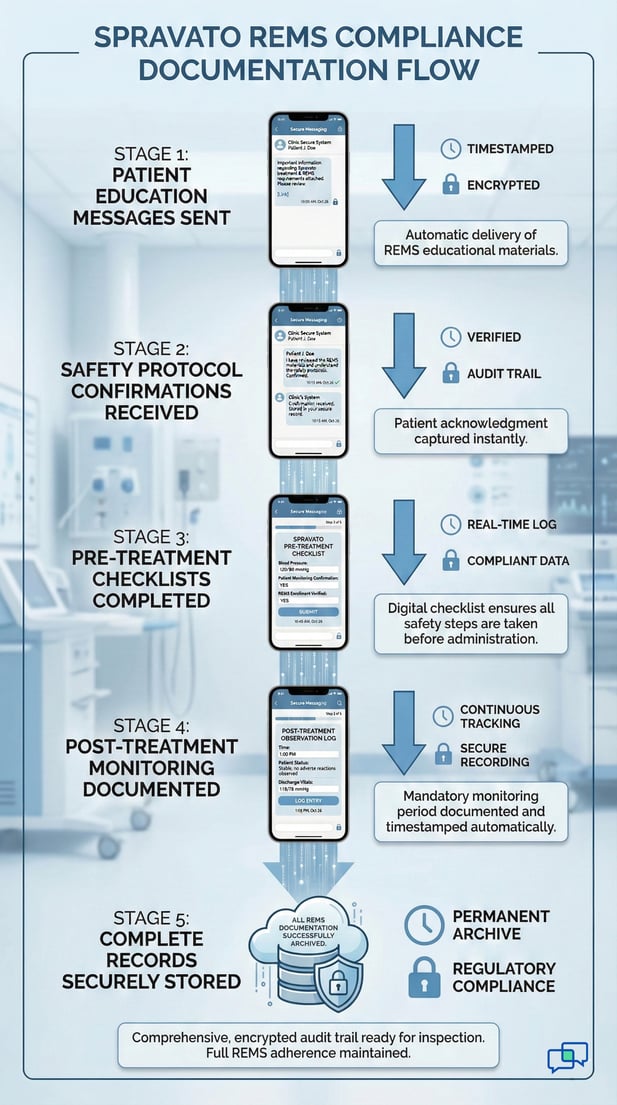
Spravato REMS compliance demands detailed documentation. Every patient interaction must be tracked and stored. Traditional paper systems create gaps. Manual logging introduces errors. Curogram solves both problems through automatic record-keeping.
Each message sent and received gets time-stamped. The system logs who sent what and when patients responded. During audits or inspections, clinics can produce complete communication records instantly. This documentation proves safety protocols were followed at every step.
Regulatory requirements demand proof of patient education and consent verification. Curogram generates reports that show all pre-treatment communications.
These reports include confirmation that patients acknowledged safety instructions. This reduces administrative burden while strengthening compliance.
Post-treatment monitoring is where secure texting shows its greatest clinical value. Automated check-ins reach patients at optimal times. The system asks specific questions about mood, side effects, and overall wellbeing. Responses trigger appropriate clinical actions.
When a patient reports severe symptoms, staff receive instant alerts. A sudden mood drop after ketamine treatment gets flagged for review.
Concerning physical symptoms, trigger callback protocols. This rapid response system catches problems that traditional follow-up methods miss completely.
Daily symptom tracking builds a comprehensive picture of treatment effectiveness. Clinics can review mood trends across entire treatment cycles.
This data informs dosage adjustments and protocol modifications. Better data leads to better clinical decisions and improved patient outcomes.
Every patient receives automated reminders 24 hours before their appointment. These messages aren't generic. They're specific to the treatment type and include exact fasting times and transportation requirements. Patients reply with simple confirmations.
The system tracks responses automatically. If a patient confirms they've arranged a driver, that information flows directly into their Osmind record. If they don't respond by a set deadline, staff receive alerts. This catches problems before patients arrive at the clinic.
All messages are encrypted end-to-end. They can include protected health information without violating HIPAA rules. Clinics can send appointment details, medication instructions, and safety reminders, knowing the data stays secure. This level of protection isn't possible with standard text messaging.
The relationship between patients and providers determines treatment success. Trust, communication, and accessibility form the foundation of effective mental healthcare. Secure texting strengthens these connections while removing barriers that traditionally weaken them.
Patients in mental health crises face overwhelming cognitive demands. Depression reduces motivation and energy. Anxiety creates avoidance behaviors.
Remembering to log into patient portals becomes another task they can't complete. This creates a vicious cycle where those who need help most receive it least.
Meeting Patients Where They Are
Text messages require no special effort. Patients don't need to download apps or remember passwords. They simply receive a message and respond.
This low barrier to entry means higher engagement rates. Clinics report that 85% of patients respond to text messages within an hour, compared to 30% for portal messages.
The Friction Problem Solved
Every extra step reduces patient compliance. Having to find login credentials, navigate complex interfaces, or fill out lengthy forms creates friction.
Secure SMS removes these obstacles. The result is consistent communication that maintains treatment momentum even when patients are struggling.
Ketamine and psychedelic-assisted therapies depend on integration work. The insights patients gain during sessions need to be processed and discussed.
But these breakthroughs often occur between scheduled appointments. Without a way to capture them immediately, valuable therapeutic material is lost.
Capturing Critical Moments
Secure texting allows patients to share insights right after they occur. A patient might text about an emotional breakthrough three hours after their ketamine session.
This information gets documented in their chart immediately. The therapist reviews it before the next appointment and can build on that momentum.
Building Continuous Dialogue
Treatment becomes a conversation rather than a series of isolated appointments. Patients feel supported throughout their journey. They know they can reach out when needed. This sense of connection reduces anxiety and improves treatment outcomes. The therapeutic relationship extends beyond the clinic walls.
Completion rates determine treatment success. Many patients start interventional psychiatry protocols but don't finish them. The dropout rate for ketamine treatment hovers around 40% in some clinics. Communication breakdowns are the primary cause of this attrition.
Reducing No-Shows and Cancellations
Automated reminders significantly reduce psychiatric no-shows. When patients receive confirmation requests 24 hours before appointments, they're 60% less likely to miss sessions.
The ability to easily reschedule through text prevents last-minute cancellations. This keeps treatment schedules on track and maintains therapeutic momentum.
The 25% Adherence Increase
Clinics using comprehensive secure messaging systems report a 25% increase in treatment plan adherence. Patients complete full induction cycles. They maintain their maintenance schedules.
The combination of consistent reminders, easy communication, and continuous support makes the difference. Better adherence leads to better outcomes and justifies the initial investment in secure communication technology.

Implementing secure messaging systems raises important questions about safety, compliance, and practical usage. Understanding how these systems handle emergencies, protect sensitive data, and improve patient retention helps clinics make informed decisions.
How do we handle emergency or crisis situations via text?
Text messaging isn't designed for emergencies. Patients need to understand this clearly from the start. Curogram includes automatic disclaimers that appear in every conversation. These messages direct patients to call 988 for crises or 911 for medical emergencies.
When patients use crisis-related keywords in messages, the system flags the conversation. Staff receive immediate notifications that a patient may need urgent attention. This doesn't replace proper emergency protocols, but it adds an extra safety layer. The clinic can follow up with a phone call to assess the situation.
Patient education materials should explain when to text versus when to call. Include response time expectations in your communications.
For example, messages sent during business hours receive responses within two hours, while after-hours messages are addressed the next business day. Clear boundaries prevent misunderstandings.
Can we send PHI, like lab results or mood scales?
Yes, secure messaging platforms are specifically designed to handle protected health information. Regular SMS cannot legally transmit PHI because messages aren't encrypted. Curogram creates an encrypted tunnel for all communications, making it HIPAA-compliant for sharing clinical data.
Clinics can safely send appointment details with specific procedure names, medication instructions including dosages, lab results, and what they mean for treatment, and mood assessment scores with clinical context. This level of detail helps patients understand their care while maintaining security standards.
All messages containing PHI are automatically logged in the patient's chart. This creates a complete communication record for continuity of care.
When multiple staff members work with the same patient, they can review previous text conversations to stay informed. This reduces errors and improves care coordination.
Can my whole team see the messages?
Absolutely. Spravato treatment requires significant commitment from patients. The twice-weekly schedule during induction, combined with strict pre-treatment requirements, creates multiple opportunities for patients to drop out. Consistent communication addresses many retention barriers.
Many patients feel anxious about new treatments. Regular check-ins through text provide reassurance. When patients can ask questions easily, their concerns get addressed quickly. This reduces the fear and uncertainty that often lead to treatment abandonment. Supported patients are more likely to complete their protocols.
Spravato isn't a one-time treatment. Patients need ongoing maintenance sessions after induction. Secure messaging helps maintain engagement during these long-term relationships.
Automated check-ins between appointments keep patients connected to their care team. This sustained support improves adherence and helps patients stick with their maintenance schedules for months or years.
Patient safety can't wait for perfect conditions. Every day without secure communication systems creates unnecessary risk. The tools exist now to close the safety gap that puts patients and practices in jeopardy.
Curogram's integration with Osmind provides the secure messaging infrastructure your interventional psychiatry practice needs. The system automates safety checks while maintaining the personal touch patients value.
It ensures Spravato REMS compliance without adding administrative burden. It captures critical post-treatment data that improves clinical decisions.
Implementation is straightforward. Most clinics are fully operational within two weeks. Staff training takes hours, not days.
Patients adapt immediately because texting is familiar. The return on investment appears quickly through reduced no-shows, better adherence rates, and improved outcomes.
The question isn't whether secure messaging improves safety and adherence—the evidence is clear. The question is whether your practice can afford to wait.
Each missed safety check, each canceled session, each patient who drops out represents an opportunity to prevent harm and deliver better care.
Your patients deserve communication that matches the quality of your clinical care. They need systems that work with their lives, not against them.
Secure texting meets them where they are and keeps them connected throughout their treatment journey. This is how modern mental health practices reduce psychiatric no-shows and improve outcomes.
Learn how other interventional psychiatry practices are using this technology to protect patients and improve treatment success rates.
Schedule a 10-Minute Demo today to see how Curogram’s secure messaging can bridge the safety gap in your Osmind-based clinic.
1 min read
💡 Ortho patient communication in Dolphin is a challenge when not done right. But with HIPAA-compliant texting, your clinic can: Give parents...
1 min read
 Sharee Narciso : Dec 5, 2025, 2:30:00 PM
💡 Many clinics face challenges when staff send messages through personal phones or tools not designed for healthcare. These gaps lead to compliance...
1 min read
💡 You can ensure healthcare compliance with secure texting in Allscripts enterprise workflows. Protect your patients' data and increase...