12 min read

Automated Appointment Reminders for Osmind: Maximizing Attendance

Automated Appointment Reminders for Osmind: Maximizing Attendance
💡 Interventional psychiatry practices lose thousands of dollars when patients miss Ketamine or Spravato appointments. Automated appointment reminders for Osmind solve this problem by sending 2-way SMS messages that patients can respond to instantly.

These reminders cut no-show rates by up to 75%. They protect your schedule from gaps and keep treatment rooms filled. When a patient confirms with a simple text reply, your team knows the slot is secure.

For clinics using Osmind, this means less wasted medication and fewer idle staff hours. It also means patients stay on track with their mental health treatment plans.

The system works in real-time with your Osmind schedule, making sure every reminder goes out at the right moment.

Picture this: It's Monday morning at your clinic. You have six Ketamine sessions on the books. Each one needs a prep room, a nurse, and fresh medication. Then at 9 AM, your first patient doesn't show.

No call. No text. Nothing.

That empty chair just cost you $400 in revenue and wasted two hours of nurse time. Worse yet, the patient's healing journey got derailed. Now they might need to restart their full treatment series.

This happens more than you'd think. Mental health patients face unique barriers to keeping appointments. They struggle with memory during crisis periods. They forget to arrange rides. They don't always grasp how critical each session is.

Phone calls don't fix this problem. Most patients don't answer unknown numbers. Voicemails get ignored. Your staff spends hours trying to confirm who's actually coming tomorrow.

Automated appointment reminders for Osmind change everything. They send text messages straight to your patient's phone. Patients can confirm, cancel, or ask questions with a quick reply. Your team sees these responses in real-time.

The result? Fewer gaps in your schedule. Less stress for your staff. Better outcomes for patients who stay consistent with their care.

Let's look at how this system works and why it matters so much for practices that offer Ketamine, Spravato, and TMS treatments. We'll show you exactly how Osmind SMS confirmations protect your clinic from the "empty chair" crisis that drains both money and morale.

The Empty Chair Crisis: Why Traditional Reminders Fail Osmind Users

Traditional reminder systems weren't built for the high-stakes world of interventional psychiatry. A missed therapy session is one thing. A missed Ketamine infusion is something else entirely.

These treatments require careful prep work, dedicated staff, and expensive medications that can't be saved for later. When reminder systems fail, the whole clinic suffers. Let's break down exactly why old methods don't work for practices using Osmind.

The Resource Drain

Every interventional treatment ties up significant clinic resources. Unlike a standard talk therapy session, these appointments can't happen in just any room with just any staff member. They need specialized spaces and trained personnel.

A Ketamine infusion requires a monitoring room with comfortable seating and dimmed lights. A nurse needs to stay present for the full session. Medical supplies must be prepped and ready. The medication itself costs money and can't be reused.

The True Cost of a No-Show

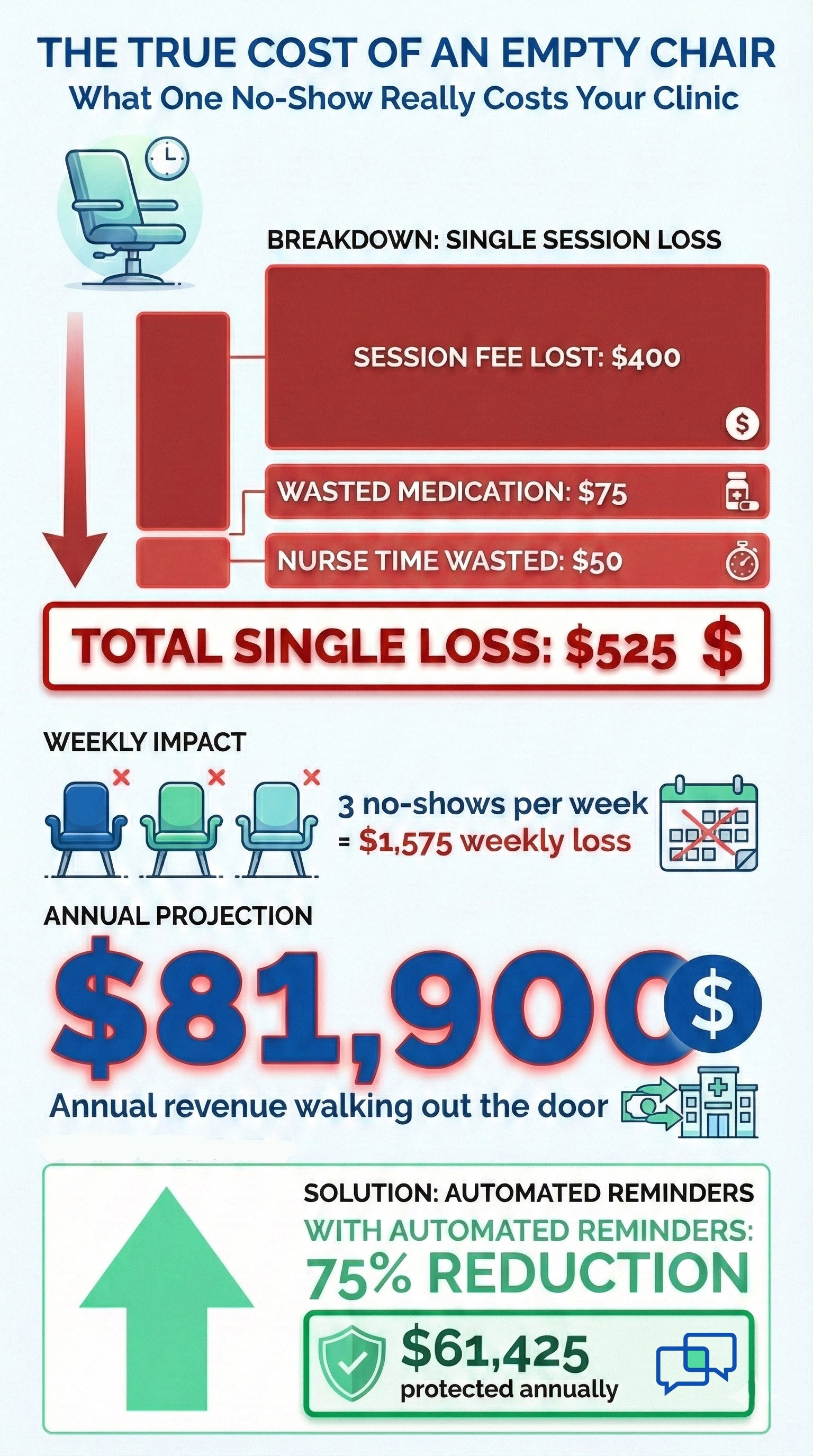
When a patient doesn't show for their Spravato treatment, you lose more than just the session fee. The medication has already been prepared. The nurse's time is already blocked. The monitoring room sits empty when it could be generating revenue.

Most clinics charge $300 to $500 per Ketamine session. That's pure loss when the chair stays empty. Multiply that by two or three no-shows per week, and you're looking at over $50,000 in annual revenue walking out the door.

Staff Time Wasted on Prep

Your nursing staff spends 15 to 20 minutes getting ready for each treatment. They sanitize the room. They prep the IV line. They review the patient's vitals from the last visit. All of that effort gets wasted when the patient doesn't arrive.

The front desk faces pressure, too. They can't fill that slot with another patient on short notice. The schedule stays locked because traditional phone reminders don't give enough advance warning when someone plans to cancel.

The Series Interruption

Mental health treatments follow strict protocols. Patients need consistent dosing at regular intervals. Missing even one session can reset their progress and force them to start over. This creates medical complications and emotional setbacks.

Traditional reminders don't emphasize this urgency. They treat each appointment like it stands alone. Patients don't realize that skipping today's session could mean losing weeks of progress.

Treatment Protocols Demand Consistency

Ketamine therapy for depression typically follows a six-session induction phase. Each session builds on the last. Skip one, and the therapeutic effect weakens. The brain needs steady exposure to create lasting changes.

Spravato treatments work the same way. The first month requires twice-weekly visits. Missing appointments during this critical window can delay remission by months. Patients end up suffering longer than necessary.

The Emotional Impact on Patients

When patients miss sessions, they often feel guilty. They know they let down their care team. This shame makes it harder for them to reschedule. Some drop out of treatment entirely because they're too embarrassed to come back.

Mental health appointment automation prevents this cycle. It gives patients gentle nudges before they forget. It removes barriers by letting them confirm or reschedule with zero friction. They stay engaged with their healing process.

The Phone Tag Trap

Manual reminder calls create more problems than they solve. Most patients screen calls from numbers they don't recognize.

Even when they listen to voicemails, they rarely call back to confirm. Your staff ends up playing phone tag instead of focusing on patient care.

This leaves everyone in limbo. You can't confidently fill backup slots because you don't know who's coming.

Patients miss important details because voicemails get deleted or forgotten. The whole system runs on hope instead of confirmation.

Why Patients Don't Answer Calls

Nobody answers their phone anymore. Between spam calls and robodialers, people ignore unknown numbers by default. Your clinic's number looks like every other unwanted call trying to reach them.

Even patients who want to stay engaged with treatment fall into this pattern. They see the missed call hours later. By then, your staff has already moved on to other tasks. The confirmation never happens.

Staff Burnout from Repeat Attempts

Your front desk team makes the same calls three or four times trying to reach one patient. They leave messages that never get returned. They mark the appointment as "unconfirmed" and hope for the best.

This busywork drains morale. Staff members could spend that time on high-value tasks like patient education or insurance follow-ups. Instead, they're stuck in an endless cycle of unreturned phone calls. Systems that reduce ketamine clinic no-shows free them from this trap.

How Curogram and Osmind Optimize the Patient Schedule

Smart technology solves the problems that manual systems can't. When Curogram connects to your Osmind schedule, everything runs on autopilot. Reminders go out at the perfect time. Confirmations come back instantly. Your team always knows who's coming and who needs a follow-up.

This integration transforms how your clinic manages appointments. Let's walk through each piece of the system and see how it all works together.

Real-Time 2-Way Sync

The magic starts with seamless data flow between platforms. Curogram reads your Osmind calendar every few minutes. When you book a new Ketamine appointment, the reminder system knows about it right away. No manual entry required.

This real-time connection means your reminders stay accurate even when schedules change. Cancel an appointment in Osmind? The reminder gets canceled automatically. Move a session to a different time? The new reminder reflects that update.

Custom Reminder Intervals

You control when patients hear from you. Most clinics send three reminders: one at 72 hours out, another at 24 hours, and a final check at 2 hours before the session. This gives patients multiple chances to confirm or make changes.

The 72-hour reminder catches planning issues early. Patients have time to arrange rides or request time off work. The 24-hour reminder serves as a final confirmation. The 2-hour alert prevents last-minute forgetfulness.

Zero Manual Data Entry

Your staff doesn't lift a finger to make this happen. They schedule appointments in Osmind just like always. Behind the scenes, the system handles everything else. Reminders queue up automatically based on your custom timing rules.

This eliminates human error. Nobody forgets to queue a reminder. Nobody types in the wrong phone number. The integration ensures every scheduled patient gets their messages without any extra steps from your team.

Automated Confirmations

Patients receive text messages they can respond to instantly. The message might say: "You have a Ketamine session tomorrow at 2 PM. Reply 1 to confirm or 2 to reschedule." Patients tap a single number, and they're done.

When that confirmation comes in, Curogram marks the appointment with a green status. Your front desk sees at a glance which patients are locked in. No guessing. No anxiety about whether people will show.

Visual Dashboard for Staff

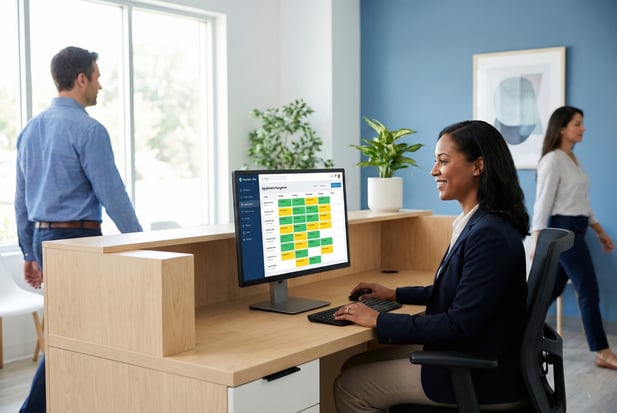
Your team works from a color-coded dashboard. Green means confirmed. Yellow means waiting for a response. Red means the patient indicated they can't make it. This visual system lets staff prioritize their outreach efforts.

The dashboard updates in real-time as responses come in. A nurse preparing for the afternoon shift can check the screen and know exactly how many patients to expect. No surprises. No wasted prep work.

Instant Visibility Across the Team

Everyone with access to the system sees the same information. The psychiatrist knows their schedule is solid. The nurse knows which treatments to prep. The front desk knows which patients might need a follow-up call.

This transparency reduces stress for the entire team. Nobody wastes time wondering if patients will appear. The Osmind SMS confirmations give everyone confidence about the day ahead.

Smart Rescheduling

Not every patient can make their appointment. Life happens. The difference with this system is that you find out right away. When a patient texts back that they can't come, you have time to fill the gap.

Your clinic probably keeps a waitlist of patients eager to start treatment. Now you can pull from that list and fill same-day cancellations. What used to be lost revenue becomes an opportunity to help more people.

Waitlist Management Made Easy

When a Spravato treatment slot opens up, the system can alert patients on your waitlist. They get a text: "A spot just opened for tomorrow at 10 AM. Reply 1 to claim it." First responder gets the slot.

This turns cancellations into wins. Your schedule stays full. Patients get faster access to care. Revenue that would have vanished now flows into your clinic. Psychiatric practice attendance stays high even when life throws curveballs.

Reducing Schedule Gaps

Empty time slots hurt everyone. Your clinic loses money. Patients wait longer to start treatment. Staff members feel underutilized. Smart rescheduling keeps those gaps to a minimum.

The system gives you enough lead time to pivot. A cancellation that comes in 24 hours early leaves room to find a replacement. Even a 6-hour notice can work if you have an engaged waitlist ready to jump on short-notice openings.


Infographic showing the cost of psychiatric no-shows and savings from automated reminders

Clinical Value: Reminders as Preparation Tools

Appointment reminders do more than just tell patients when to show up. They prepare people for what's coming. Good reminders include instructions that keep patients safe and make treatments more effective. This is especially critical for interventional psychiatry.

Let's look at how thoughtful reminder content improves both clinical outcomes and patient experience.

Transportation and Fasting Alerts

Some treatments require special preparation. Ketamine and Spravato sessions mean patients can't drive themselves home. They need to arrange rides ahead of time. Reminders should spell this out clearly.

A good reminder might say: "Your Ketamine session is tomorrow at 2 PM. Remember to arrange a ride home. You cannot drive for 24 hours after treatment." This prevents unsafe situations and last-minute cancellations.

Safety Instructions in Every Message

Patients sometimes forget the rules between appointments. They might grab a meal an hour before their session, not realizing they should fast. Including these details in reminders prevents problems at check-in.

"Please stop eating 2 hours before your visit" takes five seconds to read, but saves 15 minutes of delay when a patient arrives with a full stomach. Clear instructions help treatments start on time and go smoothly.

Preventing Last-Minute Logistical Issues

Transportation problems kill schedules. A patient who planned to drive themselves might cancel when they realize they can't. Early reminders about ride requirements give people time to arrange alternatives.

Some clinics include ride-share gift codes in their reminders for patients who struggle with transportation. Others partner with local services. Either way, addressing logistics early in the reminder sequence keeps chairs filled.

TMS Series Adherence

TMS therapy demands extreme consistency. Patients typically need daily sessions for 4 to 6 weeks straight. That's 20 to 30 appointments in rapid succession. Missing even two or three sessions can reduce the treatment's effectiveness.

Reminders help patients stay committed to this intense schedule. Each text reinforces that today's session matters. It's easy to skip one day when you're feeling better. But that one skip can derail the entire protocol.

Daily Reinforcement Builds Routine

Getting a reminder every morning turns TMS into a routine. Patients build their day around that text message. "I have TMS at 10 AM" becomes as automatic as brushing teeth.

The reminders also track progress. "This is session 12 of 30. You're almost halfway there!" These small encouragements keep patients motivated through the long haul. Spravato treatment scheduling works the same way for its twice-weekly induction phase.

Reaching Full Remission

Studies show that patients who complete their full TMS series have much better outcomes than those who drop out early. Automated reminders dramatically increase completion rates. More patients reach remission when they stick with the plan.

This is the real clinical value of a good reminder system. It's not just about protecting revenue. It's about getting patients to the finish line where healing happens. Mental health appointment automation supports recovery at scale.

Reducing Cognitive Load

Patients in mental health crisis often struggle with basic tasks. Memory fails. Keeping track of appointments feels overwhelming when you’re experiencing mental health issues.

Automated reminders provide the external structure these patients desperately need. They don't have to remember appointment times. They don't have to worry about forgetting. The text arrives exactly when they need it.

Supporting Patients in Crisis

Depression and anxiety both mess with memory. A patient might book an appointment on Monday and completely forget about it by Thursday. This isn't laziness. It's a symptom of their illness.

Gentle text reminders meet patients where they are. "Hey, you have an appointment tomorrow" feels supportive, not accusatory. It removes shame from the equation. Patients feel cared for instead of judged.

Building Trust Through Consistency

When patients know they'll always get a reminder, they relax. They don't spend mental energy trying to remember appointments. They trust the system to prompt them at the right time.

This trust strengthens the therapeutic relationship. Patients see their care team as reliable and supportive. They engage more deeply with treatment because they feel held by a system that works. That's the deeper benefit of automated appointment reminders for Osmind users.


Frequently Asked Questions About Osmind Reminders

Clinics considering automated reminder systems often have similar questions. They want to know how flexible the system is, whether it works with their specific setup, and what happens when patients need extra support. Here are the answers to the most common questions we hear.

Can we customize the message for different treatment types?
Yes, Every treatment type can have its own message template. Your Spravato induction reminder looks different from your Ketamine maintenance reminder. Each one includes the specific instructions patients need for that particular session.

You might send one message for first-time patients that explains what to expect. Regular patients get a simpler version. The system recognizes which category each appointment falls into and sends the right content automatically.

Treatment-Specific Instructions

A TMS reminder focuses on daily commitment: "Your daily TMS session is tomorrow at 9 AM. This is day 8 of your series."

A Ketamine reminder emphasizes preparation: "Your infusion is Thursday at 3 PM. Eat a light meal 2 hours before and arrange your ride home."

This customization makes reminders more useful. Patients get exactly the information they need without wading through irrelevant details. The message stays short and clear.

Language and Tone Options

You control the voice of your messages. Some clinics prefer warm and casual: "Hi Sarah! Looking forward to seeing you tomorrow."

Others go professional: "This is a reminder of your scheduled appointment." Pick the tone that matches your practice culture.

You can even send reminders in multiple languages if your patient base needs it. The system supports Spanish, Mandarin, and other common languages. Each patient receives messages in their preferred language.

Does this work for multi-provider clinics?
Absolutely. The system handles complex schedules with multiple psychiatrists, multiple locations, and various treatment types all at once. Each reminder includes the provider's name and the specific location where the appointment takes place.

Patients see: "Your Ketamine session with Dr. Martinez is on Wednesday at 2 PM at our downtown office."

This clarity prevents mix-ups and makes sure people show up at the right place at the right time.

Provider-Specific Customization

Each provider can set their own reminder preferences. Dr. Smith might want three reminders per patient. Dr. Johnson might prefer just two. The system respects these individual choices while pulling from the same Osmind schedule.

This flexibility matters in group practices where different providers have different styles. Everyone gets the reminder system that works for their patient relationships.

Multi-Location Support

Clinics with multiple offices benefit from location-specific reminders. The message automatically includes the address or building name. Patients don't have to dig through their email to remember which office they're supposed to visit.

You can even include parking instructions or entry codes in location-specific reminder templates. This reduces confusion and makes sure patients arrive prepared.

What happens if a patient replies with a question?
When a patient replies with something other than a simple confirmation, the conversation moves into a secure chat window. Your staff sees the question immediately and can respond without picking up the phone.

This chat happens inside a HIPAA-compliant platform. Curogram encrypts all messages and stores them according to strict privacy rules. You can discuss treatment details without worrying about security risks.

Real-Time Staff Responses

Your front desk monitors the chat dashboard throughout the day. When a patient asks, "Can I move my appointment to 4 PM instead?", staff can answer instantly. No phone tag. No delayed responses. The conversation happens in real-time.

This back-and-forth often prevents cancellations. A patient might text, "I'm not sure I can make it tomorrow."

Your team can reply immediately: "Would Thursday work better?" Problem solved before the appointment gets lost.

HIPAA Compliance Built In

Every message meets federal privacy standards. The platform doesn't use regular consumer texting. It routes everything through secure channels. Messages never sit on personal phones or unsecured servers.

Staff can safely discuss treatment plans, medication questions, or side effects through this chat. The conversation stays private and documented in case you ever need to reference it later. This is the core benefit of using Osmind SMS confirmations through a proper clinical platform.


Clinic receptionist using appointment scheduling software on a computer at a modern front desk

Lock in Your Clinic's Growth and Patient Success

Empty treatment chairs drain your clinic in ways that go beyond lost revenue. They waste your team's time and energy. They delay patient healing. They create stress and uncertainty that ripple through your entire operation.

Automated appointment reminders for Osmind fix these problems at the root. They give patients the structure they need to stay on track.

They give your staff the visibility they need to plan each day with confidence. They protect your schedule from the gaps that hurt both your bottom line and your mission.

The clinics that adopt this technology see dramatic improvements fast. No-show rates drop by 50% to 75% within the first month.

Staff spend less time on phone tag and more time on meaningful patient care. Treatment completion rates climb as patients stay consistent with their protocols.

Your practice deserves systems that work as hard as you do. Systems that reduce ketamine clinic no-shows, keep Spravato treatment scheduling tight, and support psychiatric practice attendance across all your service lines. This isn't just about efficiency. It's about helping more people heal.

Schedule a 10-Minute Demo today to see how automated appointment reminders for Osmind can protect your schedule, reduce staff burnout, and ensure your patients never miss a step in their recovery.

Maximize ROI: Automated Reminders for Elation Health Practices

Maximize ROI: Automated Reminders for Elation Health Practices

💡 Independent practices lose thousands each month from empty exam rooms. A single no-show can cost up to $500 in lost revenue. When you add up just...
Read More
Ending Empty Recliner Syndrome: How to Reduce Ketamine Clinic No-Shows

Ending Empty Recliner Syndrome: How to Reduce Ketamine Clinic No-Shows

💡 Practices that work with interventional psychiatry can reduce ketamine clinic no-shows. The key is using automated, two-way SMS reminders that...

Read More
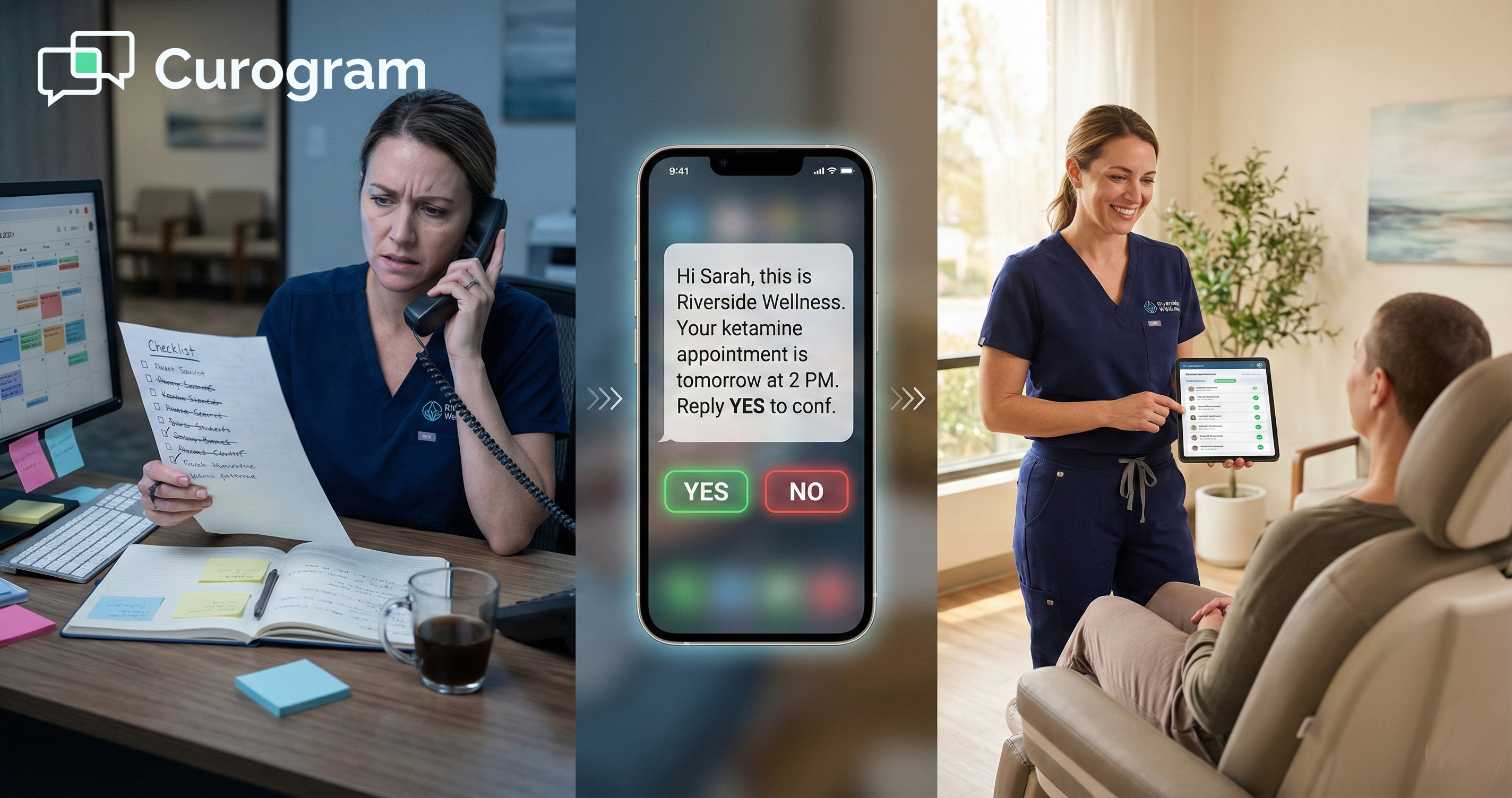
Reclaim Clinical Hours: The Staff ROI of Osmind Appointment Automation

Reclaim Clinical Hours: The Staff ROI of Osmind Appointment Automation

💡 Mental health practices see a strong Osmind appointment reminders ROI when they automate patient contact. Staff spend less time on phone calls...

Read More