Maximize ROI: Automated Reminders for Elation Health Practices
💡 Independent practices lose thousands each month from empty exam rooms. A single no-show can cost up to $500 in lost revenue. When you add up just...
11 min read
Jo Galvez
:
February 2, 2026
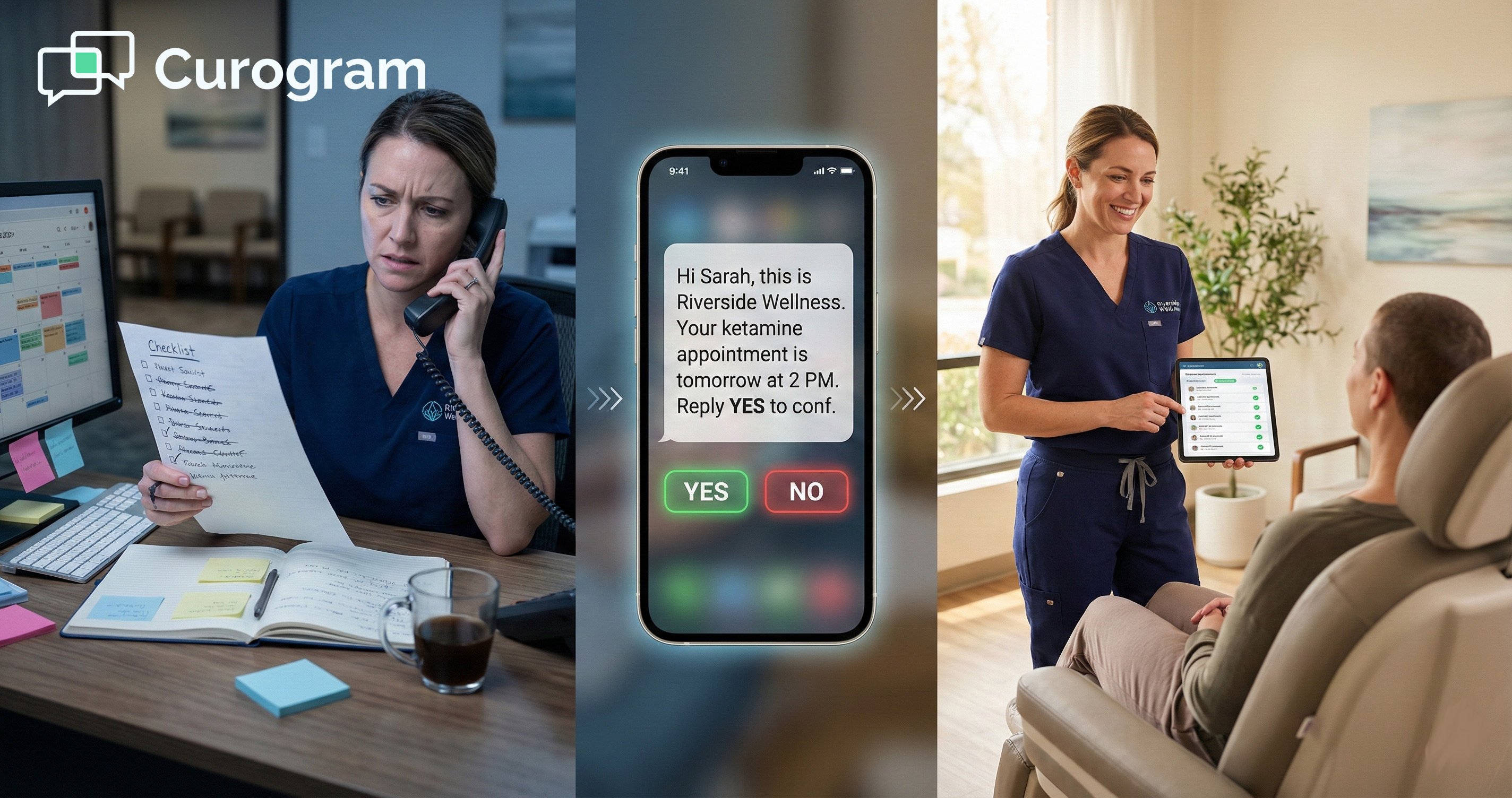
Your medical assistant starts each day with a long list. She calls every patient on tomorrow's schedule to confirm rides, check ketamine prep rules, and answer last-minute questions. By noon, she's left 40 voicemails and reached maybe 15 people.
This is the hidden cost of manual outreach. While she juggles phone calls, your clinic loses hours of skilled labor.
That time could support patient care, update charts, or handle insurance tasks. Instead, it vanishes into an endless loop of unanswered calls.
The Osmind appointment reminders ROI becomes clear when you replace phone tag with automated texts. Curogram sends a message to each patient in seconds. They reply yes or no with one tap. Your staff sees every response in a single dashboard.
This shift saves 15 to 20 hours per week on average. Those hours return to your team for higher-level work. Nurses can monitor vitals during infusions.
Medical assistants can prep treatment rooms with full attention. Front desk staff can focus on new patient intake instead of chasing confirmations.
Mental health staff burnout often starts with repetitive admin tasks. When team members spend half their day on clerical work, they feel disconnected from the clinical mission. Automation removes this frustration and gives them back the work they trained for.
Interventional psychiatry demands precision. Room turnover, nurse coordination, and patient safety all depend on tight schedules.
Medical office automation benefits show up fast when your team can rely on real-time appointment data. You reduce no-shows, improve flow, and protect your staff from exhaustion.
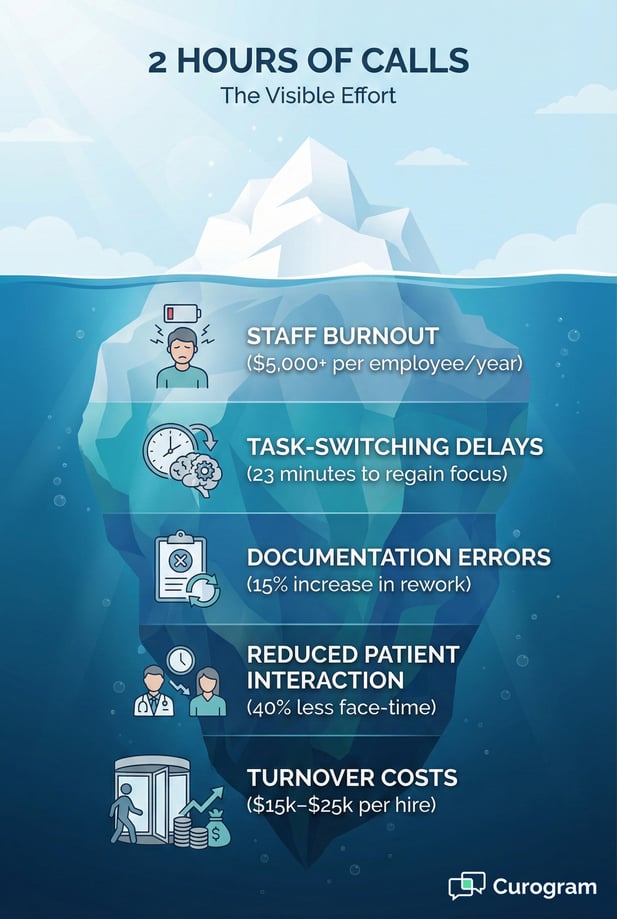
Manual confirmation calls drain your clinic's resources in ways that don't show up on a budget line. Every minute your nurse spends dialing patients is a minute she can't spend on clinical observation. The real cost appears in reduced care quality, slower operations, and rising staff turnover.
Phone-based outreach creates massive productivity loss. A typical ketamine clinic schedules 20 to 30 patients daily. Confirming each appointment takes 3 to 5 minutes when you include redialing, leaving messages, and documenting attempts. That's 60 to 150 minutes of pure clerical work.
Your highly trained medical staff handles these calls instead of clinical duties. A nurse who could be checking post-treatment vitals instead leaves her tenth voicemail of the morning. An MA who should be prepping the next infusion room sits at the front desk with a phone list.
Time Lost to Voicemail
Most patients don't answer unknown numbers during work hours. Your staff leave messages that require callbacks. When patients call back, the front desk fields questions that delay other tasks. This creates a confirmation backlog that stretches into evening hours.
Every hour spent on phone outreach is an hour not spent on patient integration support. Ketamine treatments need careful monitoring in the first 24 hours. TMS patients benefit from check-ins between sessions. When your team chases confirmations, these touchpoints slip through the cracks.
The Switching Cost Penalty
Constant task-switching destroys focus and increases errors. Your staff jump between the EMR, phone system, and paper notes dozens of times per hour. Each switch requires a mental reset time that compounds throughout the day.
Research shows that task-switching can reduce productivity by up to 40%. When your MA confirms an appointment by phone, she must pull up the patient's chart, check treatment protocols, note the confirmation, and then return to her previous task. That full cycle takes 2 to 3 minutes beyond the actual call.
Osmind users know the platform well, but accessing specific patient data mid-call still requires several clicks. Staff search for appointment details, verify insurance status, and check treatment history while the patient waits on the line. This fragmented workflow adds 30 to 45 seconds per interaction.
Manual confirmation processes increase the chance of missed notes. A staff member might confirm a patient verbally but forget to update the EMR status field.
Later, another team member calls the same patient again. These duplicate efforts waste time and frustrate patients who already confirmed.
The Morale Drain
Repetitive clerical work is a leading cause of mental health staff burnout. Your team chose psychiatric care because they want to help people recover. They trained for clinical skills, not phone banking. When 30% to 40% of their day involves unsuccessful call attempts, job satisfaction plummets.
Burned-out staff make more mistakes and take more sick days. They become less engaged with patients and less collaborative with colleagues.
The cycle feeds itself until talented nurses and MAs leave for positions that use their skills properly. Replacing clinical staff costs $30,000 to $50,000 per position when you factor in recruitment, training, and lost productivity.
Your staff want meaningful patient interaction. They want to support someone through a difficult treatment or celebrate a breakthrough in symptoms. Phone tag doesn't provide these rewards. It feels like obstacle management rather than healthcare delivery.
When one team member spends hours on confirmation calls, other staff must cover her clinical duties. This creates resentment and disrupts workflow. Teams function best when everyone can focus on their primary responsibilities without constant coverage gaps.
The Osmind appointment reminders ROI becomes measurable when you track time saved and errors prevented. Curogram's automation turns a multi-hour manual process into a 10-minute staff review. Your team shifts from reactive phone chasing to proactive exception management.
When a patient receives a text reminder, their response flows directly into your clinical dashboard. They tap yes or no.
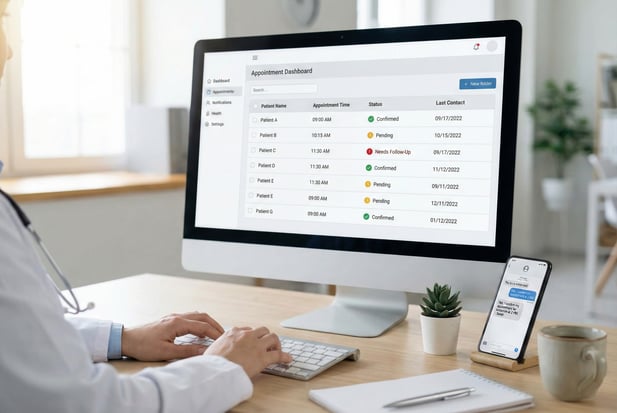
That action updates their appointment status in real time. Your staff sees a color-coded list that shows confirmed, unconfirmed, and needs-attention patients.
This eliminates the need to open individual charts for confirmation status. One screen shows your entire day's schedule with visual indicators. Green means confirmed and ready. Yellow means waiting for a response. Red means the patient needs a call. Your front desk staff can assess the situation in 30 seconds instead of 30 minutes.
Medical office automation benefits include shared information access. When every team member can view appointment status, coordination improves.
The nurse prepping treatment rooms knows which patients are confirmed. The billing specialist sees who might cancel so she can adjust insurance authorization timing. Everyone works from the same data set.
Manual confirmation requires staff to log each call attempt and result. Automated systems handle this documentation instantly. Every text sent, delivered, and responded to creates a timestamped record. Your compliance documentation happens automatically without extra clicks or typing.
Traditional confirmation processes treat every patient the same. Your staff call everyone on the list, whether they need intervention or not.
Automation flips this model. It handles routine confirmations silently and only alerts staff when something requires human attention.
This approach reduces psychiatric administrative burden by over 80%. Instead of making 30 calls daily, your MA makes 4 or 5 calls to patients who didn't respond to texts or who asked specific questions. They spend 20 minutes on exceptions instead of 2 hours on the full list.
Not all unconfirmed appointments require the same urgency. A first-time ketamine patient who hasn't confirmed needs immediate follow-up to review safety protocols.
A regular TMS patient who usually confirms might just be busy and will respond later. Automated systems can flag high-priority cases, so staff address critical situations first.
Manual processes create capacity ceilings. When your staff spends fixed hours on confirmations, you can't schedule more patients without hiring more staff.
Automation breaks this constraint. You can handle 40 appointments per day with the same staffing that previously maxed out at 25. Growth doesn't require proportional headcount increases.
Two-way texting creates flexibility that phone systems can't match. When a patient realizes they'll be 10 minutes late, they send a quick text. Your front desk sees this instantly and adjusts the room schedule.
The next patient can check in early and start treatment on time. You maintain flow instead of watching staff stand idle in an empty treatment room.
This real-time communication helps streamline ketamine clinic operations by preventing cascade delays. One late patient used to throw off the entire afternoon schedule.
Now your team has advance warning and can rearrange the sequence to maximize room utilization and minimize patient wait times.
Every unused treatment slot represents lost revenue. A ketamine infusion that doesn't happen because of poor communication costs your clinic $400 to $600.
When you multiply this across a month or year, the financial impact becomes substantial. Automated reminders protect this revenue by ensuring patients show up or cancel with enough notice for you to fill the slot.
When your team sees smooth operations and happy patients, morale improves. They feel competent and in control rather than constantly fighting fires.
This positive environment reduces turnover and attracts high-quality candidates when you do need to hire. Psychiatric practice staff efficiency becomes a recruiting advantage.

Financial ROI measures time and money saved. Cultural ROI measures something harder to quantify but equally valuable: staff wellbeing and retention.
When you reduce mental health staff burnout through automation, you protect your clinic's most important asset—skilled, motivated people who deliver excellent care.
Restoring Clinical Focus
Your medical assistants and nurses are trained for patient care, not clerical work. They spent years learning clinical skills, safety protocols, and patient communication techniques. When 40% of their day involves phone tag, that training goes unused.
Automation returns staff to their core competencies. A nurse can monitor patients during ketamine infusions with full attention. An MA can prepare treatment spaces with proper care. Front desk staff can conduct thorough intake interviews instead of rushing through them between confirmation calls.
Job Satisfaction Increase
Studies show that healthcare workers report the highest satisfaction when they spend most of their time on direct patient care. When automation removes administrative barriers, staff engagement scores rise. They feel respected and valued because their employer invested in tools that let them practice at the top of their license.
Reduced Turnover Costs
Replacing medical assistants can be costly. Here's a breakdown of these costs:
| Position | Replacement Cost Range | Cost Components |
|---|---|---|
| Medical Assistant | $25,000 - $35,000 | • Recruitment fees • Training time • Lost productivity during ramp-up period |
| Nurse | $40,000 - $60,000 | • Recruitment fees • Training time • Lost productivity during ramp-up period |
When you reduce psychiatric administrative burden and improve job satisfaction, staff stay longer. You avoid these replacement costs and maintain institutional knowledge.
First impressions matter in mental health treatment. When a patient's first contact is a harried phone call about logistics, it sets a transactional tone. When their first contact is a simple, frictionless text that respects their time, it signals professionalism and consideration.
This shift improves the initial in-person interaction. Your staff aren't rushing through business items to get to the clinical discussion. They can focus entirely on the patient's emotional state, treatment goals, and concerns. The relationship starts with care, not scheduling logistics.
Reduced Patient Anxiety
Many psychiatric patients experience phone anxiety. An unexpected call from a medical office can trigger stress.
Text communication lets them respond on their own timeline without the pressure of real-time conversation. This accommodation demonstrates that your clinic understands and respects their needs.
Better Clinical Outcomes
When staff have more time for patient support, outcomes improve. They can answer questions about side effects, check on integration progress, and provide encouragement between sessions. These touchpoints strengthen the therapeutic alliance and increase treatment adherence.
Automated, branded reminders present your clinic as modern and organized. Patients receive consistent messaging that includes your logo, clinic name, and professional tone.
This beats the variability of manual calls, where message quality depends on which staff member happens to make the call and how rushed they feel.
Consistency builds trust. When every patient receives the same high-quality communication, they feel confident in your systems. They know important information won't fall through the cracks.
This peace of mind is especially valuable in psychiatric care, where patients may already feel vulnerable or anxious about treatment.
Enhanced Clinic Reputation
Word-of-mouth matters in mental health. Patients talk to friends and family about their treatment experience. When your clinic uses streamlined systems, patients notice and mention it in positive reviews. They appreciate the smooth logistics that let them focus on healing rather than scheduling headaches.
Staff Pride
Your team takes pride in working for a well-run clinic. When they have efficient tools, they feel good about their workplace. They recommend your clinic to job-seeking colleagues.
They speak positively about their employer in professional circles. This goodwill supports recruitment and strengthens your market position.
Practice managers often have specific questions about implementing automated systems. These FAQs address the most common concerns we hear from clinics considering the switch from manual to automated appointment confirmation.
How much time will my staff actually save?
Time savings depend on your current patient volume and confirmation process. Most Osmind users report reclaiming 15 to 20 hours per week after implementing Curogram integration. This breaks down to 45 to 60 minutes saved per 10 patients on your daily schedule.
A typical ketamine clinic, seeing 25 patients daily, will save 2 to 2.5 hours of staff time each business day. Over a month, that's 40 to 50 hours returned to your team. Over a year, you reclaim 480 to 600 hours of skilled clinical labor that was previously spent on phone tag.
Manual confirmation typically takes 3 to 5 minutes per patient when you include initial call attempts, leaving messages, waiting for callbacks, and documenting results.
Automated confirmation takes 10 to 15 seconds per patient for the system to send and log. Staff only intervene for the 15% to 20% who don't respond, which takes about 3 minutes each.
Your actual savings depend on patient demographics and response rates. Younger patients text back faster. Established patients need less hand-holding.
First-time patients may still need calls to review protocols. Most clinics find that 75% to 85% of patients confirm via text without requiring staff follow-up.
Can we use the extra time for billing or intake?
Absolutely. The hours saved translate to whatever your practice needs most. Many clinics reallocate the time to faster insurance follow-ups, which improves cash flow and reduces days in accounts receivable. Others use it for more thorough new-patient onboarding, which improves treatment adherence and reduces early dropouts.
Some practices add clinical services without hiring new staff. If your nurse saves 10 hours weekly on confirmations, she can now provide medication management support, run integration groups, or conduct follow-up assessments. This increases practice revenue without increasing labor costs.
When you redirect saved hours to billable services, the ROI multiplies. Ten hours of nursing time weekly equals 40 hours monthly.
If those hours support services billed at $100 to $150 per hour, you generate $4,000 to $6,000 in additional monthly revenue. This easily covers the cost of automation tools and delivers net positive returns.
Even if you don't add billable hours, operational improvements create value. Faster insurance processing reduces claim denials. Better intake procedures lower no-show rates.
More attention to patient communication increases retention. All of these contribute to practice health and profitability.
Is it difficult to implement?
No. Curogram is designed for ease of use. Most teams find that it reduces their stress levels within the first 48 hours of going live. The learning curve is minimal because the interface is intuitive and mirrors workflows your staff already know.
Implementation typically takes 1 to 2 hours for initial setup and training. Your team learns to use the dashboard, customize message templates, and review confirmation status. After that, daily use requires less than 10 minutes for the entire schedule review and exception handling.
Curogram integrates with Osmind's platform, so data flows automatically. You don't need IT support or custom development.
The system pulls appointment data, sends reminders, and updates status fields without manual intervention. Your staff access everything through a web browser with no software installation required.
Most clinics complete training in a single session. Support documentation is clear and searchable. If questions arise, response times are quick.
The system is built to work right away with minimal customization needed. You can start seeing benefits on day one rather than waiting weeks for a complex rollout.

The Osmind appointment reminders ROI extends beyond saved hours and reduced no-shows. It protects your team from burnout and creates space for the clinical work they love.
When you automate repetitive tasks, you respect your staff's skills and training. You show them that their time matters and their wellbeing is a priority. This investment pays dividends in retention, morale, and patient care quality.
Your clinic faces unique challenges in interventional psychiatry. Room coordination, safety protocols, and treatment timing all require precision.
Manual confirmation processes add unnecessary stress to an already demanding workflow. Automation removes this friction and lets your team focus on excellence.
The financial case is clear. Saving 15 to 20 hours weekly creates capacity for growth without new hires. The operational case is strong. Real-time status updates improve scheduling and reduce errors.
But the human case may be the most compelling. Your staff deserve tools that support their mission rather than obstruct it.
Medical office automation benefits reach every corner of your practice. Patients get better communication. Clinicians get more time for care.
Administrators get cleaner data and smoother operations. Everyone wins when technology handles the mundane so humans can focus on the meaningful.
Schedule a 10-Minute Demo today to calculate your specific Osmind appointment reminders ROI and see how automation can help your team do more of what they love.
💡 Independent practices lose thousands each month from empty exam rooms. A single no-show can cost up to $500 in lost revenue. When you add up just...
💡 Practices that work with interventional psychiatry can reduce ketamine clinic no-shows. The key is using automated, two-way SMS reminders that...
💡 Automated reminders cut no-show rates and boost revenue for ModMed practices. When patients miss appointments, your practice loses money and...