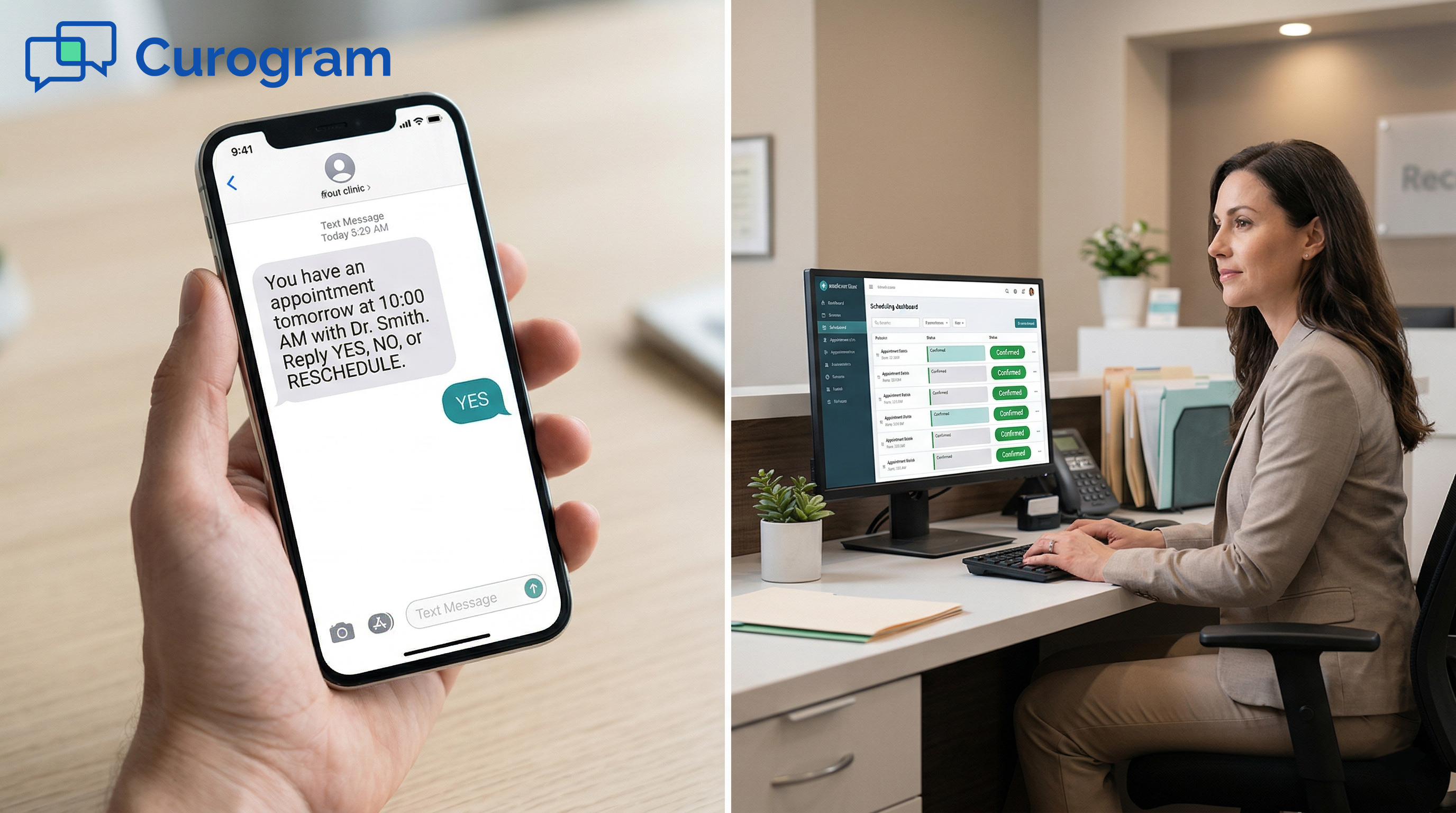
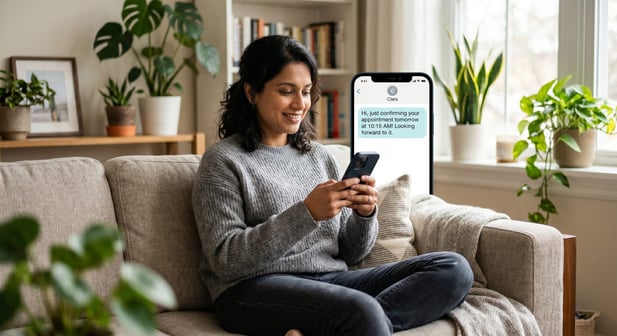

Curogram pairs with Opus EHR to send two-way SMS reminders at clinically safe hours. Patients reply with one tap to confirm or reschedule. No app. No portal login. No friction.
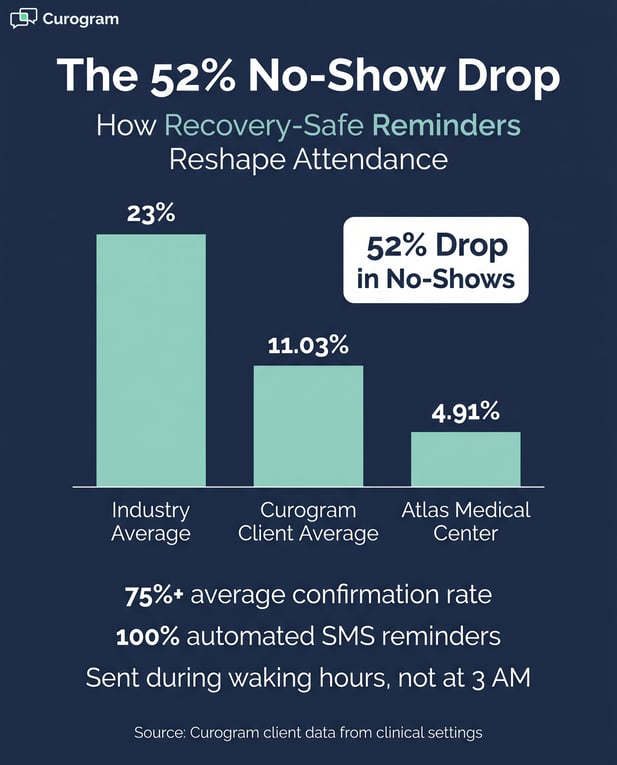
The results show up fast. Curogram client data from clinical settings shows an 11.03% no-show rate, well below the 23% industry average. That is a 52% drop, driven by reminders that respect the patient's day and support steady attendance in IOP, MAT, and PHP programs.
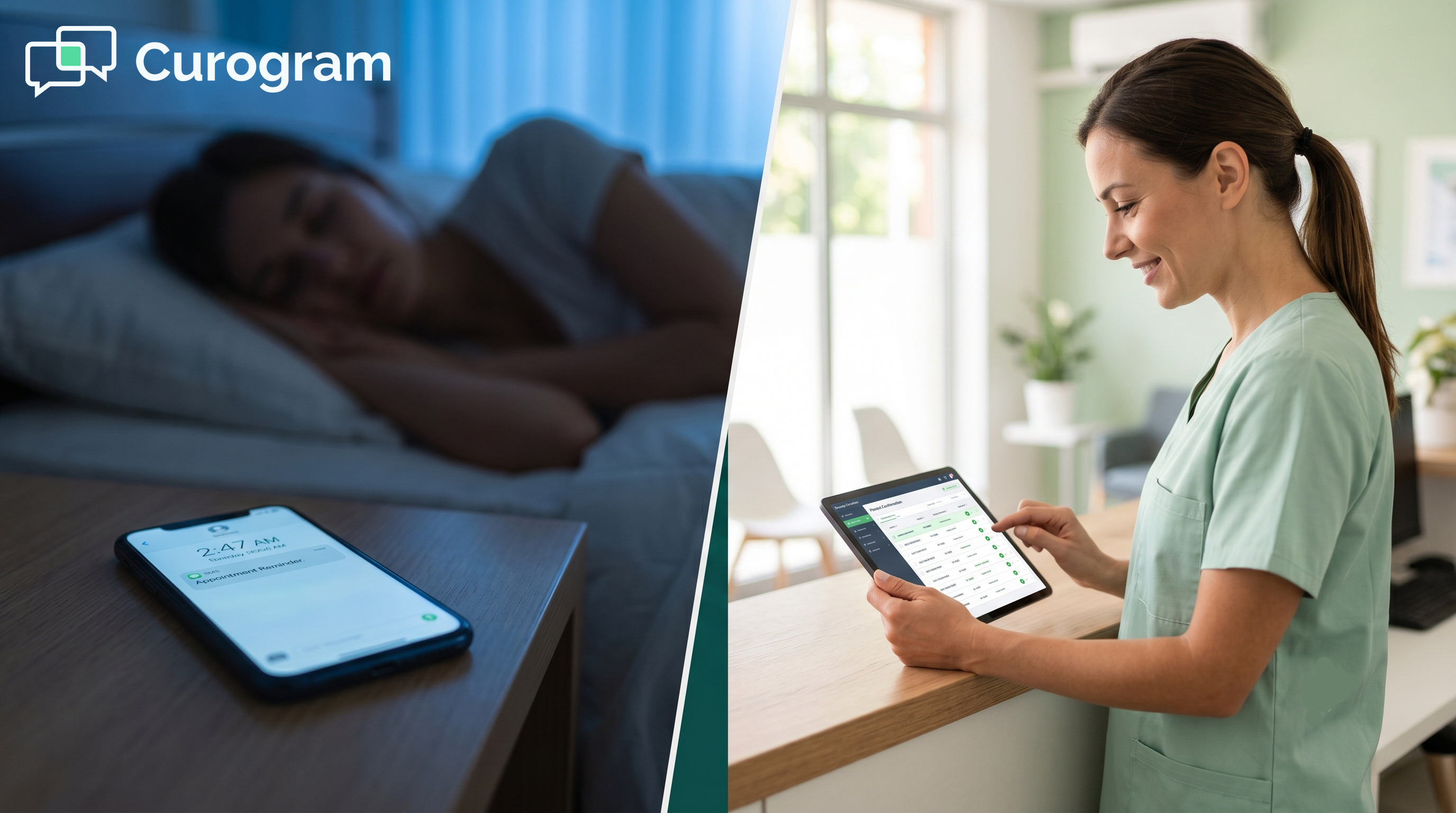
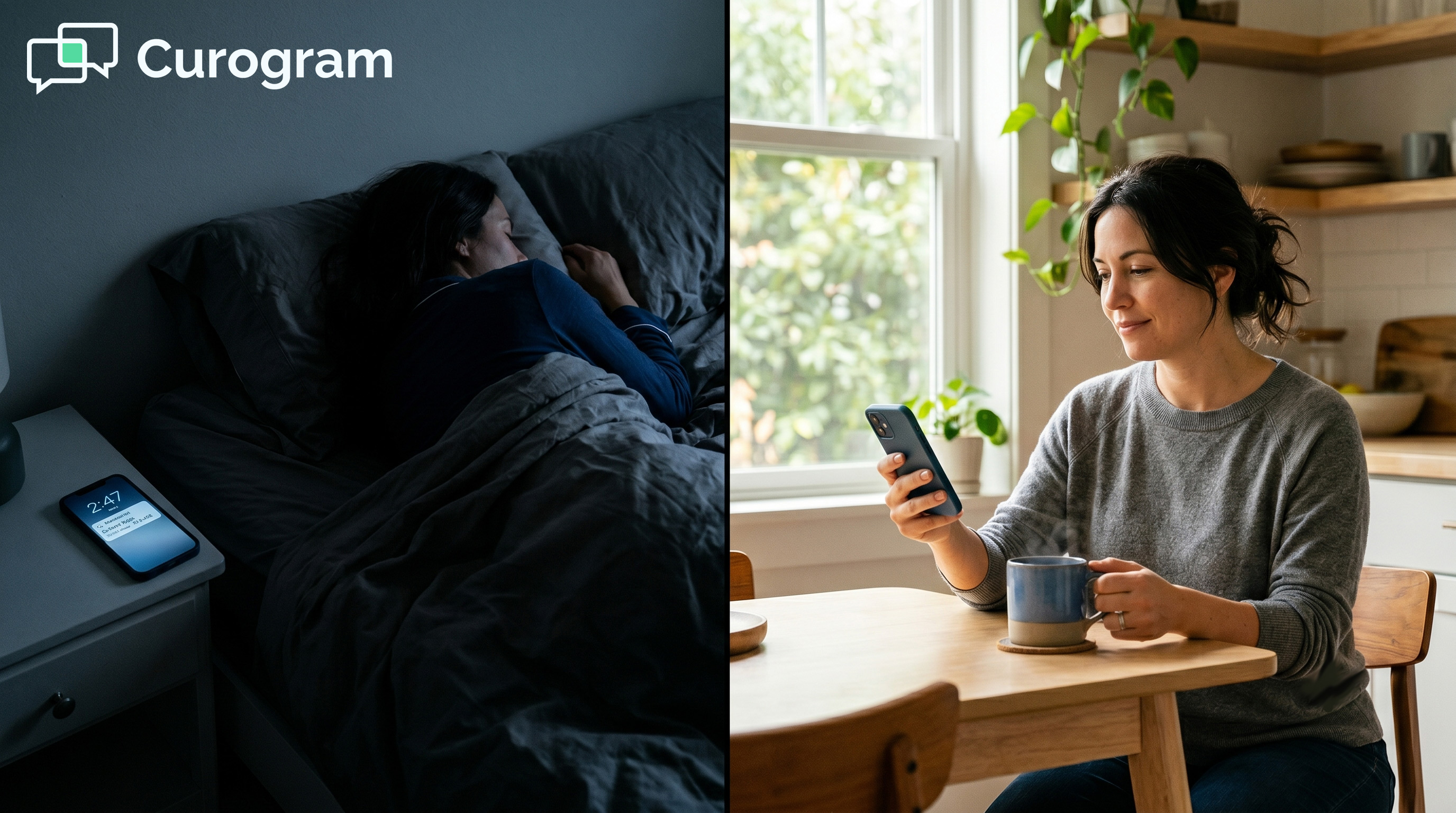
A patient 45 days into opioid recovery is finally sleeping through the night. But, at 2:49 AM, their phone buzzes. It is a reminder for tomorrow's MAT visit.
They wake up confused. Anxiety creeps in fast. They swipe the message away and try to fall back asleep. By morning, they have no memory of the alert. They miss the visit.
This is not a rare bug. Opus EHR users have reported reminders landing between 1 AM and 4 AM. For most patients, that is annoying. For a person in early recovery, it can stall progress.
Sleep is part of the treatment plan. So is routine. A reminder that breaks both works against the very care it is meant to support. The chart just shows "No Show." It does not show the 3 AM buzz that caused it.
That gap between the system and the patient's real life is where most reminder tools fail. They send messages. They do not read the room.
This is where patient-friendly appointment reminders Opus EHR SUD recovery treatment adherence matters. Recovery is built on steady cues, calm timing, and trust. A reminder should feel like a check-in from a team that cares. Not a jolt at 3 AM.
In this guide, we will walk through what goes wrong with poorly timed reminders. We will show what a recovery-safe approach looks like in plain terms.
We will tie it to addiction recovery appointment timing reminders and treatment retention appointment confirmation SUD outcomes.
You will see real patient stories, real numbers, and a clear path forward. The goal is not to add more tech. The goal is to make the tech you have feel kind.
The Villain: The Disruptive Notification
Most software bugs cause small headaches. A reminder bug in addiction care is different.
It can stall a patient's recovery and cost a program real money. Below, we break down what really happens when the timing is off.
Why Timing Hits Harder in Recovery
Patients in early recovery often deal with broken sleep. Many have not slept well in years. A steady sleep routine is part of their healing.
When a reminder lands at 3 AM, it does more than wake them. It triggers stress and racing thoughts. The patient may stay up for hours. By the time the visit comes, they are too tired or rattled to show up.
That is why behavioral health patient reminder experience needs more care than a standard SMS blast. The clock matters as much as the message.
The Friction Patients Already Carry
Recovery patients juggle a lot. They may track court dates, housing checks, group visits, and medication pickups. Their phones buzz all day long.
When the visit reminder looks just like every other alert, it gets lost. Worse, it can feel like one more nag in a long line of demands.
The Portal and App Trap
Some EHRs push patients to log in to a portal or download an app. That sounds simple. For a patient with low battery, weak Wi-Fi, or shaky focus, it is a wall.
Each login step is a chance to drop off. SMS sidesteps that wall. The patient already knows how to read and reply to a text.
The Real Numbers Behind Missed Visits
Missed visits in SUD care are not just a billing issue. Each empty chair in an IOP group breaks the flow for the whole cohort. The therapy works because the group works.
For a program billing $250 to $400 per session, even 6 missed slots per day adds up to $30,000 to $48,000 in lost revenue each month. That is money that could fund staff, training, or new patient outreach.
Here is a quick view of what poor timing costs SUD programs:
|
Problem |
Patient Impact |
Program Impact |
|
3 AM reminder buzz |
Lost sleep, stress, missed visit |
Empty IOP seat, broken group flow |
|
Portal login required |
Friction, drop-off, no confirm |
Unknown headcount each morning |
|
Reminder fails to send |
Patient forgets visit |
$250-$400 per missed slot |
The takeaway is simple. The cost of a bad reminder is not only the missed visit. It is the trust lost, the group disrupted, and the cycle of shame that keeps a patient from rescheduling.
Many programs spot the no-show numbers long before they spot the cause. The chart shows a missed slot. It does not show the buzz at 3 AM, the cold sweat, or the swipe to silence.
That is why the fix has to start with the patient view, not the staff view. Once you see the reminder through their eyes, the changes feel obvious. The 3 AM text has to go.

The Guide: The Recovery-Safe Reminder
A good reminder feels less like a buzz and more like a check-in. It lands at a calm hour. It uses plain words. It asks for a simple reply.
Here is how Curogram builds that into Opus EHR patient communication recovery programs.
Sent at the Right Hour, Through the Right Channel
Curogram sends reminders during waking hours. A common setup is one text the day before, then a short nudge two hours before the visit. The patient sees the message at 10 AM, not 3 AM.
The channel is plain SMS. The same one they use with friends, sponsors, and family. There is no app, no portal, and no new password to recall.
This is the core of properly timed reminders behavioral health patients can actually act on. The patient reads the text while eating lunch and taps "C" to confirm. Done in five seconds.
Two-Way Replies, Not One-Way Alerts
Most basic systems only send. Curogram lets patients reply. They can confirm, reschedule, or ask a quick question. Staff see the reply in one shared inbox.
That two-way flow is what turns a reminder into a real touchpoint. It is also what powers SUD treatment engagement SMS confirmation across IOP, MAT, and PHP visits.
Plain, Private, and Compliant
Curogram is HIPAA-compliant and supports 42 CFR Part 2 needs for SUD programs. The text does not list the diagnosis or visit type. It just says when and where to show up.
That keeps the message safe to read in public. A patient can glance at it on a bus and feel no shame. Privacy stays intact, and so does their dignity.
Built for the Real Lives of Recovery Patients
Phone numbers change. People lose phones, switch carriers, or get new lines. With Curogram, staff update the number in the system, and texts resume right away.
There is no app to reinstall. No account to rebuild. The patient just keeps getting their reminders on the new number.
Here is a side-by-side view of the shift:
|
Feature |
Default Opus Reminder |
Curogram Recovery-Safe SMS |
|
Timing |
Reported 1 AM to 4 AM sends |
Waking hours only |
|
Format |
App or portal push |
Standard SMS |
|
Reply Option |
One-way alert |
Two-way reply: C or R |
|
Privacy |
May show visit type |
No diagnosis shared |
The shift is not about doing more. It is about doing less, but at the right time. That is what makes a reminder feel like care, not control.
Staff feel the change too. Front-desk teams stop dialing patient after patient to confirm. The shared inbox shows who is in and who needs a quick chat. That cuts hours of phone work each week.
For the program, the win is steady. IOP groups start with a clear headcount. MAT visits run on time. PHP days hit census by 8 AM. The whole flow gets calmer for everyone in the room.
The Success: The Patient Who Keeps Coming Back
When the reminder fits the patient's life, attendance rises. When attendance rises, both the patient and the program win. This section walks through the link between timing, retention, and real revenue.
The 52% No-Show Drop, Explained
Curogram client data from clinical settings shows an average no-show rate of 11.03% across psychiatry and behavioral health clients. The industry average sits at 23%. That works out to a 52% drop.
One Curogram client, Atlas Medical Center, cut their no-show rate from 14.20% to 4.91% in just three months. The change came from better timing and easy two-way replies, not more staff calls.
Why Confirmations Build Habit
Each time a patient taps "C" to confirm, they make a small promise. Over weeks, those small promises stack into a steady habit. The reminder becomes part of the recovery routine itself.
This is the heart of treatment retention appointment confirmation SUD outcomes. The patient feels seen. The program feels organized. The bond between them grows.
Staff Time Stays Free for Care
Curogram's reminder flow is 100% automated. Curogram clients average a 75%+ confirmation rate without staff lifting a phone. That frees up hours each week.
Front-desk staff stop chasing patients and start helping them. The shift in tone is felt by both sides.
Revenue You Can Actually Count
For an IOP program billing $250 to $400 per session, every recovered slot matters.
Recovering even half of 12 daily no-shows can mean $30,000 to $48,000 in monthly revenue. That is funding that can stay in the program.
|
Metric |
Industry Average |
Curogram Client Average |
|
No-show rate |
23% |
11.03% |
|
Confirmation rate |
Varies, often low |
75%+ average |
|
Atlas Medical Center |
Started at 14.20% |
Dropped to 4.91% in 3 months |
The Patient Story Behind the Numbers
Picture a patient in week three of IOP. At 4 PM the day before group, they get a text: "Your IOP session is tomorrow at 1 PM. Reply C to confirm or R to reschedule."
They reply "C" over dinner. The next morning, a short text says, "See you at 1 PM today." They walk in on time. The group has 14 of 15 patients.
The counselor runs the full session. The patient finishes the 12-week IOP program. Treatment worked because attendance worked. Attendance worked because the reminder met them where they were.
That story plays out across IOP, MAT, and PHP all day long. Each confirmed text turns into a kept visit. Each kept visit turns into a stronger streak. Streaks are how recovery sticks.
For program leaders, the loop is just as clear. Better timing means higher attendance. Higher attendance means stable revenue. Stable revenue means the program can keep helping more patients.
Conclusion: Reminders Should Support Recovery, Not Disrupt It
Recovery is hard work. Patients already carry more than most of us see. Their reminder system should make the day easier, not harder.
A text at 3 AM is not a reminder. It is a stressor with a calendar icon. Programs that fix this small thing often see big shifts in attendance and trust.
We walked through the real cost of poorly timed reminders in SUD care. We looked at how a recovery-safe SMS approach works in plain terms. We tied better timing to higher retention and stronger revenue.
The thread through all of it is simple. The patient experience drives the clinical outcome. The reminder is part of that experience, whether the program means it to be or not.
Opus EHR is built for your clinical protocols. Curogram is built for their experience of care. The two work side by side.
Curogram does not replace your scheduler or your charting. It fixes the last mile between the schedule and the patient's phone. Reminders go out at the right hour. Replies come back to one shared inbox.
That handoff is what turns a system into a support. The patient feels held by a team that pays attention. The staff get their time back for actual care.
Better timing is not just kinder. It is also smarter. Programs that respect the patient's clock keep more chairs full, more groups running, and more revenue flowing back into care.
It also builds the kind of trust that brings patients back after a slip. When the system has been steady, the patient is more likely to call when things wobble. That is the quiet power of a well-timed text.
Your patients are doing the hard work of recovery. The least their reminder system can do is land at a reasonable hour. That small fix sets off a chain of wins for everyone.
If you run an Opus EHR program, the next step is easy. Book a demo with Curogram. You will see how a properly timed text becomes part of your patients' recovery routine.
Frequently Asked Questions
Curogram is HIPAA-compliant, SOC 2 certified, and supports 42 CFR Part 2 needs. Reminder texts do not list the diagnosis, drug, or visit type. The patient just sees a short note with the date and time. That keeps the message safe to read in public.
Sleep is part of healing in SUD care. A 3 AM buzz cuts sleep and sparks stress. That stress can stall focus for the whole next day. A patient who feels off the next morning is far more likely to miss the visit.
They reply with a single letter from the text itself. "C" confirms the visit. "R" asks to reschedule. No app, no portal, and no login. The whole flow takes about five seconds.
One-way alerts leave staff guessing who will show up. Two-way SMS lets patients confirm, reschedule, or ask a quick question. That builds trust and gives staff a real headcount before each group starts. It also cuts the chase calls that fill up a front desk.
Most clients see no-show drops within weeks, not months. Atlas Medical Center moved from 14.20% to 4.91% in just three months. The shift comes from better timing, easy replies, and steady habit-building with patients.