
9 min read

HIPAA Telemedicine for Opus EHR Behavioral Health

HIPAA Telemedicine for Opus EHR Behavioral Health
💡 HIPAA telemedicine Opus EHR behavioral health programs can extend care past the facility with text-launched video visits. Opus EHR already offers built-in telehealth through Zoom, Meet, and Teams. But for SUD and behavioral health patients, app-based video calls often fail.

Curogram works alongside Opus as a no-friction option. The patient gets a text, taps the link, and joins a HIPAA-compliant session in their phone's browser. No app. No portal. No login.

This serves the cases where Opus's built-in tools struggle: post-discharge follow-ups, MAT check-ins, step-down therapy, and alumni booster sessions. SMS reaches patients at a 98% open rate based on Curogram client data. One tap connects them to their counselor in seconds, keeping the clinical bond intact when it matters most.

A patient finishes 8 weeks of residential SUD care. The counselor sets a weekly video check-in. Week one, the patient gets a portal alert with a Zoom link. They have a new phone. The app is gone.

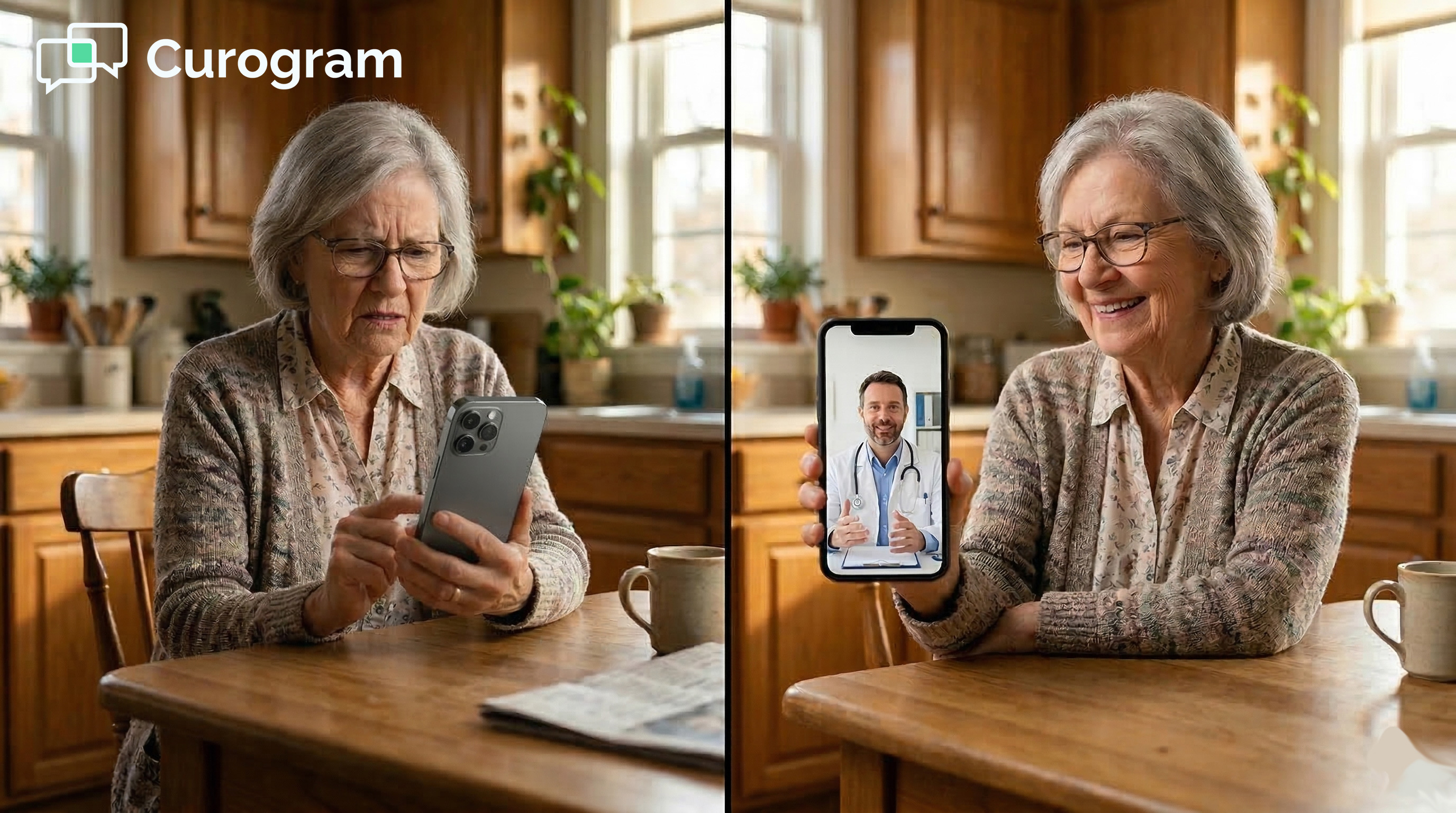
They try the browser. Zoom pushes them back to the app store. The session window closes. The counselor logs a no-show. The dropout was never about the patient's will to stay in care. It was about the tech.

HIPAA telemedicine Opus EHR behavioral health teams know this story well. Opus EHR has solid built-in telehealth through Zoom, Google Meet, and Teams.

These tools work fine for patients with stable phones, good data, and tech comfort. But recovery patients often lack one or more of those things.

Each extra step is a chance to lose them. Download. Install. Sign up. Find the link. By step two, the link is dead, and so is the visit.

Curogram works next to Opus EHR as the one-tap path. The patient gets a text. They tap. The video opens in their phone's browser.

No download. No login. No account. Their counselor's face shows up in under 5 seconds.

This is not about replacing what Opus does well. It is about filling the gap where app-based video fails the patient. Post-discharge follow-ups, MAT med checks, step-down therapy, and alumni booster sessions all live in that gap.

This guide walks through how text-launched video keeps care connected. We will cover the dropout problem, the one-tap fix, and the real outcomes for behavioral health programs. The clinical work earned the patient's trust. The tech should never break it. 

The Villain: The Download Dropout

Behavioral health and SUD patients face barriers that other patients do not. Opus EHR's built-in video tools work well for many.

But for the post-discharge population, the tech itself often becomes the reason care stops. This is the dropout that no clinician wants to log.

What Makes the Barrier Real

Opus EHR offers strong telehealth through Zoom, Meet, and Teams. These platforms work for patients with stable devices, steady internet, and tech ease.

But recovery patients often swap phones, run low on data, or skip apps they do not use daily. A 15-minute check-in is not worth a full app setup to them.

The barrier is hidden from providers who use Zoom each day. It only shows up when the patient does not. That is why no-show data alone misses the cause.

How One Missed Session Becomes Three

Picture a patient 2 weeks out of residential SUD care. The counselor plans a weekly video follow-up. This is the bridge from intensive care to life on their own. The plan is sound. The tech is not.

Week one: the patient has a new phone. They download Zoom, set up an account, and fight with audio.

They join 12 minutes late for a 20-minute slot. Week two: they never set up the new phone's portal, so they missed the alert.

Week three: no attempt at all. Three no-shows. The case closes. The patient now sits 3 weeks past their last clinical touch, in early recovery, with no support team.

Why Numbers Climb Higher Than You Think

Psychiatry sees around 23% no-shows industry-wide. For virtual visits that need an app, the rate in SUD groups climbs even more. The data shows what most clinical directors already feel in their day-to-day work.

Each missed virtual visit chips away at the clinical bond. For MAT patients, one missed med check can break a buprenorphine refill.

That gap can trigger relapse. The cost of one tech failure is rarely just one visit.

Why This Hurts Clinical Teams Most

The Download Dropout is the worst kind of no-show. The patient wanted the visit. The clinician had the time. The plan made sense. Only the path to the screen broke down.

Programs spend weeks earning a patient's trust. They build a care plan that fits the patient's life. Then a four-step video join (download, install, register, log in) loses them at step one. The work was right. The door to that work was locked.

For clinical directors, this gap shows up in falling follow-up rates. For MAT coordinators, it shows up as patients who returned to work and cannot use the portal on a lunch break.

For program directors, it shows up as alumni who deleted the app months ago and never came back. The break is at the tech layer, not the clinical one.

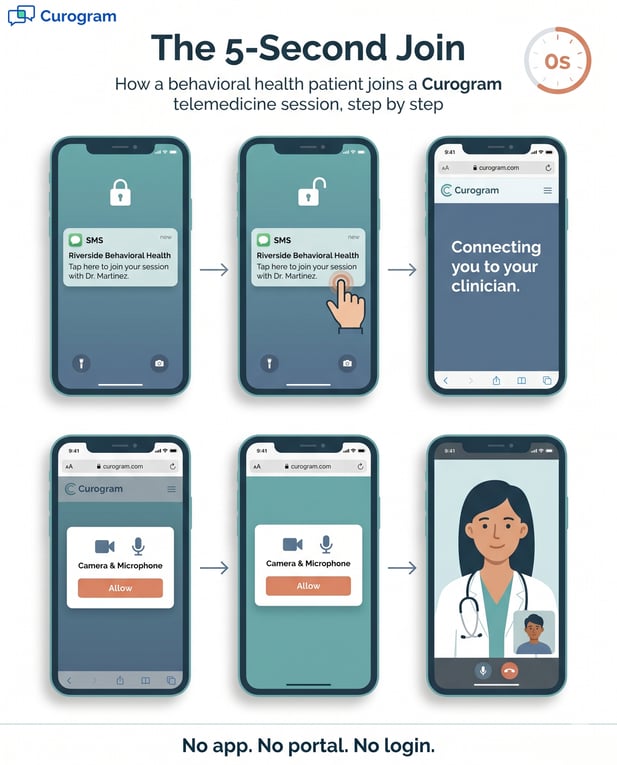
Steps to join a Curogram behavioral health telemedicine session

The Guide: The One-Tap Session

The fix for the Download Dropout is not a better app. It is the absence of one. Curogram works next to Opus EHR to give patients a path that needs no setup at all. This is what we call the one-tap session.

How Text-Launched Video Works

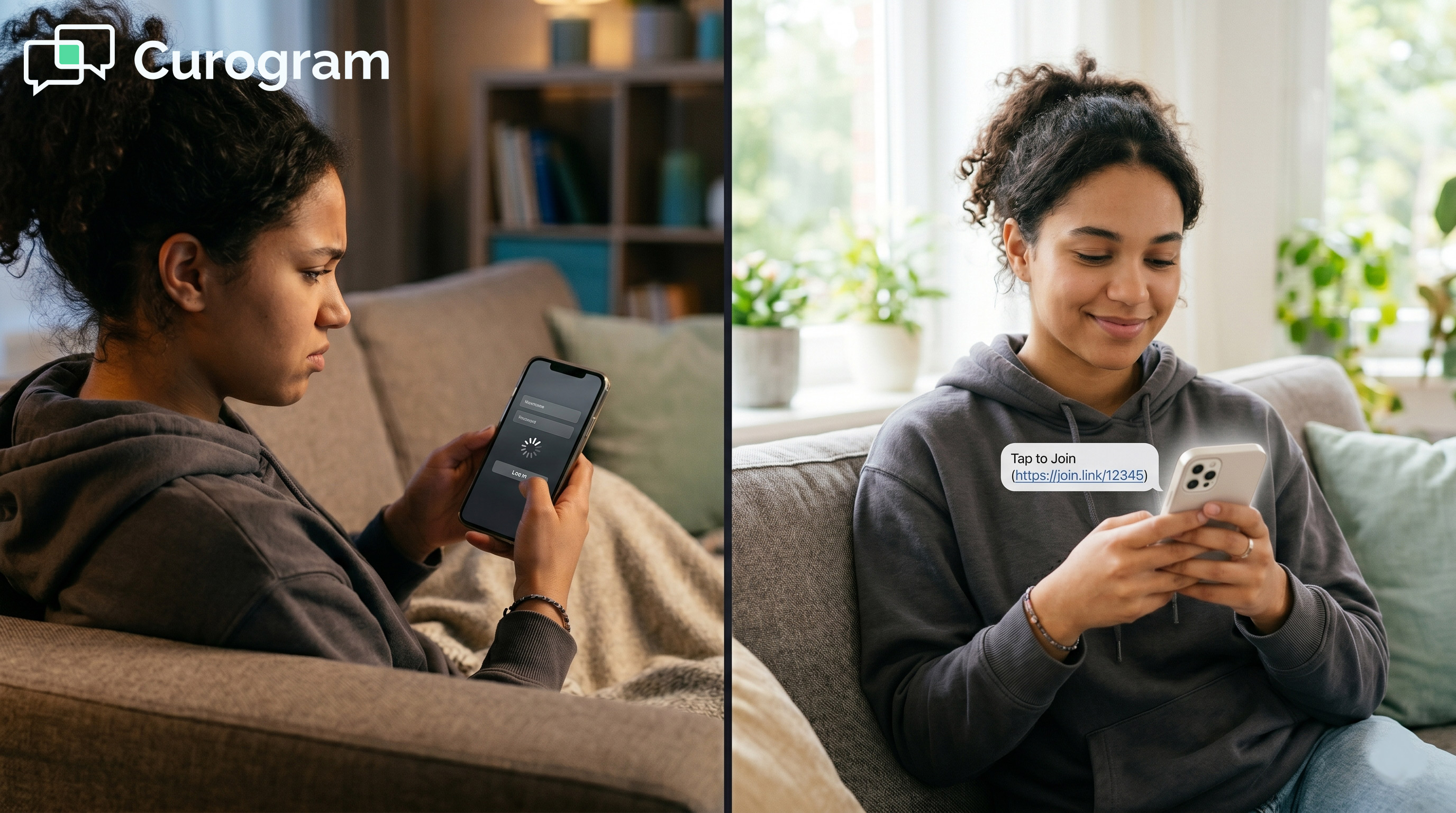
A patient gets a text on the day of their visit. The text says, "Tap here to join your session with Dr. Martinez."

They tap. A HIPAA-compliant video opens in their phone's browser. They see their counselor's face in under 5 seconds.

No app. No portal. No login. No account. The path from notice to face-to-face care is one tap long.

The Feature Set Built for Recovery Care

Curogram's text-launched video visit Opus EHR option runs on any phone with a browser. The session is HIPAA-compliant and 42 CFR Part 2-compliant for SUD groups.

Links can go out on demand for same-day visits or be set up ahead of time with auto text reminders.

The clinician joins from their own device through Curogram's provider screen. The patient joins from the text link. The two sides do not need to share a platform.

How It Fits Next to Opus EHR

Curogram's tool does not replace Opus's built-in video. It runs next to it. In-person patients keep their Opus schedule. Patients who like Zoom keep using Zoom.

But for the cases where the app video fails, the text link is the backup that works. Post-discharge follow-ups. MAT check-ins. Step-down therapy. Alumni booster sessions.

Each of these fits the no-app telehealth SUD treatment use case better than any download flow ever will.

Why Less Friction Equals More Care

The rule in behavioral health is simple. Fewer steps mean more visits. A patient who is unsure about staying in care will not troubleshoot Zoom audio. A MAT patient on a 30-minute lunch break will not log into a portal to find a link.

An alumnus invited to a booster will not re-download an app they cut months ago. Each of these patients is one tap from care. Or they are zero visits from care. There is no middle path.

Telemedicine post-discharge behavioral health work needs this kind of low-lift access. The link arrives where the patient already is, in their text messages.

They open it on the phone they carry every day. The path matches their life.

For MAT telemedicine medication management Opus workflows, this is the difference between a refill on time and a gap.

For an Opus EHR virtual follow-up session, it is the difference between week-two attendance and week-three closure. For behavioral health telehealth continuity of care, it is the bridge that holds.


The Success: The Connected Session

The shift from download flows to text links does more than ease one visit. It changes what is possible for a whole program.

Patients who used to drop off now stay in care. The clinical work that started in the facility keeps going past its walls.

What the Numbers Show

Curogram's platform reaches no-show rates 53% lower than the industry average based on Curogram client data from clinical settings.

For telehealth, that drop ties straight to the tech barrier. Cut the app, the login, and the account, and the no-show cause shrinks.

SMS hits a 98% open rate based on Curogram client data. Portal alerts and email invites open at below 20% for behavioral health groups. The text link gets seen because text is where patients live.

A Look at the Channel Gap

Channel

Open Rate

Steps to Join Visit

SMS text link

98%

1 (tap)

Patient portal

Below 20%

4+ (log in, find link, click, allow camera)

Email with app link

Below 20%

5+ (open, click, download app, sign up, join)


The chart is not subtle. The shorter path wins on both sight and use. This is why text-launched video reshapes follow-up rates in ways app-based tools cannot.

Real-World Volume at Scale

Covina Arthritic Clinic confirms over 1,100 appointments each month through Curogram's auto-comms platform based on Curogram client data.

That kind of volume shows the tool can hold up under heavy use. The same plumbing that sends visit confirmations can send virtual visit links.

For behavioral health, this means one channel handles reminders, confirmations, and the live visit itself. Staff does not juggle three tools. Patients do not learn three flows.

What This Looks Like for Programs

Picture a behavioral health program where post-discharge follow-up attendance climbs week over week. The reason is plain. The tech that used to drop patients no longer does.

A MAT patient who moved 60 miles away keeps a weekly med check from their lunch break. The link is in their texts. The clinician sees them on time. The buprenorphine refill goes out the door.

An alumnus, 6 months past discharge, accepts a booster session offer. The link arrives in their texts. They tap. They sit with the counselor who helped them stay sober. No app to find. No password to recall.

The clinical work each program invested in each patient now has a path to last. Distance does not break it. A 60-mile move does not break it.

A lunch break does not break it. A deleted app does not break it. The patient is one tap from the team that knows their care plan. 

Close-up: hand holding phone with SMS join link on screen

ConclusionOne Tap Between Your Patient and Their Counselor

The story of behavioral health care has always been about staying close to the patient. The clinical work earns trust.

The follow-up plan keeps that trust alive. The tech is meant to serve both, not to stand between them.

Opus EHR's built-in video tools work well for patients who are at ease with Zoom, Meet, or Teams. Many patients fall into that group.

But behavioral health and SUD programs serve patients who do not. That is where the gap shows up.

Opus EHR is for your clinical workflow and notes. Curogram is for your patient's simplest path to a visit. The two do not compete. They cover for each other.

For each visit, the clinician picks the right tool. A patient who handles Zoom well stays on Zoom. A patient who deleted the app last month gets a text link. The same care plan runs through both paths. The same notes land in the same Opus chart.

The shift is not just about cutting no-shows, though that gain is real. It is about who stays in care at all. A program with text-launched video reaches patients its app-based flow never could.

Post-discharge alumni who moved away. MAT patients who returned to work. Step-down therapy clients with tight schedules. Each of these groups now has a path that matches their life.

For clinical directors, the win shows up in follow-up rates that hold past the first month. For MAT coordinators, it shows up in refills that go out on time. For program directors, it shows up in alumni who return for booster sessions when they need them.

A patient in early recovery should not have to fight tech to reach their counselor. They have enough to carry already. The cleanest path from a hard moment to a steady voice is what care looks like done well.

When the link is a tap away, the bond stays warm. When the bond stays warm, the care plan stays on track. When the care plan stays on track, the clinical work that started in the facility keeps doing its job.

Every patient who skips a virtual visit because of a download screen or a portal login is a patient whose care breaks at the tech layer, not the clinical one. That break is fixable. The fix is already built.

The clinical work has already earned the trust. Let the tech keep up.

Book a demo to see text-launched video from your patient's view. Watch a post-discharge follow-up go from "download this app" to "tap this link" in under 5 seconds.


Frequently Asked Questions

How does Curogram's text-launched telemedicine stay HIPAA-compliant and 42 CFR Part 2 compliant for SUD patients?

Curogram's video sessions use encrypted transmission that meets HIPAA rules. The text with the link names only the facility and clinician, never the type of care, so 42 CFR Part 2 protection holds. Session notes follow the same privacy rules as in-person visits. Curogram is also SOC 2 certified for added security.

Why would a program use Curogram if Opus EHR already has Zoom, Meet, and Teams built in?

Opus's built-in tools work well for patients who are at ease with those apps. Many SUD and behavioral health patients are not. Curogram fills the gap for post-discharge, MAT, and alumni cases where downloads and portals lose patients. The two tools run side by side, not one over the other.

How do clinicians document a Curogram telemedicine visit in Opus EHR?

The video runs through Curogram, but the chart work stays in Opus. Clinicians write notes, treatment plans, and billing entries the same way they would for any other visit. The path to deliver care changes, but the path to record care does not. The Opus workflow stays intact.

Why is text the right channel for behavioral health follow-up links?

SMS reaches a 98% open rate based on Curogram client data, while portal and email invites open at below 20% for behavioral health groups. Patients carry their phones with them. They check texts within minutes, not days. The link lands where the patient already looks each day.

How does text-launched video help with MAT medication management visits?

MAT patients often return to work and cannot drive to the clinic during a short break. A text link lets them join a med check from a break room or car in seconds. The clinician can confirm dose stability, screen for side effects, and send the next refill. The link removes the trip without removing the visit.