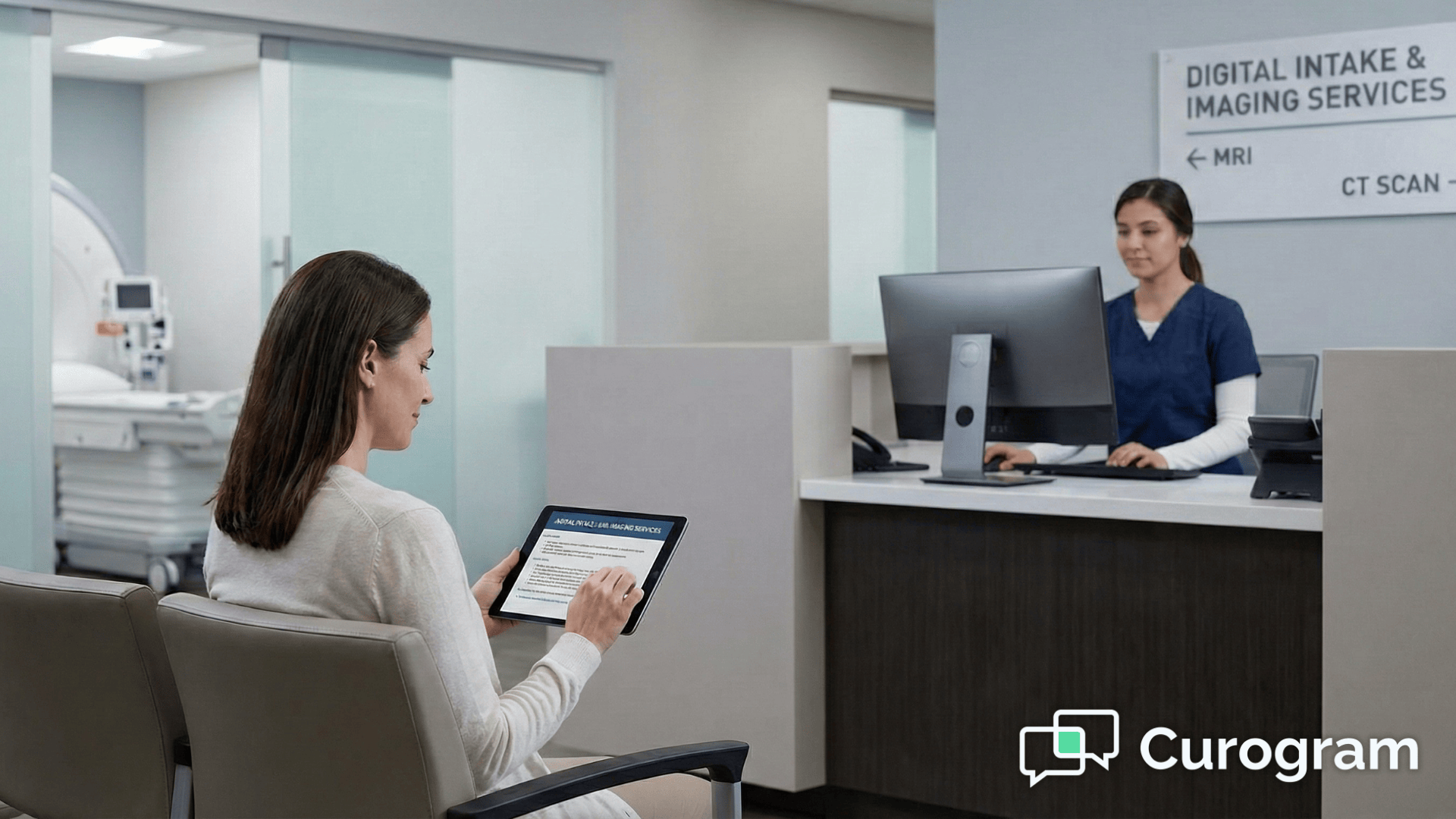
12 min read

Medstreaming Workflow Gains With HIPAA-Compliant Online Forms

Medstreaming Workflow Gains With HIPAA-Compliant Online Forms

💡 Medstreaming imaging centers manage high volumes of MRI, CT, ultrasound, and cardiovascular scans, each requiring specific prep and safety screening. Paper intake at check-in creates delays and leads to unprepared patients. 
  • Online forms send digital intake to patients before appointments
  • Pre-registration collects medical history, insurance, and exam-specific prep
  • Patients complete MRI, CT, and ultrasound screening from home
With intake completed in advance, staff receive complete information before arrival. This reduces wait times, improves scan readiness, and keeps imaging schedules running smoothly.

It’s 8:30 AM at a busy imaging center, and the waiting room is already full. The front desk coordinator watches three more patients walk in, clipboards in hand. She knows what’s coming next: illegible handwriting, missing insurance details, and blank fields where critical medical history should be.

Just another Monday, she thinks, already calculating how far behind schedule they'll fall by noon.

This scene isn’t unique. It plays out in imaging centers nationwide every day. Walk into any radiology practice in the morning and you’ll see it: patients hunched over clipboards trying to recall medication names, front desk staff racing to enter handwritten data, and technologists waiting as last-minute safety screenings are completed.

But here's what's interesting about this daily chaos. The bottleneck isn't the expensive MRI machine or the skilled technologists. It's not the imaging software or the scheduling system. It's something far simpler and far easier to fix. It's the clipboard.

That single piece of plastic with paper attached represents the weakest link in the modern imaging workflow. Everything else in the facility is digital, connected, and efficient—but patient intake still disrupts otherwise optimized imaging workflows.

The scanners are cutting-edge. The PACS system is sophisticated. The scheduling software is robust. But the intake process? Still stuck in the analog era.

The consequences ripple through the day. Slow intake backs up check-ins. Incomplete forms delay scans. Unprepared patients lead to rescheduled appointments. The inefficiency compounds until the afternoon schedule is 45 minutes behind and staff can’t catch up.

For Medstreaming imaging centers, there’s a better way. Digital intake integrations replace clipboard chaos with an automated workflow. Patients complete forms in advance, data flows directly into systems, and staff verify instead of transcribe. Mornings stay on schedule.

This isn’t about adding more technology. It’s about removing the analog bottleneck that slows everything down. Fix intake, and everything improves—faster check-ins, better data, prepared patients, happier staff, and a stronger revenue cycle.

Workflow Challenges in Radiology & Cardiovascular Imaging Intake

Let's talk about what actually happens when patients arrive for imaging appointments.

Picture this scenario. A patient scheduled for an MRI walks in 15 minutes early (because that's what the reminder message said). They're handed a clipboard with six pages of forms. Questions about metal implants they may or may not have. Surgical history they're trying to recall. Insurance details they didn't bring because nobody mentioned they'd need them.

They're sitting in an unfamiliar waiting room, trying to remember if that knee surgery was in 2018 or 2019, whether they have any metal screws, and what their insurance group number is. Meanwhile, the clock is ticking toward their appointment time.

The front desk staff know what happens next. The form comes back incomplete. Someone forgot to sign page three. The insurance information is missing. There's a vague mention of some kind of heart thing in the medical history section that needs clarification before anyone can proceed with a contrast scan.

Now multiply this scenario by 50 or 60 patients per day.

For MRI safety screening, incomplete information isn’t just inconvenient. It’s potentially dangerous. Patients must disclose pacemakers, surgical clips, shrapnel, or other metal in their body. Rushing through forms in a waiting room makes it easy to forget a dental implant, an IUD, or a metal fragment from an old workplace injury.

CT imaging has its own complications. Did the patient mention that shellfish allergy? What about their kidney function? Are they possibly pregnant? These aren't questions you want to discover the answers to when the patient is already on the table.

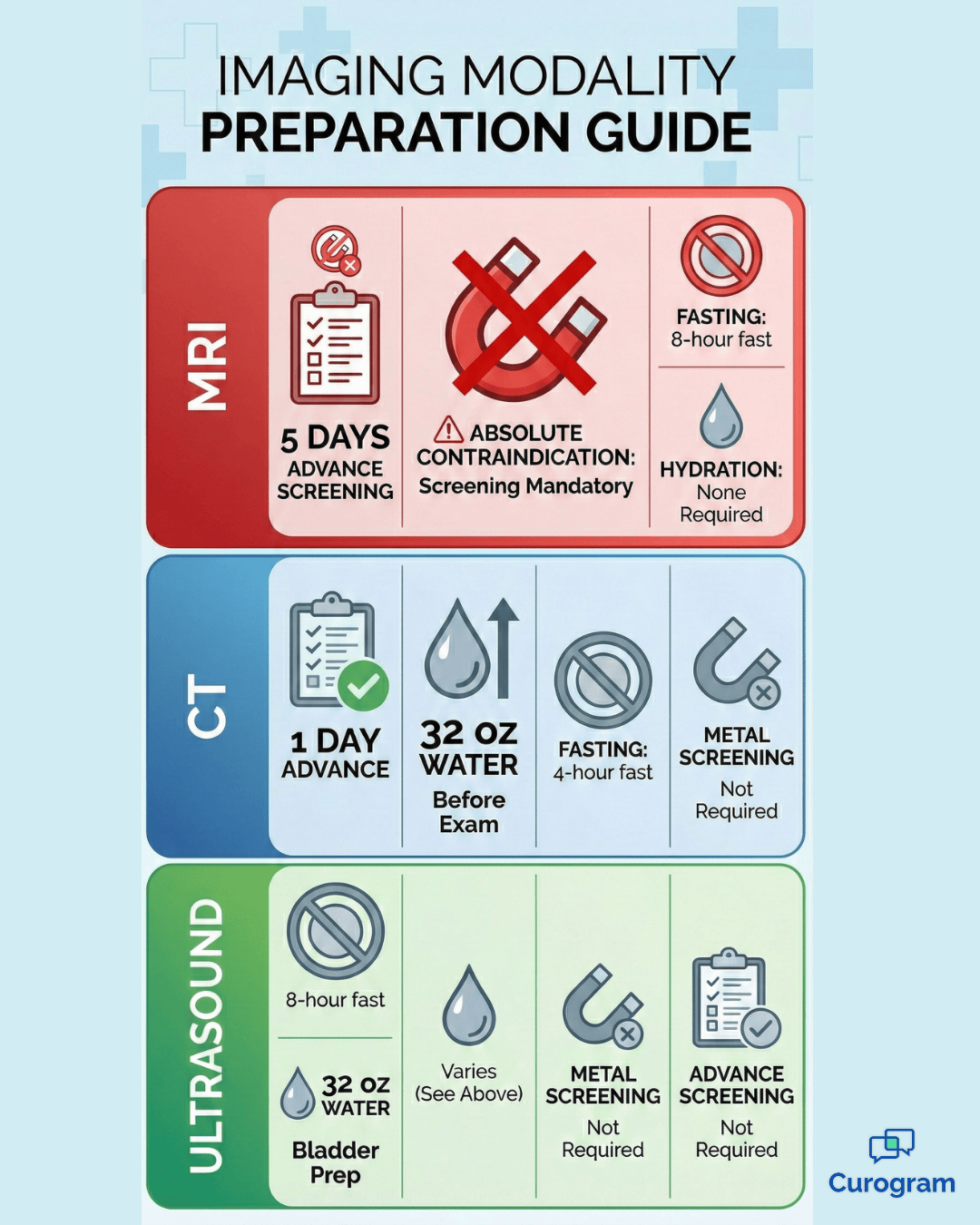
Ultrasound procedures fail for one primary reason. Inadequate preparation. The patient was supposed to fast for eight hours. They had a small snack at 6 AM because they forgot. Or they were supposed to drink 32 ounces of water for a full bladder, but they only had about 16 ounces because they didn't understand the instructions.

Result? Rescheduled appointment. Wasted scanner time. Frustrated patient. Staff scrambling to fill the empty slot.

For cardiovascular imaging, the devil is in the details. When did the chest pain start? What medications are you taking? Have you had a heart attack before? How many stents? When? These details matter enormously for accurate interpretation, but handwritten forms in busy waiting rooms rarely capture this information with the precision cardiologists need.

And if you're running a multi-location imaging network? Each facility probably has slightly different forms. Different workflows. Different interpretations of the same questions. Good luck maintaining consistent quality standards across your organization.

How Manual Intake Creates Operational Bottlenecks

Here's where things get expensive.  When the front desk receives an incomplete clipboard, there’s a choice.

Have the patient sit back down to finish missing sections, adding another 10 minutes to an already delayed schedule. Or ask a series of follow-up questions at the desk while other patients wait in line.

Either way, someone is typing. Manually entering patient demographics, insurance information, and medical history. Data the patient already wrote on paper, now being transcribed into the system.

Manual data entry creates cascading problems throughout the workflow:

  • Transposed insurance IDs that delay billing and revenue collection
  • Missed medication allergies that create safety risks during contrast procedures
  • Illegible handwriting that forces guesswork or time-consuming callback verification
  • Incomplete phone numbers that make follow-up communication impossible

Each error multiplies the original time spent. Some don’t surface until weeks later during billing, forcing staff to track down patients, correct records, and resubmit claims. What starts as a 10-minute intake can quickly become 30 to 40 minutes of cumulative work.

In the MRI suite, one incomplete screening can stop the schedule. A patient isn’t sure about metal from an old surgery, the scan pauses, the surgeon’s office can’t be reached, and on-time patients begin waiting. One incomplete form delays three appointments and ties up a million-dollar scanner.

The cost adds up quickly. MRI expenses stay the same whether the scanner runs or sits idle. Technologists remain on the clock, rent is paid, and no revenue is generated. When 100 patients add five extra minutes at check-in, delays exceed eight hours, schedules slip, staff stay late, and patients grow frustrated.

Backlogs affect every department. Front desk staff rush and make more data entry errors. Technologists wait on patients, lowering productivity. Billing teams receive incomplete information, slowing the revenue cycle. These breakdowns ripple across imaging workflows, reducing efficiency even though everyone is working hard.

By the end of the day, front desk staff go home exhausted—not from helping patients, but from typing, chasing missing details, and deciphering handwriting. This isn’t why they entered healthcare. With the job now dominated by data entry, it’s no surprise front desk turnover is so high.

Imaging prep requirements chart for MRI, CT, and ultrasound procedures

How Online Patient Forms Standardize and Streamline Intake

Now, let's reimagine that Monday morning.

The next day, a call to the surgeon's office confirms the details. Titanium screws in the knee, but they're MRI-safe. The form gets updated with this information. Now complete. Total time spent is about 12 minutes, but spread across two days and done at personal convenience.

Monday morning, a patient arrives at 8:55 AM. The front desk opens the completed form in seconds. Insurance and medical history are verified, MRI safety screening is documented, and identity is confirmed. The interaction takes 90 seconds, and the scan begins exactly at 9:00 AM.

This is what Medstreaming digital intake integration enables. Forms are tailored to the scheduled exam. MRI appointments receive safety-specific questions, CT scans include contrast and kidney screening, and ultrasounds deliver precise prep instructions with required timing.

For imaging centers, this transformation touches every part of the workflow:

  • Pre-registration forms deploy automatically when appointments are scheduled
  • Smart reminders prompt patients who haven't completed forms 48 hours before their visit
  • Real-time dashboards show staff which patients are ready and which need assistance
  • Check-in becomes verification instead of data entry—most patients done in under 2 minutes
  • Prep compliance rates improve by 30% or more with clear instructions delivered days ahead

The check-in process changes completely. Most patients finish in under two minutes. Waiting rooms stay calm, staff focus on patients, technologists receive complete screening information in advance, and insurance issues are resolved before arrival. Claims are submitted correctly the first time.

The environmental impact adds up quickly. A mid-sized imaging center performing 100 scans per day can eliminate 600 sheets of paper each week—over 31,000 sheets a year. Printing, shredding, and overflowing filing cabinets disappear as cost savings and sustainability improve.

But perhaps the most important change is in data quality.

Online forms include built-in safeguards that paper can never match:

  • Required fields prevent patients from skipping critical safety questions
  • Format validation ensures phone numbers, dates, and insurance IDs are entered correctly
  • Conditional logic shows relevant follow-up questions based on previous answers
  • Real-time verification flags potential issues before the appointment day
  • Automated reminders catch incomplete forms while there's still time to address them

The information staff receive is complete and structured. Technologists see full screening details, red flags are identified days in advance, and radiologists have already reviewed where needed. Patients with contraindications are rescheduled, and the MRI suite runs on time every morning.

Medstreaming + Curogram Workflow Synchronization

The information staff receive is complete and structured. Technologists start the day with full screening details, and red flags are identified days in advance. Radiologists have already reviewed cases, and patients with contraindications are rescheduled. The result is a predictable workflow and an MRI suite that runs on time every morning.

Forms routed based on imaging type

When a CT scan is booked in Medstreaming, the system knows. Automatically, without anyone clicking anything, a CT-specific form goes out to the patient. MRI appointments trigger MRI safety screening forms. Ultrasound bookings send prep instruction forms.

The system is smart enough to know what questions each patient needs to answer based on what they're scheduled for. No manual form selection. No possibility of sending the wrong form. Just automatic, intelligent routing.

Accurate patient matching across locations

In multi-location networks, patients often repeat paperwork. A patient may complete forms for an MRI at one location, then fill out the same demographics, insurance, and history again for an ultrasound elsewhere.

With Medstreaming and Curogram integration, patient information is shared across all locations. Each facility accesses the same record, and patients only answer new, procedure-specific questions. No duplicate forms, no repeated data entry.

Automated pre-visit delivery timings

Different procedures need different lead times. MRI safety screening is complex enough that sending forms five days ahead makes sense. CT prep instructions might go out two days before. Same-day urgent ultrasounds trigger immediate form delivery.

The system handles this timing automatically based on appointment type and date. Reminder messages follow up based on completion status. If a form isn't completed 48 hours before an appointment, a gentle reminder goes out. If it's still incomplete 24 hours before, staff receive an alert to make a phone call.

This automation ensures patients have adequate time to prepare while maintaining staff visibility into who might need assistance.

Zero double entry for staff

This is what transforms the front desk experience. When patients complete forms, the information flows directly into Medstreaming—no separate systems, spreadsheets, or manual reconciliation. Patient records are complete, accurate, and structured before anyone arrives.

Staff no longer spend time typing demographics, insurance, or medical history. Instead, they greet patients, answer questions, and create a welcoming check-in experience—the human side of healthcare they signed up for.

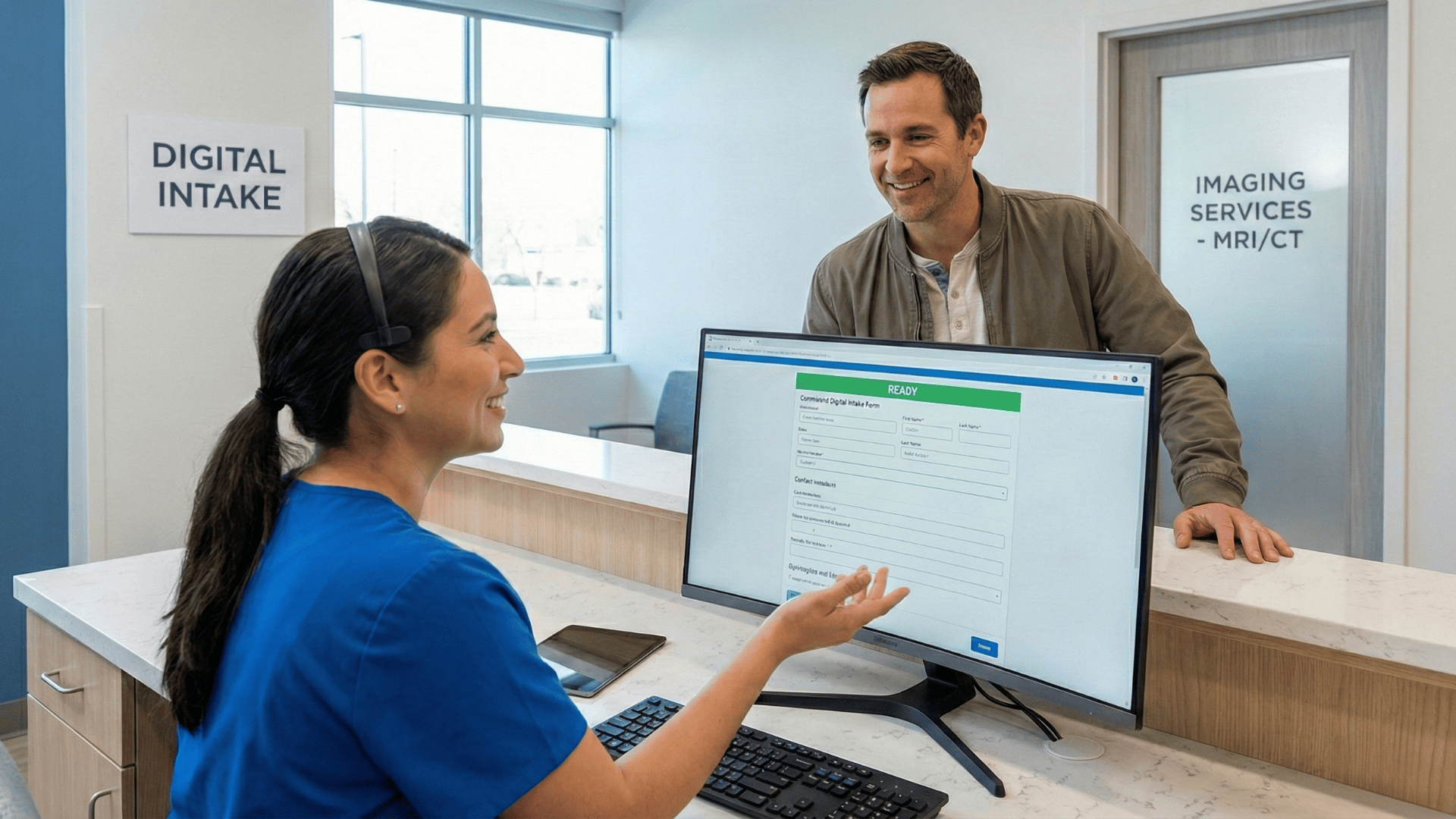
Imaging center staff reviewing completed digital intake with patient at check-in

Imaging Use Cases for Digital Intake Forms

MRI safety screening completion before arrival

MRI safety screening isn’t something to rush. Patients must recall past surgeries, dental work, tattoos, injuries, and implanted devices—details that take time and reflection.

Completing the screening at home allows patients to check records, contact providers, and talk with family members. Visual aids, including implant images and diagrams, help them identify items they might otherwise overlook.

Technologists review screenings in advance and flag issues early. This creates time to consult radiologists or physicians, resolve concerns, and prevent canceled scans and frustrated patients.

CT contrast screening and hydration verification

CT scans with contrast require careful preparation, including kidney function screening, allergy documentation, and hydration compliance.

Digital forms collect this information in a structured way while delivering clear prep instructions as part of the intake process. Staff review responses days in advance, allowing time to adjust contrast, coordinate with the ordering physician, or choose an alternative exam. Decisions happen before scan day, when there’s time and flexibility.

Ultrasound fasting or bladder prep confirmation

Ultrasound prep failures are a common cause of rescheduled appointments. The solution is simple: clear instructions and confirmation.

Digital forms deliver precise prep guidance, then ask patients to confirm compliance on the day of the appointment. If prep wasn’t followed, patients are prompted to reschedule before leaving home. Prep issues are caught early, time slots are reused, and no one’s time is wasted.

Cardiovascular intake history for echo/vascular tests

Cardiac and vascular imaging require detailed history, from symptom onset to medications, dosages, and prior procedures. These are hard to answer accurately in a waiting room, where patients are anxious and rushing to recall dates and details.

At home, patients can take their time, check records, and provide precise information. That thorough history gives cardiologists critical context, improving interpretation and helping issues get caught earlier.

Multi-modality pre-registration for large imaging networks

Large imaging networks often schedule multiple studies on the same day, which improves convenience but complicates intake. Smart forms automatically recognize multiple procedures and generate a single, unified form with all required screening questions and prep instructions—without duplicate data entry.

Patients complete one form, receive all instructions in one place, and have a single reference for their appointment day.

Efficiency Gains for Front Desk and Technical Staff

Let's get back to that Monday morning. With digital intake, the day looks completely different.

The first patient of the day checks in. The front desk looks at the screen. Green checkmark. Form complete. Identity verified, location confirmed, any questions answered. Total time is 90 seconds. The patient is comfortable in the waiting area, not hunched over a clipboard.

By 9 AM, eight patients have checked in. In the old system, staff would still be on patient number four, running 20 minutes behind schedule.

The phone rings less frequently. Fewer calls asking what patients need to bring or what the prep instructions are because patients already received that information with their forms. When the phone does ring, staff have time to provide thoughtful, helpful answers instead of rushing through conversations while three people wait at the desk.

Technical staff notice the difference too. MRI technologists used to spend the first 10 minutes of every appointment reviewing safety screening with patients. Asking the same questions that were on the form they filled out in the waiting room. Double-checking answers because the forms were often unclear.

Now, technologists review the completed screening before calling the patient back. They know before patients walk into the scan room if there are any concerns. Most days, the screening is clear and they can proceed immediately to positioning and scanning.

This might seem like a small time savings per patient. But multiply it across 20 to 30 MRI scans per day, and technologists gain back two to three hours. Hours they can spend on what they're actually trained to do. Producing high-quality diagnostic images.

The workflow becomes predictable. When the schedule says 9:00 AM appointment, the scan actually happens at 9:00 AM. Not 9:15. Not 9:30. At 9:00 AM.

This predictability reduces stress across the entire staff. People can plan their day. They can take breaks at scheduled times. They're not constantly playing catch-up. Job satisfaction improves when the work environment becomes more manageable.

The physical workspace improves too. No stacks of clipboards. No bins of pens that need to be sanitized. No filing cabinets full of forms that need to be shredded after retention periods expire. The front desk is cleaner, more organized, more professional.

Small changes that add up to a completely different work experience.

How Online Forms Improve Patient Preparedness & Scan Completion Rates

Patients report having adequate time to think about the questions.

Some didn't realize they needed to bring their insurance card, but the form told them three days ahead.

The fasting instructions were clear with specific timing details.

Others called their previous doctors to get the records they needed because the form explained what information was important.

Patient preparedness improves because the process respects their time and cognitive load. They're not trying to remember complex medical history while sitting in a busy waiting room, anxious about an upcoming scan.

The results show in the numbers. Imaging centers that implement digital intake see prep compliance rates improve by 30% to 40%. Patients arrive fasted when they need to be fasted. They arrive hydrated when they need to be hydrated. They arrive with their bladders full for pelvic ultrasounds.

Scan completion rates improve correspondingly. Fewer rescheduled appointments due to inadequate prep. Fewer incomplete studies because the technologist couldn't get good images. Fewer wasted scanner slots.

The financial impact is significant. When an MRI sits idle due to prep failures, hundreds of dollars are lost each hour. Improving prep compliance by 30% reduces idle time, increases completed scans, and boosts revenue—simply by delivering clear instructions when patients can follow them.

Patient satisfaction improves as well. Wait times drop, check-in is smooth, and appointments run on time. For patients, these basics matter more than fancy equipment or upscale waiting rooms.

And perhaps most importantly, patients become advocates. They post positive reviews. The check-in was easy. Everything was ready when they arrived. The facility has its act together. These reviews drive new patient volume in competitive imaging markets.

For multi-location networks, consistency becomes a competitive advantage. A patient who has a great experience at one location will return to any location in the network. They trust the brand because the experience is reliably good everywhere.

Conclusion

The transformation from clipboard chaos to digital efficiency doesn't require a massive overhaul. It's not about replacing your entire practice management system or retraining staff on complex software. It's about connecting the tools you already use with a smarter approach to patient intake.

Curogram and Medstreaming integration creates this connection. The workflow happens automatically. Forms go out when appointments are scheduled. Data flows back into Medstreaming when forms are completed. Staff use the same systems they're already familiar with.

Watch how a patient receives a form, completes it on their phone, and has their information automatically populate in Medstreaming. See the dashboard that gives staff visibility into completion rates. Experience the check-in process from both the staff and patient perspective.

The demo covers implementation details. How long does it take to set up? What does the training process look like? How do you handle patients who can't or won't use digital forms? What happens during the transition period? These are practical questions with practical answers.

Most imaging centers are up and running within a few weeks. Staff training takes hours, not days. The system includes backup workflows for patients who need assistance or prefer paper.

Discover what it looks like when your front desk team spends their time welcoming patients instead of typing forms. When your technologists run on schedule because everyone arrives prepared. When your revenue cycle improves because insurance information is verified before appointments.

Ready to see how Curogram and Medstreaming work together to transform your imaging center's workflow? Book your demo today and experience the difference digital intake makes for your staff, your patients, and your bottom line.


Frequently Asked Questions

How do online patient forms improve MRI safety screening accuracy?

Patients complete forms at home, with time and access to medical records. Guided questions and visual aids prompt more accurate disclosures. Technologists review screenings in advance, allowing issues to be resolved before the patient arrives.

Why does digital intake work better than paper forms for multiple imaging locations?

Digital intake creates a unified patient record across all locations. Information is entered once, shared everywhere, and updated automatically. Staff follow consistent workflows, making training, quality control, and reporting easier.

How do pre-registration forms reduce no-shows and late cancellations?

Forms act as reminders and increase patient commitment. Prep instructions help patients plan ahead, and confirmation steps reinforce readiness. Patients who can’t comply reschedule early, reducing no-shows and wasted slots.

What happens when patients don’t have smartphones or internet access?

Digital-first doesn’t mean digital-only. Most patients complete forms online, freeing staff to assist those who need paper or in-person help. This ensures better service without slowing down the entire workflow.

How do online forms integrate with existing radiology information systems?

Forms are triggered by scheduling events and return data directly to the RIS. Demographics, insurance, and clinical details update automatically. Staff stay in their existing systems with no duplicate entry or extra logins.


Online Patient Forms in Veradigm with Curogram

Online Patient Forms in Veradigm with Curogram

💡 Online patient forms in Veradigm enable imaging centers to transition away from paper-based intake that causes delays and errors. Patients...

Read More
Streamlining Digital Intake Workflows in Veradigm

Streamlining Digital Intake Workflows in Veradigm

💡 Digital intake workflow, along with Veradigm solutions, helps imaging centers eliminate delays and errors from paper-based processes. Patients...
Read More
The ROI of Online Patient Forms for Medstreaming Imaging Centers

The ROI of Online Patient Forms for Medstreaming Imaging Centers

💡 Online patient forms are transforming how Medstreaming imaging centers operate by reducing manual work and improving data accuracy before...

Read More