Automating Patient Review Requests in Veradigm
💡 Imaging centers that use Veradigm often face a gap in post-visit care. While clinical work runs smoothly, most centers struggle to gather patient...
10 min read
Aubreigh Lee Daculug
:
Jan 5, 2026 6:00:00 PM
Table of Contents
Your online reputation shapes whether new patients choose your clinic. For specialty practices using GE Centricity, managing that reputation shouldn't drain your staff's time and energy.
Most clinics know they need patient reviews. But asking for them manually creates problems. Front desk staff get busy and forget. Some locations collect more reviews than others. Timing matters too - waiting days after an appointment means patients forget their experience.
The result? Low review volume, uneven feedback, and missed chances to build your brand.
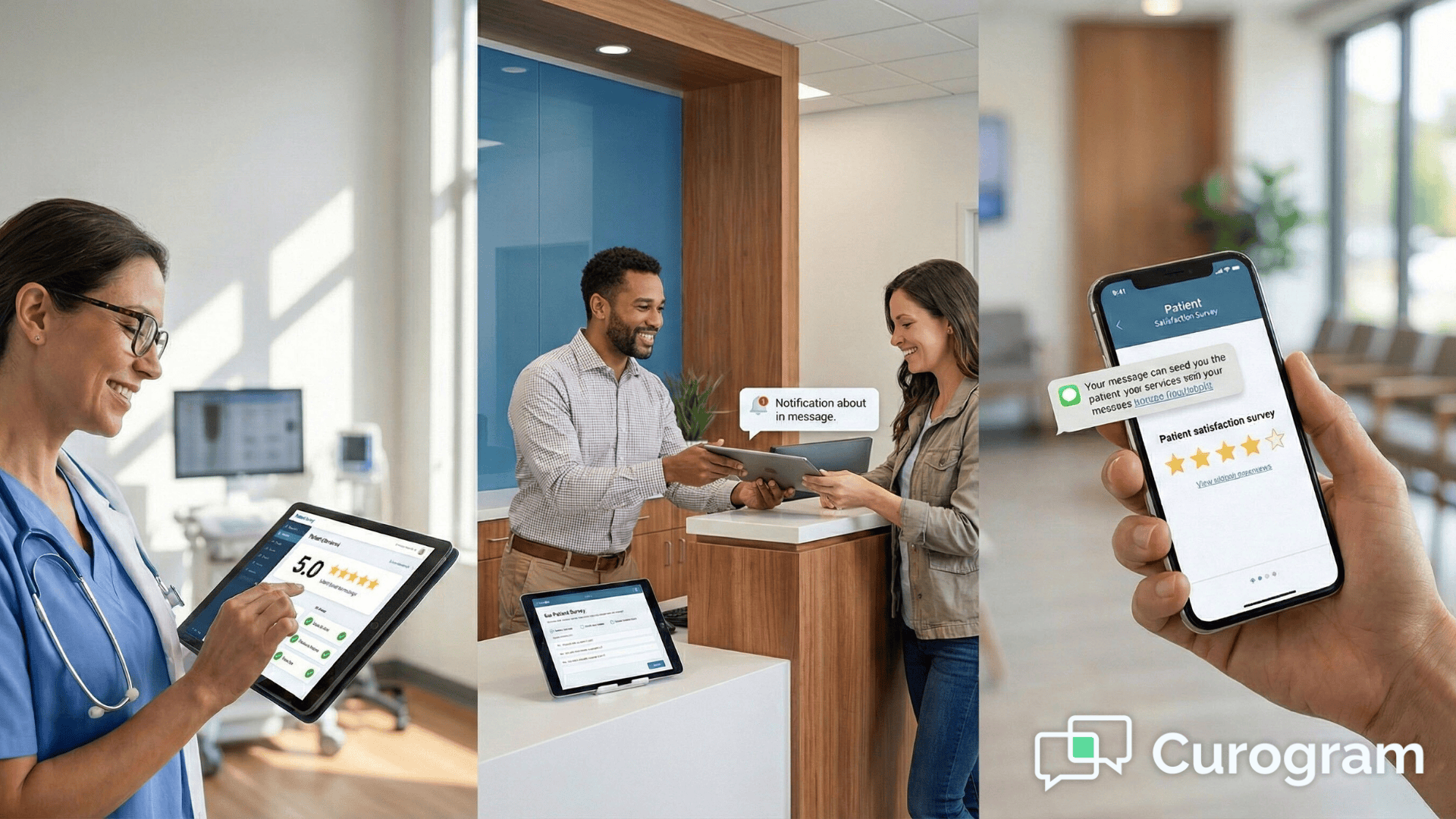
Automated review requests GE Centricity integration changes this completely. When visits close in your system, workflows trigger automatically. Patients get satisfaction surveys at the perfect time. Staff don't lift a finger. Your reputation grows steadily across every location. This guide shows exactly how specialty clinics use these workflows to build stronger online presence, improve patient experiences, and free up valuable staff time.
Building a strong online presence takes consistent effort. Specialty clinics face specific hurdles that make reputation management harder than it should be.
Low review volume:
This creates a gap between your actual quality and what people see online. Search engines favor businesses with higher review volumes. A clinic with 500 reviews ranks higher than one with 50, even with similar star ratings. You lose visibility before potential patients even see your practice.
Inconsistent patient feedback:
This inconsistency creates bias in your data. Maybe you only collect reviews after successful procedures. Perhaps one location has an enthusiastic staff member while other sites fall behind. Your feedback becomes unreliable for making improvements.
Manual, staff-dependent processes:
Training complexity adds burden. Some staff feel uncomfortable making requests. Others lack confidence. Staff turnover means starting over with training repeatedly. Your review collection drops during every transition period.
Multi-location visibility gaps:
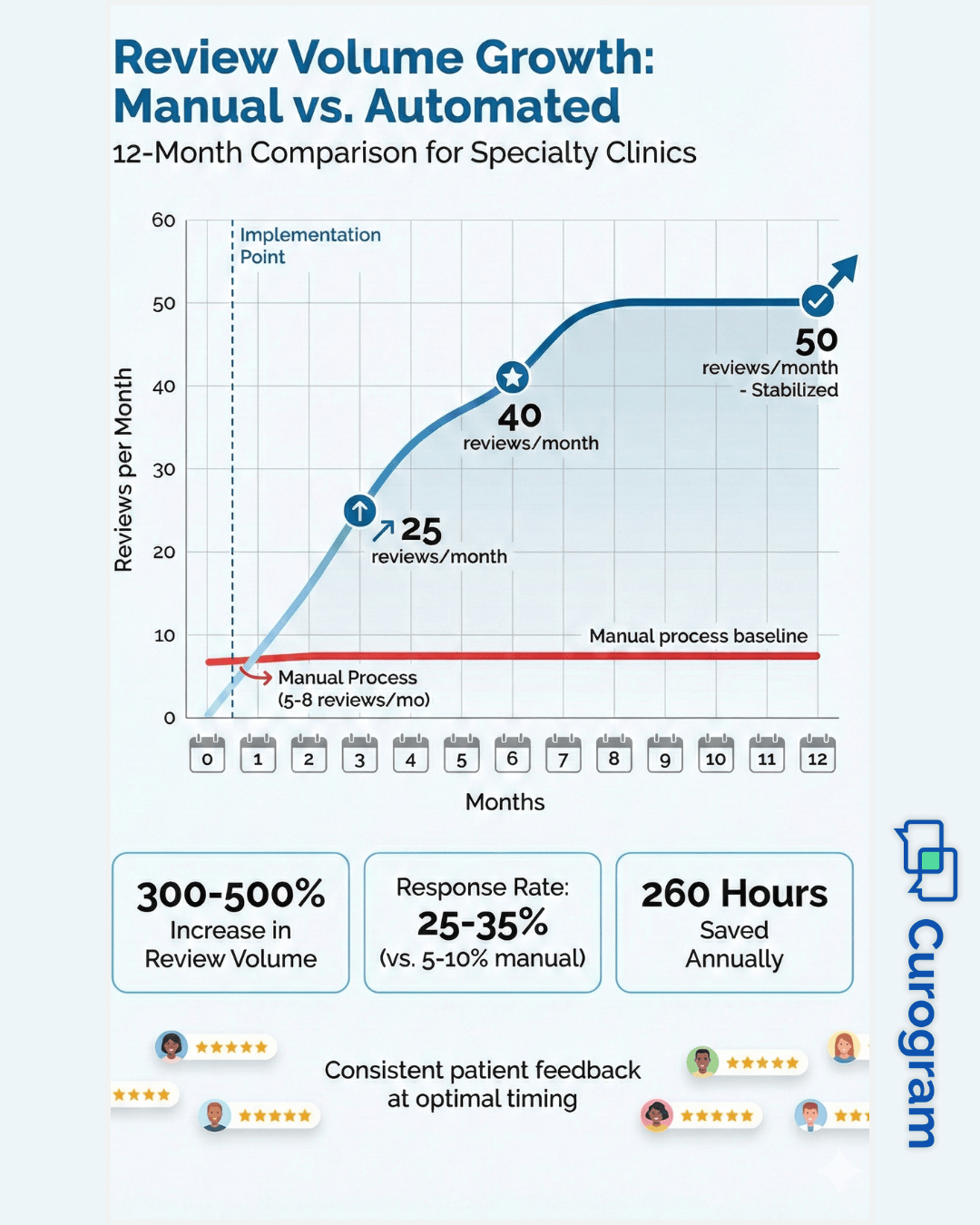
Competition makes these challenges pressing. Other clinics might use automated systems collecting 40-50 reviews monthly while you manually gather 5-10. After one year, they have 500+ reviews while you're stuck at 100. The gap becomes nearly impossible to overcome.
Manual systems create daily friction that slows down your entire operation. The problems start at the front desk and ripple through your workflow.
Staff forget to request reviews during peak hours. A Tuesday morning with back-to-back appointments leaves no mental space for review collection. Your receptionist juggles phone calls, insurance questions, and patient check-outs. Asking for a review drops to the bottom of the list. By afternoon, those patients are long gone.
This pattern repeats across specialties. Radiology centers process high volumes quickly. Between explaining procedures and managing scheduling, technicians have limited interaction time. A rushed checkout means review requests get skipped entirely. The same thing happens in cardiology offices during stress test days or orthopedic clinics after busy injury evaluations.
Uneven review distribution across locations creates management headaches. Your main office has one staff member who excels at requesting feedback. Another location doesn't have that champion. The result? Wildly different online profiles for facilities that deliver identical care quality. Administrators spend time trying to balance this out rather than focusing on patient care improvements.
Geographic patterns emerge that hurt your brand. A clinic in an affluent area might naturally get more reviews because patients are more tech-savvy or vocal. Your location serving a different demographic lags behind through no fault of the care team. This creates an unfair representation of your organization's reach and quality.
Time-consuming follow-up tasks pile up quickly. Some practices try calling patients a few days after visits. These calls take 5-10 minutes each when you include phone tag. Multiply that by dozens of patients weekly and you're looking at hours of staff time. That's time not spent on scheduling, billing, or patient care coordination.
Email campaigns require similar effort. Someone has to pull lists from your system, write messages, track responses, and follow up. Many practices start these initiatives with enthusiasm but abandon them within months due to the workload. The feedback workflow becomes another abandoned project that never quite worked.
Missed opportunities to capture positive experiences happen constantly. A patient just had an amazing visit. They're grateful, impressed, and willing to share their story. But no one asks them at checkout. Three days later when they get a generic email, the moment has passed. They don't feel the same enthusiasm. They skip the review.
These timing failures cost you the most valuable reviews. Research shows immediate positive feedback gets more detailed and emotional responses. Patients remember specific staff members who helped them. They recall exactly how the care made them feel. Wait too long and you get bland, forgettable reviews that don't convince potential patients.
The efficiency impact extends beyond marketing. When staff spend time on manual review collection, they're not doing their core jobs. Front desk productivity drops. Patient wait times increase. Small frustrations accumulate across your team as they try to balance competing priorities.
Manual processes also make it nearly impossible to track performance. You can't easily see which providers or services generate the most positive feedback. Patterns stay hidden in scattered spreadsheets or email folders. Your leadership team makes decisions without clear data about patient satisfaction trends across different areas of practice.
Automated systems transform reputation management from a burden into a seamless background process. The technology handles everything your staff currently struggles with.
Fully automated review request delivery:
No manual staff involvement:
Consistent timing after appointments:
Centralized patient experience management:
Smart routing protects your reputation. Happy patients get links to leave public reviews. Patients with concerns receive private feedback forms that alert your team immediately. Integration with GE Centricity means zero double data entry, and workflows scale automatically as your practice grows.
The system creates natural feedback loops that improve care quality. Providers who receive consistently high marks can share their best practices with colleagues. Teams identify which aspects of service delivery patients value most. Your improvement initiatives become data-driven rather than based on assumptions.
Smart routing based on responses protects your public reputation while capturing all feedback. When someone gives positive ratings, the system guides them to leave a public review on Google or Healthgrades. If someone expresses concerns, they're directed to a private feedback form that alerts your patient relations team immediately.
This routing prevents negative reviews from appearing online before you can address the issue. Your team contacts unhappy patients quickly, resolves their concerns, and often prevents public complaints entirely. Some patients even update their feedback to positive after experiencing excellent service recovery.
Integration with GE Centricity means zero double data entry. The system pulls patient contact information, visit details, and provider assignments directly from your existing records. No one manually types phone numbers or email addresses. No one has to cross-reference paper schedules. Everything flows automatically between systems.
This integration also enables sophisticated segmentation. Different specialties can send customized survey questions. Radiology patients might get questions about technician friendliness and procedure explanation. Cardiology patients see questions about follow-up care instructions and appointment availability. Each specialty gets feedback on what actually matters to their patients.
Automated workflows scale effortlessly as your practice grows. Opening a new location? The same system extends there automatically. Adding providers? Their patients get surveys just like everyone else. Increasing patient volume? The automation handles 1,000 requests as easily as 100.
This scalability matters for health systems and growing practices. You don't need to hire more marketing staff or burden existing teams with higher workloads. The technology absorbs the growth without requiring proportional resource increases. Your cost per review actually decreases as volume rises.
Compliance tracking becomes built into the process. Every message sent, every response received, and every action taken gets logged automatically. When patients opt out of communications, the system respects those preferences across all future campaigns. HIPAA compliance stays intact because the platform was designed specifically for healthcare.
The combination of these improvements creates a reputation engine that runs constantly in the background. While your staff delivers care, your system builds your brand. Positive experiences turn into public testimonials without anyone breaking their workflow. Patient satisfaction insights flow to leadership without administrative burden. Your reputation grows steadily month after month.

The integration between GE Centricity and Curogram creates a seamless reputation management system. Everything works together without disrupting your existing processes.
When staff mark a visit as complete in GE Centricity, Curogram receives that trigger instantly. The patient's contact information, visit type, and provider details transfer automatically. This real-time connection means surveys go out within minutes of checkout. Patients receive requests while their experience remains top of mind.
The trigger mechanism works across all visit types. Radiology scans, specialty consultations, follow-up appointments, and procedures all generate appropriate survey requests. Each patient gets a relevant message based on the care they received. Smart throttling prevents over-communication if patients visit multiple times in one week.
The satisfaction survey appears first through the patient's preferred channel - text or email. Questions adapt to the service provided. Radiology patients see different questions than cardiology patients. This customization leads to more meaningful responses.
Based on survey responses, the system routes patients intelligently. Happy patients receive direct links to leave public reviews on Google, Yelp, or healthcare-specific sites. Patients with concerns get private feedback forms that alert your management team. This smart routing protects your online reputation while ensuring you hear all feedback.
Every message sent through Curogram remains HIPAA compliant. The system never includes protected health information in texts or emails. Messages reference recent visits generally without specific medical details. This keeps communications legal and patients comfortable.
Audit logs track every interaction automatically. When compliance officers need records, they can pull complete communication histories instantly. The system documents who received messages, when they responded, and what actions resulted. This creates ironclad documentation for regulatory reviews.
Different specialties benefit from automated workflows in unique ways. Each practice type faces specific reputation challenges that automation solves effectively.
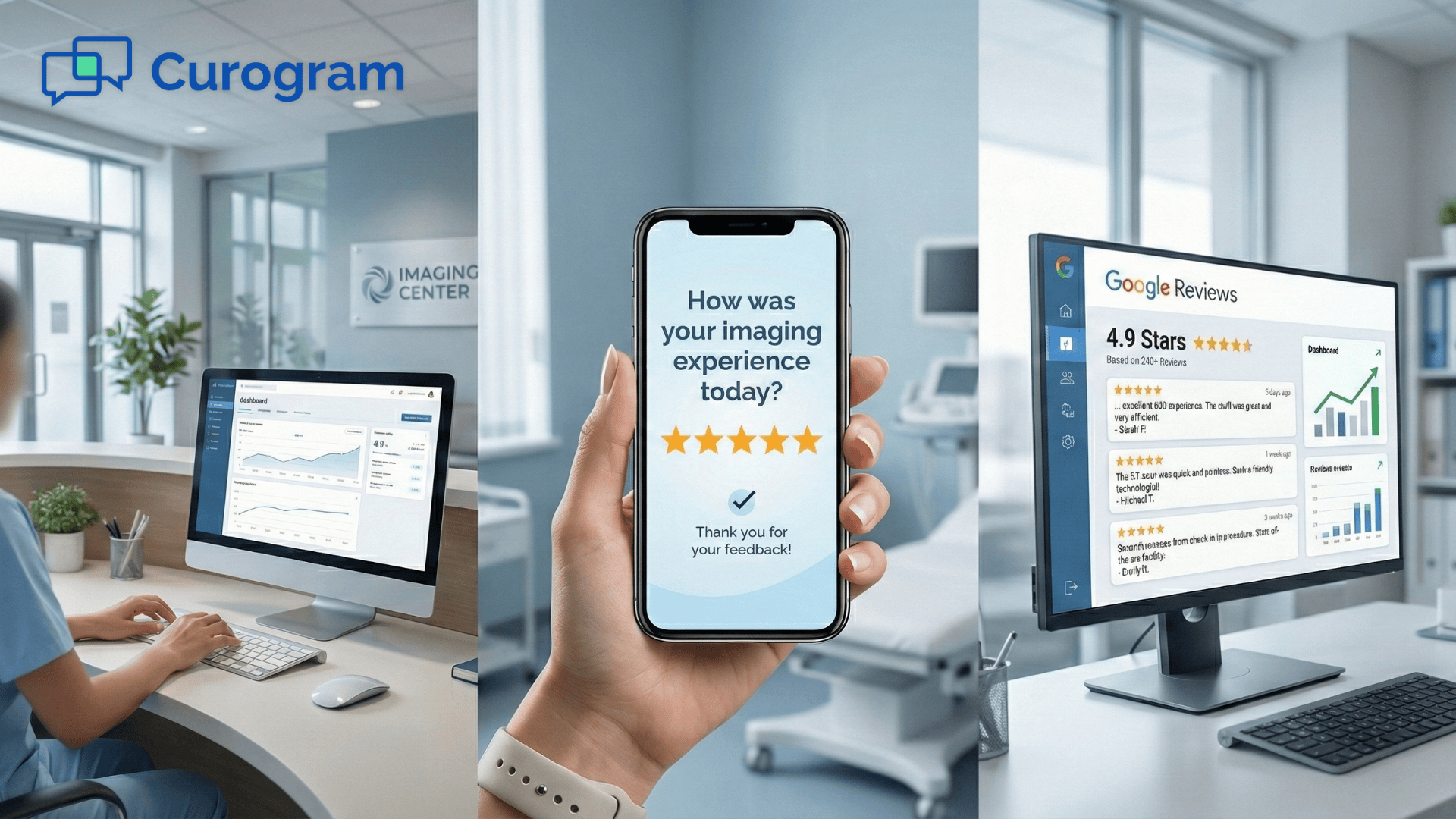
Radiology centers often have brief patient interactions. Someone comes in for a scan and leaves 30 minutes later. Staff rarely have time for feedback conversations during high-volume days. Automated surveys capture satisfaction immediately after these quick visits. Patients can rate technician friendliness, comfort during procedures, and facility cleanliness while details remain fresh.
Satisfaction Surveys After Specialty Consults
Cardiology, orthopedics, and other specialty practices see patients for complex consultations. These visits involve detailed discussions about diagnosis and treatment plans. Post-visit surveys help evaluate whether patients understood their conditions and felt heard by providers. The feedback reveals whether appointment times allowed adequate discussion or felt rushed.
Quick Detection of Negative Experiences
Automated feedback workflow allows immediate identification of problems. When a patient rates their experience poorly, alerts go to managers within minutes. The team can call that same day to understand what went wrong. Fast response often turns negative situations into positive outcomes before they become public complaints. Many patients feel impressed when practices call the same day to address concerns.
Multi-Location Visibility for Department-Level Insights
Large specialty groups with multiple locations get unified reporting across all sites. Administrators see which facilities excel and which need support. Department-specific data shows whether imaging centers perform better than exam rooms. This granular visibility enables targeted improvements rather than broad assumptions about quality.
The benefits of automated workflows extend far beyond collecting more reviews. Patients notice and appreciate the improved experience.
Faster communication makes patients feel valued. When someone receives a survey minutes after their visit, they know the clinic cares about their experience. This immediate attention creates positive impressions that last. Patients remember practices that seek their input promptly.
Consistent follow-up builds trust across all interactions. Every patient receives the same attention whether they visit on a busy Monday or quiet Friday. No one gets forgotten because staff were overwhelmed. This reliability strengthens patient relationships over time. People choose providers who demonstrate consistent care at every touchpoint.
Improved experience at every touchpoint creates loyalty. From scheduling through checkout and follow-up, automation ensures nothing falls through cracks. Appointment reminders arrive on time. Post-visit surveys show up when promised. Patients develop confidence that your organization has systems that work. This operational reliability becomes a competitive advantage.
Stronger patient trust across departments results from this consistency. When every specialty in your organization delivers the same smooth experience, patients recommend your entire health system. Someone impressed by orthopedics willingly tries your cardiology services. Internal referrals increase because patients trust your whole brand rather than individual providers. Automated reputation workflows create this systematic excellence that patients notice and appreciate.
Automated review requests GE Centricity integration transforms how specialty clinics build and manage their reputations. The technology solves fundamental workflow problems that manual processes create.
Your staff stops spending hours on review collection tasks. Patients receive timely requests that capture their experiences accurately. Every location maintains consistent online visibility regardless of size or patient volume. Leadership gains real-time insights into satisfaction patterns across your organization.
The results speak clearly. Practices implementing these workflows see review volume increase 300-500%. Response times for patient concerns drop from days to hours. Brand consistency improves across all locations. Staff productivity rises as technology handles repetitive communication tasks.
Most importantly, automated systems scale with your growth. Adding locations, providers, or patient volume doesn't require proportional increases in marketing staff or effort. The technology adapts seamlessly to your expanding needs.
Book your demo today to see Curogram + GE Centricity in action. Discover how automated reputation workflows can strengthen your online presence, improve patient satisfaction, and free your team to focus on delivering excellent care.
Automated systems send requests within minutes of visit completion when patient experience remains fresh. This immediate timing captures authentic feedback that manual follow-up days later misses. The convenience of text or email links makes responding effortless. Patients receive requests consistently regardless of staff workload, eliminating the gaps that happen during busy periods. Most practices see 3-5 times more reviews after implementing automation compared to their previous manual processes.
Direct integration eliminates double data entry and ensures accuracy. When visits close in GE Centricity, patient information transfers automatically to trigger surveys. Staff don't manually export lists or type contact details. The system knows each patient's provider, visit type, and service received, enabling customized feedback questions. This seamless connection means reputation management runs in the background without disrupting clinical workflows or requiring additional administrative work.
Smart routing directs unhappy patients to private feedback forms instead of public review sites. When someone rates their experience poorly, the system alerts your patient relations team immediately. Staff can contact that patient the same day to understand concerns and resolve issues. This fast response often prevents negative reviews entirely. Many patients feel heard and satisfied after receiving prompt attention to their complaints. The system captures all feedback while protecting your public reputation from problems you could have fixed.
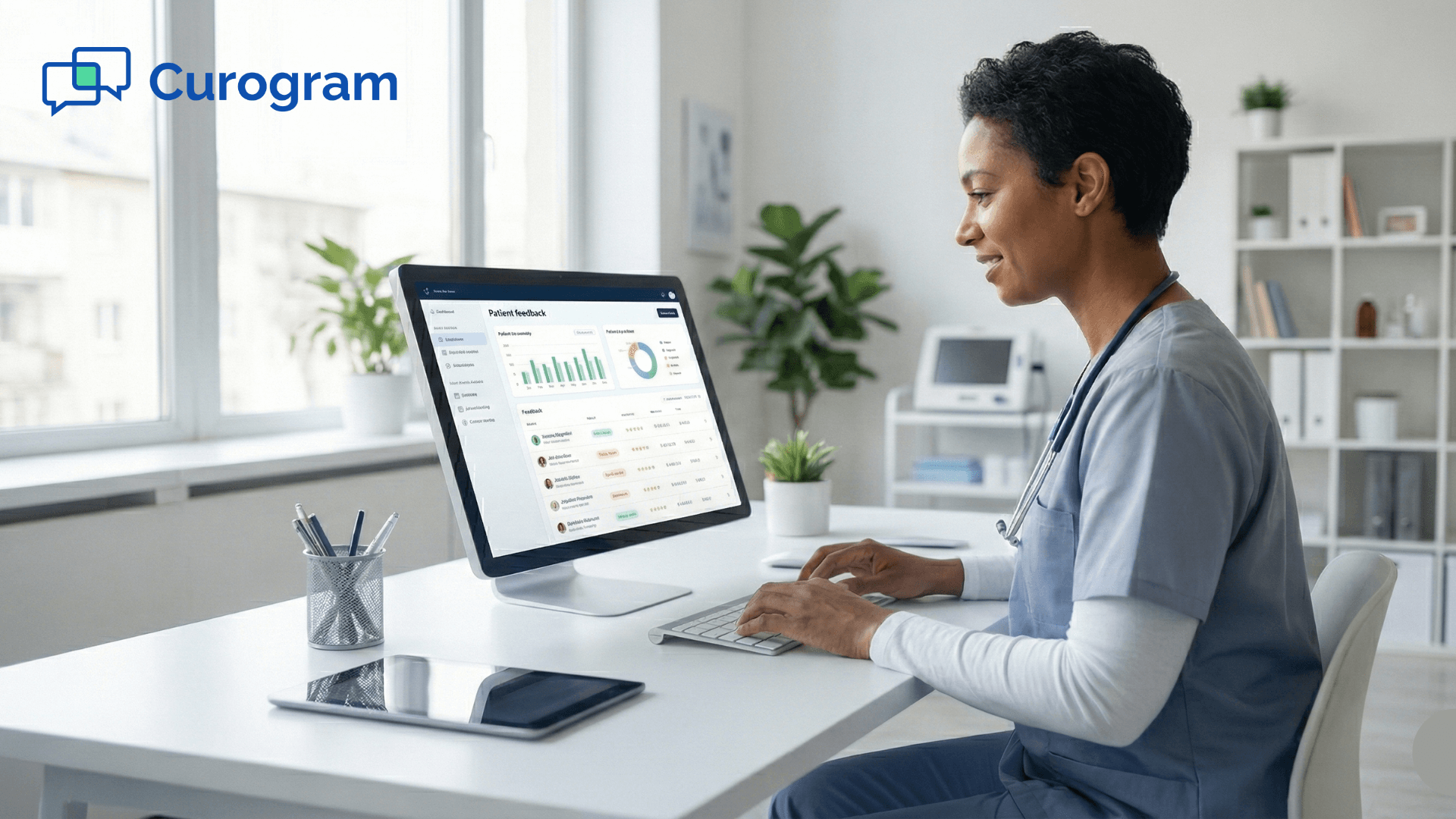
Centralized dashboards show performance across all locations in real-time. Marketing directors see which sites need reputation support without waiting for monthly reports. Regional managers can compare satisfaction scores between territories to identify best practices. Individual location leaders access their specific data while maintaining consistent processes organization-wide. This unified visibility enables faster problem-solving and better resource allocation. You can spot trends affecting multiple locations quickly and address them before they impact your brand significantly.
Consistent feedback collection reveals patterns manual systems miss. You discover which parts of patient experience need improvement across all locations. Fast response to concerns prevents small issues from becoming major problems. Patients appreciate timely follow-up and feel valued when asked for input. This attention builds loyalty and trust. Over time, acting on feedback data improves actual service quality, which naturally raises satisfaction scores. The workflow creates a continuous improvement cycle that strengthens both reputation and real patient experience.
💡 Imaging centers that use Veradigm often face a gap in post-visit care. While clinical work runs smoothly, most centers struggle to gather patient...
💡 Imaging centers lose revenue when negative reviews drive patients away. Automated reputation management can help mitigate that by: Boosting...
1 min read
💡Automated review requests in Office Ally help small and mid sized medical practices collect more accurate feedback without adding work to the...