Boosting Google Reviews and Patient Acquisition in Veradigm
💡 Imaging centers lose revenue when negative reviews drive patients away. Automated reputation management can help mitigate that by: Boosting...

Table of Contents
Patient experience can pose a unique challenge for imaging centers. You handle hundreds of appointments each week, run complex equipment, and manage tight schedules. Clinical operations often run smoothly through Veradigm, but what happens after patients leave?
Most centers never hear from satisfied patients. Happy people rarely go out of their way to leave reviews. Meanwhile, upset patients head straight to Google or Facebook to share their frustration. This creates an unfair picture of your service quality.
The gap between clinical excellence and reputation management hurts growth. New patients search for imaging centers online and choose based on reviews. When your profile mostly show complaints, you lose volume to competitors who ask for feedback more consistently.
Manual outreach doesn't solve this problem. Staff get busy during peak hours and forget to request reviews. Even well-meaning teams can't maintain consistent follow-up across all locations. The result? Some sites build strong profiles while others lag behind.
Automated review requests Veradigm can integrate with will change this dynamic completely. Every patient receives outreach at the right time. Issues get caught before they become public complaints. All locations maintain equal engagement without extra work for your teams.
This approach doesn't just gather more reviews. It creates a feedback workflow that improves operations, protects brand reputation, and strengthens patient trust. Multi-location networks gain the most because automation ensures every site follows the same quality process.
The following sections show exactly how automated systems work, what benefits they deliver, and why they matter for Veradigm users who want to scale reputation management across their entire imaging network.
Imaging centers serve hundreds of patients each week. Every scan, every wait, every staff chat creates a chance for good or bad feedback. When things go well, patients often stay quiet. But when delays happen or prep steps confuse people, negative reviews appear fast.
Most Veradigm users handle clinical tasks well. The software keeps exams on track and helps teams share images quickly. Yet many centers miss a key step: asking patients how things went after they leave.
Without follow-up, you only hear from upset patients. Happy patients rarely post reviews on their own. This creates an unfair picture of your service quality. New patients see the bad reviews and might choose another center.
Post-visit outreach fixes this problem. When you reach out right after an exam, you catch issues before they become public complaints. You also give satisfied patients an easy way to share praise. Automated systems make this happen for every patient, not just the ones staff remember to contact.
High-volume centers benefit most from automation. Staff focus stays on patient care while the system handles reputation work. This leads to more reviews, fewer surprises, and better online visibility.
Think of it as closing a gap in your workflow. Clinical tasks run through Veradigm, but patient experience needs its own system. When both work together, your center gains a full picture of quality and service.
Manual review requests fail when staff get busy. Automated systems solve this by reaching every patient without extra work. This creates steady review growth across all your imaging locations.
Front desk teams juggle many tasks during busy imaging days. Between checking patients in, verifying insurance, and prepping for the next scan, staff often forget to ask for reviews. Even with good intentions, manual outreach fails when volume picks up.
Automated systems solve this problem by removing the human memory factor. After each exam, the system sends a message without staff having to click anything or remember anyone. The request goes out the same day, while the visit still feels fresh to the patient.
This consistency changes outcomes. When every patient gets outreach, review volume grows steadily. Centers that used to get one or two reviews per month now collect dozens. More reviews mean better search rankings and a more complete view of patient sentiment.
Multi-location groups gain extra value here. Each site operates on the same schedule, so no location falls behind. Patients at every facility receive the same quality of follow-up. This creates a level playing field across your network.
Increasing Positive Review Rates Through Consistent Follow-Up
Timing matters for review requests. Patients who had a smooth exam are most likely to respond within 24 hours. Wait a week, and they forget details or lose interest in sharing feedback.
Automated messaging ensures outreach happens at the right moment. The system triggers after the exam ends, so patients receive their request while the experience stays clear in their mind. This leads to higher response rates and more detailed comments.
Happy patients need a gentle push. Most satisfied people won't seek out your Google listing to leave praise. But when you make it simple with a direct link, many will take two minutes to help. This produces a more balanced online profile for all your locations.
Reliable review generation also supports your feedback workflow strategy. When you collect input consistently, patterns emerge. You can spot trends across sites and fix common pain points before they hurt your reputation. This turns review collection into a tool for continuous improvement.

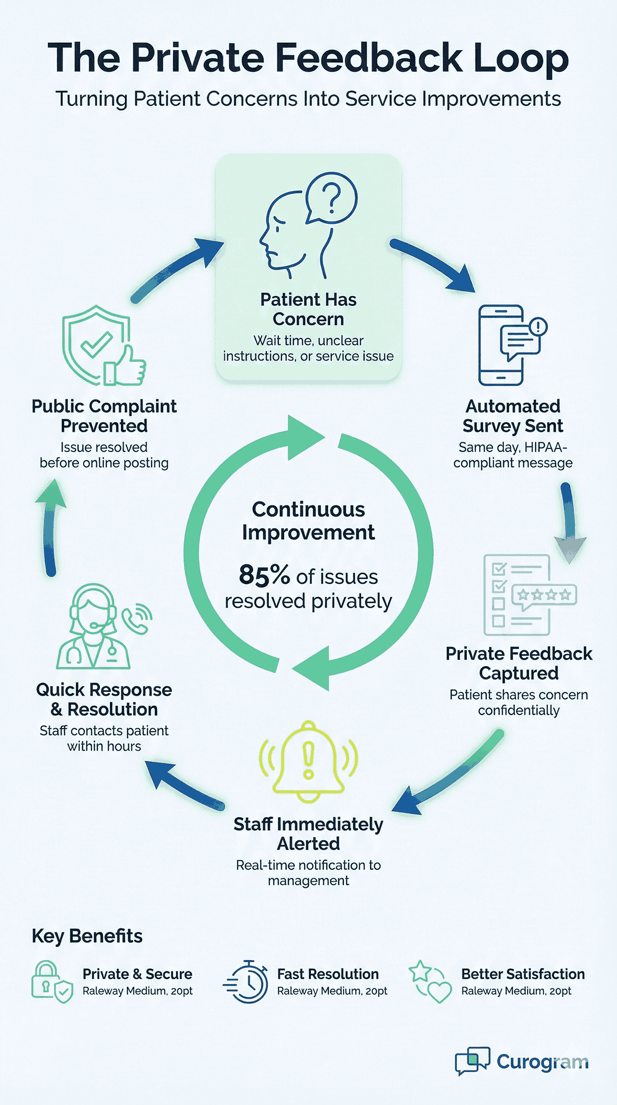
Most negative reviews start as small, fixable problems. Catching these issues early gives staff a chance to resolve them privately. Reputation management helps with this while improving service quality.
Not every patient wants to post a public review. Some just want to tell you about a problem so you can fix it. Automated systems give these patients a private channel to share concerns before they escalate.
A satisfaction survey catches issues that might otherwise show up as one-star reviews. Maybe a patient didn't understand prep instructions. Or they waited longer than expected, and front desk staff seemed rushed. When you learn about these problems early, you can reach out and make things right.
This approach reduces public complaints by giving upset patients a direct line to management. Many people prefer this over posting online. They want their issue heard and resolved, not broadcasted. When you offer that option, they take it.
Imaging centers that capture private feedback first see fewer negative reviews on Google and Facebook. Staff can address wait times, clarify prep steps, or explain billing questions before patients turn to public platforms. This creates a smoother feedback workflow and protects your online reputation.
Most negative reviews stem from small, fixable issues. A patient didn't get a callback. Forms seemed confusing. Check-in took too long. None of these problems requires major changes, but they damage reputation when left unresolved.
Early feedback lets your team act fast. When a patient mentions a problem through your private system, staff can call within hours. They can explain what went wrong, apologize, and offer a solution. This often turns an upset patient into a loyal one.
Quick resolution improves patient satisfaction across your network. Staff feel empowered to fix issues rather than watch them become public complaints. Patients appreciate the personal attention. Your online ratings stay strong because problems get handled privately.
Enterprise radiology groups especially value this benefit. When one location has a spike in complaints, leadership can address it before other sites face the same issue. Consistent service quality across all facilities becomes easier to maintain. Brand perception stays positive even as you scale.
Large radiology networks often show uneven review distribution. One location might have 200 reviews while another has only 15. This happens when some sites ask for feedback, and others don't. New patients see the low-review locations as less credible or less active.
Automated review workflows fix this imbalance by treating every site equally. Each location sends the same post-visit message to every patient. No site depends on staff remembering to ask. The system runs the same process everywhere, which leads to similar review counts across your network.
Equal outreach creates fair comparisons. Patients can evaluate locations based on real feedback rather than wondering why one site has so few reviews. Your network looks established and professional at every address. This prevents certain sites from appearing underrepresented or poorly rated due to low engagement.
Review balance also helps with search visibility. Search engines favor businesses with consistent activity. When all your locations show recent, steady feedback, each one ranks better in local results. This strengthens your multi-location imaging workflows and brings in more patients across the board.
Some imaging centers struggle with online visibility due to low review volume. They serve patients well, but don't show up in search results. Competitors with more reviews rank higher, even if their service quality matches or lags behind yours.
Automated outreach ensures ongoing engagement at every location. New reviews appear regularly, which signals to search engines that your business stays active. Patients see fresh feedback when they research your services. This keeps your listings relevant and competitive.
Territory-based comparisons become fairer when all locations maintain similar review patterns. Patients can choose based on proximity or scan type rather than worrying that one site might offer worse service. Your brand reputation stays consistent across all areas you serve.
Online credibility improves when no location looks neglected or outdated. A steady stream of reviews shows that you care about patient feedback everywhere. This builds trust with potential patients and strengthens referral relationships with doctors who want reliable imaging partners for their patients.
Post-visit messages must protect patient health information. Any system that sends review requests or surveys needs to follow HIPAA rules. This means encrypted messages, secure servers, and careful handling of patient data.
Automated review requests with Veradigm must use HIPAA-safe workflows. Messages go through encrypted channels. No protected health info appears in the text. Patients click a secure link to provide feedback without exposing their medical details.
This approach supports enterprise IT rules. Your security team can audit the system and verify compliance. Logs show when messages went out and how data moved through the platform. Nothing happens off the record or outside approved processes.
Imaging centers avoid compliance risk while improving patient experience. You don't have to choose between gathering feedback and protecting privacy. The right system does both. Staff can focus on care, knowing that outreach follows all required guidelines.
Feedback from automated outreach shows patterns quickly. When 20 patients mention long waits in one week, you know to adjust scheduling. When prep instructions confuse multiple people, you rewrite them. This creates a cycle where patient input leads to real changes.
Imaging directors use this data to refine operations. They can test new communication methods and see results within days. Staffing allocation improves when you know which times see the most complaints. Prep workflows get clearer when you learn what patients misunderstand.
This strengthens your overall workflow. Clinical tasks run through Veradigm, but patient feedback helps you optimize the entire experience. When both systems share insights, you make better decisions about where to invest time and resources.
Patients benefit from these ongoing improvements. Each round of feedback makes the service better for the next group. Quality rises steadily rather than staying stuck at the same level. This turns reputation management into a growth tool, not just a way to collect reviews.
Search engines rank businesses with many reviews higher than those with few. When your imaging center has 300 positive reviews, you appear above competitors with 50. This happens across Google, Bing, and other platforms that patients use to find medical services.
Automated systems generate authentic reviews at scale. Patients share real experiences without prompting beyond the initial request. This builds a strong review profile that search algorithms reward with better placement in results.
Patients choose providers based on social proof. A five-star rating with 200 reviews carries more weight than a five-star rating with 10 reviews. People trust volume because it shows consistent quality over time. When you have both high ratings and high review counts, conversion rates improve.
Better visibility drives appointment growth. More people find your services when searching for MRI, CT, or ultrasound. More clicks lead to more scheduled exams. This creates a positive cycle where good reviews bring in patients who then leave more good reviews.
Patients often search by exam type and location together. They type phrases like "MRI near me" or "urgent care imaging downtown." Search results favor centers with strong local signals, and review count ranks high among those signals.
Centers with higher review totals show up more often in map packs and local listings. This matters because many patients choose from the first few results they see. If your location doesn't appear in that initial view, you lose potential volume to competitors.
Automated review generation keeps every location active and visible. Fresh reviews tell search engines that your business operates regularly and serves current patients. This prevents any site from looking outdated or inactive in search results.
Long-term success in patient communication automation depends on sustained engagement. One-time campaigns bring temporary boosts, but ongoing systems create lasting advantages. When your review generation runs automatically, your search performance stays strong year after year.
Curogram connects directly with Veradigm to automate reputation work. The platform handles everything from review requests to compliance tracking. This allows imaging centers to focus on patient care while reputation management runs itself.
Curogram connects with Veradigm without adding work for your staff. The integration triggers review requests after each patient encounter. No one needs to remember to send messages or track who received outreach.
Staff avoid manual tracking because the system handles everything. After an exam ends in Veradigm, Curogram sends a message automatically. This creates consistent post-visit communication across all your facilities without requiring new processes or extra training.
Teams focus on patient care while reputation work happens in the background. Front desk staff don't juggle another task. Technologists don't need to remember to ask about reviews. The workflow stays clean and efficient for everyone.
Imaging centers gain the benefits of active reputation management without the burden of running it manually. Every patient gets follow-up. No location falls behind. Quality stays high across your entire network.
Curogram handles thousands of review requests each day across large enterprise imaging groups. The platform scales without losing reliability. Whether you run 5 locations or 50, every site gets the same quality of outreach.
Review volume is distributed evenly across locations. No site gets overlooked. No staff member carries extra weight. The system treats each facility as equally important and ensures consistent engagement everywhere.
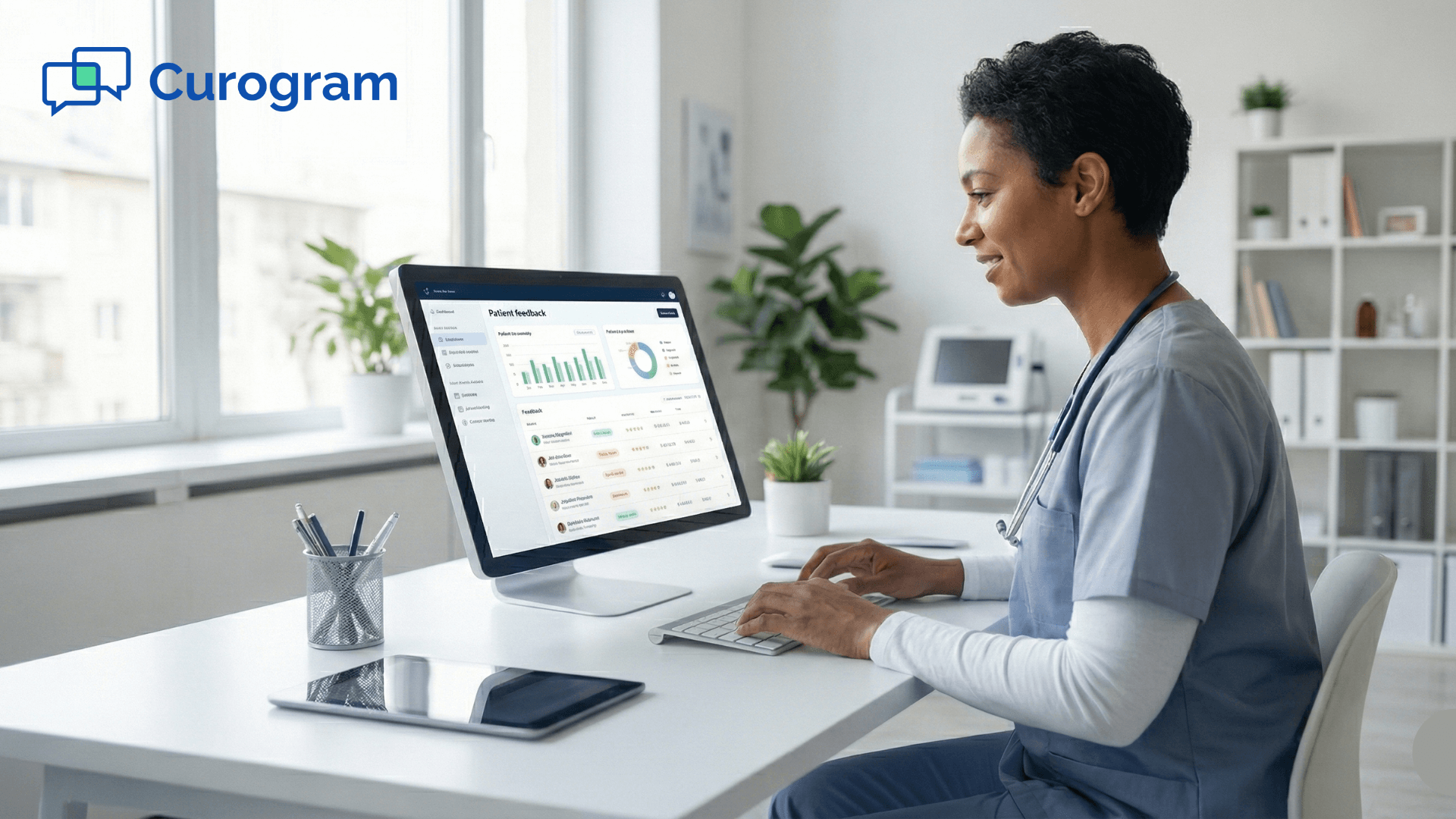
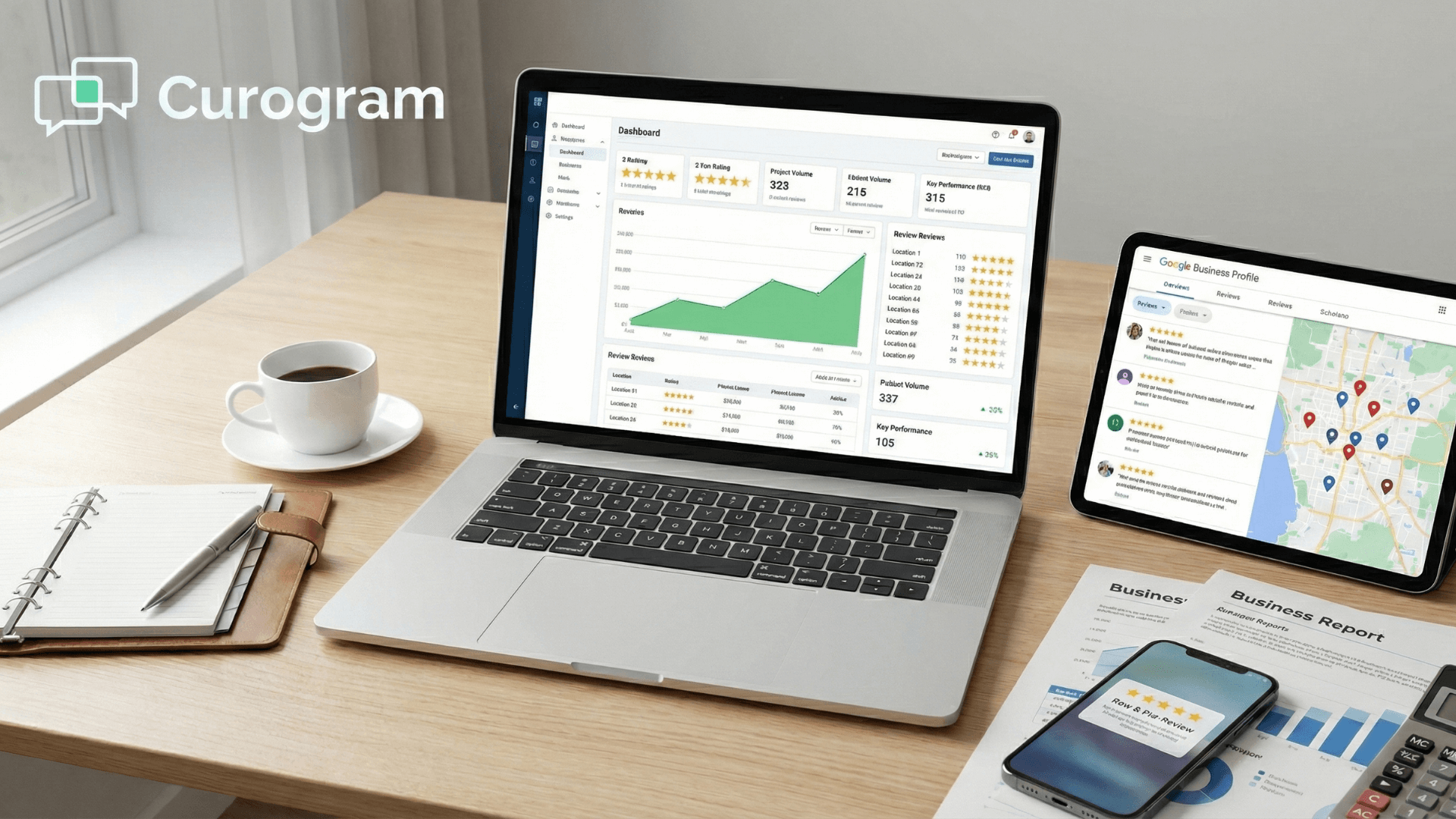
Imaging leaders gain full visibility into performance metrics across all sites. Dashboards show review counts, response rates, and satisfaction survey results by location. This makes it easy to spot trends and address issues before they spread.
Workflow alignment stays consistent with your existing radiology processes. Curogram fits into the systems you already use rather than requiring a separate workflow. This keeps operations smooth and prevents confusion among staff.
All review outreach uses encryption and secure logging. Messages protect patient privacy from start to finish. No protected health information appears in texts or emails. Patients provide feedback through secure links that meet HIPAA standards.
Enterprise IT teams maintain full audit control. They can review message logs, check encryption methods, and verify compliance at any time. Nothing happens outside approved security protocols.
Compliance extends across the entire patient experience pipeline. From initial outreach to feedback collection to data storage, every step follows HIPAA rules. Your imaging center stays protected while gathering the insights you need to improve service.
Automated reputation management changes how imaging centers gather feedback. Instead of hoping patients leave reviews, you ensure every person gets a chance to share their experience. This leads to more online reviews, better search rankings, and fewer surprises from negative comments.
Multi-location networks gain the most from this approach. When every site follows the same outreach process, you eliminate gaps in coverage. All locations build strong review profiles. Your brand looks consistent and professional across every territory you serve.
Curogram makes this simple for Veradigm users. The system connects with your existing workflow and handles post-visit communication without adding work for staff. Review requests go out automatically. Feedback comes in consistently. Security stays strong through HIPAA-compliant processes.
Patient acquisition improves when your online presence reflects the quality of your service. Good reviews attract new patients. Quick responses to concerns prevent damage to your reputation. Ongoing feedback helps you refine operations and deliver better care.
This creates a system that scales with your growth. As you add locations or increase volume, the reputation workflow keeps pace. Your brand trust stays protected while you support patient needs across all touchpoints.
Book a Demo to See Curogram + Veradigm in Action.
Automated systems send requests at the best time, right after the visit ends. Patients remember their experience clearly and respond more often. The system also makes it easy by including direct links. This removes friction and increases the chance that satisfied patients will share feedback.
Patients forget details quickly after medical visits. Within 24 hours, memories stay fresh, and responses tend to be more detailed. Wait a week, and patients either forget to respond or provide less useful feedback. Automated timing ensures requests arrive when patients can give the most helpful input.
Many upset patients just want their issue to be heard and fixed. When you offer a private channel, they use it instead of posting publicly. Staff can then resolve the problem directly. This turns a potential bad review into a chance to improve service and keep the patient satisfied.
Large networks face uneven review distribution when outreach depends on individual staff. Some sites ask for reviews while others forget. Automated systems treat all locations equally, so every site builds a strong review base. This creates consistent brand perception and fair comparisons across your network.
Compliant systems encrypt all messages and avoid including protected health information in texts or emails. Patients click secure links to provide feedback. All data moves through HIPAA-approved channels. Enterprise IT teams can audit the entire process to verify that privacy rules are followed at every step.
💡 Imaging centers lose revenue when negative reviews drive patients away. Automated reputation management can help mitigate that by: Boosting...
1 min read
💡Automated review requests in Office Ally help small and mid sized medical practices collect more accurate feedback without adding work to the...
💡Automated review requests in DrChrono help practices collect more balanced and honest patient feedback. Send automated SMS or email review...