9 min read
Boost Patient Texting Experience and Elation Health SMS Engagement
Mira Gwehn Revilla
:
May 19, 2026
- Portal logins create five steps of friction for a 10-second question.
- SMS lands on the home screen with a familiar alert.
- Curogram is HIPAA-compliant and pairs with Elation Health.
- No app, no password, no portal needed for patients.
- Atlas Medical Center cut no-shows by 65% with two-way texting.
A patient signs the membership agreement on Monday. By Thursday, she has a quick question about her prescription refill. She does not log in to the portal. She does not call. She just stops engaging.
This is the quiet drift happening inside thousands of Elation Health practices right now. The clinical system works beautifully. The chart is clean. The note is signed. But the channel meant to keep the patient connected, the portal, is collecting unread messages like an unused inbox.
The patient texting experience Elation Health SMS engagement story is not really about technology. It is about behavior. Patients live in their messages app. They check it 96 times a day, on average. They do not check the patient portal once a week.
Elation Health’s portal supports secure messaging, test results, and online scheduling. These features matter for clinical access. But for daily communication, like confirming a visit, asking a quick question, or sending an intake form, the portal asks too much from a patient holding a phone in line at the grocery store.
SMS is the patient communication preferences winner by a wide margin. Industry data points to a 98% SMS open rate against single-digit engagement for many portal messages. That gap is not small. It is the entire difference between a patient who feels heard and one who feels processed.
This article is about that gap. We will look at why portal fatigue is real, what Elation patients actually want, and how a patient portal alternative Elation practices can layer on top, without ripping out their EMR, changes the relationship.
Specifically, we will show how Curogram serves as the frictionless patient channel that pairs Elation’s clinical strength with the SMS habit patients already have.
If you run a DPC or primary care office on Elation, this is for you.
The Villain: Portal Fatigue
Portal fatigue is the slow burnout patients feel when every message from their doctor needs a login, a password reset, and a guess at which menu hides the right reply box.
For Elation Health practices, this fatigue shows up as silent inboxes and missed pre-visit prep. The portal works as designed. The patients just stop showing up to it.
The Login Barrier
Elation’s portal asks the patient to open a browser or app, type in credentials they set up months ago, and hunt through menus built for clinical records. That is five steps of friction for a 10-second question.
Most patients pick the path of least effort. They call instead, which adds work for the front desk. Or they delay, which can mean a missed refill or skipped form. Or they just disengage, which is the worst outcome for any practice.
Think about it from the patient’s view. To ask “Do I need to fast before my visit?”, they must remember a password they made last winter. That is not a clinical problem. That is a habit problem.
The Notification Gap
A text message lights up the home screen with a familiar SMS badge. The patient sees it. The patient opens it. That is the whole loop.
Portal alerts often go to an email inbox that the patient ignores or filters as spam. Or they show up in a mobile app where push alerts were never turned on. The message was sent on time. The patient never knew it existed.
This gap is invisible to the practice. The staff sees “sent” and assumes the patient saw it. The patient sees nothing.
The Engagement Collapse
When pre-visit instructions, intake forms, and follow-up notes all live in a portal patients ignore, the operational results follow. Forms arrive blank at the front desk. Patients show up without lab prep done. Follow-up coordination breaks down within days.
For a typical primary care office, this might look like 30% to 40% of patients arriving without completed forms. Staff then redo the intake on paper. The 8 a.m. visit slides to 8:20. The day backs up from the first appointment.
The Patient Perspective
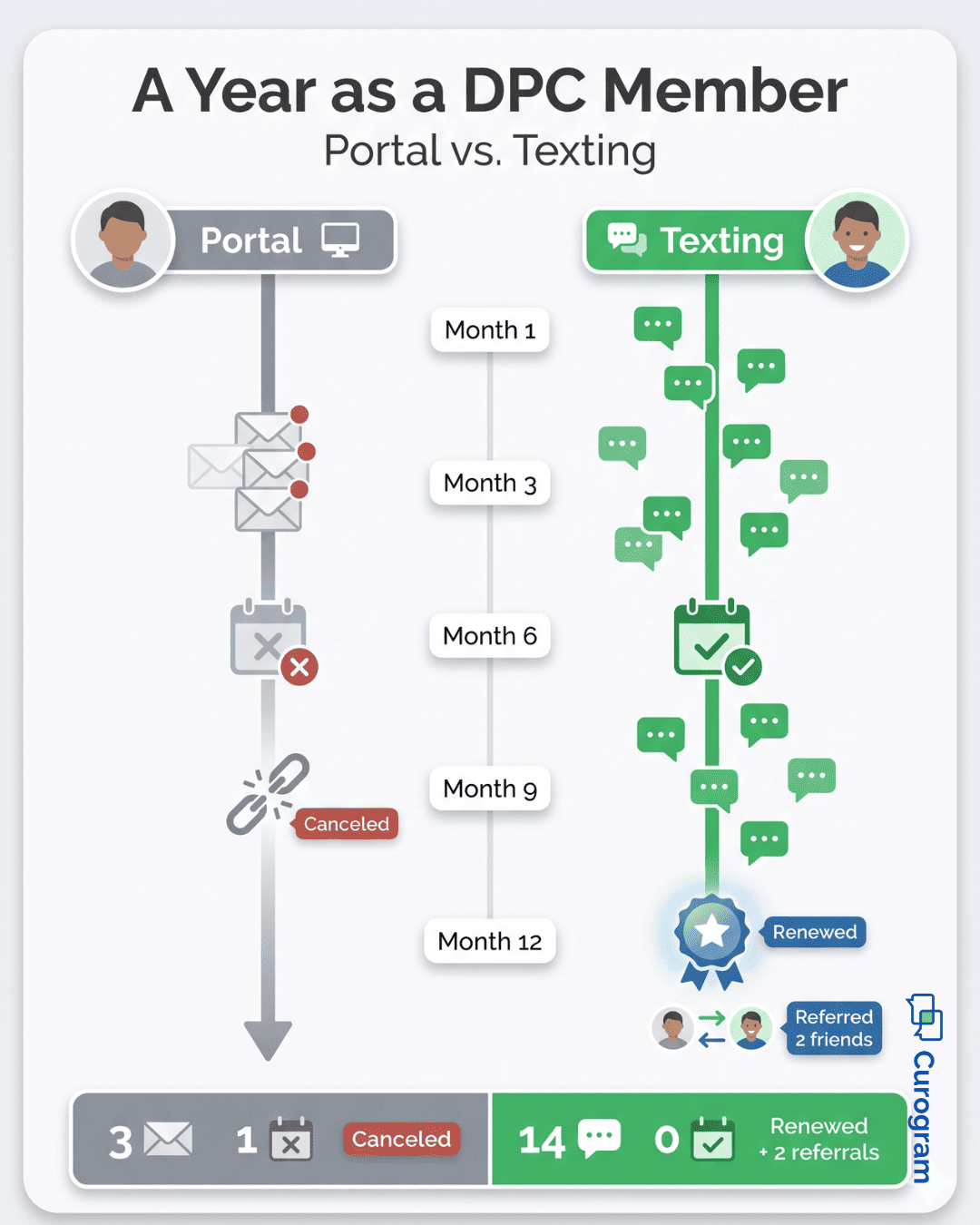
In Direct Primary Care, patients pay a monthly fee for responsive, personal care. Portal friction directly contradicts that promise. The membership says concierge. The portal feels like a help desk.
Patients in DPC models often say they feel processed, not cared for, when every reply needs a login. That feeling shows up in retention numbers months later. SMS vs portal messaging is not just an engagement debate. For DPC, it is a renewal question.
This is the villain at work. The technology is fine. The behavior it asks of patients is not.
The Guide: The Frictionless Patient Channel
If portal fatigue is the villain, the guide is the channel patients already use, made safe for healthcare. Curogram is that guide for Elation Health practices. It does not replace the EMR. It fixes the layer where the EMR struggles most: real-time patient communication.
The Solution
Curogram serves as the frictionless patient channel for Elation Health. It delivers HIPAA-compliant two-way texting through the one app every patient already has and checks dozens of times a day, their native SMS app. No new tool to learn. No new habit to build.
Zero-Download Communication
Curogram’s two-way texting asks the patient for nothing. There is no app to install. There is no portal login to remember. There is no interface to learn. The patient texts the practice the same way they text family.
For staff, the experience is just as simple. They reply from a unified dashboard that looks like a familiar messaging window. Compare that to the portal experience below.
|
Communication Step |
Elation Portal |
Curogram SMS |
|
Open a tool |
Browser or app |
Native messages app |
|
Sign in |
Username + password |
None |
|
Find the right thread |
Navigate menu |
Top of inbox |
|
Read the message |
After login |
On home screen |
|
Reply |
Click into reply box |
Type and send |
|
Avg. time to first read |
Hours to days |
Under 3 minutes |
That table is the whole argument. Friction equals delay. Delay equals disengagement.
The Integration
When a patient texts an Elation practice through Curogram, the message lands in the Curogram dashboard with the patient’s record context pulled from Elation Health. Staff see who is texting, why they are texting, and what their last visit covered, all in one screen.
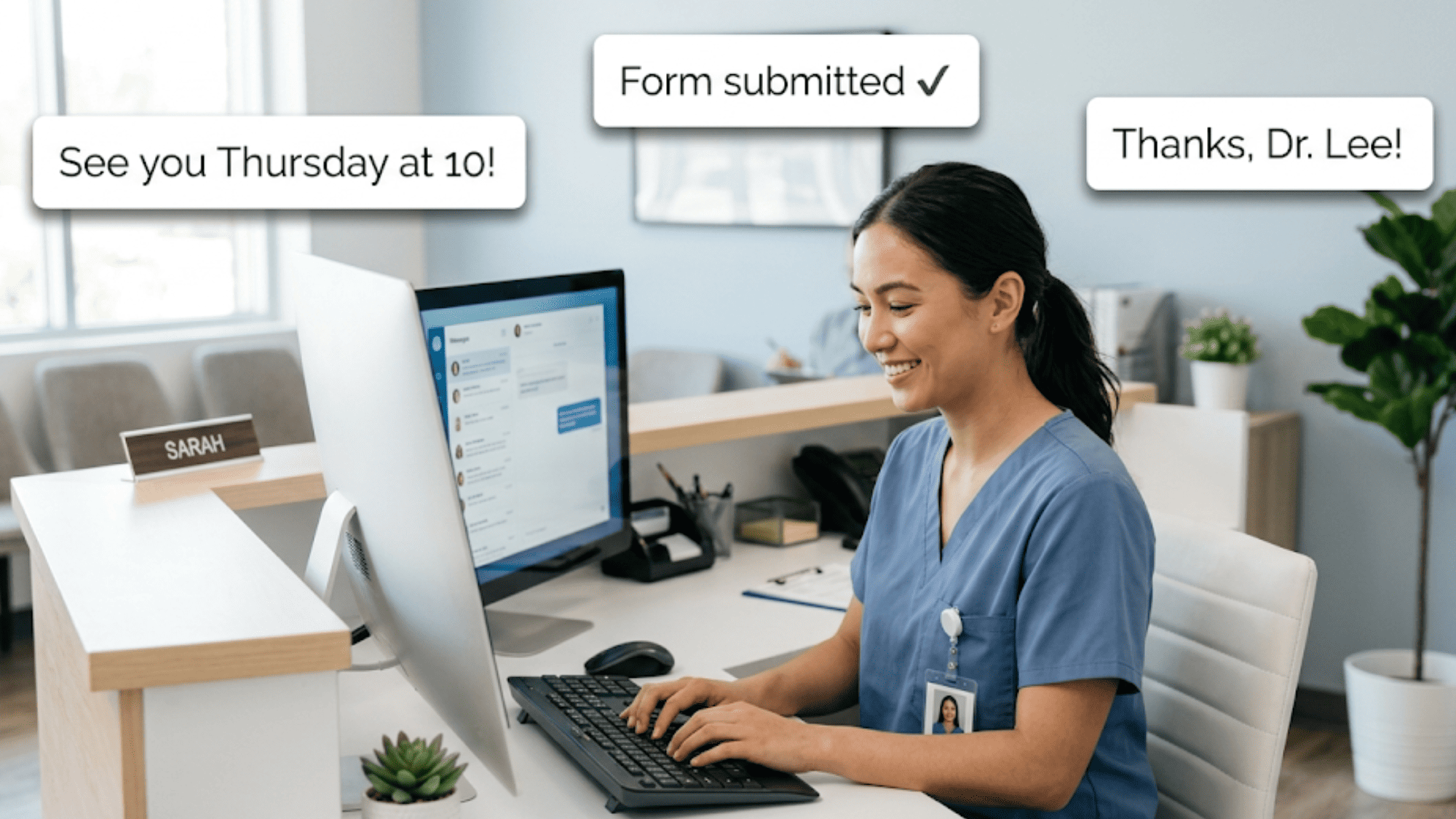
There is no toggle between systems for routine questions. A nurse can confirm a refill request in 30 seconds. The front desk can send an intake form with one tap. The reply lands in the patient’s text thread, right next to their lunch plans.
The DPC Advantage
DPC practices live or die on patient satisfaction. Members pay every month, so every month is a renewal decision. Elation Health patient engagement that depends on portal logins is a slow leak in that retention bucket.
Curogram closes that leak. A patient who texts the practice and gets a reply in three minutes feels the value of their membership in real time.
That is the concierge feeling the DPC model promises. It is not automation replacing human touch. It is automation that frees staff to deliver more human touch.
For primary care that bills insurance, the same principle holds. Lower friction means higher engagement. Higher engagement means more completed forms, more confirmed visits, and more reviewed care plans. The math is simple. The behavior change is what makes it work.

The Success: The Connected Patient
This is where the engagement gap stops being a theory and starts showing up in the schedule, the inbox, and the bottom line.
When Elation Health practices add Curogram’s two-way texting, the change is fast and measurable. Patients shift from portal silence to instant connection within the first month.
The Metric
SMS achieves a 98% open rate, based on industry data on patient communication channels. Portal messages, by contrast, often sit in single-digit engagement zones. That is a 10x to 20x gap on the most basic step of communication, did the patient see the message?
Atlas Medical Center, a Curogram client, translated that engagement gap into real numbers. Their no-show rate dropped from 14.20% to 4.91% in just three months, a 65% reduction, based on our internal data.
Across Curogram’s wider client base, the average no-show rate runs about 53% lower than the industry average. The pattern repeats across specialties.
|
Specialty |
Industry No-Show Rate |
Curogram Client Avg. |
|
Primary Care |
19.00% |
14.11% |
|
Pediatrics |
30.00% |
14.00% |
|
Psychiatry |
23.00% |
11.03% |
|
Dermatology |
25.00% |
9.00% |
|
Pain Medicine |
14.00% |
10.00% |
Numbers from internal Curogram case study data.
For a primary care practice doing 100 visits a week at an average revenue of $150 per visit, that no-show shift is real money. Moving from 19% to 14% saves about 5 visits a week. Over a year, that is roughly $39,000 in recovered revenue, plus the staff time saved chasing reschedules.
From Portal Silence to Instant Connection
The shift is not just about no-shows. It is about how patients now respond to the practice. Pre-visit instructions get read. Intake forms get filled out on the patient’s phone the night before, in the waiting room, or during a coffee break.
Follow-up coordination changes from a portal thread no one checks to a text exchange that wraps up in minutes. A nurse can text a chronic care patient “How is the new BP medication?” and get a real answer the same day. That is the kind of touchpoint that improves outcomes and trust at the same time.
The practice also gets cleaner workflows. Roughly 50% of routine phone calls move to text, based on Curogram’s internal benchmarks. Staff productivity often rises by 30% or more, since they can handle three or four text threads at once but only one call.

How Curogram Solves the Elation Portal Engagement Problem
Curogram is the HIPAA-compliant communication layer that sits next to Elation Health and meets patients in the channel they already use every day. It does not compete with Elation. It completes it.
The platform delivers two-way SMS that staff manage from a single dashboard. Messages route to the right team member based on the topic, so the front desk sees scheduling texts and the clinical team sees medical ones. Each conversation is logged and searchable, so there is a clear record for compliance and follow-up.
Curogram also automates the routine. Appointment reminders go out on a custom schedule. Recall messages reach patients who are overdue for a visit. Forms get delivered by text, filled out on the phone, and returned ready for review, all without a portal login.
For Elation Health practices, the integration is built to feel native. Patient data flows from Elation into Curogram, so staff see the right context when a text comes in. The two systems work side by side, not on top of each other.
The compliance posture is firm. Curogram is HIPAA-compliant, signs a BAA with every client, encrypts data in transit and at rest, and holds SOC 2 certification. The texting feels casual to the patient, but the protections behind it meet healthcare’s strictest standards.
The result is simple to describe. Patients text. Staff reply. Visits get confirmed. Forms get filled. Reviews go up. Phone volume goes down. The practice runs on the same Elation clinical workflow it already trusts, with a patient communication channel that finally works.
Conclusion: Meet Patients Where They Already Are
Elation Health patients prefer texting because SMS removes every barrier the portal creates. No login. No app. No password. No friction.
Curogram makes that preference safe for healthcare. It delivers HIPAA-compliant two-way texting designed to pair with Elation Health, not replace it. The clinical work stays in Elation. The communication moves to where patients already live, their messages app.
The insight is worth repeating. Elation Health is built for the physician’s clinical experience. Curogram is built for the patient’s communication experience. When both run together, clinical excellence and patient engagement stop competing for staff time.
The patient communication preferences signal is loud and clear. Patients are texting everyone else in their lives, their kids, their landlord, their pharmacy. Give them a secure way to text your practice too. That single change reshapes the patient relationship from formal to felt.
For DPC practices, this is the difference between a renewing member and a quiet cancellation. For primary care, it is the difference between a 19% no-show rate and a 9% one. The numbers and the feeling both point the same way.
Your next step is short. Book a demo and see exactly how a patient receives, replies to, and interacts with your practice through Curogram’s SMS channel.
You will watch one full loop in real time, intake form, confirmation, follow-up, and you will see why the gap between portal and text is the most important workflow change you can make this year.
Test the frictionless patient channel yourself. Reserve a demo slot and understand why patients respond to SMS but ignore portal messages.
Frequently Asked Questions
Curogram is HIPAA-compliant, signs a BAA, encrypts data in transit and at rest, and holds SOC 2 certification. The delivery is SMS instead of a portal, but the security meets the same regulatory bar. Patients get the ease of texting with the protection your practice needs.
Portal messages require a login, a password, and menu navigation for a quick question. SMS lands on the home screen with a familiar alert. Patients check their texts dozens of times a day, while portal visits are rare, so SMS wins on simple habit.
Curogram acts as a side-by-side layer, not a replacement. Patient data flows from Elation into Curogram, giving staff context when a text comes in. Clinicians keep charting in Elation, while the front desk and care team handle communication in Curogram.
Phone calls do not go away. Curogram shifts about 50% of routine inquiries to text, based on internal benchmarks. Patients who still call get shorter hold times and more attentive service, since staff are no longer buried under the routine question volume.
Most practices see engagement shifts within the first 30 days, with no-show drops and faster reply times. Atlas Medical Center cut no-shows by 65% in three months. The lift comes from patients reading messages they used to miss in the portal.