


8 min read

The Safety Valve: Handling Negative Feedback Internally

The Safety Valve: Handling Negative Feedback Internally
💡 Handling negative patient feedback for eKyros clinics means creating a safe way for patients to share concerns before they post online. 

When patients feel unheard, they often turn to Google Reviews to express their frustration. This can hurt your clinic's reputation and mission.

The solution is simple. Give patients a private channel first. Curogram's automated feedback system routes low ratings (1-3 stars) to your leadership team through an internal form. 

High ratings (4-5 stars) go straight to Google. This protects your reputation while giving you a chance to fix problems.

This approach lets eKyros centers respond quickly to complaints, turning frustrated patients into loyal supporters. The Safety Valve workflow keeps negative feedback internal and highlights positive reviews

Every eKyros center leader knows this fear. You check your Google Reviews and find a one-star rating. A patient felt ignored during their visit. Now that frustration lives online forever.

The worst part?

You would have fixed the problem if you had known. Managing bad reviews starts with preventing them. Most negative online posts come from patients who simply wanted someone to listen.

Your center serves women during vulnerable moments. These patients need compassionate care. When something goes wrong, they deserve a chance to be heard before they share their story with the world.

This is where protecting clinic reputation becomes critical. A single bad review can make potential patients question your care. They see one complaint and wonder if your center really cares about women in crisis.

The good news?

You can prevent most negative reviews before they happen. An internal feedback loop gives unhappy patients a private way to share concerns. This simple step can save your reputation while improving your care.

Research shows that 94% of people avoid businesses with negative reviews. For eKyros centers, this means fewer women seeking your help.

That is why eKyros patient satisfaction must be protected carefully.

Curogram's Safety Valve approach changes the game. Instead of sending every patient to Google, it asks them first. Low ratings trigger a private feedback form. High ratings go public. This smart routing helps you catch problems early.

When a patient shares a complaint privately, your team gets an immediate alert. You can call them that same day. This quick response shows you care about resolving patient grievances.

Often, a simple apology and explanation can heal the relationship.

When Silence Creates a Crisis

The Breaking Point

Sarah walked out of the clinic feeling ignored. She waited 90 minutes past her appointment time. The volunteer at the front desk seemed rushed and never explained the delay.

No one called to follow up. No one asked about her experience. Sarah felt like just another number.

Two days later, she opened Google. She left a one-star review describing her long wait and dismissive treatment. The review went live immediately. Other women considering your center now see this complaint.

Sarah is not alone. Studies show that unhappy customers are twice as likely to share their experience compared to happy ones. They tell an average of 15 people about their negative experience.

With online reviews, that number can reach thousands.

For pregnancy centers, this impact is even more significant. Women searching for help during a crisis read every review carefully. They look for signs that they will be treated with dignity and respect.

One negative review can make them choose another center or avoid seeking help altogether.

The Missed Opportunity

Here is the tragedy. Your director would have called Sarah personally. She would have explained that your ultrasound tech had a family emergency that day. She would have apologized for the confusion at the front desk.

But Sarah never had a chance to share her concerns privately. The lack of an internal feedback loop forced her to go public. This is how the public blowup happens.

Your center had everything needed to resolve the issue. You had caring leadership ready to listen. You had a valid explanation for the delay. You had the willingness to make things right. What you lacked was the mechanism to connect Sarah's frustration with your desire to help.

This gap between patient experience and organizational response creates most reputation problems. Centers do not intentionally ignore complaints. They simply never receive them until the damage is already done.

By the time a one-star review appears on Google, the opportunity for direct resolution has passed.

The Ripple Effect

The damage extends beyond one review. Other potential patients see Sarah's complaint. They assume your center is always disorganized. They question whether your staff truly cares about women in crisis.

This affects your mission. Fewer women reach out for help. Your center loses opportunities to serve those who need you most. One preventable complaint snowballs into a reputation problem.

The financial impact matters too. Your center operates on donations and grants. Supporters check your online reputation before giving.

A pattern of negative reviews can affect funding decisions. This means less resources to serve women who need your help.

Most negative reviews follow this same pattern:

  • A patient experiences a problem during their visit
  • They feel unheard and dismissed by staff
  • No one follows up to check on their experience
  • They share their frustration online because they have no other outlet

The cycle is predictable and completely preventable. All it takes is giving patients a way to voice concerns before they go public.

This proactive approach to managing bad reviews protects your reputation while strengthening patient relationships.

Creating a Private Channel for Concerns

Curogram prevents public blowups by asking patients first. After each visit, a simple automated text starts the conversation before issues escalate.

Patients receive the message within hours, keeping it personal and timely. For example, after her appointment,

Sarah gets:

“How was your visit today?” She can rate her experience 1–5 stars right in the message.

If she rates 2 stars, instead of being sent to Google,

Curogram directs her to a private feedback form:

“We are so sorry your experience did not meet expectations. Please tell us what went wrong so we can fix it.”

This automated routing recognizes low ratings and pivots immediately to a recovery path—no delay, no human intervention.

The form is quick and easy to complete, guiding patients to share specific, actionable feedback. Sarah explains her frustration about long waits and confusing communication. The act of sharing privately helps her feel heard, calming her anger and preventing a public complaint.

Research shows complainers usually want resolution more than revenge. Offering a private channel first allows most patients to vent safely, avoiding drama while giving your team insight to improve care.

Meanwhile, patients giving 4–5 stars receive a different message, inviting them to share their positive experience on Google.

This dual pathway builds a virtuous cycle:

happy patients amplify satisfaction publicly, while unhappy patients share concerns privately. Your online reputation reflects your best work, and problems are addressed behind the scenes—transforming how eKyros clinics manage patient feedback.

Turning Complaints Into Ministry Moments

Immediate Alerts That Drive Action

When Sarah submits her feedback form, something important happens. Your center director receives an immediate alert. The notification includes Sarah's rating and comments.

This is where resolving patient grievances becomes personal. The director can call Sarah within hours.

The conversation starts with genuine care:

"I saw your feedback, and I want to apologize personally."

The speed of response matters tremendously. Research shows that contacting a customer within one hour of their complaint increases satisfaction by 60%. Within 24 hours, that number drops to 40%.

The automated alert system ensures no complaint goes unnoticed for long.

Your team can customize who receives these alerts. Maybe your director handles serious complaints. Your office manager addresses scheduling issues. Your volunteer coordinator follows up on front desk concerns. The system routes feedback to the right person every time.

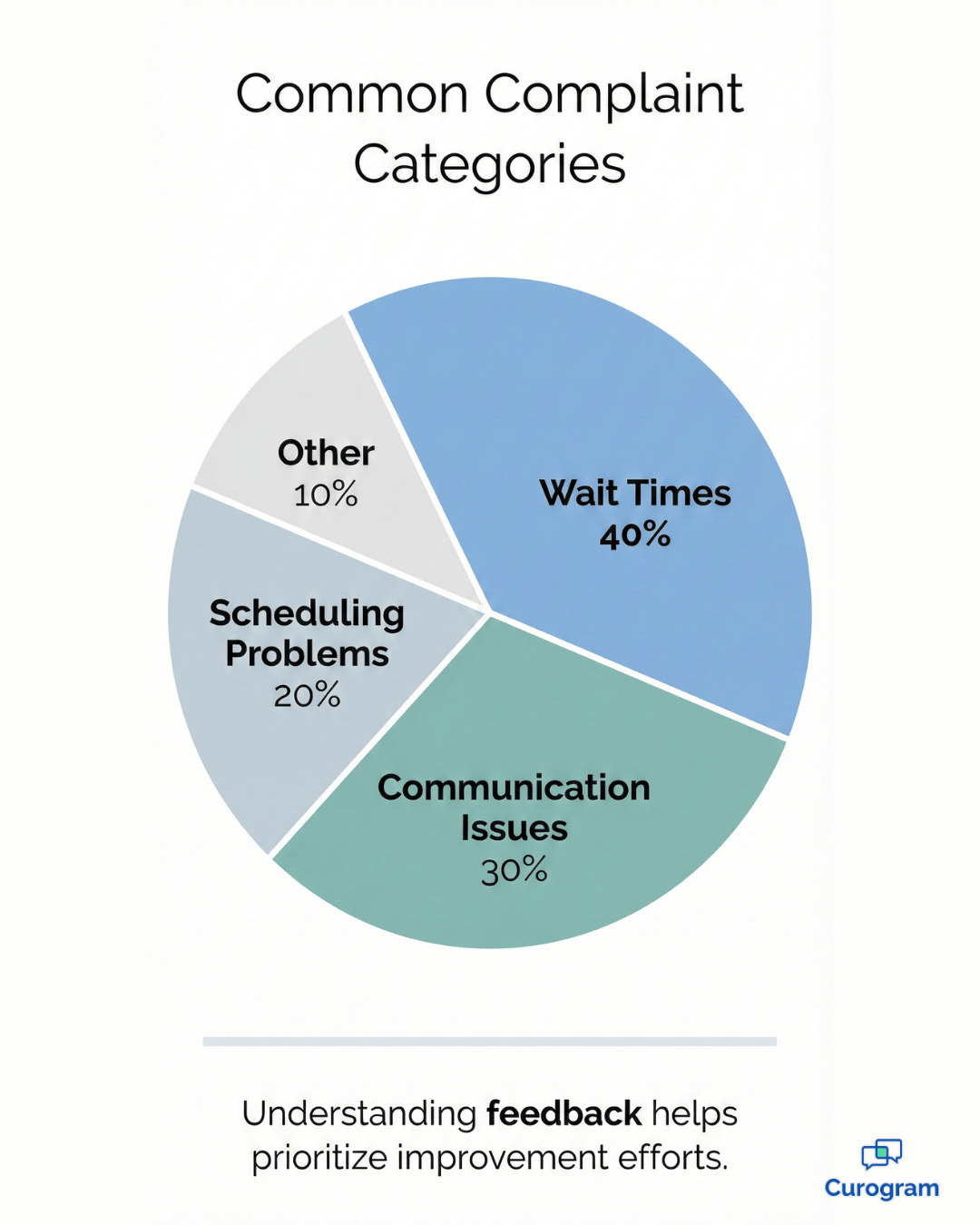
Common patient complaint categories chart showing wait times and communication issues

The Follow-Up Conversation

The director explains what happened. The ultrasound tech had a family emergency. The front desk was short-staffed and overwhelmed. She acknowledges that Sarah deserved better communication.

Most patients respond well to this honesty. Sarah understands that emergencies happen. She appreciates that someone cared enough to call. The relationship begins to heal.

The director does not make excuses. She owns the problem. She explains what went wrong without shifting blame. This authentic approach resonates with patients. They feel respected rather than dismissed.

But something deeper often emerges during these calls:

  • Many complaints about service mask deeper fears or trauma
  • A woman angry about wait times might actually be scared about her pregnancy
  • Surface frustrations often hide real emotional needs

The follow-up call creates space for these real concerns. The director can offer support beyond an apology. She can connect the patient with counseling resources. She can pray with her if appropriate.

This is where your mission truly shines. A service complaint becomes an entry point for deeper ministry. The patient feels seen beyond her surface frustration. Your center demonstrates that it truly cares about the whole person.

This approach to eKyros patient satisfaction, enhanced by eKyros integration, goes far beyond managing reviews.

From Critic to Advocate

This is restorative care in action. A complaint becomes an opportunity for ministry. The patient feels truly seen and heard. Often, this turns a critic into your strongest advocate.

Sarah might tell her friends about the long wait. But she will also tell them how the director called personally. She will share how the center truly cares about each woman who walks through the door.

This transformation happens more often than you might expect. People want to believe in your mission. They want to support centers that serve women in crisis. When you show genuine care during a problem, they often become your most loyal supporters.

Some patients even ask to remove their initial complaint after the follow-up call. While you cannot control what they post publicly, you can influence their final impression.

The personal touch makes all the difference in protecting clinic reputation over the long term.

Patient speaking with clinic staff about appointment scheduling at front desk

Building Protection Through Connection

No center can please every patient every time. Staff get overwhelmed. Emergencies happen. Communication breaks down. These realities are part of serving people in crisis.

But you can protect your mission by listening to everyone. The Safety Valve approach does not hide problems. It creates a pathway for addressing them before they damage your reputation.

Think of it like a pressure release. Negative emotions need somewhere to go. If patients have no private outlet, those emotions explode publicly. An internal feedback loop gives them a healthier release.

Curogram handles this automatically. The system filters incoming feedback. It amplifies praise by sending happy patients to Google. It contains complaints by routing them internally.

This dual approach improves eKyros patient satisfaction in two ways.

  • First, you collect more positive reviews from satisfied patients.

  • Second, you prevent negative reviews by addressing concerns privately.

The result is a stronger online presence. Potential patients see authentic positive reviews. They read stories from women you helped. Your reputation reflects the good work you actually do.

Meanwhile, you gather valuable feedback about operations. The internal forms show patterns. Maybe wait times are consistently too long on Tuesdays.

Maybe one volunteer needs better training on patient communication.

This data helps you improve care. You can fix systemic problems before they create more complaints. Handling negative patient feedback for eKyros clinics becomes part of continuous improvement.

Frequently Asked Questions

How does the Safety Valve prevent negative Google reviews?

The system intercepts low ratings (1-3 stars) before they reach Google. When a patient rates their experience poorly, Curogram shows them a private feedback form instead of a public review link.

This gives your team a chance to address concerns before they become public complaints. Patients who rate 4-5 stars are encouraged to post on Google, building your positive review count.

What happens when a patient submits negative feedback?

Your center director receives an immediate alert via email or text. The notification includes the patient's rating and written comments. This allows your team to respond quickly, often within hours.

Many centers make a personal phone call to address the concern and apologize. This quick response can turn an unhappy patient into a loyal supporter of your mission.

Can patients still leave public reviews if they want to?

Yes. The Safety Valve is an invitation, not a barrier. Patients can always choose to post a public review on Google directly. However, most patients will use the private feedback form when offered. They simply want to be heard. Giving them a private channel usually satisfies that need without requiring a public complaint.

How does this improve our overall patient satisfaction scores?

The system improves satisfaction in multiple ways.

First, collecting feedback shows patients you care about their experience. Second, quick responses to complaints demonstrate genuine concern. Third, fixing systemic problems based on feedback improves actual care quality.

Finally, more positive reviews attract patients who will appreciate your mission-focused approach to care.

What if we are too busy to follow up on every complaint?

Even a simple acknowledgment makes a difference. A quick text or email saying "We saw your feedback and are reviewing what happened" shows you listened. You can prioritize follow-ups based on severity.

Not every complaint needs a phone call, but serious concerns deserve personal attention. The automated alerts help you triage effectively.

Listening Before They Post

Your eKyros center, powered by eKyros integration, exists to serve women during their most vulnerable moments. Every patient deserves compassionate care. Staff can follow the workflow guide to ensure every concern is addressed quickly and consistently.

When something goes wrong, they deserve to be heard.

The Safety Valve approach protects both your patients and your reputation. It gives unhappy patients a private channel for concerns. It gives your team a chance to respond with care and ministry.

Most public complaints can be prevented. All it takes is asking first and listening carefully. Curogram makes this simple with automated feedback routing that works 24/7.

The investment in this system pays dividends beyond reputation management. You gain insights into patient experience. You create opportunities for deeper ministry. You build trust with the community you serve.

Every center that implements this approach sees results. Negative reviews decrease. Positive reviews increase. Most importantly, patient relationships grow stronger. The system works because it treats people with dignity during difficult moments.

Your mission is too important to let preventable complaints damage your reputation. Women in crisis need to find you online.

They need to see authentic positive reviews that reflect your genuine care. They need to trust that your center will treat them with respect.

Ready to protect your center's reputation while improving patient care? Schedule a demo to see how Curogram's automated feedback system helps eKyros centers turn potential critics into advocates. 

Overcoming the Lobby Anxiety: Why Privacy Matters in Intake

Overcoming the Lobby Anxiety: Why Privacy Matters in Intake

💡 Improving patient privacy in eKyros clinics starts with removing the need for patients to fill out sensitive forms in public waiting rooms....

Read More
Breaking Down Barriers: Why Patients in Crisis Prefer Texting

Breaking Down Barriers: Why Patients in Crisis Prefer Texting

💡 Improving patient access for eKyros clinics starts with one simple shift: letting patients text instead of call. For many people in crisis,...

Read More
Automated Google Reviews for eKyros Centers

Automated Google Reviews for eKyros Centers

💡 Automated Google reviews for eKyros centers help non-profit pregnancy clinics build a trusted online presence. Curogram integrates with eKyros to...

Read More