Secure Patient Communication Efficiency for Oracle Health Networks
💡 Patient communication efficiency for Oracle Health networks improves when routine calls move to HIPAA-compliant texting and automation. This...
9 min read
Aubreigh Lee Daculug
:
February 17, 2026
Table of Contents
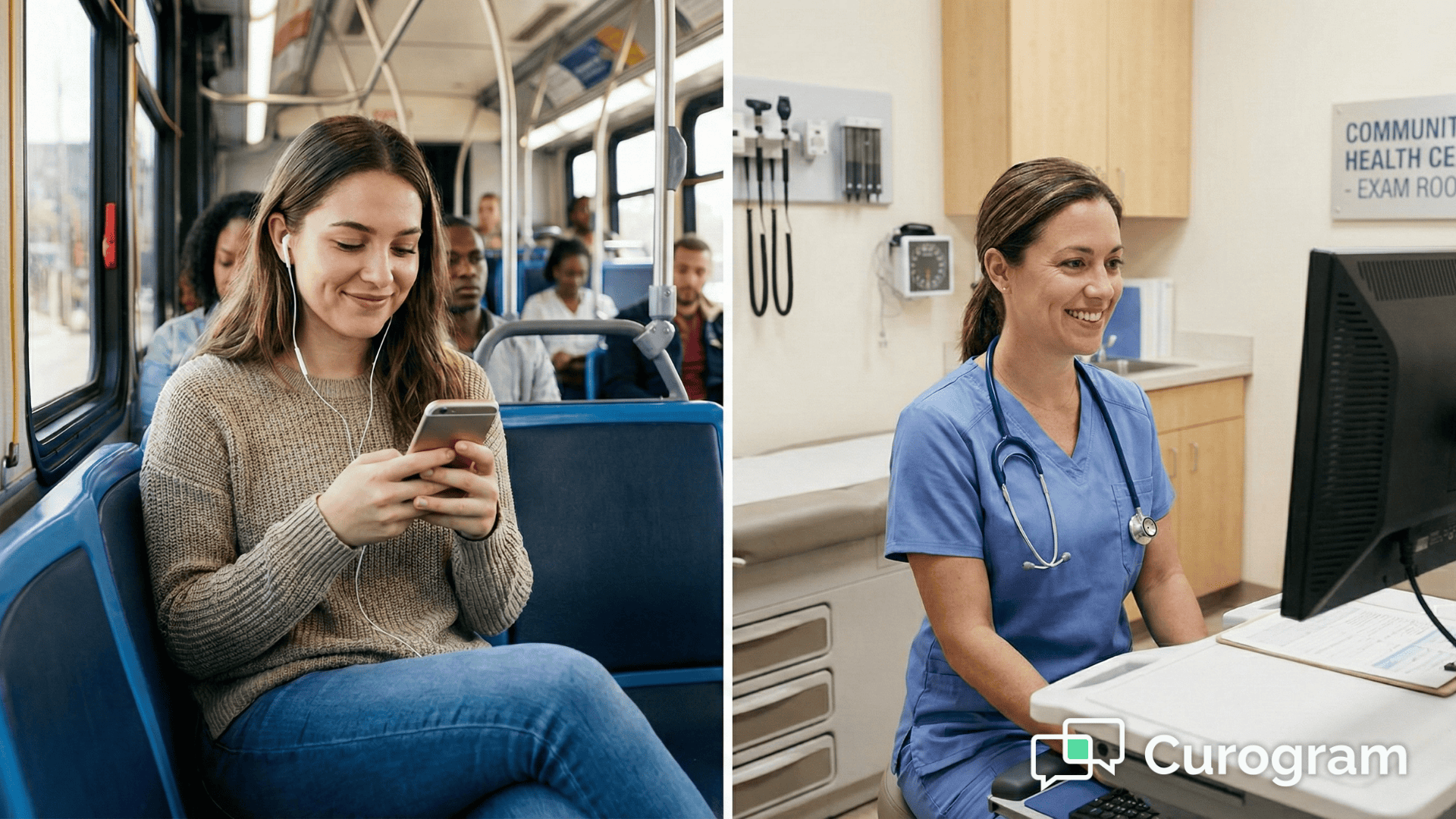
A young woman finds your clinic's number online. She needs help, but she's sitting on a crowded bus. She can't make a phone call without everyone around her hearing every word. So she puts her phone away, and the moment passes.
This happens more often than most clinics realize. When improving patient access for eKyros clinics is the goal, centers need to look at the problem from the patient's side.
The phone call, which feels like a simple step to staff, can feel like a mountain to someone in crisis. The voice barrier is real, and it keeps people from reaching out when they need help the most.
For many patients, especially younger women facing an unplanned pregnancy or an unsafe home situation, privacy is everything. Being overheard on a call isn't just uncomfortable. It can feel dangerous.
That fear alone is enough to stop someone from ever contacting your center.
Then there's the anxiety factor. Studies show that Gen Z and Millennial adults often struggle with phone anxiety. Calling a stranger and waiting for someone to pick up feels overwhelming. But sending a quick text? That feels safe, familiar, and manageable.
This is where text messaging for pregnancy centers changes the game. When patients can send a simple text to start a conversation, the emotional cost of reaching out drops to almost zero.
They don't need to find a private room. They don't need to psych themselves up for a call. They just need their thumbs and a few seconds of courage.
Curogram brings this kind of barrier-free crisis care to eKyros clinics.
It offers a secure, two-way texting channel that works with the tools your staff already uses. In the next sections, we'll walk through why the phone call is failing patients, how texting opens a quiet digital door, and why Curogram makes it easy without asking patients to jump through hoops.
Think about the moments when your patients need you most. They're not sitting alone in a quiet room with all the time in the world. They're at work, in class, at a family dinner, or next to a partner they don't want to alert. They see your number. They want to reach out. But they can't speak out loud.
This is the voice barrier, and it's one of the biggest obstacles standing between your center and the people you want to help. A phone call demands something that many patients in crisis simply don't have: privacy.
In high-stakes situations like an unplanned pregnancy or domestic concerns, being overheard is a primary fear. The risk of someone listening in is enough to stop the call before it ever starts.
Where Privacy Disappears
The privacy risk gets even harder when you consider the environments these patients live in. A shared apartment, a family home, a dorm room with thin walls. None of these places offer the quiet, safe space a phone call requires.
For someone already feeling scared and alone, the added pressure of finding privacy makes the whole process feel impossible.
In some cases, the lack of privacy isn't just inconvenient. It's genuinely unsafe. A woman living with a controlling partner may not be able to close a door or step outside without raising suspicion. A teenager in a strict household may have no moment during the day when she's truly alone.
These aren't edge cases. They're the reality for a large portion of the patients your center exists to serve.
The Generation That Doesn't Call
And then there's overcoming phone anxiety. For Gen Z and Millennial patients, who make up a large share of the people your center serves, calling a stranger is genuinely stressful. Research consistently shows that younger adults prefer texting over calling.
Nearly 75% of Millennials say they avoid phone calls because they're too time-consuming or anxiety-inducing.
Dialing a number, waiting for someone to answer, and then explaining a deeply personal situation to a stranger? That's a huge ask. Sending a text, on the other hand, feels normal and low-pressure. It's how they communicate with everyone else in their lives.
If your center only offers a phone number, you're speaking a language that many of your patients no longer use.
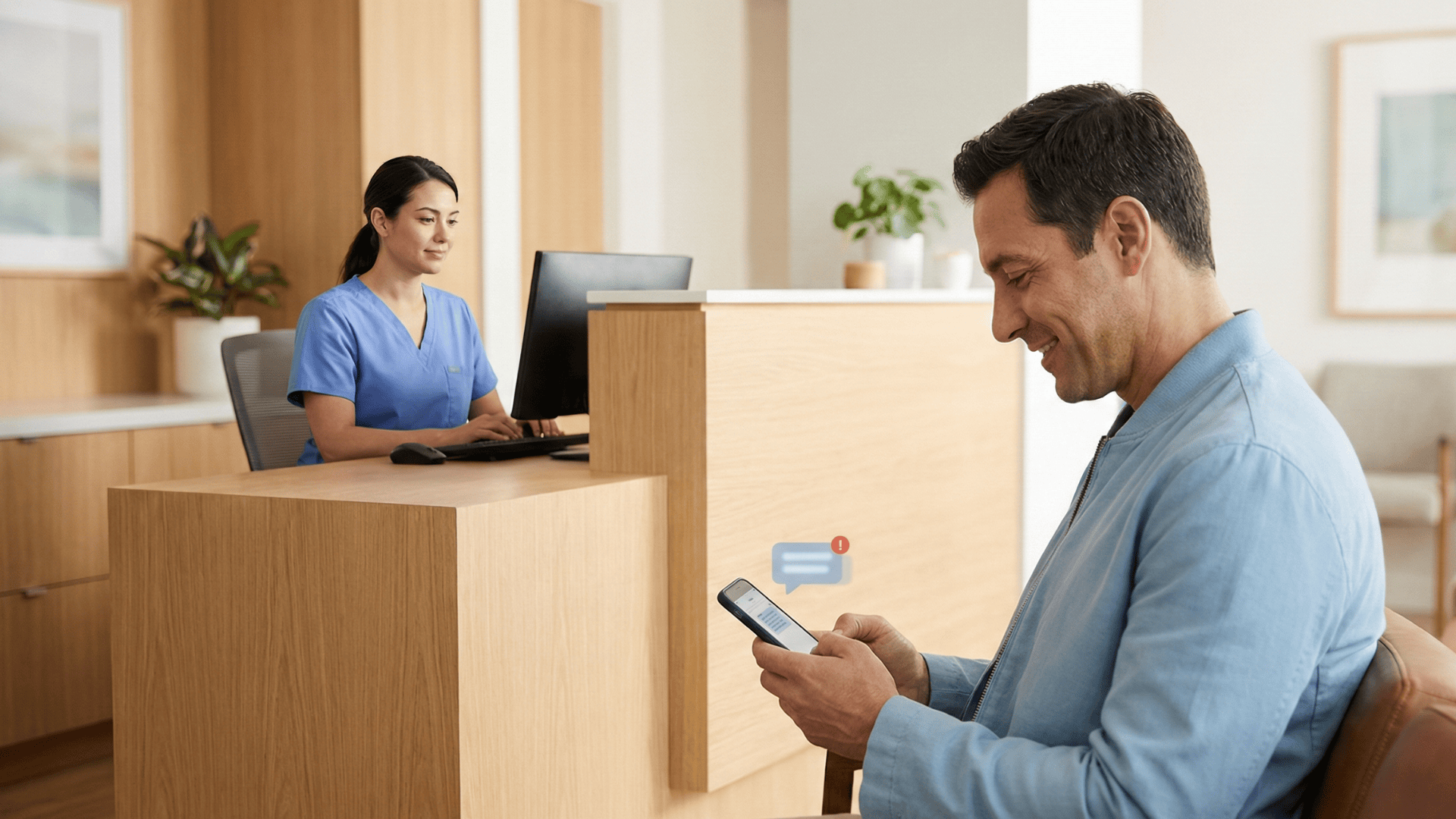
Texting lowers both the emotional and logistical barriers to reaching out. It gives a patient space to begin a conversation without immediately stepping into a voice call. She can send a message from the bus, from a bathroom stall, or from under the covers late at night.
The communication is silent, quick, and private. That is what discreet patient communication looks like in real life: access without exposure, support without pressure.
With eKyros, the process stays simple and seamless. When a patient texts your clinic’s number, the message flows into your Curogram dashboard. If she already has a record in eKyros, the system automatically matches the message to her profile. If she is new, a fresh lead is created without extra manual steps.
Your staff can then respond with warmth and clarity, just as they would on a phone call, but in a format that feels safer and more controlled for the patient.
That is where real eKyros patient engagement begins. The first text opens the door. Each reply builds familiarity. Trust grows message by message, without the patient ever having to speak out loud before she is ready.
Once that trust is established, moving to a phone call or scheduling an in-person visit feels natural instead of intimidating.
The first interaction sets the emotional tone for everything that follows. When that moment is easy and private, patients are far more likely to continue the conversation. When it feels stressful, awkward, or risky, many will simply disengage.
Texting functions as the quiet front door to your center. A traditional phone call can feel like a heavy, visible entrance that not everyone is prepared to walk through.
Texting, by contrast, is:
It meets her exactly where she is, without demanding that she change her circumstances first.
It's one thing to talk about the benefits of texting in general terms. It's another to see how it plays out in the day-to-day reality of patient outreach.
Below are a few common situations where a simple text message can be the difference between a patient getting help and a patient disappearing.
In every one of these situations, the patient wanted help. The only question was whether the center made it easy enough to ask. Texting removes the need for a private room, a block of free time, or the emotional energy to speak to a stranger.
It strips the process down to its simplest form: type a message and hit send.
Reaching Patients After Hours
Another often-overlooked advantage is timing. Many patients don't reach their breaking point during your office hours. They search for help at 2 a.m. when the house is quiet and their thoughts are racing.
A phone line is useless at that hour. But a text can sit in your inbox and get a response first thing in the morning.
This kind of around-the-clock access doesn't require your staff to work night shifts. It just requires a system that captures those late-night messages and routes them to the right person when the office opens.
Curogram does exactly that within your existing eKyros workflow, so no message falls through the cracks.

Many secure messaging tools on the market today require patients to download a portal app, create an account, and remember a password. In theory, that sounds fine. In practice, it's a dead end.
A patient in panic mode is not going to download an app she's never heard of, set up a login, and navigate an unfamiliar interface. She's going to give up.
The Problem with Patient Portals
This is a major friction point that most clinics don't think about. You've already fought hard to get that patient to the point of wanting to reach out. The last thing you need is a technology hurdle that kills the momentum.
Every extra step between the patient and your staff is a chance for her to change her mind.
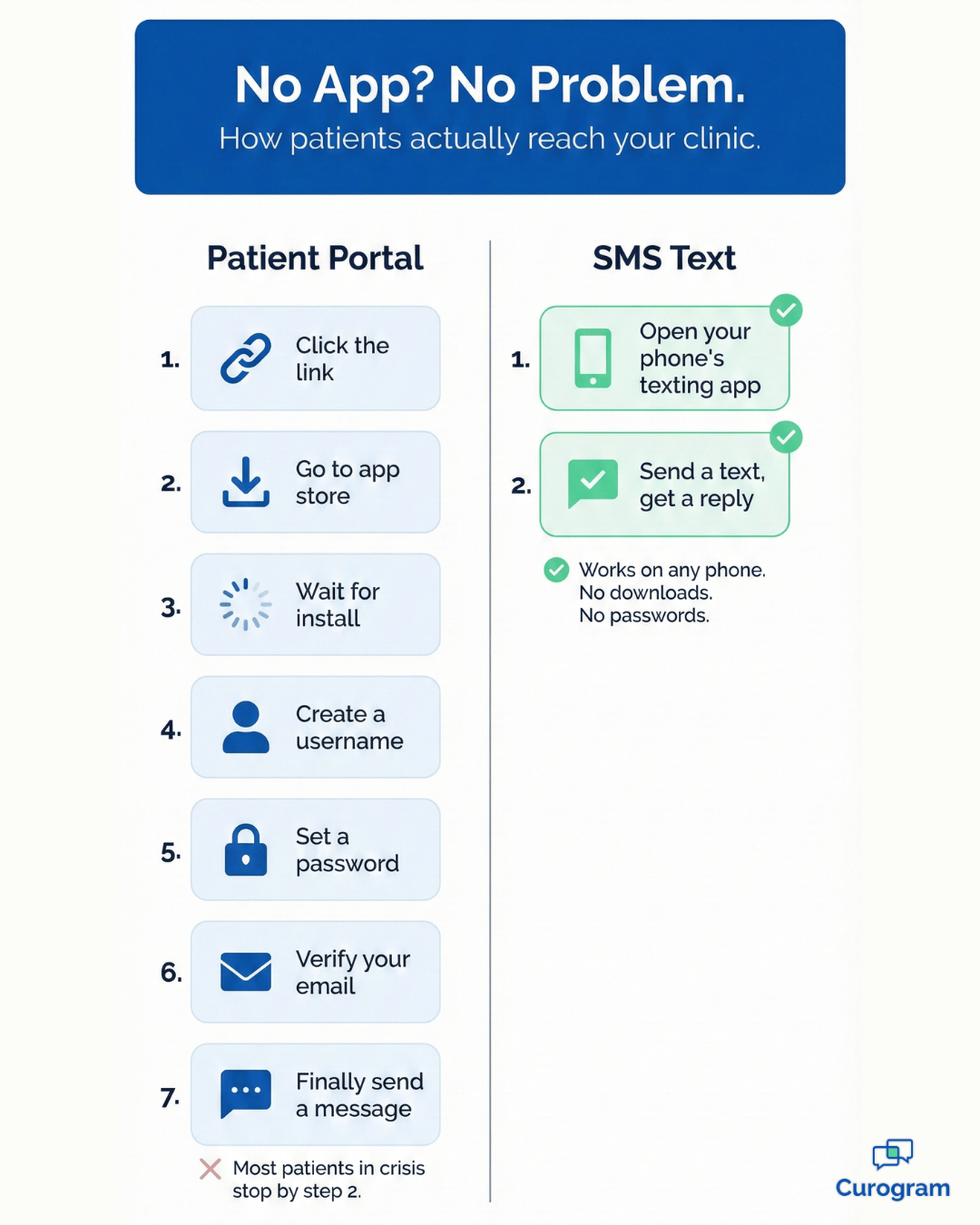
Consider the typical patient portal experience. The patient clicks a link, gets sent to a download page, waits for the app to install, creates a username, sets a password, verifies her email, and then finally gets to type her message.
That's six or seven steps before she even says hello. Most patients in crisis won't make it past step two.
How Curogram Keeps It Simple
Curogram solves this by using plain SMS. It works on every phone, whether it's the latest smartphone or a basic prepaid device. There's nothing to download and no passwords to remember for that first contact. The patient just sends a text, and your team responds. It's that simple.
But what about compliance? That's a fair question. Curogram handles the complexity on the backend, using Magic Links when sensitive data needs to be shared securely.
The patient's experience stays simple and familiar on the frontend. She never has to think about HIPAA rules or data security. Your center stays compliant, and the patient stays comfortable. That's the balance that makes this approach work.

Any new tool is only as good as the experience it creates for the people using it every day. If texting is great for patients but a headache for staff, it won't last. The good news is that Curogram was designed with both sides in mind.
A Dashboard That Feels Familiar
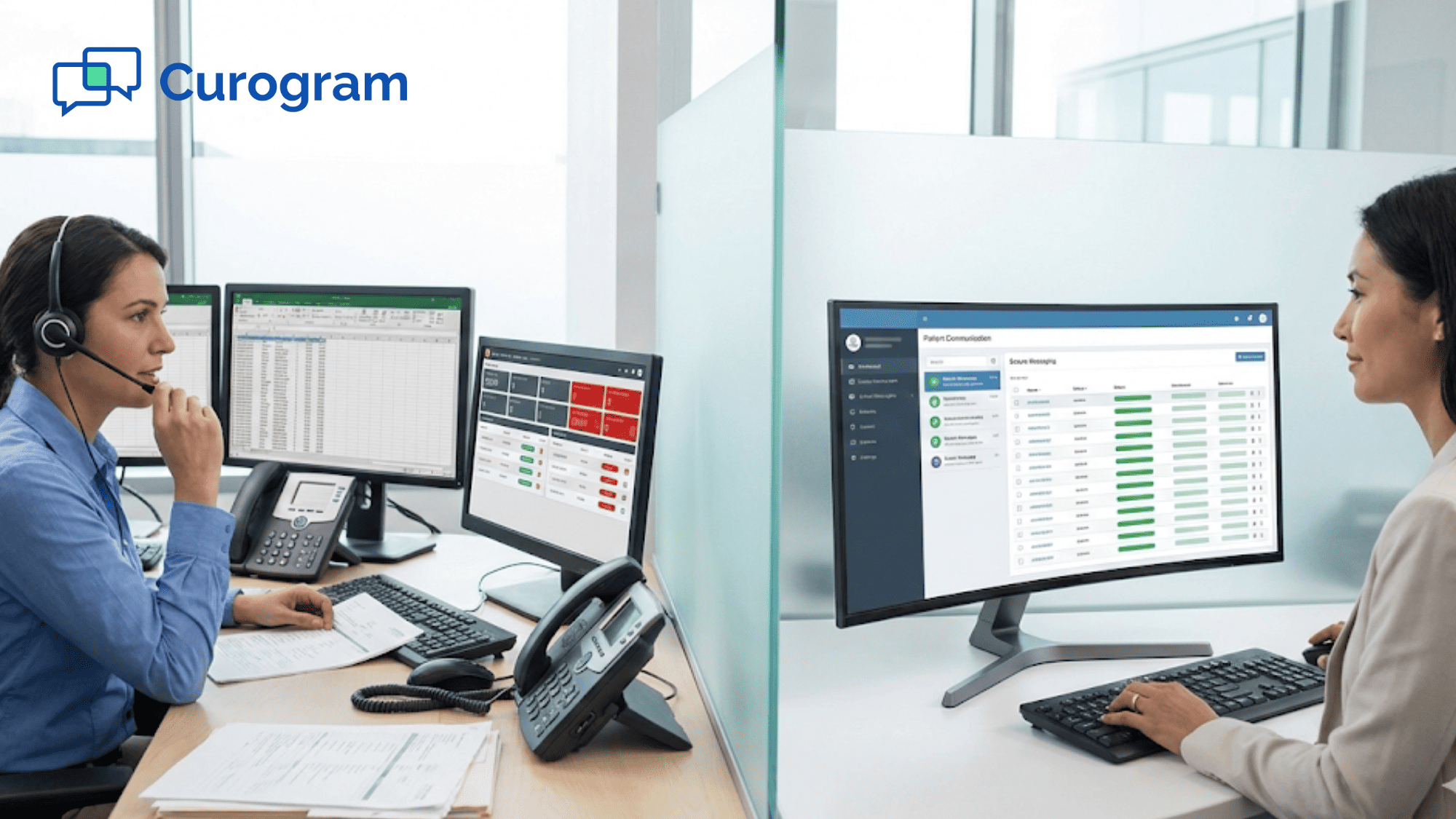
Your front desk team won't need to learn a complicated new system. Curogram's dashboard organizes incoming texts in a clean, simple layout.
Staff can see who sent the message, when it came in, and whether the patient is already in eKyros. Responding is as easy as typing a reply on their phone, because the interface works the same way.
This matters because staff buy-in is everything. If your team finds the tool frustrating or confusing, they'll stop using it. Curogram avoids that problem by keeping the design intuitive and lightweight. There's no steep learning curve and no week-long training process.
Managing Volume Without Burning Out
One of the biggest concerns clinics have about adding texting is volume. Won't the inbox get flooded? The short answer is that texting actually helps manage volume better than phone calls do.
Here's why:
The result is that your front desk team can serve more patients in less time, with less stress. Instead of being tied to the phone all day, they can balance text conversations with other tasks. That's a win for staff morale and for patient access.
How does Curogram protect patient privacy when using text messages?
Curogram uses HIPAA-compliant protocols to keep every conversation secure. Standard texts handle the initial contact, and when sensitive health information needs to be shared, the system sends a Magic Link that opens a secure page.
This keeps the patient's experience simple while making sure your center meets all compliance requirements on the backend.
Do patients need to download an app to text my eKyros clinic?
No. That's one of the biggest advantages of using Curogram. Patients text your clinic's number using the basic messaging app already on their phone. There's nothing to download, no account to create, and no password to remember. It works on any device, including prepaid and older phones.
Can Curogram texts sync with our existing eKyros patient records?
Yes. When a patient texts your clinic, Curogram checks for a matching record in eKyros. If one exists, the conversation is linked to that patient's profile. If the person is new, the system creates a fresh lead automatically. Your staff never has to manually enter data or switch between platforms.
What happens if a patient texts outside of office hours?
The message stays in your Curogram inbox until your team is ready to respond. Patients don't get an error or a dead end. Instead, you can set up an auto-reply that lets them know their message was received and that someone will follow up soon. This keeps the door open even when your office is closed.
Is texting really better than a phone call for reaching patients in crisis?
For many patients, yes. A phone call requires privacy, time, and the emotional energy to speak to a stranger. A text can be sent in seconds from almost anywhere without anyone noticing.
For younger patients dealing with phone anxiety or those in unsafe home environments, texting removes the biggest barriers to reaching out. It doesn't replace the phone call entirely. It gives patients a quieter way to start the conversation.
Be the center that feels safest to approach. If we truly want to help people, we have to remove friction from the very first step. Requiring a voice call in 2025 is more than outdated.
It is a barrier that quietly filters out the patients who are anxious, hiding their situation, or simply not ready to speak out loud. When the only option is to call, many will choose silence instead.
Improving patient access for eKyros clinics does not demand a complicated rebuild of your systems. It begins with one intentional shift: offering texting as a primary communication channel.
That single option communicates something powerful. It tells patients they can reach out in the way that feels safest and most manageable for them. For someone in a vulnerable situation, that small layer of control can make the difference between reaching out and staying silent.
Texting expands access in ways that are both emotional and practical. It allows patients to connect outside of traditional call-heavy windows, gives staff the ability to manage conversations within existing workflows, and ensures that every exchange is documented clearly and securely.
Instead of asking patients to adapt to your process, your center adapts to their reality. That is what modern, compassionate access looks like.
When you add secure texting through Curogram, your center becomes a silent sanctuary that is reachable from anywhere. A patient can take that first step from a parking lot, a shared living space, or a quiet late-night moment of uncertainty.
No raised voices. No risk of being overheard. Just a private, steady path forward.
Open your digital door. Schedule a demo to learn how Curogram increases access for eKyros centers and helps you connect with patients who would never make the call.
💡 Patient communication efficiency for Oracle Health networks improves when routine calls move to HIPAA-compliant texting and automation. This...
💡 Compliance texting with Veradigm brings secure, automated messaging that improves both operations and revenue. This approach reduces no-shows and...
💡 Mass texting helps GE Centricity clinics cut costs and improve patient care. Automated messages reduce staff workload while keeping patients...