
7 min read

Why Patients Respond to Text | The Psychology of App-Free Engagement

Why Patients Respond to Text | The Psychology of App-Free Engagement
💡 Improving patient engagement for CharmHealth practices starts with removing the biggest roadblock: the patient portal itself.

Most patients never open portal emails because the login process takes too long. They forget passwords, skip downloads, and ignore messages that require multiple steps to read.

Curogram solves this with app-free patient communication. Instead of forcing patients through a portal, Curogram sends a secure text with a one-tap verification link. No app download. No username. No password reset.

No app download. No username. No password reset.

The result is a 40% increase in patient response rates. Practices using HIPAA compliant texting for patients see faster form completion, fewer no-shows, and a stronger connection between staff and the people they serve.

Your patient portal is secure. It stores records, tracks messages, and keeps everything in one place. But here is the problem: your patients are not using it.

Think about the last time you sent a portal message and waited days for a reply. Or worse, the message was never opened at all. This is not a technology failure. It is a friction problem.

Patients do not hate your practice. They hate the hoops. The download. The forgotten password. The six-step process just to read a two-word confirmation. Every extra click between your message and their eyeballs is a chance for them to give up and move on with their day.

This is why patients ignore portal emails. The intent is good, but the delivery method asks too much.

A busy parent juggling school pickup and dinner prep is not going to spend ten minutes resetting a login just to confirm an appointment time.

A working professional is not going to download another app when their phone already has two hundred.

Improving patient engagement for CharmHealth practices does not require a bigger budget or a fancier portal. It requires less friction. It means meeting patients on the device they already use, in the app they already know: their native text messaging app.

That is the shift this article is about. We are going to walk through why traditional portals create what we call "Portal Fatigue," how app-free patient communication removes those barriers, and what happens to your response rates when you stop asking patients to work so hard just to talk to you.

If you have been looking for CharmHealth patient portal alternatives that actually get results, keep reading.

The Real Reason Patients Go Silent: Too Many Steps, Too Little Time

Patient portals were built with the best intentions. They give practices a secure place to store records, share documents, and send messages. The CharmHealth portal does this well.

But security and ease of use do not always go hand in hand, and that gap is where patient communication breaks down.

This is not about patients being lazy or difficult. It is about being realistic. In a pediatric practice, a parent managing two kids and a full workday does not have ten spare minutes to troubleshoot a login.

In a functional medicine clinic, a patient dealing with chronic fatigue is not going to push through a frustrating digital process just to answer a quick question.

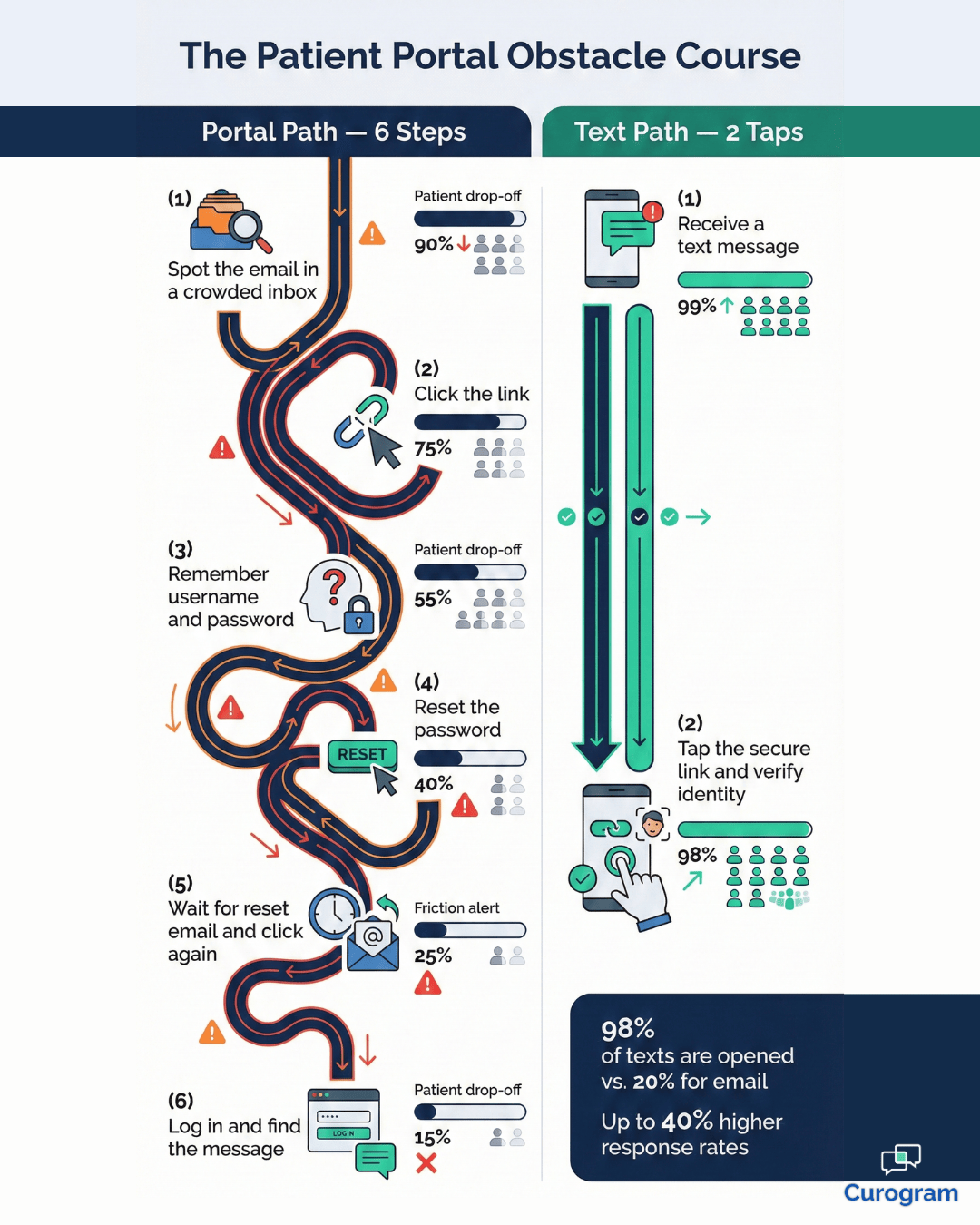
The Portal Gauntlet: Six Steps to Read One Message

Picture what happens when you send a message through the portal.

The patient has to clear every one of these hurdles just to see what you wrote:

  • Spot the notification email buried in a crowded inbox.
  • Click the link and land on a login page.
  • Remember their username and password, or start a reset.
  • Wait for the reset email, then click another link.
  • Log in, navigate to the inbox, and finally read the message.

Every extra step reduces the chance of a response. In marketing, this is called drop-off, and it applies to patient communication just as much as it applies to online shopping carts.

The portal creates what we call

"Password Purgatory" — the frustrating loop of forgotten credentials, reset emails,

and abandoned logins that keeps patients from engaging with your practice.

Understanding why patients ignore portal emails is the first step toward fixing the problem. The solution is not a better portal. It is a different path entirely.

How One Secure Text Replaces a Six-Step Login

If the portal is the wall, Curogram is the open door. Instead of sending patients to a login page, Curogram sends a secure text message directly to their phone. The patient taps a link, verifies their identity with a date of birth or a one-time password, and they are in.

No username. No app to download. No password to remember.

Magic Link Authentication: Two Taps and They're In

This is what we call "Magic Link" authentication, and it turns a six-step process into a two-tap experience.

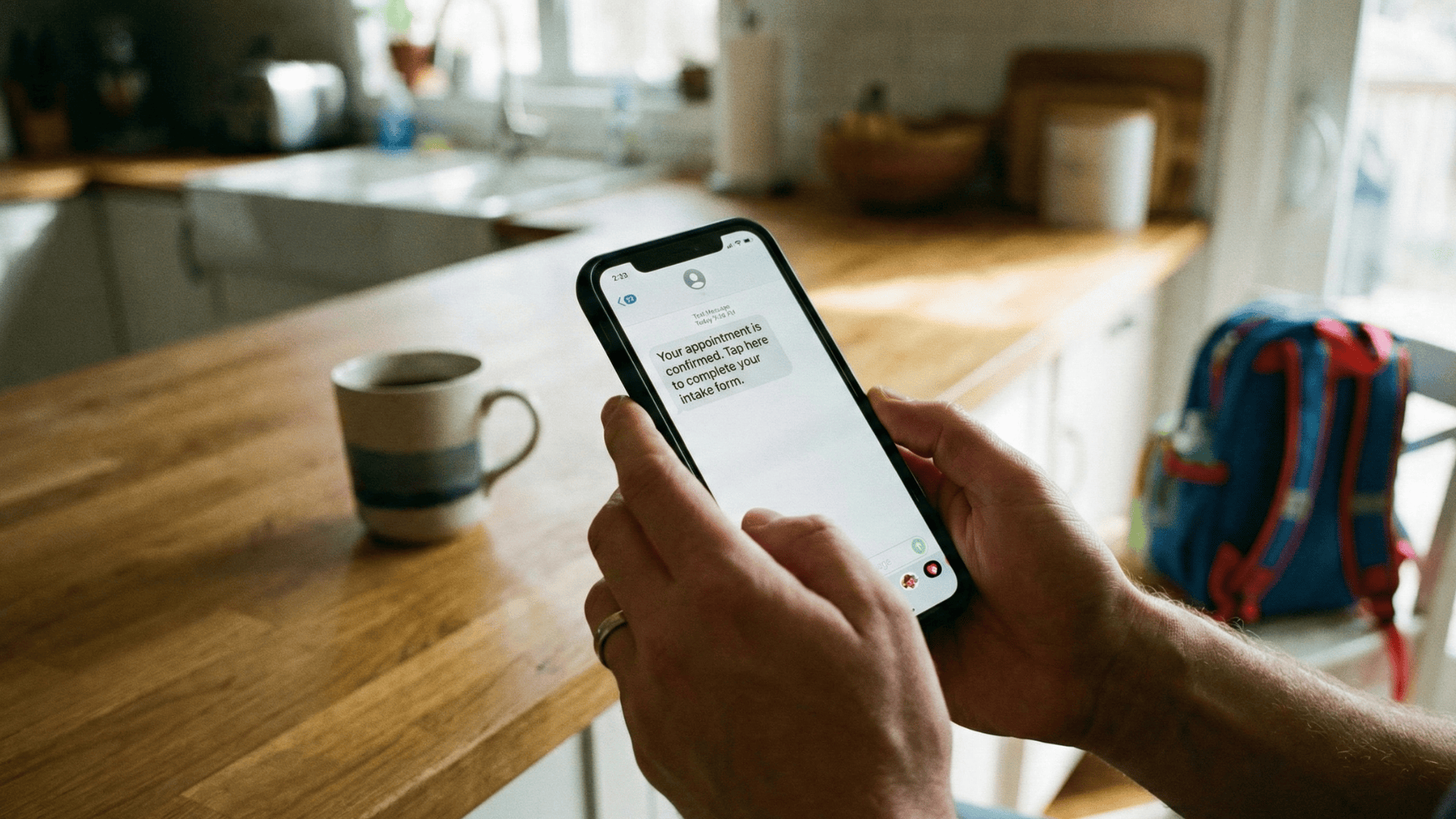
The patient receives the text on their standard messaging app, taps the secure link, and instantly accesses forms, appointment details, or clinical messages.

It is HIPAA-compliant texting for patients without the friction of a traditional portal.

The reason this works so well comes down to behavior. According to Pew Research Center data on smartphone ownership, over 97% of Americans own a cellphone, and texting is the most widely used feature on those devices.

You are not asking patients to learn a new system. You are fitting into the one they already use every day.

Patient portal login steps vs Curogram two-tap texting comparison infographic

Why Texting Fits the Care Relationship

This matters even more in practices that depend on a strong patient-provider relationship. Functional and integrative medicine clinics, for example, rely on trust and ongoing communication.

A "Do Not Reply" portal email feels corporate and cold.

When your communication method matches the warmth of your care, patients respond.

Beyond convenience, secure texting improves engagement. Patients are more likely to complete forms, confirm appointments, and respond to follow-ups when the process is seamless.

Curogram eliminates missed messages and forgotten passwords, which are common pain points with traditional portals.

Texting also enhances accessibility. For patients who struggle with technology or have limited internet access, a secure text provides instant access without requiring a desktop or tablet. This inclusive approach ensures no patient is left behind in digital communications.

Curogram works alongside CharmHealth, not against it. Your EHR still holds the records. Curogram simply provides a better front door for patient interaction.

Think of it this way:

CharmHealth is for your records, and Curogram is for their convenience.

This is what makes it one of the most effective CharmHealth patient portal alternatives available today for practices focused on increasing patient response rates.

Finally, the measurable impact is clear. Clinics using Curogram report higher completion rates for intake forms, faster appointment confirmations, and improved patient satisfaction scores.

By reducing friction at the very first step of patient interaction, practices create a more efficient, patient-centered workflow from the start.

Patient confirming appointment via secure text message from home on smartphone

What Happens When You Meet Patients Where They Already Are

The numbers tell a clear story. Text messages have a 98% open rate. Emails sit around 20%.

When you switch from portal-based communication to text-based outreach, you are not making a small improvement. You are making a fundamental shift in how reliably your messages get seen.

Practices using Curogram report response rates that are up to 40% higher than what they experienced with portal-only workflows. Intake forms that used to arrive incomplete on the day of the appointment now show up finished hours or even days ahead of time.

Appointment confirmations that went unanswered for a week now get a reply within minutes.

The Ripple Effect on Daily Operations

Increasing patient response rates is not just about open rates and click-throughs.

It changes how your entire practice runs day to day:

  • Your front desk spends less time chasing patients with follow-up calls.
  • Providers can review completed forms before the visit even starts.
  • Scheduling gaps shrink because confirmations come back faster.

The entire workflow tightens up. Tasks that used to take hours of phone time now happen in the background through text. That is time your staff gets back for the work that actually requires a human touch.

But the impact goes beyond efficiency. Communication that meets patients where they already are improves satisfaction and reduces frustration. Patients feel heard when they can ask a quick question through text and get a timely reply.

They feel respected when you do not force them to jump through hoops just to say “yes” to an appointment.

In holistic, integrative, and pediatric care settings—where the patient relationship is everything—this kind of experience builds loyalty that no portal redesign can match.

There’s also a trust element at play. When patients know they can reach your practice easily and receive prompt responses, they are more likely to follow treatment plans, keep regular appointments, and engage proactively with their care.

This small change in communication style can lead to measurable improvements in health outcomes over time.

The shift here is simple but powerful. You are no longer asking patients to learn your system. You are fitting into their life. And when communication feels that effortless, engagement stops being something you have to chase. It just happens.

Finally, the benefits compound over time. Every text sent, every form completed, and every timely reply strengthens the patient-practice relationship.

Staff morale improves because they spend less time in frustration loops, and patients develop a sense of continuity and care that sets your practice apart. This is more than technology—it’s a better experience for everyone involved.

Frequently Asked Questions 

Is texting actually HIPAA compliant?

Standard SMS on its own is not HIPAA compliant. However, Curogram is built specifically for healthcare.

When sensitive information needs to be shared, Curogram uses secure, encrypted links rather than placing protected health information directly in the text.

This gives patients the convenience of texting with the security standards of a portal. Your practice stays compliant, and your patients get a faster, easier experience.

Do patients have to download an app?

No, and that is the entire point. Curogram was designed so that patients never need to download anything. They receive messages on their standard phone texting app, the one they already use every day.

Only the practice needs the Curogram software. This removes the biggest barrier to patient adoption and is a core reason why app-free patient communication drives better results than traditional portals.

Can patients opt out of text messages?

Yes. Curogram manages all opt-out requests automatically.

When a patient replies "STOP," the system processes the request and updates CharmHealth to keep your records current. This ensures your practice remains compliant with TCPA regulations. You never have to worry about manually tracking who has opted in or out.

Give Your Patients the Experience They Deserve

The best technology is the kind that gets out of the way. It does not ask your patients to download new software. It does not force them to remember another password. It just works.

That is the difference Curogram makes for CharmHealth practices. Your EHR handles the clinical side. Curogram handles the human side — the part where a patient needs to confirm a visit, fill out a form, or ask a quick question without jumping through digital hoops.

Throughout this article, we have seen why portal-based communication falls short. The multi-step login process creates too much friction. Patients are not ignoring you because they do not care. They are overwhelmed by a process that asks too much of their time.

When you replace that process with a simple, secure text, everything changes.

Response rates go up. Forms get completed before the appointment. Your front desk stops spending half the day making follow-up calls. And your patients feel like they are being met where they are, instead of being forced to meet you where your software lives.

This is not about abandoning your portal. It is about adding a layer that respects your patients' time and fits their habits.

App-free patient communication is not a workaround. It is the future of how medical practices connect with the people they serve.

If you are ready to stop forcing patients to be IT experts and start using the communication method they actually prefer, Curogram is ready for you.

Schedule a demo today and see how easy it is to send your first portal-free message.