From Paper to PDF: Automating Data Entry for eKyros
💡 Automating data entry for eKyros clinics removes the need to type handwritten patient forms by hand. With Curogram's digital intake workflow,...

9 min read
Aubreigh Lee Daculug
:
February 18, 2026
Table of Contents
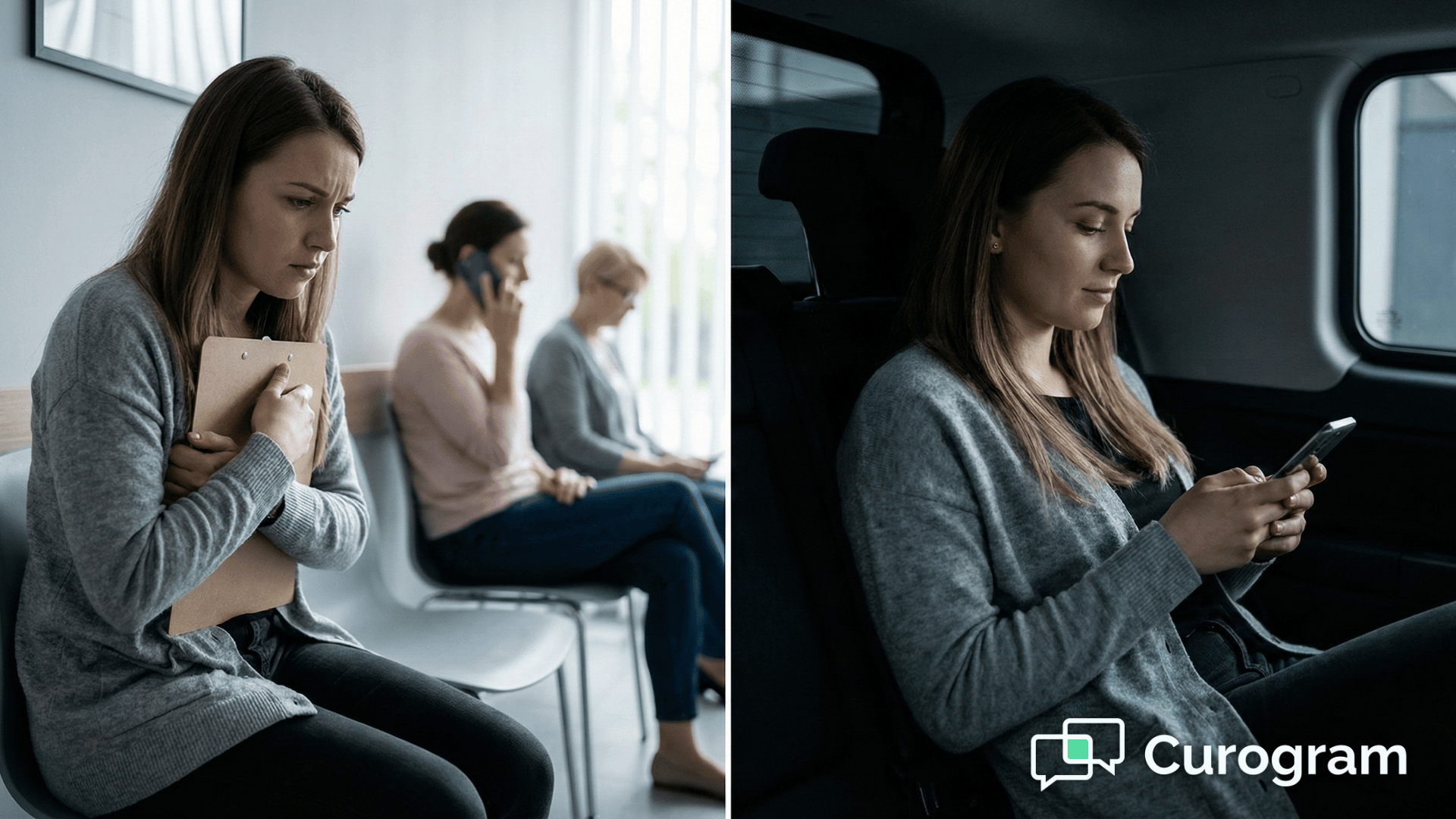
Sarah sat in the waiting room, gripping her purse. The clipboard felt heavy in her hands. Question after question stared back at her: "Date of Last Period," "Number of Previous Pregnancies," "Reason for Visit."
Her hand shook as she tried to write. Every person in that room felt like a pair of eyes watching her. She rushed through the form, leaving half the questions blank. It was easier than risking anyone seeing her answers.
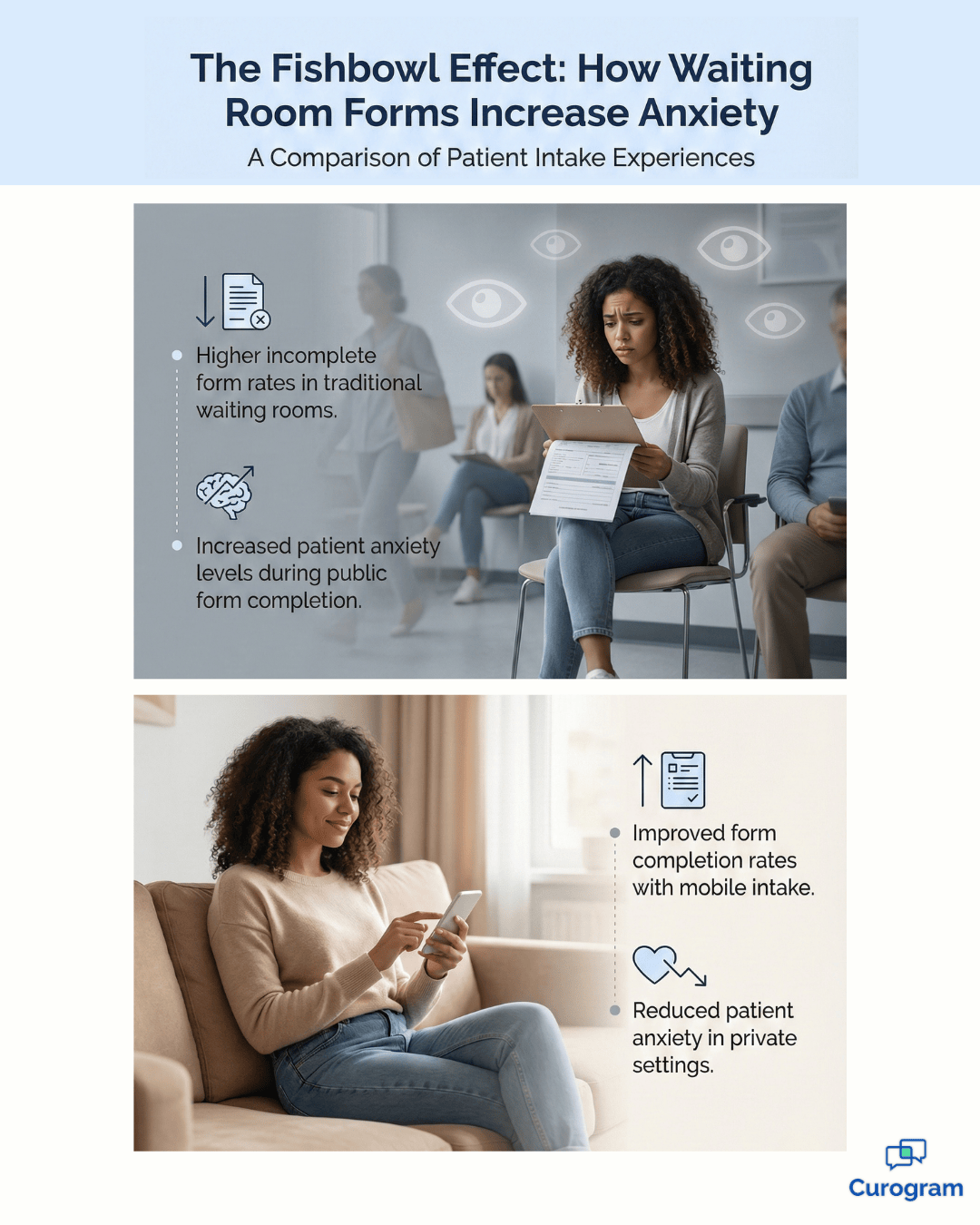
This scene plays out thousands of times each day in pregnancy centers across the country. We call it the Fishbowl Effect. Patients feel exposed and judged before they even meet with staff.
The very first interaction with your center creates stress instead of comfort.
The problem goes deeper than discomfort. When patients feel anxious, they provide incomplete information. They skip sensitive questions or write illegibly.
Your clinical team then lacks the details needed to provide proper care. What should be a straightforward intake process becomes a barrier to quality service.
Improving patient privacy in eKyros clinics requires a different approach. The solution is not to redesign your waiting room or train staff to be more discreet. The answer is to remove the waiting room from the equation entirely.
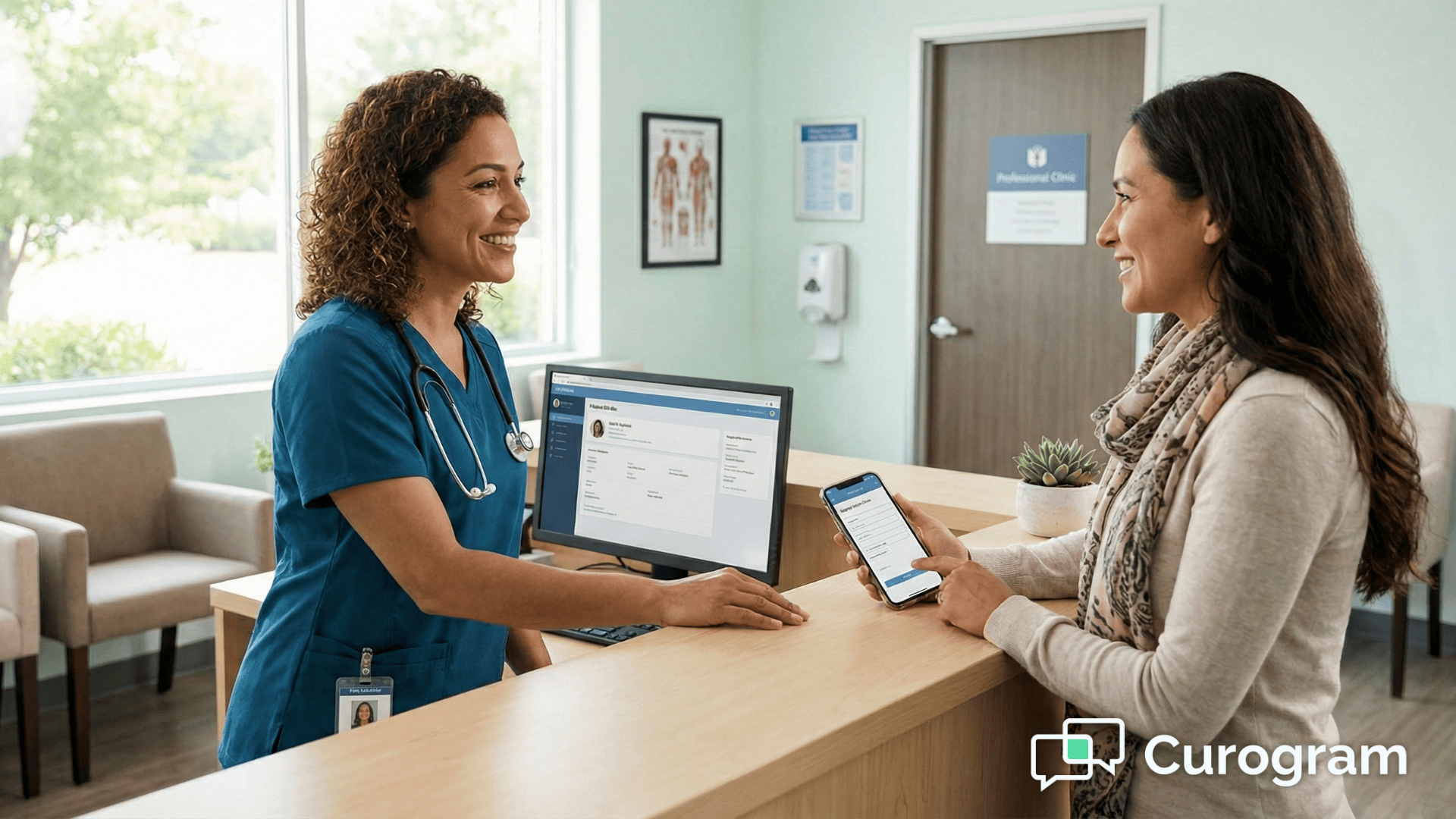
Curogram's mobile intake system allows patients to complete sensitive forms before they arrive. They receive a simple text message with a secure link. They fill out the intake forms from their bedroom, their car, or anywhere they feel safe.
The information flows directly into your eKyros system.
This shift changes everything. Patients arrive calmer and more prepared. Your staff receives complete, accurate information before the first greeting. The entire visit starts on a foundation of trust and dignity instead of anxiety and exposure.
In this article, we will explore how the Fishbowl Effect creates barriers in pregnancy centers. We will show you how mobile forms for pregnancy centers create a trauma-informed intake process.
You will learn specific ways this technology improves the eKyros patient experience from the moment a patient books their appointment.
The traditional clipboard intake model creates multiple problems for pregnancy centers. These issues affect both patient comfort and the quality of information your team receives.
Most patients entering a pregnancy center are already dealing with significant stress. They may be facing an unexpected pregnancy, relationship challenges, or family pressure. Adding the requirement to answer deeply personal questions in a public space amplifies their anxiety.
The physical environment of a waiting room makes privacy nearly impossible. Other patients sit nearby. Volunteers or staff members walk past. Anyone in the room could potentially see what someone is writing.
This lack of privacy is not theoretical—patients actively notice and worry about it.
nvironmental factors directly impact patient disclosure.
When people feel observed or judged, they tend to:
This happens even when they understand the information is important for their care. The waiting room becomes a kind of “fishbowl.” Every movement feels visible. Every answer feels public.
Patients grow hyperaware of their surroundings, making it difficult to focus on providing accurate medical information.
Incomplete intake forms then create operational strain. Nursing staff must spend additional time asking follow-up questions, important medical history can be missed, and appointments often run longer than scheduled.
Over time, this disrupts workflow and reduces the number of patients a center can effectively serve.
There is also an emotional cost. When a patient withholds information during intake, that guardedness often continues into the appointment. The initial anxiety creates a barrier to openness that affects the entire counseling session.
Staff members may work hard to create a welcoming environment, but the first impression has already been formed. If a patient’s experience begins with feeling exposed or judged, that tension can linger—ultimately affecting the center’s ability to provide fully informed, compassionate care.
The solution to the Fishbowl Effect is simple in concept but powerful in impact. Move the intake process to a truly private space. Let patients complete their forms where they feel safe.
Curogram's mobile intake system sends patients a text message before their appointment. The message arrives 24-48 hours in advance. It includes a secure link to complete their intake forms.
Where Privacy Happens
Patients can fill out these forms anywhere they choose:
The location does not matter. What matters is that they control their environment and feel safe. This private medical history submission transforms the patient experience completely.
They have time to think about their answers. They can take breaks if questions become emotionally difficult. There is no pressure from feeling watched or rushed. This creates space for honest, complete responses.
The Message That Changes Everything
The text message patients receive sets a positive tone.
A typical message might read:
"Hi Sarah, for your privacy, please complete your intake forms here before you arrive."
Notice the language. It emphasizes privacy right away. It frames the digital form as a benefit for the patient, not just an administrative task. This small detail matters.
When patients click the link, they find a clean, mobile-friendly form. The questions match exactly what they would see on a paper clipboard. But the context has completely changed. They are now in control of their environment.
After completing the form, patients receive confirmation. They know their information has been submitted. When they arrive at your center, they can walk in with confidence.
Mobile forms for pregnancy centers need to be more than just digital versions of paper forms. They should be intelligent systems that adapt to each patient's situation.
Curogram forms include skip logic that changes based on patient answers. If someone indicates they have never been pregnant before, the form automatically skips detailed pregnancy history questions. This prevents the emotional difficulty of answering irrelevant questions.
How Adaptive Logic Works
The system watches for key responses and adjusts accordingly. When a patient answers "no" to having previous pregnancies, the form immediately skips to relevant topics.
They never see questions about prior pregnancy outcomes, complications, or terminations. This saves time and emotional energy.
This feature does more than save time. It shows respect for the patient's emotional state. They do not have to repeatedly indicate "not applicable" to questions about past pregnancies. The form simply moves forward to topics that matter for their current situation.
The system also prevents common form errors. Required fields are clearly marked. If a patient tries to submit an incomplete form, they receive a gentle prompt. This ensures your staff receives complete information without creating frustration for the patient.
Language Support Without Lobby Translators
Language barriers add another layer of stress to the intake process. A patient who needs to work through a translator to complete basic forms loses even more privacy. Conversations that should be confidential become shared with multiple people in a public space.
Curogram forms can be toggled to Spanish or other languages instantly on the patient's phone. They can switch languages without asking for help. They can read questions carefully and understand exactly what is being asked. This creates equal access to privacy.
A Spanish-speaking patient gets the same dignified experience as an English-speaking patient. Both can complete their forms in a private space in their preferred language.
The completed form arrives in your eKyros system as a PDF. Your staff immediately knows what language the patient speaks and can prepare appropriate materials.

Technology only works if it fits into your existing workflow. Adding new systems that create extra steps defeats the purpose of improving efficiency.
How the Data Flows
Curogram's mobile intake forms integrate directly with eKyros. When a patient completes their form, the information flows automatically into your system. No manual data entry is required. The form arrives as a completed PDF attached to the patient's record.
Your nursing staff can review it before calling the patient back. They see the medical history, understand the reason for visit, and note any special needs. This preparation time changes the dynamic of the appointment completely.
When the nurse greets the patient, she already knows key information. She can address the patient in their preferred language. She can reference specific concerns without making the patient repeat everything.
The conversation starts from a place of understanding rather than information gathering.
Staff Benefits From Better Preparation
The trauma-informed intake process benefits your team as much as your patients:
Your team can focus on what they do best: providing compassionate care. The administrative burden of intake has been handled before the patient arrives. This allows the entire appointment to be more intentional and effective.
Staff members also report feeling more confident when they have reviewed a patient's history beforehand. They can plan their approach. They can gather any additional resources that might be needed. The entire visit becomes smoother from start to finish.

The shift to mobile intake creates measurable improvements in the eKyros patient experience. Centers that implement this system report higher completion rates for intake forms.
Patients who complete forms privately provide more complete information. They take time to think about their answers. They do not skip sensitive questions out of fear of being observed. This completeness matters for clinical care.
What Changes in the Waiting Room
Staff members notice that patients arrive calmer. The visible anxiety that often marks the beginning of appointments decreases. Patients who have already shared their story through the form feel less vulnerable walking through the door.
This initial comfort sets a positive foundation for the entire visit. When patients start from a place of dignity rather than exposure, they engage more openly during counseling.
They ask more questions. They participate more actively in planning their next steps. The entire tone of the appointment shifts.
Long-Term Benefits for Your Center
The benefits of reducing waiting room anxiety extend beyond individual appointments. Over time, your center builds a reputation for respecting patient privacy and dignity.
Patients are more likely to recommend your services to friends. They remember that their first interaction felt safe and private. This word-of-mouth referral is invaluable for pregnancy centers. Your staff experiences less burnout.
When intake runs smoothly and patients arrive prepared, the entire day flows better.
There are fewer stressful moments trying to gather missing information or calm an anxious patient. The overall quality of care improves. With better information and calmer patients, your team can focus on providing excellent counseling and support.
This is the core mission of your center, and mobile intake helps you achieve it more effectively.
What if a patient does not have a smartphone?
Curogram forms work on any device with internet access, including tablets and computers. Patients without smartphones can complete the forms on a laptop or desktop before their appointment.
Your center can also keep a tablet available for patients who arrive without having completed the forms electronically. This maintains the option for traditional paper forms when needed while offering the digital option to those who prefer it.
How secure is the patient information submitted through mobile forms?
All information submitted through Curogram is transmitted through secure, encrypted connections. The system is fully HIPAA compliant. Patient data is protected with the same security standards used by major healthcare providers.
The forms use secure links that expire after use. Only authorized staff members with eKyros access can view the submitted information.
Will this replace the personal connection of greeting patients in person?
Mobile intake enhances rather than replaces personal connection. Staff members still greet patients warmly when they arrive. The difference is that this greeting happens without the barrier of a clipboard.
Patients feel more relaxed because the difficult part is already complete. Staff can focus the in-person interaction on building rapport rather than gathering basic information. This creates space for more meaningful personal connection.
How long does it take for patients to complete mobile intake forms?
Most patients complete mobile intake forms in 5-10 minutes. The time varies based on their individual situation and how many questions apply to them. Smart skip logic helps reduce this time by eliminating irrelevant questions.
Patients can also save your progress and return later if they need a break. This flexibility allows them to complete the forms at their own pace without feeling rushed.
Can patients still fill out paper forms if they prefer?
Yes, paper forms remain available as an option. Some patients may prefer traditional forms for various reasons. The goal is to provide choice, not to force everyone into a digital system. Staff can assess each patient's preference and offer the method that works best for them.
Most centers find that once patients try mobile forms, they strongly prefer them for future appointments.
Technology should serve compassion, not replace it. Digital intake forms are not about cutting costs or reducing staff time. They are about creating a better experience for vulnerable patients at one of the most emotionally sensitive moments of their lives.
When you give patients privacy to tell their story, you demonstrate care before they ever meet your team. That first interaction silently communicates your values. It tells them whether this is a place where they can exhale or a place where they need to stay guarded.
First impressions in healthcare settings are powerful, and they often shape how open someone is for the rest of their visit.
The Fishbowl Effect is real and damaging. Every day, patients sit in waiting rooms feeling exposed and judged. They worry about who might glance at their answers. They second-guess how much to share.
As a result, they provide incomplete information not because they do not care, but because they do not feel fully safe. Over time, this pattern becomes normalized, even though it directly undermines both emotional comfort and clinical quality.
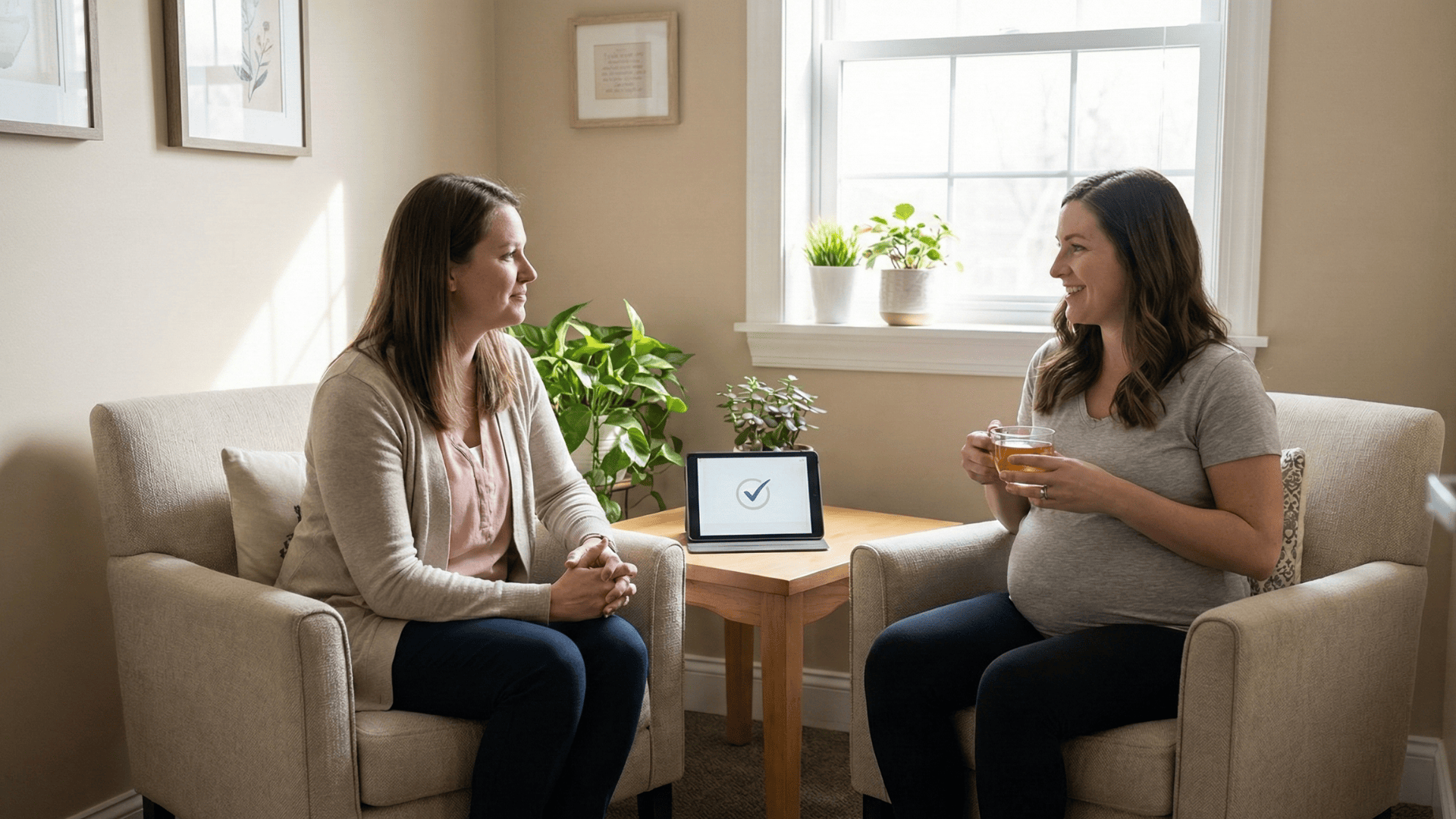
Privacy changes that dynamic immediately. When patients complete forms on their own phone, in their car, at home, or in a quiet corner, they can slow down and answer honestly.
They are not rushing. They are not scanning the room. They are not filtering their story out of fear. This small shift restores dignity at the very beginning of the care journey.
Curogram’s mobile intake system transforms the first interaction from a source of anxiety into a moment of reassurance. Patients complete sensitive forms in private and arrive prepared and calmer.
Your staff receives more complete information ahead of time, allowing appointments to focus on meaningful conversation rather than paperwork. The result is not just operational efficiency, but a more compassionate, trauma-informed workflow.
Creating a true sanctuary for patients starts with one intentional change. Remove the clipboard from the waiting room. Replace exposure with privacy. Replace tension with preparedness. When intake becomes private, care becomes stronger.
Schedule a demo now. See how Curogram improves the patient experience for eKyros users and integrates seamlessly into your existing workflow.
💡 Automating data entry for eKyros clinics removes the need to type handwritten patient forms by hand. With Curogram's digital intake workflow,...
💡 Digital intake forms for eKyros centers let patients complete sensitive medical history privately on their phones before appointments. This...
💡 GE Centricity specialty clinics struggle with paper-based patient intake across multiple locations. A digital intake workflow GE Centricity...