9 min read
Introduce Clinic Texting So Patients Trust Text One
Mira Gwehn Revilla
:
September 8, 2026
- Say it at checkout: "We text now, from this number. Please save it."
- Send the first message from each location's existing local number, and name the clinic before asking for anything.
- Capture consent during eCW check-in and checkout, so the ask rides on visits already on the books.
- Put the same sentence on door signage, appointment cards, and the hold message.
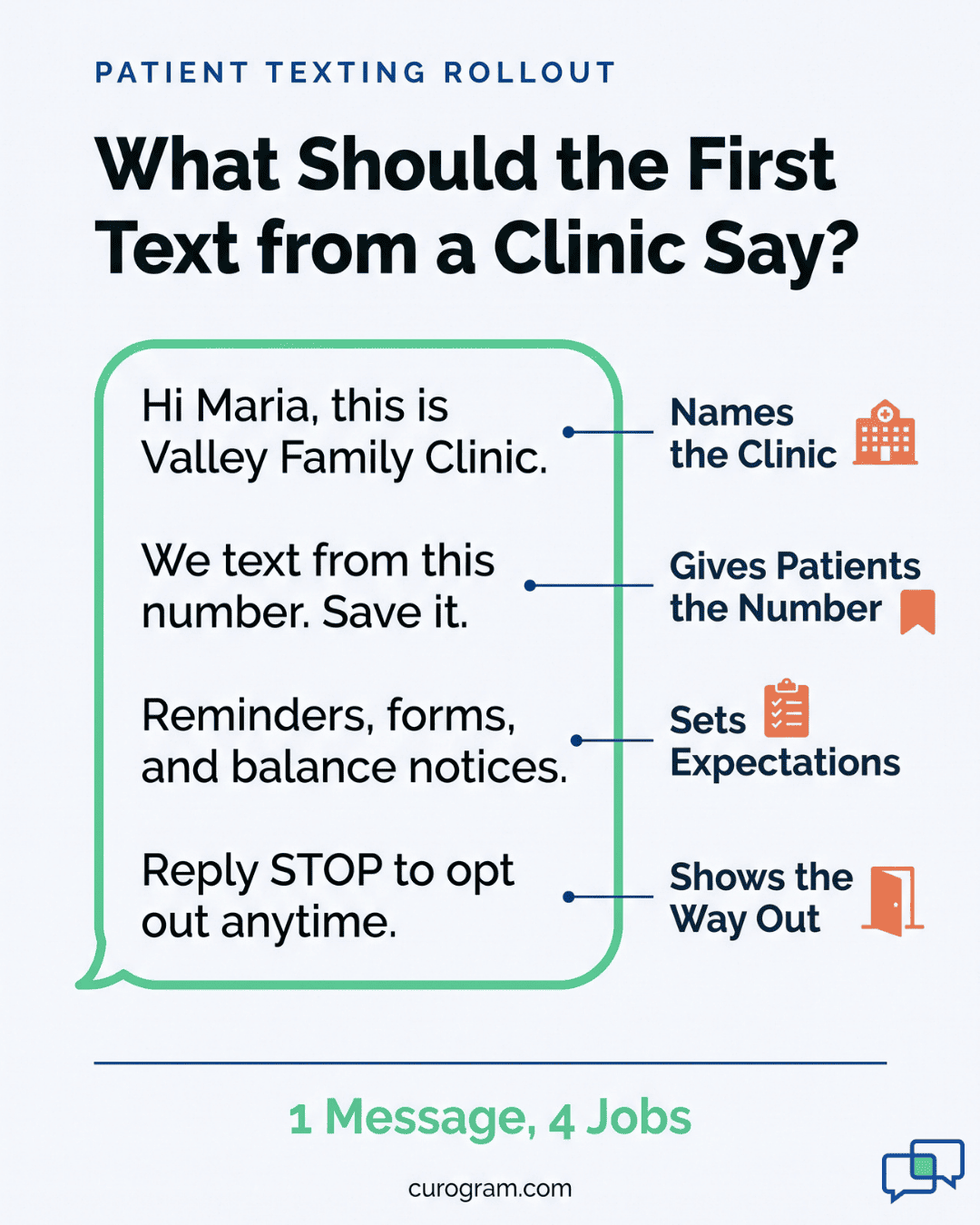
- Include reply and stop instructions in the first text, not the third.
Every texting rollout gets decided on a lock screen. A message lands from a number nobody in the house knows, and the patient has two seconds to sort it into "clinic" or "scam." Deleting takes less effort than checking.
Your front desk finds out later. Two patients call to ask who texted them. One arrives for a slot she canceled by reply, because nobody told her replies were read. A third no-shows and gets logged as unresponsive.
That isn't a software problem. eClinicalWorks holds contact and consent records fine, and reminders go out on schedule. The missing piece is a sentence somebody should have said at checkout the week before.
Introducing text communication to patients at eClinicalWorks practices is a communication project with a start date, so treat it as one.
Patient adoption of text reminders is close to automatic when the first impression is designed, because texting is already how your patients handle school pickups, refills, and the dentist. Skip the announcement and you spend a quarter rebuilding trust at each site.
The numbers move quickly once patients open the messages. Atlas Medical Center cut no-shows from 14.20% to 4.91% in three months, based on our internal data. None of that happens if the first text gets deleted.
Launch work is cheap. A card, a sign, and one sentence at the desk cost almost nothing, and they decide how the next two years of messaging perform.
Multi-site groups tend to underrate this part. A multi-location patient communication change needs the same wording at every desk, or patients at your third site hear a different story than patients at your first. Same script, same number logic, same week.
The Unannounced Change
A first text from an unknown 10-digit number reads like everything else a patient deleted that week. Fake toll notices. Bank alerts. Package problems that need a reply.
The FTC keeps a public page of these formats and tells consumers to delete and report them. Your patients have read it, or a version of it on the local news.
Now put your reminder in that stack. "Reply Y to confirm your appointment Tuesday at 2:15" arrives with no clinic name, no address, and no context. A patient with two upcoming visits can't even tell which one it means.
Trust doesn't come from the content of that message. It comes from whether someone warned her it was coming.
The Reaction You Never Hear About
Nobody calls the office to say they ignored a text. The first text from a clinic gets a patient reaction you only see in reporting, weeks later, as a low response rate.
Three things happen in that silence, and each one damages a different record.
|
What the patient does |
What your schedule shows |
|
Deletes the confirmation request |
Appointment stays unconfirmed |
|
Replies STOP to be safe |
Patient marked opted out |
|
Calls the desk to ask who texted |
Four-minute call, no confirmation logged |
Why One Location Looks Worse Than the Rest
Rollouts drift by site. One office manager mentions the change at checkout because that is how she runs her desk. Another office never brings it up.
Six weeks later, the report shows your third location at half the response rate of the other two. The natural read is that those patients do not text.
They text plenty. Nobody told them the clinic does.
That misread costs more than the low numbers do. Groups pull back reminders at the "weak" site, add phone calls back in, and pay staff hours to fix a problem a printed card would have solved.
The Timing Nobody Plans For
Scam awareness runs in waves. A local station covers a text scam targeting seniors, and for the next two weeks every unknown number in your patients' phones is guilty until proven otherwise.
Rollouts that land in one of those weeks get judged harshly. Same message, same schedule, much lower response, and no way to tell from the report why.
You can't time the news. You can make the message survive it by putting your clinic name in the first line and by getting the number into the patient's contacts before it ever sends.
Older panels feel this hardest. A 74-year-old with a Medicare Advantage plan has been warned about texts by her bank, her pharmacy, and her daughter. She needs the checkout sentence more than anyone on your schedule does.
What It Costs to Fix Later
Recovery is slower than launch. A patient who deleted your first message has already sorted your number into junk, and the second message gets the same treatment.
Reaching her again means catching her in person at the next visit, then asking her to unblock a number she doesn't remember blocking. Front desk staff hate that conversation, and they're right to.
Run the math on a mid-size group. If 15% of a 12,000-patient panel opts out or ignores the channel during a bad launch, that is 1,800 people you are still calling by phone next year. Those calls don't get cheaper. (Illustrative math, not a case figure.)
The clinics that skip this cost are the ones that spent a week on wording before anything sent.
The Rollout Playbook
Launch week has four touches: checkout, signage, the appointment card, and the first message itself. All four say the same 12 words, and the staff sentence is the one that carries the rest.
Write it once and print it. Staff shouldn't have to improvise wording while a patient digs for a copay.
|
Touch |
Who handles it |
What it says |
|
Checkout |
Front desk |
"We text now, from this number. Save it as our clinic." |
|
Door and window |
Signage |
Same sentence, plus the site's number |
|
Appointment card |
Front desk |
Number printed under the visit time |
|
First text |
Curogram |
Clinic name first, then the ask |
Patient onboarding for a new communication channel works the same way a new portal or a new parking rule does. People accept it when they hear it from a person, in the room, before it affects them.
Announce texting to patients where they're already standing. Newsletters, portal banners, and emailed notices reach the patients who least need warning, and miss the ones who will delete your first message.
Use the Number They Already Have
Each location should text from the local number patients already call. A patient who has that number saved sees your clinic's name on the notification instead of a stray area code.
Shared short codes break this. Six sites texting from one 5-digit number gives patients nothing to recognize and nothing to save.
Keeping the number local also fixes the callback problem. Patients reply, and when they prefer to call, they call the desk they know rather than a main line that has to route them back out.
Curogram enables texting on your existing lines, so voice calls keep working exactly as they do today. Nothing changes on the phone side for staff or patients.
Where Consent Gets Captured
A patient consent texting rollout doesn't need a separate campaign. Consent gets captured at the eCW touchpoints patients already stop at: intake forms, check-in, and checkout.
Two consent levels matter, and mixing them causes trouble. Appointment reminders and clinical messages are one category under the TCPA. Marketing and promotional texts require a separate, express written opt-in.
Record both, with a timestamp and the wording the patient agreed to. Opt-outs get honored automatically and per patient, so a STOP reply at one site does not silently keep messages flowing from another.
Keep the paperwork boring and specific. A consent line that names the clinic, the number, and the message types holds up better than a checkbox labeled "communications."
Give staff one answer for the question they'll get most: "what will you text me about?" Reminders, confirmations, forms before the visit, and balance notices. Patients who hear the list at the desk rarely ask again by reply.

Say It Out Loud, Then Show It
Signage does the work for patients who skip checkout small talk. One sign at the door, one at the desk, one in each exam room if you have the frames.
Same sentence on all of them. Patients read a sign three or four times before it registers, and repeating it across sites makes the change feel routine.
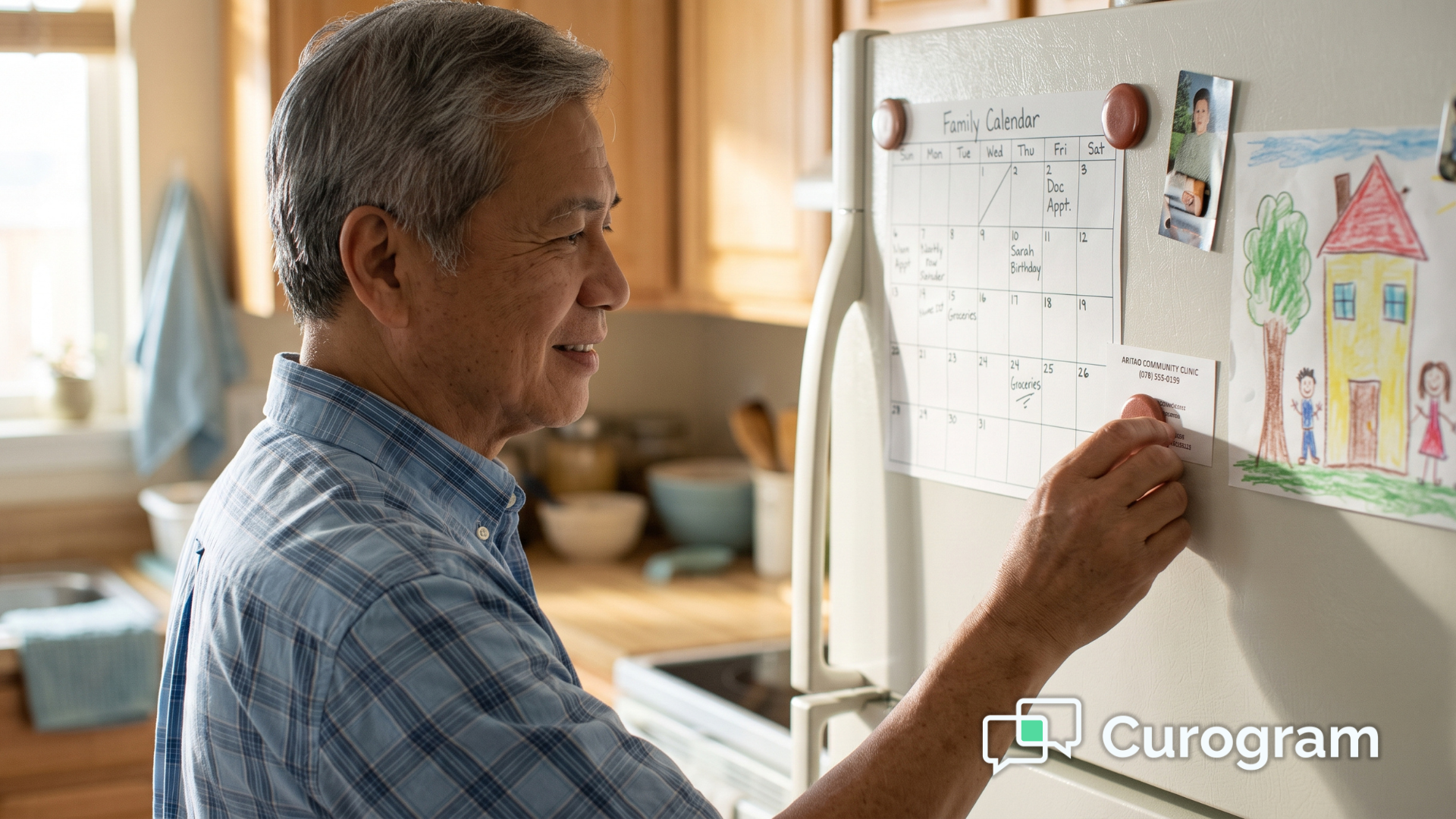
Two details are worth printing rather than saying. Put the site's number on the appointment card, under the visit time, so patients leave with it in hand.
Add one line about how to stop messages, because the patients most worried about scams are the ones scanning for that line.
Voicemail is the last touch and the cheapest. Update the hold greeting at each location with the same wording, and patients hear it while they wait to speak with your desk about something else.
Trusted From Message One
Announce it well and adoption is immediate. Confirmation rates cross the 75% benchmark in the first cycles, based on our internal data, because nothing's being asked of patients except the thing texting is already good at.
Most four-site launches follow the same shape.
|
Week |
What happens |
What to watch |
|
1 |
Staff sentence at checkout, signage up |
Cards handed out at every site |
|
2 |
Introduction text sends per site |
Opt-out rate under 2% |
|
3 |
First reminder cycle runs |
Reply rate by location |
|
4 |
Gaps reviewed and scripts corrected |
Any site trailing the others |
What the Front Desk Notices
Call volume drops before anything else does. Patients who used to phone in to confirm just reply. One practice we work with logged a 24% drop in inbound calls, based on our internal data, after patients had a text channel they trusted.
The tone of the calls changes too. Fewer "who texted me" calls, more actual scheduling questions.
Staff also stop chasing confirmations by phone the day before. That hour goes back to the front desk, which is usually the first thing an office manager mentions when we check in after launch.
The Reaction You are Designing For
The goal is a small shift in what patients say when the message arrives. "What is this number" becomes "oh good, the clinic texts now."
That second reaction produces behavior you can see. Patients confirm by reply, ask a question they would have skipped, and reschedule instead of no-showing.
Atlas Medical Center's drop from 14.20% to 4.91% in three months came from patients doing exactly that, based on our internal data. The reminder did its job because the patient opened it.
Front desks hear a version of this within days: patients telling them they wish every office worked this way. It's a small comment, and it tells you the introduction landed.
Curogram Highlight: The Recognized First Text
The Recognized First Text is the introduction message every location sends before any reminder goes out. It leads with the clinic name and site, states what patients will get, and gives the reply and stop instructions in plain words. Then it stops. No confirmation request rides along with it.
Sent from your existing local number, that message arrives labeled with your clinic's name for anyone who has called you before. Patients who saved the number at checkout get the same recognition on the lock screen.
Curogram syncs with eClinicalWorks, so the introduction goes to the patients your schedule already has, in the batches you choose: one site at a time, or the whole group in a week.
Consent and preferences captured at intake and checkout carry through, and opt-outs apply per patient across every location.
Staff training runs about 10 minutes, based on our internal materials, because the front desk is only learning one sentence and one screen.
Replies from every site land in a shared inbox, so a patient who answers the introduction with a question gets a person, not silence.
The measurable part shows up in the first reminder cycle. Curogram clients average confirmation rates above 75%, based on our internal data, and Covina Arthritic Clinic confirms more than 1,100 appointments a month through the same setup.
Conclusion: Launch the Channel Like You Mean It
Patient adoption isn't the hard part of this project. Getting every site to say the same sentence during launch month is.
eClinicalWorks holds your record of consent and contact. Curogram sends the patient's first hello, from a number that already has your clinic's name attached to it.
So write the checkout sentence this week. Print it, hand it to every desk, and make saying it a habit before the first message sends. A group that gets that right sees confirmations above 75% in the first cycles, based on our internal data, and stops guessing which location has a patient problem.
Schedule a demo to see the patient launch kit: first-text scripts, signage files, and the consent flow, ready to set up per site.
Frequently Asked Questions
Consent gets collected at the points patients already stop: intake forms, check-in, and checkout. Record the date, the number, and the message types the patient agreed to. Keep reminder consent separate from marketing consent, since the TCPA treats them differently. Curogram stores the record and applies opt-outs per patient across every location.
An unknown 10-digit number looks like the scam texts they delete daily. The FTC publishes warnings about those formats, so deleting is the trained response. The fix is recognition: tell patients at checkout, print the number on the card, and send an introduction that names the clinic before it asks for a reply.
One week of preparation and about four weeks to steady numbers. Staff training runs roughly 10 minutes per person. Week 1 covers the checkout sentence and signage. Week 2 sends introductions, week 3 runs the first reminder cycle, and week 4 fixes whichever site drifted from the script.
Nothing gets taken away. Calls, portal messages, and mailed reminders continue for anyone who wants them, and preferences are stored per patient. Texting is offered as an addition, which is also how staff should describe it at checkout. Patients who never reply keep getting the contact method they already use.
Start with the desk, not the patients. Check whether checkout staff are saying the sentence and whether cards are being handed out. Then re-introduce the channel in person at the next visit for patients who opted out, since a STOP reply can't be undone by another text. Recovery takes a visit cycle.