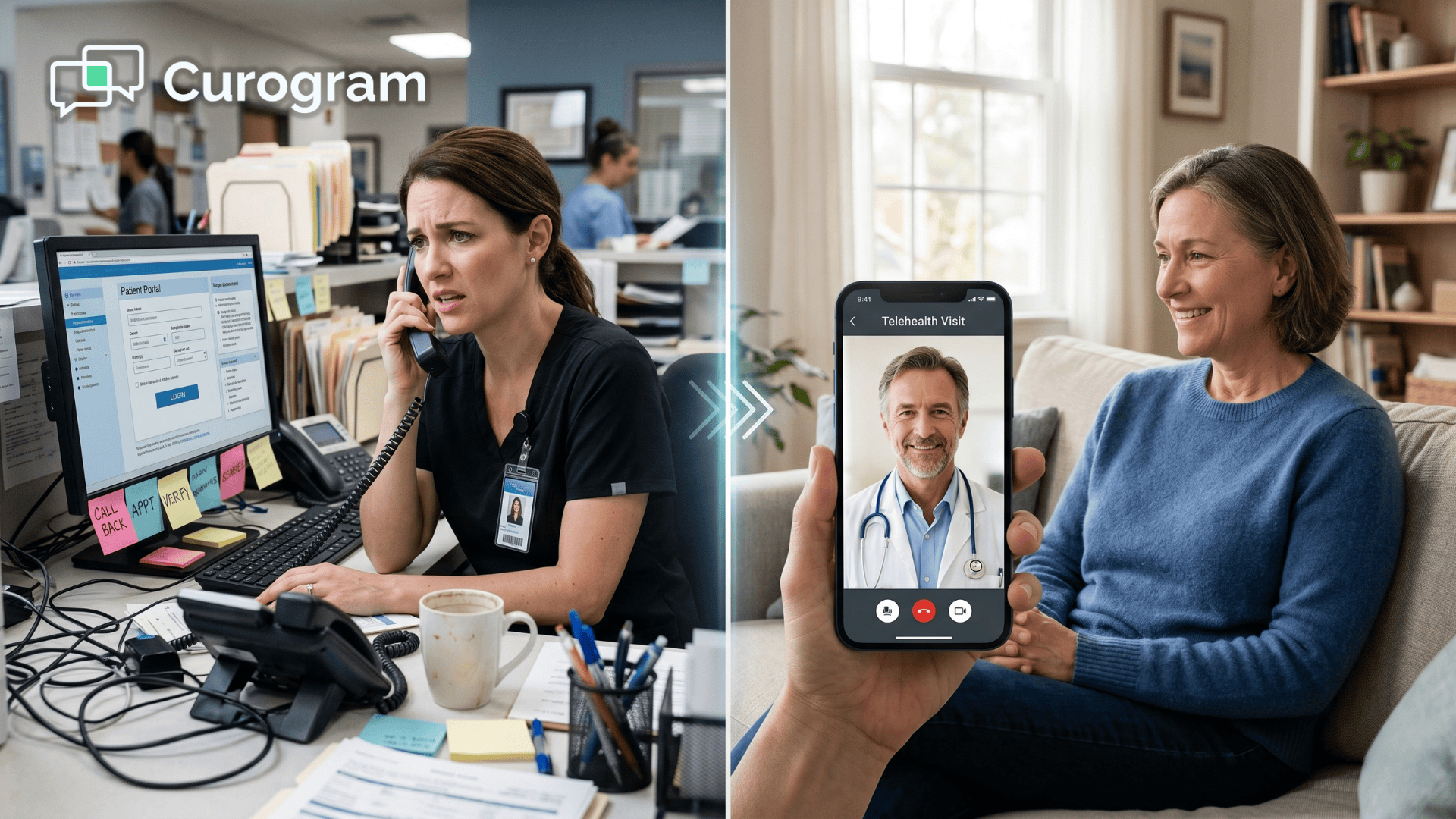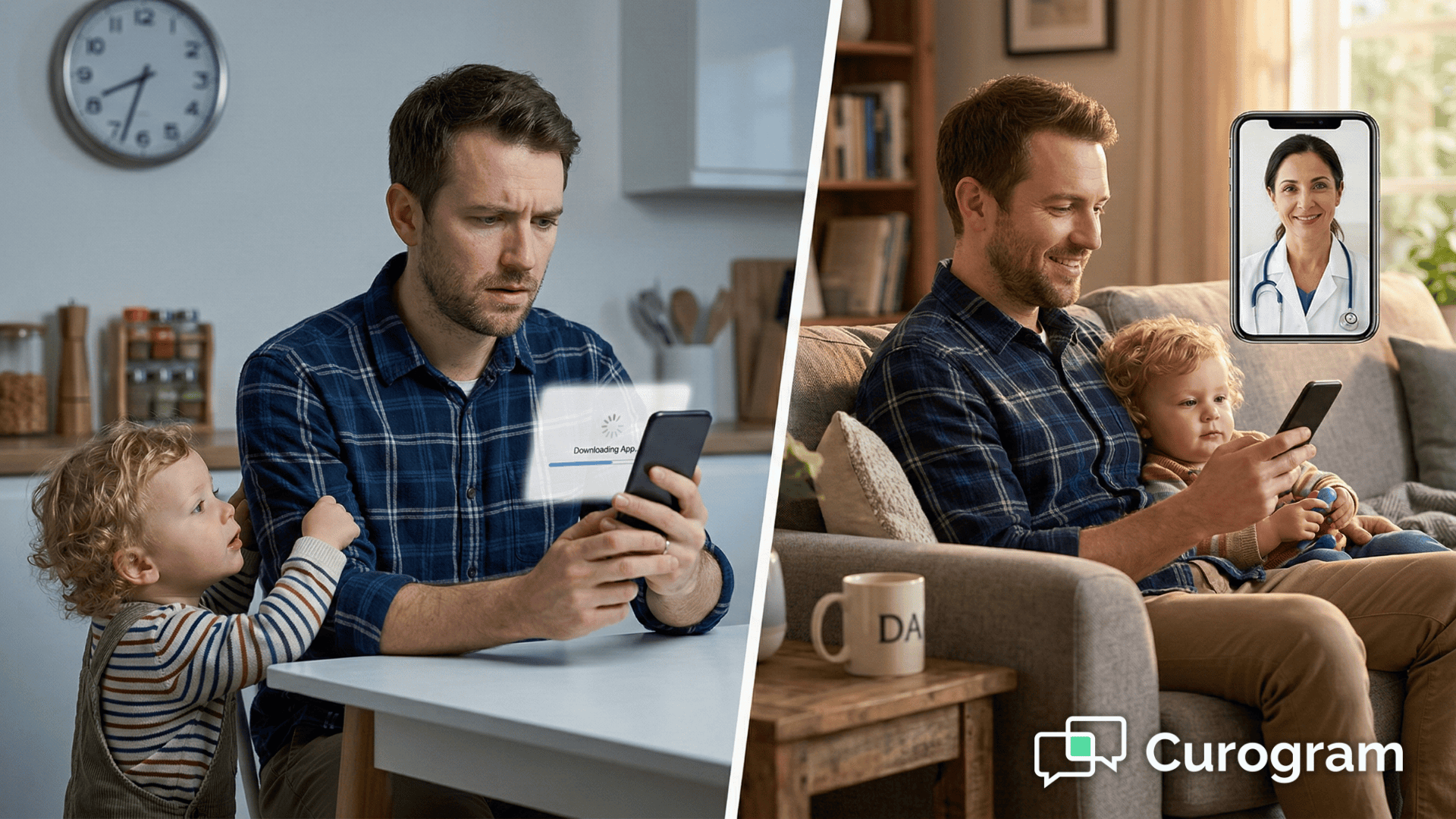
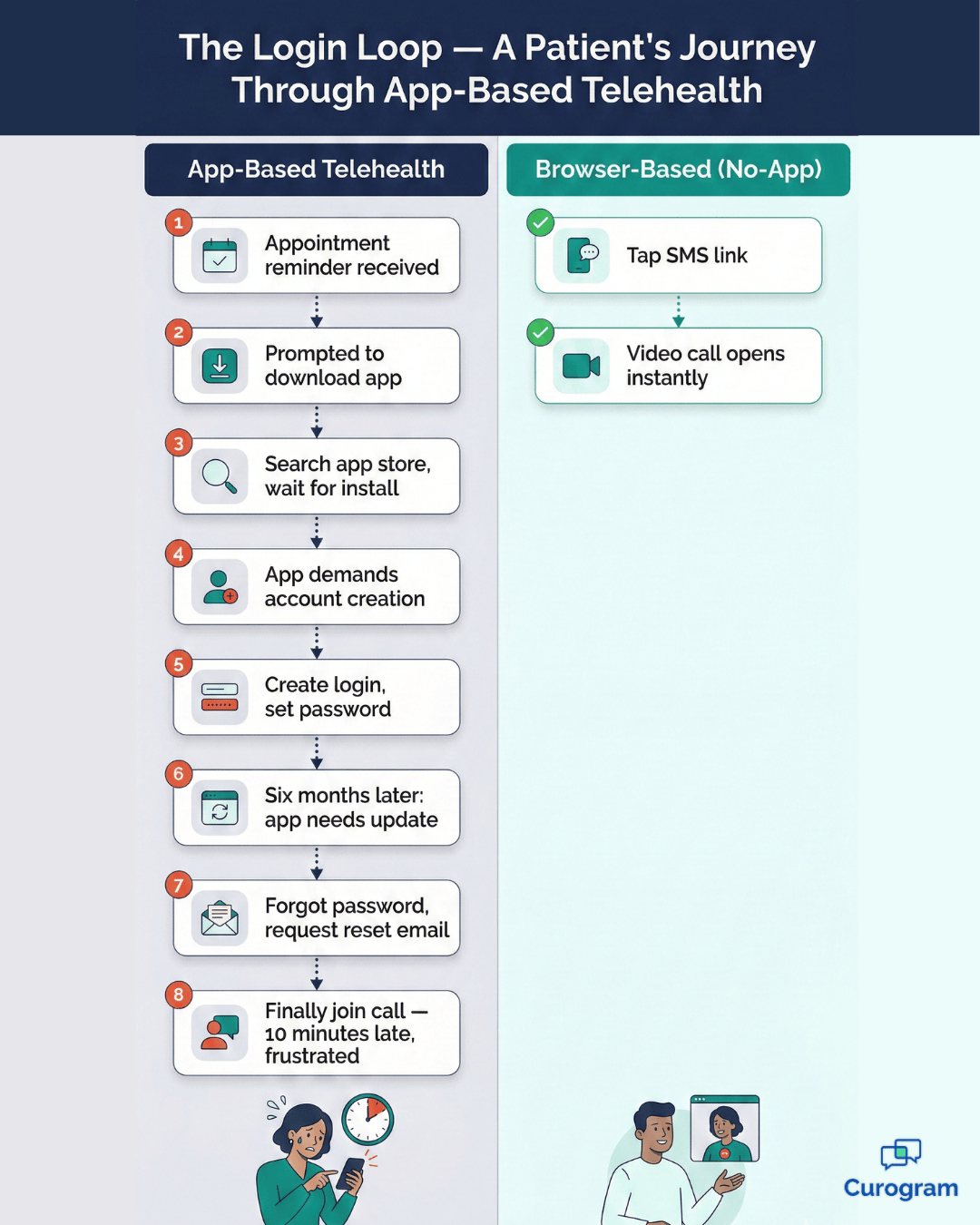
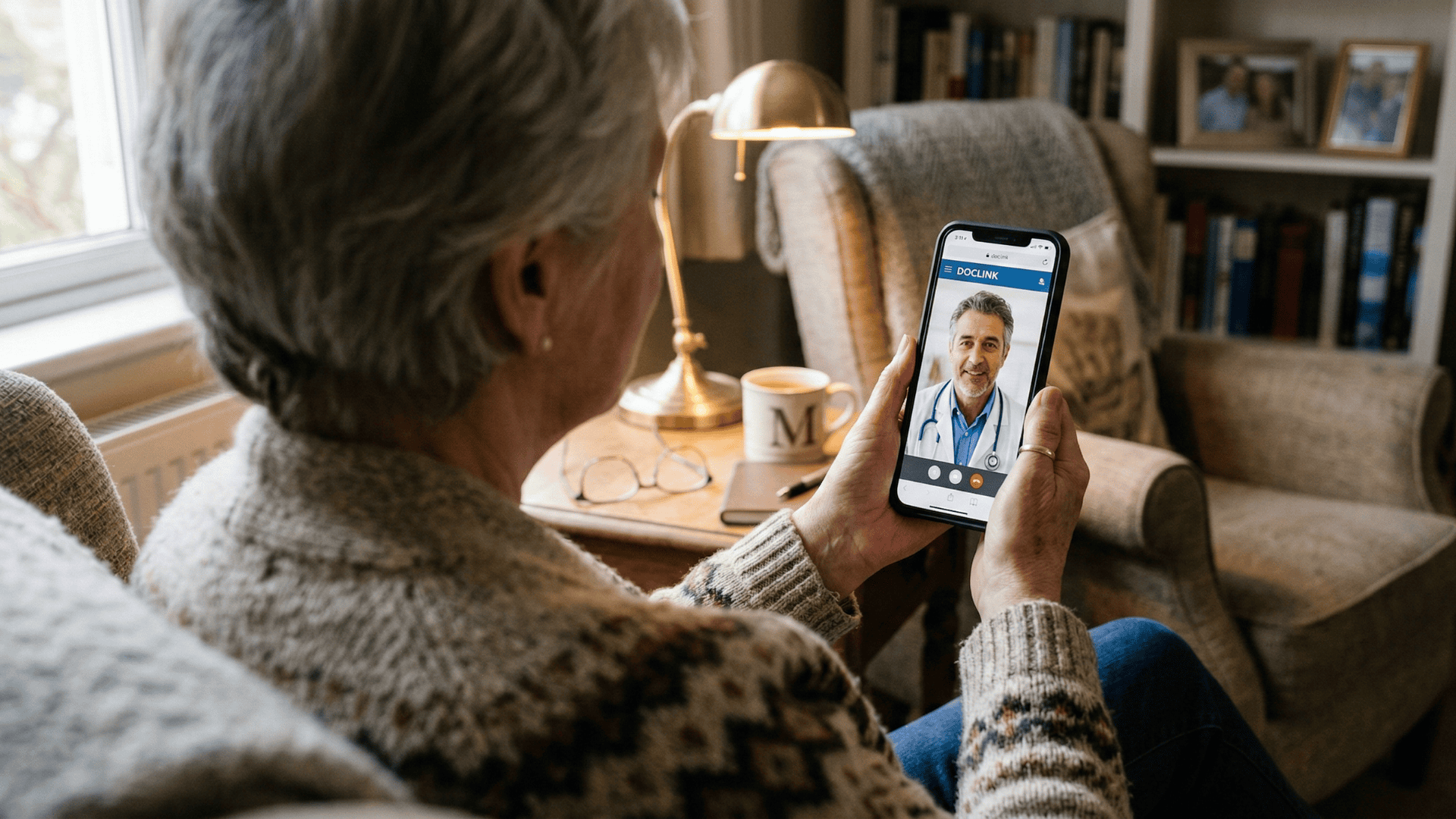

A patient finally books a follow-up video visit after putting it off for weeks. Five minutes before the appointment, they get a reminder to download an app. The download stalls. The app demands an account.
They fumble through a password-reset email. By the time they're in, they're ten minutes late, frustrated, and barely listening.
Sound familiar? That scenario plays out every day across medical practices that rely on app-based telehealth platforms.
And in many cases, the patient never shows up at all. It's not that they don't want care—it's that the technology got in the way. The visit that should have taken one tap to join turned into a ten-minute IT support session.
Patient preference for no-app telemedicine is driven by a simple truth: people want their healthcare to feel easy. They want to tap a link and see their doctor, the same way they tap a link to read an article or watch a video.
When the tool is invisible, the conversation takes center stage.
For CharmHealth practices, this matters more than you might think.
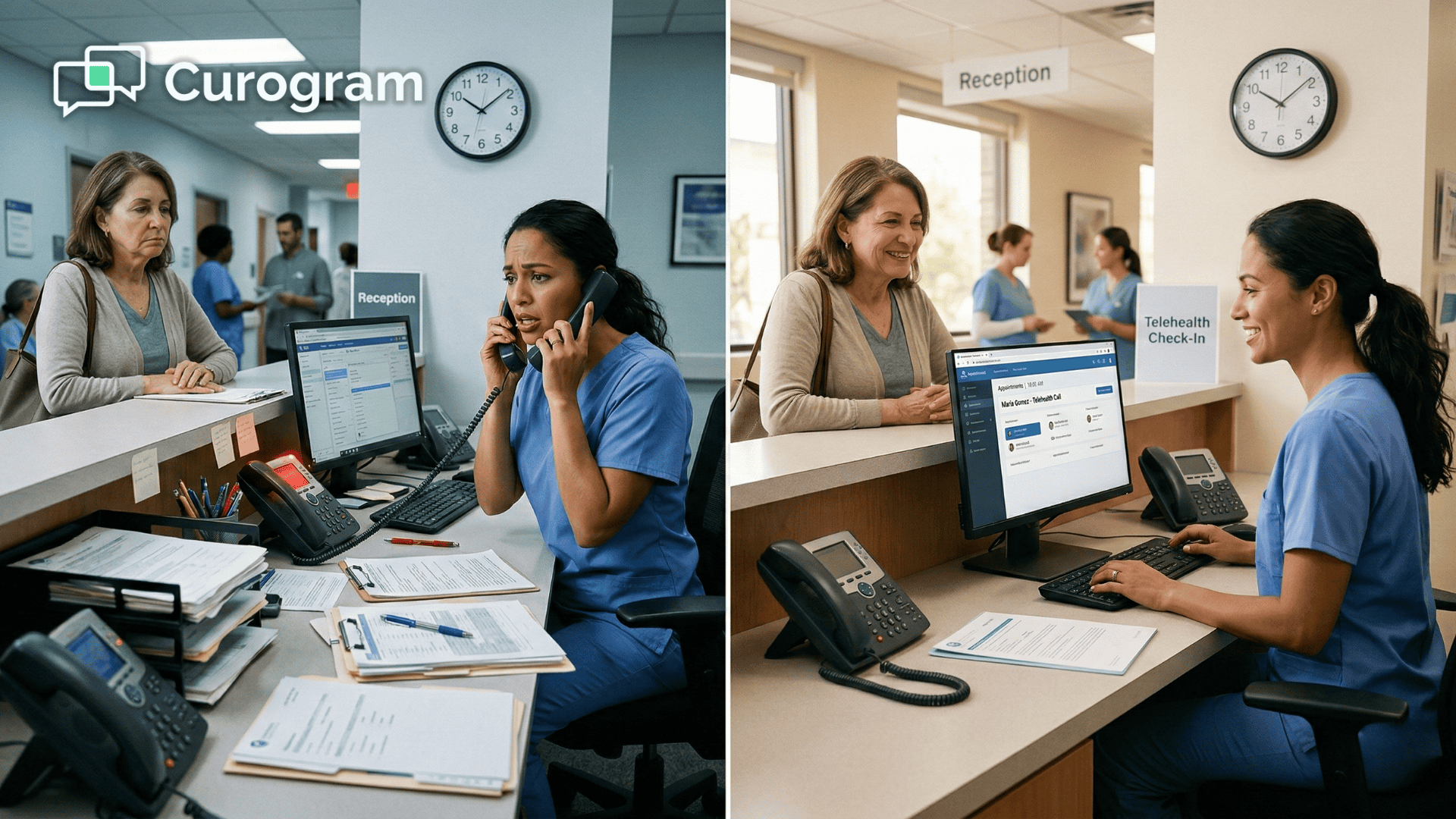
Whether you serve older adults managing chronic conditions, busy parents squeezing in a visit between school drop-offs, or anyone who simply dislikes clutter on their phone, the telehealth experience you offer shapes how patients feel about your practice.
That's the shift we're going to unpack in this article. We'll look at why app-based telehealth creates friction, how browser-based video visits eliminate it, and what happens to patient satisfaction when you remove the login screen entirely.
If your CharmHealth virtual visit experience has been falling short, the fix might be simpler than you expect.