7 min read

How to Write Text Blasts That Get Booked (Without Annoying Patients)

How to Write Text Blasts That Get Booked (Without Annoying Patients)
💡 Writing effective mass text messages for healthcare means keeping every message short, relevant, and easy to act on. The best campaigns feel like helpful updates, not marketing blasts. 

When a message says something like "Flu shots are in" or "Your doctor has openings tomorrow," patients welcome it.

For CharmHealth practices, the key is to target the right patients with the right message. Use filters to send specific updates to the right groups. 

Always lead with the benefit to the patient, and include a direct booking link so they can act in one tap.

Keep messages under 160 characters, follow HIPAA compliant text marketing rules, and watch your results. Practices that follow these steps see open rates as high as 98% and booked appointments within minutes.


There is a good chance your patients want to hear from you more than you think. The problem is not that texting feels pushy. The problem is that most practices never send the first message at all.

Every week, appointment slots sit empty. Patients forget to rebook. New services launch without anyone knowing.

Meanwhile, your inbox fills with questions that a simple text could have answered. The gap between your practice and your patients is not a lack of care. It is a lack of communication. And that gap costs you real revenue.

Learning how to write effective mass text messages for healthcare changes that dynamic completely. A well-crafted text blast does not annoy patients. It connects them to the care they already need.

Think of it as a direct line to your community, one that skips the phone tag, the junk mail pile, and the voicemails that never get returned.

For practices running CharmHealth, the opportunity is even bigger. You already have patient data organized by demographics, visit history, and health needs.

Pairing that data with a platform like Curogram turns your patient list into a powerful outreach tool. Instead of sending generic newsletters, you can send targeted messages that feel personal because they are personal.

This article walks you through three simple rules for writing text blasts that fill your schedule instead of your opt-out list.

You will learn why the fear of being "spammy" is costing you patients, how to write messages that people actually want to receive, and how one practice booked 50 appointments in 20 minutes with a single text.

If you have been looking for integrative medicine newsletter alternatives that actually get read, this is your playbook. Let us get into it.

Why the Fear of Annoying Patients Is Actually Losing Them

Here is the barrier most practice owners face. They worry that sending a mass text will bother their patients. They picture annoyed people hitting "unsubscribe" and leaving bad reviews.

So they do nothing. And doing nothing is the most expensive choice of all.

The truth is that patients do not get annoyed by relevant messages. They get annoyed by irrelevant ones.

There is a huge difference between a random ad for a product they never asked about and a text from their own doctor saying appointments just opened up for tomorrow. One is noise. The other is a favor.

This fear often comes from personal experience. Practice owners think about the marketing texts they ignore on their own phones. But those texts come from brands they barely remember signing up for. Your patients chose you as their healthcare provider.

That relationship changes everything about how they receive a message from your office.

Relevance Changes Everything

This is the core idea behind what works in CharmHealth patient marketing. When you send the right message to the right people at the right time, it does not feel like marketing. It feels like good service.

Here is how patients actually see it:

  • A flu shot reminder during flu season feels like a helpful heads-up, not a sales pitch.
  • A text about a same-day opening feels like a favor, not an interruption.
  • A new-service announcement from their own doctor feels like insider access, not spam.

The difference between a welcome message and an unwanted one almost always comes down to context. Patients who just had a physical do not mind hearing about lab follow-ups. Parents with young children appreciate vaccine reminders.

The closer the message matches the patient's current needs, the more likely they are to act on it.

By staying silent, you are not protecting your patients from unwanted messages. You are withholding valuable access from people who trust you.

Patients who have not visited in months are not gone forever. They are simply waiting for a reason to come back. A well-timed message about reactivating dormant patients through a short, friendly text is often all it takes to fill an empty afternoon on your schedule.

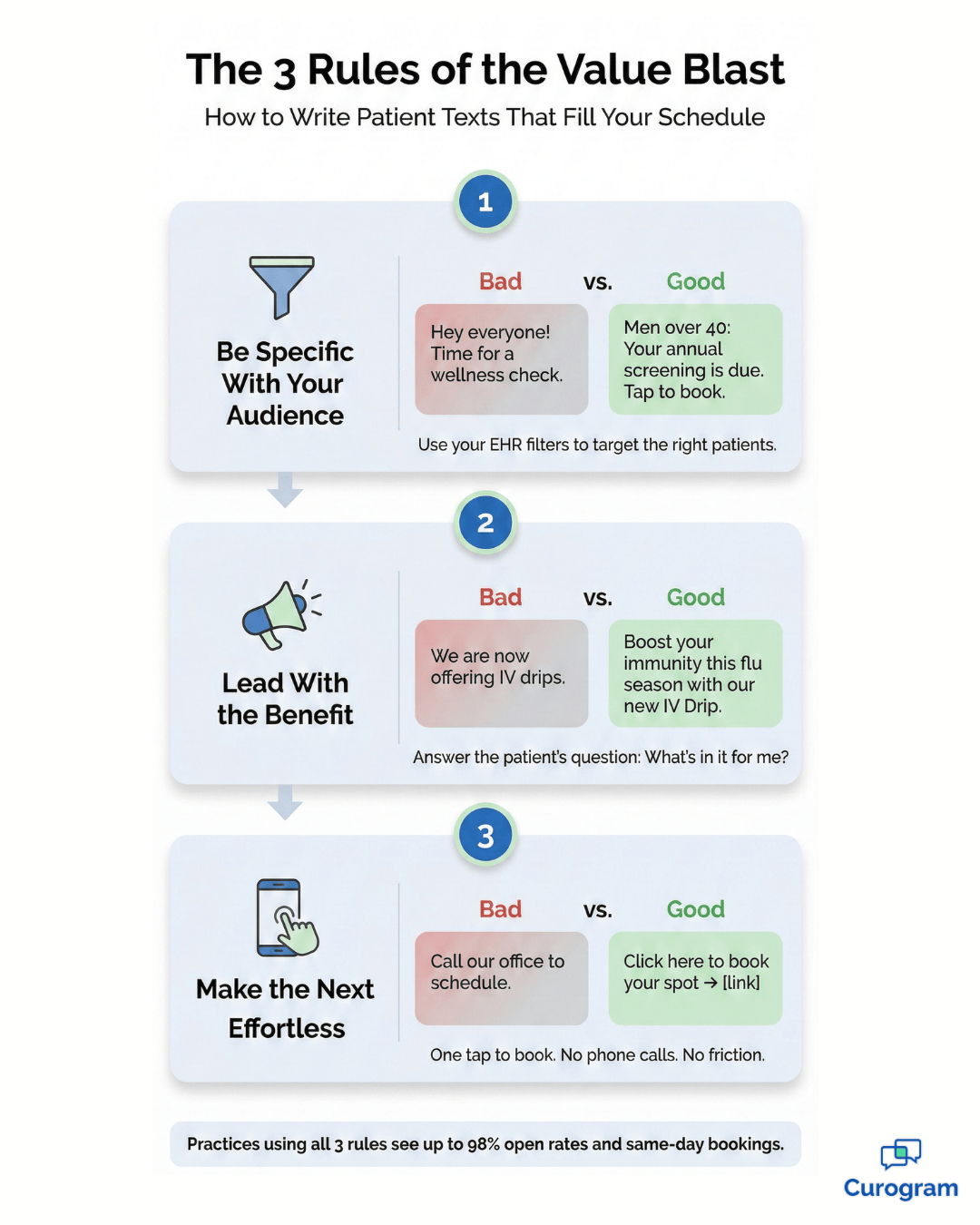
Infographic comparing bad and good patient text blast examples using three simple rules

Three Simple Rules for Text Blasts That Actually Work

Not every text blast performs the same. The ones that fill schedules follow a clear pattern. These three rules separate messages that get booked from messages that get ignored.

Rule 1: Be Specific With Your Audience

A vague "wellness check" blast sent to your entire patient list will fall flat.

Instead, use your CharmHealth filters powered by your CharmHealth integration to narrow the audience and target patients based on age, visit history, or care gaps. Send a men's health screening reminder only to men over 40. Send a pediatric vaccine update only to parents.

The more targeted the message, the more it feels like it was written just for them.

Specificity also protects your reputation. Patients who receive messages that clearly apply to them are far less likely to opt out. They stay on your list because every text feels relevant to their care.

Think of it this way.

A dermatology practice sending a sunscreen reminder to every patient in January will get ignored.

That same practice sending a skin cancer screening reminder to patients over 50 who have not been seen in a year will get clicks. The data is already in your system. You just have to use it.

Rule 2: Lead With the Benefit

Patients care about what the message means for them, not what your medical practice is offering in general terms.

Compare these two approaches.

"We are offering IV drips" tells the patient about you. "Boost your immunity this flu season with our new IV drip" tells the patient how they benefit.

Always answer the question every reader is silently asking: what is in it for me?

The best-performing messages put the patient's outcome front and center. Instead of announcing what your practice has, describe what the patient gets.

Faster recovery, fewer sick days, peace of mind before travel season. When the benefit is obvious in the first few words, patients keep reading.

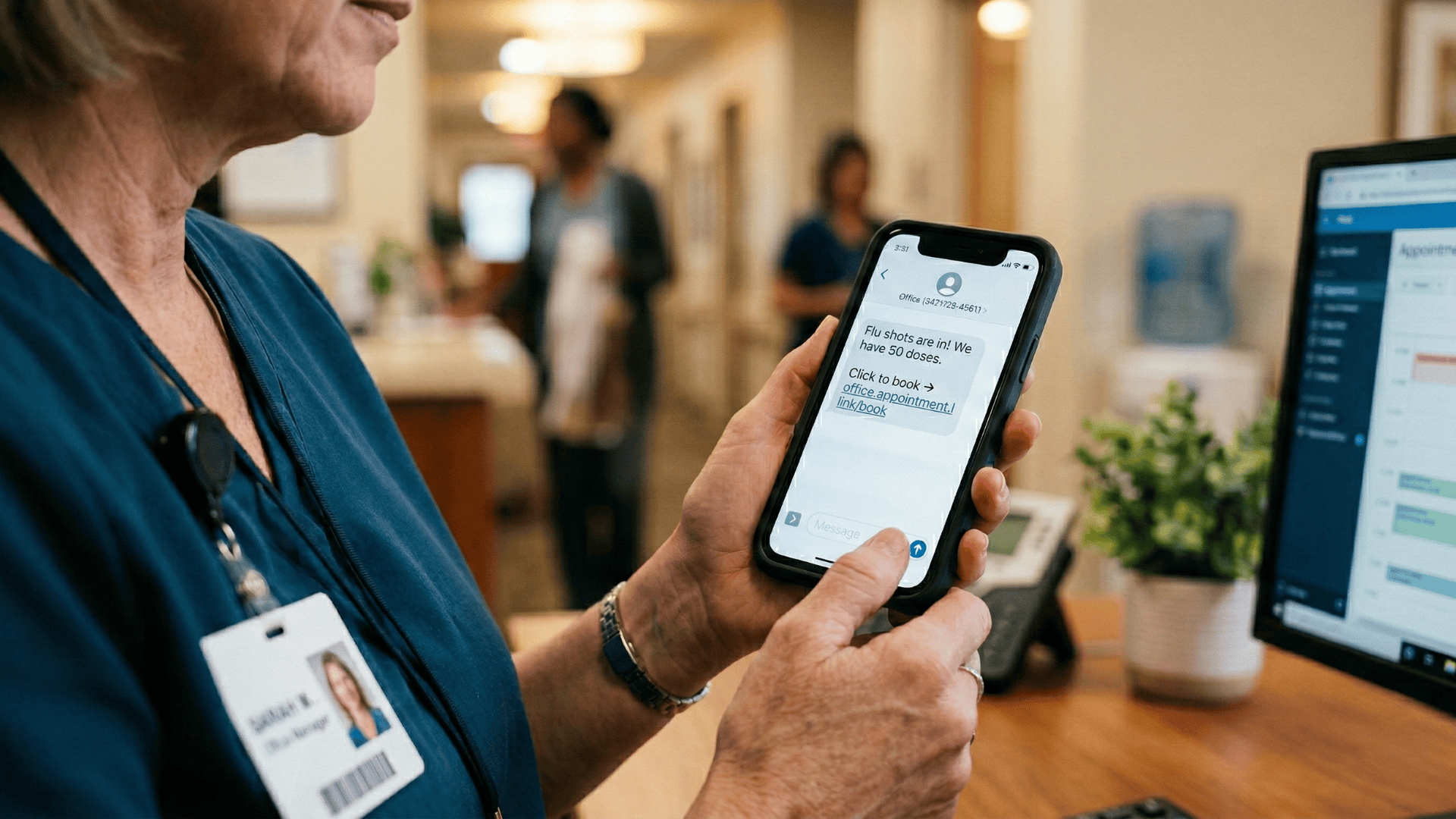
Office manager about to send a patient text blast from her smartphone at a medical practice

Rule 3: Make the Next Step Effortless

Do not tell patients to "call the office." That creates friction.

Instead, include a direct self-scheduling link from Curogram so patients can book in one tap. The fewer steps between reading and booking, the more appointments you fill.

This matters even more on mobile, where most patients will read your message. A booking link they can tap without switching apps or waiting on hold removes every excuse to delay.

Practices that switched from "call us" to a one-tap link consistently see higher conversion rates on the same campaigns.

This is also one of the most effective strategies for avoiding spam filters in healthcare.

Messages with clear value and a single link perform far better than promotional blasts stuffed with multiple offers. Carriers and phone platforms reward clean, simple messages by delivering them straight to the main inbox.

How One Blast Booked 50 Appointments in 20 Minutes

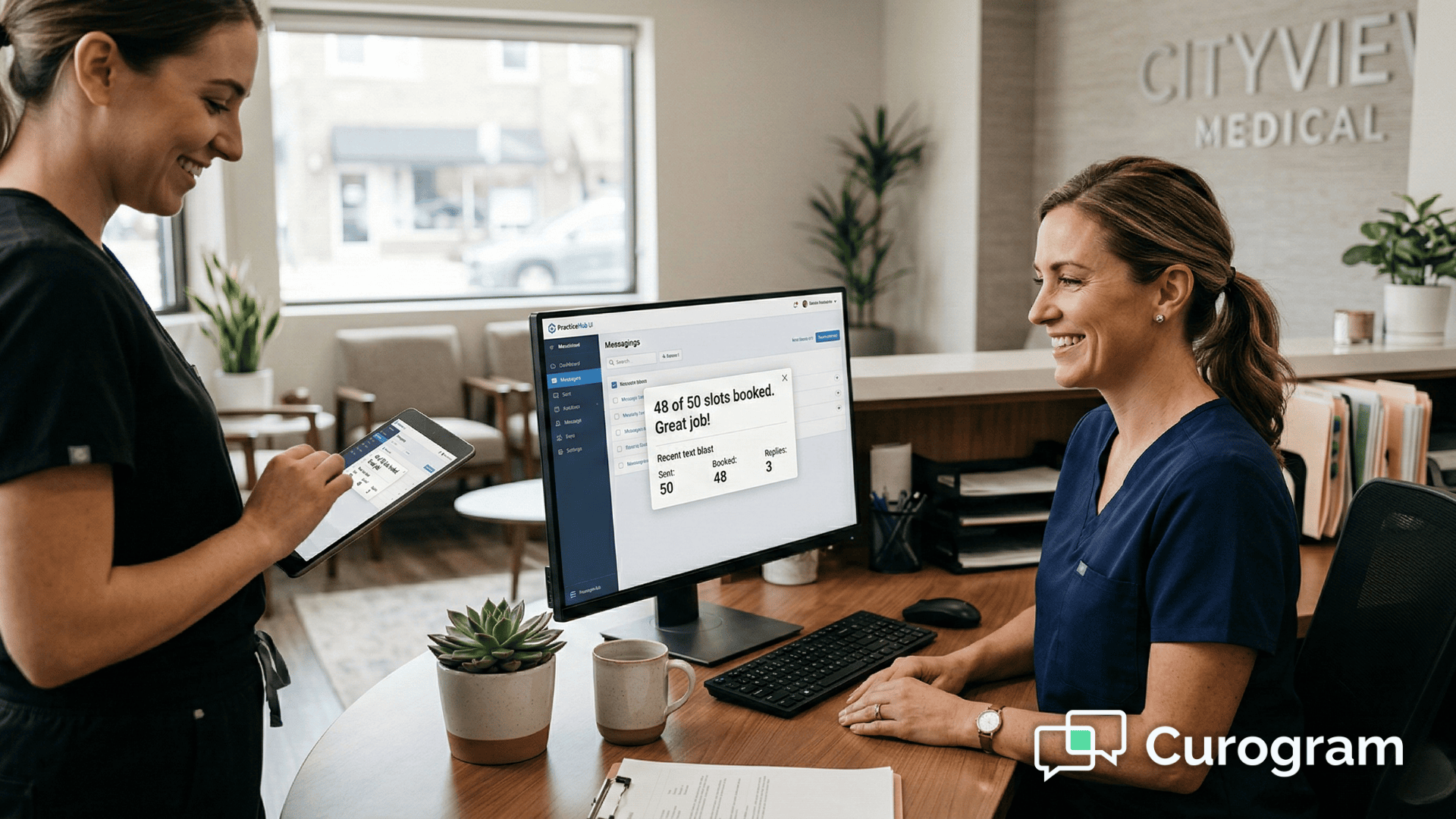
Here is what this looks like in the real world. A pediatric practice had 50 flu shot doses arrive on a Monday morning. Instead of waiting for parents to call in and ask.

They sent a single text blast through Curogram:

"Flu shots are in! We have 50 doses. Click to claim yours."

Within 20 minutes, every single slot was booked. No phone calls. No back-and-forth. No wasted inventory sitting in the fridge while the front desk tried to fill the schedule manually.

The front desk staff did not have to make a single outbound call. Parents saw the text, tapped the link, and picked a time that worked for their family.

By the time the office opened on Tuesday, the entire week's flu shot schedule was full. The staff spent their morning on patient care instead of phone tag.

Why This Campaign Changed Their Thinking

That moment changed how the practice thought about mass messaging entirely. They stopped seeing it as marketing and started seeing it as inventory management for their schedule.

The shift came down to three realizations:

  • Every open appointment slot is a product that loses value the longer it sits unfilled.
  • Every targeted text is a chance to match that slot with a patient who needs it.
  • Speed matters more than perfection. A short, clear message sent now beats a polished email sent next week.

After that first campaign, the practice started using text blasts for more than just vaccines. They promoted new wellness packages, filled last-minute cancellations, and even reminded patients about annual physicals that were coming due.

Each campaign followed the same simple formula: a specific audience, a clear benefit, and a one-tap booking link.

This is also what makes HIPAA compliant text marketing through Curogram so different from old-school outreach.

You are not blasting ads into the void. You are connecting real patients with real availability at your practice, all through a secure, compliant channel they already use every day.

Frequently Asked Questions 

How often should we send text blasts to patients?

We recommend no more than one to two times per month unless there is an urgent update, like an office closure due to weather or a last-minute vaccine shipment.

Keeping a reasonable frequency helps your patients stay engaged without feeling overwhelmed. If every message you send delivers real value, your audience will look forward to hearing from you.

Can we include images in our text blasts?

Yes, you can send images through MMS messaging.

However, text-only messages often perform better because they feel more personal. A plain text from your doctor's office reads like a real message, not a corporate flyer. Test both formats and see what your patients respond to best.

What happens if a patient replies STOP?

Curogram automatically removes that patient from your messaging list. This keeps your practice compliant with TCPA laws and protects you from any legal risk. It also means you never have to worry about accidentally texting someone who has opted out.

Your Patients Are Waiting to Hear From You

The best way to think about your text list is like a community board.

When you post something useful, people pay attention. When you clutter it with noise, they tune out. The practices that succeed with mass messaging are the ones that treat every text like a small act of service.

Your patients already trust you. A message from their doctor's office carries real weight. It is not the same as a random brand trying to sell them something. When you use that trust wisely, patients stay subscribed, they book faster, and they tell others about the great experience.

That kind of word-of-mouth is something no paid ad can buy.

If you have been relying on email newsletters or phone call reminders that no one answers, it is time to rethink your approach. Mass texting through Curogram gives CharmHealth practices a direct, HIPAA-compliant channel that patients actually read.

With open rates near 98% and the ability to include self-scheduling links, it is the closest thing to a guaranteed touchpoint in healthcare communication today.

The practices that grow fastest are the ones that stay in touch with their patients between visits.

They send the flu shot alert. They share the new service launch. They fill cancelled slots in minutes instead of hours. That is what a smart texting strategy looks like, and it is easier to start than most people think.

Draft your first campaign today. Keep it short, make it valuable, and send it to a targeted group. Download the Curogram Template Library for 10 pre-written blasts that are ready to customize for your practice.

And when you are ready to see the full platform in action, Schedule a demo with Curogram to learn how mass messaging, two-way texting, and patient recall can work together to grow your practice.


How to Reactivate Dormant Patients in CollaborateMD

How to Reactivate Dormant Patients in CollaborateMD

💡 When you reactivate dormant patients in CollaborateMD through broadcast text messaging, your practice can bring in over $15,000 in new revenue...

Read More
How to Drive Ancillary Revenue with SMS Health Marketing for CureMD

How to Drive Ancillary Revenue with SMS Health Marketing for CureMD

💡 Health marketing campaigns for CureMD workflows let practices send targeted SMS messages to patients already in their database. Instead of buying...

Read More
Ending Recall Debt with a Modern ModMed Workflow

Ending Recall Debt with a Modern ModMed Workflow

💡Specialty practices can optimize their ModMed patient recall workflow by replacing manual phone lists with automated SMS re-engagement sequences....

Read More