Broadcast Messaging for CollaborateMD Recalls: A Revenue Playbook
💡 Broadcast messaging for CollaborateMD recalls lets medical practices wake up dormant patients and fill schedule gaps with targeted,...
12 min read
Mira Gwehn Revilla
:
February 24, 2026
There is a good chance your practice is sitting on tens of thousands of dollars in lost revenue right now. It is not hidden in a budget line or locked behind a new marketing plan. It is sitting inside your CollaborateMD database, attached to real patients who already know and trust you.
These are people who came in for care, had a good visit, and then simply fell off the radar. They did not leave because they were unhappy. Life got busy. They forgot. No one reminded them to come back.
Most practices respond to slow schedules by spending more on ads. They buy Google clicks. They pay for mailers. They chase strangers on social media. All of this costs money, and the return is never a sure thing. Meanwhile, hundreds or even thousands of past patients sit quietly in the EMR, waiting for a reason to return.
What if you could reach all of those patients at once, in under 15 minutes, and fill your schedule for the next two weeks? That is what happens when you reactivate dormant patients in CollaborateMD using a broadcast text recall through Curogram.
Think of your EMR as a bank account. Every patient record is a deposit. But if no one makes a withdrawal, that value just sits there doing nothing. A single patient recall SMS campaign can unlock that value fast.
One practice, Atlas Medical Center, did exactly this. They filtered their CollaborateMD list, sent a bulk text, and saw bookings pour in within hours. No ad budget. No new leads. Just one smart message to the right group of people.
This article breaks down the math, the method, and the results. You will see why the fastest path to medical practice revenue acceleration is not finding new patients. It is bringing back the ones you already have.
Every practice needs patients to survive. The question is how much it costs to get them through the door. Most clinics default to the same playbook: run ads, buy leads, and hope enough strangers convert into booked visits. This is the patient acquisition trap, and it bleeds budgets dry.
The average cost to acquire a new patient through digital ads ranges from $150 to $300 or more. That covers the ad spend, the landing page, the follow-up calls, and the staff time to close the booking. Even then, there is no promise that the new patient will show up or return for a second visit.
Now, compare that to a patient already in your system. They have a chart. They have a history. They chose your practice once before. The only thing missing is a reminder.
When you reach out to these people, the cost to bring them back is close to zero. There is no ad spend. There is no lead form. You are not starting from scratch.
This is why the idea of CollaborateMD database mining is so powerful. Your EMR is not just a record-keeping tool. It is a list of real people who are likely overdue for care. They need a check-up, a follow-up, or a screening. They just need someone to nudge them.
|
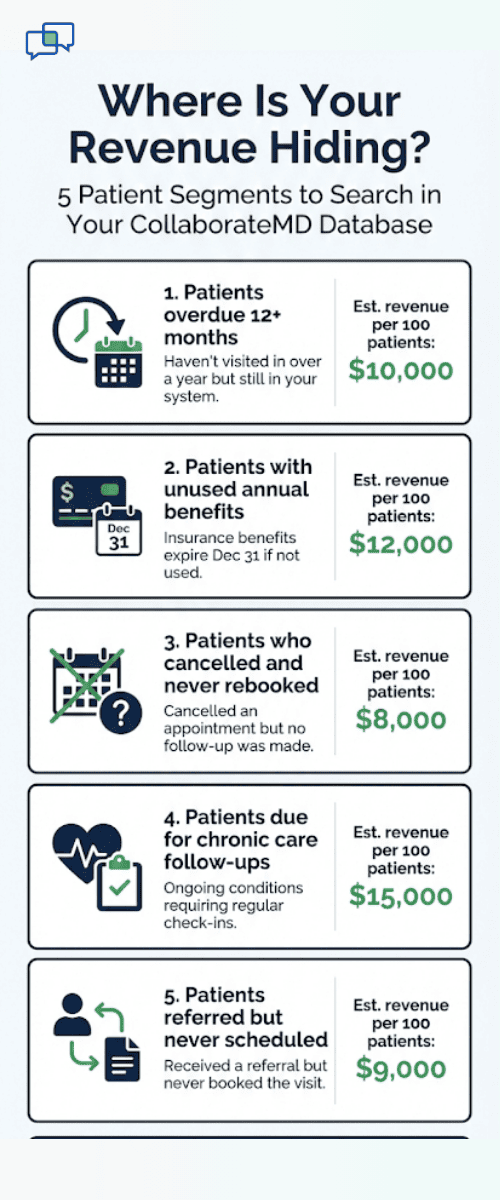
Let us run the numbers on a simple text recall: Say, you pull a list of 500 patients from CollaborateMD who have not visited in over 12 months. You send each one a short, friendly text through Curogram. Based on real-world results, about 35% of those patients will book a visit. That gives you 175 new appointments. If the average visit brings in $100 in payment, that is $17,500 in revenue. All from a task that took less than 15 minutes and cost nothing in ad spend. |
Now, think about what it would take to get 175 new patients through paid ads. At $200 per new patient, you would spend $35,000 just to match the same number of bookings. And those new patients are less likely to stay loyal compared to someone who has already been to your office.
This is the core of medical practice revenue acceleration. You do not need to find more people. You need to reach the people you already have. The return is higher. The cost is lower. The time is almost nothing.
There is also the long-term value to consider. A patient who comes back for one visit often stays on the books. They schedule follow-ups. They refer family members.
Over time, a single reactivated patient can bring in $1,000 or more in total revenue. When you compare that to the one-time cost of a text message, the math speaks for itself.
The real waste is not that your practice is under-marketed. The real waste is that you are paying to chase strangers while a goldmine of known, trusted patients sits untouched in your system. When you reduce patient acquisition cost by tapping into your own data first, every dollar stretches further.
Practices that shift their mindset from "we need new patients" to "we need to bring back our patients" see results fast. The revenue is already earned in trust. It just needs to be collected through action.

If there is one time of year when this strategy works best, it is the final quarter. October through December is a window that most practices overlook, and it is one of the easiest ways to increase billable encounters before the year ends.
|
Here is why: Many patients have insurance benefits that reset on January 1. If they do not use those benefits before December 31, they lose them. This includes covered check-ups, screenings, lab work, and follow-up visits. Most patients do not track this on their own. They forget, or they simply do not know. |
This is where the "use it or lose it" campaign comes in. The idea is simple. You filter your CollaborateMD database for patients who have not had a visit in the current year and who still have active coverage. Then you send a broadcast message through Curogram reminding them that their benefits are about to expire.
The message might read something like this: "Hi [Name], you still have unused benefits for this year. Book your check-up before they expire. Click here to schedule." That is it. Short, clear, and tied to a real deadline.
This type of patient recall SMS campaign works because it is built on urgency that already exists. You are not making up a reason to reach out. The deadline is real. The benefits are real. And the patient gains something by acting now rather than waiting.
From the practice side, the result is a surge of bookings in Q4. This fills empty slots during a time when schedules often thin out due to holidays and travel. It also helps the practice hit its annual revenue targets without relying on a last-minute push from paid ads.
|
Let us say you identify 400 patients in CollaborateMD who fit the criteria: You send the broadcast in early October. Even at a modest 25% booking rate, that is 100 new visits. At $120 average revenue per visit, that brings in $12,000. If you send a second wave in November to catch the stragglers, you could add another 50 to 75 visits on top of that. |
This is not a one-time trick either. You can run this campaign every year. In fact, it gets better over time. As your team builds the habit of filtering and texting, the process becomes second nature. You start to see the Q4 sprint as a planned revenue event, not a scramble.
The key is timing. Send the first wave in early October so patients have time to schedule and show up. Send a follow-up in mid-November for anyone who did not respond. By December, your schedule should be filled with patients who are grateful you reminded them.
This also creates a good patient experience. People appreciate the heads-up. They feel cared for. And when a practice shows that level of attention, patients are more likely to stay on the books the following year.
One more thing to note: This campaign is not limited to end-of-year benefits. You can adapt the same approach for mid-year plan resets, Medicare wellness visits, or seasonal screenings like flu shots. The framework stays the same. Filter the list, craft a short message, and send it through Curogram.
The end-of-year sprint is one of the clearest examples of how CollaborateMD database mining turns static records into active revenue. The data is already there. The patients are already yours. All that is missing is the message.
One of the biggest reasons practices do not follow up with past patients is time. Front desk staff are already stretched thin. Phones ring nonstop. Patients walk in with questions. Forms need filing. Adding a manual recall process on top of all that is not realistic.
|
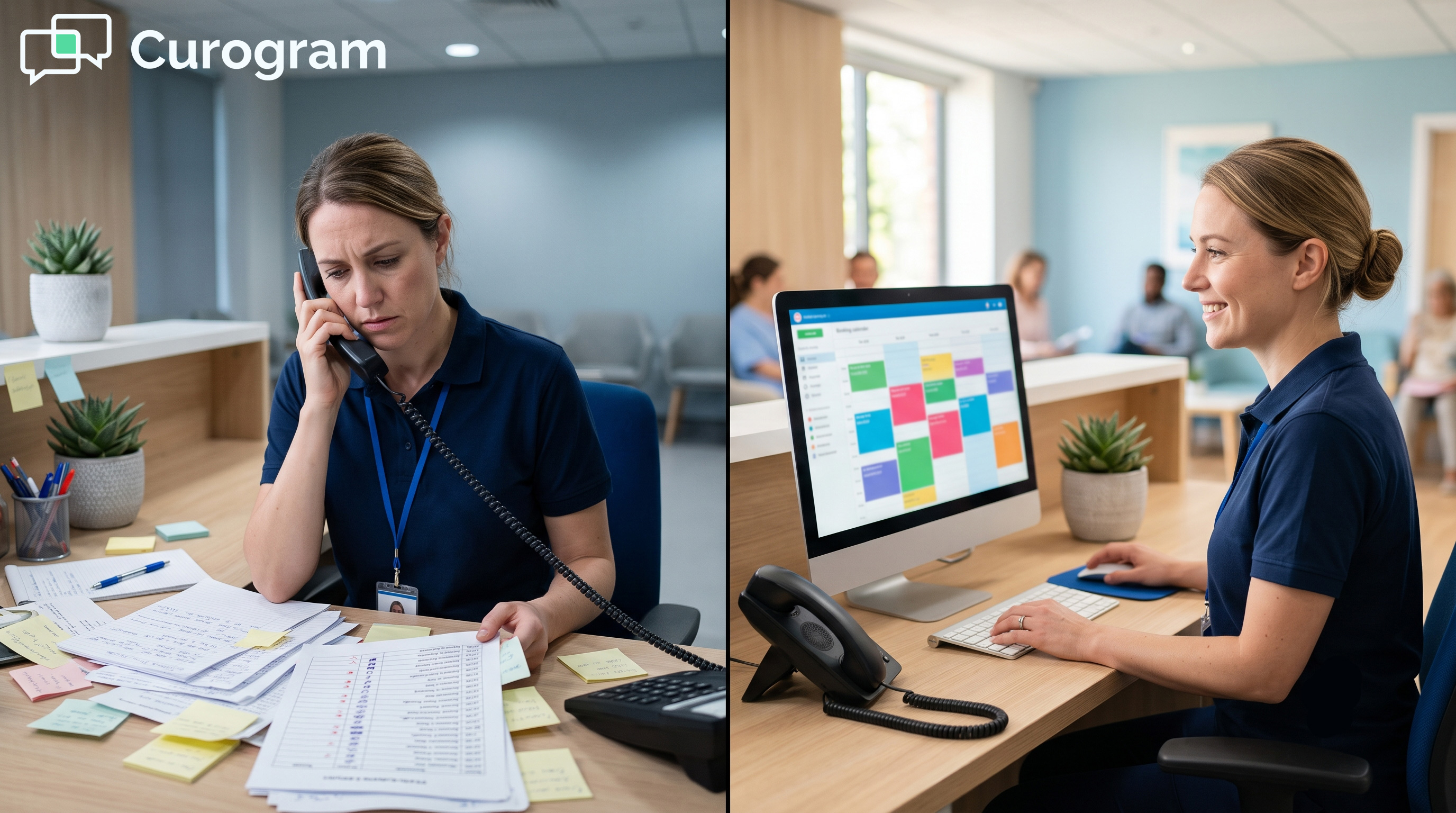
Let us look at what it would actually take to reach 500 patients by phone: Assume that about 20% of calls get answered. That means your staff needs to dial roughly 2,500 numbers just to speak with 500 people. At three minutes per call, that adds up to about 125 hours of phone time. |
Even if only 1,000 calls are needed because some patients pick up sooner, you are still looking at 50 or more hours of labor. That is more than a full work week for one staff member.
During that time, the front desk still has to handle check-ins, manage the schedule, take incoming calls, and deal with walk-ins. Manual phone recalls are not just slow. They are a drain on your entire operation.
|
With Curogram and CollaborateMD working together, the process looks like this:
Total time from start to finish: About 10 to 15 minutes |
The results are often better too. Text messages have a far higher open rate than phone calls. Most people read a text within a few minutes of getting it. A phone call from an unknown number goes straight to voicemail most of the time.
This speed matters for more than just saving labor. It also means you can use this tool on demand. Say, your practice manager looks at next week's schedule on a Friday afternoon and sees 30 open slots.
Instead of hoping walk-ins fill the gaps, they can pull a list and send a broadcast in minutes. By Monday morning, many of those slots could be filled.
When the schedule is light, you turn it on. When the schedule is full, you turn it off. No ongoing ad campaign. No contract with a marketing agency. Just a quick text blast from your own patient data.
This model also helps practices avoid the costly cycle of feast and famine. Many offices experience a dip in volume after the new year, during summer, or around long weekends.
These dips hurt revenue and leave staff underused. With a broadcast tool in place, the practice manager can smooth out these valleys before they become a problem.
|
Let us put a dollar figure on the labor savings: If a front desk employee earns $18 per hour and spends 50 hours on phone recalls, that is $900 in labor alone. That does not count the lost output from other tasks they could not get to. With Curogram, you get the same or better result in 15 minutes. The labor cost drops to almost nothing. Now, multiply that across several recall campaigns per year. If you run one broadcast per quarter, you save around 200 hours and $3,600 in labor annually. That is time and money your team can put toward tasks that actually need a human touch, like handling complex patient questions or managing referrals. |
Speed to value is not just a catchy phrase. It is the difference between a strategy that works on paper and one that works in practice. If a recall process takes 50 hours, most teams will never do it. If it takes 15 minutes, it becomes a habit.
The practices that get the most out of their CollaborateMD data are the ones that make recall easy and repeatable. They do not wait for a slow month to react.
They build short text campaigns into their routine. Once the team sees how fast the results come in, the process sticks.
To put it simply, the manual way is broken. It costs too much time, too much labor, and produces weaker results. The broadcast way is fast, cheap, and built for the way modern patients prefer to communicate. People want to book by text, not sit through a phone call. Giving them that option is not just good marketing. It is good care.

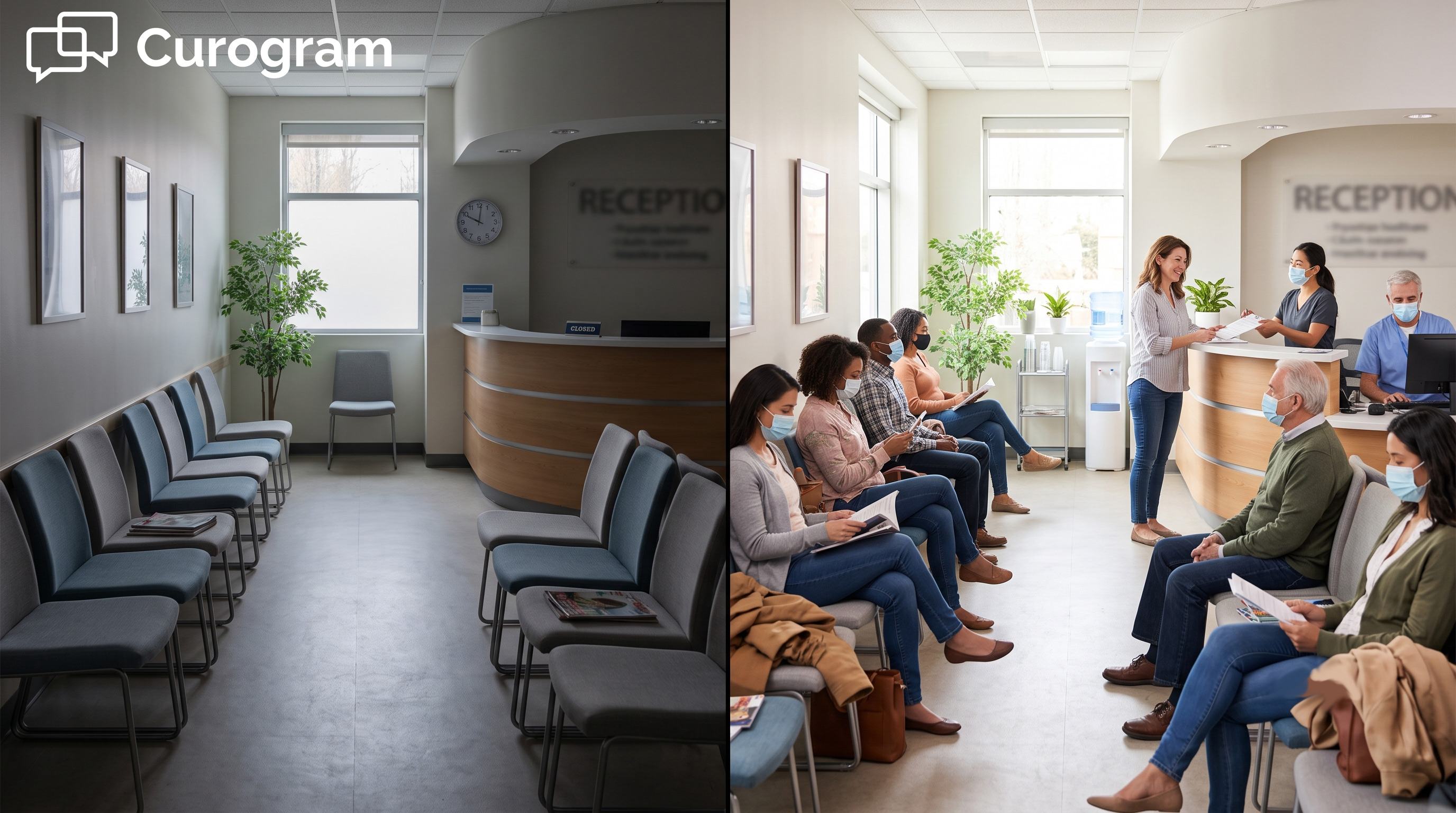
A patient who is not seen is not billed. It does not matter how many records sit in your system if none of them turn into visits. Your CollaborateMD data has value, but only when it drives action.
Every inactive chart is a missed visit. Every missed visit is lost revenue. And when hundreds or thousands of those charts pile up, the total loss can reach six figures over a single year.
The fix is not complicated. You do not need a new marketing agency. You do not need to redesign your website. You do not need to run Facebook ads to strangers who may never call. What you need is a way to reach your own patients quickly, at scale, and through a channel they actually respond to.
That is exactly what Curogram does. It connects to your CollaborateMD database and gives you the power to send targeted text recalls to any segment of your patient list. Whether you want to reach overdue patients, remind people about expiring benefits, or fill next week's open slots, the tool is built to make it happen in minutes.
Think of Curogram as the tool that turns your data into dollars. The data is already there. The patients are already yours. Curogram simply bridges the gap between a name in a chart and a patient in a chair.
And the best part is how fast it works. The Atlas Medical Center case study showed that a single broadcast recall pulled in over $15,000 in bookings within 24 hours. That is real revenue, from real patients, with no ad spend and no new lead generation.
How Curogram Powers the $15k Recall Strategy
Curogram is built to help medical practices turn their patient data into real revenue. It works with CollaborateMD and other EMR systems to make patient outreach fast, simple, and HIPAA compliant.
The platform lets you sync a filtered patient list from CollaborateMD and send a bulk text message to every patient on that list. The message can include a direct link to book online, which means patients can schedule without calling the office.
It supports two-way texting, so if a patient replies with a question, your team can respond right from the Curogram dashboard. There is no need to switch between systems. Everything stays in one place.
For practices worried about compliance, Curogram handles that too. Messages are sent through a HIPAA-compliant system that protects patient data. You can reach patients quickly without putting their private health details at risk.
Staff training takes about 10 minutes. The interface is clean and easy to use, even for team members who are not tech-savvy. This means your front desk staff can run a recall campaign without needing IT support or outside help.
Beyond recalls, Curogram also supports automated appointment reminders, review requests, patient intake forms, and secure messaging. So the same platform that helps you reactivate dormant patients in CollaborateMD can also help you keep those patients engaged after they return.
The result is a single tool that handles outreach, booking, reminders, and follow-up. Instead of juggling five different tools, your team uses one. That saves time, cuts costs, and keeps the patient experience smooth from start to finish.
The money is not hiding. It is sitting in plain sight inside your CollaborateMD system, attached to patients who already know your practice and trust your care.
Every week that passes without reaching those patients is revenue left on the table. Not because the patients left. But because no one asked them to come back.
The math is clear. A single broadcast text to 500 overdue patients can bring in 175 bookings and over $17,000 in revenue. That takes about 15 minutes and costs nothing in ad spend. Compare that to the thousands of dollars and dozens of hours it would take to bring in the same number of new patients through paid ads.
You do not need a bigger marketing budget. You need a smarter use of the data you already own. By running a patient recall SMS campaign through Curogram, you can fill empty slots, hit revenue targets, and bring lapsed patients back into care, all from your desk in a single morning.
The end-of-year benefits campaign alone could add five figures to your annual revenue. And that is just one use case. You can run this play any time the schedule looks light or when you want to boost volume for a specific service.
The practices that grow fastest are not the ones that spend the most on ads. They are the ones that make the most of what they already have. Your CollaborateMD database is a growth engine. Curogram is what turns it on..
Stop chasing strangers and start texting your own patients. Schedule a quick demo now to see how much revenue is waiting inside your charts.
Most practices see replies and bookings within the first few hours. In the Atlas Medical Center case, over $15,000 in bookings came in within 24 hours of sending a single broadcast to their overdue patient list.
Paid ads can cost $150 to $300 per new patient. A broadcast recall targets people who are already in your system, so there is no ad spend. The only cost is the texting platform, which makes the cost per booking a small fraction of paid ads.
Many patients lose unused insurance benefits on December 31. A Q4 campaign reminds them to book before that deadline. Waiting until January means those benefits are gone, and so is the urgency that drives fast bookings.
💡 Broadcast messaging for CollaborateMD recalls lets medical practices wake up dormant patients and fill schedule gaps with targeted,...
💡 Mass texting through Ramsoft helps radiology centers run better campaigns. Patients respond better to text messages than phone calls or emails.
💡 StreamlineMD practices use mass texting to automate patient notifications and streamline imaging workflows. This tool helps radiology, vascular,...